



The Global Plastics Treaty: A Historic Opportunity
In March 2022, the United Nations Environment Assembly decided on a mandate to create the world’s first Plastics Treaty, a legally binding international law aimed at reducing plastic pollution worldwide, and covering the full life-cycle of plastic. Plastic is a growing crisis with devastating impacts on the environment, human health, human rights, environmental justice, the rights of Indigenous Peoples, biodiversity, and climate. Global actions to address this crisis are urgently needed. As numerous studies have demonstrated, plastic has been found everywhere, not only in ecosystems and the atmosphere but also in the food we eat, the water we drink, and even inside our bodies. For the Global Plastics Treaty to be effective in reversing the tide of plastic pollution, mechanisms and solutions to address it need to exist within climate and planetary boundaries. This treaty is an opportunity to get it right and open a path for comprehensive national policies to regulate plastic production and consumption. It can potentially be one of the most significant environmental agreements in history.
For more information, visit https://www.no-burn.org/unea-plastics-treaty/.
The next round of negotiations or Intergovernmental Negotiating Committee (INC) for the plastics treaty (INC-5.2) will take place in Geneva, Switzerland August 5-14. The negotiations are held under the auspices of the United Nations Environment Programme (UNEP)
For those following online a webcast is available here.
Upcoming Online Journalist Briefings
LinkedIn Live: INC-5.2 Plastics Treaty Primer
Date: Jul 24, 2025, Thursday
Time: 10PM Malaysia | 4PM Rwanda | 8AM Mexico | 7AM PST
Register: https://www.linkedin.com/events/7349287367825870850/
Civil society leaders from around the world as well as Member State delegates from Rwanda and Panama will discuss what’s at stake at the Geneva negotiations, and the path forward for a strong plastics treaty.
Africa
Date: 24 July 2025, Thursday
Time: 3pm GMT
Register: https://us06web.zoom.us/meeting/register/O7GoIfh7Soe0HuLdxcHx-Q
This media briefing aims to empower African journalists to effectively report on the upcoming INC-5.2 negotiations of the plastics treaty, spotlighting key priorities from African civil society and negotiators.
Asia Pacific
Date: 23rd July Wednesday
Time: 11:30 AM – 1:00 PM IST (Delhi) | 1:00 PM Bangkok | 2:00 PM Kuala Lumpur | 6:00 PM Suva
Register: https://us02web.zoom.us/webinar/register/WN_MORLqhxsR-qxlX-p-me0QQ (bit.ly/preINC52briefing)
This media briefing grounds the plastics treaty negotiations within the Asia Pacific context, with speakers from across the region.
United States
Date: July 23, Wednesday
Time: 12pm PST | 3pm EST
Register: https://us02web.zoom.us/webinar/register/WN_EGzyBYiQTuib9h1tuf_hsA
Leading plastics treaty experts from across the U.S. will offer insights on the U.S. delegation’s participation in the global plastics treaty negotiations and contradictions in the U.S. ‘s position.
Latin America and the Caribbean
Press briefing recording (spanish only)
Taller para periodistas: La crisis del plástico y el Tratado global de plásticos
INC-5.2 Agenda
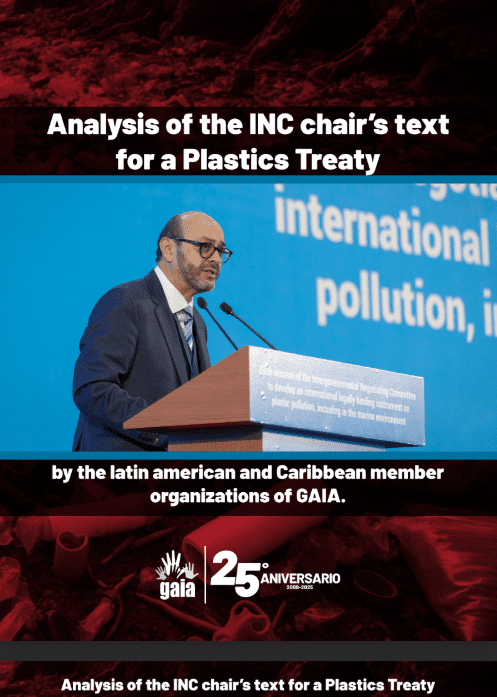
The negotiations will take two official forms: plenary (live-streamed on the UNEP website), and contact groups, which are confidential in nature according to Chatham House Rules. There will be four contact groups with two occurring in parallel at any given time. The negotiations are presided over by the Chair, Ambassador Luis Vayas Valdivieso of Ecuador, and are negotiated by the countries in the United Nations, called Member States. Here is the text that Member States will be negotiating at INC-5.2 (see GAIA’s comments here).
According to the Scenario Note that the Chair has recently released, the flow of negotiations may be the following:
- August 5: Opening Plenary
- 10am brief Opening Plenary, no verbal statements for Member States (opportunities to submit in advance on the online portal), potential 30 minute window for observer interventions (civil society statements)
- Organizational matters will be addressed here: Rules of Procedure, Adoption of Agenda
- August 5-8, 11-14: Contact Groups
- The bulk of the negotiations will be split into four “Contact Groups,” each negotiating different groups of articles in the treaty text.
- August 9: “Stocktake” Plenary
- Chairs of each Contact Group will give a brief report of their progress
- August 10: Informal Consultations
- informal consultations among members (no formal convenings)
- August 14: Closing Plenary
Another Chance at Clinching a Strong Plastics Treaty
The below summarizes the most recent developments in negotiations leading up to INC-5.2. For a recap of the outcomes of INC-5, please see our report. For more information on the outcomes of previous INC’s please see our news archives.
We Are the Majority
At the close of INC-5 in Busan, South Korea, late last year, it was clear that, although more time was clearly needed for negotiations on the treaty provisions, the ambitious countries vastly outnumbered and isolated the small group of countries looking to weaken the final treaty text. In one particularly rousing moment, Juliet Kabera of Rwanda read a statement on behalf of over 85 countries emphasizing their shared commitment to a legally binding treaty enshrining reduction targets, phase-out of harmful chemicals, a just transition, and an equitable financial mechanism. She then urged everyone in the room who supported an ambitious treaty to stand up, and 90% of the people present leap to their feet and applaud. It was a powerful moment in the room and a reminder of the determination of the majority. To date:
- 103 countries signed in support of a Declaration on Primary Plastic Polymers.
- 85 countries signed the “Standing Up for Ambition” statement
- 94 countries signed a Declaration on Plastic Products and Chemicals of Concern
- 100 countries signed a text proposal to adopt a plastic production reduction target
- 151 countries support a proposal for a dedicated, equitable Financial Mechanism
Read GAIA’s response to the announcement of INC-5.2.
Environment Ministers United at UNOC: “The Nice Wake-Up Call for an Ambitious Plastics Treaty”
At the United Nations Oceans Conference in Nice, France in June, environment ministers and representatives from 96 countries (the majority of United Nations Member States) reaffirmed their dedication to securing a strong plastics treaty in a declaration coordinated by France entitled, “The Nice Wake-Up Call for an Ambitious Plastics Treaty.”
Civil society leaders applauded the statement’s reaffirmation of the need for a treaty to have a global target for plastic production reduction, to phase out the most problematic plastic products and hazardous chemicals, and to include monitoring and reporting mechanisms to ensure that countries remain on target, as well as room to strengthen commitments based on emerging science, health, and environmental impacts.
Another noteworthy inclusion in the statement is the call for standard decision-making practices, if consensus cannot be reached. This further isolates the few obstructive countries who have insisted on consensus decisionmaking as a tactic to stall negotiations and weaken the ambition of the final treaty (see here for details).
While the declaration missed several demands from civil society, overall non-profit organizations welcomed the statement as a floor, not a ceiling, of ambition in negotiations.
Read GAIA’s response to the release of the Nice Wake-Up Call.
Setting the Stage: the Negotiations Process
The below summarizes the procedural issues at stake in negotiations at INC-5.2.
Ministers Waiting in the Wings
Ministers from Member States will attend INC-5.2 at the controversial invitation of UNEP’s Executive Director Inger Andersen. Although no ministerial segment is included in the INC mandate, dedicated informal ministerial roundtables are planned for August 12th to 14th.
The Tyranny of Consensus vs. Voting for Democracy
In previous INC’s, a central sticking point has been the fierce debate over Rules of Procedure, namely Rule 38 (1), which dictates voting procedures. A small group of countries including Saudi Arabia and Russia have used what could have been routine procedural matters as a tool to undermine a strong treaty, and are proposing full veto power over treaty text by advocating for consensus only, with no opportunity for voting if consensus cannot be reached. Provisions for voting are an essential bargaining chip that can serve to bring the more obstructive parties to the negotiating table. At INC-2 in Paris, extensive time used to argue over Rules of Procedure led negotiators to reach a tense truce, where a provision for voting was adopted provisionally and an interpretative statement was added to rule 38. It’s turned into a can of worms that Member States have been hesitant to open as the bully countries have continued to insist in consensus only.
However, as countries have become more determined to make INC-5.2 the last INC and come out with a strong treaty at the end of it, calling for a vote seems like the only way out of the consensus gridlock, allowing the will of the majority to dictate the resulting treaty, instead of the stubborn few.
The standard for voting provisions has been set in many other successful international negotiations like the Minamata Convention on mercury, and the Rotterdam and Stockholm Conventions.
Will Civil Society be in the Room?
According to a report from the Center for International Environmental Law (CIEL), 220 fossil fuel and chemical industry lobbyists registered to attend INC-5, a larger group than any national delegation or civil society organization, and gained extensive access to government representatives from around the world–including from within their country delegations.
While the industry profiting from the plastics crisis has been given free reign in the negotiations, civil society access has been severely limited, and even countries themselves, particularly in the Global South, have been sidelined through exclusionary practices like failing to provide adequate language interpretation services in negotiating rooms. At INC-5, civil society was physically locked out of negotiations, in violation of our rights and standard practice.
Key Issues to Watch at INC-5.2
The below summarizes the potential lightning rod issues in negotiations at INC-5.2.
The Battle Over Plastic Production
A key tension point in the negotiations thus far is over including ambitious and binding plastic production cuts in the final treaty. The vast majority of countries (over 100) engaged in the negotiation process have remained open to including production reduction targets in the treaty, reflected in Article 6, option 2 of the Chair’s draft text. However, a small but vocal minority, primarily made up of fossil fuel-producing nations, have sought to sabotage the talks through obstruction tactics and by arguing that plastic pollution starts only at the disposal stage.
One such tactic is to call into question the definition of where the “life-cycle” starts, despite numerous precedents in international environmental policy, making clear that the “life-cycle” starts at extraction. Member States have already committed to developing a treaty that covers the full plastic life-cycle.
The other is to dilute the text on plastic reduction by using the terms, “circular economy” and “circularity” as a dog whistle, signaling an emphasis on downstream measures only (waste management), instead of getting to the root of the problem. There is overwhelming evidence that plastic as a material is not “circular” and inevitably becomes waste. This vocal minority claims that plastic only becomes pollution at the disposal stage, despite the scientific consensus and outcry from millions of people around the world whose land, air, and bodies are being poisoned by this industry. Plastic doesn’t become pollution, plastic is pollution from the moment of fossil fuel extraction.
Will Just Transition be Enshrined in the Treaty?
A just transition under the treaty must promote systemic change that upholds human rights and allows communities most impacted across the plastic life-cycle–particularly waste pickers, Indigenous Peoples, and frontline and fenceline communities– to live and work with dignity, free from the harms of the plastic industry. A just transition must be truly inclusive, from decision-making to implementation, and allow impacted communities to define their own vision for a plastic pollution-free world, and ensure no communities are impacted by future systems.
Specifically, the treaty should retain a dedicated article on just transition, as well as retain its mention in the preamble and objective. A Just Transition Coalition made up of a diverse group of impacted stakeholders including Indigenous Peoples, frontline communities, and waste pickers have unanimously agreed that drastic plastic production cuts are needed to protect their lives and right to safe and dignified work.
For more information, please see the International Alliance For Waste Pickers Recommendations on Section II, Part 12 on Just Transition section.
Who’s footing the bill? A Financial Mechanism Fit for Purpose
A plastics treaty is only as strong as its budget; in order to ensure its proper implementation, developing countries must have access to adequate resources. This means a dedicated financial mechanism that includes mandatory contributions from high-wealth and top-plastic producing countries to support lower income countries to meet the agreement, especially pacific small island developing states. This fund must help right historical injustices by funneling money from the countries most responsible for plastic production and export– to countries who have borne the brunt of its costs, particularly in the Global South, and finance a just transition.
There has been lots of momentum around a proposal from the Africa Group, GRULAC, Cook Islands, Fiji and Federated States of Micronesia for the organization of the dedicated financial mechanism that centers equity, and has been supported by over 150 countries.
There is a debate over financing the treaty using public vs. private finance, especially from donor countries– The problem with leaving it to the private sector is that they will have control over where the money goes and who gets it, a highly undemocratic process that puts profit over social good. Another threat is the potential inclusion of widely debunked, industry-promoted financial mechanisms like plastic credits or “offsetting.” Plastic credits have shown time and again that they do not actually reduce plastic pollution. Including them in treaty financing will only give companies a social license to pollute. (See a recent academic paper summarizing the evidence against plastic credits, tying it to the failures of carbon credits).
In addition to a dedicated fund, a polymer fee would potentially serve as a powerful financial mechanism, as well as eliminating plastic production subsidies, which currently add up to US$ 30 billion annually for direct subsidies in the top 15 plastic-polymer-producing countries alone.
Stop the Smokestack
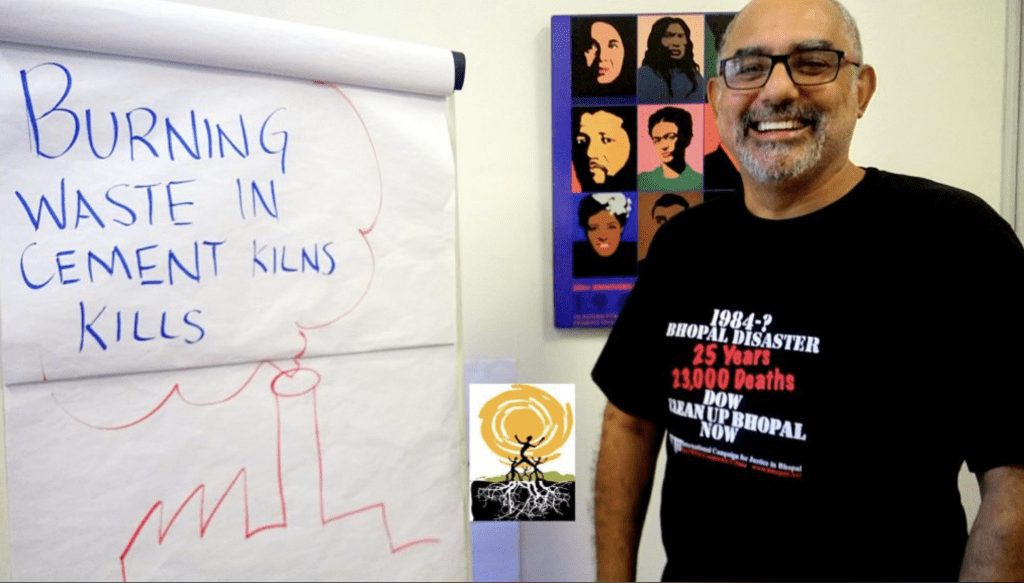
GAIA has been monitoring the rise of industry-influenced promotion of burning waste in cement kilns and other incinerators, plastic credits, chemical “recycling,” and substitution with other single-use materials (like bioplastic) instead of reuse systems, all of which not only cause even more pollution, but shift the focus away from production cuts, which undermines the treaty’s aims to eradicate plastic pollution.
Potential Outcomes of INC-5.2
The below summarizes the potential outcomes of INC-5.2, with an understanding that no one has a crystal ball, and negotiations can always go in unexpected directions.
Best Possible Outcome: Landing a Strong Treaty
Civil society remains hopeful that INC-5.2 will conclude with an agreed upon text for a strong plastics treaty, which would be ratified by the end of the year. This text would enshrine the priorities listed below, with an adequate financial mechanism. The treaty must also make provisions for adding and amending the text through annexes at future implementation meetings (COPs) to reflect the latest science on the social and environmental impacts of plastic pollution. COPs must also allow for voting on these annexes, as well as make the annexes “opt-out” vs. “opt-in” for ratifying countries, to ensure more widespread adoption.
Policy analysts predict that breaking the consensus deadlock through voting will be essential to securing an ambitious plastics treaty.
For more information on the pathways to an effective plastics treaty, read our policy brief.
Good Outcome: Getting Most of the Way There
There is a chance that negotiators finalize the majority of the treaty text, and will only require meetings to resolve minor issues before the ratification.
Middling Outcome: No Agreed Upon Text, Another INC
One potential outcome of the negotiations is that Member States and the Chair will decide that more time is needed to work out critical sticking points in the Chair’s Text– leading to an INC-5.3, INC-6 or other meetings after INC-5.2. It may be appropriate to give negotiators more time to agree on a treaty, as long as procedural conditions change so that Member States do not repeat the same dynamics and expect a different result. Namely, if Member States finally call for a vote at INC-5.2, loosening the stranglehold that consensus has had on the negotiations thus far, then further negotiations can be justified, as the conditions for those negotiations will have changed.
Bad Outcome: A Weak Treaty
If the majority of Member States decide to capitulate to the select few countries insisting on a weak treaty (devoid of these priorities), there will be devastating consequences for the climate, human health, and environmental justice. However, even in this worst case scenario, there is still hope. A group of ambitious Member States could decide to form a “Coalition of the Willing” and develop a separate treaty process outside of UNEP, which could result in a much stronger treaty. If enough higher income countries and trading partners ratify the treaty, it creates pressure for other countries to sign on after the fact, to avoid complicated trade and economic barriers. Universality then, could be achieved over time under stronger conditions. There is an established precedent for this in past treaty processes (see chapter 5 of our policy brief.) This route is far from perfect and can face issues related to funding and civil society access to negotiations, but is still an option on the table if current talks fall through.
It is also important to note that even if plastics treaty negotiations do not culminate in a strong treaty, civil society’s work has already been strengthened through movement alignment, consequential scientific research conducted to support treaty negotiations, the relationships we’ve been able to forge with government leaders, the increased visibility of the plastics crisis, and the global understanding that plastic is pollution and for as long as production is not regulated and reduced, there will be no meaningful resolution to the crisis.
Overall aims for the Treaty
We call on governments to ensure that the emerging instrument includes:
- Mandatory targets to cap and dramatically reduce plastic production, commensurate with the scale and gravity of the plastic pollution crisis and aligned with planetary boundaries. This includes, but is not limited to, the elimination of single-use plastics, and other non-essential, unnecessary, or problematic plastic products and applications—including intentionally-added microplastics. This system should be supported by measures to prevent countries that are not parties to the treaty from undermining these agreements.
- Bans on toxic chemicals in all virgin and recycled plastics based on groups of chemicals, including additives (e.g., brominated flame-retardants, phthalates, bisphenols) as well as notoriously toxic polymers (e.g. PVC).
- Legally binding, time-bound, and ambitious targets to implement and scale up reuse and refill to accelerate the transition away from single-use plastics. Correspondingly, the treaty must reject false solutions, regrettable substitutes, and polluting and ineffective techno-fixes such as “chemical recycling,” incineration, waste-to-energy, co-processing of plastic-rich RDF in cement kilns, international waste trade, plastic credits, and other schemes which perpetuate business as usual and support continued plastic production and pollution to the further detriment of the climate, human and environmental health.
- A just transition to safer and more sustainable livelihoods for workers and communities across the plastics supply chain, including those in the informal waste sector; and addressing the needs of frontline communities affected by plastic production, incineration, and open burning. This approach necessitates respect for human rights and Indigenous Peoples’ rights, and due recognition of the traditional knowledge and expertise of Indigenous and tribal original people of the lands affected, as well as local communities, waste pickers, and formal sector recyclers towards resolving the crisis.
- A dedicated financial mechanism that provides new, additional, dedicated, adequate, accessible and predictable funding on a grant basis to enable eligible developing countries implementing the treaty core obligations.
- Provisions that hold polluting corporations and plastic-producing countries accountable for the profound harms to human rights, human health, ecosystems and economies arising from the production, deployment and disposal of plastics. Provisions should also provide science-based solutions—including traditional knowledge.
- In the same light, the treaty should also set publicly accessible, harmonized, legally binding requirements for the transparency of chemicals in plastic materials and products throughout their whole life-cycle.
- Polluters should be kept out of the treaty negotiations. The INCs should result in a treaty that limits the influence of entities with conflicts of interest (like plastics producers) in the ongoing work of the Conference of Parties (COP) of the eventual treaty.
- Decision-making by voting at the COPs to allow the treaty to be strengthen over time
Key References
GAIA “Wrap-Up” Report on the Outcome of INC-5
GAIA’s Pathways to an Effective Plastics Treaty policy paper
GAIA’s Comments on the Chair’s Draft Text
Academic paper on plastic credits
Academic paper with the scientific argument for plastic production reduction
All GAIA resources relating to the Global Plastics Treaty
Media Contacts
Global Press Contact:
- Claire Arkin | Claire@no-burn.org | +1 (973) 444 4869
Regional Press Contacts:
- Africa: Carissa Marnce | carissa@no-burn.org | +27 76 934 6156
- Latin America: Camila Aguilera | Camila@no-burn.org | +56 9 8913 6198
- Asia & the Pacific: Robi Kate Miranda | robi@no-burn.org I +63 927 585 4157
- United States & Canada: María Guillén | mariaguillen@no-burn.org | +1 609 553 4569
Spokespeople
The GAIA Network has a diverse delegation of members going to INC-5.2, mostly from the Global South. Our spokespeople can give you on-the-ground perspectives on how plastic has impacted their region, and the solutions that they are building rooted in equity and justice. They specialize in climate and plastics, corporate accountability, health and toxics, waste colonialism, false solutions (e.g., “chemical recycling”, incineration), environmental justice, policy, and more. Contact us to arrange an interview.
About GAIA
GAIA is a worldwide alliance of more than 1,000 grassroots groups, non-governmental organizations, and individuals in over 90 countries. With our work we aim to catalyze a global shift towards environmental justice by strengthening grassroots social movements that advance solutions to waste and pollution. We envision a just, zero waste world built on respect for ecological limits and community rights, where people are free from the burden of toxic pollution, and resources are sustainably conserved, not burned or dumped.
Follow us on YouTube, Twitter, Facebook, Instagram, BlueSky, and LinkedIn for live updates during INC-5, and our regional accounts:
GAIA Africa: Instagram, Facebook
GAIA LAC: Instagram, Facebook, Twitter, LinkedIn
GAIA Asia Pacific: Instagram, Facebook, LinkedInGAIA US Canada: Instagram, Facebook, Twitter