






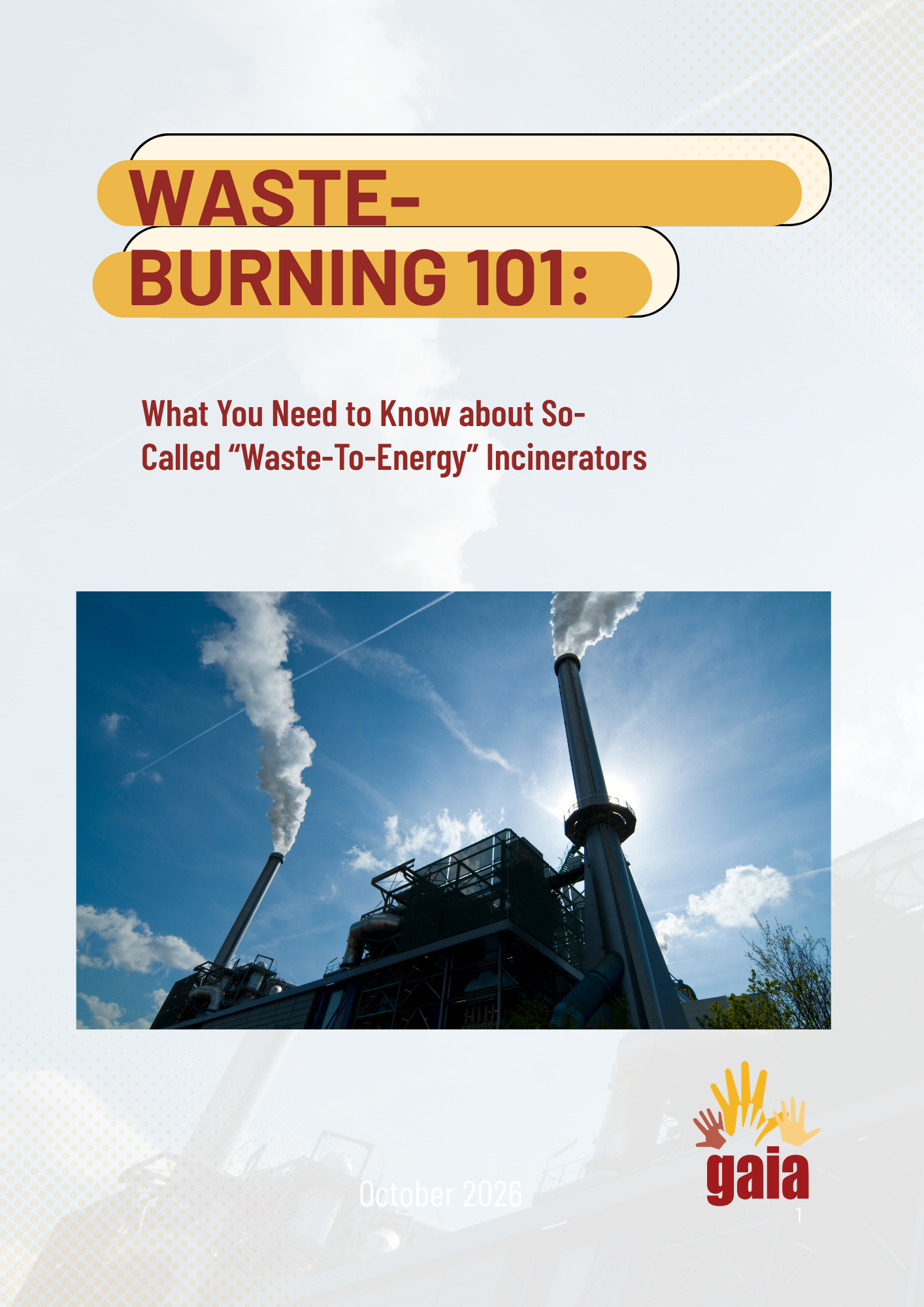

If your community is being pitched a “waste-to-energy” incinerator as a clean, modern fix for its garbage, this page equips you to evaluate that claim with evidence rather than industry marketing.
The short version: a waste-to-energy incinerator is not renewable, not cheap, and not clean. It is one of the most expensive ways to manage waste, locks cities into decades of burning materials that should be reduced, reused, and composted, and releases pollutants into the neighborhoods least able to fight back. If that weren’t bad enough, it’s a climate disaster, emitting almost twice as much CO2 per unit of energy than coal. Zero waste solutions cut climate pollution, cost less, and create more jobs.

This is GAIA’s evidence base for policymakers, community organizers, and journalists assessing incineration proposals. It draws on GAIA’s more than two decades of research and community organizing across the global zero waste movement. Read it, share it, and download the full brief to bring the receipts to your next council meeting.
What is a waste-to-energy incinerator?
A waste-to-energy incinerator is a facility that burns municipal solid waste at high temperatures to produce heat, which drives a turbine to generate electricity. “Waste-to-energy” (often shortened to WTE) is the industry’s preferred name for what is, at its core, mass-burn incineration.
The term is a marketing frame. Burning trash to make a small amount of power does not make incineration a clean or circular technology. It converts discarded materials — much of which could be recycled or composted — into ash, air pollution, and greenhouse gases.
How waste-to-energy incineration actually works
Mixed municipal waste is fed into a combustion chamber and burned at roughly 850°C or higher. The heat boils water into steam, the steam spins a turbine, and the turbine generates electricity. Whatever is left becomes bottom ash and fly ash, both of which require disposal — often in a landfill.
This is the detail the industry rarely leads with: incineration does not make waste disappear. It transforms one waste stream into three — air emissions, toxic fly ash, and bottom ash — while destroying the material value of everything it burns.
Why “energy recovery” is a misleading label
The amount of energy recovered from burning waste is low relative to the energy that was embedded in producing those materials in the first place. Recycling an aluminum can or a plastic bottle saves far more energy than burning it ever recovers.
Burning waste for a modest electricity yield destroys that embedded energy permanently. GAIA’s research shows that a zero waste approach — reduce, reuse, recycle, compost — retains far more value and cuts far more climate pollution than any “energy recovery” from an incinerator.
Why incineration of waste harms the climate and communities
The incineration of waste harms the climate because it emits more carbon dioxide per unit of electricity than coal, and it harms communities because it releases hazardous air pollutants into the neighborhoods surrounding the plant.
Waste-to-energy incinerators emit 1.7 times as much greenhouse gases (GHGs) per unit of electricity produced compared to coal-fired power plants. They also emit more air pollutants than other sources of energy.
That single comparison dismantles the “clean energy” claim. A technology that out-pollutes coal per megawatt-hour cannot credibly be sold as a climate solution. GAIA’s peer analysis found that zero waste beats incineration in cutting climate pollution, and the emissions math is the reason why.

The pollutants a waste-to-energy incinerator releases
GAIA’s WTE Facts and Figures brief documents that waste-to-energy incinerators release a range of hazardous pollutants, including dioxins, furans, mercury, lead, and particulate matter. These are not trace nuisances — they are among the most toxic substances in industrial air pollution.
Dioxins and furans are persistent, bioaccumulative, and linked to cancer and reproductive harm. Mercury and lead are neurotoxins. Fine particulate matter penetrates deep into the lungs and is associated with heart and respiratory disease. The exact pollutant profile of any given plant depends on what is burned and how emissions are controlled.
Environmental justice: who lives next to the smokestack
Incinerators are not distributed evenly. They are disproportionately sited in low-income communities and communities of color — the same communities that have historically had the least political power to refuse them.
This is the heart of GAIA’s objection. A waste-to-energy incinerator does not just produce emissions; it concentrates them where the people breathing them did not consent. Community air-quality monitoring by GAIA members repeatedly documents this pattern. That is why more than 100 organizations have urged UN-Habitat to stop promoting waste-to-energy as a false solution.
The true cost of waste incineration vs. zero waste
Waste-to-energy incineration is one of the most expensive waste management options available — incinerators carry very high upfront capital costs, long-term debt, and “put-or-pay” contracts that lock cities into feeding the burner for decades. For a detailed breakdown, see GAIA’s resource on the high cost of waste incineration.
That one sentence is the answer most policymakers are searching for: what does a waste-to-energy incinerator cost? It costs more than nearly any other disposal method — and the bill lasts far longer than a single budget cycle.
Why incinerator cost is higher than it looks
The sticker price of an incinerator is only the beginning. A full accounting of incinerator cost includes capital financing over decades, ongoing operations and maintenance, pollution-control equipment, ash disposal, and the health and environmental costs borne by nearby residents.
Because the facilities are so expensive to build, they are financed with long-term debt. To service that debt, operators need a guaranteed volume of waste to burn. That is where the trap closes.
The put-or-pay trap
Many incinerator contracts include “put-or-pay” clauses. A put-or-pay clause is a contractual guarantee that a city will supply a minimum tonnage of waste — or pay a penalty as if it had.
This creates a direct financial disincentive to reduce, reuse, recycle, or compost. Once a city signs, cutting waste means paying penalties. The incinerator’s economics actively fight against the zero waste progress a community wants to make.
What communities get instead when they choose zero waste
Zero waste systems require far less capital, scale incrementally, and create more jobs per ton of material handled than incineration. Recycling and composting infrastructure can be built in stages, funded without decades of debt, and adjusted as a community’s needs change.
Crucially, zero waste keeps money and materials circulating in the local economy rather than sending them up a smokestack. It is the flexible, lower-cost, community-controlled alternative that a put-or-pay incinerator contract forecloses.
Zero waste alternatives that beat incineration
Zero waste alternatives — waste reduction, reuse, expanded recycling, and organics composting — cut climate pollution, cost less, and create significantly more jobs than a waste-to-energy incinerator. They are not aspirational; they are already working in cities across the GAIA network.

Reduce and reuse first
The cheapest, cleanest ton of waste is the one never created. Waste reduction and reuse — refillable systems, repair, product redesign, and bans on the worst single-use items — shrink the waste stream at the source before disposal is ever a question.
This is why incineration and zero waste are fundamentally incompatible. An incinerator needs a steady diet of waste; zero waste is designed to starve that diet down to nothing.
Recycling and separate collection
Separating materials at the source keeps recyclables clean and valuable. When waste is mixed and burned, that material value is destroyed forever. When it is separated and recycled, it displaces the far larger energy and emissions cost of producing materials from scratch.
GAIA’s global network has documented zero waste cities that have driven diversion rates high enough to make incineration unnecessary — proof that the model scales in the real world.
Composting and organics
Organic waste — food scraps and yard trimmings — is wet and heavy, which makes it a poor fuel and a major driver of an incinerator’s inefficiency. Diverted to composting instead, that same material becomes soil, sequesters carbon, and supports local agriculture.
Removing organics from the waste stream is one of the fastest ways to cut both landfill methane and incinerator emissions at the same time.
The trans-local model behind the movement
GAIA supports these alternatives through a trans-local organizing model — distributed leadership across regional communities rather than a single top-down blueprint. Programs like GAIA’s Zero Waste Academy equip citizens, policymakers, and organizations with the scientific knowledge and political frameworks to build community-led systems that make incineration obsolete.
Frequently asked questions about waste-to-energy
Is waste-to-energy renewable?
No. Waste-to-energy incineration is not renewable. It relies on a continuous supply of discarded materials — much of it fossil-based plastics — and emits 1.7 times as much greenhouse gas per megawatt-hour as coal-fired power plants. Burning finite materials to make power is the opposite of a renewable cycle.
Is incineration better than landfill?
No — framing the choice as “incinerator or landfill” is a false dilemma. Both are disposal methods that destroy material value, and incineration adds hazardous air emissions and toxic ash on top. The real alternative is zero waste: reduce, reuse, recycle, and compost so that far less material needs disposal at all.
What does a waste-to-energy incinerator cost?
A waste-to-energy incinerator is one of the most expensive waste management options, with very high capital costs and long-term contracts that often lock cities in for decades. The full picture — including financing, operations, ash disposal, and health costs — is detailed in GAIA’s the high cost of waste incineration.
Does waste-to-energy reduce waste?
Not really. Incineration reduces the volume of waste but leaves behind bottom ash and toxic fly ash that still require disposal, and it destroys recyclable and compostable materials in the process. It converts one waste stream into three — air emissions, fly ash, and bottom ash — rather than genuinely eliminating waste.
Are waste-to-energy emissions regulated?
WTE incinerators are subject to air-quality regulations, but regulation does not make them safe. Emission limits vary widely between countries, monitoring is often intermittent, and pollutants like dioxins, furans, mercury, and lead are hazardous even at low, “permitted” concentrations. Community air-quality monitoring by GAIA members frequently reveals gaps between what is permitted and what communities actually breathe.
Take action against waste incineration
Waste-to-energy incineration is a false solution — more polluting than coal, more expensive than the alternatives, and a decades-long lock-in that punishes communities for choosing zero waste. The evidence is clear, and the movement to stop it is growing.
Download the full WTE Facts brief to bring GAIA’s complete data set — emissions figures, cost analysis, and pollutant profiles — to your next hearing, article, or campaign. Enter your email and we will send you the brief and updates from the movement.
Add your name to GAIA’s campaign against waste incineration. Communities across the global GAIA network are refusing incineration and building zero waste systems that work. Join the Global Week of Action to Stop Incineration, and help make the next proposed incinerator the one that never gets built.
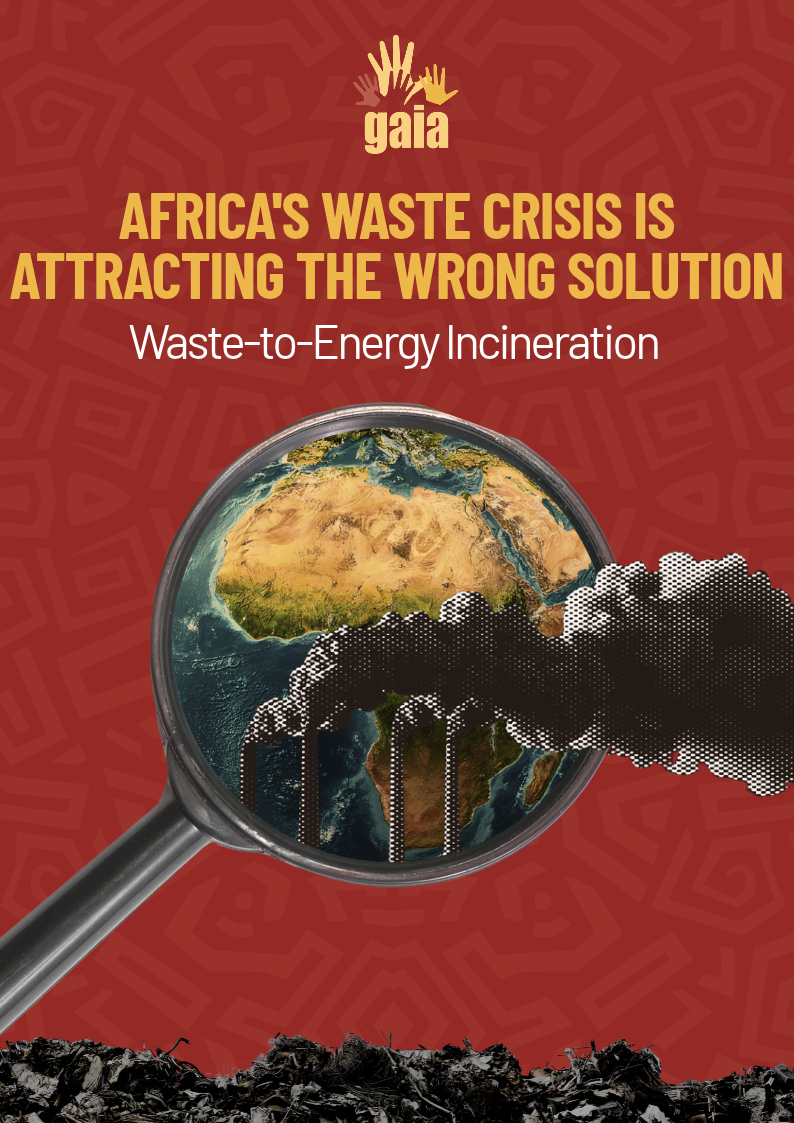
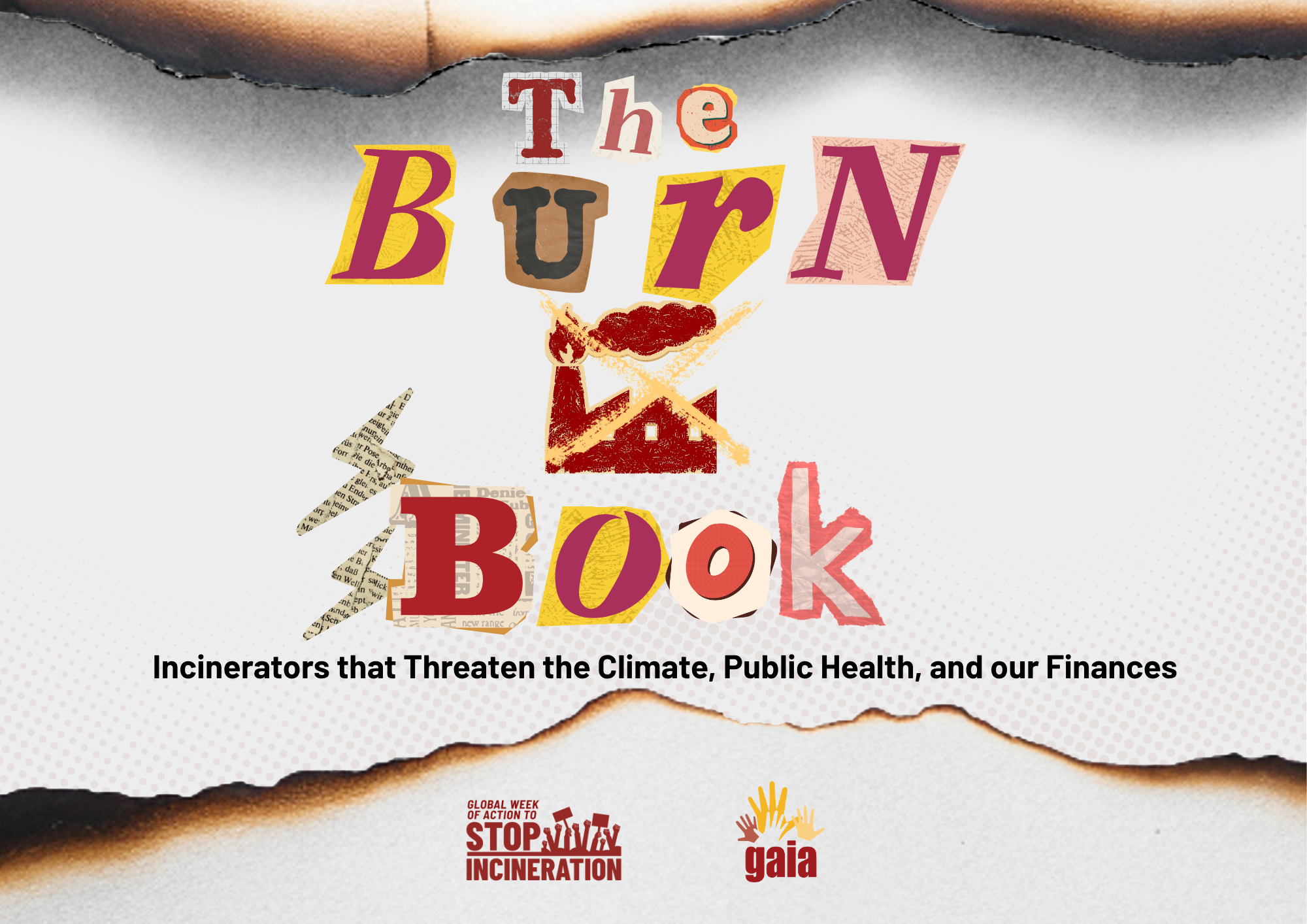
See the evidence from twenty incinerators worldwide in GAIA’s Burn Book, and read GAIA’s new report on waste-to-energy in Africa.