




Waste-Burning 101: What You Need to Know about So-Called Waste-to-Energy Incinerators
- Incineration and cement kilns -This toolkit compiles key facts, data and strategies to help communities and organizers understand the impacts of waste burning, challenge proposed or existing facilities, and engage in waste policy and planning decisions.
Waste-to-energy explained
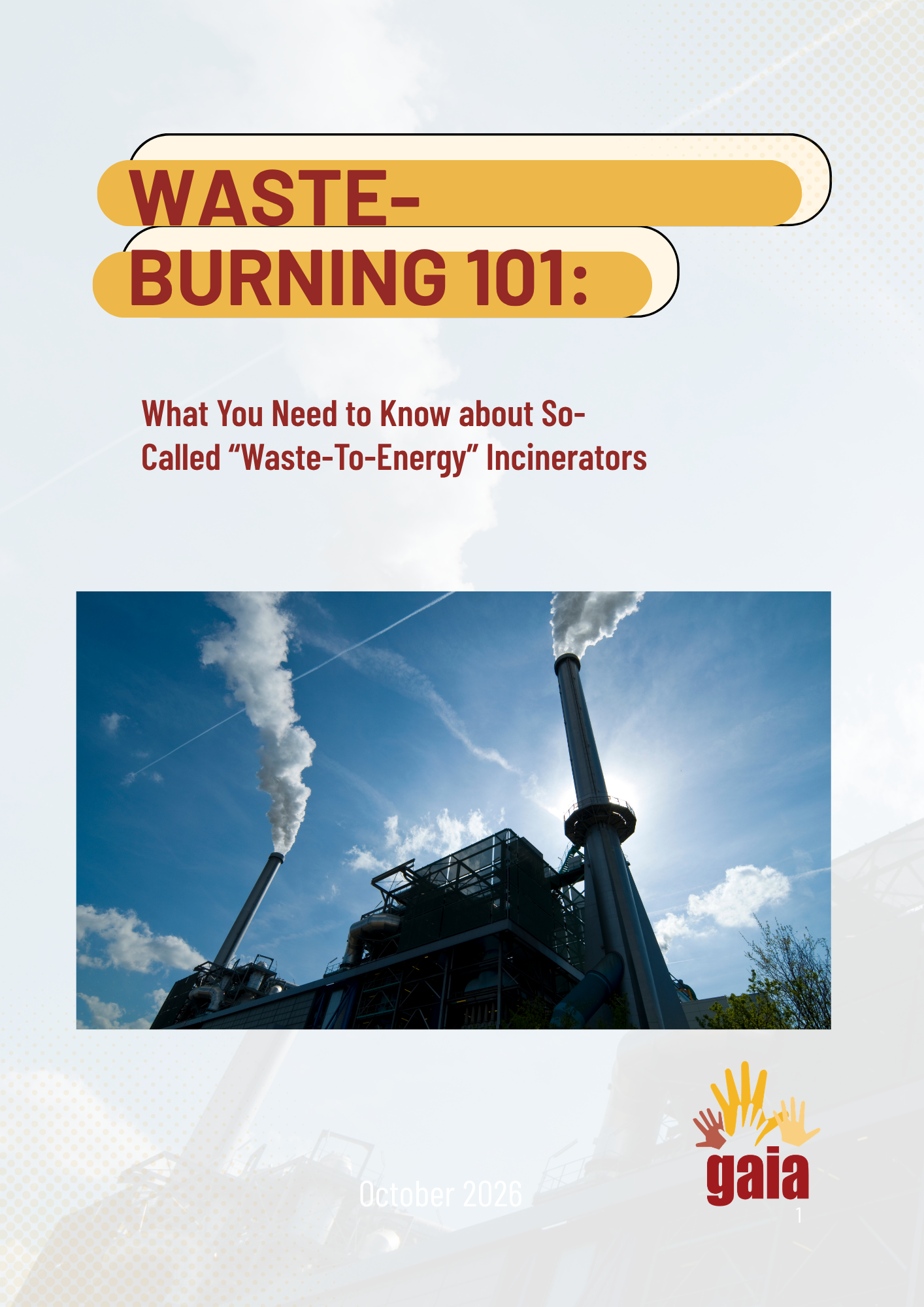
“Waste-to-energy” is the industry name for incinerators and other facilities that burn waste to generate electricity or heat. Waste-Burning 101 explains why these facilities are a pollution, climate and financial problem rather than a waste solution, and how communities can respond. For a deeper look, read Waste-to-Energy Incineration: The Facts, Costs & Risks.
What’s inside the guide
- Understanding waste incineration: mass-burn incinerators, pyrolysis and gasification, cement kilns and open burning.
- The global shift away from incineration: policy changes in Europe, Asia Pacific and the United States.
- Why incineration is a problem: impacts on health and the environment, the climate, waste reduction, public budgets and environmental justice.
- Better solutions: how zero waste strategies outperform burning.
- A community checklist: questions and actions for communities facing a proposed or existing facility.
Frequently asked questions about waste burning
What is waste-to-energy?
“Waste-to-energy” is a marketing term for incinerators and other thermal facilities that burn waste to produce electricity or heat. Burning does not make waste disappear: it turns it into air emissions, greenhouse gases and toxic ash.
What types of waste-burning facilities are there?
The main types are mass-burn incinerators, plastic pyrolysis and gasification plants (often marketed as “plastic-to-fuel” or “chemical recycling”), co-incineration of refuse-derived fuel in cement kilns, and open burning.
Is waste-to-energy renewable or climate-friendly?
No. Incineration is the most carbon-intensive way to manage waste because it burns fossil-derived materials such as plastic. Per unit of electricity, incinerators emit more greenhouse gases than coal.
How can communities stop an incinerator?
Communities can learn who owns and funds the facility, track its pollution, review permits and impact assessments, gather their own evidence, and organize around a clear goal such as denying permits or transitioning to zero waste.
Take action
Use this guide during the Global Week of Action to Stop Incineration, explore the incinerators documented in The Burn Book, and learn from 20 Inspiring Stories of Victory Against Incinerators. Organizing locally? See How Communities Can Refuse Incineration and Win.