One of the celebratory moments for civil society organizations is the COP29 Presidency declaration on reducing methane from organic waste. While the Declaration shows goodwill, whether and how it will be put into practice is yet to be seen. Thus, we can’t help but ask, is it a boon or a bane?

Join the Global Alliance for Incinerator Alternatives as civil society and frontline communities respond to the Declaration, share a set of environmental justice criteria to ensure waste methane reduction delivers truly transformative action, and call for a higher ambition on national action plan implementations.  

Date:  November 19, 2024

Time: 4 PM Baku/8 PM Manila / 2 PM Cape Town / 7 AM New York

Venue: Online

Live Streaming: GAIA LinkedIn

Registration:  https://us06web.zoom.us/webinar/register/WN_mtrrDTD9SvKpLzOZOzn54g

Speakers:

  1. Yobel Putra, GAIA Global Climate Policy Officer: What is missing in the Declaration 
  2. Mariela Pino, Member Support Program Coordinator, GAIA Latin America and the Caribbean: On Zero waste and agroecology in Latin America context 
  3. Desmond Alugnoa, Zero Waste & Climate Program Manager, GAIA Africa: On successful waste methane reduction programs in Ghana
  4. Jayakumar C, Executive Director, Thanal: On Kerala’s success stories on zero waste, agroecology, and climate action
  5. Dr. Shahriar Hossain, Founder, Environment and Social Development Organization: On Bangladesh NDC

Moderator: Yogi Tujuliarto, CNN Indonesia News Correspondent

____________

Media Contacts:

Sonia Astudillo, Senior Communications Officer, Global Alliance for Incinerator Alternatives (GAIA) Asia Pacific  I sonia@no-burn.org I +63 917 5969286

About GAIA  |  GAIA is a network of grassroots groups as well as national and regional alliances representing more than 1000 organizations from 92 countries whose ultimate vision is a just, toxic-free world without incineration. www.no-burn.org 

(Spanish translation below)

Watch the press con here.

November 15, 2024, Baku Azerbaijan—With the Global Methane Pledge Ministerial meeting happening today, climate activists and zero waste implementers say while it is good, it needs action with  higher ambition.  

In a press conference, the Global Alliance for Incinerator Alternatives (GAIA) reiterated that for the GMP to be successful, climate finance in the waste sector needs to radically shift from waste disposal towards scaling up and replicating already successful community-led zero waste initiatives that can achieve the greatest environmental and social justice benefits. In alignment with the Environmental Justice Principles for fast action on waste and methane to prioritize local economies and a just transition in the waste sector, upstream solutions such as waste prevention, source-separation of organic discards, composting and other methods can reduce solid waste methane emissions by as much as 95% by 2030

Soledad Mella, President, National Association of Recyclers of Chile (ANARCH) and member of the Secretariat of the Regional Network of Waste Pickers of Latin America RedLacre said that while waste pickers and workers have been at forefront of methane reduction in the waste sector through organics waste management, it is only recently that they are included in discussions that have tremendous impact on their livelihoods and future.  She pointed out the need to “participate and be included in decision-making at national and local levels, and for climate finance to be accessible to communities and waste workers.”

A community-led zero waste strategy in Dar Es Salaam  in Tanzania has successfully implemented  a daily collection of 1.74 tonnes of waste from 4.500 households achieving 95% diversion  from landfills – achieving a reduction of 16.4 tonnes of methane emissions per year. Ana Rocha, GAIA Global Plastics Director and Executive Director of Nipe Fagio said ““Through a zero waste approach, vulnerable groups– like women, youth, informal waste collectors, and indigenous populations– are included in waste management solutions, creating positive systemic change in the waste sector that will build the foundation for a socially-just and climate resilient city. 

Dr Leslie Adogame, Executive Director of the Sustainable Research for Action and Development (SRADev) in Nigeria warns of polluting waste disposal industries that the Global North continues to  inNigeria.  “Incineration is simply not the solution to Africa’s waste issues. Just as burning coal: it is a dirty source of energy and yet another form of waste colonialism, a wasteful imported technology. There are now alternative methods of dealing with waste which would avoid the main health hazards of incineration, would produce [or save] more energy and would be far cheaper in real terms, if the health costs were taken into account. Incineration is certainly a no-option for Africa”

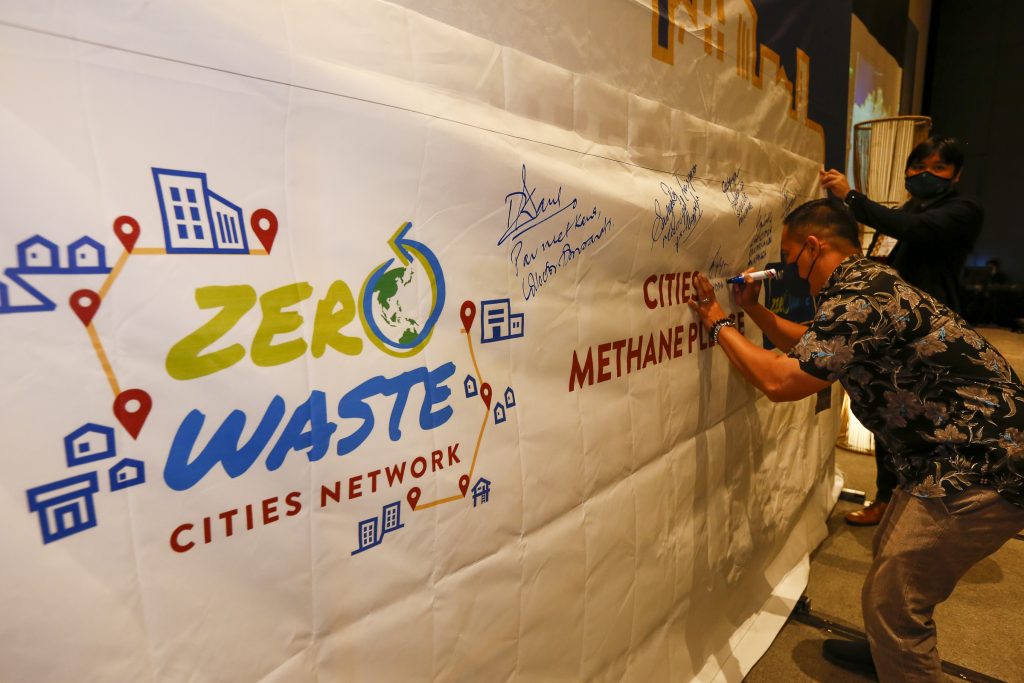
President of the Zero Waste Cities Network – Philippines and City of San Fernando, Pampanga Vice Mayor Benedict Jasper Lagman echoes the need to move away from incineration and instead channel resources to existing zero waste solutions that work, further urging other policymakers to invest in the right solutions. “We cannot miss this opportunity for the NDC review.  We need to prioritize zero waste in NDC 3.0.”  The Vice Mayor is also urging local policy makers to join the movement to build resilient communities and make a lasting impact by signing the Cities Methane Pledge and committing to 70% organic waste recovery in cities, villages, municipalities, and communities. 

(SPANISH TRANSLATION)

No desperdicien el compromiso mundial sobre el metano

Grupos de la sociedad civil del sector de los residuos piden más ambición en la aplicación del compromiso climático

Vea la rueda de prensa aquí.

15 de noviembre de 2024, Bakú, Azerbaiyán- Hoy se celebró la reunión ministerial del Compromiso Global sobre Metano, pero los activistas climáticos y quienes trabajan implementando iniciativas de basura cero afirman que, aunque es positiva, necesita medidas más ambiciosas.  

En conferencia de prensa, la Alianza Global para Alternativas a la Incineración (GAIA) reiteró que para que el Compromiso Global sobre el Metano tenga éxito, la financiación climática en el sector de los residuos debe cambiar radicalmente de la eliminación de residuos a la ampliación y replicación de iniciativas de basura cero lideradas por la comunidad que ya han tenido éxito y que pueden lograr los mayores beneficios ambientales y de justicia social. En consonancia con los Principios de Justicia Medioambiental para una acción rápida en materia de residuos y metano que dé prioridad a las economías locales y a una transición justa en el sector de los residuos, las soluciones aguas arriba como la prevención de residuos, la separación en origen de los residuos orgánicos, el compostaje y otros métodos pueden reducir las emisiones de metano de los residuos sólidos hasta en un 95% para 2030

Soledad Mella, Presidenta de la Asociación Nacional de Recicladores de Chile (ANARCH) y miembro de la Secretaría de la Red Regional de Recicladores de América Latina RedLacre dijo que, si bien los recicladores y los trabajadores han estado a la vanguardia de la reducción de metano en el sector de los residuos a través de la gestión de residuos orgánicos, es sólo recientemente que se incluyen en los debates que tienen un tremendo impacto en sus medios de vida y su futuro.  Señaló la necesidad de «participar y ser incluidos en la toma de decisiones a nivel nacional y local, y de que la financiación climática sea accesible para las comunidades y los trabajadores del sector de los residuos».

En Dar Es Salaam (Tanzania) se ha puesto en marcha con éxito una estrategia de residuos cero dirigida por la comunidad que recoge diariamente 1,74 toneladas de residuos de 4.500 hogares, logrando desviar el 95% de los residuos de los vertederos, lo que supone una reducción de 16,4 toneladas de emisiones de metano al año. Ana Rocha, directora de GAIA Global Plastics y directora ejecutiva de Nipe Fagio, ha declarado: «Con un planteamiento de basura cero, los grupos vulnerables -como las mujeres, los jóvenes, los recolectores informales y las poblaciones indígenas- se incluyen en las soluciones de gestión de residuos, creando un cambio sistémico positivo en el sector de los residuos que sentará las bases de una ciudad socialmente justa y resistente al cambio climático». 

El Dr. Leslie Adogame, Director Ejecutivo de Investigación Sostenible para la Acción y el Desarrollo (SRADev) en Nigeria, advierte sobre las industrias contaminantes de eliminación de residuos que el Norte Global continúa en Nigeria.  “La incineración simplemente no es la solución a los problemas de residuos de África. Igual que quemar carbón: es una fuente de energía sucia y una forma más de colonialismo de residuos, una tecnología importada derrochadora. Actualmente existen métodos alternativos para tratar los residuos que evitarían los principales peligros para la salud de la incineración, producirían [o ahorrarían] más energía y serían mucho más baratos en términos reales, si se tuvieran en cuenta los costes sanitarios. Sin duda, la incineración no es una opción para África».

El Presidente de la Red de Ciudades con Residuos Cero de Filipinas y Vicealcalde de San Fernando, Pampanga, Benedict Jasper Lagman, se hace eco de la necesidad de abandonar la incineración y, en su lugar, canalizar los recursos hacia soluciones de basura cero que funcionen, instando además a otros responsables políticos a invertir en las soluciones adecuadas. “No podemos desaprovechar esta oportunidad para la revisión de la NDC.Tenemos que dar prioridad a los residuos cero en la NDC 3.0».  El Vicealcalde también insta a los responsables políticos locales a unirse al movimiento para construir comunidades resilientes y tener un impacto duradero firmando el Compromiso de Metano de las Ciudades y comprometiéndose a recuperar el 70% de los residuos orgánicos en ciudades, pueblos, municipios y comunidades.

_______

Media Contact: Sonia Astudillo, Global Climate Communications Officer, Global Alliance for Incinerator Alternatives (GAIA) I sonia@no-burn.org I +63 917 5969286

About GAIA  |  GAIA is a network of grassroots groups as well as national and regional alliances representing more than 1000 organizations from 92 countries whose ultimate vision is a just, toxic-free world without incineration. www.no-burn.org 

Civil society calls for shift on climate financing for waste methane reduction and inclusion of environmental justice in NDC 3.0

Date:  November 15, 2024 Time: 13.00 – 13.30 PM Baku 

Venue: Media Center (Zone D) Live Streaming @ We Don’t Have Time

Since its launch at COP26 and now with 156 signatory countries, the Global Methane Pledge has driven an increasing momentum of opportunity to advance mitigation and adaptation in the waste sector, which contributes up to 20% of anthropogenic methane emissions. Many national governments are realizing the enormous potential  of tackling waste  methane emissions, resulting  from organic waste in landfills and dumpsites. However, despite this, the waste sector is severely underfunded. What is worse,  94% of climate finance for methane reduction goes to burning of waste instead of upstream zero waste solutions that offer the greatest mitigation potential as well as a wide range of co-benefits for people and the planet. 

For the Global Methane Pledge to succeed, climate finance in the waste sector needs to increase and radically shift from waste disposal towards scaling up and replicating already successful, community-led zero waste initiatives, in alignment with the Environmental Justice Principles for Fast Action on Waste and Methane. Civil society contribution and local community action, though often overlooked, is critical to ensure successful implementation of the Global Methane Pledge and the upcoming review of NDCs. 

Join the Global Alliance for Incinerators Alternatives for a press conference on how community-centered zero waste systems, policies, and practices contribute to fast action on methane reduction in the waste sector while ensuring just transition and integration of waste pickers and other impacted communities; and know why they need to be in this conversation. Key stories we bring to COP29:

  • In Nigeria, civil society opposes a planned incinerator project funded with 120M Euros from the Dutch government,  a waste disposal technology that is a disaster for climate and environmental justice. Speaker: Dr Leslie Adogame, Executive Director, Sustainable Research for Action and Development (SRADev), Nigeria 
  • Waste pickers are the real climate heroes and the de facto recycling system in the Global South. Speaker:Soledad Mella, President, National Association of Recyclers of Chile (ANARCH),
  • This year, the Zero Waste Cities Network Philippines was launched with 16 local government officials committing to include waste methane reduction in their climate action plans. Globally, 46  cities have signed the Cities Methane Pledge committing to recover 70% of organic waste by 2030. Speaker: Hon Benedict Lagman, Vice Mayor, City of San Fernando, Pampanga Philippines and President, Zero Waste Cities Network Philippines
  • In Dar Es Salaam, Tanzania, the groundbreaking zero waste initiative led by Nipe Fagio is demonstrating the potential of environmental justice to reduce methane and create jobs. Speaker: Ana Rocha, Global Plastics Policy Director, GAIA and Executive Director, Nipe Fagio

_______

Media Contact: Sonia Astudillo, Global Climate Communications Officer, Global Alliance for Incinerator Alternatives (GAIA) I sonia@no-burn.org I +63 917 5969286

About GAIA  |  GAIA is a network of grassroots groups as well as national and regional alliances representing more than 1000 organizations from 92 countries whose ultimate vision is a just, toxic-free world without incineration. www.no-burn.org 

Launched guidance to policy makers to integrate Environmental Justice Principles in the new round of NDCs 3.0 and beyond

(Spanish version below)

November 7, 2024, Baku Azerbaijan—In the run-up to COP29, members of the Global Alliance for Incinerator Alternatives (GAIA) are calling international delegates to channel greater funds toward urgently needed climate action for reducing waste methane emissions in alignment with environmental justice principles and leaving no one behind. 

Solutions are at the ready: waste methane emissions can be cut by as much as 95% by 2030 through low cost, scalable and easy to implement measures focused on waste prevention and the separation and treatment of organic waste. 

Moreover, measures grounded on the Environmental Justice Principles for fast action on waste and methane ensure the inclusion of waste pickers, takes the lead and builds capacity at the local level, moves away from waste disposal technologies, and commits to systemic change beyond GHG emission reduction. 

Today, GAIA is launching its NDC Checklist: Guidance on integrating waste and methane reduction into the NDCs 3.0 in alignment with Environmental Justice Principle  to support national delegates in utilizing climate solutions in the waste sector grounded on environmental justice principles. 

“The opportunity to deliver climate action is huge but it needs climate finance to increase, shift, and be accessible to existing successful community-led projects that lead to the greatest economic, social, and environmental impacts,” said Mariel Vilella, GAIA Climate Program Director. 

“As governments update their Nationally Determined Contributions (NDCs), it is critical to integrate the waste sector and prioritize waste methane solutions aligned with environmental justice principles, ensuring a just transition for impacted communities of wastepickers”, she added. 

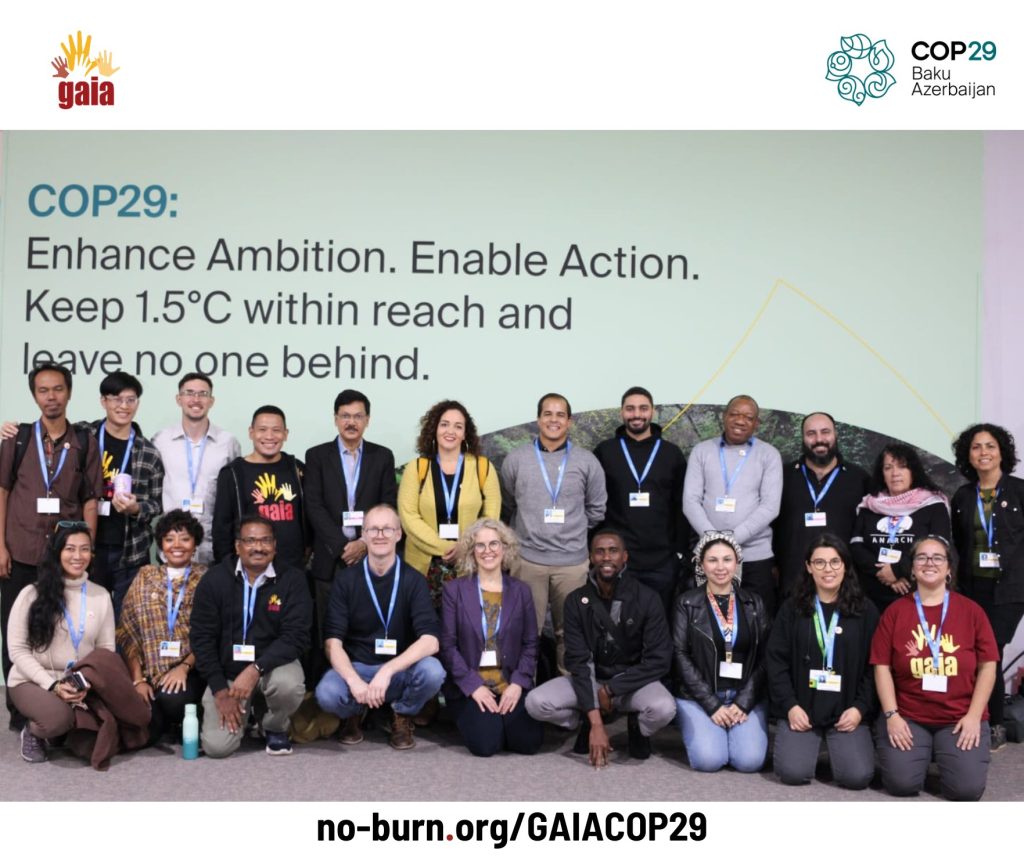
The 37 GAIA@COP29 Delegation of climate experts and zero waste implementers from across the globe will be sharing their stories and lived experience of successful community-led zero waste initiatives.  They are calling for a community-centered climate finance and waste pickers integration that ensures no one is left behind.  Specifically, the call for:

  • Commitment to substantial, transparent, and quality funding for urgent climate action in the Global South under the NCQG,
  • Increased climate finance in the waste sector and shift from harmful to impactful, supporting upstream solutions, with justice and equity at its core, 
  • Integration of the waste sector in NDCs 3.0, driving support for waste methane solutions and ensuring a just transition for impacted communities,
  • Recognition of municipal solid waste management as an essential public service and funding it accordingly, scaling-up and replicating successful community-led zero waste initiatives, and  
  • Support for a just transition in food systems to prevent food loss and waste.

Get to know the GAIA@COP29 Delegation and join them at several side events during COP.  For more information, visit no-burn.org/GAIACOP29.

 (SPANISH VERSION)

LA SOCIEDAD CIVIL HACE UN LLAMADO A LA COP29  PARA QUE LA FINANCIACIÓN CLIMÁTICA PARA EL METANO DE RESIDUOS NO DEJE A NADIE ATRÁS

7 de noviembre de 2024, Bakú, Azerbaiyán-En vísperas de la COP29, los miembros de la Alianza Global para Alternativas a la Incineración (GAIA) hacen un llamamiento a los delegados internacionales para que canalicen más fondos hacia la acción climática que se necesita urgentemente para reducir las emisiones de metano de los residuos en consonancia con los principios de justicia ambiental y sin dejar a nadie atrás.

Las soluciones existen: las emisiones de metano de los residuos pueden reducirse hasta en un 95% para 2030 mediante medidas de bajo coste, escalables y fáciles de aplicar, centradas en la prevención de residuos y en la separación y el tratamiento de los residuos orgánicos.

Además, las medidas basadas en los Principios de justicia ambiental para una acción rápida en materia de residuos y metano garantizan la inclusión de los recicladores, toman la iniciativa y crean capacidad a nivel local, se alejan de las tecnologías de eliminación de residuos y se comprometen con un cambio sistémico que va más allá de la reducción de las emisiones de GEI.

Hoy, GAIA lanza su Lista de verificación de las NDC / GAIA: Guía para la integración de la reducción de residuos y metano en las NDC 3.0 en consonancia con los Principios de justicia ambiental para apoyar a los delegados nacionales en la utilización de soluciones climáticas en el sector de los residuos basadas en principios de justicia ambiental.

«La oportunidad de llevar a cabo acciones climáticas es enorme, pero es necesario que la financiación climática aumente, cambie y sea accesible para los proyectos liderados por las comunidades existentes que han tenido éxito y que conducen a los mayores impactos económicos, sociales y ambientales», dijo Mariel Vilella, Directora del Programa Climático de GAIA.

«A medida que los gobiernos actualizan sus Contribuciones Determinadas a Nivel Nacional (NDC, por sus siglas en inglés), es fundamental integrar el sector de los residuos y priorizar soluciones para el metano de residuos alineadas con los principios de justicia ambiental, garantizando una transición justa para las comunidades de recicladores afectadas», añadió.

La delegación de GAIA@COP29, compuesta por 37 expertos en clima y ejecutores de iniciativas de basura cero de todo el mundo, compartirá sus historias y experiencias de éxito en iniciativas de basura cero lideradas por las comunidades.  Ademñas, hacen un llamamiento para que la financiación de la lucha contra el cambio climático y la integración de los recicladores se centren en la comunidad y garanticen que nadie se quede atrás.  En concreto, piden:

  • Compromiso de financiación sustancial, transparente y de calidad para la acción climática urgente en el Sur global bajo el NCQG,
  • Aumento de la financiación climática en el sector de los residuos y cambio de perjudicial a impactante, apoyando soluciones desde la fuente, con la justicia y la equidad en su núcleo, 
  • Integración del sector de los residuos en las NDC 3.0, impulsando el apoyo a soluciones para el metano de los residuos y garantizando una transición justa para las comunidades afectadas,
  • El reconocimiento de la gestión municipal de residuos sólidos como un servicio público esencial y su financiación en consecuencia, ampliando y reproduciendo con éxito las iniciativas comunitarias de basura cero, y  
  • Apoyo a una transición justa en los sistemas alimentarios para evitar la pérdida y el desperdicio de alimentos.

Conozca a la delegación GAIA@COP29 y participe en varios eventos paralelos durante la COP.  Para más información, visite no-burn.org/GAIACOP29

___________

Media Contact

Sonia Astudillo, Global Climate Communications Officer, Global Alliance for Incinerator Alternatives (GAIA) I sonia@no-burn.org I +63 917 5969286

About GAIA  |  GAIA is a network of grassroots groups as well as national and regional alliances representing more than 1000 organizations from 92 countries whose ultimate vision is a just, toxic-free world without incineration. www.no-burn.org and www.zerowaste.asia 

Climate finance for the waste sector is insufficient and the little there is, goes into the wrong pockets, invested in polluting technologies that are only profitable for the few. It needs to increase, shift, and be accessible to existing successful community-led projects that lead to the greatest economic, social, and environmental impacts.

As governments update their Nationally Determined Contributions (NDCs), it is critical to integrate the waste sector and prioritize waste methane solutions aligned with environmental justice principles, ensuring a just transition for impacted communities. 

A community-centered climate finance and waste picker integration ensures no one is left behind.  At COP29, we call on  policy makers and policy stakeholders, various financiers, such as MDBs, IFIs, development aid organizations, and philanthropic funders to: 

  • Commit to substantial, transparent, and quality funding for urgent climate action in the Global South under the new NCQG
  • Increase and shift climate finance in the waste sector from harmful to impactful, supporting upstream solutions, with justice and equity at its core 
  • Integrate the waste sector in NDCs 3.0, driving support for waste methane solutions and ensuring a just transition for impacted communities
  • Recognize municipal solid waste management as an essential public service and fund it accordingly, scaling-up and replicating successful community-led zero waste initiatives  
  • Support a just transition in food systems to prevent food loss and waste.

GAIA@COP29 delegation are climate experts and zero waste implementors whose experiences weave an inspiring story of climate action through methane emissions reduction in the waste sector, centered on environmental justice. Get to know us!

Learn from GAIA experts from around the globe how zero waste systems, policies, and practices could cut total methane emissions from the waste sector by 84% while ensuring a just transition for impacted communities. See you at COP29!

JOIN THE CITIES METHANE PLEDGE

Cities around the globe can take action to significantly reduce waste methane emissions and keep global warming within 1.5°C by committing to recover 70% of organic waste by 2030. Zero waste strategies, like source-separation and organic waste recovery can reduce solid waste methane emissions by up to 95%, while promoting green jobs for the community, supporting local farmers, and empowering waste pickers and waste workers, and ensuring a just and sustainable transition for them. We invite city officials to join the movement to build resilient communities and make a lasting impact. Know more about the Cities Methane Pledge.

Closing blog: Amist chaos and despair, waste and methane stay strong in the climate agenda

The appetite for waste methane solutions proved to be strong, yet providing finance and delivering its implementation in alignment with Environmental Justice Principles remains a critical homework for 2025. GAIA Climate Program Director Mariel Vilella reflects on the recently concluded #COP29. Read more.

GAIA@COP29 NEWS & UPDATES

MEDIA ADVISORIES

NEWS RELEASES

PRESS CONFERENCES

  • (November 15, 2024) Waste Not the Global Methane Pledge – A press conference on how community-centered zero waste systems, policies, and practices contribute to fast action on methane reduction in the waste sector while ensuring just transition and integration of waste pickers and other impacted communities; and know why they need to be in this conversation. Speakers: Ana Rocha, Global Plastics Director and Executive Director, GAIA and Nipe Fagio, Dr Leslie Adogame, Executive Director, SRADev, Nigeria, Soledad Mella, President, ANARCH, and Benedict Jasper Simon Lagman, President, Zero Waste Cities Network PH
  • (November 16, 2024) #BuyMoreTime – Landfills and Waste – Landfills emit large amounts of methane when organic waste such as food scraps, wood, cardboard paper and garden waste decompose in the absence of oxygen. An expert discussion on how to drastically reduce methane emissions from landfills and waste sites around the world. Speakers: Mariel Vilella, Global Climate Program Director, GAIA, Berliana Yusuf, Senior Analyst, Climate Policy Initiative, Charlotte Morton OBE, CEO, World Biogas Association, and Peter Dery, Director, Enviroment, Ministry of Enviroment, Ghana.
  • (November 19, 2024) COP29 Presidency Declaration on Reducing Methane from Organic Waste: Boon or Bane? – A press conference on civil society and frontline communities response to the Declaration, sharing of a set of environmental justice criteria to ensure waste methane reduction delivers truly transformative action, and call for a higher ambition on reducing waste methane. Speakers: Yobel Putra, Global Climate Policy Officer, GAIA, Mariela Pino, Waste Methane Climate Campaigner, GAIA Latin America and the Caribbean, Jayakumar C., Executive Director, Thanal, Dr. Shahriar Hossain, Founder, ESDO, and Desmond Alugnoa, Zero Waste and Climate Program Manager, GAIA Africa. Moderated by Yogi Tujuliarto, CNN Indonesia News Correspondent.

CLIMATE NEWSROOMS

NEWS COVERAGES

RESOURCES

Practical roadmaps and guidelines on implementing zero waste strategies:

Relevant external reference documents and processes from close and aligned allies:


October 2024

Por décadas se ha hablado de las emisiones de gases efecto invernadero, y finalmente le llega el turno al metano. Si bien pocas personas entienden el vínculo con los residuos, la producción antropogénica de este gas a partir de nuestra basura genera un quinto del total a nivel global. La era de la mitigación del metano nos brinda una tremenda oportunidad para dar un giro positivo al mundo de la gestión de los residuos sólidos (y líquidos) municipales. 

Técnicamente evitar la producción de metano es fácil, y las condiciones para hacerlo no son particularmente complejas de implementar: la acción consiste en separar nuestra basura en una fracción húmeda u orgánica (restos de la preparación de alimentos) y otra seca (lo que habitualmente hemos entendido como reciclable: vidrios, latas, tarros de conserva, papel, cartón, etc.). ¿Qué sistemas existen para llevar esa acción a la realidad?  compostar o vermicompostar en nuestras viviendas, trasladar nuestros residuos separados a puntos de acopio, esperar el día de recolección de orgánicos, entregar a los recicladores que están gestionándola, pagar por este servicio, o bajarlos a los contenedores diferenciados de nuestros edificios para que otros valoricen estos residuos a través del compostaje, digestión anaeróbica o el uso de larvas de mosca soldado negras. E idealmente cuando no existan otras vías de gestión, nos movilicemos para que así sea. Una acción simple como esta hoy resulta muy difícil de impulsar porque hemos naturalizado la acción de mezclar nuestros residuos, esconderlos en una bolsa negra y hacerlos desaparecer en donde sea que los desechemos.

Como en todas las Cumbres del Clima, la COP 29 en noviembre de 2024 en Azerbaiyán será un nuevo desafío para impulsar estrategias de reducción de gases de efecto invernadero.  A través del trabajo en residuos la humanidad tiene en sus manos una herramienta efectiva y rápida para disminuir las emisiones de metano y otros gases de efecto invernadero, mientras que el financiamiento climático podría abrir las puertas a soluciones justas, saludables y muy necesarias hoy en día para enfrentar la triple crisis planetaria. Esperamos que en esta COP 29 se vuelquen las miradas hacia los proyectos y el trabajo que se viene realizando en América Latina, con miras a la COP 30 que será en Brasil en 2025.

Porqué en el siglo XXI todavía no invertimos lo suficiente en gestionar adecuadamente (e inocuamente) los residuos 

Desafortunadamente una radiografía del sector de los residuos en América Latina incluye los siguientes aspectos: 

  • Por más que los ingenieros y grandes empresas, corporaciones y bancos han desarrollado y facilitado la instalación de soluciones tecnológicas, los problemas asociados a la generación de basura domiciliaria crecen y se descontrolan porque a la industria no se le ponen límites ni condiciones a su producción de residuos, ni al tipo de productos químicos utilizados en su fabricación, porque efectivamente la fiscalización de leyes y normas no se realiza, y porque también al consumidor se le invita a disponer sus residuos mezclados. 
  • Los municipios pasan a ser los responsables protagónicos de la recolección, tratamiento, y disposición final de residuos sólidos municipales, y quienes tienen que enfrentar la creciente producción de residuos en América Latina sin presupuesto, personal, equipo, ni capacidades específicas suficientes. Hasta ahora una gestión mejorada de los residuos municipales solamente ha sido fruto de voluntad política; o de insistencia e iniciativa impulsada desde las organizaciones de la sociedad civil.
  • Dado este creciente desafío,  es crucial pensar en el problema sistémico que origina las siguientes derivadas: zonas de sacrificio, emisiones de metano, contaminación de cuerpos de agua, y suelos; emisiones de material particulado, carbono negro y otros contaminantes orgánicos persistentes a la atmósfera, etc.
  • La gestión de residuos es una necesidad urgente que involucra actores de variados sectores. Desafortunadamente, hoy en día vemos que la solución más popular o la que la mayoría de los gobiernos locales considera como un mínimo deseable es una solución ”de final de tubería” (rellenos sanitarios, vertederos). Los grandes gestores de residuos solo se movilizan cuando la gestión representa un negocio, y por desgracia ese negocio, normalmente es contraproducente. Adicional a ello, la industria del plástico, envases, y embalajes, se jacta de proyectar crecientes utilidades, sin asumir ninguna responsabilidad ambiental.
  • Aunque parezca increíble, todavía se practica la quema de basura al aire libre inclusive en zonas urbanas, y se promociona o menciona el enterrar basura en zonas rurales como una solución a la gestión de residuos.
  • Existe creciente comercio transfronterizo de residuos plásticos, los que en general no tienen trazabilidad, y por lo tanto se desconoce su destino final una vez en los países de destino.
  • Mediciones hechas desde el espacio (1) indican que hay grandes emisiones de metano del sector de residuos, sobre todo en vertederos, pero también en rellenos sanitarios, y varios de los emisores más grandes detectados se encuentran en América Latina
  • Un gran eslabón que ha quedado relegado en el mundo de los residuos orgánicos es la pérdida y el desperdicio alimentario que contienen esos residuos. 
  • La presión por responder a esta crisis de residuos la está aprovechando la industria de la incineración en el sur global, que pretende convencer que es una solución mágica y ambientalmente inocua; un obstáculo que debiera salir del juego.

La necesidad de movilizar recursos hacia soluciones de bajas emisiones y justicia ambiental en el sector de los residuos municipales en América Latina 

Esperamos que todas las organizaciones y tomadores de decisión que asisten a la COP 29 entiendan que el financiamiento climático debe ir en la dirección correcta: en la implementación de proyectos que engloben soluciones de bajas emisiones, que generen verdadero impacto positivo en los territorios.

Trabajo con las comunidades que impulsan el compostaje autogestionado; Fundación El Árbol, Concepción, Chile

Impulsar la separación en origen, trabajando codo a codo con y para la sociedad, con la incorporación de los recicladores de base al sistema resulta clave en un momento en que muchos países (México, Argentina, Brasil, Chile) de LAC están viviendo el colapso de sus rellenos sanitarios o presionados ante la contaminación e impactos de los vertederos a cielo abierto, cuyas emisiones de metano se encuentran entre las más altas entre los vertederos del mundo.(2)

Apoyar la articulación social, las estructuras de gobernanza, el desarrollo de instrumentos y la diversificación de mecanismos de financiamiento, así como la implementación de obligaciones graduales, permitirá que los proyectos de gestión de residuos orgánicos sean atractivos y sostenibles en el tiempo. Y que pasemos de la huerta urbana comunitaria, al uso del compost, y la instalación de espacios de gestión de residuos orgánicos en jardines botánicos, en cadenas de hoteles, y en zonas vulnerables y estigmatizadas, inclusive. Debiera ser una posibilidad, por ejemplo, que los propios municipios, gestores comunitarios y recicladores de base puedan tratar los residuos orgánicos, y vender el compost que producen, y que el mercado no sea solamente para los privados. 

Intercambio entre organizaciones centroamericanas que trabajan en agroecología con comunidades de jóvenes, y mujeres indígenas CESTA (El Salvador) y CEIBA (Guatemala)

América Latina mantiene vivas importantes redes de agroecología capaces de generar alimentos sanos y libres de tóxicos. Una alta ambición en las políticas climáticas (NDCs por ejemplo) en el ámbito de los residuos significa ayudar a los municipios a implementar tecnologías sencillas y menos costosas, teniendo a mano todas las capacidades necesarias, generando los mecanismos de financiamiento para que nuestros países sean capaces de mantener dichas estrategias vivas en el tiempo de forma descentralizada tanto en zonas urbanas, como rurales, buscando la complementariedad de ambos territorios. De la mano con limitar la producción de plástico, y prohibir las falsas soluciones, como el reciclaje químico, los bonos de plástico, entre otras.

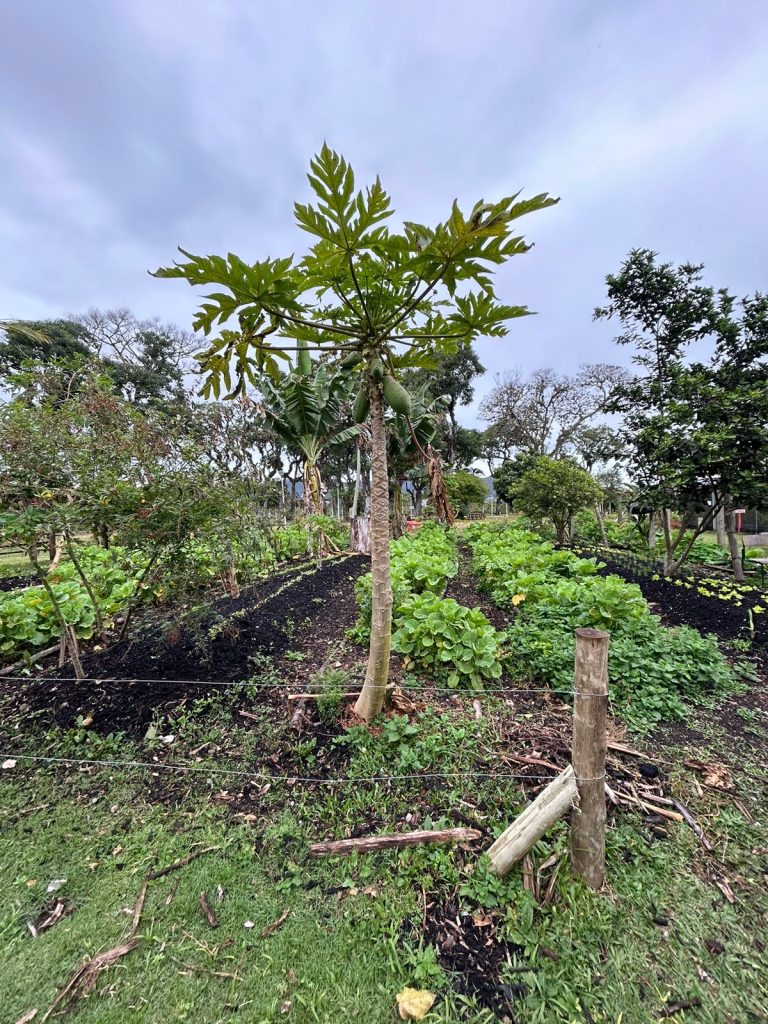
Huertas agroecológicas en sitios peri-urbanos

La seguridad y soberanía alimentaria encuentran un aliado en la recuperación de los residuos orgánicos para compostaje, o digestión anaeróbica, y su rol como componedores del suelo; mientras que la incineración y el enterramiento de dichos residuos así como de porciones importantes de alimentos en buen estado resulta una aberración en un continente como América Latina, donde más de 40 millones de personas aún sufren hambre.

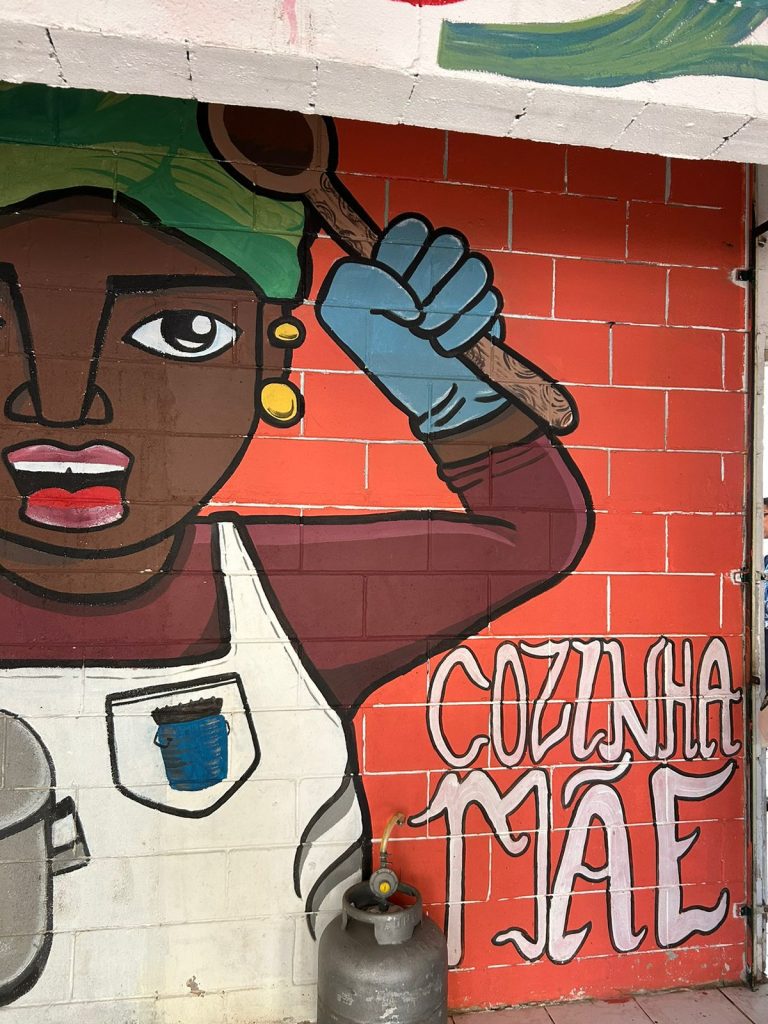
Cocina comunitaria de la iniciativa “Revolución de los baldiños” Complejo Montecristo, Florianópolis, Brasil

Si realmente queremos ambición en las NDC, la gestión de residuos orgánicos podría ser incluida, planificada e incentivada en espacios de planificación territorial que incorporen la mayor cantidad de estos aspectos: los territorios tienen sus dinámicas y flujos de residuos, aguas y energía que organizar. El flujo de bioresiduos (desde los residuos orgánicos alimenticios, pasando por los lodos de aguas residuales, hasta las podas y residuos verdes de jardinería, sin olvidar los residuos y rastrojos agrícolas) puede ser muy provechoso si sabemos planificarlo, y beneficiarnos de ello. Invertir en estos proyectos es invertir en la vida.

Para poder proveer insumos, ejemplos de buenas prácticas, y poner en vitrina ejemplos de proyectos que se enmarcan en el plan basura cero y justicia ambiental, desde GAIA estaremos ofreciendo varios eventos paralelos en la COP 29. Compartimos además mayor detalles del tipo de proyectos en que se enmarca la justicia climática: en este documento ofrecemos una panorámica de lo que están realizando nuestros miembros en América Latina. 

Camión municipal de recolección selectiva de residuos orgánicos, en Florianópolis, Brasil


(1) https://www.globalmethanehub.org/2023/09/20/global-methane-hub-google-org-rocky-mountain-institute-and-clean-air-task-force-team-up-to-reduce-methane-emissions-from-landfills-using-satellite-detection-technology/

(2) https://wastemap.earth/

Featuring Case Studies from Chile and Indonesia

September 26, 2024In 2022, over 1 billion tonnes of food waste were generated globally, amounting to around 132 kg per person (1). This pressing issue has severe social, economic, and environmental consequences, with the economic loss surpassing $1 trillion annually (2). Meanwhile, nearly 800 million people face hunger, and 15 million children under five suffer from malnutrition (3).

To address this critical challenge, the Global Alliance for Incineration Alternatives (GAIA) is launching a groundbreaking report that not only highlights the extent of global food loss and waste but also presents systemic solutions. The report emphasizes the importance of zero waste strategies to reduce methane emissions, enhance food recovery, and promote environmental justice.

Food waste, part of the organic waste stream, significantly contributes to the financial burden of municipal waste management programs and is a leading source of methane emissions. Methane, a potent greenhouse gas, has a warming potential over 80 times higher than carbon dioxide in the short term (4). The waste sector is responsible for nearly 20% of global methane emissions (5), underscoring the urgent need for sustainable solutions.

This report offers zero waste strategies that target the entire food value chain, from production and distribution to consumption. These strategies align with global efforts to curb methane emissions, particularly through food waste prevention and recovery, building environmental justice.

Highlighting Case Studies from Chile and Indonesia

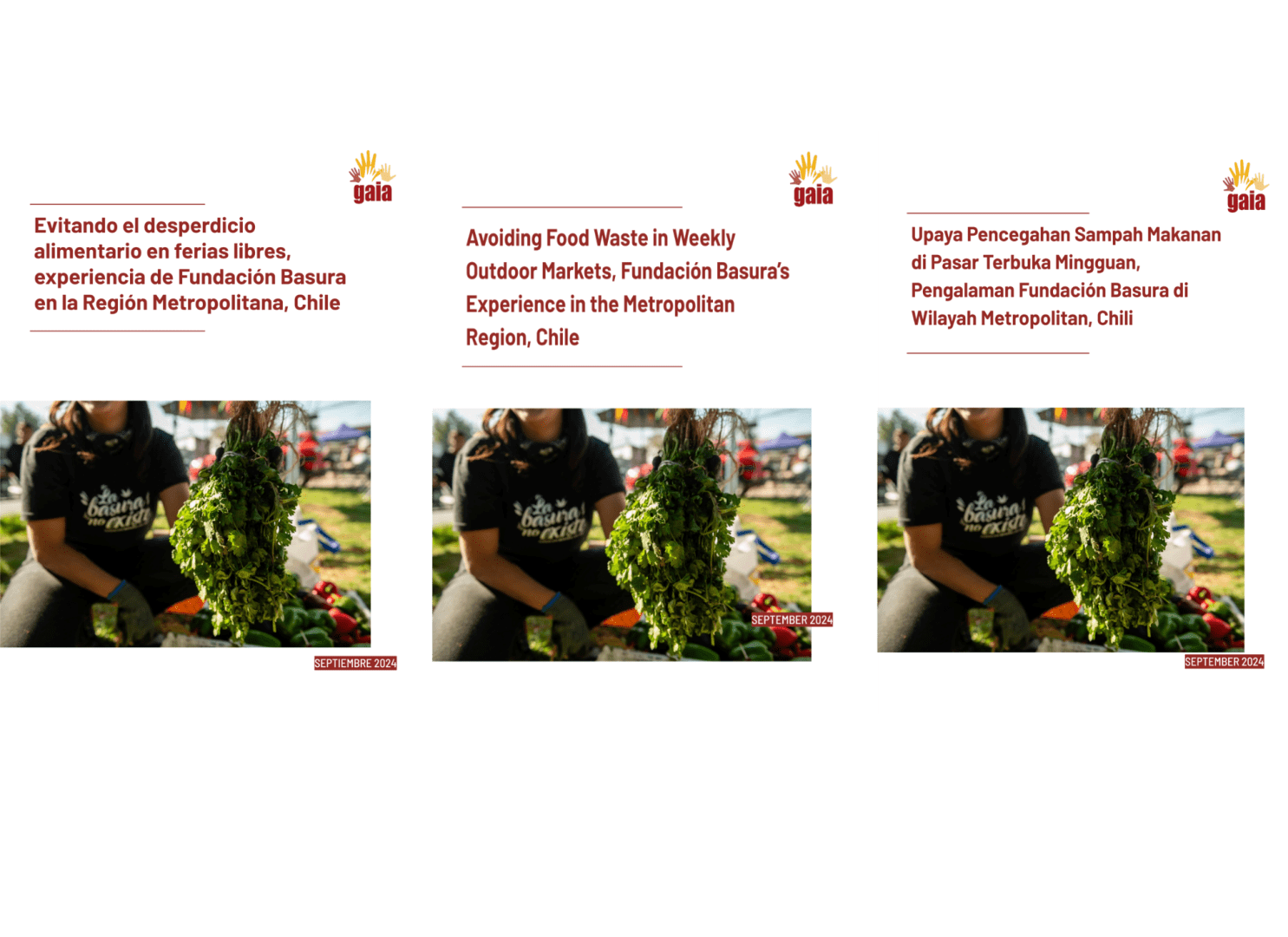
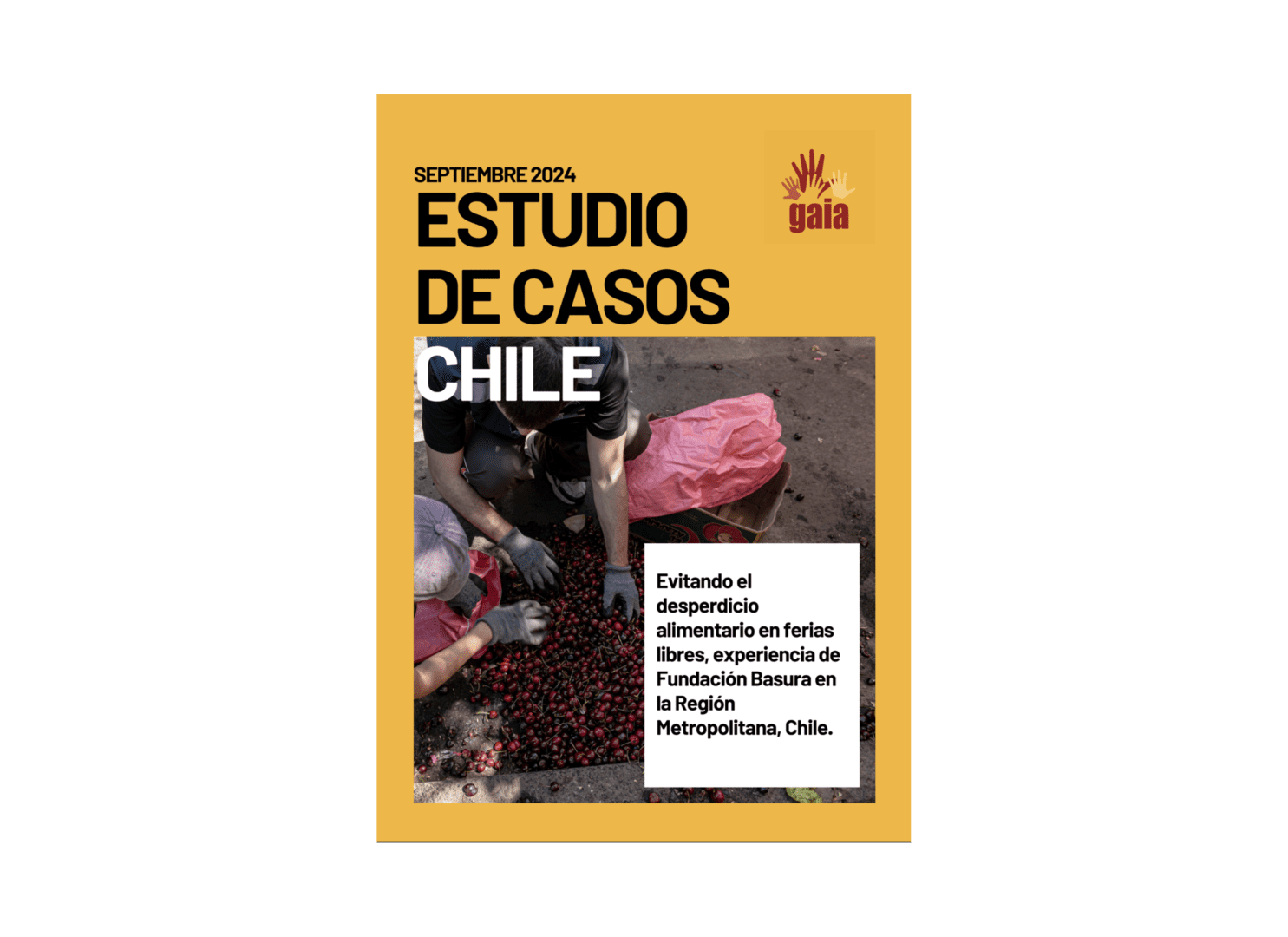
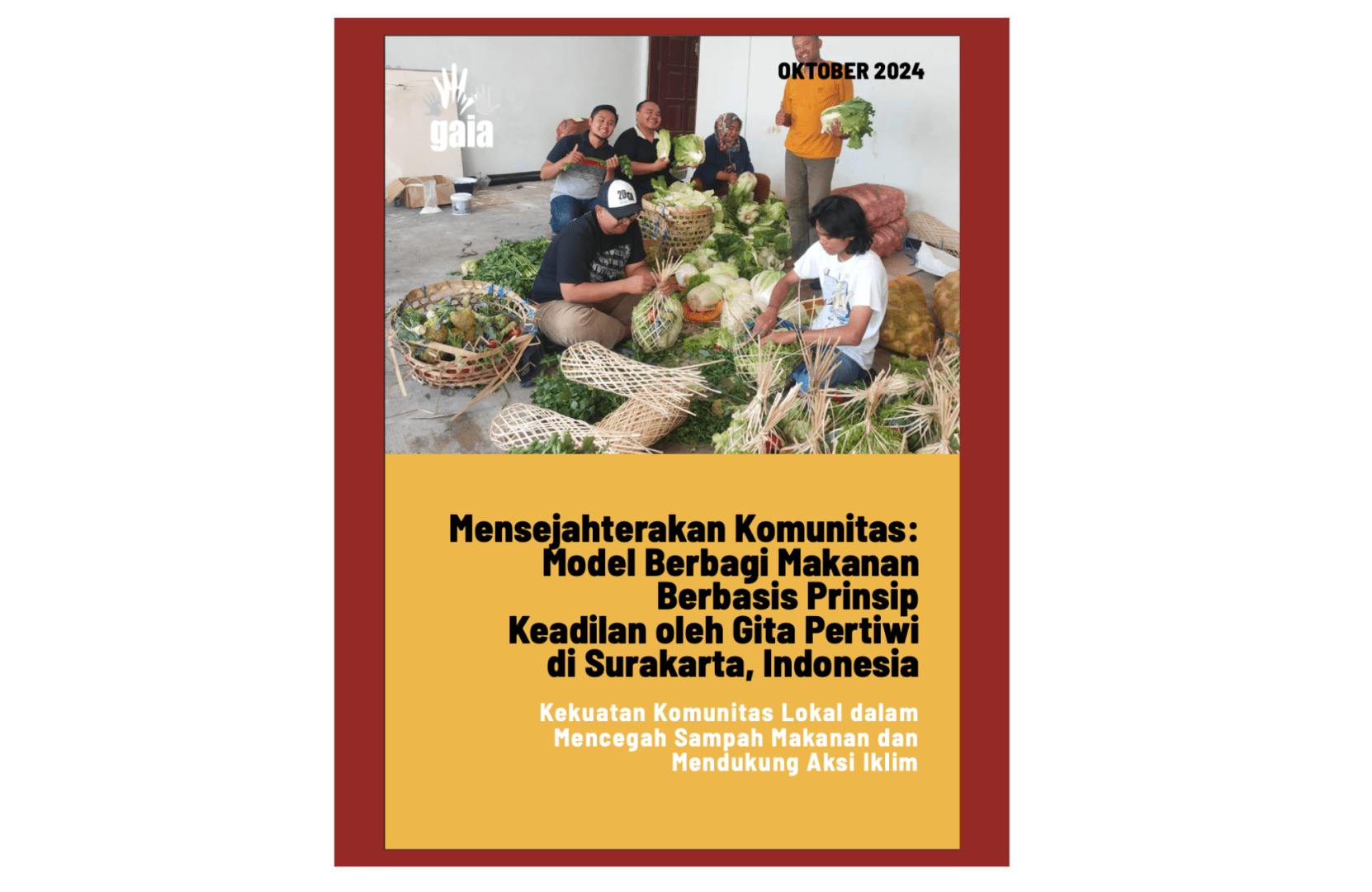
The report also includes case studies from Fundación Basura in Chile and Gita Pertiwi (to be launched in October) in Indonesia, showcasing community-led initiatives that demonstrate the success of zero waste principles in reducing food loss and waste.

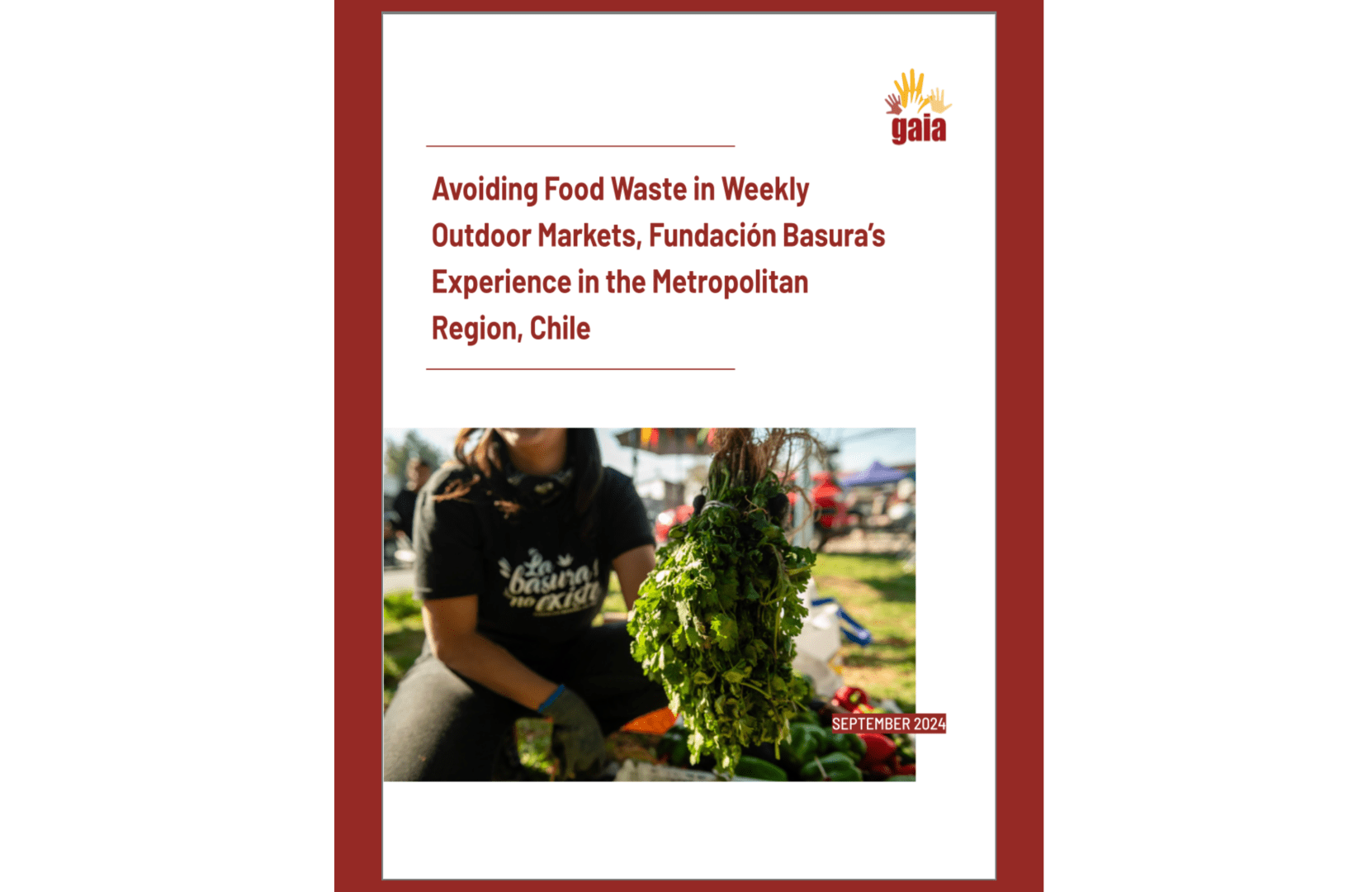
Fundación Basura’s Zero Food Waste Markets in Chile exemplify how food surplus can be redirected to those in need. Through a combination of policy support, grassroots action, and local engagement, Fundación Basura is leading the way in food redistribution and waste prevention in Latin America.

Gita Pertiwi’s Food Donation Program in Indonesia focuses on food recovery for vulnerable populations, promoting food security and reducing waste. By mobilizing local communities and forging partnerships with businesses, this initiative ensures that surplus food is efficiently redistributed.

Both case studies provide scalable models for addressing food loss and waste, which can be adapted to different contexts and regions worldwide. These initiatives represent the actionable pathways that can significantly contribute to global efforts to combat climate change, food insecurity, and inequality.

Call for Action

As the world grapples with multiple crises—climate change, loss of biodiversity, and poverty—addressing food loss and waste has never been more critical. The solutions outlined in the report are accessible, low-cost, and scalable. They offer a unique opportunity to reduce methane emissions while promoting social equity, food security, and environmental justice.

For more information visit http://no-burn.org/Cutting-Methane-Emissions-through-Zero-Food-Waste-Systems 

Launch Venues and Events

We are excited to unveil this report at several key events:

  • Sept 24: At Climate Week (New York City, USA) 
  • Sept 26: At the Regional Congress on Organics and Climate Change  Congress (Bengaluru, India)
  • Sep 29: On International Awareness Day on Food Loss and Waste where influencers from Chile and Indonesia will share their thoughts on food loss and food waste plus a social media campaign encouraging everyone to share their zero waste food recipes.

SOURCES

(1)  UNEP, 2024. World squanders over 1 billion meals a day – UN report. https://www.unep.org/news-and-stories/press-release/world-squanders-over-1-billion-meals-day-un-report

(2)  Íbid.

(3)  UNEP, 2024. Food Waste Index Report 2024. https://wedocs.unep.org/handle/20.500.11822/45230

(4)  Masson-Delmotte, Valérie, Panmao Zhai, Anna Pirani, Sarah L. Connors, Clotilde Péan, Sophie Berger, Nada Caud, et al., eds. 2021. Climate Change 2021: The Physical Science Basis. Contribution of Working GroupI to the Sixth Assessment Report of the Intergovernmental Panel on Climate Change. Cambridge, UnitedKingdom and New York, NY, USA: Cambridge University.Press. https://doi.org/10.1017/9781009157896.

(5)  UNEP, 2021. Global Methane Assessment. Benefits and Costs of Mitigating Methane Emissions. https://www.ccacoalition.org/resources/global-methane-assessment-full-report

Press Contact: 

Sonia G. Astudillo, Global Climate Communications Officer, sonia@no-burn.org, +639175969286

###

ABOUT GAIA

GAIA is a network of grassroots groups as well as national and regional alliances representing more than 1000 organizations from 92 countries. With our work we aim to catalyze a global shift towards environmental justice by strengthening grassroots social movements that advance solutions to waste and pollution. We envision a just, zero waste world built on respect for ecological limits and community rights, where people are free from the burden of toxic pollution, and resources are sustainably conserved, not burned or dumped. www.no-burn.org

ABOUT Fundación Basura

Fundación Basura is a nonprofit organization founded in 2015 to challenge the conventional notion that there is something called “garbage” because if you observe, nothing lacks usefulness in nature and all residual waste becomes part of a new virtuous cycle. Nevertheless, humanity created the concept of “garbage” to describe those elements that are no longer useful to them and that they discard without a second thought.

Fundación Basura seeks to address the climate crisis through waste to protect planetary health through three lines of action: education, consulting services, and political influence to generate a comprehensive and transversal impact on society. Through these central points of action, the organization has promoted projects such as the Zero Food Waste Outdoor Markets, to address food waste in open-air markets, eradicating small dumping grounds through the project Chao Basurales, working on a GreenWashing bill, implementing Zero Waste Academies, publishing books and implementing in-person and online gatherings to bring together experts from the world of waste in search of solutions to build a world without garbage.

ABOUT Gita Pertiwi

Gita Pertiwi is a non-governmental organization (NGO) focusing on environmental conservation and community development activities. The organization was established on December 21, 1991, and currently is based in Surakarta, Central Java Province. The organization envision a more just social order and environmental sustainability based on the values of justice, democratic participation, equality, accountability, and openness for all people without considering ethnicity, race, class, religion, and gender. Gita Pertiwi in particular has a mission to reduce the exploitation of marginalized groups, especially women, children and other vulnerable groups, while reducing environmental degradation. 

The vision and mission have four strategies; empowerment, networking, policy advocacy, and learning. The organization program and activities are geared towards empowering and developing critical attitudes of the community from the environmental and social justice lens. Currently, there are two main programs, namely Sustainable Agriculture and Sustainable City.

September 2024

In 2022, over 1 billion tonnes of food waste was produced worldwide—equivalent to around 132 kg per person. Food loss and waste is an urgent global issue with significant social, economic, and environmental implications. According to the United Nations Environment Programme, this represents an economic loss of more than 1 trillion dollars, affecting actors throughout the value chain, from small and large producers to vendors, distributors, and consumers. Outrageously, almost 800 million people suffer from hunger and 15 million children under five years old are malnourished. 

Embracing zero waste strategies linked with food systems is not merely an option—it is necessary to achieve significant climate and social benefits for current and future generations. Strong political action is needed to put in motion a pathway to systemically address food loss and waste. The moment to take bold, decisive action is now. Learn how communities work together to prevent food loss and waste through zero waste practices, while reducing methane emissions and keeping global warming below 1.5°C.

Case Studies

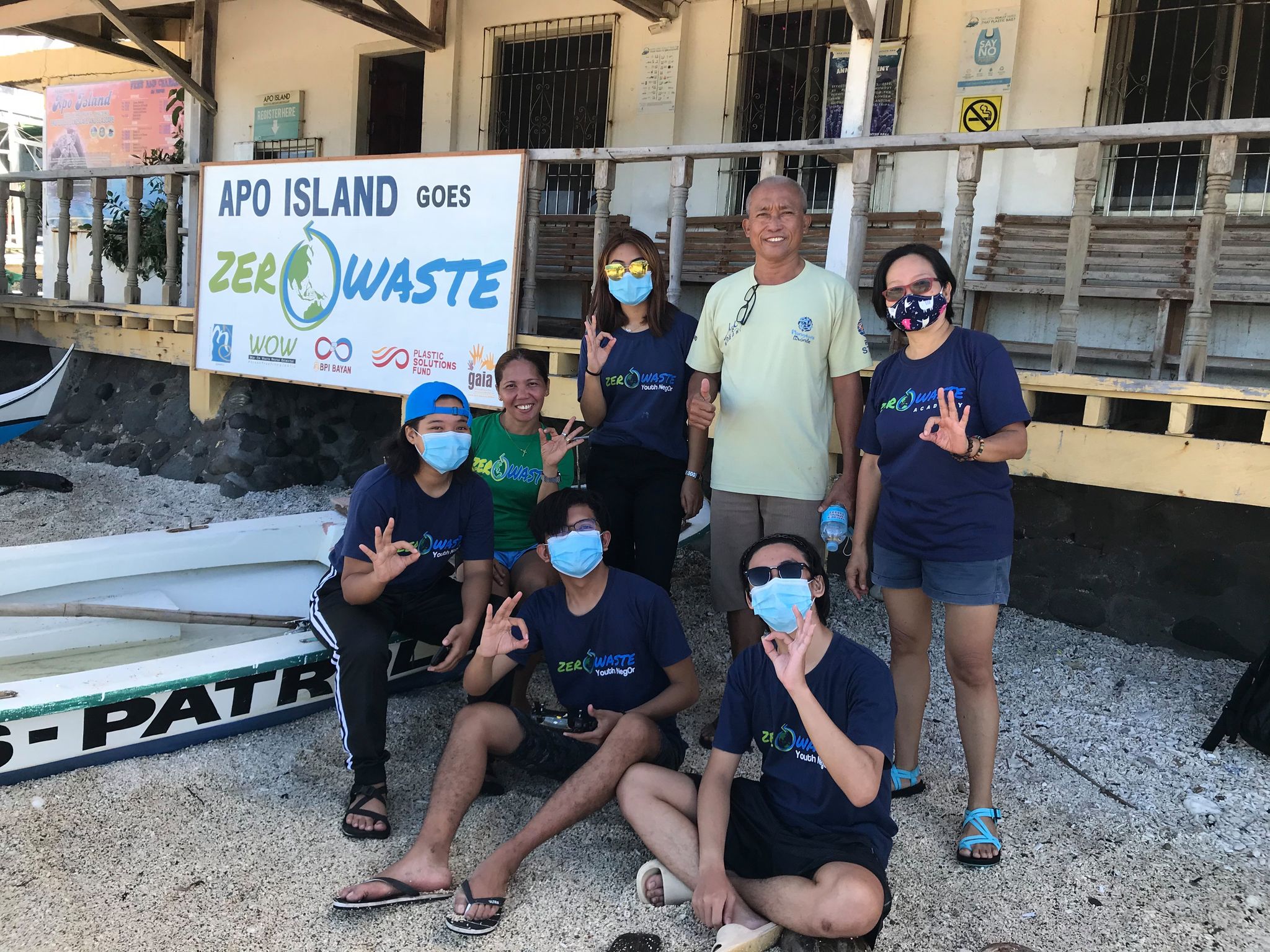
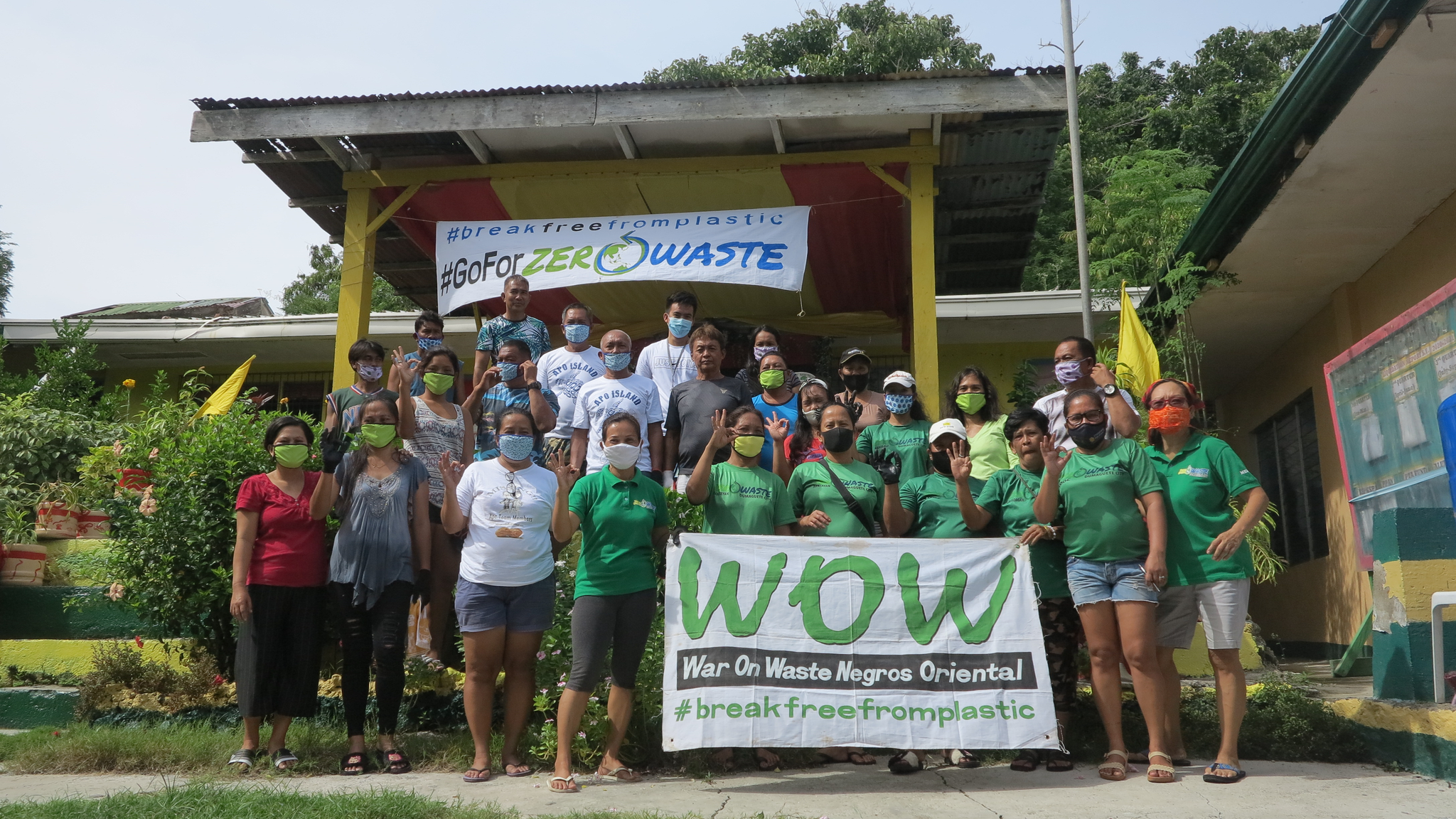
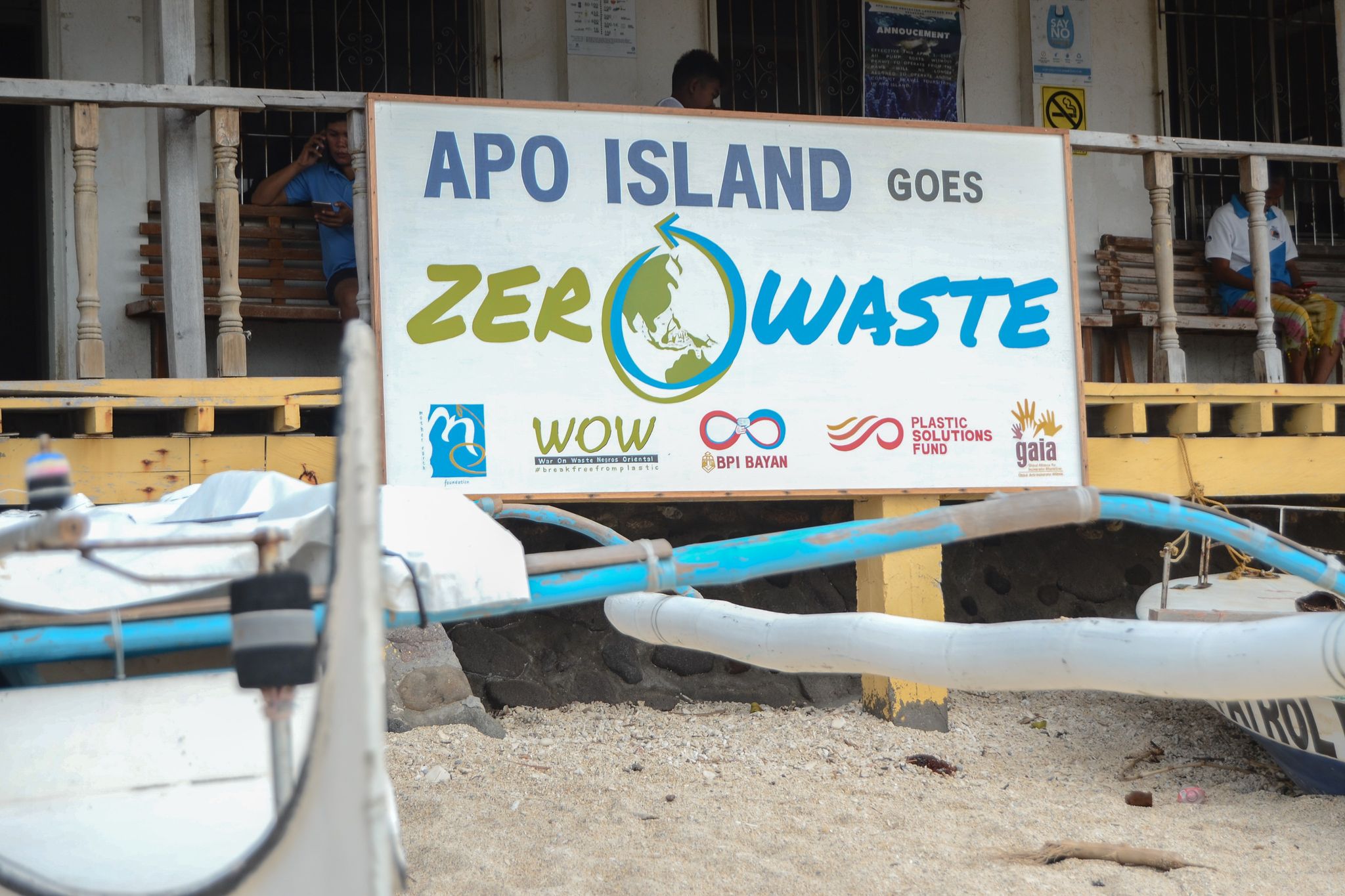
18 September 2021, Philippines–After a year of successfully sustaining its Zero Waste efforts, Apo Island—a barangay (village) in Dauin municipality in Negros Oriental, Philippines—is now tagged as the county’s 1st Zero Waste Island Barangay. 

“The community is proud of what they have achieved in their first year of adopting Zero Waste system and practices,” said Merci Ferrer of War On Waste (WOW) Negros Oriental-Zero Waste Cities Project Manager. She hopes that a better normal will be on the horizon soon, to better celebrate both small and big victories in the war on wastes. 

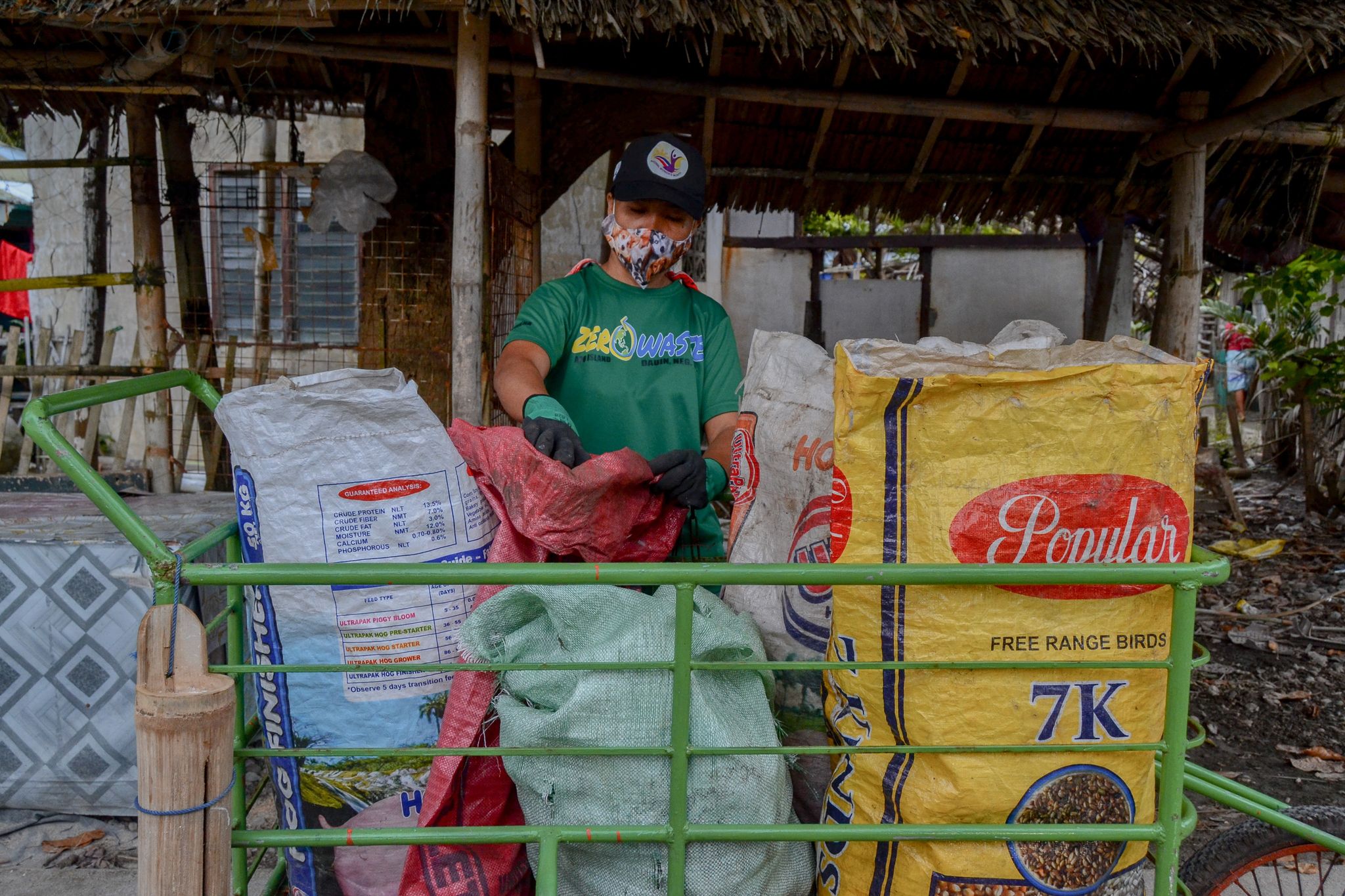
In 2020, Apo Island adopted waste management systems and practices introduced by WOW Negros Oriental in their community. These systems and practices include the conduct of information campaigns to inform households about proper waste segregation at source, implementation of door-to-door segregated waste collection system, use of composting methods, establishment of a decentralized Materials Recovery Facility (MRF) where organic wastes are composted and recyclables are aggregated for junk shop sale, and community members training on waste assessment and brand audits to identify waste composition to help design a waste management system that will work for the island.

“We want to recognize Apo Island for their amazing work on their Zero Waste journey. We want to acknowledge their hard work and to encourage them to sustain it and do more. This is unique: Apo Island is the first Zero Waste Island Barangay  in the Philippines,” said Froilan Grate, GAIA’s Asia Pacific Regional Coordinator.  
To date, Apo Island has seven waste workers, four MRFs, and an ordinance regulating single-use plastics in the island. Moreover, residents in the island now rinse and dry out their plastic bottles, food cans, and other recyclables before throwing them away. Further, residents in Apo Island, including waste collectors and barangay  leaders, expressed their steady support for the Zero Waste Cities Project (ZWCP).

However, despite the consistent efforts of Apo Island, its residents continue to face challenges caused by the inaction of its neighboring communities. “Even if we keep the surroundings clean, because we live on an island, there are times when the strong winds and waves bring the trash from our neighboring towns and communities  onto our shores. This is because our current comes from the northeast of the island; sometimes, the garbage from those areas end up in our shoreline,” said Mario Pascobello, a village leader from Apo Island.  

This 2021, WOW – ZWCP is working to have at least one Zero Waste store and Zero Waste Elementary and High Schools. WOW Negros Oriental also continues to support  Apo women through its livelihood project which uses discarded clothing.

The ZWCP is an initiative of GAIA Asia Pacific and 10 member collaborators from India, Indonesia, and the Philippines and is funded by the Plastic Solutions Fund. The project was brought in Apo Island by WOW Negros Oriental in their village in 2020. It is aimed at promoting decentralized solid waste management, enabling waste reduction policies, identifying and reducing wastes, and creating jobs in collecting and handling recyclable materials and processing at local recyclers, waste depots, and compost facilities.

Apo Island is a tourist destination in the Philippines known for its white beaches, dive spots, and marine sanctuary. It also serves as a living marine laboratory to several universities inside and outside of the country. 

[All photos courtesy of War on Waste – Break Free From Plastic Negros Oriental]

Check out Apo Island Goes Zero Waste video.

Media Contacts:

Sonia Astudillo, Communications Officer, Global Alliance for Incinerator Alternatives (GAIA) Asia Pacific  I sonia@no-burn.org I +63 917 5969286

Merci Ferrer,  Co-convenor, War on Waste Break Free From Plastic Negros Oriental – Philippines, Zero Waste Cities Project- Dumaguete – Negros Oriental, Philippines I merci.ferrer@gmail.com I +63 917 6553498

About GAIA  |  Global Alliance for Incinerator Alternatives is a worldwide alliance of more than 800 grassroots groups, non-governmental organizations, and individuals in over 90 countries whose ultimate vision is a just, toxic-free world without incineration. www.no-burn.org and www.zerowasteworld.org

About War on Waste – Negros Oriental  | WOW is a collective of NGOs, academics and individuals brought together by our passion to help solve waste management challenges in Dumaguete and Negros Oriental.