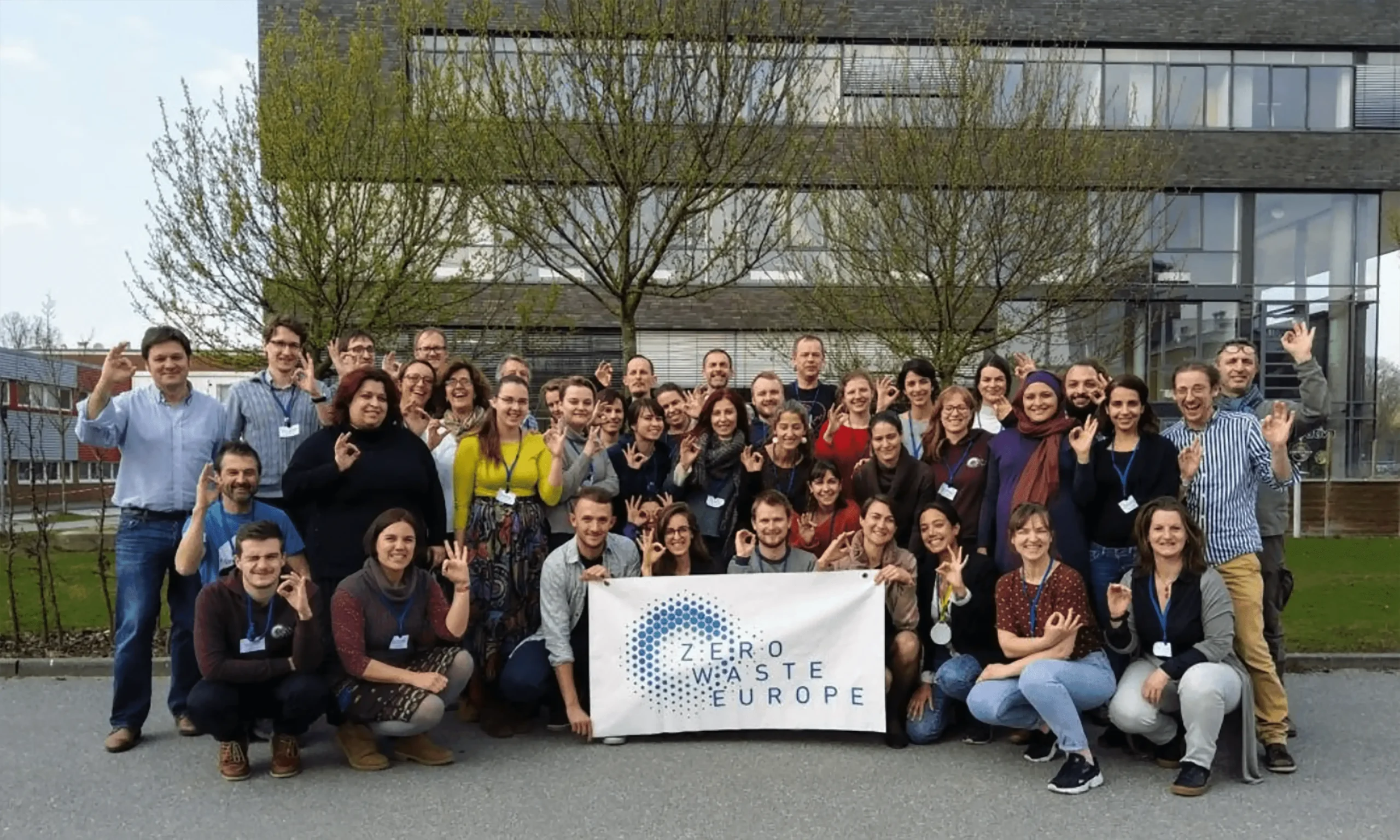


International Zero Waste Cities Conference
Across the globe, leaders are becoming increasingly aware of how crucial zero waste strategies like waste reduction, separate collection, and composting are to solving some of the biggest hurdles our civilization faces.
GAIA at the Global Plastics Treaty Negotiations
GAIA members are pushing for a strong plastics treaty that prioritizes plastic reduction and a just transition.
Nothing and no one should be disposable
GAIA is a global network working towards a just and waste-free world without incineration
Zero Waste to Zero Emissions
Our new report provides the clearest and most comprehensive evidence to date of how better waste management is critical to the climate fight.
down
From community organizers to frontline waste pickers to policymakers, GAIA unites and supports local environmental justice efforts around the world to end waste pollution and implement regenerative zero waste solutions.
Going Zero Waste
Going Zero Waste — fundamentally restructuring a system that sends billions of tons of waste a year into our land, oceans, and air — is about regeneration, respect for nature, and environmental and social justice. Implementing zero waste strategies such as waste reduction, composting, recycling, and industrial redesign leads to more resilient cities and communities, social equity, and healthier environments.
A Global community
Our Impact
From our founding meeting in 2000 that brought together 83 participants from 23 countries, GAIA has grown into an organization that unites hundreds of members in 90 different countries. Together, we have played a leadership role in influencing climate policy, building a world free from plastic, and supporting cities in their transition to zero waste.
million people live in cities with zero waste commitments
incinerators prevented
advisory board members from 27 countries
distributed to member organizations annually, and growing
OUR LATEST RESOURCES
Info Sheet: Battery Passports
The Battery Passports Info Sheet defines a battery passport as a digital twin of a physical battery, storing information including the battery’s label, manufacturing history and origin of its materials, battery chemistry, state of health, use history, safe handling and end-of-life (EoL) management. The battery passport is a means to support end-to-end traceability, and provides crucial information for decision-making on repair, reuse, repurposing and recyclability of the battery. A robust and widely accessible battery passport helps provide information critical to removing important barriers to repair, reuse, repurposing, recycling and end-of-life of EV batteries. A wide range of initiatives currently underway at sub-national, national and international levels are summarized in this Info Sheet, along with five key considerations for a fair and equitable battery passport and its relationship to environmental justice.
Download This Resource
Related Resources
Info Sheet: Electric Vehicle Battery Repurposing and Second Life
The right to repair infosheet highlights that EV batteries risk having an artificially limited life in the vehicle given significant barriers to repair. Repair of EV batteries is very challenging requiring additional training or specialized service centers, prohibitively costly meaning consumers or insurers opt to scrap rather than repair the battery, and sometimes impossible due to proprietary technology or battery construction. While there are some developing policies on consumer right to repair, much more robust and effective laws are needed to ensure consumer right to repair of EV batteries to counter premature obsolescence and automakers monopolizing repair services. Such a right to repair includes: (i) providing universal and fair access to diagnostic information, tools and repair manuals; (ii) removing firmware, software and hardware barriers preventing consumer repair; (iii) following standard design criteria for core components, and (iv) ensuring fair access to and availability of spare parts.
Download This Resource
Related Resources
Info Sheet: The Right to Repair of Electric Vehicle Batteries
The right to repair infosheet highlights that EV batteries risk having an artificially limited life in the vehicle given significant barriers to repair. Repair of EV batteries is very challenging requiring additional training or specialized service centers, prohibitively costly meaning consumers or insurers opt to scrap rather than repair the battery, and sometimes impossible due to proprietary technology or battery construction. While there are some developing policies on consumer right to repair, much more robust and effective laws are needed to ensure consumer right to repair of EV batteries to counter premature obsolescence and automakers monopolizing repair services. Such a right to repair includes: (i) providing universal and fair access to diagnostic information, tools and repair manuals; (ii) removing firmware, software and hardware barriers preventing consumer repair; (iii) following standard design criteria for core components, and (iv) ensuring fair access to and availability of spare parts.
Download This Resource
Related Resources
Info Sheet: Electric Vehicle battery Disassembly
The EV battery Disassembly infosheet exposes the complex and often destructive process with proprietary tools required to disassemble a typical EV battery with cell-pack-module construction for repair, reuse, repurposing or material recovery. A host of recommendations are outlined ranging from streamlining access to the battery pack and modules with linear design and standardized components, reducing toxic substances for worker safety, universal access to technical manuals and proprietary tools, industry standards for battery refurbishment, and simplifying battery construction for disassembly.
Download This Resource
Related Resources
Info Sheet: Understanding Basics of Electric Vehicle Batteries
While most attention on EV batteries concerns minerals such as their cobalt, nickel and lithium content, the battery basics infosheet highlights that these materials make up less than half of a typical 1,000 lb battery, meaning that any discussion of material recovery must look at the fate of all 1,000 lbs, and not only those materials that form the economic incentive for recycling. Moreover, the binders or glues critical to EV battery functionality and used throughout the battery structure are manufactured with Per- and Polyfluorinated Substances (PFAS), commonly referred to as “forever chemicals.” These binders pose dangerous risks to human and environmental health that must be considered in battery end-of-life, and fire-safe design alternatives must be prioritized.
Los riesgos del uso del término Economía Circular del Plástico en América Latina y el Caribe
La “economía circular del plástico” ha sido difundida como un modelo que busca imitar los ciclos de la naturaleza; disminuir o eliminar la extracción de recursos naturales y evitar los desechos y la contaminación en su ciclo de producción y uso. Sin embargo, en nuestra región ha sido utilizada para avalar prácticas y tecnologías de gestión de residuos que impactan seriamente la salud de las poblaciones y del ambiente.
Por lo anterior, desde nuestras organizaciones que pertenecen a la región de Latinoamericana y el Caribe y a la red de GAIA, BFFP, y IPEN vemos con preocupación que el término de economía circular pueda ser usado en el texto del Tratado Global de Plásticos para promover el uso de tecnologías de fin de tubería o falsas soluciones, y así deshacerse de los desechos plásticos con el argumento de ser procesos circulares, amigables con el medio ambiente e inocuos.
Download This Resource
Kanuni za haki kwa Mazingira: kwa Hatua ya Dharura kuhusu Taka na Methani
Download This Resource
Prinsip Keadilan Lingkungan: Untuk Aksi Cepat pada Sampah dan Metan
Download This Resource
Fundación Lenga: Kit de turismo hacia basura cero
Esta guía forma parte de un kit de herramientas diseñado para orientar a los actores del turismo, como tour operadores, alojamientos, restaurantes, hoteles, guías de turismo y la comunidad en general, hacia hábitos de Basura Cero. Su objetivo es facilitar la adopción de prácticas regenerativas y fomentar cambios significativos para reducir los residuos. La guía ofrece diversas herramientas estratégicas, desde métodos de gestión de residuos hasta consejos para sensibilizar a clientes y la comunidad local. Incluye pasos específicos para implementar la gestión de Basura Cero en operaciones turísticas, la fabricación sostenible de baños secos, y prácticas para guías y visitantes en zonas remotas.
Además, proporciona recursos adicionales disponibles a través de un código QR o directamente en en linktr.ee/fundacionlenga
Download This Resource
En el día mundial de la biodiversidad, organizaciones piden reducción de la producción de plásticos
Este 22 de mayo, en el Día Internacional de la Diversidad Biológica, las organizaciones de América Latina y el Caribe de GAIA vemos la ocasión para reflexionar y celebrar vivir en una de las regiones más biodiversas del planeta. Somos territorios ricos en bosques, mares, lagos, selvas, ríos, suelos fértiles, humedales, que albergan cientos de miles de seres vivos que nos permiten acceder a alimentos y agua dulce, esenciales para nuestra calidad de vida y que hoy son parte de la emergencia climática y de la pérdida de biodiversidad en la región que afectan al planeta.
Este año se celebra el Día de la Diversidad Biológica paralelamente con el período de negociaciones del Tratado Global de Plásticos, y es por esta razón que queremos hacer especial referencia a la contaminación por plásticos, por ser una clara amenaza a nuestra biodiversidad, suelos y agua de superficie y a la vida humana.
Textile Waste in Africa | Google Map
Textile waste poses significant environmental, economic and social challenges for Africa. Some of these impacts include: large amounts of textile waste in Africa’s landfills, and burning of textile waste causing air pollution and the release of toxic substances. Communities near landfills and waste disposal sites face health risks from contaminated water and air. Check out our Google Map on Textile Waste in Africa comprising of: textile waste legislation in Africa, second-hand textiles arrival points, hotspots where textiles end up in Africa and textile markets.
Map Key:
[Bin]: Landfills, dump sites, and textile waste hotspots.
[Shopping bag]: African markets flooded with imported second-hand textiles.
[Law hammer]: Legislation across African nations governing second-hand textile imports.
[Ship]: Ports inundated with shipments of second-hand textiles.
Got intel to share or a spot to pinpoint? Reach out to Andrea Dixon, our Africa Programs Associate (andi@no-burn.org).
Download This Resource
Electric Vehicle Battery Repair, Reuse and Repurpose Teach-In Recap
GAIA’s February 2024 Electric Vehicle (EV) Battery Repair, Reuse and Repurpose Teach-In helped GAIA members and partnering organizations learn more about the EV battery supply chain, how they are recycled, and why design for repair, reuse, and repurpose is so important. This publication compiles the key takeaways for each panel.
Download This Resource
Our Latest News
Read the most pressing stories on environmental protection, sustainable development, and human rights.
Our Latest News
Read the most pressing stories on environmental protection, sustainable development, and human rights.
Stay Connected
Sign up for our Global Newsletter to stay up today on our cross regional work.