FOR IMMEDIATE RELEASE: September 30, 2025

Colorado Stands with Communities, Stops Industry’s False Recycling Claims

As explained in a recently released letter describing its position, CDPHE “determined that it is not appropriate to use the mass balance credit method with free allocation – fuel exclusion when calculating [Post-consumer Recycled Content] PCR content” as it “does not verify the actual PCR content contained within a material” in the Producer Responsibility for Paper and Packaging program (HB 22-1355). This momentous Colorado decision can be an example for other states and countries to disallow ‘free allocation’ mass balance accounting — a type of greenwashing accounting method and false advertising corporations use to increase their profit margins and mislead consumers about the actual recycled content of the products they purchase.

The Colorado State Advisory Board deliberated for months over the question of whether to allow this controversial accounting method, ultimately issuing a statement of concern. CDPHE subsequently made an official determination that “free allocation” isn’t compliant with state law.

“We are elated by this decision to remove greenwashing from recycling methods. All communities must be protected from hazardous and toxic industries that pollute our environment,” said Brian Loma, Hazardous Materials and Waste Diversion Advocate at GreenLatinos Colorado. “GreenLatinos, along with our partner organizations, are excited to celebrate this significant decision by the Colorado Department of Public Health and Environment and hope that this decision will have a positive impact on communities nationwide and around the world. We continue to do everything we can to educate our members, partners, and other consumers about the dangers corporations cause when intentionally using greenwashing methods to deceive consumers.”

“Colorado just took an important step towards ending a little-known but highly consequential corporate greenwashing scheme for recycled plastic. While there is still more that needs to be done, communities and consumers throughout the state will breathe easier because of this decision,” said Renée Sharp, Director of Plastics and Petrochemical Advocacy, Natural Resources Defense Council (NRDC).

“People have an understanding of what recycling plastic looks like and what recycled content means. Free allocation mass balance uses opaque accounting methods that mislead consumers,” said Jessica Roff, Plastics and Petrochemicals Program Manager at GAIA.

“Colorado listened to environmental justice groups, residents, and experts, and made the right decision to stop industry from using this method of greenwashing harmful practices that are not actually recycling. This is a great first step, and we hope other municipalities will follow suit and then all will keep improving.”

“As a mission-based recycling organization, we see this decision as a win for transparent and reliable recycling. The public made it clear that unverifiable accounting practices have no place in our system. By rejecting these approaches, the State helps ensure that Colorado’s recycling system remains something people can trust,” said Rachel Setzke, Senior Policy Advisor at Eco-Cycle.

“I was thrilled with this important decision by CDPHE,” said State Senator Lisa Cutter, sponsor of HB22-1355. “Burning plastics for fuel is an inefficient and unproven method of recycling plastics, exposing the communities where these plants are located to extremely hazardous air quality. We must not leave the door open for the continued perpetuation of these toxic plastics, and this is a great step in that direction.”

Link to Press release: https://www.greenlatinos.org/colorado-stands-with-communities-stops-industrys-false-recycling-claims/

Press contacts:

María Guillén, Communications & Network Development Manager, GAIA

mariaguillen@no-burn.org 

Edder DÍaz-MartÍnez, Communications Director, GreenLatinos

edderdiazmartinez@greenlatinos.com

###

About GreenLatinos

GreenLatinos (NOTE: GreenLatinos is ONE WORD) is an active comunidad of Latino/a/e leaders, emboldened by the power and wisdom of our culture, united to demand equity and dismantle racism, resourced to win our environmental, conservation, and climate justice battles, and driven to secure our political, economic, cultural, and environmental liberation.

About Eco-Cycle
Founded in 1976, Eco-Cycle is one of the nation’s oldest and largest nonprofit recyclers and advocates for Zero Waste solutions, and is a founding member of the Alliance for Mission-Based Recycling (AMBR).

About GAIA
The Global Alliance for Incinerator Alternatives (GAIA) is a member-based, environmental justice network working at the intersection of waste, climate, and justice. In the United States and Canada, GAIA supports grassroots organizations that advance zero waste solutions, challenge the plastics and petrochemical industries, reduce methane emissions, and promote safe, sustainable practices for electric vehicle battery production and recycling.

Governor Newsom’s new packaging regulations are a cop out, advocates say

FOR IMMEDIATE RELEASE: September 9, 2025

Sacramento, CA — When California passed Senate Bill 54 in 2022, the world’s fifth-largest economy had enacted a bold law to hold plastic polluters accountable, cut waste at the source, and relieve taxpayers of skyrocketing costs for managing single-use packaging. SB 54 promised nothing short of a transformation: shifting responsibility away from the public and onto the corporations that profit from disposable plastics, reducing the $420 million spent by local ratepayers on litter prevention and removal. And given the worsening plastic pollution crisis, with microplastics found everywhere from the deepest ocean trenches to our brains, we can’t afford for SB 54 to fail.

But three years later, the Newsom Administration’s draft regulations threaten to unravel that promise. Governor Gavin Newsom ordered a rewrite of the first draft in March 2025, citing concerns about costs for businesses and consumers. Instead of upholding the law, the second set of rules issued by CalRecycle are riddled with loopholes that invite greenwashing, funnel money into unproven and harmful technological “solutions,” and shield industry from any meaningful shift from the status quo. Cost efficiency also means not wasting public money on costly “chemical recycling” schemes.

The result: a hollowed-out program that fails California communities, the environment, and ratepayers. That is why legislators, environmental and environmental justice organizations remain staunchly opposed to the proposed regulations as drafted, and are instead calling for the implementation of the law as intended – without creating industry loopholes or further imperiling the communities already hardest hit by pollution.

Notable Loopholes

“Chemical recycling”: SB 54 was explicitly written to ensure that harmful “chemical recycling” technologies are not considered recycling for purposes of the law. However, the law’s requirement that recycling technologies not produce “significant amounts of hazardous waste” has been rendered nearly meaningless in the updated regulations, which replace a detailed scientific process with a statement that a facility meets these criteria if the hazardous waste “is handled and disposed of in compliance with an applicable permit”.  

So-called “chemical recycling” technologies are a cluster of costly, toxic, and climate-harming technologies – mainly pyrolysis, which is incineration under the federal Clean Air Act – pushed by the petrochemicals industry to rescue the tarnished image of plastic recycling and perpetuate single-use plastics. The changes to the regulations are in stark contrast to the California Attorney General’s suit against ExxonMobil filed last September, asserting that it “deceptively promotes “advanced recycling” as the solution to the plastic waste and pollution crisis”

Food packaging: The draft regulations also permanently “categorically exclude” packaging for food or agricultural commodities based on “regulations, rules, or guidelines” issued by the USDA or FDA, whether or not these regulations legally preempt California. In effect, California would allow the Trump administration to issue a “guideline” permanently excluding food and agricultural packaging.

Advocates have issued the following statements in response to the draft regulations issued by Newsom administration:

“California’s SB 54 promised to shift responsibility for plastic pollution away from overburdened communities and onto the producers of the toxic plastic packaging themselves. Instead, the new regulations carve out loopholes that let polluters off the hook, once again sacrificing the health of environmental justice communities in order to grow industry profits. Californians need real solutions that put communities and health ahead of industry interests.” – Melissa Aguayo, Global Co-Coordinator, Break Free From Plastic (BFFP)

“This regulation reads like a cop-out to the petrochemicals industry. It ignores warnings from the environmental community and will see dirty, toxic incineration facilities mushrooming across California, at a great cost to the wallets and health of taxpayers. This isn’t what California needs – what we need is regulations that are faithful to SB 54 and a ban on the whole cluster of dirty technologies that is “chemical recycling”.”Sirine Rached, Senior Policy Advisor, Global Alliance for Incinerator Alternatives (GAIA) 

“California is on the verge of blowing its opportunity for transformational change by adopting regulations that effectively perpetuate the status quo. We are incredibly disappointed to see CalRecycle’s deliberative process be overridden by industry lobbying and political ambition.” – Nick Lapis, Director of Advocacy, Californians Against Waste


Press contacts:

Brett Nadrich, US Communications Officer, Break Free From Plastic

brett@breakfreefromplastic.org

María Guillén, Communications & Network Development Manager, Global Alliance for Incinerator Alternatives (GAIA)

mariaguillen@no-burn.org

###

About BFFP #BreakFreeFromPlastic is a global movement envisioning a future free from plastic pollution. Since its launch in 2016, more than 2,700 organizations and 11,000 individual supporters from across the world have joined the movement to demand massive reductions in single-use plastics and push for lasting solutions to the plastic pollution crisis. BFFP member organizations and individuals share the values of environmental protection and social justice and work together through a holistic approach to bring about systemic change. This means tackling plastic pollution across the whole plastics value chain – from extraction to disposal – focusing on prevention rather than cure and providing effective solutions. www.breakfreefromplastic.org.

About GAIA — The Global Alliance for Incinerator Alternatives (GAIA) is a member-based, environmental justice network working at the intersection of waste, climate, and justice. In the United States and Canada, GAIA supports grassroots organizations that advance zero waste solutions, challenge the plastics and petrochemical industries, reduce methane emissions, and promote safe, sustainable practices for electric vehicle battery production and recycling.

FOR IMMEDIATE RELEASE: August 11, 2025

Berkeley, CA — The Global Alliance for Incinerator Alternatives (GAIA) is deeply disturbed by the U.S. government’s decision to incinerate $9.7 million worth of vital reproductive health supplies funded by the U.S. Agency for International Development (USAID), including contraceptives such as birth control pills, shots, implants, and IUDs. This action, ordered under the Trump administration and now moving forward, not only wastes critical resources but also undermines the fundamental human right to reproductive care. The government is set to spend more than $160,000 to burn these essential medical supplies at a facility in France.

This follows the recent incineration of 500 tons of taxpayer-funded emergency food aid, intended to feed starving children in Afghanistan and Pakistan. In both cases, the choice to burn life-saving aid represents a profound waste that deepens human suffering, denies dignity, and withholds care from those who need it most.

While GAIA’s core mission is to end waste incineration, our vision of environmental justice recognizes that all forms of injustice are interconnected. From our work around the world, we know that incineration is never a neutral act. It is a toxic, unjust, and shortsighted method of disposal that not only harms public health but also accelerates climate change and reinforces systems of oppression. Burning life-saving aid is a political decision. 

We stand in solidarity with reproductive justice advocates, hunger relief organizations, and global health movements calling for an immediate halt to burning these needed resources in planned incinerations, and urgent delivery of these supplies to the communities that need them most. True justice requires that we see and fight all injustices together, because our struggles are bound, and so is our liberation.

###

GAIA is a worldwide alliance of more than 1,000 grassroots groups, non-governmental organizations, and individuals in over 90 countries. With our work, we aim to catalyze a global shift towards environmental justice by strengthening grassroots social movements that advance solutions to waste and pollution. We envision a just, zero waste world built on respect for ecological limits and community rights, where people are free from the burden of toxic pollution, and resources are sustainably conserved, not burned or dumped. 

Press contact:

María Guillén, Communications & Network Development Manager

mariaguillen@no-burn.org

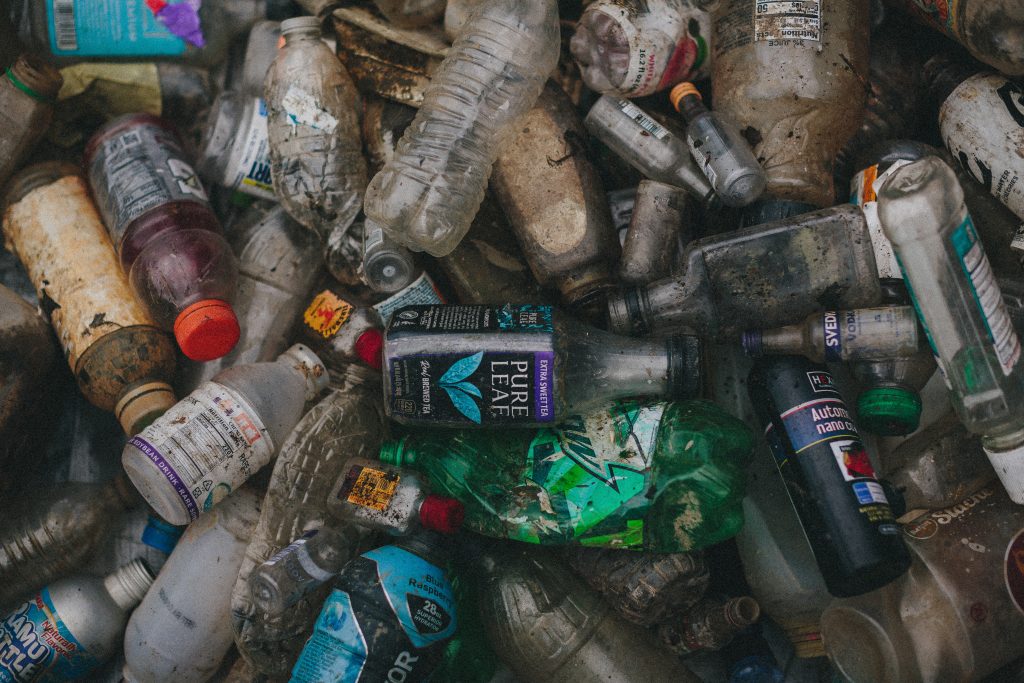
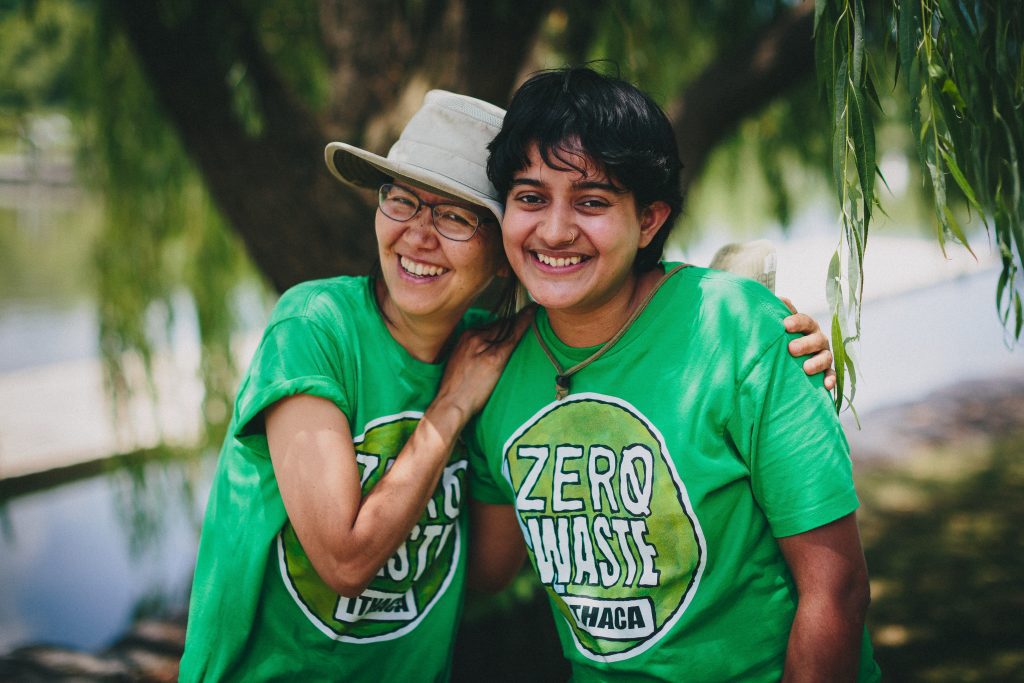
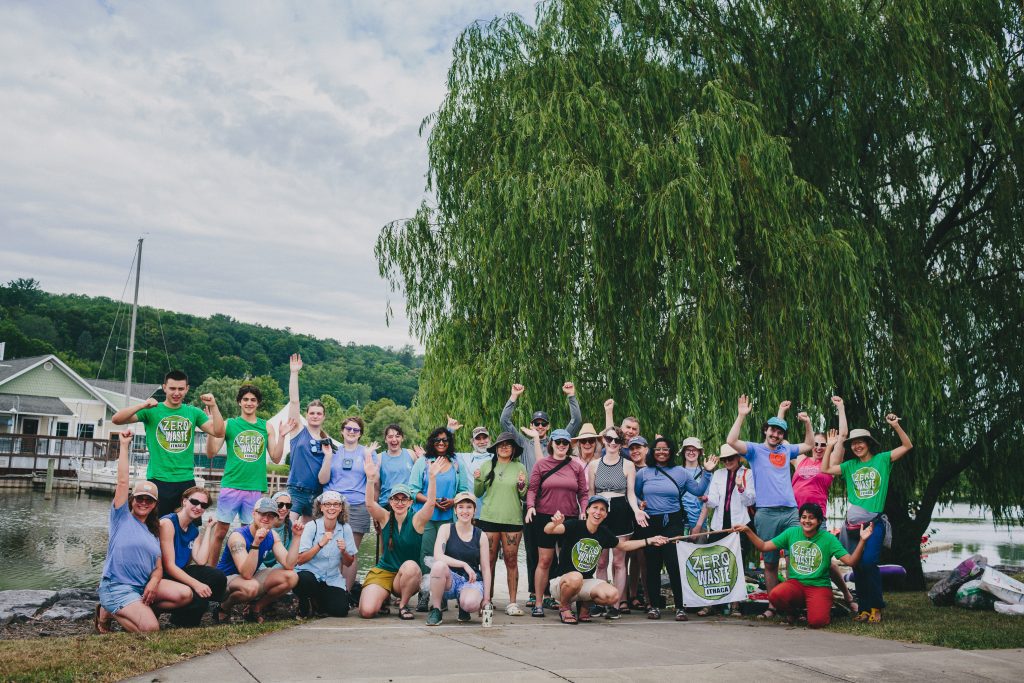
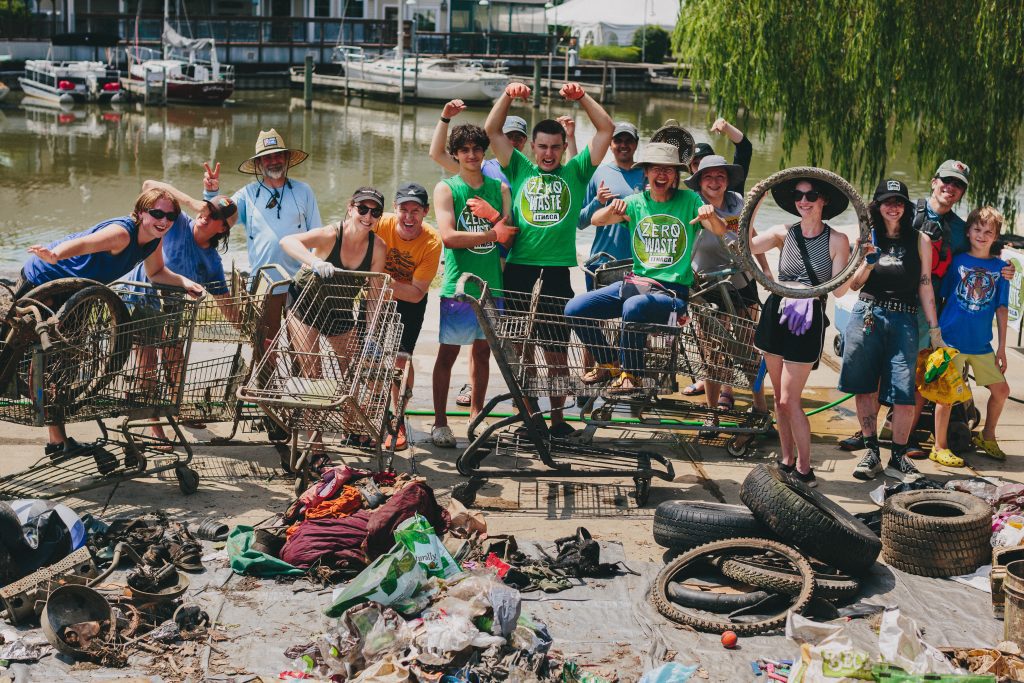
Zero Waste Ithaca mobilized 40 volunteers for their “Trash Paddle Ithaca” on July 12, 2025, spending more than four hours removing an incredible 800 pounds of waste from the Cayuga Inlet. The haul included shopping carts, bikes, tires, Styrofoam, and hundreds of bottles and cans, making a visible difference in the local waterways. Building on the cleanup’s success, the team is advocating for a city and county single-use ordinance to tackle pollution at its source.

Zero Waste Ithaca is a grassroots volunteer group founded in 2018, based in Ithaca, New York, USA, locally advocating for a sustainable Zero Waste society. The group works to advance zero waste policies and culture with a vision of “prosperity without growth,” rethinking consumption and promoting justice for all living beings. They combine policy advocacy with community-building activities like trash pickups, gift economy exchanges, and sharing zero waste tips, while rejecting industry-backed false solutions to the waste and climate crises. Their flagship program, BYO – Ithaca Reduces, encourages businesses to welcome customer-provided containers through a visible sticker campaign, with over 100 local businesses participating.

They are advocating for a statewide BYO law in New York and are part of the broader US Reduces network. Zero Waste Ithaca also opposes synthetic turf, advocates for a local foodware reuse ordinance, fights the use of sewage sludge as soil amendments (including biochar and compost), and addresses PFAS issues, in addition to organizing community gatherings such as trash pickups, tabling, and craft events.

This event was made possible through the collaboration of local partners, including Ithaca College, Team Greene, Paddle-N-More, Recycle Tompkins, GreenStar, Cayuga Lake Watershed Network, Ithaca Dragon Boat Club, Cayuga Outrigger Canoe Club, and Discover Cayuga Lake. It was also supported in part by a 2024 GAIA Microfunds grant, which helped strengthen community-led action for upstream solutions to plastic waste.

(Photos by Rich Mattingly)

As battery innovation for electric vehicles progresses, it’s crucial to avoid regrettable substitutions—simply replacing one harmful chemical or material with another. 

Watch the first webinar in a new series co-hosted by the Collaboratory for a Regenerative Economy (CoRE) and the Global Alliance for Incinerator Alternatives (GAIA). This series brings together interdisciplinary stakeholders to explore how accelerating battery design decision-making processes—from the molecular scale to neighborhood impact—can lead to significant advances in safety, awareness, community resilience, and battery performance. 

This webinar, Accelerating More Sustainable EV Battery Design Processes from Molecules to Neighborhoods, spotlights how real-time environmental monitoring, citizen science, and equitable data integration can shape more just and responsible approaches to battery materials discovery and development. It will also explore how data-driven design can be utilized to help eliminate hazardous substances in EV battery production, offering pathways for collaborative, community-informed innovation throughout the battery materials lifecycle. This webinar series and discussions will explicitly address both performance pressures and environmental justice priorities, with a focus on centering the experiences and leadership of the most impacted communities.

Berkeley, CA — In a failure of leadership and a blatant handout to industry, the House of Representatives has approved S.J.Res. 31, which dismantles critical protections under the Clean Air Act, allowing over 1,800 of the nation’s largest industrial polluters, including waste incinerators, refineries, and chemical plants, to increase their toxic emissions with fewer restrictions. 

In this deeply troubling move, which allows major polluters to reclassify themselves as “minor sources,” Congress cleared the path for these facilities to avoid installing or maintaining pollution controls. As a result, we face a greater risk of cancers, birth defects, reproductive harm, neurological disorders, cardiovascular disease, and other serious health threats. All of this protects industry’s bottom line.

“This vote is both disgraceful and dangerous,” said Denaya Shorter, Senior Director of GAIA’s US and Canada Regional Program. “Our communities are once again treated as sacrifice zones so corporations can continue to profit. Congress has shown exactly where their priorities lie—and it’s not with the people they were elected to serve.”

This decision will hit environmental justice communities hardest. For generations, Black, Brown, Indigenous, and frontline neighbors have borne the daily burden of industrial pollution. Now, Congress has deepened that harm.

This resolution passed 216–212, with all Democrats and one Republican opposing it. The Republican-controlled Senate approved the same measure earlier this month. GAIA commends the lawmakers who stood up for clean air protections and will continue to advocate tirelessly for policies that safeguard the health of all communities.

###

The Global Alliance for Incinerator Alternatives (GAIA) is a member-based, environmental justice network working at the intersection of waste, climate, and justice. In the United States and Canada, GAIA supports grassroots organizations that advance zero waste solutions, challenge the plastics and petrochemical industries, reduce methane emissions, and promote safe, sustainable practices for electric vehicle battery production and recycling.

Press contact:

María Guillén, Communications Coordinator, US and Canada

mariaguillen@no-burn.org

Released: May 23, 2025

FOR IMMEDIATE RELEASE: May 6, 2025

Berkeley, CA —  The Global Alliance for Incinerator Alternatives (GAIA) is proud to announce the 13 grassroots partners advancing transformative zero waste solutions through the U.S. Methane Reduction and Environmental Justice Regrant Program. 

With an investment from the Global Methane Hub, GAIA mobilized $675,000 to its member organizations across the U.S. that are implementing innovative, community-driven solutions including composting, food waste prevention and diversion, landfill pollution reduction and monitoring, and climate and environmental justice leadership. These grants support grassroots organizations at the forefront of advancing zero waste solutions that safeguard public health and the environment across local, regional, and state levels.

At a time when the waste sector remains the third largest source of methane emissions, a potent greenhouse gas (GHG) that traps more than 82 times as much heat as carbon dioxide (CO2) over a 20-year timespan, grassroots leadership has never been more critical. Even modest ambition to separately collect and treat organics can reduce landfill methane emissions by 62 percent.

“GAIA’s U.S. Methane Reduction and Environmental Justice Regrant Program is an opportunity to highlight and support the various grassroots efforts taking shape across the country to address and reduce methane emissions from the waste sector,” said Marcel R. Howard, US & Canada Regional Zero Waste Program Manager at GAIA. “This initiative is aimed at ensuring environmental and climate justice principles are prioritized and integrated within methane emissions reduction strategies. By embracing zero waste strategies, the waste sector could reduce methane emissions by 95% through a combined approach that prevents food waste, recovers edible surplus food, separately collects and processes organic waste, and reduces emissions at disposal sites.”

The 2025 GAIA Methane Reduction and Environmental Justice Grant Recipients and Cohort include:

  • Minnesota Environmental Justice Table
  • CURE (Minnesota)
  • Californians Against Waste Foundation
  • Valley Improvement Projects (California)
  • JOIN for Clean Air (Louisiana)
  • Environmental Integrity Project (Louisiana)
  • Slingshot (New England)
  • GreenLatinos (Colorado)
  • Brookhaven Landfill Action and Remediation Group (New York)
  • South Baltimore Community Land Trust (Maryland)
  • Clean Water Fund (Maryland)
  • Zero Waste Detroit (Michigan) 
  • Pocasset Pokanoket Land Trust (Rhode Island)

The U.S. Methane Reduction and Environmental Justice Regrant Program strengthens grassroots leadership and accelerates the transition to just and sustainable waste systems. By equipping frontline communities with the resources they need to drive change, GAIA aims to reduce methane emissions, advocate for zero waste policies, and support environmental justice efforts nationwide.

“GAIA’s regrant program is rooted in a powerful truth: the solutions we need are already thriving in our communities,” said Denaya Shorter, Senior Director of the US & Canada Region at GAIA. “For generations, frontline communities have been leading with courage, innovation, and justice—advancing zero waste solutions that protect our planet and our people. We are honored to support their vision for a future where no community is sacrificed, and where zero waste paves the way toward true environmental justice.”

For more details on the U.S. Methane Reduction and Environmental Justice Regrant Program and its grantees, visit no-burn.org/us-methane-ej-regrant-program.

U.S. Methane Reduction and Environmental Justice Cohort Quotes:

“We’re grateful for the opportunity to partner with other members of the GAIA network to tackle methane emissions at the source. Landfills are a major driver of climate change, and we need real solutions now. Stronger regulations can cut methane quickly, while composting keeps food scraps and yard trimmings out of landfills entirely—turning this ‘waste’ into a resource that offers a climate solution instead of posing a climate threat,” said Nick Lapis, Director of Advocacy, Californians Against Waste Foundation (CAWF).

“The Brookhaven Landfill is a 270-foot-high monster that looms over our community.  A monster that the local government fails to address. After 50 years of tireless advocacy, countless illnesses, and even death in our community, we know that the local government refuses to keep us safe. This grant will help keep us on the road to march to zero waste and win the struggle for the achievement of environmental justice,” said Monique Fitzgerald, Co-Founder, Brookhaven Landfill Action & Remediation Group (BLARG).

“The generous grant support from GAIA affirms the importance of Indigenous-led solutions to environmental justice and food sovereignty. It will allow us to expand composting infrastructure and provide outreach and education for Indigenous families in Rhode Island, making sustainable waste reduction accessible and culturally grounded. Through this project, we’ll turn food scraps into fertile soil that feeds our communities and our futures,” said Michelle Nikfarjam, Agroecology Support Specialist, Pocasset Pokanoket Land Trust.

“We are very excited to be accepted into GAIA’s U.S. Methane Reduction & Environmental Justice Regrant Program. This grant helps make possible our progress, connecting us to the resources we need and helping us expand the work we do with our partners in the fight for clean air here in Louisiana,” said Justin Vittitow, Director, JOIN for Clean Air.

“Slingshot is grateful for GAIA’s support of our work alongside most-impacted communities to take aim at polluters and build local leadership. This funding will enable us to support community groups across the northeast in decreasing pollution from existing landfills, halting the build-out of greenwashed energy solutions, and calling for an overhaul of our broken waste system. We are excited to join this cohort in our shared fight for a just and thriving world,” said Hayley Jones, VT and NH State Director, Slingshot

“The Environmental Integrity Project is thrilled to join GAIA’s landfill methane and environmental justice cohort. GAIA’s effective coalition-building has helped communities affected by waste disposal throughout the country. We look forward to building knowledge and relationships as we work together to tackle the important and under-resourced issue of landfill pollution,” said Leah Kelly, Senior Attorney, Environmental Integrity Project (EIP).

“This grant will enable Zero Waste Detroit to continue building and strengthening capacity to reach more community stakeholders. This grant facilitates the expansion of our organizational ability to reach more residents while expanding our educational programming related to food waste and reducing methane and carbon dioxide emissions. Educating our communities about waste reduction and diversion is a necessary step to reducing CO2 and Methane CH4 emissions, in the fight to mitigate climate change,” said Deborah Stewart Anderson, M.Ed., Executive Director, Zero Waste Detroit

“The conversation about how to sustainably address the waste crisis is often focused on our cities and dense population centers, leaving rural communities as something of an afterthought. This is in spite of the fact that a lot of our waste, whether it’s going to a landfill or a garbage burner, is often headed to a rural locale. As rural community advocates, we at CURE are excited to partner with our friends at the Minnesota EJ Table to address this gap and bring rural and urban zero waste champions together to talk about both the commonalities and differences our communities face when it comes to waste and move towards finding holistic solutions,” said Maggie Schuppert, Director of Strategic Initiatives, CURE.

Press contact:

María Guillén, Communications Coordinator, US & Canada

mariaguillen@no-burn.org

###

GAIA is a worldwide alliance of more than 1,000 grassroots groups, non-governmental organizations, and individuals in over 90 countries. With our work, we aim to catalyze a global shift towards environmental justice by strengthening grassroots social movements that advance solutions to waste and pollution. We envision a just, zero waste world built on respect for ecological limits and community rights, where people are free from the burden of toxic pollution, and resources are sustainably conserved, not burned or dumped. 

On April 30, GAIA sent two submissions to the UN Special Rapporteur on Climate Change, responding to her call for inputs on Human Rights in the Life Cycle of Renewable Energy and Critical Minerals. These inputs, one global and one specific to Asia-Pacific, highlight evidence-based risks and recommendations to reduce harm and advance a just transition in battery materials. The submissions propose a zero waste approach that centers reuse, repair, and redesign to protect human rights and environmental health. GAIA’s recommendations are intended to help shape the Special Rapporteur’s thematic report to the Human Rights Council.

Berkeley, CA — The Global Alliance for Incinerator Alternatives (GAIA) stands in unwavering solidarity with our allies at Greenpeace in the wake of the deeply unjust verdict handed down by a North Dakota, United States jury for more than $600 million in damages against Greenpeace entities—including Greenpeace Inc., Greenpeace Fund, and Greenpeace International—in an outrageous Strategic Lawsuit Against Public Participation (SLAPP). 

This shocking decision is a dangerous escalation in corporate attacks on civil society, aimed at chilling future protests, and silencing those who dare to stand in defense of people and the planet. It also further undermines the sovereignty of the Standing Rock Sioux Tribe, who has been resisting Energy Transfer’s efforts to force the Dakota Access Pipeline through their land and drinking water supply. Greenpeace, answering the Tribe’s call for solidarity, stood alongside hundreds of Tribes and tens of thousands of water protectors from around the world in nonviolent resistance at Standing Rock. 

This verdict does not just target Greenpeace—it is an attack on fundamental rights enshrined in the United States Constitution, including freedom of speech and the right to protest. It is an attack on Indigenous sovereignty. It is an attack on our collective ability to resist environmental destruction and corporate greed. 

“GAIA stands unequivocally with Greenpeace, the Standing Rock Sioux Tribe, and all movements fighting for environmental justice and human rights. We will not be silent as corporations attempt to weaponize the legal system to suppress dissent. We call on our allies, supporters, and governments to take a firm stand against SLAPP suits and demand stronger protections for activists and advocates globally,” said Denaya Shorter, Senior Director of GAIA’s US & Canada Region.

This verdict is a troubling reminder of the urgent need to defend democracy, free speech, and the right to a livable planet, in the U.S. and across the globe. Now more than ever, we must stand firm in our commitment to protecting the right to protest and showing unwavering solidarity with those on the frontlines of resistance. No lawsuit can extinguish the power of collective action.

###

GAIA is a worldwide alliance of more than 1,000 grassroots groups, non-governmental organizations, and individuals in over 90 countries. With our work we aim to catalyze a global shift towards environmental justice by strengthening grassroots social movements that advance solutions to waste and pollution. We envision a just, zero waste world built on respect for ecological limits and community rights, where people are free from the burden of toxic pollution, and resources are sustainably conserved, not burned or dumped. 

Press contact:
María Guillén, Communications Coordinator, US/Canada
mariaguillen@no-burn.org