De los datos a la acción: Guía para usar la base de datos anti-incineración
Latin America & the Caribbean - Incineración y cementeras -
Esta base de datos nace como una respuesta colectiva frente a la creciente ola de proyectos que promueven falsas soluciones para la gestión de residuos en América Latina y otras regiones del Sur Global. Incineradoras, plantas de "waste to energy", co-procesamiento en cementeras o reciclaje químico, se presentan como respuestas técnicas modernas, pero en la práctica reproducen impactos profundos y desiguales sobre los territorios, las comunidades y los sistemas públicos de gestión de residuos.
En este contexto, las organizaciones sociales, ambientales y comunitarias no pueden enfrentar estos proyectos únicamente desde la indignación o la urgencia del conflicto, por más legítimas que estas emociones sean. La experiencia en los territorios ha demostrado que quienes impulsan estas tecnologías se amparan en lenguajes técnicos, estudios fragmentados y marcos regulatorios complejos que buscan desplazar el debate hacia terrenos donde las comunidades o siempre cuentan con herramientas suficientes para responder.
Esta base de datos surge, entonces, para equilibrar esa asimetría, poniendo al alcance de las organizaciones evidencia científica, académica y técnica que permita sostener las luchas desde argumentos sólidos, verificables y contextualizados.
El objetivo no es reemplazar la experiencia territorial ni despolitizar los conflictos, sino articular el conocimiento técnico con la realidad vivida. La quema de residuos no es solo un problema ambiental, tiene impactos económicos, sociales, sanitarios y políticos que se entrecruzan. Afectan presupuestos públicos, redefine modelos de desarrollo local, afectan la salud de las comunidades, debilitan el trabajo del movimiento reciclador y consolidan decisiones tomadas sin participación real.
Esta base de datos busca ofrecer una mirada integral de estos impactos, demostrando que las falsas soluciones no pueden evaluarse de forma aislada, sino como parte de un modelo que profundiza desigualdades y sacrifica territorios en nombre de la eficiencia.
RIGGING THE NUMBERS: Questions and Answers on Biogenic Carbon in Waste and Climate Change
UN Day of ZW 2026 - Climate -
This brief Q&A explains why biogenic CO2 is not inherently climate-neutral, how IPCC inventory guidance is frequently misinterpreted to justify these exclusions, and how waste facilities must report biogenic carbon emissions as well as fossil carbon emissions.
Lutter contre les émissions de méthane des décharges grâce à la justice environnementale
- Climate -
Le présent rapport décrit les risques liés aux approches habituelles (« Business As Usual » ou BAU) en matière de réduction des émissions de méthane provenant des décharges et plaide en faveur d'une réponse durable et axée sur la justice. Il s'appuie sur des données internationales, sur les tendances politiques actuelles et sur l'expérience des communautés pour identifier les solutions efficaces et inefficaces en matière de fermeture des décharges et de gestion des déchets organiques.
As the UK closed the doors of its last coal power plant in September 2024, the focus has now turned to the UK’s next dirtiest form of energy production: waste incinerators. While waste-to-energy incinerators have been controversial within the waste sector for years, the protest has been recently mainstreamed when the BBC labelled incineration as the UK’s dirtiest way to make power.
Waste-to-energy incineration has been heavily confronted all over the world by hundreds of groups and communities for several reasons. In the first place, concerns about health impacts on the local people and the environment have often been the trigger point. Neighbours to incinerators report devastating impact, such as in Runcorn, Cheshire, home to the UK’s largest incinerator, where operator Viridor paid a total of £1m to local families who had complained about noise, smells and other negative effects on their lives.
Air pollution from incinerators includes greenhouse gas emissions contributing to climate change. Shlomo Dowen from the UK Without Incineration Network (UKWIN) stated: “For every tonne of plastic that is incinerated, more than two tonnes of carbon dioxide are being released, as the carbon in the plastic combines with oxygen in the air to produce CO2…[Overprovision of incineration means that] people’s health is being jeopardised for no justifiable reason.”
In this sense, the incineration of matter that could have been recycled or composted also harms the UK’s progress towards a circular economy. According to the European Environment Agency: “One of the central pillars of a circular economy is feeding materials back into the economy and avoiding waste being sent to landfill or incinerated, thereby capturing the value of the materials as far as possible and reducing losses.”
As it stands, incinerators are three times more likely to be in the most “deprived and ethnically diverse areas of the UK,” further raising concerns about the impact of pollutants on vulnerable populations.
Despite these threats to the wellbeing of the UK’s people, environment, and economy, there are still currently 41 planned incinerators, 27 of which have obtained environmental permits. In November 2024, Olympic sailing team medallists on the Isle of Portland threatened to quit the site because of plans to build a £150m waste incinerator next to their base. A letter from the athletes to Steve Reed, the UK Government’s Environment Secretary, and Lisa Nandy, the Culture Secretary, reads:
“The plans to build an incinerator raise significant environmental and health concerns, which we believe would harm the quality of Portland’s sailing facilities…We fear that the damage posed by an incinerator could force us to consider leaving Portland altogether.”
Hundreds of protesters gathered to demonstrate against the construction of the incinerator and its adverse effects on the Portland Port. Last October, the Stop Portland Waste Incinerator campaign group started legal efforts against the incinerator. Despite rejection by the Dorset Council, the plans for the Portland incinerator were still approved by the Labour Government in September of 2024.
At Edmonton in North London, redevelopment of the existing outdated incinerator has been halted. The project started in 2022 and was expected to open in 2025, but will reportedly be delayed until 2027. The North London Waste Authority (NLWA), who is leading the project, has blamed global inflation, expensive materials, and rising skilled labour costs as reasons for the project’s delay.
Carina Millstone, a spokesperson for the group, said: “It’s not too late for the councils to safeguard their budgets, their climate, air pollution and waste targets, and do the right thing by their taxpayers, by pulling the plug on this outdated, outsized, toxic incinerator.”
The UK’s biggest incinerator at Runcorn in Cheshire is yet another example of an incinerator taking hold of a disadvantaged area. Pollution and disturbances from the incinerator, including flies, rats, smell, and noise, has led to a settlement of £1m ($1.2m) for 180 local residents, or about £4,500 per family after legal costs. The tradeoff? Their acceptance of a strict non-disclosure agreement (NDA) mandating their silence about the adverse effects of the plant.
Viridor, the waste management company that runs the Runcorn plant, refused to comment on the settlement agreement but claimed that the noise and odour of the incinerator remained well within regulations set by the Environment Agency. However, a BBC investigation found breaches of air quality controls increased both at Runcorn and across incinerators in England between 2019 and 2023.
The UK Government is finally starting to wake up to public concerns about there being too many incinerators operating across England. New measures were announced on December 30, 2024 cracking down on incinerators by raising standards. For any new incinerators, developers will have to prove that they will help to lower the amount of non-recyclable waste that’s being sent to landfill and show how the incinerator could be used to deliver heat to homes and/or businesses.
The UK Government has also been shifting focus towards waste that could be recycled but is instead going to landfill or incineration. Recycling rates in England have stagnated as individual households find that keeping track of separate bins is too complicated and that many materials are not being collected for recycling, including food waste and some types of plastic. The continued use of waste-to-energy incinerators threatens the UK’s 2050 net zero emissions goal. With the introduction of several new collection and packaging reforms by the Government to encourage citizens to separate their waste, as well as the transition towards a circular economy, the need for incinerators will be greatly reduced, with only 17.6 million tonnes of non-recyclable waste to be managed by 2042.
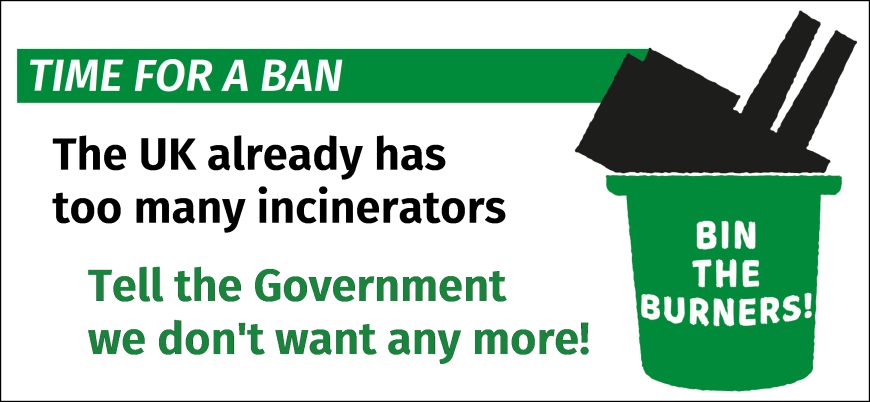
Despite the new and stricter regulations, many environmentalists are saying it’s not enough, and still call for a total ban on any new incinerators in England, including Shlomo Dowen from the UK Without Incineration Network (UKWIN).
“Not only do we need a complete ban on new incinerators, I think England needs an incineration exit strategy, like Wales and Scotland. We need to start looking at which incinerators should be decommissioned; those that are least efficient, most polluting, closest to where people live.”
UKWIN continues to advocate for a total ban of new incinerators in the UK, having extended invitations to candidates of both local and national elections to sign a pledge to support recycling by opposing incineration. Nearly 200 local election candidates signed the pledge, followed by 127 Parliamentary candidates, 11 of whom are now MPs.
Per the UKWIN’s findings, the only way to increase recycling rates is to send less to be incinerated. UKWIN has already stopped the construction of 70 proposed incinerators by working together with local anti-incinerator campaigners. For further change and action, they call for policy changes in the form of an immediate moratorium on new waste incineration capacity, a residual waste tax on incineration, and targets to reduce total and residual waste.
The first month of the year, declared the Zero Waste Month in the Philippines, has expanded to the rest of the globe. Here, we highlight five cities from across the globe, each implementing zero waste strategies, sharing learnings, and inspiring communities to build healthier cities and therefore, a healthier living.
Let’s start with the Global South,
Photo from SWaCH.
In Pune, India in Asia, the SWaCH cooperative has significantly transformed the city’s waste management system by integrating over 3,900+ waste pickers into formal operations, providing door-to-door waste collection, serving approximately 1,000,000 households daily. SWaCH promotes waste segregation into wet, dry, and sanitary waste. The cooperative also facilitates at-source composting, installing composting infrastructure in residential and commercial spaces, and providing waste picker-managed composting services. SWaCH waste pickers divert over 80,000 metric tons of waste from landfills annually, significantly reducing environmental impact while improving livelihoods. Waste pickers, many of whom are women, report increased income, autonomy, and social respect. For instance, after the pandemic, citizens began recognizing the critical role waste pickers play in maintaining cleanliness, often gifting items like sarees as tokens of appreciation. However, challenges remain. Waste pickers lack full social welfare benefits, including improved education support for their children and pensions, which they continue to advocate for. Despite this, the SWaCH model demonstrates the potential for inclusive, equitable, and sustainable waste management systems.
Photo from Earthshot Prize.
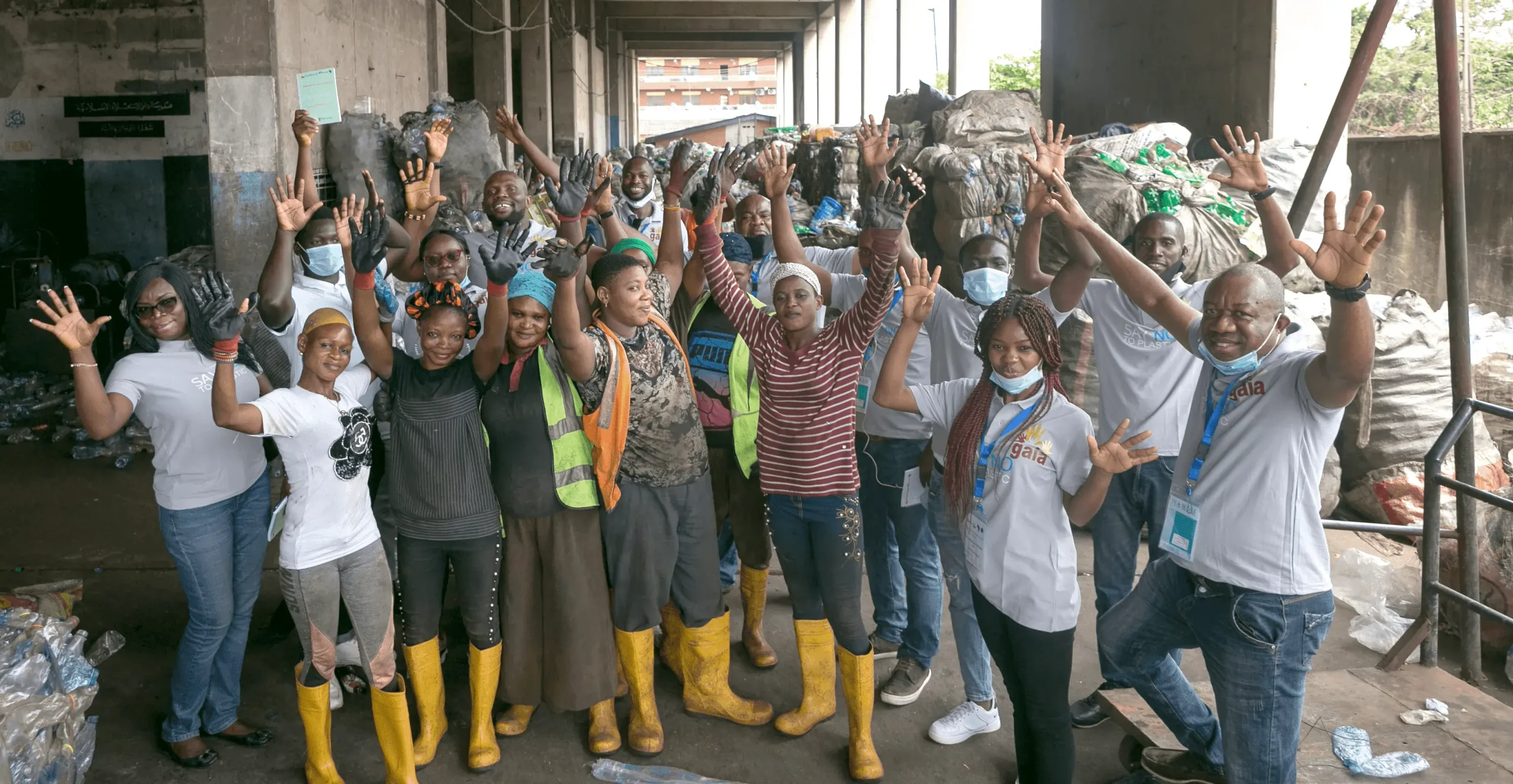
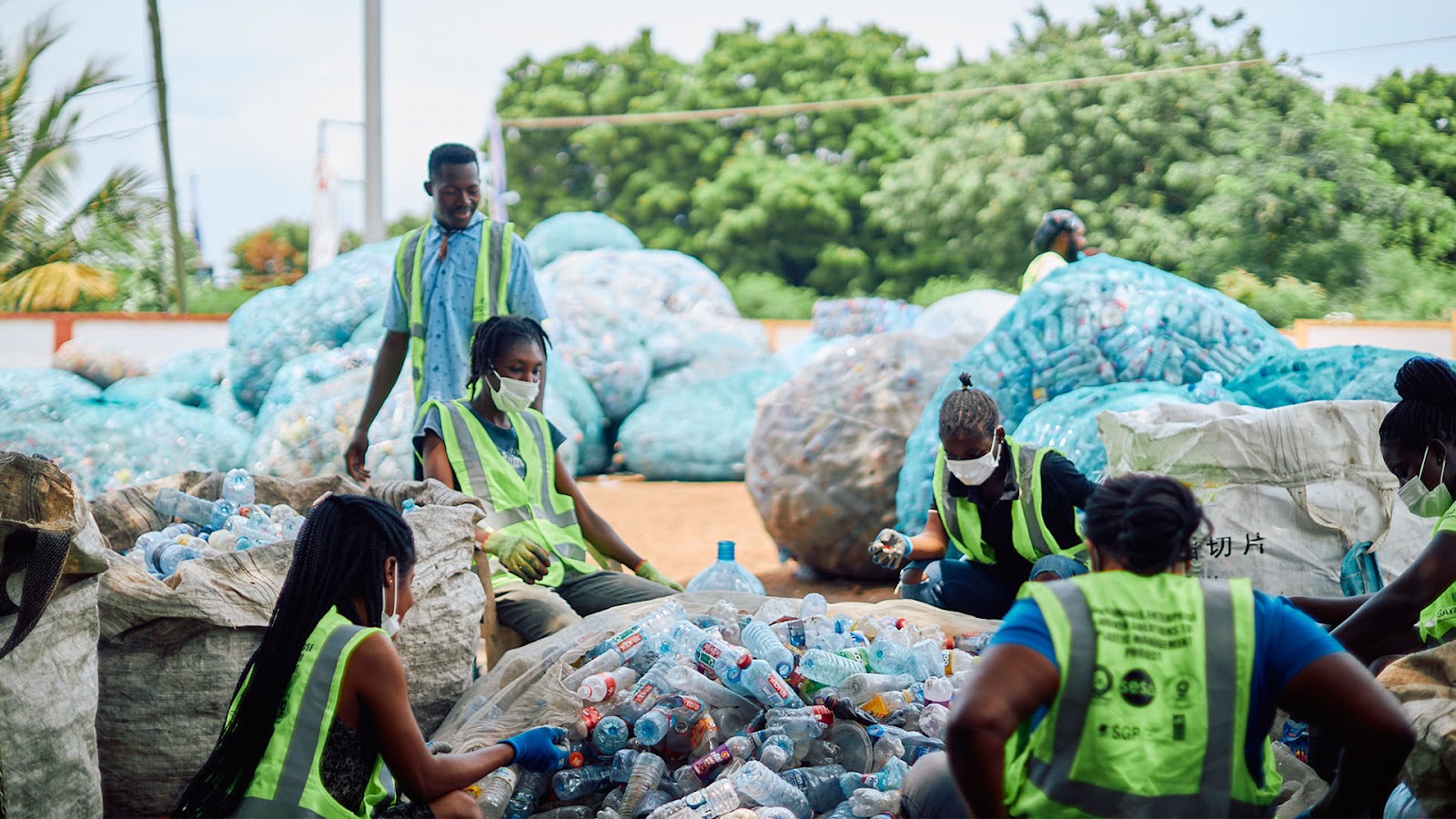
In Ghana, Africa, about 12,710 tons of solid waste are generated every day, with only ten percent collected and disposed of properly (UNDP, 2022). In the city of Accra, the NGO GAYO is showing there is a way to increase collection rates and reduce waste disposal, recognizing and integrating waste pickers in materials management. Their work contributes to increasing the percentage of recycled waste through a Material Recovery Facility (MRF) and inclusion of waste pickers in materials collection and management. Since 2022, over 600 informal workers and waste pickers, including unemployed youth, have been able to recover more than 300 tons of waste in five municipalities including e-waste, transformed organic waste into compost, and created urban gardening hubs, encouraging home-based food production and healthier eating habits.
Photo from Fundación Basura.
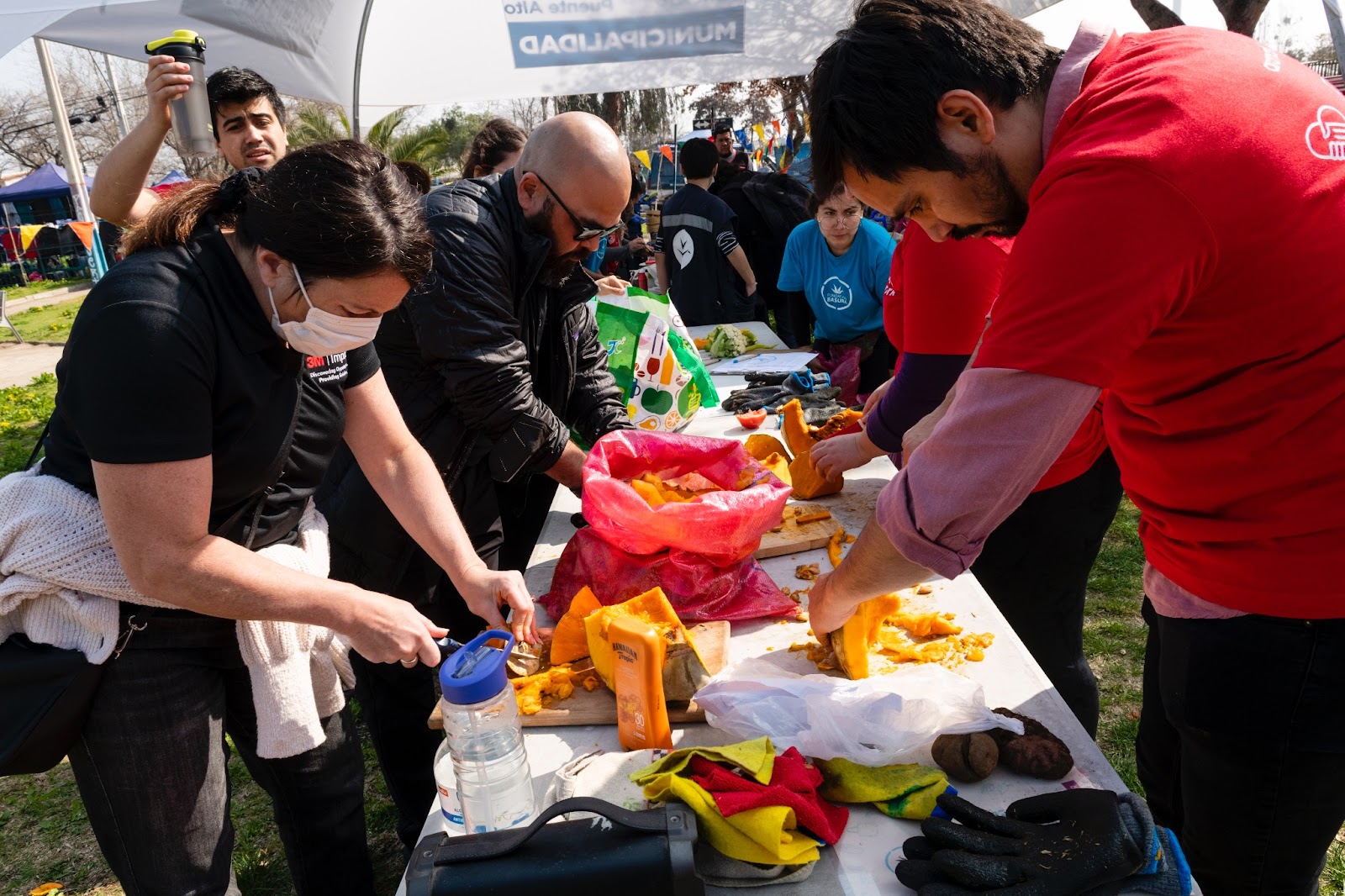
In Latin America and the Caribbean, around 230 million tons of municipal solid waste was generated in 2021 (Circularity Gap Report Latin America and the Caribbean, 2023). It is expected to increase to 290 million tons in 2030 and 369 million tons by 2050. UNEP estimates a 25% increase by 2050 (UNEP, 2018). It is important to note that about half of that waste is organic. To respond to this, organizations like Fundación Basura in Chile initiated the Zero Waste Outdoor Market in the Metropolitan Region of Santiago to recover unsold food donated by market vendors and send it to solidarity kitchens while those that cannot be consumed, are composted. The program encourages volunteerism and socio-environmental education. For a period of over three years (between 2020 and April 2024), Fundación Basura reported a total of 17.5 tons of food waste collected with 70% for composting and 30% for donation and consumption. Other organizations in the region are leading similar initiatives on food waste recovery and source separation incorporating grassroots recyclers, indigenous groups, and agroecology networks. Among these initiatives are the community-managed composting of El Árbol Foundation, Concepción in Chile, the community kitchen of the “Revolução dos Baldiños” in Montecristo Complex, Florianópolis in Brazil, and the work between Central American organizations on agroecology with communities of young people and indigenous women CESTA (El Salvador) and CEIBA (Guatemala).
Looking at the Global North,
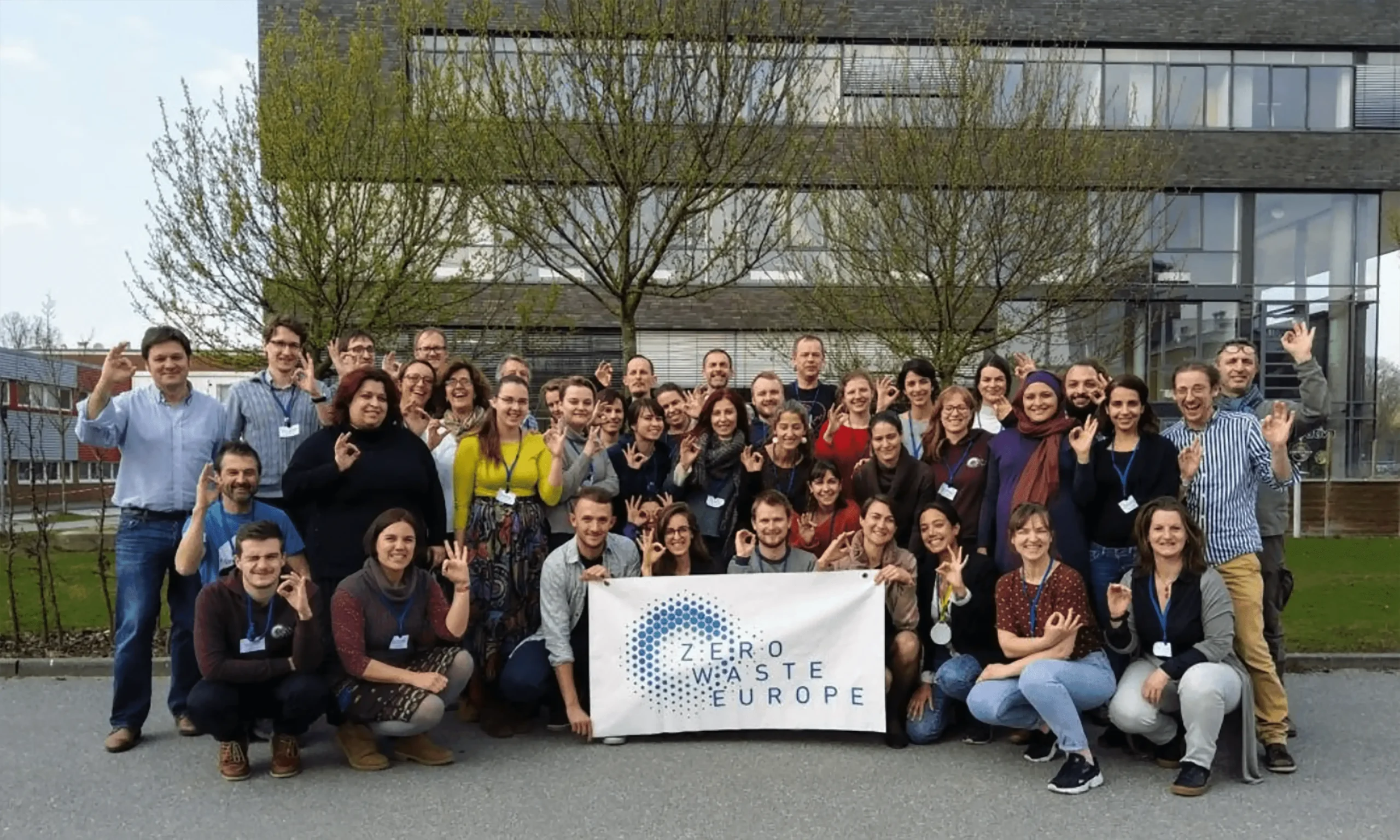
Photo from Zero Waste Europe.
Ukraine is one of the European countries with the largest absolute volumes of waste generation and accumulation. To address efficient reuse and collection, the country started implementing reforms through Ukraine’s Waste Management Law. Furthermore, very recently the cities of Lutsk and Khmelnytski have committed to becoming a candidate city within the Zero Waste Certified City program, focusing on reducing waste, increasing recycling, and applying circular economy principles. In the Lviv region, community composting initiatives are ongoing within the ForkToFarm campaign. Eight community composters that were installed have diverted at least 8,000 kg of bio-waste from landfills over six months, converting it into valuable compost that enhances soil fertility – with a very impressive contamination rate of just 0.05% across these eight sites. Furthermore in the same region, the local member of the national zero waste alliance, Ecological News, helped conduct a six months home composting program with 100 households, with data showing a total of 47,083 kg of kitchen waste redirected to household composters and not in landfills. These efforts are being supported by the Zero Waste Alliance Ukraine and its many members, who remain active and tirelessly working for a better environment despite the ongoing horrors of the war.
Peoples Compost Initiative compost training [Georgia Street Community Collective, FoodPLUS Detroit, Wayne State University compost pilot site]. Photo by Carleton Peeples (2022)
In the US, the City of Detroit—a city that hosted one of the largest municipal waste incinerators in the US—partnered with Breathe Free Detroit, to launch a $100,000 city-led compost pilot program for homes, community gardens, and urban farms. The new program builds on a prior pilot, Detroit Composting for Community Health which launched in 2021 and will inform the city’s initiative. This marks a pivotal step toward establishing a strong, scalable model for city-led composting in the US, building on prior grassroots efforts. While official figures do not fully capture the contributions of grassroots organizations, these groups diverted approximately 2,575.7 tons of waste from landfills in 2021, complementing the city’s declared 19,640 tons. Detroit’s first Office of Sustainability, established in 2019, set ambitious waste diversion goals of 15% by 2024 and 30% by 2029 in the Detroit Sustainability Action Agenda. Key partnerships with organizations like Zero Waste Detroit Coalition, Freedom Dreams, and others continue to drive innovative solutions, including an ongoing effort to establish a Materials Recovery Facility (MRF) and shift toward an opt-out curbside recycling program.
Cities as Catalysts for Zero Waste Transformation
The cities highlighted in this article exemplify the transformative power of local and community action in advancing the global zero waste movement, showing how tailored solutions can address unique waste management challenges while delivering environmental, social, and economic benefits. These cities prove that impactful progress is possible when vision meets action.
Get Involved
Explore and share success stories of zero waste initiatives worldwide through our regional accounts:
Advocate for local policies that support waste reduction and resource recovery.
Celebrate Zero Waste everyday by committing to sustainable habits like reducing, reusing, and recycling.
As the International Zero Waste Month comes to a close, let these cities’ efforts inspire action in your community. Together, we can create a future where impactful solutions make waste a thing of the past.
[SPANISH VERSION]
Mes Internacional de Basura Cero: 5 impactantes historias de basura cero, 5 ciudades diferentes
El primer mes del año, declarado el Mes de la Basura Cero en Filipinas, se ha extendido al resto del mundo. Aquí destacamos cinco ciudades de todo el mundo, cada una de las cuales está implementando estrategias de basura cero, compartiendo aprendizajes e inspirando a las comunidades a construir ciudades más saludables y, por lo tanto, una vida más saludable.
Empecemos por el Sur Global:
En Pune, India, en Asia, la cooperativa SWaCH ha transformado significativamente el sistema de gestión de residuos de la ciudad al integrar a más de 3900 recolectores de residuos en operaciones formales, proporcionando recolección de residuos puerta a puerta y atendiendo a aproximadamente 1 000 000 de hogares diariamente. SWaCH promueve la separación de residuos en húmedos, secos y sanitarios. La cooperativa también facilita el compostaje en origen, instalando infraestructuras de compostaje en espacios residenciales y comerciales, y proporcionando servicios de compostaje gestionados por recolectores de residuos. Los recolectores de residuos de SWaCH desvían anualmente más de 80 000 toneladas métricas de residuos de los vertederos, lo que reduce significativamente el impacto medioambiental y mejora los medios de vida. Los recolectores de residuos, muchos de los cuales son mujeres, informan de un aumento de sus ingresos, su autonomía y su respeto social. Por ejemplo, después de la pandemia, los ciudadanos empezaron a reconocer el papel fundamental que desempeñan los recolectores de residuos en el mantenimiento de la limpieza, a menudo regalando artículos como saris como muestra de agradecimiento. Sin embargo, siguen existiendo desafíos. Los recolectores de residuos carecen de todas las prestaciones de la seguridad social, incluido un mejor apoyo educativo para sus hijos y pensiones, por lo que siguen luchando. A pesar de ello, el modelo SWaCH demuestra el potencial de los sistemas de gestión de residuos inclusivos, equitativos y sostenibles.
En Ghana, África, se generan alrededor de 12 710 toneladas de residuos sólidos cada día, de los cuales solo el 10 % se recoge y se dispone adecuadamente (PNUD, 2022). En la ciudad de Acra, la ONG GAYO (Green Africa Youth Organization) está demostrando que hay un camino para incrementar los porcentajes de recolección y disminuir la disposición de residuos, reconociendo e integrando a los recicladores de base en el manejo de materiales. Su trabajo contribuye a aumentar el porcentaje de residuos reciclados a través de una instalación de recuperación de materiales (MRF, por sus siglas en inglés) y la inclusión de recicladores de base. Desde 2022, más de 600 trabajadores informales y recolectores de residuos, incluidos jóvenes desempleados, han podido recuperar más de 300 toneladas de residuos en 5 municipios, incluidos residuos electrónicos, transformar residuos orgánicos en compost y crear centros de jardinería urbana, fomentando la producción de alimentos en el hogar y hábitos alimentarios más saludables.
En América Latina y el Caribe, en 2021 se generaron alrededor de 230 millones de toneladas de residuos sólidos urbanos (Informe sobre la brecha de circularidad en América Latina y el Caribe, 2023). Se espera que aumente a 290 millones de toneladas en 2030 y a 369 millones de toneladas en 2050. El PNUMA estima un aumento del 25 % para 2050 (PNUMA, 2018). Es importante señalar que aproximadamente la mitad de esos residuos son orgánicos. Para responder a esto, organizaciones como la Fundación Basura en Chile iniciaron el Mercado al Aire Libre Basura Cero en la Región Metropolitana de Santiago para recuperar los alimentos no vendidos donados por los vendedores del mercado y enviarlos a cocinas solidarias, mientras que los que no se pueden consumir se convierten en abono. El programa fomenta el voluntariado y la educación socioambiental. Durante un periodo de más de tres años (entre 2020 y abril de 2024), la Fundación Basura informó de un total de 17,5 toneladas de residuos alimentarios recogidos, de los cuales el 70 % se destinó a compostaje y el 30 % a donación y consumo. Otras organizaciones de la región están liderando iniciativas similares de recuperación de residuos alimentarios y separación en origen en las que participan recicladores de base, grupos indígenas y redes de agroecología. Entre estas iniciativas se encuentran el compostaje gestionado por la comunidad de la Fundación El Árbol, Concepción en Chile, la cocina comunitaria de la «Revolução dos Baldiños» en el Complejo Montecristo, Florianópolis en Brasil, y el trabajo entre organizaciones centroamericanas que trabajan en agroecología con comunidades de jóvenes y mujeres indígenas CESTA (El Salvador) y CEIBA (Guatemala).
En cuanto al Norte Global,
Ucrania es uno de los países europeos con mayores volúmenes absolutos de generación y acumulación de residuos. Para abordar la reutilización y la recogida eficientes , el país comenzó a implementar reformas a través de la Ley de Gestión de Residuos de Ucrania. Además, muy recientemente, las ciudades de Lutsk y Khmelnytski se han comprometido a convertirse en ciudades candidatas dentro del programa Zero Waste Certified City, centrándose en reducir los residuos, aumentar el reciclaje y aplicar los principios de la economía circular. En la región de Lviv, se están llevando a cabo iniciativas de compostaje comunitario dentro de la campaña ForkToFarm. Ocho compostadores comunitarios que se instalaron han desviado al menos 8000 kg de biorresiduos de los vertederos en 6 meses, convirtiéndolos en valioso compost que mejora la fertilidad del suelo, con una tasa de contaminación muy impresionante de solo el 0,05 % en estos 8 sitios. Además, en la misma región, el miembro local de la alianza nacional de basura cero , Ecological News, ayudó a llevar a cabo un programa de compostaje doméstico de 6 meses con 100 hogares, y los datos muestran que un total de 47 083 kg de residuos de cocina se redirigieron a compostadores domésticos y no a vertederos. Estos esfuerzos cuentan con el apoyo de la Zero Waste Alliance Ukraine y sus numerosos miembros, que siguen activos y trabajando incansablemente por un medio ambiente mejor a pesar de los horrores de la guerra.
Formación sobre compostaje de la Peoples Compost Initiative [Georgia Street Community Collective, FoodPLUS Detroit, centro piloto de compostaje de la Wayne State University] – Foto de Carleton Peeples (2022)
En Estados Unidos, la ciudad de Detroit, que albergaba uno de los mayores incineradores de residuos municipales del país, se asoció con Breathe Free Detroit para poner en marcha un programa piloto de compostaje de 100 000 dólares dirigido por la ciudad para hogares, huertos comunitarios y granjas urbanas. El nuevo programa se basa en un programa piloto anterior, Detroit Composting for Community Health, que se puso en marcha en 2021 y servirá de base para la iniciativa de la ciudad. Esto marca un paso fundamental hacia el establecimiento de un modelo sólido y escalable para el compostaje dirigido por la ciudad en EE. UU., basado en esfuerzos previos de base. Aunque las cifras oficiales no reflejan plenamente las contribuciones de las organizaciones de base, estos grupos desviaron aproximadamente 2575,7 toneladas de residuos de los vertederos en 2021, lo que complementa las 19 640 toneladas declaradas por la ciudad. La primera Oficina de Sostenibilidad de Detroit, creada en 2019, estableció ambiciosos objetivos de desvío de residuos del 15 % para 2024 y del 30 % para 2029 en la Agenda de Acción para la Sostenibilidad de Detroit. Las asociaciones clave con organizaciones como Zero Waste Detroit Coalition, Freedom Dreams y otras siguen impulsando soluciones innovadoras, incluido un esfuerzo continuo para establecer una Instalación de Recuperación de Materiales (MRF) y avanzar hacia un programa de reciclaje en la acera con opción de exclusión.
Las ciudades como catalizadoras de la transformación hacia el residuo cero
Las ciudades destacadas en este artículo ejemplifican el poder transformador de la acción local y comunitaria en el avance del movimiento global de residuo cero, mostrando cómo las soluciones a medida pueden abordar desafíos únicos de gestión de residuos al tiempo que ofrecen beneficios ambientales, sociales y económicos. Estas ciudades demuestran que el progreso impactante es posible cuando la visión se une a la acción.
Participe
Explore y comparta historias de éxito de iniciativas de residuo cero en todo el mundo a través de nuestras cuentas regionales:
Abogar por políticas locales que apoyen la reducción de residuos y la recuperación de recursos.
Celebre el residuo cero todos los días comprometiéndose con hábitos sostenibles como reducir, reutilizar y reciclar.
Ahora que el Mes Internacional del Residuo Cero llega a su fin, deje que los esfuerzos de estas ciudades inspiren la acción en su comunidad. Juntos, podemos crear un futuro en el que las soluciones impactantes hagan que los residuos sean cosa del pasado.
Governor Newsom just vetoed a faulty battery bill. A revised 2025 version must address key shortcomings.
California Governor Gavin Newsom recently vetoed Senate Bill 615, which aimed to establish regulations for the reuse and recycling of electric vehicle (EV) batteries. Rightly so.
The bill, introduced in 2022, was among the first battery recycling legislative proposals in the nation and it took an important first step toward establishing battery manufacturers’ and suppliers’ responsibility for end-of-life management. While it is encouraging that the state is working to develop transport electrification standards that will protect communities and the environment, and ensure materials used in vehicles and batteries are kept in circulation as long as possible, this bill was overly vague in its definitions, scope and lines of accountability. Most egregiously, it would have sanctioned burning batteries as “recycling” and allowed potential waste dumping as a “responsible” form of end-of-life management, as GAIA and six other environmental justice organizations warned in our opposition letter to SB615.
With rapidly evolving battery technologies and build-out of electrification infrastructure, it’s imperative that legislators address battery waste and pollution. Photo of Nissan Leaf by Tennen-Gas / Wikimedia.
California Governor Gavin Newsom’s veto pointed out that the bill included many loopholes allowing battery suppliers to avoid responsibility for recycling, repurposing, and data transparency. Additionally, it did not build on California’s existing Extended Producer Responsibility (EPR) models and instead burdened the state Department of Toxic and Substance Control (DTSC) with the responsibility of developing, implementing, and enforcing standards and regulations for the battery producer responsibility program.
Batteries play a pivotal role in our efforts to transition to a fossil fuel-free future. But as with any energy system, renewables come with their own set of challenges and impacts. With rapidly evolving battery technologies and build-out of electrification infrastructure, it’s imperative that waste and pollution are addressed and that we prioritize solutions at the top of the zero waste hierarchy (rethink, reduce, reuse) over those at bottom (recycle, other material recovery, disposal).
Newsom has encouraged the bill’s author, Senator Ben Allen (El Segundo), to introduce a revised bill that addresses these concerns at the next legislative session in the new year. GAIA applauds the Governor’s veto, and has several key demands for the new version:
Use coherent definitions of recycling
Incineration is not recycling. SB615 would have allowed incineration as a form of recycling. This goes against California’s track record of not allowing incineration, combustion, energy generation, and other forms of disposal to qualify as a form of “recycling.”
Incineration produces air, water, and soil pollution; it endangers human health while destroying, rather than recovering, valuable materials. Allowing incineration as recycling was the most grave of many shortcomings in SB615’s loose and vague definition of recycling. At a minimum, the new bill must state that recycling does not include combustion, incineration, energy generation, fuel production, and other forms of disposal. It should align with the definition of recycling set out in the California Responsible Battery Recycling Act of 2022.
Given the nascent and dynamic field of battery recycling technologies — almost all of which use some form of thermal treatment that carries significant risks that have yet to be fully documented and assessed — the bill should include an assessment of proposed recycling pathways for their viability and require a “peer review” or scientific baseline to be qualified as recycling. A peer review process will ensure that recycling pathways are regularly assessed for continuous improvement on the highest material recovery rates, lower carbon footprint, and energy intensity, and fewer risks of toxic impacts on frontline communities.
In the previous bill, the recycling definition covered only a very small percentage of the battery mass, leaving most battery material, including hazardous material, for disposal. It further failed to define black mass — an intermediate product during battery recycling — or set target material recovery rates or require reporting on those rates. Neither did it clearly define responsible end markets. These definition gaps should be rectified.
Set clear and enforceable collection, testing, and decision-making parameters
The new bill must clarify vague language, such as that stating that battery suppliers should “adhere to the battery waste management hierarchy” in deciding what to do with a used traction battery (rechargeable batteries for EVs and heavy machinery). This vagueness gives battery suppliers a free hand to choose how and what they will reuse and/or recycle without having to justify their decision-making.
The previous bill defined the “battery management hierarchy” as:
“a hierarchy of battery management wherein the entity in possession of the battery shall first strive to reuse, repair, or remanufacture the battery when possible and cost effective. When that is not possible or cost effective, that entity shall ensure that the battery is either repurposed or recycled. If a battery cannot be cost-effectively used in any application, that entity shall ensure the battery is recycled.”
But allowing a battery supplier to base their decision-making on cost effectiveness gives them a major loophole to avoid responsibility for end-of-life management.
The new bill should have a management hierarchy that prioritizes repurposing before recycling.
Endicott, New York, residents protest outside of a proposed lithium-ion battery recycling plant. Battery recycling facilities rely on hazardous processes that can impact the environment and the health of nearby communities. Photo courtesy of Paul Connett.
Repurposing “good quality” used EV batteries saves significant embedded carbon emissions, reduces the need for new mining for minerals needed in batteries, and maximizes the useful life of the materials. Repurposed EV batteries that meet stringent quality standards are up to 40 percent less expensive than new stationary battery storage systems, and so provide an alternative for energy storage and access to electricity in low- and middle-income communities locally and in developing countries.
To prioritize repurposing before recycling, California will have to develop policies around battery inspection and testing before recycling and adopt clear parameters to guide decision-making on repair, reuse, remanufacturing, and repurposing batteries before recycling.
Certification standards for EV battery repurposing facilities, such as UL1974. can provide some useful guidance in this respect, and could be used as an initial benchmark. The new bill can include a provision to update that benchmark when standards are revised or new standards are made available with more stringent requirements protecting the environment and public health, similar to California Public Resources Code 42356.1.
The new bill should also address export of used batteries and black mass, given repurposed batteries risk being considered second rate, and dumped in low-income communities and countries. The second life industry need to have regulations in place to prevent waste colonialism. The bill should also ensure that all relevant right to repair laws apply to EV batteries.
Require robust data transparency
SB615 had limited data reporting requirements that applied primarily to the sale and transfer of traction batteries. The new bill should require suppliers to provide battery data information to a central repository, including information about its state of health, chemical composition, replacement parts, safe handling, dismantling instructions and repair manuals, and data about the battery supplier’s decision-making on the next use in the hierarchy, and data on the emissions from battery recycling facilities.
These facilities rely on hazardous processes such as hydrometallurgy and pyrometallurgy (high heat) that can impact the environment and health of nearby communities. These communities have a right to information about potential environmental and health exposures from the facility processing these batteries, which have toxic materials. Providing data on full recovery waste of all materials as well as reporting on volumes of waste generated, and on energy and water consumption, can help inform efforts to reduce the facility’s environmental footprint and to verify the credibility of recyclers’ sustainability claims.
In addition to these three key asks, the bill should have provisions ensuring:
Strengthened accountability for battery suppliers. This is especially necessary in the case of batteries, which have a complicated and dynamic chain of custody. The definition of who is the supplier changes over time, and this raises the question of how to assign liability over time to engage those responsibilities. Liability is critical and related to collection as well: the bill should require manufacturers and suppliers set up a system to collect all traction batteries, regardless of the supplier. At the moment, collection requirements are scattered depending on the supplier, and there is no clear breakdown of which collection cost categories suppliers are responsible for. Collection accounts for a significant share, at times 40 percent, of the cost of battery recycling.
Objective standards and coherent definitions of a “qualified recycler.” The original bill’s definition of a “qualified battery recycler” used undefined terms (such as “elemental component”), was not flexible enough to accommodate changing battery chemistries, and risked allowing waste-to-energy or smelters to qualify as recyclers. In other recycling sectors (such as electronics, or lead acid batteries), smelters or other crude pyrometallurgical refining processes that cheaply recover select materials financially undercut more legitimate recyclers with technologies designed to recover higher rates of materials, but at higher operating costs. GAIA strongly suggests requiring qualified recyclers to comply with third-party electronic recycling facility certifying body standards such as such as ANSI, R2, SERI or E-Stewards.
EPR scheme governance shared across CalRecycle and DTSC. California’s current electronic waste recycling scheme is governed by both CalRecycle and DTSC. CalRecycle has successfully implemented many reuse and recycling systems that significantly reduce waste and create jobs by turning a challenging product into a resource. The Extended Producer Responsibility for batteries program should benefit from state agencies with experience in recycling and EPR schemes, while maintaining DTSC’s role on regulation of hazardous materials.
Include repairability, performance, and ecodesign requirements in the EPR scheme. The EPR scheme should state minimum repairability and performance requirements and reward battery configurations and materials that are durable and environmentally-friendly.
Costs. Cost coverage of battery collection system must be better defined to fully cover the cost of safe transportation, collection logistics, and reporting obligations.
Invest in Research and Development (R&D). The bill should require scaled-up and intensified R&D in safer recycling processes, such as mechanical or direct recycling, that offer the highest material recovery rates of all materials with lower costs, lower carbon footprint, and fewer risks of toxic impacts on frontline communities. Such investments should also consider the social costs of transition, and embed safeguards for frontline workers.
Given California is leading the way in the clean energy transition, adopting zero waste solutions for renewable energy systems should be a priority from the outset during this period of industry innovation and standard-setting. By integrating environmental justice and end-of-life considerations into the design of systems and products, and providing access to information, we can drive innovation that supports true circularity and ensure that no communities are left behind while advancing climate solutions.
Sheila Davis
Sheila has played a leadership role in shaping environmental policy in the high-tech industry, including the Solar Scorecard, a ban on hazardous electronic waste from California municipal landfills, and the subsequent passage of the first electronic recycling legislation in the nation. Sheila is the Battery Waste Coordinator for GAIA US & Canada, based in San Francisco, California.
By Mariel Vilella, GAIA Climate Program Director
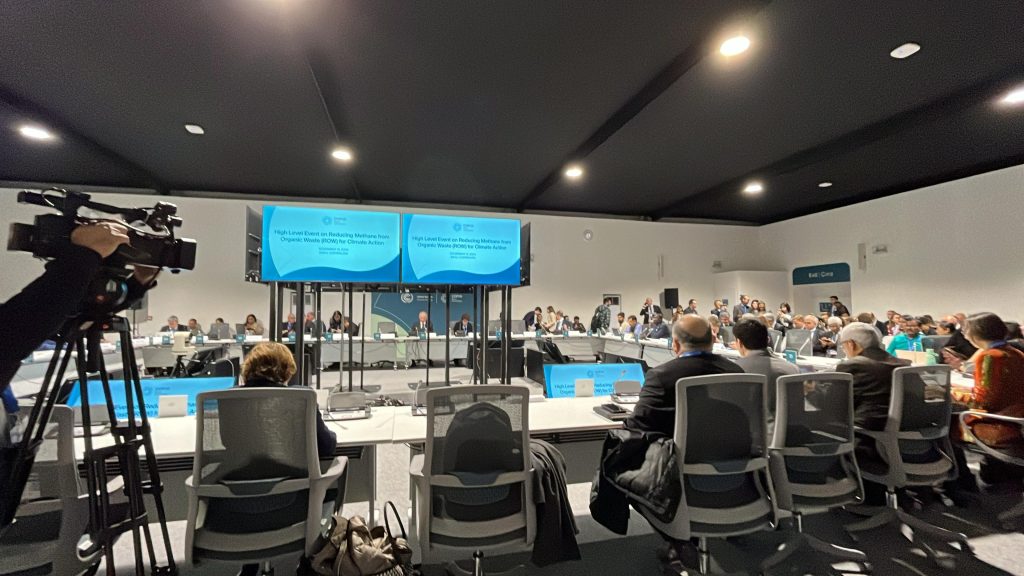
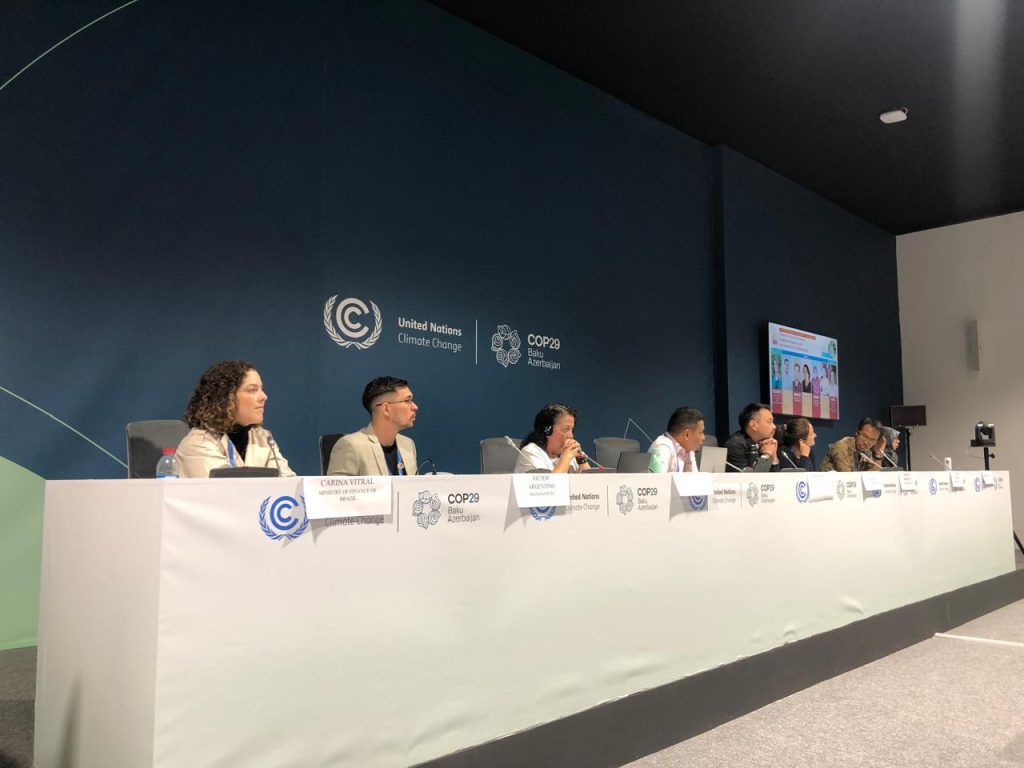
COP29 had a real buzz on waste and methane, and kept the GAIA delegation busy as ever. A 35 delegates group with representatives from 14 countries advocated for environmental justice and climate solutions in the waste sector in 4 official side events, 2 press conferences, 24 events across 10 pavilions including national pavilions (Bangladesh, Brazil, Germany, Ghana, Nigeria, and Tanzania) and 4 non-country pavilions (Global Methane Hub, FAO, Action on Food Hub, SFOC South Korea), plus several interventions from the audience and many conversations in the corridors, meeting with allies and key partners. The appetite for waste methane solutions proved to be strong, yet providing finance and delivering its implementation in alignment with Environmental Justice Principles remains a critical homework for 2025.
No one said it would be easy. Money discussions are generally controversial, nevermind when the the task at hand involves deciding on an amount in the range of trillions, deployed at a global scale, intended to keep the 1’5º goal within reach while repairing the historical climate debt owed by the the Global North to the Global South, with accessible and transparent finance without creating further indebtedness.
And yet, that was the mission agreed by the parties and mandated by the Paris Agreement, an amount very much needed for several reasons, such as Ed King summarized: “this year saw the longest lasting tropical cyclone on record; some of the worst ever wildfires, a historical drought in the Amazon, and record levels of ocean warming, sea-level rise and glacier retreat. More than half a million people were killed in the 10 deadliest weather events of the last 20 years, all of which have been scientifically attributed to climate change. Extreme weather events now cost US$227 billion a year – up by a quarter in just a decade.” Even more importantly, despite the concept of a trillion may be beyond any ordinary person’s imagination, there is ample consensus that quantum is doable, findable, and nothing less to be aspired to.
Unsurprisingly, the COP29 host (and several rich countries) were not up to the task. Anyone going to the COP29 venue from the northern outskirts of Baku won’t have missed the hundreds of oil wells in the landscape, often situated near apartment buildings as if their piston pumps were a feature in the communal garden. The fact that fossil fuels make up 90% of Azerbaijan’s exports make this country one of the top 10 most oil- and gas-dependent economies in the world – something that would most likely have consequences in a climate change negotiation. Just a guess.
The final outcome has left a wide majority of developing countries and Global South representatives bitterly disappointed. Their call was to raise $1.3 – $1.5 tn a year in quality climate finance by 2030. In stark contrast, the final agreement settled on raising $300 billion from a wide range of sources, including private investment, by 2035. An “abysmally poor” result that many have described as a slab in the face of developing countries. More so when economists have pointed out that a failure to factor in inflation means the $300bn climate finance deal is not the tripling of pledges that has been claimed.
Moreover, the final outcome included an agreement on carbon markets, amidst criticisms of process and meaningful consultation, and failed to specify next steps on transitioning away from fossil fuels. Overall, it’s a result that has once more raised questions about whether the UNFCCC COPs are really fit for purpose, in any case leaving much room for improvement and critical pending items to be further elaborated.
Waste Methane at COP29
Amidst the challenges for the fossil fuels phase out agenda – a parallel track has gained traction in the UNFCCC over the last years and shone again at COP29: the waste and methane agenda. The UK energy security and net-zero secretary Ed Miliband noted:
“CO2 is the marathon, methane is the sprint.” The cause has not disappointed in Baku either, with several wins worth cheering up for, and a clear map for the next steps that need to be taken.
First, the UN acknowledged that cutting methane emissions before 2030 was the emergency break in the climate emergency, commending the 159 nations that have pledged to cut methane emissions by 30% by 2030 signing on to the Global Methane Pledge. Within these, 30 countries endorsed the COP29 Declaration on Reducing Methane from Organic Waste, including eight of the 10 largest emitters of methane from organic wastes. Together, these 30 countries cover nearly 50% of global methane from organic waste emissions. Looking at the fine print, the commitment entails setting sectoral targets to reduce methane from organic waste within future Nationally determined contributions (NDCs). One country did step up their leadership on this mission in the first week: Chile led a specific regional declaration alongside with Brasil, Colombia, Costa Rica, Guatemala, México, Uruguay, Panamá, and Perú -committing to include waste methane sectoral targets in their upcoming NDCs.
Furthermore, at the other side of the Atlantic, the G20 Declaration reaffirmed an explicit commitment to “significantly reduce the generation of waste, including unmanaged and poorly managed waste, through zero waste and other initiatives”.
These are not small wins. GAIA’s NDCs analysis in 2021 found that only a third of NDCs updated at that point included solid measures to reduce waste methane, and in fact, almost half of them made provisions for implementing waste incineration technologies which further exacerbate climate change, air pollution and poverty for waste pickers. Three years later, in 2024, the appetite for utilizing the solutions in the waste sector are completely different, as the pledges above illustrated – making the next round of NDC particularly exciting and promising.
Critical questions on waste methane in 2025: what finance and for what projects?
Of course, pledges are only pledges; and there are many pending questions. First and foremost, whether the pledges will translate into actual finance for real implementation of upstream solutions is key. These questions were already included in GAIA’s campaign flags at COP29, and will remain critical on the path towards COP30.
Upstream solutions such as waste prevention, source-separation of organic discards, composting and other methods have the potential to reduce waste methane emissions by as much as 95% by 2030, replacing fossil fuels in energy generation and/or in fertilizers, and creating good jobs for waste pickers and community-based organizations who are the ‘de facto’ recycling system in the Global South.
These solutions are only receiving 1% (US$22M) of all climate finance for methane abatement, while dirty and greedy waste-to-energy incinerators receive 94% (US$4.08B). Of this financing, 54% come from the private sector, according to the Climate Policy Initiative (CPI). Early findings of research expected to be published in February 2025 by CPI and presented at the official side event along with GAIA, Instituto POLIS, and YPBB, found that upstream solutions led by grassroots communities are cost competitive and deliver an array of core benefits that go well beyond mitigation. In fact, they are essential to make life possible.
Indeed, a huge threat to these methane pledges is the controversial “methane to CO2 swap” – which is simply unacceptable. In such a swap, a country could be reducing their waste methane emissions by investing in waste-to-energy incineration, a highly problematic industry responsible for climate change, air pollution, indebtedness of global south countries, and loss of livelihoods in vulnerable communities.
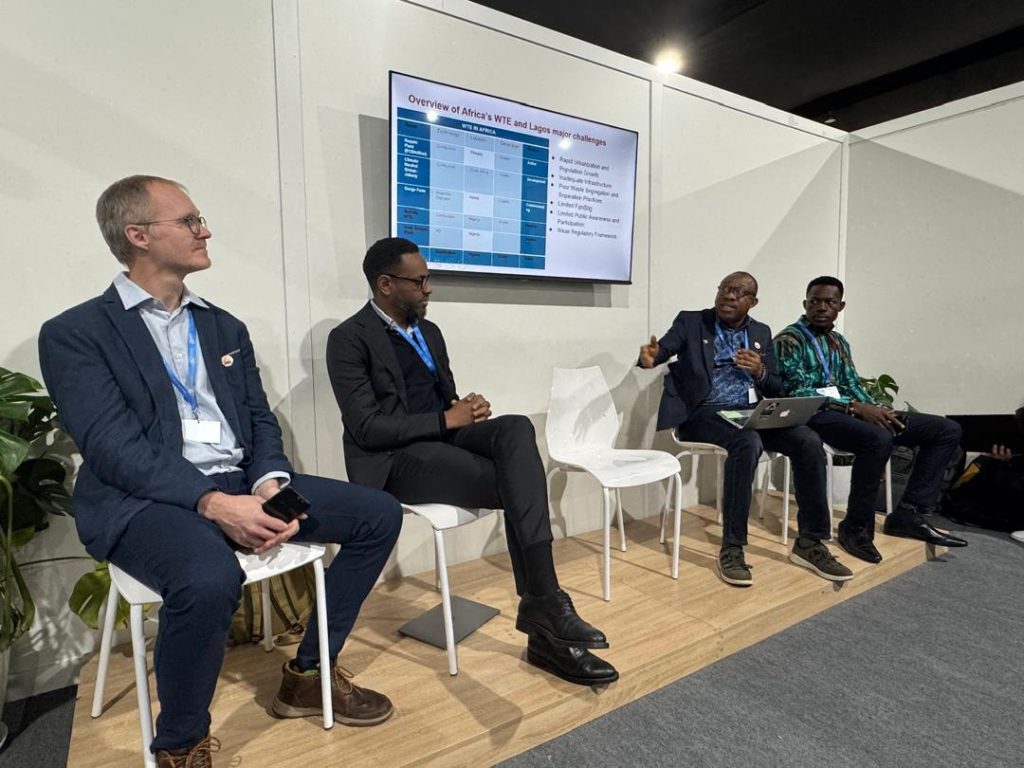
This is exactly the direction that countries like Nigeria, for example, could be taking, as discussed in the Nigeria Pavilion by local organisations. Last July, Nigerian civil society organizations petitioned the Lagos Governor to abandon its poor plans to set up a waste-to-energy incinerator in Epe landfill. The incinerator, which has been promised 120 EUR million investment from the Dutch government, would be built by a Dutch company, Harvest Waste – yet another precedent of Global North exporting dirty technology to the Global South. If Lagos adopts this flawed approach, it sets a dangerous precedent for the rest of Nigeria and Africa.
In addition, the COP29 agreement on carbon markets does add a new layer of climate finance advocacy. The recent New York Times exposé about the infamous Timarpur-Okhla incinerator in Delhi (India) is a clear testimony to the quality of those carbon credits that are supposedly mitigating climate change cost-effectively. Any more fuel in this direction will make methane pledges just empty, meaningless, wishful thinking.
As several GAIA members made explicit in its press conference, for the Global Methane Pledge and NDCs to succeed, aligning implementation with a just transition pathway in the waste sector is a must. The Environmental Justice Principles for Fast Action on Waste and Methane are a critical tool to guide action. For that to happen, climate finance in the waste sector must shift dramatically from waste disposal to scaling and replicating successful community-led zero-waste initiatives that deliver the greatest environmental and social justice benefits. Failing to maintain environmental justice standards will effectively undermine the Paris Agreement and jeopardize the 1’5º goal. Methane reduction needs to build on decarbonising efforts, swapping methane for CO2 will not work.
In short: the homework is clear. GAIA’s call is loud: to all policymakers and practitioners looking into how to operationalise the waste methane pledges into real climate action please do feel warmly encouraged to check and follow GAIA’s NDC test for fast action on waste and climate.
Indeed, no one said it would be easy. But it’s definitely possible. As always, the positive stories from the ground (see complete stories here) are what set the standards of our climate ambition; it’s been done, so let’s do more of this:
In Dar Es Salaam, Tanzania, the groundbreaking zero waste model in Bonyokwa ward collects 1.74 tonnes of waste daily from 4.500 households (95% of households), achieving 95% diversion (source segregation rate) and 100% of organic waste diversion from disposal.
In Brazil, more than 10 waste picker organizations are running organic waste recycling systems, and more than 20 are to be implemented, including two in big cities São Paulo and Brasilia.
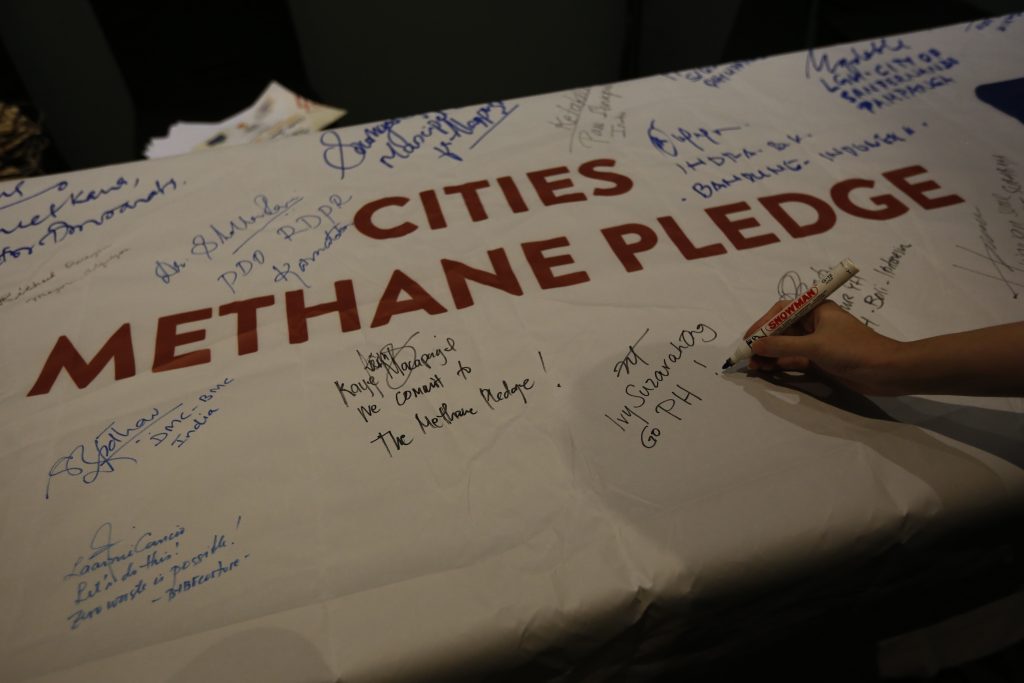
In the Philippines, the Zero Waste Cities Network was launched with 37 cities uptaking the Cities Methane Pledge, committing to reduce 70% of their methane emissions from waste by 2030
In Durban, South Africa: zero waste project started in one market now ready to scale up and recover waste from 3 markets, including 3rd biggest in the country, creating four jobs per 400 tons of waste processed.
In Accra, Ghana, GAYO’s work on methane reduction with organic waste treatment project was named finalist for the world’s most prestigious environmental prize in the clean air category.
In Europe, there are nearly 500 municipalities now who are committed to zero waste, led by the world’s first Zero Waste Cities Certification. Many of these zero waste cities implement the continent’s best practices on organic waste reduction and management.
In Valparaíso, Chile, a collaboration amongst national and local cooperatives of waste pickers with local authorities is planning to launch an innovative pilot project for organic waste treatment for 500 households.
In the US, newly secured funding for regrants to environmental justice organizations in the US to implement methane reduction programs.
These projects illustrate the enormous potential to achieve rapid action on reducing methane emissions from the waste sector by dedicating climate finance to scaling up proven organic waste management strategies with demonstrable co-benefits for livelihoods, quality of life, governance, and community health, both in identified priority countries and elsewhere.
(Spanish version)
En medio del caos y la desesperación, los residuos y el metano se mantienen firmes en la agenda climática
La COP 29 se centró en los residuos y el metano, y mantuvo a la delegación de GAIA más ocupada que nunca.Un grupo de 35 delegados con representantes de 14 países abogó por la justicia ambiental y las soluciones climáticas en el sector de residuos en 4 eventos paralelos oficiales, 2 conferencias de prensa, 24 eventos en 10 pabellones, incluidos pabellones nacionales (Bangladesh, Brasil, Alemania, Ghana, Nigeria y Tanzania) y 4 pabellones de fuera del país (Global Methane Hub, FAO, Action on Food Hub, SFOC Corea del Sur), además de varias intervenciones desde la audiencia y muchas conversaciones en los pasillos, y en reuniones con aliados y socios clave. El apetito por soluciones para el metano residual demostró ser fuerte, pero proporcionar financiamiento y lograr su implementación en consonancia con los Principios de Justicia Ambiental sigue siendo una tarea crítica para 2025.
Nadie dijo que fuera a ser fácil. Las discusiones sobre el dinero suelen ser controvertidas, más aún si se trata de decidir sobre una cantidad en la región de trillones, desplegados a escala mundial, con el fin de mantener el objetivo de 1’5º al alcance de la mano y, al mismo tiempo, reparar la deuda climática histórica del Norte Global con el Sur Global, con una financiación accesible y transparente sin generar más endeudamiento.
Y sin embargo, esa fue la misión acordada por las partes y encomendada por el Acuerdo de París, una cantidad muy necesaria por varias razones, como resumió Ed King: “este año se produjo el ciclón tropical de mayor duración jamás registrado; algunos de los peoresincendios forestales de la historia , una sequía histórica en el Amazonas, y niveles récord de calentamiento de los océanos, aumento del nivel del mar y retroceso de los glaciares. Más de medio millón de personas murieron en los 10 fenómenos meteorológicos más mortíferos de los últimos 20 años, todos ellos atribuidos científicamente al cambio climático. Los fenómenos meteorológicos extremos cuestan ahora 227.000 millones de dólares al año, una cuarta parte más en sólo una década». Y lo que es más importante, a pesar de que el concepto de un billón pueda estar más allá de la imaginación de cualquier persona corriente, existe un amplio consenso en que la cuántica es factible, recaudable y nada menos a lo que aspirar.
Como era de esperar, el anfitrión de la COP 29 (y varios países ricos) no estuvieron a la altura. Cualquiera que se dirija a la sede de la COP 29 desde las afueras del norte de Bakú no habrá pasado por alto los cientos de pozos petrolíferos en el paisaje, a menudo situados cerca de edificios de apartamentos como si sus bombas de pistón fueran un elemento más del jardín comunitario. El hecho de que los combustibles fósiles representan el 90% de las exportaciones de Azerbaiyán convierte a este país en una de las 10 economías más dependientes del petróleo y el gas del mundo, algo que muy probablemente tendría consecuencias en una negociación sobre el cambio climático. Sólo una suposición.
El resultado final ha dejado amargamente decepcionados a una amplia mayoría de países en desarrollo y representantes del Sur Global. Su petición era recaudar entre 1,3 y 1,5 trillones de dólares al año en financiación climática de calidad para 2030. En cambio, el acuerdo final fijó la recaudación de 300 billones de dólares procedentes de una amplia gama de fuentes, incluida la inversión privada, para 2035. Un vacío evidente que muchos han calificado de bofetada en la cara de los países en desarrollo. Más aún cuando los economistas han señalado que el hecho de no tener en cuenta la inflación significa que el acuerdo de 300 billones de dólares para la financiación de la lucha contra el cambio climático no triplica las promesas que se han hecho.
Además, el resultado final incluyó un acuerdo sobre los mercados de carbono, en medio de críticas sobre el proceso y las consultas significativas, y no especificó los próximos pasos en la transición hacia el abandono de los combustibles fósiles. En general, es un resultado que una vez más ha planteado dudas sobre si las COP de la CMNUCC son realmente adecuadas para su propósito y, en cualquier caso, deja mucho margen de mejora y puntos críticos pendientes que deben elaborarse más a fondo.
Metano residual en la COP 29
En medio de los desafíos para la agenda de eliminación de los combustibles fósiles, una vía paralela ha ganado tracción en la CMNUCC en los últimos años y brilló de nuevo en la COP 29: la agenda de residuos y metano. El Secretario de Seguridad Energética y Red Cero del Reino Unido , Ed Miliband, señaló: «El CO2 es la maratón, el metano es el sprint». La causa tampoco ha decepcionado en Bakú, con varias victorias por las que merece la pena alegrarse, y un mapa claro de los próximos pasos que hay que dar.
En primer lugar, la ONU reconoció que reducir las emisiones de metano antes de 2030 era el freno de emergencia en la emergencia climática, elogiando a las 159 naciones que se han comprometido a reducir las emisiones de metano en un 30% para 2030 firmando el Compromiso Global del Metano. Entre ellos, 30 países respaldaron la Declaración de la COP29 sobre la reducción del metano procedente de residuos orgánicos , incluidos ocho de los 10 mayores emisores de metano procedente de residuos orgánicos. Juntos, estos 30 países cubren casi el 50% de las emisiones mundiales de metano procedente de residuos orgánicos. Si nos fijamos en la letra pequeña, el compromiso implica el establecimiento de objetivos sectoriales para reducir el metano procedente de residuos orgánicos dentro de las futuras Contribuciones Nacionales Determinadas (NDC). Un país intensificó su liderazgo en esta misión durante la primera semana: Chile lideró una declaración regional específica junto con Brasil, Colombia, Costa Rica, Guatemala, México, Uruguay, Panamá y Perú, comprometiéndose a incluir objetivos sectoriales de metano de residuos en sus próximas NDC.
Además, al otro lado del Atlántico, la Declaración del G20 reafirmó el compromiso explícito de «reducir significativamente la generación de residuos, incluidos los residuos no gestionados y mal gestionados, a través de la iniciativa de cero residuos y otras iniciativas».
No se trata de pequeñas victorias. El análisis de las NDC realizado por GAIA en 2021 reveló que encontró que sólo un tercio de las NDC actualizadas en ese momento incluían medidas sólidas para reducir el metano del sector residuos y, de hecho, casi la mitad de ellas establecían disposiciones para implementar tecnologías de incineración de residuos que exacerban aún más el cambio climático, la contaminación del aire y la pobreza de los recicladores. Tres años después, en 2024, las ganas de utilizar las soluciones en el sector de los residuos son completamente diferentes, como ilustran las promesas anteriores, lo que hace que la próxima ronda de NDC sea especialmente emocionante y prometedora.
Cuestiones cruciales sobre el metano de residuos en 2025: ¿qué financiación y para qué proyectos?
Por supuesto, las promesas son sólo promesas, y hay muchas cuestiones pendientes. En primer lugar, es fundamental saber si las promesas se traducirán en financiación real para la aplicación de soluciones verdaderas. Estas cuestiones ya se incluyeron en las banderas de campaña de GAIA en la COP 29, y seguirán siendo fundamentales en el camino hacia la COP30.
Las soluciones previas, como la prevención de residuos, la separación en origen de los residuos orgánicos, el compostaje y otros métodos, tienen el potencial de reducir las emisiones de metano de los residuos hasta en un 95% para 2030, sustituyendo a los combustibles fósiles en la generación de energía y/o en los fertilizantes, y creando buenos puestos de trabajo para los recicladores y las organizaciones comunitarias, que son el sistema de reciclaje «de facto» en el Sur Global.
Estas soluciones sólo reciben el 1% (22 millones de dólares) de toda la financiación climática para la reducción del metano, mientras que las sucias y codiciosas incineradoras de residuos reciben el 94% (4.080 millones de dólares). De esta financiación, el 54% procede del sector privado, según la Iniciativa de Política Climática (CPI). Los primeros resultados de una investigación que la CPI publicará en febrero de 2025 y que se presentaron en un acto paralelo oficial junto con GAIA, el Instituto POLIS y YPBB, concluyeron que las soluciones lideradas por las comunidades de base son competitivas en costes y aportan una serie de beneficios fundamentales que van mucho más allá de la mitigación. De hecho, son esenciales para hacer la vida posible.
No obstante, una gran amenaza para estos compromisos sobre el metano es el controvertido «canje de metano por CO2», que es sencillamente inaceptable. En dicho canje, un país podría estar reduciendo sus emisiones de metano en el sector residuos invirtiendo en la incineración de residuos, una industria muy problemática responsable del cambio climático, la contaminación atmosférica, el endeudamiento de los países del Sur global y la pérdida de medios de vida en comunidades vulnerables.
Esta es exactamente la dirección que podrían tomar países como Nigeria, por ejemplo, tal y como han debatido organizaciones locales en el Pabellón de Nigeria. El pasado mes de julio, organizaciones de la sociedad civil nigeriana pidieron al Gobernador de Lagos que abandonara sus malos planes de instalar una incineradora de residuos para producir energía en el vertedero de Epe. La incineradora, a la que el gobierno holandés ha prometido una inversión de 120 millones de euros, sería construida por una empresa holandesa, Harvest Waste: otro precedente más del Norte Global exportando tecnología contaminante al Sur Global. Si Lagos adopta este enfoque erróneo, sentará un peligroso precedente para el resto de Nigeria y África.
Además, el acuerdo de la COP 29 sobre los mercados de carbono añade una nueva dimensión de campaña en la financiación climática. La reciente revelación del New York Times sobre la infame incineradora de Timarpur-Okhla en Delhi (India) es un claro testimonio de la calidad de esos créditos de carbono que supuestamente mitigan el cambio climático de forma rentable. Si se sigue avanzando en esta dirección, las promesas sobre el metano se convertirán en meras ilusiones vacías y sin sentido.
Tal y como explicaron varios miembros de GAIA en su conferencia de prensa, para que el Compromiso Global sobre el Metano y las NDC tengan éxito, es imprescindible alinear su implementación con una vía de transición justa en el sector de los residuos. Los Principios de Justicia Ambiental para la Acción Rápida sobre Residuos y Metano son una herramienta fundamental para guiar la acción. Para ello, la financiación de la lucha contra el cambio climático en el sector de los residuos debe pasar radicalmente de la eliminación de residuos a la ampliación y reproducción de iniciativas de basura cero comunitarias de éxito que aportan los mayores beneficios medioambientales y de justicia social. Si no se mantienen las normas de justicia medioambiental, se socavará el Acuerdo de París y se pondrá en peligro el objetivo de 1 ‘5o. La reducción del metano debe basarse en los esfuerzos de descarbonización, cambiar metano por CO2 no funcionará.
En resumen: los deberes están claros. GAIA hace un llamamiento: a todos los responsables políticos y profesionales que estén estudiando cómo convertir los compromisos sobre el metano en residuos en una acción climática real, les animamos a que consulten y sigan el test NDC de GAIA para una acción rápida en materia de residuos y clima.
De hecho, nadie dijo que fuera fácil. Pero sin duda es posible. Como siempre, las historias positivas desde el terreno (ver historias completas aquí) son las que marcan las pautas de nuestra ambición climática; ya se ha hecho, así que hagamos más de esto:
En Dar Es Salaam (Tanzania), el innovador modelo de residuo cero del distrito de Bonyokwa recoge diariamente 1,74 toneladas de residuos de 4.500 hogares (95% de los hogares), logrando una desviación del 95% (tasa de segregación en origen) y un 100% de desviación de residuos orgánicos de la eliminación.
En Brasil, más de 10 organizaciones de recicladores gestionan sistemas de reciclaje de residuos orgánicos, y se van a implantar más de 20, dos de ellas en las grandes ciudades de São Paulo y Brasilia.
En Filipinas se puso en marcha la Red de Ciudades con Residuos Cero, con 37 ciudades que se comprometieron a reducir el 70% de sus emisiones de metano procedentes de residuos para 2030.
En Durban (Sudáfrica): el proyecto Residuo Cero se inició en un mercado y ahora está listo para ampliarse y recuperar residuos de tres mercados, incluido el tercero más grande del país, creando cuatro puestos de trabajo por cada 400 toneladas de residuos procesados.
En Accra (Ghana), el trabajo de GAYO en la reducción de metano con el proyecto de tratamiento de residuos orgánicos fue nombrado finalista del premio medioambiental más prestigioso del mundo en la categoría de aire limpio.
En Europa, ya son casi 500 los municipios comprometidos con el residuo cero, liderados por la primera Certificación de Ciudades con Residuo Cero del mundo. Muchas de estas ciudades de residuo cero aplican las mejores prácticas del continente en materia de reducción y gestión de residuos orgánicos.
En Valparaíso (Chile), una colaboración entre cooperativas nacionales y locales de recicladores con las autoridades locales tiene previsto poner en marcha un innovador proyecto piloto de tratamiento de residuos orgánicos para 500 hogares.
En EE.UU., se acaba de conseguir financiación para conceder subvenciones a organizaciones de justicia medioambiental de ese país para que pongan en marcha programas de reducción del metano.
Estos proyectos ilustran el enorme potencial para lograr una acción rápida en la reducción de las emisiones de metano del sector de los residuos mediante la dedicación de financiación climática a la ampliación de estrategias probadas de gestión de residuos orgánicos con beneficios colaterales demostrables para los medios de subsistencia, la calidad de vida, la gobernanza y la salud de la comunidad, tanto en los países prioritarios identificados como en otros lugares.
The Inflation Reduction Act (IRA) channels $270 billion in tax credits for climate investments but raises concerns about incineration—a false solution to waste disposal that could generate 637.7 million tonnes of CO2e emissions over two decades, further harming the environment and disadvantaged communities.
By: Marcel Howard (Zero Waste Program Manager, US/Canada) and Jessica Roff (Plastics & Petrochemicals Program Manager, US/Canada)
Key Highlights
The Inflation Reduction Act (IRA) is primarily a tax bill. Of the promised $369 billion in climate investments, $270 billion will come in the form of tax credits1
Incineration is one of the most polluting and expensive waste disposal systems. Industry2 often greenwashes incineration as “waste-to-energy”3 despite producing minimal amounts of usable energy and massive energy input
By measuring the lifecycle climate impacts of incineration accurately, the Department of the Treasury can deny polluting facilities billions in tax credits intended for actual sustainable energy solutions and ultimately delay or block their construction or expansion
If industry succeeds in propping up incinerators for 20 years, they will produce 637.7 million tonnes of climate-change-inducing CO2e emissions and further exacerbate toxic pollution and environmental racism4
Pairing new subsidies for incinerators with incentives for EVs is perverse
Turning waste, including fossil fuel-derived plastics, into jet fuel is dangerous and does not decarbonize air travel
Two-thirds of US incinerators are located in states that include incineration in their renewable energy portfolio
The IRA allocated billions of dollars in lending subsidies specifically meant to drive reinvestment in low-wealth and environmental justice communities. Environmental justice, frontline, and fenceline groups should consider applying for these IRA lending programs
Background
The United States (US) has a waste problem compounded by a plastic problem. For decades, we have been handling our waste in ways that harm communities, our climate, and the natural world. Federal, state, and municipal governments continue to site waste incinerators of all forms in Black, brown, indigenous, and lower-wealth communities — plaguing them with decades of harmful air emissions, high levels of greenhouse gasses, toxic waste, accidents, and other health and safety-related concerns.From fossil fuel extraction to final waste product disposal, the entire production process damages these communities and numerous others. Across the board, incineration is one of the most polluting and expensive waste disposal systems.
Industry often greenwashes incineration as “waste-to-energy” despite producing minimal amounts of usable energy and leverages this greenwashing to access billions of dollars in federal, state, and local green, renewable, and sustainable energy subsidies and tax breaks. Against this backdrop, the Biden Administration signed the Inflation Reduction Act (IRA) into law on August 16, 2022. Many agencies are already approving and funding false solutions under the IRA. The Department of Energy (DOE) is funding new carbon capture programs at nearly $3.5 billion and allocating $1.2 billion of Justice40 money to develop direct air capture facilities. We are in a pivotal moment where the US must decide if it will take critical steps to lower greenhouse gas and toxic emissions and move toward a truly sustainable future or will continue to subsidize the dirtiest industries to annually emit millions of tonnes of new CO2 and other dangerous air pollutants.
IRA Overview
The Biden Administration claims its 755-page IRA is the most comprehensive climate bill in US history that is supposed to “make a historic commitment to build a new clean energy economy.” Its provisions on climate change mitigation, clean energy, and energy innovation dominate headlines, as it raises nearly $800 billion from multiple sources. President Biden said, “With this law, the American people won and the special interests lost.” To ensure this is true and stop the incinerator lobby and other special interests from cashing in on a new pool of taxpayer money, the federal government must implement critical changes to its business-as-usual model.
The IRA is primarily a tax bill. Of the promised $369 billion in climate investments, $270 billion will come in the form of tax credits. Before the IRA, Congress awarded tax credits to specific technologies (including incinerators) regardless of greenhouse gas emissions or community harm. Beginning in 2025, however, their eligibility will depend entirely on the Department of Treasury (Treasury) determining that they are zero-emission technologies.By measuring the lifecycle climate impacts of incineration accurately, Treasury can deny polluting facilities billions in tax credits intended for actual sustainable energy solutions and ultimately delay or block their construction or expansion.
Threats & False Solutions
Lifelines to Old, Failing Incinerators
Corporate polluters are corrupting the IRA, lobbying to weaken its rules and definitions to qualify for billions in new subsidies to expand and retrofit existing incinerators, most of which have been operating for an average of 32 years. It is nearly impossible to construct new conventional incinerators due to cost and community opposition, so industry is focused on expansion and modification. If industry succeeds in propping up incinerators for 20 years, they will produce 637.7 million tonnes of climate-change-inducing CO2e emissions and further exacerbate toxic pollution and environmental racism.
Codifying False and Greenwashed Definitions
The incinerator lobby’s goal is to maximize subsidies, profits, and expansion and to use the IRA and other climate bills as a subsidized path to an undeserved sustainable image upgrade. In the context of the IRA, federal agencies such as the Treasury, the Department of Energy (DOE), and the Environmental Protection Agency (EPA) can either categorize incineration as the dirty, expensive, polluting process it is or bolster industry’s claims that incineration produces sustainable energy. If the federal government supports industry’s definitions in the earliest stages of IRA implementation, they will frame agency action and provide billions in tax credits, likely being codified for many climate laws, including the IRA.
IRA Breakdown & Opportunities for the Incinerator Lobby
The incinerator lobby is working to undermine all aspects of the IRA, specifically focusing on (1) the Renewable Fuel Standard (RFS), (2) Sustainable Aviation Fuel (SAF), and (3) IRA lending programs.
Renewable Fuel Standard (RFS)
In consultation with the Department of Agriculture and DOE, EPA implements the Renewable Fuel Standard (RFS) program. The RFS program is a “national policy that requires a certain volume of renewable fuel to replace or reduce the quantity of petroleum-based transportation fuel, heating oil, or jet fuel.”The four renewable fuel categories under the RFS are biomass-based diesel, cellulosic biofuel, advanced biofuel, and total renewable fuel. Although long limited to liquid fuels like ethanol, Biden’s EPA is in the process of allowing electricity from certain types of bioenergy to generate eligible credits. Under the current proposal, electric vehicle manufacturers would contract with power producers to generate highly profitable RFS credits.
Pairing new subsidies for incinerators with incentives for EVs is perverse. While support for electric vehicles is vital, it must not be fueled by dirty energy nor sacrifice frontline and fenceline communities. Incinerator interests recently launched a lobbying campaign to secure these incentives. Fortunately, EPA is not required to allow incinerator electricity into the program and has recently tabled an industry-backed eligibility proposal. But, only public pressure on Biden’s EPA and key Administration climate deciders will ensure they don’t approve such proposals.
Sustainable Aviation Fuel (SAF)
As one of the most generous IRA incentives, the Sustainable Aviation Fuel Tax Credit (SAF) poses an urgent environmental justice concern. The credit increases in value for lower lifecycle emissions fuels. Treasury’s implementation will determine if this approach succeeds or fails. Industry interests are pushing to make the credit friendlier– and more lucrative–to a new generation of incinerators masquerading behind greenwashing like “pyrolysis,” “chemical or advanced recycling,” and “plastic-to-fuel.” Turning waste, including fossil fuel-derived plastics, into jet fuel is dangerous and does not decarbonize air travel.
Although the new aviation production tax credit theoretically excludes petroleum-based feedstocks like plastic, industry is pressuring the Administration to interpret the law to maximize benefits for incineration-based aviation fuels. President Biden and Treasury must decisively determine that plastic-derived fuel — including that derived from pyrolysis oil or any other product of chemical recycling/pyrolysis/gasification — is ineligible for these tax credits.
Lending Programs
The IRA allocated billions of new dollars to EPA and DOE, in particular, to expand existing lending programs and launch entirely new ones. Like the rest of the IRA, these programs’ climate and justice benefits depend on implementation. EPA is in charge of the new Greenhouse Gas Reduction Fund (GGRF), arguably the most important non-tax provision of the IRA. Worth $37 billion, it will be divided into three separate programs. EPA released broad, unenforceable guidelines in April 2023, suggesting they will focus lending on distributed generation, building decarbonization, and transport. These guidelines will not ensure the money is appropriately allocated, so EPA must prioritize applicants working on proven zero waste approaches.
DOE is in charge of The Energy Infrastructure Reinvestment (EIR) Program, a new loan guarantee program with $250 billion that must be spent before 2026. It can fund energy infrastructure upgrades and the reopening of defunct energy infrastructure, both of which industry could coopt to support their ongoing incineration and chemical recycling plans. DOE must refuse to consider any incinerator applications to guarantee industry does not use loopholes to access clean energy tax credits.
In July, the Republican-led House Appropriations Committee passed the Interior, Environment, and Related Agencies budget for Fiscal Year 2024. Their budget supports chemical recycling while cutting massive amounts from EPA’s budget and the IRA’s environmental justice efforts, including a nearly $4 billion EPA budget cut (a 39% reduction over 2023), reneging on the IRA’s $1.35 billion promised in environmental and climate justice grants.
Call to Action
The incinerator lobby is so desperate for money and a government-greenwashed reputation that they launched a new, big-money–astroturf5 network, including DC power brokers and local government enablers. The combined movements6 for climate justice don’t have industry money, but we have people power, the truth, and a prime opportunity to fight against this industry push. There are three key areas in which to counter industry’s agenda: (1) Treasury engagement, (2) state-level renewable portfolio standards, and (3) IRA lending subsidies.
Treasury Engagement
As the Washington Post exposed in May 2023, the incinerator industry is among polluting industries racing to position themselves as green to access billions in subsidies and tax credits. In the last year alone, industry launched two trade groups to push their message: the Waste-to-Energy Association and the Circular Economy Coalition. Both have made comments to access benefits for incinerators under the Inflation Reduction Act, or considered prioritizing it. Industry is dedicated to getting Treasury to qualify incinerators as renewable, despite overwhelming evidence that incinerators are extremely polluting.
It is critical to engage with Treasury as it develops policies, rules, regulations, and procedures to implement the IRA. If Treasury determines this most costly and polluting form of energy is zero emission, it will set an appallingly low bar within the IRA that will exacerbate rather than address the climate crisis, perpetuating and compounding the issues we currently face, and permanently scarring the Biden Administration legacy.
State-level Renewable Portfolio Standards
The IRA has broad implications, reaching far beyond the federal level of government. Defeating federal government incinerator giveaways in the IRA and other federal climate initiatives will strengthen communities fighting state and local government incinerator giveaways. Currently, different states provide a patchwork of policies and incentives related to incineration. Perhaps most notable are state Renewable Portfolio Standards (RPS). Twenty-nine states, the District of Columbia, and four US territories have an RPS. Each RPS has its own renewable electricity targets, defines what technologies qualify as renewable, designates particular technologies as higher or lower tier within the mix, and enables the trading or sale of renewable energy credits. Two-thirds of US incinerators are located in the 26 US states and territories that include incineration in their renewable energy portfolio. Showing industry’s power, scope, and connections at both the federal and state levels of government. It also shows an entrenched mentality that incineration is a clean energy solution. It is imperative that the IRA does not follow suit.
IRA Lending Subsidies
Along with Treasury engagement, environmental justice, frontline, and fenceline groups should consider applying to IRA lending programs. The Greenhouse Gas Reduction Fund (GGRF) and DOE’s Energy Infrastructure Reinvestment (EIR) Program offers billions of dollars for projects specifically meant to drive reinvestment in low-wealth and environmental justice communities. Both programs provide an opportunity to fund proven zero waste solutions that push back against false solutions, like incineration.
The Greenhouse Gas Reduction Fund (GGRF):The GGRFis a $27 billion investment program designed to achieve the following: “ (1) Reduce greenhouse gas emissions and other air pollutants; (2) deliver benefits of greenhouse gas, and air pollution-reducing projects specifically to low-wealth and disadvantaged communities; and (3) mobilize financing and private capital to stimulate additional deployment of greenhouse gas and air pollution reducing projects.” The GGRF is being implemented via three grant competitions, which include: (1) the National Clean Investment Fund, (2) the Clean Communities Investment Accelerator, and (3) the Solar for All Fund.”7
The National Clean Investment Fund:“The National Clean Investment Fund competition will provide grants to 2-3 national nonprofit clean financing institutions7 capable of partnering with the private sector to provide accessible, affordable financing for tens of thousands of clean technology projects across the country.” To learn more about the program and how to apply, visit Grants.gov.Application packages must be submitted on or before October 12, 2023, at 11:59 PM (Eastern Time) through Grants.gov.
The Clean Communities Investment Accelerator:“The Clean Communities Investment Accelerator competition will provide grants to 2-7 hub nonprofits that will, in turn, deliver funding and technical assistance to build the clean financing capacity of local community lenders working in low-wealth and disadvantaged communities so that underinvested communities have the capital they need to deploy clean technology projects.” To learn more about the program and how to apply, visit Grants.gov. Application packages must be submitted on or before October 12, 2023, at 11:59 PM (Eastern Time) through Grants.gov.
DOE Energy Infrastructure Reinvestment (EIR) Program: “The EIR Program provides $250 billion for projects that retool, repower, repurpose, or replace energy infrastructure that has ceased operations or enable operating energy infrastructure to avoid, reduce, utilize, or sequester air pollutants or greenhouse gas emissions.” To learn more about the program and how to apply, visit Energy.gov. Individuals interested in applying should request a no-cost pre-application consultation with a member from DOE’s Loan Programs Office.
USDA Empowering Rural America (New ERA) Program: “The ERA program provides $9.7 billion for projects that help rural Americans transition to clean, affordable, and reliable energy intending to improve health outcomes and lower energy costs for people in rural communities.” To learn more about the program and how to apply, visit USDA.gov. Individuals interested in applying should submit a Letter of Interest (LOI) by September 15, 2023.
Conclusion
On paper, the Biden Administration’s IRA may be the most comprehensive climate legislation in history, but it also has the immense potential to be a climate destroyer. We are at a crossroads where the Administration and all other levels of government have the power to use the IRA for its stated purpose to “confront the existential threat of the climate crisis and set forth a new era of American innovation and ingenuity to lower consumer costs and drive the global clean energy economy forward.” To make the promise a reality, the Administration — including all the executive agencies, particularly Treasury, Energy, and EPA — cannot succumb to industry greenwashing lobbying.
The Biden Administration must accurately measure the lifecycle climate and health impacts of all forms of incineration and its products (including pyrolysis and gasification) and unequivocally determine that it is not a source of clean energy or a safe way to make jet fuel. It will be up to our ever-expanding movement to hold the Administration accountable to the ideal of the IRA and ensure it is not another greenwashed handout to industry — and that its tax credits and funding go to sustainable solutions that benefit the Black, brown, indigenous, and low wealth communities as it initially intended.
For more information on the Inflation Reduction Act and its lending programs, visit our fact sheet here.
As a tax bill, the categories and definitions of processes are critical because they will determine if a process is covered under it. Historically, there have been some good and some bad determinative definitions (including currently for chemical recycling). ↩︎
Industry refers to the plastics, incinerator, fossil fuel, and chemical industries who are all perpetuating the plastic waste problem ↩︎
Industry labels waste-to-energy (WTE) a number of different ways including: plastic-to-fuel (PTF), plastic-to-energy (PTE), refuse-derived-fuel, etc. ↩︎
This is entirely dependent on if the federal government places incinerators into favorable categories for purposes of massive amounts of tax credits and de facto subsidies. ↩︎
Astroturfing is the practice of hiding the sponsors of a message or organization (e.g., political, advertising, religious, or public relations) to make it appear as though it originates from, and is supported by, grassroots participants. ↩︎
The movement includes, but is not limited to – and is always open to expand – the environmental justice movement, climate movement, conservation movement, public health movement, plastics movement, etc. ↩︎
For decades, U.S. cities have collected mixed plastic in recycling programs in an unsuccessful attempt to solve the plastic waste crisis. Analyzing the municipal solid waste (MSW) streams of five U.S. cities, this new report sheds light on the different ways legitimate recycling efforts are undermined, and how the simplest and most ethical solution to our plastic problem is to remove all non-recyclable plastic from the system. A key finding of the study is that 64% of plastic in these cities’ MSW streams cannot be recycled. It’s time for policy and regulations to prioritize reduction and reuse over recycling, and to rethink public programs and budgets for healthier outcomes.
In five major U.S. cities, 64% of plastic collected is NOT recyclable.
Key Takeaways
Lack of data transparency obstructs solutions. Good data leads to good policy. Data on municipal waste flows is absent, old and difficult to find. This allows the plastic industry to exploit loopholes and push self-serving narratives, and creates challenges for cities and communities that want to shift to true zero waste systems.
Most plastic is designed to be dumped or burned, harming communities. Cities can reduce pollution by banning non-recyclable plastic. Only 8.8% of all plastic in the waste stream in the five cities is actually recycled. The remainder is incinerated, landfilled or could supply plastic-for-fuel or chemical recycling facilities, all of which are harmful to our health and environment.
Recycling rates are low because most plastic produced is not recyclable. Companies, not cities, should pay. 64.3% of all plastic in the waste stream in the five cities is not recyclable through municipal recycling or state redemption programs, and yet communities are paying for it with their health and their pocketbooks.
People (understandably) don’t know what’s actually recyclable. Cities should prioritize collecting only plastic that can be recycled. In the five cities, only 24% of potentially recyclable plastic (#1, #2, #5) gets recycled; 76% gets incinerated or landfilled. Conversely, 12%-55% of all plastic that ended up in single-stream recycling programs was not recyclable.
While plastic recycling must be improved, it has its limits. Plastic reduction and zero waste systems must be prioritized. Zero waste infrastructure like reuse, refill, and repair provides up to 200x as many jobs as disposal, furthers environmental justice, and improves sustainability.
The Project
Across the United States, waste incinerators have plagued communities for decades with harmful air emissions, accidents, and other health and safety-related concerns. As their contracts with these aging incinerators expire in the next few years, cities have a choice to make: they can choose to bind themselves to a new generation of incinerators that will cost millions and continue to pollute our most vulnerable communities, or they can make a just transition to a sustainable system that improves public health and saves money. Communities most impacted by these facilities are taking the lead to create livable communities that manage waste effectively for the health of generations to come.
“The life cycle of plastic is harming communities all along the way; from extraction, to refinery, to single-use litter, to incineration.”
KT Andresky, Breathe Free Detroit
Baltimore, MD
Over 65% of the plastic collected through the single-stream program in Baltimore is trash, and likely ends up in the incinerator, threatening the health of the surrounding community. South Baltimore Community Land Trust (SBCLT) is working to change neighborhoods from dumping grounds surrounded by polluting industries to healthy zero waste communities. As a result of SBCLT’s work, in collaboration with other local organizations and institutions, the Baltimore City Council unanimously adopted the Fair Development Plan for Zero Waste.
After decades of community activism, the Detroit Renewable Power Incinerator announced the facility’s immediate closure. Now that an end has been put to municipal waste incineration in Detroit, Breathe Free Detroit in collaboration with grassroots groups is working to build new zero waste systems for the city. One major hurdle is that only 1.3% of plastic collected in single-stream is recyclable, and residents have to foot the bill for the resulting waste.
East Los Angeles, Southeast Los Angeles, and Long Beach have been plagued with two of the three incinerators in California, as well as several oil and plastic production facilities. East Yard Communities for Environmental Justice (EYCEJ) is a community-based environmental health and justice organization that has succeeded in shutting down one incinerator, and is advocating for a zero waste plan that will eliminate single-use plastic and build a network of reuse, refill, and repair shops across the city and a transition away from fossil fuel extraction, refining, and distribution.
Image by East Yard Communities for Environmental Justice
Minneapolis, MN
Of all of the cities in the study, Minneapolis has the most effective municipal recycling program, due to strong citizen advocates and the work of mission-based recycler Eureka Recycling to highlight the importance of recycling with the goal of waste reduction. Nevertheless, a lot of non-recyclable plastic is still sent to the incinerator, located near where the majority of Minneapolis’ Black population lives, which has the highest asthma rate in the state. The Minnesota Environmental & Climate Justice Table is working to show the county that Minneapolis doesn’t have to choose between burning and dumping its trash because zero waste is possible, feasible, and affordable.
In Newark, the Essex County Resource Recovery incinerator burns about 2.8 tons of waste per day. It emits more lead into the air than any other U.S. incinerator, in addition to dozens of other toxic chemicals. At least 89.2% of plastic collected is incinerated. The Ironbound Community Corporation (ICC) has been fighting incineration and all other major sources of pollution for more than forty years. Last year, ICC succeeded in passing an environmental justice bill for New Jersey designed to prevent the siting of new industrial facilities or the expansion of current facilities in communities like Newark that are already overburdened with pollution.
El plan climático de Chile de cara a la COP-26 aborda el tema de los residuos, pero con pasos en falso y oportunidades perdidas, según informe
Organizaciones civiles de Chile firman una carta abierta junto a más de 70 países donde se exige el cese de quemas y vertederos y pasar a una economía circular justa.
Santiago, Chile– El análisis publicado hoy por la Alianza Global para las Alternativas a la Incineración (GAIA) constata que Chile es uno de los pocos países con planes para revisar su estrategia de gestión de basura como parte esencial de su plan climático. Más de un cuarto de los países incluidos en este estudio no reconocen la reducción de residuos como un objetivo fundamental, aun cuando el Grupo intergubernamental de estudio del cambio climático (GIECC) lo considera dentro de los tres factores con el mayor potencial para reducir el aumento de la temperatura dentro los próximos 10 a 20 años.
Como parte del Acuerdo de París de 2015, los gobiernos se comprometieron a presentar planes estratégicos que su país aplicaría para colaborar con la reducción de emisiones de gases invernadero, y cumplir así con el objetivo de 1,5˚C. Estos planes se denominan contribuciones determinadas a nivel nacional (NDCs, por sus siglas en inglés). Además, muchos países han presentado este año actualizaciones de sus NDCs en preparación para la conferencia anual por el clima de la ONU (COP 26)
En su plan NDC, Chile se ha comprometido con una economía circular, donde los recursos se preservan en lugar de ser desechados. El país dio los primeros pasos en su Hoja de ruta nacional a la economía circular para los años 2020 a 2040, la cual cuenta con una estrategia de residuos orgánicos que permite apartar los residuos de alimentos y reducir las emisiones de metano, un gas de efecto invernadero potente. Estos planes son avances prometedores que podrían convertir a Chile en un líder en materia de manejo de residuos y compensación climática.
Sin embargo, puede haber grandes diferencias entre lo que un país propone en sus NDC y lo que realiza en la práctica. En el caso de Chile, su NDC incluye una ley de responsabilidad extendida del productor destinada a “mejorar las condiciones de trabajo y calidad de vida de los recicladores informales” , pero que ha sido criticada por incentivar la competencia entre empresas privadas con mejor acceso a préstamos, capital y equipamiento, perjudicando el modo de ganarse la vida de muchos trabajadores informales.
Conclusiones clave
El plástico está hecho con un 99% de combustibles fósiles, y según las proyecciones actuales consumirá el 13% del presupuesto de carbono de 1,5 C para 2050. Pese a esto, Chile no ha restringido la producción de plástico aún.
El proyecto de incineración de residuos en evaluación para la región de la Araucanía, de realizarse, perjudicaría los objetivos climáticos del país. La quema de una tonelada de residuos produce el equivalente en emisiones de gases de efecto invernadero.
Chile se suma a solo el ~35% de los países que proponen un mejor sistema de recogida y selección de residuos orgánicos y/o compostaje.
Aunque la NDC de Chile menciona mejorar la calidad de vida de los recicladores informales, en la práctica, su aplicación podría ser más perjudicial que beneficiosa.
Alejandra Parra de la Red de Acción por los Derechos Ambientales RADA, Temuco, señala, “Los gobiernos chilenos se han acostumbrado a usar bonitos discursos sin acciones reales que los respalden. Es el caso de las promesas de reducción de gases de efecto invernadero, un discurso que está siendo usado por el gobierno y las empresas privadas para promover negocios que no aportan a resolver la crisis climática sino que la aprovechan para desarrollar sectores productivos competitivos a nivel global, con enormes ganancias para las empresas, e impactos ambientales y sociales de igual magnitud en las comunidades que habitan los territorios donde se desarrollan esas actividades. Este es también el caso del sector de manejo de basura y residuos, donde el grueso de las inversiones públicas financian el entierro de la basura y un porcentaje marginal va a programas de recuperación de materiales. El apoyo institucional al proyecto WTE Araucanía es evidente a pesar de las falencias técnicas del proyecto y el rechazo transversal de la ciudadanía que ha ingresado más de 16.000 observaciones ciudadanas en contra del proyecto. Pero desde la ciudadanía seguimos promoviendo la estrategia basura cero en los municipios, donde el renuevo de las autoridades nos da esperanzas.”
Red de Acción por los Derechos Ambientales RADA se unió a los miembros de GAIA firmando una carta abierta a los delegados de la COP-26 exigiendo que cierren la brecha de emisiones con el fin de garantizar que las temperaturas no suban sobre 1,5ºC que se excluyan las incineradoras de los planes climáticos, se detenga la expansión de la industria petroquímica y la extracción de combustibles fósiles, se reduzca la producción de plásticos, y se eviten los sistemas de compensación o de comercio de carbono con la excusa de ser contribuir a la “energía neta cero”. Además, los líderes mundiales deben responsabilizar a las empresas petroquímicas y contaminantes de plástico por la contaminación por plástico y el cambio climático. Hoy mismo, el movimiento Break Free From Plastic publicó su informe anual de auditoría de marcas, en el que se constata que, por cuarto año consecutivo, Coca Cola Company y PepsiCo son las empresas que más contaminan con plástico en el mundo.
La buena noticia es que la estrategia basura cero es comprobadamente eficaz, asequible e inclusiva y ayuda a prevenir la catástrofe climática. Ya hay cientos de ciudades liderando el camino aplicando esta estrategia como Futaleufú, Santa Juana, Rafaela y Buenos Aires.La carta abierta aboga por objetivos reales de una eliminación total de las emisiones de gases de efecto invernadero y por invertir en una economía circular de residuos cero. Esto incluiría la transición desde el enfoque de un solo uso a otro basado en la reutilización de productos y envases, junto con una protección social y de ingresos sólidos de los recicladores formales e informales.
“La búsqueda de una legislación que responda a los retos que plantea el aumento de la cantidad de residuos en la región debe ir de la mano del movimiento de Basura Cero para encontrar respuestas a largo plazo”, afirma Magdalena Donoso, Coordinadora Regional de GAIA para América Latina y el Caribe. ” A la vez, es necesario que los responsables políticos incluyan a la comunidad – con organizaciones de base y recicladores – y se resistan a los intentos de las empresas de privatizar los sistemas de gestión de residuos. Los fuertes impactos del cambio climático en la región, además del impacto económico de la pandemia, sitúan la estrategia de basura cero como la solución obligada para quienes toman las decisiones, al reducir las emisiones y crear puestos de trabajo.”
La Alianza Global por Alternativas a la Incineración, GAIA, es una alianza mundial de más de 800 agrupaciones de base, organizaciones no gubernamentales e individuos en más de 90 países. Queremos catalizar un cambio global hacia la justicia medioambiental, fortaleciendo los movimientos sociales de base que promueven soluciones a los residuos y la contaminación. Imaginamos un mundo justo, sin desechos, basado en el respeto a los límites ecológicos y a los derechos de las comunidades, en el que las personas estén libres del peso de la contaminación tóxica y los recursos se preserven de manera sostenible, no se quemen ni se viertan.
Red de Acción por los Derechos Ambientales RADA es una organización de base de Temuco, Wallmapu, Chile. Fundada en 2006, da apoyo a las comunidades en conflicto con los proyectos y propuestas que ponen en peligro su territorio, especialmente a comunidades mapuches que luchan contra los vertederos municipales, las plantaciones de árboles, las centrales hidroeléctricas, los tendidos eléctricos de alta tensión, las incineradoras, etc. Además, realiza actividades de educación ambiental e incidencia política en favor de soluciones reales y descentralizadas a la crisis ambiental.
Un nuevo informe del relator especial de la ONU sobre tóxicos y derechos humanos, Marcos Orellana, deja claro que todo el ciclo de vida de los plásticos desde la extracción a la producción, el transporte, uso y eliminación, representa una amenaza para el disfrute de los derechos humanos. Ya sea mediante aditivos tóxicos, incineración o vertido de residuos, los plásticos afectan la salud, el medio ambiente y el clima de diversas formas que a menudo son peligrosos para la seguridad humana.
“Una de las mayores limitaciones para que los plásticos formen parte de la economía circular libre de tóxicos, son los aditivos químicos peligrosos que contienen “.
Algunas personas son especialmente vulnerables a los daños ocasionados por los plásticos: trabajadores industriales y recicladores, niños y generaciones futuras, mujeres, personas afrodescendientes, pueblos indígenas, comunidades costeras y aquellos que viven en la pobreza, son a quienes primero perjudican los plásticos, y de manera más acentuada. Proteger su capacidad de disfrutar de los derechos humanos, es fundamental.
¿QUÉ DERECHOS HUMANOS SON AMENAZADOS POR LOS PLÁSTICOS?
El derecho a la vida,
El derecho al más alto nivel de salud posible,
El derecho a un medio ambiente limpio, saludable y sostenible,
El derecho a la vivienda,
El derecho al agua y al saneamiento,
El derecho a una alimentación adecuada,
El derecho a la igualdad y la no discriminación,
El derecho a la información
El derecho a la participación y
El derecho a una remediación efectiva.
Dados los impactos de amplio alcance, es fundamental comprender y contrarrestar información engañosa sobre la crisis de los plásticos y falsas soluciones.
¿CÓMO SERÍA UN ENFOQUE BASADO EN DERECHOS HUMANOS PARA RESOLVER LA CRISIS DE PLÁSTICOS?
Acceso a la información: todas las personas deben saber qué aditivos tóxicos contienen los productos plásticos que utilizan a diario y cómo afectan a su salud.
Participación en la toma de decisiones sobre políticas: cuando las políticas sobre plásticos son debatidas e implementadas, las personas afectadas, especialmente los pueblos indígenas, deben ser parte de ese proceso.
Acceso a remediación: si alguna parte del ciclo de vida del plástico daña a alguien, Las empresas deben ser obligadas a remediarlos.
Prevención y precaución: los plásticos deben rediseñarse para reducir los riesgos y daños conocidos y desconocidos. También se debe evaluar las posibles soluciones para asegurar que se respetan los derechos humanos.
Quien contamina paga: si las empresas están causando daños a través de la contaminación, deberían tener que repararlo. Pero primero se debe prevenir los riesgos y daños, para evitar una violación a los derechos humanos.
¿QUÉ PUEDEN HACER LOS GOBIERNOS?
Reconocer las amenazas que los plásticos suponen para los derechos humanos.
Adoptar un enfoque basado en los derechos para políticas de plásticos,
Reducir la producción y consumo de plásticos,
Poner fin a las subvenciones a los productores de plásticos,
Prohibir los plásticos no esenciales y
Negociar cuanto antes un nuevo tratado global sobre plásticos, que sea vinculante.
¿QUÉ PUEDEN HACER LAS EMPRESAS?
Divulgar completamente los aditivos que se encuentran en los productos plásticos
Eliminar todos los aditivos tóxicos,
Dejar de generar emisiones peligrosas
Desarrollar métodos para entregar sus productos de forma verdaderamente circular y segura
Cuando sea posible, priorizar sistemas de reutilización, y
Between January and August 2020, the United States shipped 44,173 tons of plastic waste, the same tonnage as almost 300 blue whales, to 15 Latin American countries, approximately 35 containers per day. An investigative report by GAIA LAC (Latin America and the Caribbean) members reveals the untold story of how the United States is exporting its plastic problems to Latin America–disregarding international and national laws–and the harm that it’s causing to the Latin American people and environment. The Executive Summary of the report, including its key findings, has been translated into English.