






Zero waste is increasingly recognized as a powerful, immediate climate action.
In order to support policymakers and financiers in advancing community-led zero waste initiatives that offer the most substantial climate mitigation outcomes, GAIA with support from Climate and Clean Air Coalition (CCAC), the Global Methane Hub (GMH), and Urban Movement Innovation Fund (UMI Fund), presents this series of technical guidelines. These resources address the most pressing issues in the waste sector—guiding leaders on how to curb methane emissions, implement community-led source separation, and secure funding and financing for zero waste.

This high‑level synthesis distills the core insights from Financing Zero Waste: Practical Guidance for Immediate Action by Local and National Governments, showing how governments can finance zero waste systems by aligning local implementation with national enabling conditions—and by recognizing the broader public value that zero waste generates across climate, health, livelihoods, and resilience.
(EN) Financing Zero Waste: A High-Level Synthesis Report
(ID) Pembiayaan Nol Sampah (Zero Waste): Laporan Sintesis Tingkat Tinggi (Coming soon)
(SP) Financiando Basura Cero: Informe de síntesis de alto nivel

Zero waste is emerging as one of the most powerful, immediate climate actions available to governments. This publication provides practical, context‑specific guidance to help local and national governments finance and sustain zero waste systems that cut methane, improve public health, strengthen livelihoods, and build fiscal resilience.
(EN) Financing Zero Waste: Practical Guidance for Immediate Action by Local and National Governments
(ID) Pembiayaan Zero Waste: Panduan Praktis untuk Tindakan Segera oleh Pemerintah Daerah dan Nasional (Coming soon)
(SP) Financiando Basura Cero: Guía práctica para la acción inmediata de gobiernos locales y nacionales
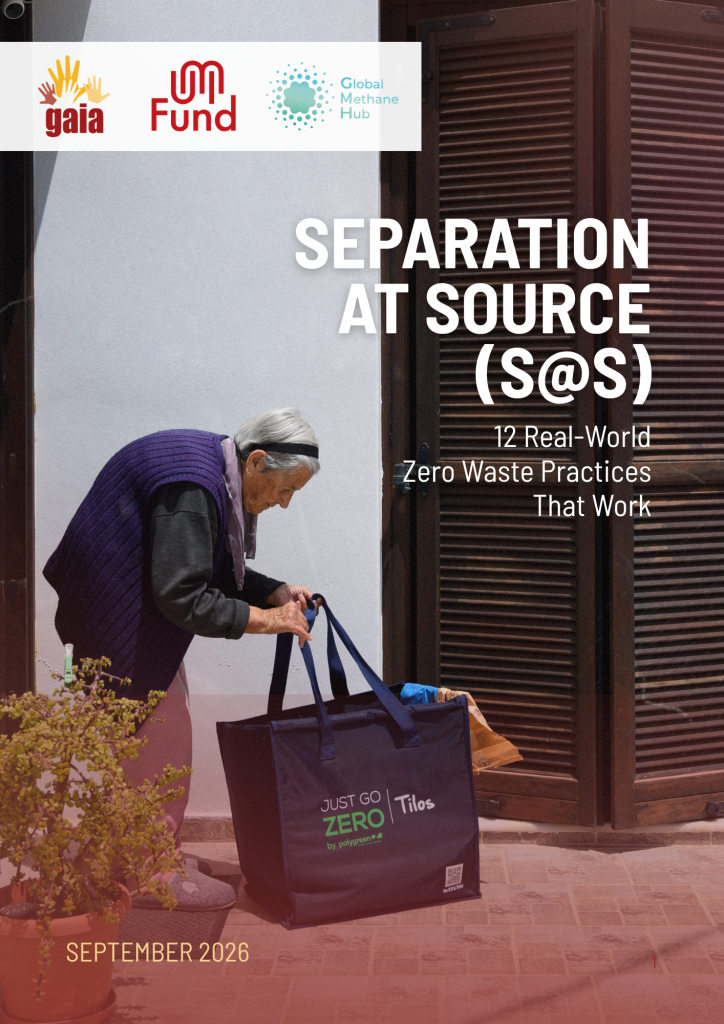
Establishing waste separation at source (S@S) is the foundation of zero waste systems. It means separating different types of waste—such as organic, recyclable, and residual materials—at the point where waste is generated, keeping materials clean and preventing contamination. This publication presents 12 diverse successful cases from five regions: Africa (Tanzania), Asia (India, The Philippines), Europe (Greece, Slovenia, Italy), North America (USA), and Latin America (Costa Rica). The communities featured range in scale, from Tilos Island with a permanent population of 700 residents, to megacities such as Bengaluru, where the zero waste systems reach approximately 2 million people. Across these jurisdictions, source separation rates vary according to local mandates and frameworks, ranging from 30-33% organic waste diversion in Portland to outstanding rates of 80- 95% in places such as Varkala, San Fernando, and Dar es Salaam, and reaching 100% in Tilos Island.
(EN) Separation at Source (S@S): 12 Real-World Zero Waste Practices That Work
(SP) Separación en origen: 12 prácticas reales basura cero que funcionan
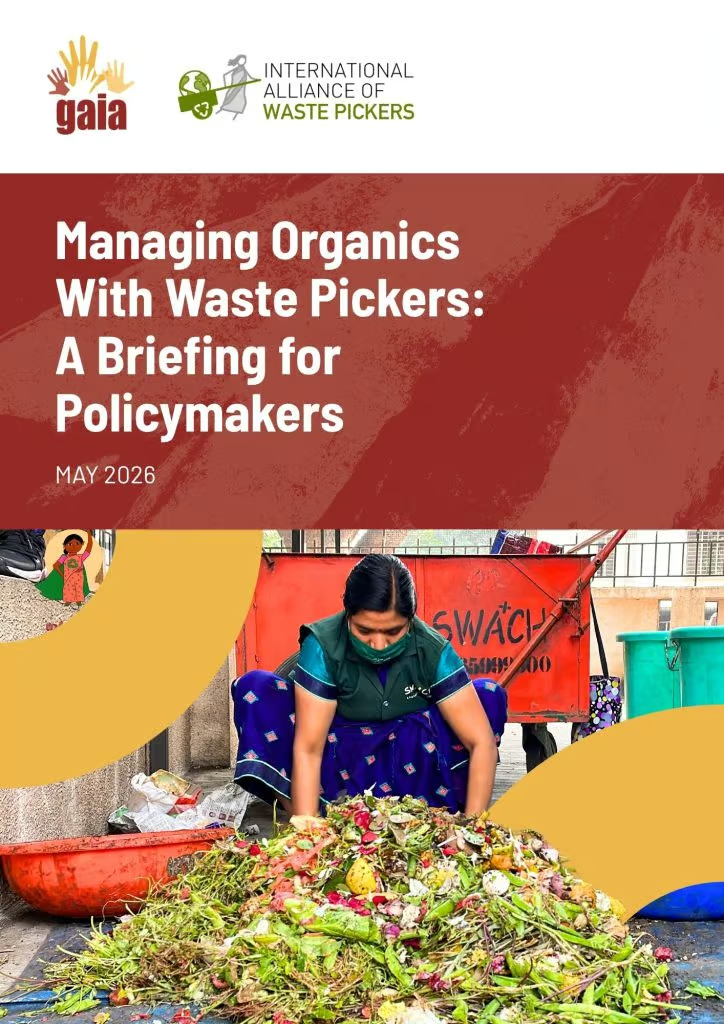
The report, co-presented by the International Alliance of Waste Pickers and supported by the Climate & Clean Air Coalition, outlines a series of recommendations for governments, including recognizing waste pickers as formal service providers, ensuring fair compensation, investing in decentralized waste infrastructure, and incorporating gender-responsive policies.
It also emphasizes the importance of sustained public funding, noting that while composting and other organic waste outputs can generate some income, they are not sufficient on their own to support livelihoods at scale.
(EN) Managing Organics With Waste Pickers: A Briefing for Policymakers
(Infographics) Waste Pickers: Cutting Methane Emissions through Organic Waste Management

Zero Waste as An Effective Climate Strategy: Avoiding Warming Tradeoffs from Incineration assesses the long-term global warming impacts of three waste management strategies —business-as-usual disposal-based practices such as dumping and landfilling (BAU), incineration, and zero waste practices such as source separation and treatment of organics and recyclables (ZW). The analysis focuses on three urban contexts: Lagos (Nigeria), Barueri (Brazil), and Quezon City (Philippines). Using the Solid Waste Emissions Estimation Tool (SWEET) and the Finite Amplitude Impulse Response (FaIR) climate model, the analysis calculates projected temperature impacts for each strategy through 2060.
(EN) Zero Waste as An Effective Climate Strategy Avoiding Warming Tradeoffs from Incineration
(ES) Basura Cero como Solución Eficaz: Evitar el Calentamiento que Provoca la Incineración
(Infographics) False Solutions for Waste: Why They Fail People and the Planet
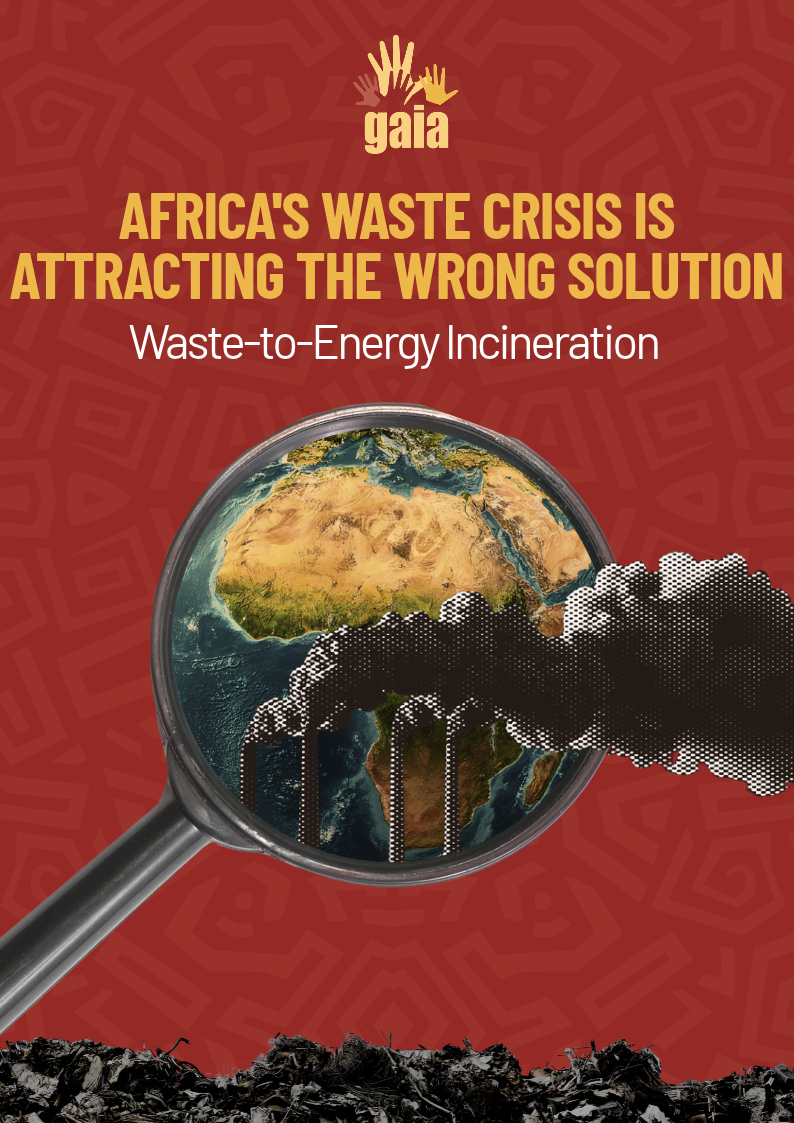
(Infographics)Waste-to-Energy (WtE) Incineration: Wasted Time, Energy, and Resources

Addressing Landfill Methane Emissions with Environmental Justice outlines the risks of business-as-usual (BAU) approaches to landfill methane mitigation and makes the case for a sustainable, justice-centered response. It draws on international evidence, current policy trends, and community experience to identify what works, and what doesn’t, when it comes to landfill closure and organics management.
(EN) Addressing Landfill Methane Emissions with Environmental Justice
(ES) Abordar las emisiones de metano de los rellenos sanitarios con justicia ambiental
(FR) Lutter contre les émissions de méthane des décharges grâce à la justice environnementale
(Infographics) False Solutions for Waste: Why They Fail People and the Planet
Municipal Strategies for Organic Waste: A Toolkit to Cut Methane Emissions is the 1st of the GAIA Technical Guidance Series for Policymakers and Financiers on Fast Action on Waste and Methane. This toolkit introduces six key strategies to help municipalities reduce methane emissions from organic waste: animal feed, composting, vermicomposting, anaerobic digestion, black soldier fly processing, and landfill biocovers. The primary objective is to prevent organic waste from reaching landfills by prioritizing diversion and resource recovery.
(EN) Municipal Strategies for Organic Waste: A Toolkit to Cut Methane Emissions
(ES) Residuos orgánicos Municipales: Estrategias para reducir las emisiones de metano
(Infographics) Why Zero Waste?