¿Necesitamos un tratado sobre el reciclaje deplásticos y puede este poner fin a lacontaminación por plásticos?
- Plástico -
El mundo exigió —y la Resolución 5/14 del PNUMA lo dispuso— un instrumento global para poner fin a la contaminación por plásticos, que incluyera medidas a lo largo de todo el ciclo de vida de los plásticos. ¿Puede cumplir con este objetivo un tratado que evita los controles sobre la producción de plástico y, en cambio, se enfoca únicamente en el reciclaje y la quema de plásticos? ¿Es un enfoque que prioriza el reciclaje serio y efectivo, o es un planteamiento engañoso que perpetúa la sobreproducción de plástico y la contaminación, y destruye nuestro clima?
Related Resources
Nous faut-il un traité sur le recyclage duplastique – et peut-il mettre fin à la pollution plastique ?
- Plastic -
La communauté internationale a réclamé un instrument mondial pour mettre fin à la pollution par les plastique, équipé de mesures couvrant l’ensemble de leur cycle de vie - et la résolution 5/14 du PNUE a ordonné a ordonné sa mise en place. Un traité qui laisse le champ libre à la surproduction, et se focalise uniquement sur le recyclage et l’incinération des plastiques, peut-il être efficace ? L'approche du tout-recyclage est-elle sérieuse et efficace, ou s’agit-il d’un discours trompeur qui perpétue la surproduction de plastique et la pollution, tout en portant atteinte à notre climat?
Related Resources
Do we need a plastic recycling treaty -and can it end plastic pollution?
- Plastic -
The world demanded - and UNEP Resolution 5/14 mandated - a global instrument to end plastic pollution, including measures along the full life cycle of plastics. Can a treaty that avoids controls on plastic production, and instead focuses only on recycling and burning plastics, deliver? Is a recycling-first approach serious and effective, or deceptive framing that perpetuates plastic overproduction and pollution and trashes our climate?
Global South Unites for a Robust Financial Mechanism for prospective plastic pollution instrument
GAIA Asia Pacific and GAIA Africa Convene Global South leadersAhead of INC-5.2
GAIA Asia Pacific and GAIA Africa hosted Global South member state delegates in an online panel discussion titled “Advancing a Robust Financial Mechanism for the Prospective Plastics Instrument” on 24 June 2025. The event comes at a critical juncture in the treaty negotiations. At the last round of negotiations (INC-5.1), an overwhelming majority of 151 countries—primarily from the Global South—called for a new, dedicated financial mechanism. Yet the current chair’s text contains weak, voluntary language that fails to reflect this broad support.
Delegates from Djibouti, Bangladesh, Ecuador, and Fiji came together to highlight the disproportionate burden of plastic pollution on developing countries — including those with economies in transition, small island developing states (SIDS), and downstream countries affected by pollution — and to emphasize the urgent need for robust financing to tackle the plastic crisis.
Ms. Hibaa-Haibado Ismael, INC focal point for Djibouti, highlighted opportunities to strengthen the chair’s text by retaining the proposal for a new dedicated multilateral fund and remediation fund, prioritizing financing for developing countries and a just transition, excluding climate- and toxics-intensive technologies (e.g. incineration), and omitting plastic credits due to their history of pollution, fraud, unreliability, and the lessons learned with carbon credits.
Speaking on behalf of the AOSIS group of countries on the necessity of a dedicated fund, Dr Sivendra Michael, Permanent Secretary for the Ministry of Environment and Climate Change, Fiji, said that, “existing portfolios cannot and must not be used as a substitute for the financial mechanism under this treaty. Instead, they should be made to complement it through alignment, coherence, and coordination.
When discussing lessons from existing funds such as the GEF (Global Environmental Fund), member states were unanimous in raising concerns regarding access to funds. In particular, Mr Walter Schuldt Espinel, Minister, Permanent Mission of the Republic of Ecuador to the United Nations Office, emphasizing the urgency of a dedicated fund, said that we cannot “delay the establishment of the fund and leave it for the COPs (Conference of Parties) to decide.”
Dr Shahriar Hossian, advisor for the Ministry of Environment, Forest and Climate Change, Bangladesh, reminded participants that the “plastics treaty is an environmental health issue” and so the financial mechanism must hold polluters accountable such as through Extended Producer Responsibility (EPR), a Plastic Pollution Fee (PPF) and support just transition.
Regarding achieving convergence on a new dedicated fund for the plastics instrument at the upcoming negotiations (INC 5.2) this August, delegates articulated the need for political courage. Dr Michael said that “meeting the obligations [of the prospective agreement] depends on adequacy of funding. This is how we engage in negotiations in good faith and reciprocal responsibility.”
Ms. Ismael reiterated this leadership in her intervention, saying that if we want to have an ambitious treaty, we need to raise the ambition to par the means of implementation, it’s the only logical way to achieve a successful treaty.
As the negotiations head inch closer to INC-5.2, speakers agreed that now is the time for coalition-building and a united front from the Global South.
We echo the words of Dr. Michael, “Geneva must not be another opportunity for procedural paralysis. Finance is a gateway to implementation and a bridge to ambition, and a cornerstone to justice.”
Asia Pacific: Robi Kate Miranda, Communications Officer for Campaigns, robi@no-burn.org
###
GAIA is a worldwide alliance of more than 1,000 grassroots groups, non-governmental organizations, and individuals in over 90 countries. With our work we aim to catalyze a global shift towards environmental justice by strengthening grassroots social movements that advance solutions to waste and pollution. We envision a just, zero waste world built on respect for ecological limits and community rights, where people are free from the burden of toxic pollution, and resources are sustainably conserved, not burned or dumped.
New assessment urges a climate-smart approach to Indonesia’s waste sector amid landfill crises and growing climate finance opportunities.
Bandung, 03 June 2025 — Composting organic waste and implementing decentralized zero waste strategies could enable Indonesia to meet its climate targets in the municipal solid waste sector while addressing its escalating landfill crisis. A new assessment by Global Alliance for Incinerator Alternatives (GAIA) finds that focusing on source separation, separate waste collection and decentralized organic waste treatment—such as composting, biodigesters, and Black Soldier Fly (BSF) farming—offers the most effective, inclusive, and climate-smart approach to reduce methane emissions, the dominant climate pollutant from Indonesia’s waste sector.
Dwi Sawung, Spatial and Infrastructure Campaign Manager of WALHI comments, “Putting communities and climate at the heart of Indonesia’s climate ambition is a must, particularly with the Indonesia government’s latest plan to close 343 open dumping sites, or simply dumpsites, nationwide. We must ensure that this critical action is paired with a genuine just transition—one that protects the livelihoods of over 600,000 waste pickers and informal workers and equips them for new opportunities in decentralized organic waste treatment.”
He adds, “By embedding meaningful consultation, targeted support programs, and dedicated financing for community‑ and waste‑picker‑led composting, biodigestion, and black soldier fly initiatives into the closure plan, put them as part of new waste management system, we can close dumpsites without leaving anyone behind—and chart a truly inclusive path to a zero‑waste, zero‑emission future.”
Indonesia generates over 32 million tonnes of waste annually, with more than 50% made up of organic materials like food and garden waste. Methane from this unmanaged organic waste accounts for 56% of Indonesia’s total methane emissions, making waste the country’s largest methane-emitting sector. Yet, Indonesia’s current climate strategy leans heavily on costly, polluting end-of-pipe technologies such as Waste-to-Energy (WTE) incineration and Refuse-Derived Fuel (RDF), which are poorly suited to Indonesia’s wet waste and risk shifting methane to long-lived CO₂ emissions. These solutions have also triggered public backlash and project failures across the country, including at the Rorotan and Jimbaran RDF facilities.
“Separate waste collection and decentralized organic treatment have proven to be sustainable and resilient strategies in Bandung,” said David Sutasurya, Director of YPBB Bandung. “These decentralized strategies not only cut emissions, but also create green jobs, strengthen the local economy, and support waste workers and small businesses. They even contribute to food security by producing healthy compost that supports local agriculture—improving the citizens quality of life.”
David Sutasurya also highlights that “Even during the waste emergency, districts practicing zero waste were largely unaffected by landfill closures or fires, and continued reducing methane emissions through community-led systems.”
City-level experiences in Bandung, Cimahi, Karawang, Purwakarta, Sumedang, Gianyar, Solo, and Gresik show that this approach is not only technically viable but also resilient—districts implementing zero waste strategies remained operational during recent landfill closures.
The report, Ramping Up Ambitions on Waste Methane and Just Transition in Indonesia, urges Indonesia to update its Second Nationally Determined Contribution with stronger targets and clear, upstream measures that prioritize source-separated collection, decentralized organics processing, and the inclusion of informal waste workers.
Yobel Novian Putra, Global Climate Policy Officer of GAIA stresses, “Indonesia’s Second NDC represents a pivotal moment to shift away from emission‑intensive, highly expensive, downstream-focused technologies —particularly WtE incineration, RDFs and landfill gas capture— that only switches methane emissions to carbon dioxide, undermining long-term climate goals. Instead, the Government of Indonesia should harness the untapped potential of food loss and waste prevention and organic waste treatment.”
He continues on saying that, “By prioritizing solutions that follow the waste hierarchy, Indonesia can cut landfill methane by over 90%. Such strong ambitions in the Second NDC can unlock vital international and domestic finance to drive implementation and curb waste methane fast, most especially for local governments, community groups and waste pickers who are at the forefront of implementation but also most affected by the recent nation-wide plan of dumpsite closures.”
Importantly, the report reveals that these climate-aligned actions could unlock international climate finance. Global frameworks such as the Global Methane Pledge, Reducing Organic Waste (ROW) Declaration, and the Lowering Organic Waste Methane (LOW-M) Partnership highlight the growing momentum and funding opportunities available for methane reduction strategies rooted in environmental justice. However, Indonesia’s current unconditional (CM1) and conditional (CM2) NDC targets fall short of ambition—missing a key opportunity to scale up proven, community-led organics management.
As Indonesia prepares to submit its updated Second NDC at COP30, the message is clear: addressing the country’s largest methane source—organic waste—through inclusive, simple yet effective solutions will not only fulfill climate commitments but also support a just transition and unlock critical climate finance. This is a once-in-a-decade chance for Indonesia to lead by example and become a climate champion in the waste sector.
Wahana Lingkungan Hidup Indonesia (WALHI): Moriska Pasally, Public Engagement Staff | 085398490395 | Moris@walhi.or.id
Global Alliance for Incinerator Alternatives (GAIA): Sonia Astudillo, Global Climate Communications Officer | +639175968286 | sonia@no-burn.org
Global Alliance for Incinerator Alternatives (GAIA) Asia Pacific: Dan Abril, Communications Officer for Programs | +639174194426 | dan@no-burn.org
About GAIA:
GAIA is a network of grassroots groups as well as national and regional alliances representing more than 1000 organizations from 92 countries. With our work we aim to catalyze a global shift towards environmental justice by strengthening grassroots social movements that advance solutions to waste and pollution. We envision a just, Zero Waste world built on respect for ecological limits and community rights, where people are free from the burden of toxic pollution, and resources are sustainably conserved, not burned or dumped. www.no-burn.org
Yaksa Pelestari Bumi Berkelanjutan (YPBB) is a professional non-profit organization based in Bandung, Indonesia, dedicated to helping society achieve a high quality of life for humanity, through a lifestyle in harmony with nature. Known for its leadership in the zero waste movement, YPBB works through community organizing, education, and support for infrastructure and policy innovation. YPBB is a member of the Global Alliance for Incinerator Alternatives (GAIA) and the Aliansi Zero Waste Indonesia (AZWI). Explore more about YPBB’s programs and vision at our website.
About Wahana Lingkungan Hidup Indonesia (WALHI)
Wahana Lingkungan Hidup Indonesia (WALHI) is a non-government organisation forum. WALHI unites more than 504 NGOs and 199 individuals throughout Indonesia’s vast archipelago, with independent offices and grassroot constituencies located in 29 of the nation’s 38 provinces. Since its establishment on October 15, 1980, WALHI has actively promoted efforts to preserve and protect the environment in Indonesia. WALHI works to encourage the realization of recognition of the right to the environment, to protect and fulfill human rights as a form of State responsibility for the fulfillment of people’s livelihoods. WALHI is a member of the Global Alliance for Incinerator Alternatives (GAIA) and the Aliansi Zero Waste Indonesia (AZWI). Explore more program and our vision through our website at www.walhi.or.id
The zero waste movement is gaining momentum from different corners of the globe. Recently, Kerala, a state in India, has been awarded a waste-free status by the country’s Minister for Local Self Government while Tallinn, the capital of Estonia became a candidate for the zero waste certification of the Mission Zero Academy, the world’s first Zero Waste Cities Certification.
This shows that by empowering the community, working with different stakeholders, putting environmental justice at the center, and a strong commitment to positive change, zero waste as a climate solution is not a far-fetched goal.
May the experience of Kerala and Tallinn serve as a blueprint for cities and communities working towards managing waste while mitigating the climate crisis. Visit no-burn.org and https://www.missionzeroacademy.eu/ to know more.
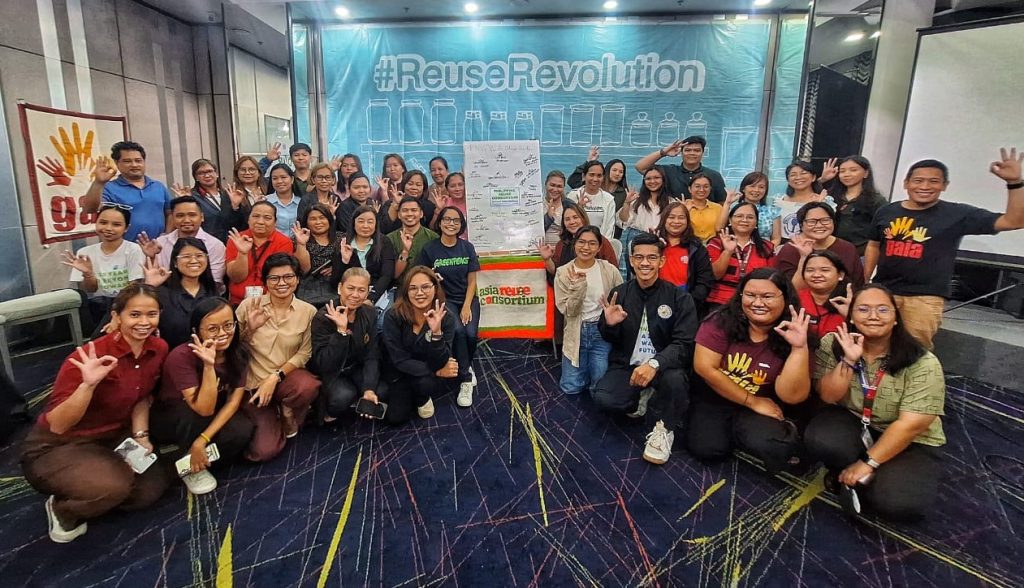
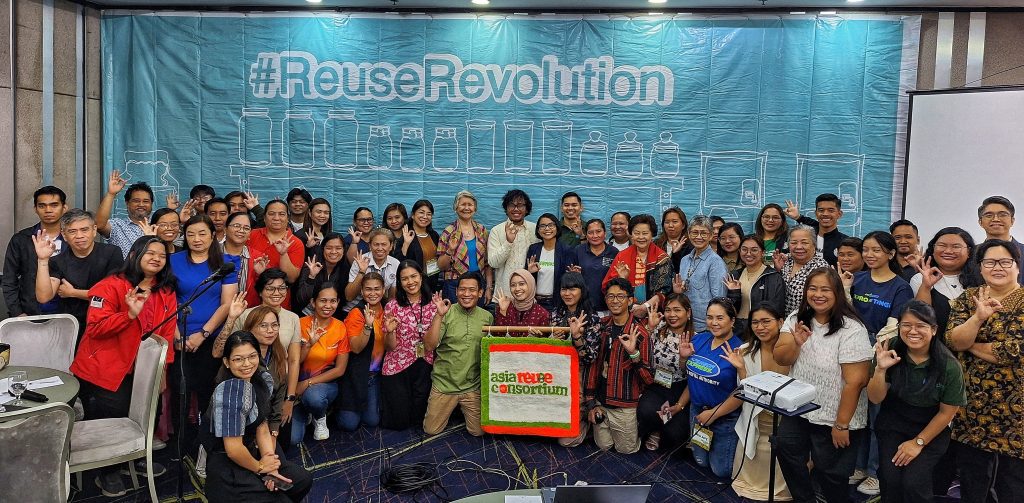
The Philippine Reuse Consortium. (Photo by Albert Lozada, Greenpeace Philippines)
Quezon City, 27 January 2025 – In celebration of International Zero Waste Month, the Philippine Reuse Consortium, the Philippine Chapter of the Asia Reuse Consortium, was officially launched this month. This marks a significant step forward in the fight against single-use plastics (SUPs) through innovative reuse solutions. The Consortium unites representatives from civil society organizations (CSOs), government agencies, and businesses in a shared mission to develop sustainable, community-driven solutions to plastic pollution.
The launch culminates the three-day workshop and stakeholder consultations on mainstreaming reuse and refill solutions in the country. The event which was organized by Greenpeace Philippines and the Mother Earth Foundation, with the support of Plasticdiet Indonesia, GAIA Asia Pacific, and the Break Free From Plastic movement, highlights scalable local initiatives, including zero waste sari-sari stores (small-scale convenience stores) carinderias (neighborhood eateries), and local reuse-and-refill stores such as Back-to-Basics and Sabon Express. These case studies offer valuable insights into adapting reuse systems to the Philippine context.
The consortium’s launch paves the way for developing a Philippine reuse roadmap, inspired by other examples in the country such as those initiated by Back-to-Basics and Sabon Express. Such a roadmap could chart a path on transitioning away from SUPs and towards scaling reuse and refill models designed to extend product life cycles, significantly reducing the environmental and social harms caused by SUPs. Research shows that reuse systems have the potential to cut plastic pollution by 30% and lower greenhouse gas emissions from packaging production by up to 80% by 2040.
As part of its efforts, the Consortium emphasizes collaboration among policymakers, businesses, and communities to institutionalize reuse systems and drive lasting environmental and economic benefits. By fostering partnerships and advancing reuse innovations, the PRC and the Asia Reuse Consortium are paving the way for a sustainable transformation in the Asia Pacific region.
The Consortium unveiled a five-year roadmap to mainstream and prioritize reuse, anchored on 10 key action points:
Advocating for progressive laws and policies. Prioritize lobbying efforts to establish and strengthen laws that support reuse systems with clear and measurable targets.
Strategic communications and public engagement. Amplify messages through media partnerships and public campaigns by disseminating PSAs and Information, Education, and Communication (IEC) materials.
Championing Role Models to Develop Champions. Identify and spotlight the work of individuals, communities, and organizations that successfully implement reuse systems.
Build Capacities of Stakeholders. Develop and offer training and resources to stakeholders, including government units, grassroots organizations, and businesses to implement effective reuse systems. The focus will be given to capacitating/empowering waste workers through education and skill-building opportunities
Promoting a Just Transition for Waste Workers and Waste Pickers. Advocate and implement frameworks that ensure waste workers are not left behind in the shift toward reuse systems.
Scaling Reuse Models. Expand and replicate reuse models, and encourage businesses to integrate reuse systems into their operations.
Expand and Strengthen Networks. Reach out and build partnerships with other sectors to foster a robust, multi-sectoral network.
Drive Innovation through Research and Development. Invest in research and development to develop reuse systems.
Secure Financial Support and Investments. Advocate for financial mechanisms to support local initiatives and ensure resources are available for scaling reuse systems.
Establish Standards and Guidelines. Develop clear guidelines for reuse systems to ensure safety and environmental integrity.
These action points address critical gaps in policies and mechanisms supporting local initiatives, ensure the inclusion of waste workers, and push big businesses to integrate reuse systems into their operations.
Quotes from consortium convenors:
“A reuse-based economy in which every Filipino has access to reuse systems and affordable alternatives to single-use plastics is possible. Communities and cities are leading the shift to reuse, but we also need businesses and the national government to act to mainstream reuse and refill solutions. Businesses must transition to reuse, while policymakers must enact a law setting targets and driving a shift to reuse and a fair regulatory framework for these systems. With the launch of the Philippine Reuse Consortium, we hope to make reuse the norm again for all socioeconomic sectors.” – Marian Ledesma, Zero Waste Campaigner, Greenpeace Philippines
“The reintroduction and mainstreaming of Zero Waste businesses, such as sari-sari stores and carinderias, have shown potential in driving a sociocultural shift toward reuse. However, achieving systemic change requires strong support through enabling policies and technologies. Engaging more sectors—such as key government agencies, waste workers and pickers, fast-moving consumer goods (FMCGs), and NGOs—will be crucial in advancing reuse practices and systems in the Philippines.” – Rap Villavicencio, Deputy Director for Programs, Mother Earth Foundation
“Local initiatives and small businesses in the Philippines—from carinderia, to sari-sari stores and reuse-and-refill zero waste stores— have shown that reuse and refill practices are still very much alive in our communities and with the right and adequate support, it is possible to scale these reuse and refill solutions not only to end plastic pollution but also to address climate concerns. It is high time that different sectors come together to play a part in creating enabling environments for these solutions and zero waste systems to thrive and become the norm again. Sound policies, standards, investments, and corporate accountability could pave the way for a complete shift from single-use throw-away plastics to a reuse economy that benefits all sectors.” –Faye Ferrer, Network Organizer, Break Free From Plastic
“Frontline communities and waste workers are crucial to building effective reuse systems. The Philippine Reuse Consortium’s 10-point action plan integrates training and fair compensation for these groups, while also drawing from local reuse models that are already working. By leveraging these existing solutions, we can reduce plastic waste and scale up sustainable practices.” – Froilan Grate, Regional Coordinator, GAIA Asia Pacific
“Malaking tulong ang reuse saming mga waste workers, mababawasan ang mga kalat na walang pakinabang saming mga waste workers tulad ng single use plastics at mga sachets. Sa pagsali sa PRC, madami kaming matututunan at maitutulong. Kami ang mag sisilbing modelo sa mga komunidad sa pamamagitan ng IEC at paghikayat sa kanila sa Reuse system. Makakatulong din kami sa pag aaral dahil kami din ang unang makakakita at maapektuhan kapag nabawasan na ang mga plastic.” (“Reuse is a great help for us waste workers, as it reduces useless trash like single-use plastics and sachets. By joining the PRC, we will gain knowledge and be able to contribute more. We will serve as models in our communities through information and education campaigns (IEC) and encourage them to adopt reuse systems. We can also contribute to research, as we are the first to see and be affected by the reduction in plastic waste.”) – Aloja Santos, President, Philippine National Waste Workers Association
“Back to Basics Ecostore is honored to be a member of the newly-formed Philippine Reuse Consortium. We look forward to contributing to the development of the Philippine Reuse Roadmap. The collective actions of diverse stakeholders bring hope that we can make real and attainable solutions readily accessible to the public to help address the plastic pollution problem at its core.” –Laarni Cancio, Owner, Back-to-Basics (BTB) Ecostore
“It was amazing to see the different reuse and refill solutions that are already existing and working in the Philippines. It helped me think of ways to apply it in our own barangay. Especially if you are a sari-sari store/carinderia owner, REUSE IS POSSIBLE. Government officials can make this happen if we support the transition of these businesses while creating and implementing policies that would ban single-use plastics.” – Khate Nolasco, Barangay Kagawad Potrero, Philippine Zero Waste Cities Network
About the Asia Reuse Consortium— Launched in 2024, the Asia Reuse Consortium (ARC) is composed of civil society organizations, businesses, and local governments from Indonesia, the Philippines, Vietnam, Thailand, and India whose aim is to encourage the development of reuse ecosystems as a solution to tackle plastic pollution in Asia. The consortium aims to promote reuse systems through joint development of reuse standards, capacity building for reuse entrepreneurs, and strengthening countries’ stance on reuse systems in the Global Plastic Treaty. Asia Reuse Consortium was initiated by Plastic Diet Indonesia, GAIA Asia Pacific, and Break Free From Plastic, with the support of PR3-The Global Alliance To Advance Reuse.
GAIA Asia Pacific: Dan Abril, Communications Officer for Programs, dan@no-burn.org | +639174194426
20 January 2025, Manila — In celebration of Zero Waste Month, plastic waste reduction advocates kicked-off the “Philippine Reuse Study Tour and Conference” today in a bid to amplify the viability of reuse and refill solutions, as a way to address the scourge of plastic pollution.
The three-day event, consisting of a conference with reuse practitioners and other multi-sectoral stakeholders alongside site visits to reuse and refill programs across Metro Manila, was held at Hive Hotel in Quezon from January 20 to 22 and is co-organized by Mother Earth Foundation, Greenpeace Philippines, GAIA, Break Free from Plastic and Plasticdiet Indonesia.
The study tour aims to address existing challenges and opportunities around reuse and refill systems, and show attending LGU and government agency officials as well as private sector representatives that reuse and refill are not just sustainable and necessary, but also practical and doable.
Over 164 million sachets, 57 million shopping bags and 45.2 million plastic labo bags are used on a daily basis in the Philippines,[1] with prevailing e-commerce and food delivery practices worsening the crisis. Environmental groups have long called for reuse and refill solutions alongside bans on single-use plastics, particularly sachets, as these not only create litter and exacerbate floods but also pollute water sources and break down into harmful microplastics that find their way into our food and bodies.
Reuse and refill systems[2] are upstream solutions that enable people to reuse packaging, eliminating the need for wasteful sachets and other throwaway containers. When adopted at scale, reuse and refill can replace disposables and effectively reduce plastic waste. Reuse systems, together with the right policies to cut down plastic production and use, can address the plastic crisis at the root of the problem.
Refill and reuse are feasible and easy to implement. Initiatives such as Kuha sa Tingi, Juana Zero Express, Back to Basics Ecostore and a zero waste carinderia in Manila, prove that these are viable sustainable business models, something that can be done alongside city-wide plastic bans. Groups believe that these could all be replicated and scaled at the national level.
The groups are calling on legislators and national government agencies such as the Department of Environment and Natural Resources (DENR), Department of Trade and Industry (DTI), and the Food and Drug Administration (FDA) to advance policies to institutionalize and mainstream reuse and refill systems, including ensuring:
the targets are set for the transition to refill systems for frequently purchased food, cosmetic, and household products packaged in single-use plastics becomes mandatory;
large-scale enterprises and medium-scale enterprises that manufacture the aforementioned products should be required to transition to refilling as a product delivery system, and mandatory targets for the transition are set;
reuse and refill systems are made more competitive compared to single-use packaging such as sachets to enable producers and consumers to easily shift to reuse and refill;
large-scale retailers should establish refilling stations in their establishments to accommodate the producers’ refillable or unpackaged products;
proper guidelines that support reuse and refill are issued by the Food and Drug Administration (FDA) to advance the transition to reuse; and
enterprises and consumers are incentivized with support mechanisms to overcome challenges, such as capital investment, time constraints and inconvenience.
With local government units and communities leading the charge in the campaign, green groups believe that it’s about time for lawmakers and businesses to act.
“Plastics last practically forever, but the plastic crisis doesn’t have to, because solutions like reduction, reuse, and refill do exist. We’ve seen how reuse and refill models were successful in reducing plastic use, while providing environmental and economic benefits to local communities and businesses. It’s about time that these solutions, which have been around before single-use plastics were introduced by companies, are backed by businesses and the government to become the Filipino norm again.” — Marian Ledesma, Zero Waste Campaigner, Greenpeace Philippines
“Reuse and refill practices are an integral part of our culture in the Philippines but seem to have been forgotten in the fast-paced tempo of modern time especially in the urban areas. This needs to be placed again in our consciousness, strengthened by reuse systems and policies. Reuse, such as MEF’s zero waste sari-sari stores and carinderias, enables consumers to buy affordable items that otherwise would be too expensive and perpetuates the linear-sachet economy. Above all, reuse and refill systems reduce plastic pollution, a “monster” in ecological solid waste management and in our Zero Waste Cities work. Moving forward, with the success and momentum of our community partners, we urge the National Government, LGUs, FMCGs, and other key stakeholders to join and support the transition into a more sustainable system, and enable policies that institutionalize and help reuse systems in the Philippines.” — Sonia Mendoza, Chairman, Mother Earth Foundation
“Reuse presents an opportunity for us to scale up our Zero Waste Cities work in the Philippines. The City of San Fernando in Pampanga has achieved 87% waste diversion via segregated collection, composting and recycling, and reuse coupled with policies that target problematic single-use plastics would allow the city to achieve real zero waste.
And when we talk about zero waste policies, it’s essential to engage with all impacted sectors – especially waste workers and waste pickers. By intentionally integrating waste pickers and waste workers in designing our reuse systems, we ensure that their jobs are protected and our systems are fit for purpose. Their roles in collecting and recovering materials are indispensable – and as such should be compensated for their service and not only for the materials they collect.” — Froilan Grate, Regional Coordinator, GAIA Asia Pacific
“Local initiatives and small businesses in the Philippines—from carinderia, to sari-sari stores and reuse-and-refill zero waste stores— have shown that reuse and refill practices are still very much alive in our communities and with the right and adequate support, it is possible to scale these reuse and refill solutions not only to end plastic pollution but also to address climate concerns. It is high time that different sectors come together to play a part in creating enabling environments for these solutions and zero waste systems to thrive and become the norm again. Sound policies, standards, investments, and corporate accountability could pave the way for a complete shift from single-use throw away plastics to a reuse economy that benefits all sectors.” —Faye Ferrer, Network Organizer, Break Free From Plastic
“Indonesia has recently initiated a preliminary study[3] to develop a reuse roadmap, aligning with its national target to ban several single-use plastics by 2030. This roadmap is designed for manufacturers, retailers, and the food and beverage service industry. It outlines the definition of reuse, various reuse systems that producers can adopt, and the essential requirements for their implementation. The development of reuse systems in Indonesia is further supported by regulations from the National Food and Drug Administration, which oversees refill systems for certain cosmetic products and is currently formulating refill guidelines for processed food products. Through this roadmap, there is significant potential to strengthen regulations for reuse systems, particularly at the local government level, as they hold the authority to manage and handle waste within their jurisdictions.” — Rahyang Nusantara, Deputy Director, Plasticdiet Indonesia
Eah Antonio, Break Free from Plastic Asia Pacific Senior Communications Officer, eah@breakfreefromplastic.org | +63 927 827 7960
Dan Abril, GAIA Asia Pacific Communications Associate, dan@no-burn.org | +63 917 419 4426
Khrisna Nañola, Mother Earth Foundation Communication Officer, khrisnan.mef@gmail.com | +63 995 311 4273
Berkeley, CA — Environmental health advocates and global experts are calling on the Indian government to abandon its plan to incinerate toxic waste from the 1984 Bhopal disaster, warning of catastrophic public health risks and environmental harm.
On the 40th year of the world’s deadliest industrial disaster, the Global Alliance for Incinerator Alternatives (GAIA), along with scientists, toxicologists, and community leaders, is demanding a comprehensive cleanup plan that prioritizes safer, non-incineration technologies — and insists that Dow Chemical, not Indian taxpayers, foot the bill.
As the owner of Union Carbide, Dow has long been called to pay for the full remediation of the site. Advocates say this moment — the 40th anniversary of the tragedy — is a critical opportunity for India to correct decades of inaction and demand justice.
The government’s proposal to burn 345 metric tons of hazardous waste at a facility in Pithampur is being met with fierce opposition. Critics point out that the Pithampur incinerator failed six of its last seven emissions tests, putting nearby communities at risk of exposure to toxic pollutants. They also argue that incinerating a small fraction of the 700,000 metric tons of contaminated soil, water, and waste left behind in Bhopal is a short-sighted, partial measure that will only spread contamination further.
“Bhopal has already experienced two tragedies: first the accident, then 40 years of neglect,” said Paul Connett, an internationally renowned toxicologist and Zero Waste advocate. “Let us avoid a third tragedy of using an incinerator to deal with the residues. In my view, it is essential to use a closed-loop technology like supercritical water oxidation to treat both the contaminated groundwater and the waste stored in pits and warehouses. This elegant technology represents a better future for Bhopal. Incineration is a very crude and dangerous approach that traps us in the past.”
The 1984 Bhopal gas leak, caused by a leak from a Union Carbide pesticide plant (a wholly owned subsidiary of Dow Chemical in February 2001), killed thousands within days and left a lasting toxic legacy that has plagued local communities for four decades. Residents continue to live amid contaminated soil, groundwater, and toxic waste. Yet, rather than forcing Dow to pay for comprehensive cleanup, the Indian government is opting for incineration — a method that is dangerous, outdated, and scientifically unjustifiable based on documented evidence worldwide.
“The tragedy at Bhopal continues today because the contamination continues to spread through the groundwater, and contaminated soils are impacting the communities’ health,” said Jane Williams, Executive Director of California Communities Against Toxics. “Now is the time to create a comprehensive plan for the cleanup of the site and take advantage of advances in technologies that can remediate both the groundwater and the contaminated soils.”
GAIA has repeatedly called on India to partner with the United Nations Environment Programme (UNEP) to conduct a transparent, science-based assessment of the contaminated water, soils, and waste. Experts are pushing for advanced cleanup methods, such as supercritical water oxidation, that can permanently destroy toxic chemicals without creating harmful emissions. Read the full letter here.
“Experts all over the world agree that this is a terrible idea, and that safe, non-incineration solutions should instead be pursued. We strongly urge the Indian government to stop this plan and finally hold Dow accountable for the tragedy that has loomed over the area for forty years” said Brex Arevalo, Climate and Anti-Incineration Campaigner at GAIA Asia Pacific.
“Incinerating the Bhopal waste would be adding insult to injury,” said Dr. Neil Tangri of GAIA and the University of California, Berkeley. “Incineration of pesticides and their components will create and release new carcinogenic and mutagenic compounds into the air. After 40 years, the people of Bhopal deserve a real clean-up, not a sham that will cause further health problems.”
GAIA argues that the people of Bhopal should not have to endure a “third tragedy” caused by short-term, high-risk cleanup methods. Instead, they are calling on the Indian government to adopt proven, non-incineration technologies and hold Dow accountable for the environmental and health harms that have persisted for four decades.
Press contacts:
Robi Kate Miranda, Communications Officer for Campaigns, Asia Pacific robi@no-burn.org
María Guillén, Communications Coordinator, US/Canada mariaguillen@no-burn.org
###
GAIA is a worldwide alliance of more than 1,000 grassroots groups, non-governmental organizations, and individuals in over 90 countries. With our work we aim to catalyze a global shift towards environmental justice by strengthening grassroots social movements that advance solutions to waste and pollution. We envision a just, zero waste world built on respect for ecological limits and community rights, where people are free from the burden of toxic pollution, and resources are sustainably conserved, not burned or dumped.
November 20, 2024
We represent technical experts, scientists, and advocates concerned about plans to incinerate highly toxic waste from Bhopal, India in an incinerator that has failed six of its last seven stack tests. Many of us have first-hand knowledge that hazardous waste incineration damages public health as a remediation method due to its poor operational performance. For example, almost every commercial hazardous waste incinerator in the U.S. has violated its air pollution permits in the last 3 years and emitted toxic air pollution into communities hosting the facilities.
The waste incineration process always creates toxic air emissions and ash that contain several hazardous chemicals like dioxins, furans, PCBs, PFAS, mercury, cadmium, lead… The dangers these chemicals pose when released into the environment is recognized internationally in multinational environmental agreements such as the Stockholm Convention on Persistent Organic Pollutants, the Minamata Convention on Mercury, the Basel Convention on the Control of Transboundary Movements of Hazardous Wastes and their Disposal, and the Rotterdam Convention on the Prior Informed Consent Procedure for Certain Hazardous Chemicals and Pesticides in International Trade. The Indian Government has ratified all of these treaties.
With this in mind, we are alarmed to learn of remediation plans to incinerate highly toxic waste left over from the Bhopal Disaster, arguably the worst industrial chemical disaster to date. The December 1984 tragedy involved the leak of methyl isocyanate gas from a pesticide manufacturing plant owned by Union Carbide. This resulted in an estimated 23,000 deaths and a range of long term environmental and social impacts, including massive amounts of contaminated water, sludges, buildings, and soils which all still remain in Bhopal.
We firmly agree that the disposal of the hazardous wastes requires the most urgent action to end the continued harm to people and the environment of this disaster. However, the Ministry of Chemicals and Fertilizers contract to incinerate 345 MT of waste in a facility in Pithampur, Indore, MP which is over 220 km from Bhopal, is a very ill-advised solution and treats only a small fraction of the waste. In fact, this plan will only serve to spread the contamination at Bhopal into another community due to the poor operational performance of the incinerator. The 345 MT is less than 4% of the estimated 700,000 MT of sludges, soils, water, and contaminated buildings in Bhopal needing a final solution. These contaminated wastes are located less than 500 meters away from residential areas in Bhopal.
We recommend the India government abandon its plans to employ incineration as a remediation plan and instead perform a comprehensive site assessment, and use advanced non-incineration treatment technologies for treatment of the wastes.
The context of our recommendations are:
The 345 MT of waste includes contaminated soil, Sevin and Napthal tars, reactor sludges, and semi-processed pesticides. Some of these wastes contain persistent organic pollutants that are difficult to destroy, and survive incineration. Furthermore, there is a toxic hotspot in the middle of the city where hundreds of thousands of tonnes of toxic waste remain buried in the pits outside the abandoned Union Carbide factory and within 19 unlined pits. This waste has led to the contamination of groundwater for over two hundred thousand people in 42 communities with Persistent Organic Pollutants, toxic agricultural chemicals, and heavy metals. Unfortunately, these wastes are also laced with hexachlorobenzene, aldrin, dieldrin, and other persistent, organic pollutants.
Though six out of the seven stack tests for this proposed incinerator have failed and indicate that the poor performance of the incinerator is exposing nearby communities to hazardous chemicals, the Ministry appears firm in their intent to pursue using this incinerator to burn the Bhopal waste. Community members fear that this plan would just expand the area of contamination to an entire new community.
We urgently propose these recommendations for the specified hazardous wastes:
The Indian Government should carry out a comprehensive and transparent scientific assessment of the contaminated water, soils, sludges, and buildings with the assistance of the United Nations Environment Program. The extent of the contamination, the chemicals present, and the potential technologies intended to remediate the situation should have environmental impact assessments performed. Some advanced, non-incineration treatment technologies such as Super Critical Water Oxidation and Wet Air Oxidation can treat both the groundwater and the surface contamination. The government of India should prioritize assessing technologies that can treat both the groundwater contamination and the contamination on the surface.All assessments of advanced, non-incineration waste treatment technologies should be done with meaningful public participation and involve the affected communities. The results of these technology assessments should be available to the public.
The Dow Chemical Company (the current owner of Union Carbide) should be made to pay for the comprehensive environmental assessment, as well as the disposal and remediation costs and must follow international environmental principles such as Polluter Pays and the OECD Guidelines for Multinational Enterprises on Responsible Business Conduct.
We are very concerned about the long-term impacts on people and the environment from the wastes remaining in place from the Bhopal disaster. A new generation of people affected by the intergenerational exposure to these highly toxic chemicals has been born, suffered, and died there and the land has still not been cleaned up. The toxic chemicals remain in place poisoning the soil, the air, the water, and the next generation of survivors
Signed: Annie Leonard Asif Qureshin b Charlie Cray Daphne Wysham Jane Williams Jim Puckett Jindrich Petrlik Jorge Emmanuel Lee Bell Neil Tangri Paul Connett Ravi Agarwal Rittwick Dutta Ruth Stringer Yuyun Ismawati
Bengaluru Declaration Unites Leaders and Communities for Innovative Organic Waste Management Strategies
Bangalore, India — 08 October 2024 – At the First Congress on Organics and Climate, an ambitious vision for the future of climate action and waste management took root, culminating in the unanimous adoption of the Bengaluru Declaration on Organics and Climate. This gathering highlighted the multitude of solutions to managing organic waste that exist in Asia.
With over 200 participants attending in person and more than 1,400 joining online, the Congress featured representatives from 13 countries representing 70 organizations. This included 98 participants from Bengaluru, 75 delegates from the rest of India, and 45 delegates from Africa and across Asia (other than India.), The group included government officials, civil society organizations, waste picker organizations, farmers, academia, think tanks, research institutions, businesses, and media. More than 20 businesses showcased innovative and practical solutions in organics management, highlighting the latest advancements in the field.
As conversations unfolded, it was emphasized that for countries to meet their sustainable development goals (SDGs) and transition to a sustainable future, the safety, well-being, and justice for waste pickers is a key lens through which waste management must be viewed. “We are the backbone of waste management in our cities. Our voices must be heard in every decision that affects our lives and livelihoods,” asserted Indumathi, a waste picker representing grassroots perspectives. “When we work together with governments and organizations, we can create real change.”
The diversity of proven organic waste management practices was seen at the Congress with the city of San Fernando (Philippines) sharing their effective implementation of source segregation and collection, decentralized composting complemented with a central composting facility, and sorting of recyclables has resulted in a reduction of waste sent to the landfill by 90%. At a more local scale, the Solid Waste Management Round Table (SWMRT) in Bengaluru shared their use of a variety of small composting methods (home, lane, microshed composting) based on the local context of space, socio-economics, etc. These contrasting models underscore the importance of tailoring strategies to local contexts and integrating diverse community experiences to address the global challenge of waste management effectively. Nalini Shekar, Co-Founder of Hasiru Dala, remarked, “Empowering local communities and weaving their knowledge into waste management practices isn’t just smart; it’s essential for sustainable development. Only by collaborating can we build systems that genuinely serve everyone.”
Uma Mahadevan, Additional Chief Secretary and Development Commissioner, Government of Karnataka, spoke about the state government’s efforts to upskill rural women to handle trucks, making them the face of effective waste management in their villages. She pointed out, “When women are empowered to manage waste, we not only contribute to climate solutions but also uplift our communities and families.”
These local initiatives align with broader global challenges, such as the staggering 931 million tonnes of food wasted each year, contributing nearly 10% of global greenhouse gas emissions. The Organics Congress highlighted efforts across Asia to address this critical issue. Panelists spoke of the efforts in countries like Indonesia and Vietnam to divert excess food to feed those in need through community-led food banks while putting in place protocols for food safety and hygiene. The second benefit of diverting edible food is the reduction in the quantity of organic waste produced and therefore ensuring resources invested in food production are not wasted. Shibu Nair, Global Alliance for Incinerator Alternatives (GAIA) Asia Pacific’s Regional Campaigner on Organics, stated, “Addressing food loss and waste is integral to combating climate change. By promoting composting and organic waste recycling, we can turn a problem into a resource that benefits our communities and the environment.”
Froilan Grate, Regional Director of GAIA Asia Pacific, underscored the urgency of tackling methane emissions, stating, “20% of methane, which is more potent than CO2, comes from landfills. And this can be addressed by making sure we divert organic wastes out of landfills – and we have the tools and examples to show that this is doable.” He emphasized that Asia is the home of solutions, showcasing successful examples of organic waste management from cities like Seoul, South Korea and Bandung, Indonesia as evidence of effective, zero waste strategies. The Organics Congress exemplifies this potential, demonstrating that while solutions exist, we need to cross-learn and scale up these initiatives across the region.
Galih Raditya, founder of 1000 Kebun (Garden Group) from Indonesia echoed the dangers of unchecked waste management, recalling a tragedy that highlighted the stakes: “In 2005, the Sarimukti landfill disaster killed 157 people due to a methane explosion. It showed us the dangers of unchecked waste management.” This harrowing example illustrates why responsible waste management must be a priority for all nations.
A pivotal moment arrived with the reading of the Bengaluru Declaration on Organics and Climate, where participants united in their resolve to combat climate change through innovative waste management strategies. The declaration calls for immediate action to reduce greenhouse gas emissions linked to organic waste, firmly rejecting waste incineration as a viable solution. “Effective climate action will not only reduce greenhouse gas emissions but also improve the fundamental ways in which society functions,” it states, framing the fight against climate change as a complex challenge intertwined with social, economic, and political factors.
Manoj CN, Director of the Pelican Foundation and a member of the India Zero Waste Alliance, added, “The path to sustainable waste management lies in collaboration and innovation. By uniting our efforts, we can unlock the potential of organic waste as a valuable resource, transforming challenges into opportunities for our communities.”
As the Organics Congress wraps up, the Bengaluru Declaration stands as a guiding light for future climate action initiatives, reinforcing the plethora of solutions across Asia and communities’ commitments to environmental sustainability and social equity. This gathering marks the first of its kind, with plans already underway to host the next organics congress in Indonesia with Aliansi Zero Waste Indonesia taking the lead. The Organics Congress will continue to build momentum for effective organic waste management and climate solutions across the region.
In a world increasingly grappling with environmental crises, the leaders and advocates present are now tasked with translating the spirit of this declaration into meaningful actions, ensuring their collective efforts foster positive change for communities and ecosystems alike.
###
The Regional Congress on Organics and Climate in Bengaluru, India was hosted by Hasiru Dala and the India Zero Waste Alliance with support from GAIA Asia Pacific, powered by the HLL Management Academy (HMA) and the Urban Movement Innovation (UMI) Fund.
August 23, 2024 – A collective letter written by the Centre for Financial Accountability, International Accountability Project, National Hawkers Federation, GAIA-Asia Pacific, and Break Free From Plastics and endorsed by 174 civil society organizations, regional and global networks and activists, is calling upon the World Bank board of directors to reject the financing of the 4 Waste-to-Energy (WTE) incineration projects proposed to be built in in Gujarat, India by Abellon Clean Energy Limited (ACEL).
Abellon Clean Energy Limited (ACEL) is a Waste to Energy (WTE) incineration developer based out of Gujarat, India, which is developing 4 WTE incineration plants in Rajkot, Vadodara, Ahmedabad, and Jamnagar with a cumulative capacity of 52.20 MW. The letter highlights the projects’ negative impacts on communities, including air and water pollution, health issues, climate impacts, and undermining sustainable waste management practices.
ACEL’s operational WTE incineration plant in Jamnagar has already demonstrated significant negative impacts on the 25,000 people living in its vicinity and suffering from air pollution, noise pollution, and health problems such as skin ailments, asthma, eye irritation etc. The local communities are thus concerned about the expansion of the incinerator plant through this project. “Initially we were told that all the waste would be converted into electricity but after the operations started there was a lot of pollution and bad odor from the plant. We have complained to the Gujarat Pollution Control Board, the Municipal Commissioner, and the District Collector but still, the communities continue to suffer. A further expansion of the plant will only increase the pollution and is unacceptable to us,” shared Ker Jayendrasinh, who has been supporting the local communities in Jamnagar.
Seeing the harmful effects of the WTE incinerator plants in Jamnagar and the lack of proper consultations held by IFC and ACEL with affected communities in the other project areas, local Civil Society Organisations and activists are concerned about the construction of the proposed WTE incinerators in the other locations. “There is a lot of ambiguity surrounding the technology, impacts, displacement, and compensation of the project by Abellon and repeated queries regarding the same have not been answered by the company,” said Advocate Shailendrasinh R Jadeja, Rajkot.
Additionally, there are major flaws in the project’s Environmental and Social Impact Assessments, in violation of both IFC Performance Standards and Indian environmental laws. To circumvent the Government of India’s (GOI’s) environmental norms, the WTE incineration project size was deliberately kept at 14.9 MW instead of 15 MW, to escape the Environmental Clearance (EC) mandated by the Environment Impact Assessment (EIA) rules 2006. Despite being considered a “red category” project in India for its massive environmental and social risks, this project has been given a lower risk rating of “Category B” by the IFC. Vaishnavi Varadarajan, International Accountability Project articulates the lack of proper due diligence for this project. “The diluted and flawed environment and social impact assessment by IFC for these toxic WTE incinerators that contribute to excessive pollution and are linked to fossil fuels indicates that IFC has not been compliant to its safeguards and also to the Paris Agreement,” she says.
These WTE incinerator plants also threaten the livelihood of waste workers as large quantities of waste in the project sites will get directed to the incinerators, thus affecting the informal economy of waste picking and recycling. Jay Vyas, National Hawkers Federation shared, “the situation in Jamnagar where there are no waste workers at the dump sites confirms that waste workers who belong to vulnerable indigenous and dalit communities will lose their livelihood because of these incinerators. Also, waste worker unions in Gujarat confirmed to us that waste workers were not consulted at the project sites by the company.”
Besides the community impacts and environmental and social concerns, the poor financial performance of WTE incineration plants in India also casts a shadow over the viability of ACEL’s projects and their potential economic burden on local governments. A report by the Centre for Financial Accountability revealed how despite strong policy and financial support, WTE incinerators in India have failed. Chythenyen D Kulasekaran, Centre for Financial Accountability says, “WTEs make profits on the shoulder of the public funds in the form of subsidies and grants they receive. Yet, WTEs produce the costliest form of electricity at about 7 rupees per unit, which the government pays. There is a double burden on the state exchequer.”
WTE incinerators are a “false solution”, contributing to pollution that exacerbates the climate crisis. The proposed WTE incineration plants will cumulatively burn about 3,750 tons of garbage every day and generate CO2 equivalent to the emissions from about 18,75,000 cars. “WTE incinerators are poised to become the most carbon-intensive power source once coal is phased out. Burning a tonne of plastic waste alone results in the release of around 1.43 tonnes of CO2. It destroys recycling, reuse, and refill options and disincentives reduction of producing new materials so less will have to be managed as wastes,” says Miriam Mayang Azurin, GAIA.
In light of these findings, we urge the World Bank to not only reject this project but to cease all funding for waste-to-energy initiatives, prioritizing environmental protection and community well-being over unsustainable energy solutions.