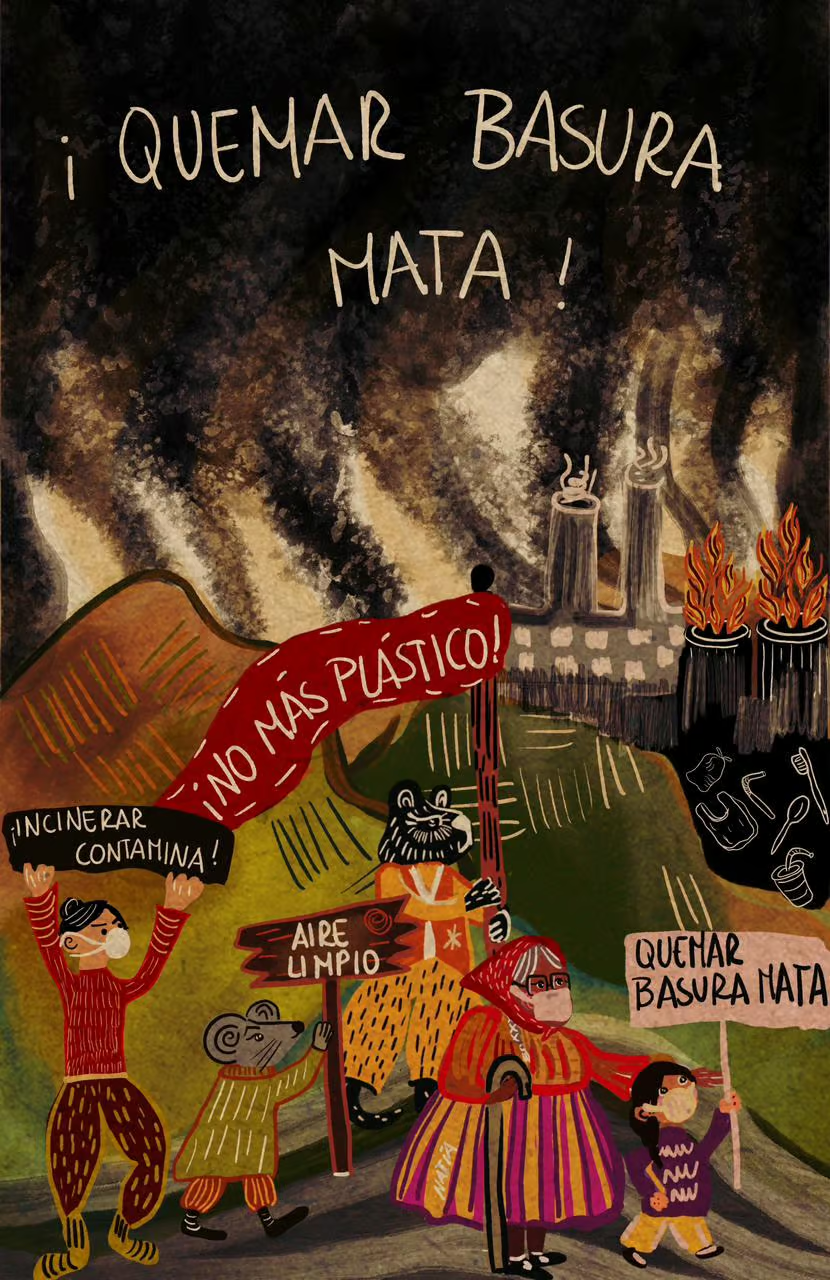
September 15, 2021 – In a media briefing exclusive for Vietnam journalists, the Global Alliance for Incinerator Alternatives (GAIA) Asia Pacific and the Vietnam Zero Waste Alliance (VZWA) launched a Public Service  Announcement (PSA) video revealing uncomfortable truths about waste incineration, also known as Waste-to-Energy incinerators.

Featuring distinguished professor and environmental scientist, Dr. Jorge Emmanuel, the PSA deflates the arguments offered by proponents of incinerators. “Waste-to-energy (WTE) is simply waste incineration in disguise. It burns tonnes of municipal wastes to generate energy while emitting massive amounts of toxic pollutants and greenhouse gases.” 

In the Global South, waste incineration  is being peddled as a quick-fix solution to waste problems. However, its supposed benefits are far outweighed by health, economic, and environmental costs on cities and communities.

In the PSA video, Dr. Emmanuel substantiates the fears and highlights that waste incinerators do fail in living up to their promises. “Even when governments adopt international emission standards, it doesn’t guarantee that dangerous emissions aren’t being released, especially in developing countries where there is no technical capacity to monitor emissions continuously.” 

In Vietnam, incinerators were introduced as a means to control waste produced by rapid urbanization. Dr Xuan Quach, coordinator of VZWA shared, “Vietnam is home to both large and small-scale incinerators. They collectively burn over 500 tonnes of waste a day. It is worrying that even in Europe where standards are high, waste incinerators have been recorded to generate CO2 , dioxins, and furans.”

Incinerators feed on highly combustible waste like plastic. Mostly made from fossil fuels, plastics that are burned in incinerators will add more than 850 million metric tons of greenhouse gases to the atmosphere—equal to the pollution from 189 new 500-megawatt coal-fired power plants. In Vietnam and the rest of Asia, meanwhile, Dr Quach noted that about half of municipal waste is composed of organic discards, which should be composted instead of incinerated.

 “The calorific value and recovery efficiency of waste incinerators are dismal. We burn a lot of useful material to generate insufficient energy.” She expounds, “These facilities also take away resources that can be recycled, reused, or repurposed – and it affects the livelihoods of sectors that rely on recycling and materials recovery.”

A report released by GAIA found that waste incinerators come into conflict with the waste picking sector as it diverts valuable materials such as plastic, cardboard, paper, and textiles away from waste workers and waste pickers thus disrupting their livelihood and source of income.

In the report, “Zero Waste and Economic Recovery: The Job Creation Potential of Zero Waste Solutions,” GAIA estimates that more jobs can be created from repair, reuse, recycling and composting activities, compared to those that just focus on burning and landfilling waste. By adopting zero waste systems, Ho Chi Minh City, for example, would create at least 18,000 jobs.

Reiterating GAIA’s report and the sentiments of communities affected by waste incinerators, Froilan Grate, regional coordinator of GAIA Asia Pacific states, “Waste incineration is not a magical solution. In truth, waste incinerators would add fuel to the already ravaging flames of toxic wastes, air pollution, and climate change. In comparison, by opting for a Zero Waste path, we would save valuable resources, provide employment, and avoid getting locked into long-term contracts that would zap the economies of municipalities dry. For environment, climate and social justice, Zero Waste is the way to go.”

###

“Waste Burning Exposed”  is a 5-minute Public Service Announcement produced by the Global Alliance for Incinerator Alternatives (GAIA) Asia Pacific with support from the Pacific Environment. Directed by award-winning Filipino director, Ray Gibraltar with animation and technical support provided by Awestruck Productions – a group of young and talented filmmakers from Negros Oriental, Philippines.

Media Contacts:

Sonia Astudillo, Communications Officer, Global Alliance for Incinerator Alternatives (GAIA) Asia Pacific  I sonia@no-burn.org I +63 917 5969286

About GAIA  |  Global Alliance for Incinerator Alternatives is a worldwide alliance of more than 800 grassroots groups, non-governmental organizations, and individuals in over 90 countries whose ultimate vision is a just, toxic-free world without incineration. www.no-burn.org and www.zerowasteworld.org

About Vietnam Zero Waste Alliance  | Vietnam Zero Waste Alliance is a network of organizations and citizens who share a strategy for applying Zero Waste practices to better manage solid waste, reduce plastics, save natural resources and protect Vietnam’s environment. 

Related resources:

IN VIETNAMESE:

Dập tắt ngọn lửa và phơi bày các sự thật

GAIA Châu Á Thái Bình Dương và Liên minh Không Rác Việt Nam tiết lộ sự thật về việc đốt rác 

Ngày 15 tháng 9 năm 2021 – Trong một cuộc họp báo dành riêng cho các nhà báo Việt Nam, Liên minh Toàn cầu về Giải pháp Thay thế Lò đốt Châu Á Thái Bình Dương  (GAIA)  và Liên minh Không Rác Việt Nam (VZWA) đã đưa ra Thông điệp vì lợi ích của công chúng (PSA) kéo dài 5 phút tiết lộ những sự thật khó chịu về việc đốt rác cũng như các lò đốt rác phát điện. 

Với sự tham gia của giáo sư – nhà khoa học môi trường nổi tiếng, Tiến sĩ Jorge Emmanuel, Thông điệp vì lợi ích của công chúng đã loại bỏ các lập luận của những người ủng hộ lò đốt. “Biến Chất thải thành năng lượng (WTE) chỉ đơn giản là việc đốt chất thải một cách trá hình. Nó đốt hàng tấn chất thải đô thị để tạo ra năng lượng đồng thời thải ra một lượng lớn chất ô nhiễm độc hại và khí nhà kính. “

Ở khu vực Nam bán cầu, việc đốt chất thải đang được coi là một giải pháp khắc phục các vấn đề về chất thải nhanh chóng. Tuy nhiên, những lợi ích giả định của nó không thể vượt qua các chi phí về sức khỏe, kinh tế và môi trường đối với các thành phố và cộng đồng.

Trong “Thông điệp vì lợi ích của công chúng”, Tiến sĩ Emmanuel đã chứng minh những nỗi sợ hãi và nhấn mạnh rằng các lò đốt rác không thực hiện được lời hứa của họ. “Ngay cả khi các chính phủ áp dụng các tiêu chuẩn khí thải quốc tế, điều đó cũng không đảm bảo rằng lượng khí thải nguy hại sẽ không được thải ra, đặc biệt là ở các nước đang phát triển, nơi không có năng lực kỹ thuật để giám sát phát thải liên tục.”

Ở Việt Nam, lò đốt rác được đưa vào sử dụng như một cách thức để kiểm soát rác thải do quá trình đô thị hóa nhanh chóng. Tiến sĩ  Quách Thị Xuân, điều phối viên của Liên minh Không Rác Việt Nam chia sẻ: “Việt Nam là nơi có các lò đốt quy mô lớn và nhỏ nói chung – chúng đốt hơn 500 tấn rác thải mỗi ngày. Điều đáng lo ngại là ngay cả ở châu Âu, nơi có các tiêu chuẩn cao, đã có sự ghi nhận về việc các lò đốt rác thải tạo ra khí nhà kính, dioxin và furan”.

Các lò đốt rác sử dụng chất thải dễ cháy như nhựa. Phần lớn các chất thải này được làm từ nhiên liệu hóa thạch, nhựa được đốt trong các lò đốt sẽ tạo ra thêm hơn 850 triệu tấn khí nhà kính cho bầu khí quyển – tương đương với mức ô nhiễm gây ra bởi 189 nhà máy nhiệt điện than có công suất 500 megawatt mới. Trong khi đó, Tiến sĩ Xuân lưu ý rằng khoảng một nửa lượng rác thải đô thị ở Việt Nam và các khu vực còn lại của châu Á là rác hữu cơ, chúng nên được ủ làm phân compost thay vì đốt.

Các nghiên cứu cũng phát hiện ra rằng khí thải độc hại có thể được gây ra từ việc vận hành không thành công vì rác thải có chất lượng thấp. Tiến sĩ Xuân cho biết thêm, “ở Việt Nam và các khu vực còn lại của châu Á, thành phần rác nhựa và các vật liệu dễ cháy khác chỉ chiếm 20-30% tổng số chất thải”.

“Nhiệt trị và hiệu suất thu hồi năng lượng của các lò đốt chất thải rất kém. Chúng ta đốt rất nhiều vật liệu hữu ích trong khi không tạo ra đủ năng lượng ” – Tiến sĩ giải thích. Những lò đốt này cũng lấy đi các nguồn tài nguyên có thể được tái chế, tái sử dụng hoặc dùng cho mục đích khác – và nó ảnh hưởng đến sinh kế của các ngành dựa vào tái chế và thu hồi vật liệu.”

Một báo cáo do GAIA công bố cho biết rằng các lò đốt rác có mâu thuẫn với lĩnh vực thu gom rác thải vì nó lấy đi các vật liệu có giá trị như nhựa, bìa cứng, giấy và vải dệt mà lẽ ra được thu gom bởi các công nhân môi trường và người nhặt rác do đó làm gián đoạn sinh kế và nguồn thu nhập của họ.

Trong báo cáo “Mô hình Không Chất Thải và Phục hồi Kinh Tế: Tiềm năng tạo việc làm của các giải pháp từ Mô hình Không Chất Thải”, GAIA ước tính rằng nhiều việc làm hơn có thể được tạo ra nhờ các hoạt động sửa chữa, tái sử dụng, tái chế và ủ phân compost; so với những hoạt động chỉ tập trung vào đốt và chôn lấp chất thải. Ví dụ, Thành phố Hồ Chí Minh sẽ tạo ra ít nhất 18.000 việc làm bằng cách áp dụng hệ thống Mô hình Không Chất Thải.

Nhắc lại báo cáo của GAIA và cảm nhận của cộng đồng bị ảnh hưởng bởi lò đốt rác thải, Froilan Grate, điều phối viên GAIA ở khu vực Châu Á Thái Bình Dương cho biết: “Đốt rác không phải là một giải pháp kỳ diệu. Trên thực tế, các lò đốt rác sẽ đổ thêm dầu vào ngọn lửa tàn phá vốn đã bao gồm chất thải độc hại, ô nhiễm không khí và biến đổi khí hậu. Trong khi đó, bằng cách chọn Mô Hình Không Chất Thải, chúng ta sẽ tiết kiệm được các nguồn tài nguyên quý giá, cung cấp việc làm và tránh bị bó buộc vào các hợp đồng dài hạn khiến nền kinh tế của các thành phố trở nên cạn kiệt. Vì môi trường và công bằng xã hội, Mô Hình Không Chất Thải chính là giải pháp cần thực hiện.

###

“Phơi bày sự thật về đốt rác thải” là một thông điệp được đưa ra vì lợi ích của công chúng kéo dài trong 5 phút do Liên minh Toàn cầu về Giải pháp Thay thế Lò đốt (GAIA) Châu Á Thái Bình Dương thực hiện với sự hỗ trợ từ Pacific Environment. Thông điệp này được chỉ đạo bởi đạo diễn người Philippines từng đoạt giải thưởng, Ray Gibraltar và sự hỗ trợ kỹ thuật và hoạt hình được cung cấp bởi Awestruck Productions – một nhóm các nhà làm phim trẻ và tài năng đến từ Negros Oriental, Philippines.

Zero Waste events – One of the best ways to beat plastic pollution at an organizational and community level

Contributed by Abishek Pradhan (Zero Waste Himalaya)

The Himalayan Cleanup, Ladakh, 2018.

A report by the United Nations Environment Program says, ‘Around the world, one million plastic drinking bottles are purchased every minute, while 5 trillion single-use plastic bags are used worldwide every year. In total, half of all plastic produced is designed to be used only once — and then thrown away.

Plastic waste is now so ubiquitous in the natural environment that scientists have even suggested it could serve as a geological indicator of the Anthropocene era.

Today, we produce about 300 million tonnes of plastic waste every year. That’s nearly equivalent to the weight of the entire human population.

Our addiction to plastic, especially single-use or disposable plastic, has severe environmental consequences and impacts our well being. 

Researchers estimate that more than 8.3 billion tonnes of plastic has been produced since the early 1950s of which only 9% has been recycled. The rest of that plastic has ended up in either a landfill, burnt, or the natural environment.

India Prime Minister Shri Narendra Modi, delivering his 2019 Independence Day speech at Red Fort, pitched for freedom for India from single-use plastic by 2022. He explained how plastic clogs drains and causes other civic problems but that is just a small part of the problem. Plastics do not degrade and disintegrate into microplastic that has gone all pervasive. Microplastics have been found inside human placenta, water, soil, air, salt, human poo, the arctic, Mt Everest, and  plants. It is estimated that an average person ingests an amount of plastic equivalent to the size of a credit card in one week. Plastic pollution is a toxic threat to our and planetary life.  

The waste crisis is not a littering problem, it is an exploitation of the ecological resources, a big factor in sustainable city planning and administration, an issue of animals rights, a human health issue, and a severe product design crisis. Only through actions at all levels (administrative, community and individual) can this crisis be addressed and progress can only be made collectively. Waste management must have a strategy that systematically reduces waste and is the responsibility of the individual, community, institutions and companies. Waste must be designed out and must be addressed at a systemic level. 

We are facing a serious waste crisis in the mountains, and also in our own hometown. The dumping grounds are overfilling as our indiscriminate consumption of disposable plastic has increased. No amount of management after waste has already been created would be able to take care of the problem. We have to think of measures that do not create waste in the first place or as little waste as possible. 

As organizations working for the welfare of common citizens we must be advocates of sustainability / sustainable development and always lead by example.

Here’s what will help in making your events sustainable at every step on the way, 

PRE-EVENT PLANNING:

1.Assessment

The organizers must identify plastic, non biodegradable, and non-recyclable items, opt to avoid them altogether or replace them with reusable or compostable alternatives. 

2.Sustainability Communications

Crafting sustainability communications with the vendors, collaborators, service providers, and participants curating the event’s overall sustainability strategy including goal setting and executing plans to help achieve this. 

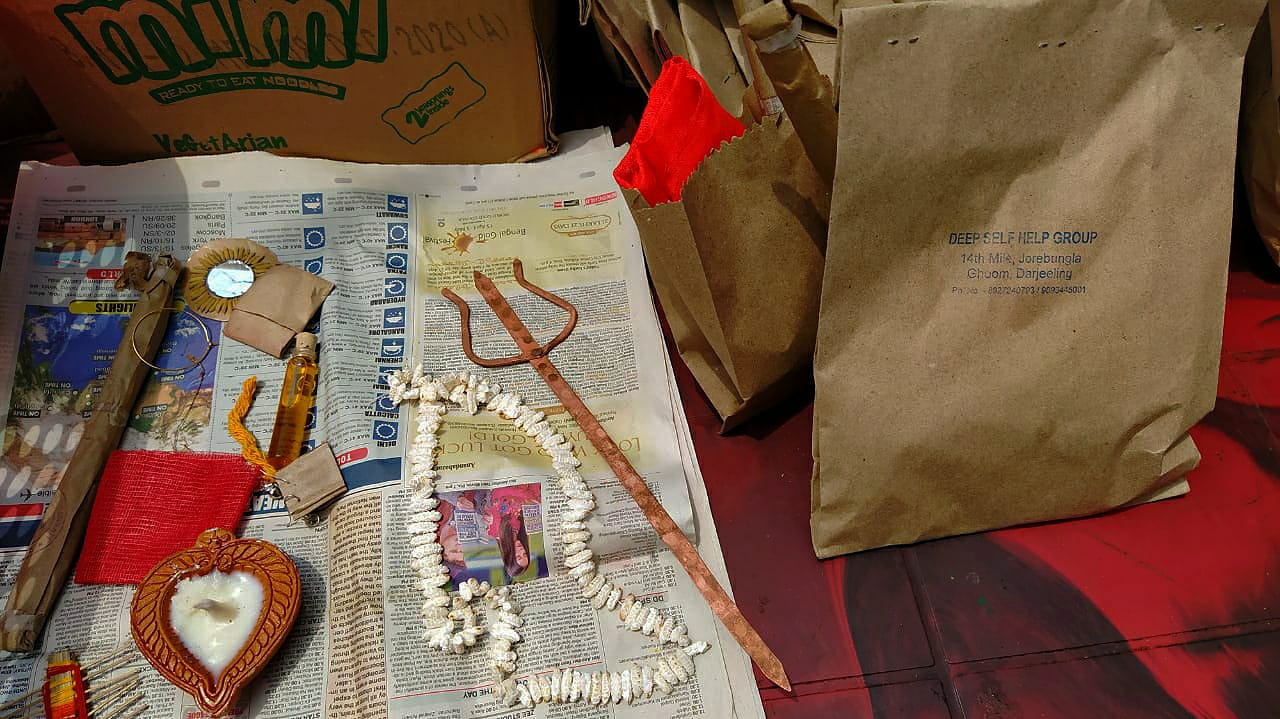
Navratri Celebration, Plastic Free Senchal Darjeeling, 2021.

3. Donor sensitization

Sometimes donors bring in items such as plastic water bottles, Tetrapak juice items, other plastic packaged offerings which might be hard to refuse once it has been provided. There is a need to engage with them early on to tell them of your Zero Waste intentions so that they are sensitized towards providing the right kind of support that does not result in adding to the waste heap. 

DURING EVENT IMPLEMENTATION:

1. Infrastructure

Setting up color-coded dustbins, bags, and signages at your event to help drive waste segregation at source. 

2.Stakeholder Training

Training various stakeholders including the food stall vendors on the waste segregation process to be followed.

3. Volunteers / Organizing Team 

Our team on ground must help build excitement and participation for the event being a Zero Waste event. 

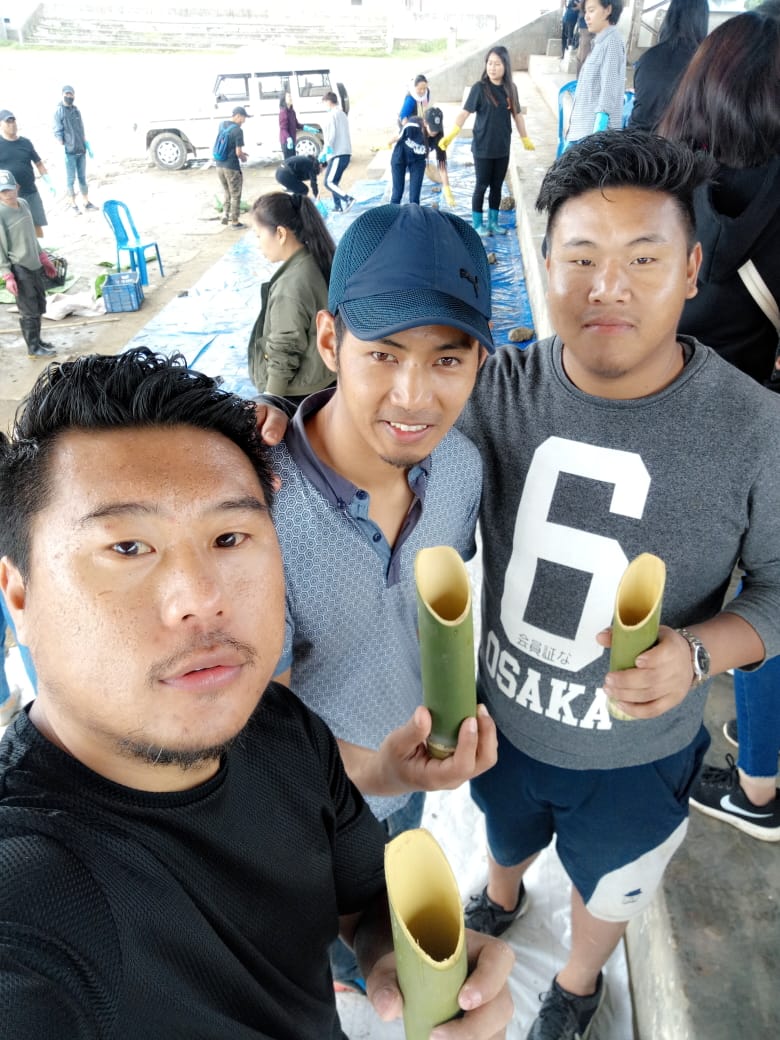
The Himalayan Cleanup, Nagaland, 2019.

4. On-Site Waste Sorting

The team must consist of trained volunteers to manage, segregate, and sort the event waste into multiple categories for resource recovery.

5. Food Donations

The excess food must not be wasted and should be either donated to people in need or at least used as animal feed. 

POST EVENT:

1. Sustainable Disposal

Working with our local partners to recycle and compost your event waste and repurpose them into valuable resources. 

2. Waste Audit & Recommendation

Providing a detailed waste audit report and further recommendations post the event for improved efforts in later events. 

Important pointers for organizing a Zero Waste Event. 

  • Say NO to FLEX. 

Use Cloth Banners instead and it’s best to reuse even those. 

  • Don’t use single-use cutlery. 

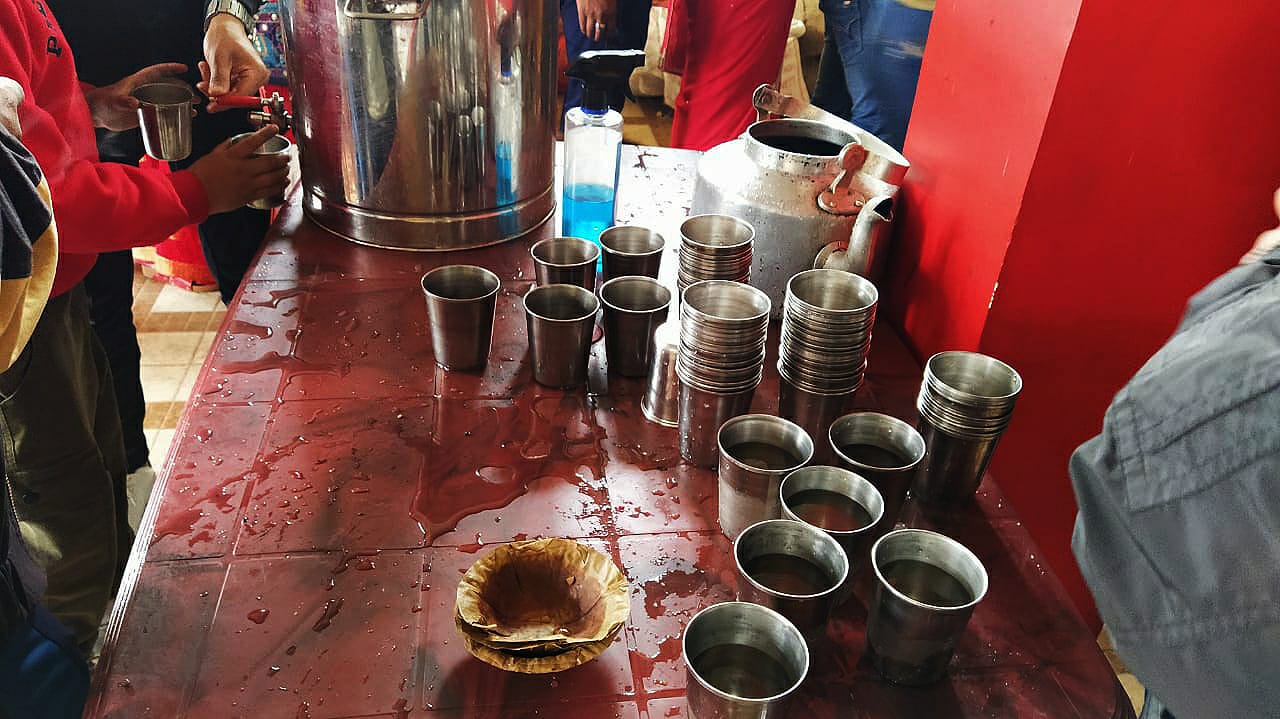
Using reusable cutlery must always be the priority. T here are biodegradable options available but exploiting any resource for extreme convenience is both unethical and unsustainable. 

  • Don’t distribute or sell packaged water. 

Water is a necessity for life but plastic is the largest and the worst polluter. Use reusable flasks, bottles, and cups. Ask the sponsors or service providers for inverted container dispensers and ask for a refill option such as a portable water filter. Ensure enough water availability so that emergency use of packaged water is avoided and announce where the water is available. 

Navratri Celebration, Plastic Free Senchal Darjeeling, 2021.
  • Decorum over decoration. 

Avoid balloons, plastic flags, flashy plastic flexs, or any plastic item that will be used for the sake of the event and then sent off to the landfill to contaminate the ecology for thousands of years. 

  • Use biodegradable, recycled, local, and handmade stuff. 

Be mindful while planning, managing and executing. Try to keep the carbon footprint of the event to the minimum. It is important to understand that there can be no true welfare in unsustainable events. 

The people look up to us, they imitate our actions with the thought that whatever NGOs and CSOs are doing is progressive and empowering but promoting the rampant use of Single-Use Plastics and jeopardizing the collective health of the planet for the sake of convention and convenience is ignorant, immoral, and unsustainable. 

We hope you will do your part in building a Zero Waste Himalaya and make your events Zero Waste and Sustainable. The people and principles you serve, look up to you. 

” Unless someone like you cares a whole awful lot,

Nothing is going to get better. It’s not. “

Dr. Seuss

In Solidarity! 

The Himalayan Cleanup Team, Zero Waste Himalaya

The ADB plays a critical role in this historic period of greater need for development finance in the transition to a green, just and resilient future for the region. As ADB and governments are pursuing COVID-19-related stimulus and recovery initiatives, it is increasingly important to factor in economic and social costs so solutions that are beneficial to human health, the environment, and the economy are prioritized.

To do this, ADB has to prioritize its investments to economic activities that respond to climate, environmental, and social challenges of our times. Unfortunately, its development projects have received much criticism from civil society groups for financing development projects that aggravate environmental deterioration, widen health inequities, reinforce community displacement, harm local jobs, and infringe on human rights objectives.

The Global Alliance on Incinerator Alternatives (GAIA) sends our submission to ADB’s draft Energy Policy. The scope of this review is on WTE — which our global alliance of 800 organizations worldwide (in partnership with grassroots organizations, scientific communities,
and local governments) have been pushing to be phased out in order to reduce plastic pollution and establish Zero Waste systems.

by Johanna Poblete 

How do you create positive change and a more inclusive world? Start by supporting sustainable ventures, Anne Poggenpohl shared, a venture builder at Enviu. To date, Enviu has grown 18 world-changing companies in the Netherlands, Kenya, India, Chile, and Indonesia. 

“When we founded Enviu in 2004, our dream was the same as it is today: an economy that serves people and the planet. An economy enriching the lives of all people, providing access to basic needs. An economy that sustainably utilizes the valuable and limited resources our planet endows,” Anne said.

To ease the transition into this equitable economy, Enviu leverages on strategic, synergistic partnerships and creates long-term entrepreneurial programs that disrupt value chains and drive industries toward a “new normal.”

“We determine what business interventions are needed along the value chain. We validate new, sustainable business models by creating, replicating, or accelerating ventures,” Anne said. “We use what’s already there and add what’s missing.”

RIDDING INDONESIA OF ITS PLASTIC WASTE PROBLEM


Enviu runs the Zero Waste Living Lab (ZWLL) program to tackle plastic pollution in Indonesia. Each venture helps develop the market for Zero Waste consumption so that a truly sustainable lifestyle is possible. 

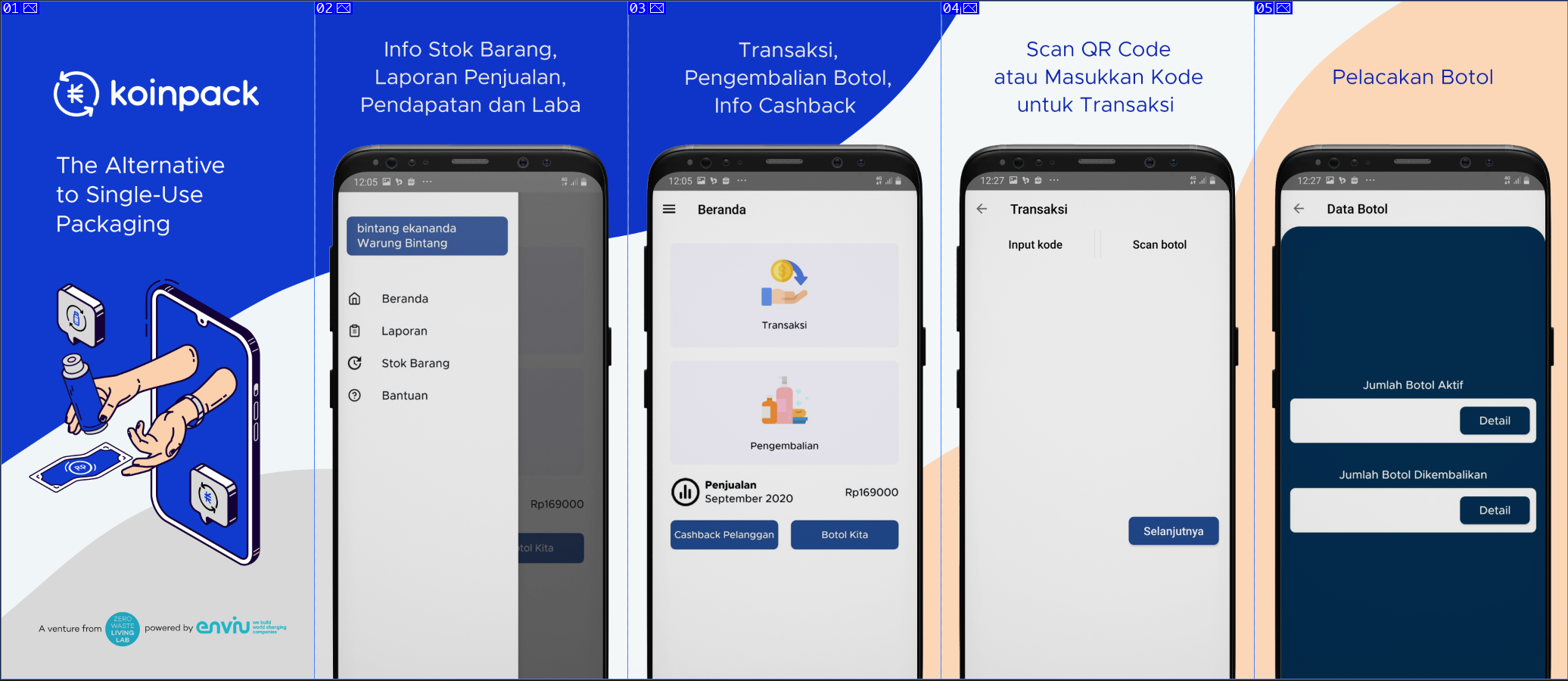
Koinpack (established March 2020) leads the waste reduction effort by providing reusable bottles as alternatives to single-use plastic sachets. Customers of the warung (a highly frequented store) get cashbacks and incentives upon returning these bottles. “Consumers get more value for their money and can generate savings by returning their reusable containers,” Anne said. 

Koinpack delivers new stock and ensures the empty packs are collected, cleaned, and refilled. The warung owners are able to check inventory, track stock orders and estimate stockouts, and process customer transactions online. After eight months, Koinpack avoided more than 10,000 sachets at two warungs and four waste banks; upscaling to 1,000 sales points will avoid four million sachet throwaways.

Shifting from single-use to reuse benefits not just the resellers but also fast-moving consumer goods companies (FMCGs). “Prior to Koinpack, a solution that targeted the low-end market using this type of packaging did not exist. Being the first ones to showcase that such a solution is not only possible but even scalable is what makes Koinpack stand out,” Anne said. 

A BURGEONING REUSE REVOLUTION 

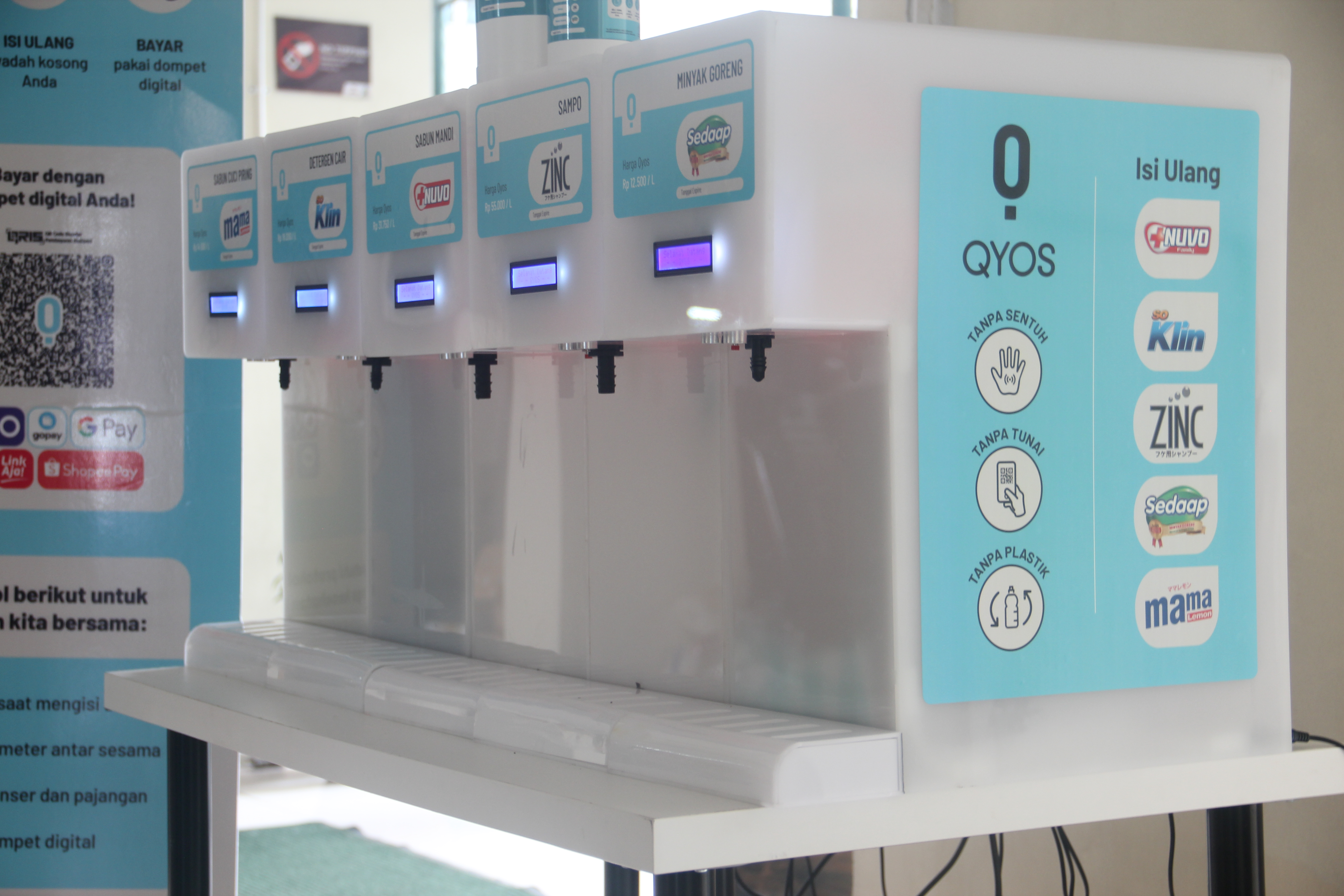
Koinpack has other “reuse sister ventures” under Enviu’s lab. Notably, QYOS (established June 2020) maintains 24/7 refill vending machines with reusable containers that, similar to Koinpack, are created by global packaging solutions company ALPLA. The cashless and touch-less machines, which dispense precise amounts of product (dish soap, body wash, or even hand sanitizer), are placed at high-density residential areas. This enables more households to refill at the QYOS station instead of purchasing their daily necessities in single-use plastic packaging. 

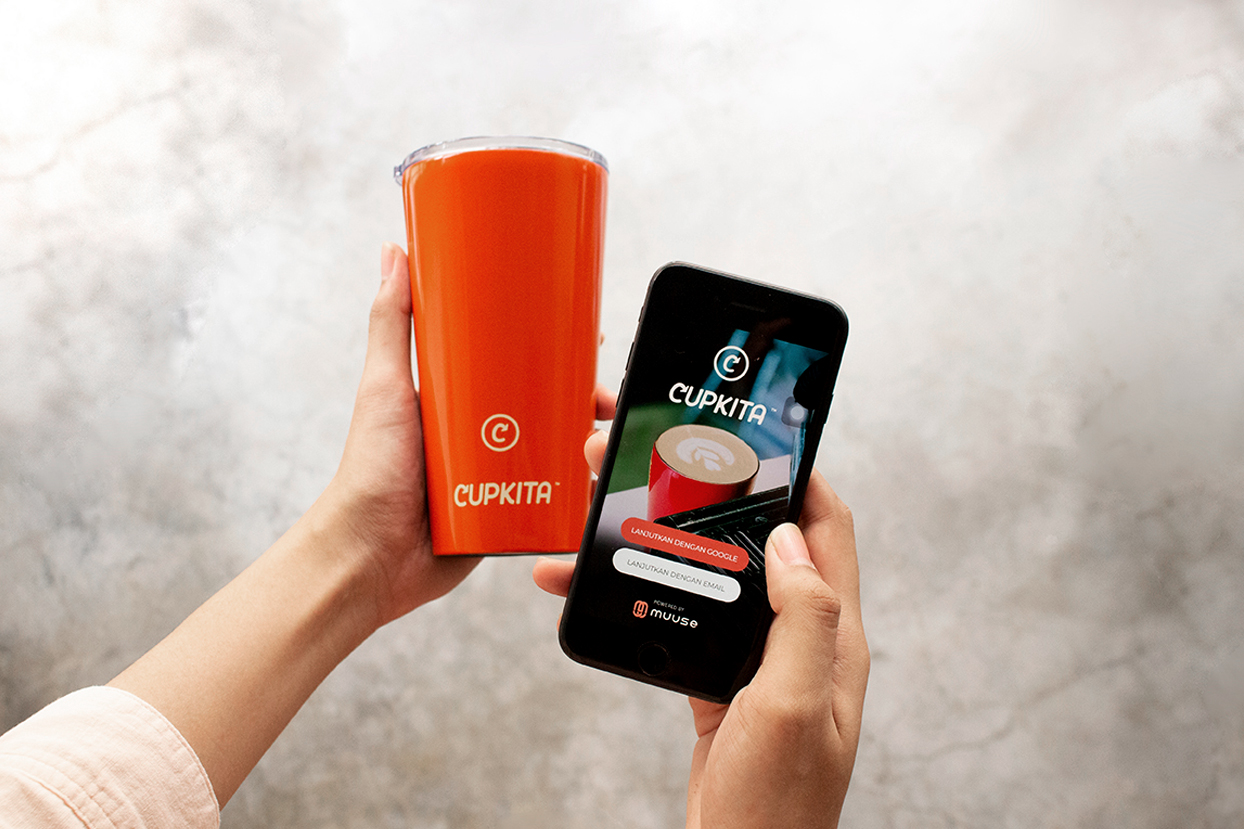
Pursuing a “borrow-reuse-return” scheme, CupKita (established July 2020) allows customers of popular cafés in Indonesia to refuse disposable coffee cups. Instead, they pay via mobile app to rent a reusable cup, and get a cashback upon returning it. Each cup is individually coded and must be returned within seven days; the customer is charged a fee if he keeps it. Based on average coffee sales, CupKita envisions saving anywhere from 525 kilograms to around 2,000 kilograms of disposables per store annually.

Other ventures under the lab include Econesia (established 2019), which offers a full-service water filtration system to residences, retail establishments, and hotels—thereby encouraging consumption of tap water and reducing demand for bottled water, while using refillable glass bottles instead of disposable plastic bottles. In the future, Econesia intends to help hotels go plastic-free by phasing out single-use amenities (shampoo, soap, dental kit, etc.). 

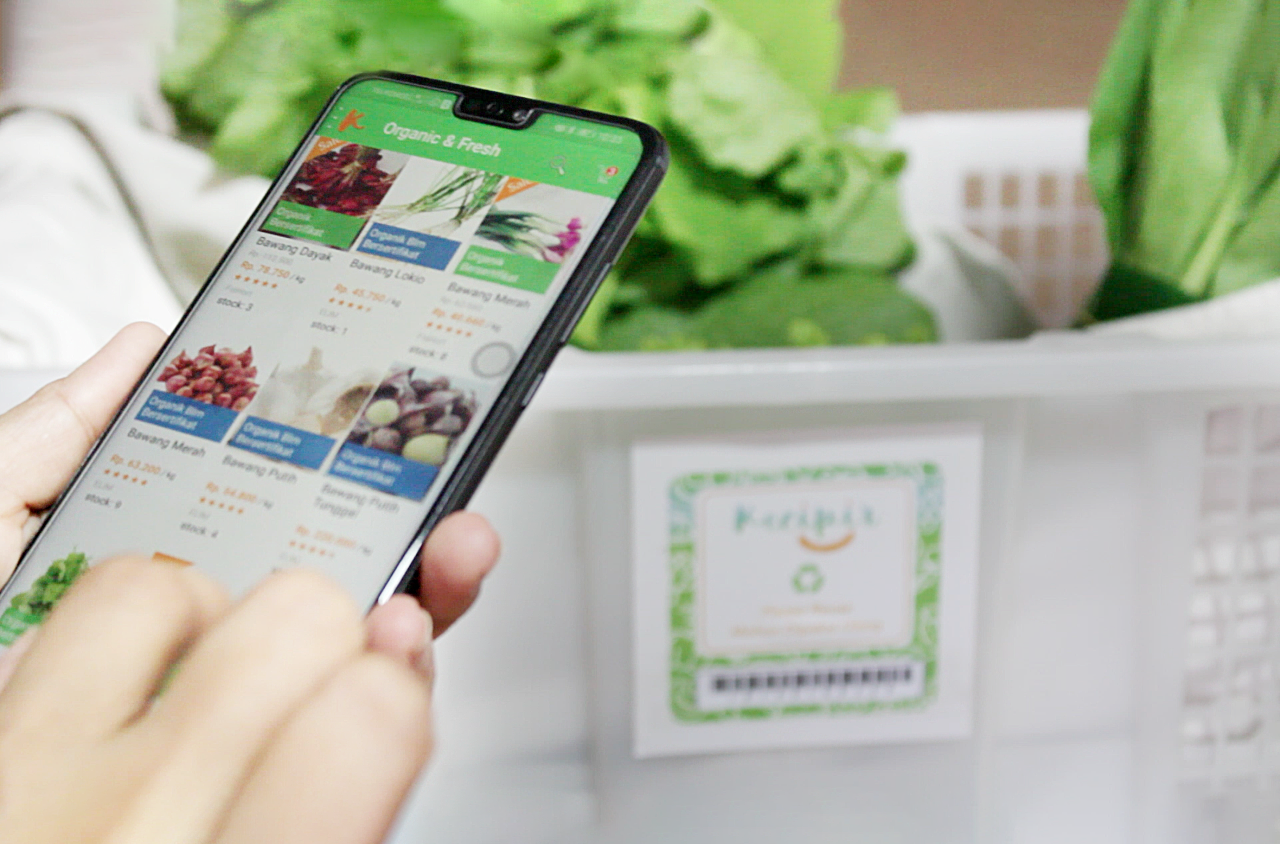
Finally, Kecipir (established April 2013, became a joint venture with Enviu in June 2019), manages an online store for local and in-season organic produce bought directly from farmer suppliers at fair prices. Customers can pick up the items fresh (less than a day’s harvesting)—and plastic-free—from Kecipir-exclusive distributors. Using Kecipir’s platform, organic becomes more affordable to customers and the farmers increase their profit.

PROVE IT WORKS, LET OTHERS COPY

Every venture consists of a separate on-the-ground local team that takes care of running and scaling the reuse business model, from operations to marketing-related activities. Each team has one or two venture builders who are responsible for the day-to-day business development, and are supported by Enviu’s back-office such as the marketing and communication team in Indonesia, as well as the Netherlands.

Moreover, Enviu’s team is also actively involved in connecting local and regional ecosystems, such as raising awareness and sharing inspiring stories about available solutions to the plastic crisis. They organize events, including webinars and forums, where key stakeholders from various sectors discuss pathways toward a future without plastic pollution. 

“Ultimately, by enabling a plastic-free reuse lifestyle in Indonesia, we expect the impact reach of our ventures to go far beyond the national market. Apart from closing the tap on plastic in the region, our reuse businesses are intended to serve as a global showcase market that will inspire more Zero Waste solutions across the globe,” Anne said. 

Website: https://www.zerowastelivinglab.enviu.org/

Instagram: https://www.instagram.com/zerowastelivinglab/

Photos courtesy of Enviu.

______________________

This article is part of the book, BUSINESS UNUSUAL: Enterprises paving the way to Zero Waste, a collection of feature articles on select enterprises in Asia Pacific that practice and promote Zero Waste principles. Published by Global Alliance for Incinerator Alternatives, the publication may be downloaded for free at www.no-burn.org/Business-Unusual.

by Marlet D. Salazar

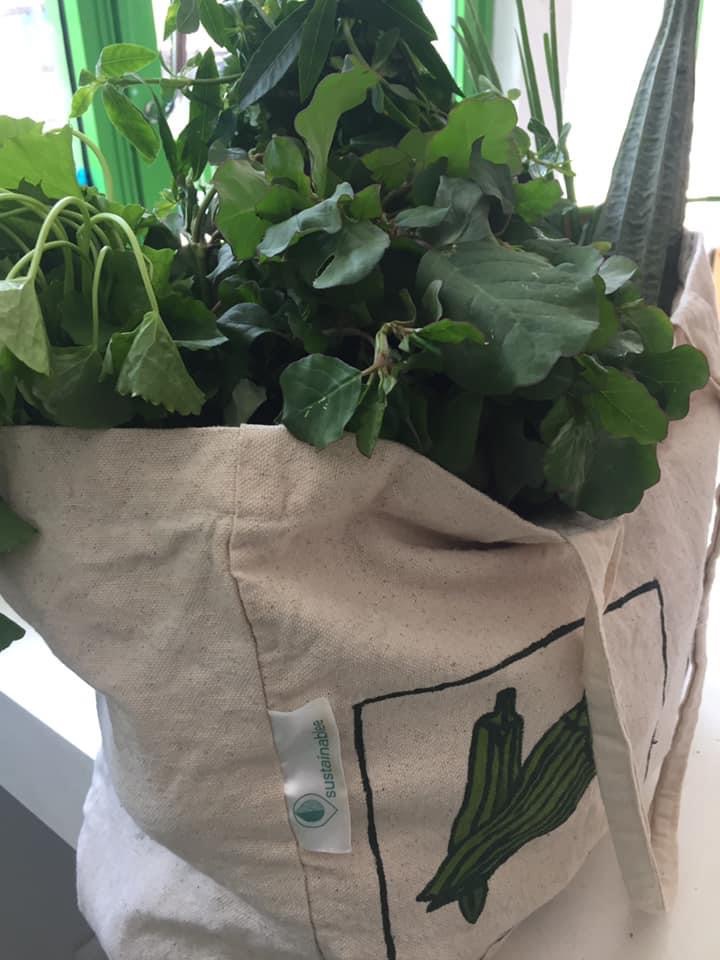
It was a couple of advocacies that led to the founding of the family-owned GreenCare Organic store in Sri Lanka. The owners wanted to sell organic vegetables grown on their family’s farm and promote the Zero Waste principle. 

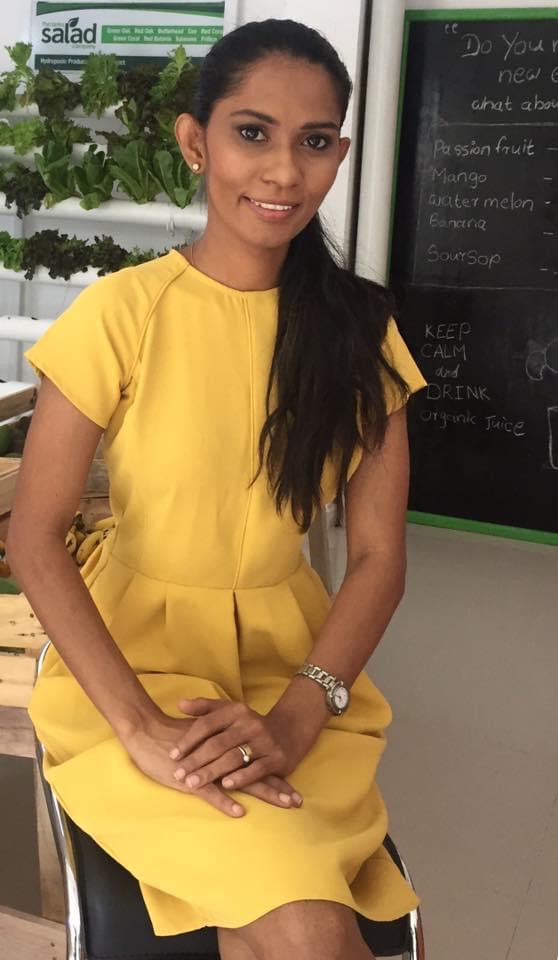
Udara Rathnayake, the co-founder of GreenCare, said that the store or supermarket which is based in Colombo is like a one-stop shop of organic produce and merchandise. Initially, the store sold organic vegetables that Udara’s mother planted and harvested from their farm.

“My mother used to grow organic fruits and vegetables for our daily consumption when we were small. When we moved to Colombo for our higher studies, we missed our mother’s produce and the healthy food she served,” she said.

In 2017, the Meethotamulla garbage dump disaster happened, rocking Sri Lanka. Nineteen people, including five children, died and 40 homes were damaged when a 300-foot high pile of garbage shifted then collapsed following floods and a fire.

The tragedy compelled Udara to strengthen her drive to reduce single-use plastic. 

“I was thinking: who was responsible for that tragedy?” she said. “Those people lost their lives because we threw away our plastics and garbage. I realized we need to find a solution to give justice to the people who died and also I have to make a difference.”

GreenCare as a company is four years old and the store is two years old. Initially, Udara and her family would attend fairs to sell their vegetable produce. Realizing that there is a market for organic vegetables, she and her family established the store.

But GreenCare has very strict rules that customers either should bring their own reusable bags or the store can provide paper bags. 

“After setting up the store, we thought of introducing the practice of Zero Waste and from day one, we only used paper bags,” she said. “[Admittedly], we are not Zero Waste yet but this is more than 50% or more than 80% Zero Waste,” she said.

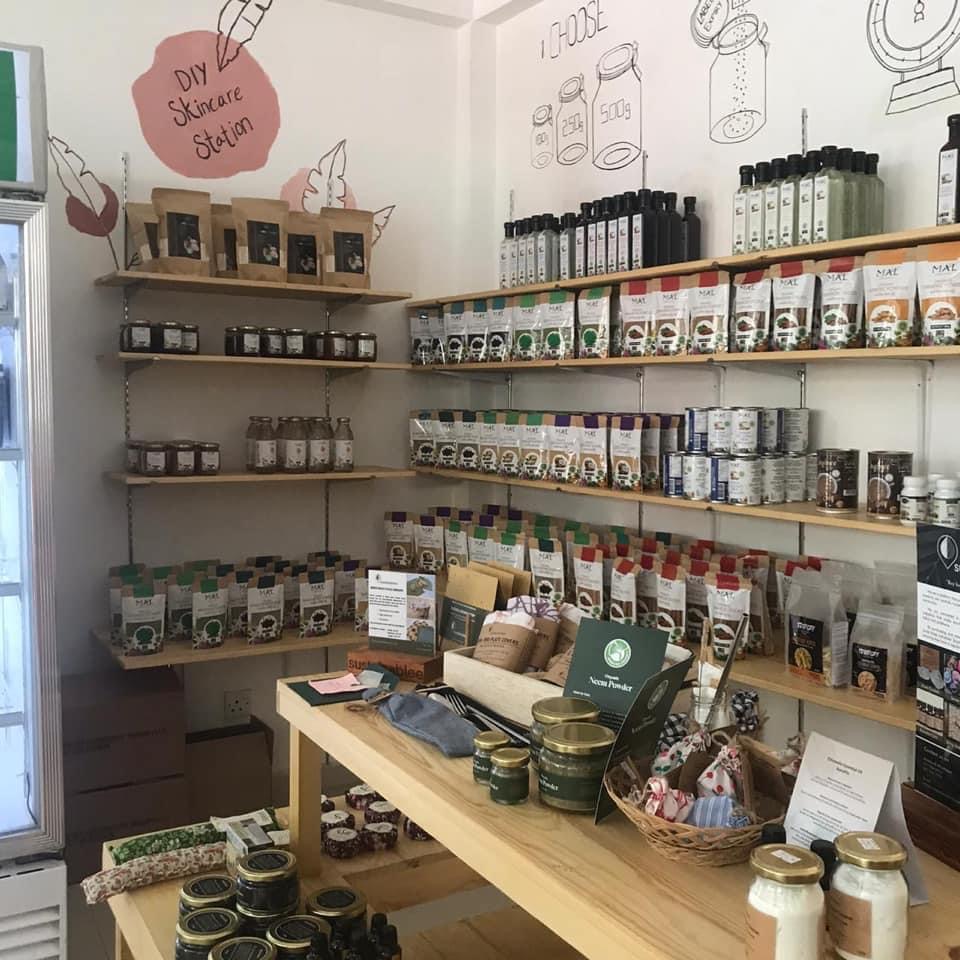
Still, GreenCare strongly encourages—and educates — its customers to be extra mindful of the waste they generate. The store buys reusable bottles and other containers that could be used for edible products. The micro-businesses that sell their goods through GreenCare are not allowed to use any type of plastic in their packaging. 

“When we discuss the concept and encourage them to try it, we give them a glass bottle and encourage them to bring it back,” she explained. “We will pay a small amount if they bring the bottles back.”

While there are still some who don’t buy the idea of shifting to reusables, Udara said that the majority of their customer base is “more educated and more knowledgeable.” 

She admitted, though, that the goods sold in their store can be a bit expensive because their products are organic as well as homemade and small scale.

“Our products are from our own farms. We do not source from others because we want to make sure that the products are truly organic,” Udara said.

She added that they have a different customer base. “These are those who allow you to reuse, those who can understand the concept, and those who are knowledgeable. Our target market is high-end, or those who have the buying power.”

According to Udara, the store doesn’t spend on any marketing. They rely on “a little bit of movement here or the word of mouth.” 

She added that she, herself, talks to people and introduces the GreenCare concept of organic farming and goods and reducing waste.

She explained: “We cannot think of the cost because it is the mindset as well as the behavior that we need to change.”

Like other stores, the COVID-19 pandemic also affected the GreenCare store but Udara said that like everybody else, they needed to adapt and resorted to delivering their goods. The packaging is of utmost importance but they still don’t allow plastics, especially single-use plastics.

In fact, according to Udara, they are looking at opening more stores. “Besides the fact that it is a good business, having more stores will allow us to educate more people about reducing waste and the health benefits of organic farming. 

Store address: No 56 A Chithra Lane Colombo 5

Facebook: https://web.facebook.com/gcareorganic

Photos courtesy of GreenCare.

______________________

This article is part of the book, BUSINESS UNUSUAL: Enterprises paving the way to Zero Waste, a collection of feature articles on select enterprises in Asia Pacific that practice and promote Zero Waste principles. Published by Global Alliance for Incinerator Alternatives, the publication may be downloaded for free at www.no-burn.org/Business-Unusual.

by Marlet Salazar

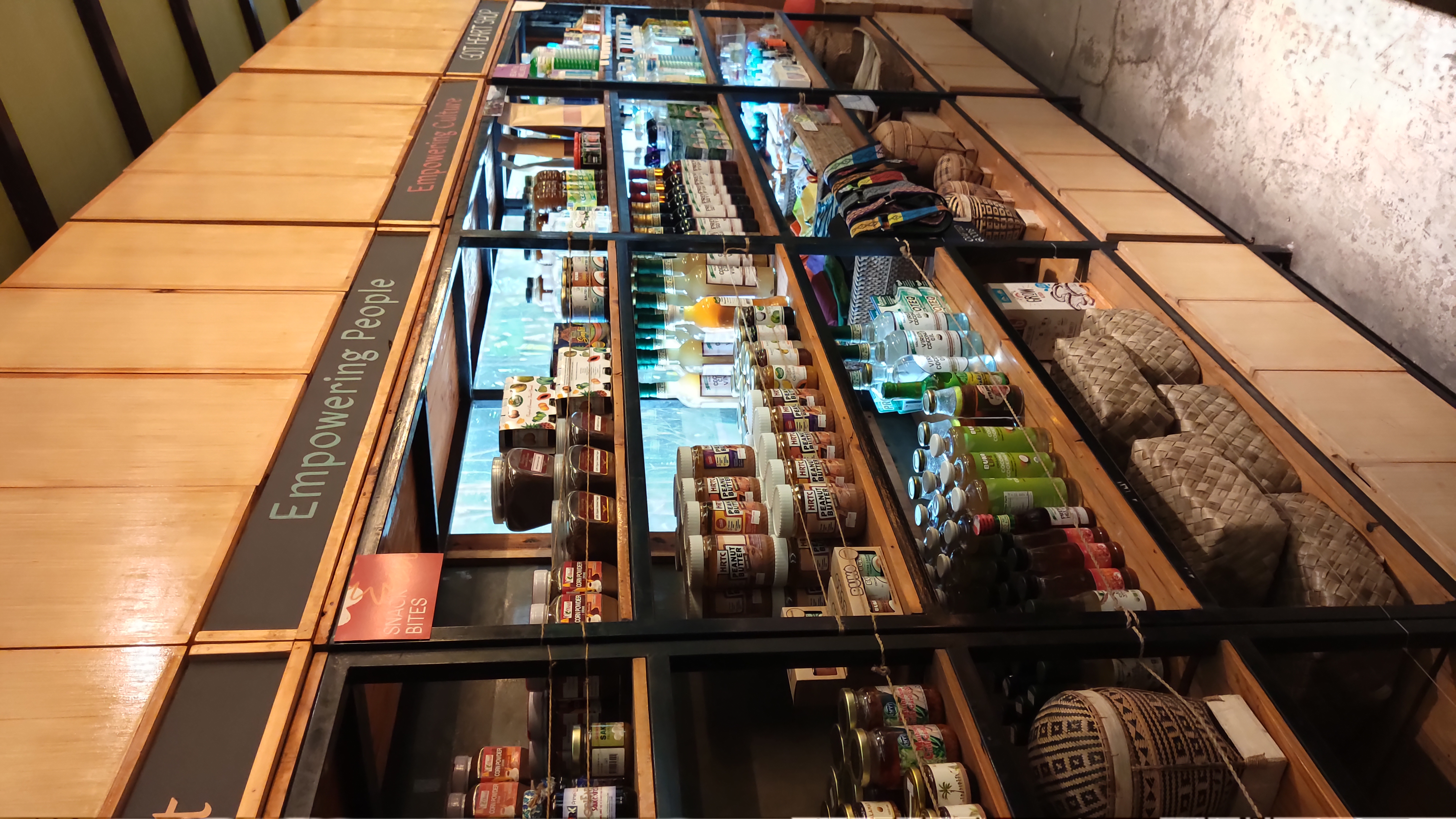
Got Heart Shop has set its heart on helping micro-enterprises and the indigenous peoples. A social enterprise that curates local food and non-food products from their partners, the shop does not only provide a venue for farmers to sell their products but also assists them in developing what it calls “businesses that are sustainable, holistic, independent, and dignified.” 

Supporting a broad range of advocacies from using organic products to locally made produce, Got Heart Shop is also actively promoting Zero Waste. 

Melissa Yeung-Yap founded the Got Heart Foundation in 2007, years after a visit to an orphanage where she realized there is a role she needed to play—to create a better world by empowering the marginalized sector and assisting them to live a life they can be proud of.

Working with different communities, the Foundation saw the struggles of micro-enterprises and understood that what prevented them from moving their businesses to the next level was sales and marketing. The communities had to resort to middlemen that undersold their products, thus losing the opportunity to increase their revenue. 

Because of this, they decided to pool the resources of the Foundation together to put up their very own Got Heart Shop where they can sell their community’s quality products at a fair price that actually benefits the community. 

In 2012, Melissa started Got Heart Shop with stores in White Plains (inside Earth Kitchen) and Esteban Abada, Loyola Heights, both along Katipunan, in Quezon City, Philippines. The shop also carries the Eat Your Straw’s Edible Straw and Earthlings brands that manufacture products like silicone menstrual cups, coffee cups, and dish sponges. 

According to Melissa, Got Heart is one of the first stores that embraced Zero Waste in the country. Being a pioneer, one of their key challenges was figuring out how this type of social enterprise will be accepted and eventually flourish. Endless trial and errors while learning by doing helped them to keep it up and running. “We just kept innovating and iterating accordingly,” she said.

She added: “Buying these Zero Waste products will promote the triple Ps bottom line that Got Heart  has been holding on for almost 12 years: the People, the Planet, and the Profit.”

Like many social enterprises, Got Heart walks the talk. They eliminated any and all forms of packaging; hence, they do not produce so much residual waste.  

Located in a neighborhood of mixed social classes, Got Heart caters to residents within the area as well as students from different campuses and workers from nearby offices.

However, as the pandemic accelerated digital transformation across all industries, the shop ramped up its online store and now engages its customers from different places through their social media platforms. 

“[Our] customers [have] been very supportive,” Melissa said. “We have a lot of regular customers who are already aware of the Zero Waste drill such as bringing sanitized containers for refilling.” 

Philippine businesses were heavily affected by the COVID-19 pandemic. And while Got Heart was also hit, the pandemic did not deter them from pursuing their advocacy. To help people practice their Zero Waste habit, they now offer delivery through couriers and/or delivery apps. They likewise expanded their operations by using an online platform. They use sterilized reusable containers to ship the products, especially the soaps, which are the best-seller.

“There are a lot of things you can’t control during a pandemic but just keep on working on the things you can control,” Melissa said. 

According to Melissa, consistency and follow-throughs are what make “habits” like Zero Waste successful. For her, one has to be true to their objective, first and foremost, because it would help any social enterprise—or any business for that matter—to find its footing and become successful, however people define success.

“We always do whatever we can to lessen any environmental impact of the products we sell,” she said.

Website: http://www.gotheartfoundation.org/

Facebook: https://web.facebook.com/GotHeartPH

Photos courtesy Got Heart Shop.

______________________

This article is part of the book, BUSINESS UNUSUAL: Enterprises paving the way to Zero Waste, a collection of feature articles on select enterprises in Asia Pacific that practice and promote Zero Waste principles. Published by Global Alliance for Incinerator Alternatives, the publication may be downloaded for free at www.no-burn.org/Business-Unusual.

15 June 2021

YONGPING ZHAI

Chief of Energy Sector Group

Sustainable Development and Climate Change Department (SDCC)

Asian Development Bank

Dear Dr. Zhai,

Congratulations on convening this virtual Asia Clean Energy Forum (ACEF) 2021 amid challenging conditions related to the ongoing pandemic. In this context, we write to raise specific concerns after having been informed on June 7th of a potential window within ACEF for a virtual discussion session on the ADB Energy Policy scheduled for June 15th.

We have been discussing the ACEF engagement with you since last year, and as we had hoped that we would be provided meaningful options for engagement, we were looking forward to your response. We regret to inform you that we are declining to engage in this dialogue based on our assessment of the platform, timing, and the lack of clarity in the way it is being rolled out. As a network of civil society groups and communities from across Central, South, and Southeast Asia as well the Pacific region and beyond, we do not consider this transparent, inclusive, meaningful opportunity for a consultation. 

Below, our key contentions related to the procedural lack of clarity and the limitations of the digital platform are elaborated.

On Process

Firstly, in regards to the process surrounding the coordination of this virtual session:

Forum member groups have been diligently checking the ADB’s website on the Energy Policy updates section over the past few weeks, waiting to see when more information would be available about scheduling civil society consultations, inclusive of all regions. Based on the stated intention by SDCC to designate a session during this year’s ACEF for an open, participatory civil society consultation during our dialogue on June 4th, Forum members have additionally been monitoring the ACEF website to remain alert as to when such a dialogue would be allocated and how they could participate in providing input from their respective groups. Disappointingly, despite the assurances provided at that time by SDCC, the given session within ACEF was not publicly identified on the website until Friday, June 11th.

Most significantly, it has never been clarified how the input provided during a moderated panel and moderated Q&A session would be duly accounted for and reflected as suggested revisions on the energy policy draft. Nor has it been clear if the SDCC intends to pitch it as the time when input from the Asian CSOs was provided, thereby limiting further engagement opportunities.

Consultation Platform Used

The chosen platform for the consultation is a conference app and thus has a minimal function if used for consultation. As per information from the technical coordinator of the event, the participants can only send their questions via chatbox and cannot participate via voice or dialogue. Also, quoting the technical advisor, ‘it is just one way and does not function like Zoom Meeting.’

In addition, the only individuals who will have access to microphones are the speakers, and those attending can only use the chatbox section of the platform, which the Bank moderates all incoming content. There is also the limitation of translation; the platform does not have translation options for local groups or impacted communities.

To continue our constructive collaboration around the ADB Energy Policy review, we hope to reconvene a consultation later. In the meantime, we are closely reading the draft policy and will be sharing with you our comments shortly. It would be effective to have a deeper dive after you have received our formal comments so we may have a more comprehensive and constructive discussion.

Respectfully,

Rayyan Hassan

Executive Director

NGO Forum on ADB

Endorsed by:

Aksi! for gender, social and ecological justice, Indonesia
Asian Peoples’ Movement on Debt and Development (APMDD)
Association Green Alternative, Georgia
Bangladesh Working Group on External Debt (BWGED), Bangladesh
Building and Wood Worker’s International, Asia Pacific
CEE Bankwatch Network
Center for Energy, Ecology, and Development (CEED) Philippines
Centre for Environmental Justice, Sri Lanka
Change Initiative, Bangladesh
CLEAN (Coastal Livelihood and Environmental Action Network), Bangladesh
Derecho Ambiente y Recursos Naturales, Peru
Environics Trust, India
Environmental public society, Armenia
Equitable Cambodia, Cambodia
Freedom from Debt Coalition, Philippines
Global Alliance for Incinerator Alternatives, Asia Pacific
Growthwatch, India
Indian Social Action Forum (INSAF), India
Initiative for Right View, Bangladesh
International Rivers
KRuHA – people’s coalition for the right to water, Indonesia
Nash Vek Public Foundation, Kyrgyzstan
Oyu Tolgoi Watch, Mongolia
Recourse, Europe
Rivers without Boundaries Coalition, Mongolia
Solidaritas Perempuan (Women’s Solidarity for Human Rights)
Youth Group on Protection of Environment, Tajikistan

Cc:

  1. Office of the President
  2. Vice-President for Knowledge Management and Sustainable Development
  3. Vice-President for Private Sector and Public-Private Partnerships
  4. Vice-President for Administration and Corporate Management
  5. Vice-President for Finance and Risk Management
  6. Vice-President Operations 1 & 2
  7. Office of the Managing Director-General
  8. Director-General, Sustainable Development, and Climate Change Department
  9. Climate Change and Disaster Risk Management Division
  10. Director, Safeguards Division
  11. Director-General of Independent Evaluation Department
  12. Director, Thematic, and Country Division
  13. Chair, Compliance Review Panel (CRP)
  14. Head, NGO and Civil Society Center
  15. Deputy Director-General, Sustainable Development and Climate Change Department
  16. Principal Safeguards Specialist, Portfolio, Results and Quality Control Unit
  17. All Executive Directors
  18. All Alternate Executive Directors

You may also read the letter in the NGO Forum on ADB website.

10 June 2021 – In line with  the  Asian Development Bank’s (ADB) annual Asia Clean Energy Forum in June 14-17 in which waste incinerators aka Waste-to-Energy (WtE) figures prominently as a renewable source of energy and a solution to a low-carbon future in its released  draft Energy Policy, the Global Alliance for Incinerator Alternatives (GAIA) Asia Pacific and #breakfreefromplastic gathered experts and representatives from civil society organizations (CSOs) to express their  opposition to the Bank’s support for WTE incinerators. 

Under its Strategy 2030, the ADB has envisioned to “achieve a prosperous, inclusive, resilient, and sustainable Asia and the Pacific, while sustaining its efforts to eradicate extreme poverty.” Moreover, it has supported cross-sectoral projects addressing water security and environmental conservation – including waste disposal services – in order to build livable cities. The ADB, however, maintains its endorsement of WtE  incineration, which it describes as a “circular economy solution,” contrary to the Bank’s commitment to a low-carbon and inclusive development.

Yobel Novian Putra, GAIA Asia Pacific’s Climate and Clean Energy campaigner stressed that, “Permitting WtE incinerators in its energy policy and considering it as renewable energy means ADB is offering a sham clean energy agenda  and  veering away from  the Paris Agreement’s 1.5° target.” He highlighted that, “WtE  incineration  is neither clean nor renewable and it is dirtier than coal-power plants (1). In Europe, it is recorded that  WTE incinerators generate twice the amount of direct CO2 emissions of the current EU28 average electricity grid intensity – significantly greater than conventional fossil fuel sources. (2)”   

In addition to  a high level of carbon intensity, a study conducted by Zero Waste Europe revealed that waste incinerators – despite being equipped with safety mechanisms, long-term tests show that they emit dioxin and other persistent organic pollutants (POPs) far beyond international standards (3).

Today, waste incinerators are heavily regulated in the EU and the US and  banned in the Philippines, Guam, and in Canberra, Australia. CSOs also said waste incinerators require a fixed amount of waste for incineration throughout the plant’s life – and as such – it undermines waste prevention, reuse and recycling policies and programs .

Hemantha Withanage, Executive Director of Centre for Environmental Justice in Bangladesh added that “the Stockholm Convention lists two  groups of POPS namely, dioxins and furans as byproducts of  incinerations which accumulate in living tissues. Long-term exposure can impair immune, nervous, endocrine and reproductive systems – and increase a person’s predisposition to cancer. Evidence suggests WTE also poisons  food systems and environmental quality.”  He also stressed that  waste incineration projects fail because in the long run, waste incinerators demand more resources both in terms of waste and cash. “Waste incinerators are expensive to build and maintain and companies lock cities in 20- or 30- year contracts demanding cities to supply trash to burn or otherwise – pay a fine.” 

Ahmed Afrah Ismail, Co-founder of Zero Waste Maldives, believes that waste incineration investments will sink the Maldives into further debt. “The Maldives already has a bad record in running waste incineration projects. Not only is it disastrous to our economy, but waste incineration, which needs a lot of waste feedstock for its operations, will ruin the government’s efforts to ban single-use plastics. Effective 1 June 2021, the Maldives banned the import of  single-use plastics, such as drinking straws, plates, cutleries, and disposable food containers.

In the Philippines, CSOs are actively pushing against a legislative bill proposing to repeal the incineration ban, which is enshrined under Philippine Clean Air Act of 1999, to address the country’s waste and energy problem.  To Atty Rose Liza Osorio, a Trustee  of the Philippine Earth Justice Center (PEJC), “The proposal is mimicking the ADB’s perspective that waste incineration is a green source of energy. “ADB is magnifying inequities, harming country regulations and offering a false solution to a low-carbon future.”  PEJC is working with communities affected by ADB’s WTE project in Cebu, Philippines on grounds of violations to national laws and social issues including health, pollution,  and job losses of waste pickers. 

Urging the institution to raise its ambitions by investing in just and cleaner energy systems  and waste management solutions, the group then advised the ADB to explicitly exclude waste incineration and other thermal-based technologies in its energy policy.  They also stressed that ADB’s decarbonization agenda must go hand in hand with achieving a more sustainable and equitable society.   

###

Footnotes:

(1) ILSR (2018 December). Waste Incineration: A Dirty Secret in How States Define Renewable Energy.  https://ilsr.org/wp-content/uploads/2018/12/ILSRIncinerationFInalDraft-6.pdf 

(2) Zero Waste Europe (September 2019). The impact of Waste-to-Energy Incineration on Climate. https://zerowasteeurope.eu/wp-content/uploads/edd/2019/09/ZWE_Policy-briefing_The-impact-of-Waste-to-Energy-incineration-on-Climate.pdf

(3) Zero Waste Europe (2018 November). Hidden Emissions: a story from the Netherlands. https://zerowasteeurope.eu/wp-content/uploads/2018/11/NetherlandsCS-FNL.pdf 

Media Contacts:

Sonia Astudillo, Communications Officer, Global Alliance for Incinerator Alternatives (GAIA) Asia Pacific  I sonia@no-burn.org I +63 917 5969286

Jed Alegado, Senior Communications Officer, Break Free From Plastic (BFFP) Asia Pacific I jed@breakfreefromplastic.org I +63 917 6070248

About GAIA  |  Global Alliance for Incinerator Alternatives is a worldwide alliance of more than 800 grassroots groups, non-governmental organizations, and individuals in over 90 countries whose ultimate vision is a just, toxic-free world without incineration. www.no-burn.org and www.zerowasteworld.org

About Break Free From Plastic | www.breakfreefromplastic.org/ | @brkfreefromplastic The #breakfreefromplastic Movement is a global movement envisioning a future free from plastic pollution. Since its launch in 2016, more than 11,000 organizations and individual supporters from across the world have joined the movement to demand massive reductions in single-use plastics and to push for lasting solutions to the plastic pollution crisis. Break Free From Plastic runs the #WeChooseReuse campaign, calling for a global shift towards refillable and reusable products.

Related resources:

Media briefing: Zero Waste Asia – YouTube or https://www.facebook.com/GAIAAsiaPacific/videos/1192319227934497/ 

Notes/References: 

18th Congress of the Senate of the Philippines (31 July 2019). Gatchalian bats for the passage of the Waste-to-Energy bill. http://legacy.senate.gov.ph/press_release/2019/0731_gatchalian1.asp

Asian Development Bank (May 2021). Energy Policy Supporting Low Carbon Transmission in Asia and the Pacific. Mandaluyong City, Metro Manila, Philippines. https://www.adb.org/documents/draft-energy-policy-supporting-low-carbon-transition-asia-and-pacific

Asian Development Bank (19 May 2021) Key Figures in the Fight Against Climate Change. https://www.adb.org/news/features/key-figures-fight-against-climate-change

Asian Development Bank (November 2020) Waste to Energy in the Age of Circular Economy. Mandaluyong City, Metro Manila Philippines. waste-energy-circular-economy-handbook.pdf

The President’s Office, Republic of the Maldives (01 June 2021) President declares list of Single-use plastics prohibited to import from June 01, 2021. https://presidency.gov.mv/Press/Article/24211

Yang, A. (28 March 2021) ADB affirms support for waste to energy despite opposition. Business World Online, https://www.bworldonline.com/adb-affirms-support-for-waste-to-energy-despite-opposition/

World Health Organisation (04 October 2016). Dioxins and their effect on human health.  https://www.who.int/news-room/fact-sheets/detail/dioxins-and-their-effects-on-human-health

Zero Waste Europe (November 2018) Hidden Emissions: a story from the Netherlands. https://zerowasteeurope.eu/wp-content/uploads/2018/11/NetherlandsCS-FNL.pdf

12 May 2021

The Global Alliance on Incinerator Alternatives (GAIA) Asia Pacific welcomes the Asian Development Bank’s (ADB) rapid phaseout of coal towards a low-carbon transition in the region, as stated in its draft Energy Policy. It is a victory for environmental and social justice advocates and affected communities worldwide. 

Yet, we believe that the Bank’s continued support for Waste-to-Energy (WtE) or incinerators will significantly hold up its low-carbon transition. According to the draft Energy Policy, ADB will keep WtE in its energy portfolio, “provided that the feedstock for combustion prudently follows the waste management’s order of priority, which considers first reducing waste generation.” While ADB recognizes the need for caution when opting for WtE, the language is unclear with regard to preferences over higher-tier activities in the waste hierarchy, such as waste prevention measures, reuse schemes, and recycling programs.

As mentioned in the policy draft, the ADB needs to invest in low-carbon solutions and avoid regrettable climate-inducing decisions, in order to achieve sustainable development. This includes avoiding carbon lock-in and curbing fossil-fuel use. WtE will create a lock-in situation which undermines waste reduction measures of local governments – including plastic waste which is derived from fossil-fuel. In the islands of Madeira and Azores in Portugal, for example, incinerators required a constant amount of waste feedstock, thus stagnating recycling rates in the area. A U.S. study concluded that WtE incineration is the most emissions-intensive form of power generation when both biogenic and fossil CO2 are accounted for. 

The ADB, through various technical assistance projects, has provided policy advice to municipalities on the use of WtE, while ignoring national goals on waste recycling targets or regulations prohibiting incinerators. Promoting WtEs, even as a last-resort option, will discourage developing member-countries (DMCs) to improve waste collection, recycling, and composting programs. By investing in thermal WtE, cities are obliged to generate more waste to maximize the operational capacity of thermal WtE facilities, as well as to meet contract-bound feedstock quotas. It locks societies into a linear economy that justifies a throw-away culture. Prudence in waste management is not a possibility with WtE. 

WtE facilities globally are primarily intended for waste management, not for producing electricity. The Bank’s continuous categorization of WtE as renewable energy is a deception to leverage public resources through guarantees and subsidies to empower industry polluters. Elsewhere, the European Union prohibits member-states from using renewable-energy subsidies to support waste incineration activities. The US Environmental Protection Agency, meanwhile, does not consider energy recovery as a waste minimization activity and rather prioritizes waste reduction at source.

The draft outlines benefits of WtE, which is described as a potential source of centralized heating, a better option for open landfills, a source of livelihood and a means to achieve liveable and healthy cities. Yet, waste incineration is the most expensive way to handle waste and create the least amount of jobs. The abovementioned list of supposed benefits is a blatant manipulation of the narrative, which projects WtE as a progressive tool for improving the quality of life and well-being of communities. We strongly express that these objectives for the use of WtE does not reflect current policy trajectories on sustainable financing, scientific findings, and on-ground experiences. 

Lastly, we express solidarity with our members and allies that are resisting ADB-funded WtE projects in the Philippines, Maldives, and Thailand. While the Bank has acknowledged the need to mitigate  environmental and social risks in WtE projects, independent evaluations show that these DMCs lack environmental and social regulations to mitigate, avoid, or compensate for harm. 

We challenge the ADB to stop investing in Waste-to-Energy and delist it from its climate financing and other sectoral portfolios. Stop the deception and use of critical resources for false solutions to climate change. 

We demand ADB to withdraw from WtE! ###

Read the Vietnamese Translation

Media Contact:

Sonia Astudillo, GAIA Asia Pacific Communications Officer sonia@no-burn.org, +63 917 5969286

Campaign Contact: Yobel Novian Putra, GAIA Asia Pacific Climate & Clean Energy Associate yobel@no-burn.org, +62 821 2818 4440