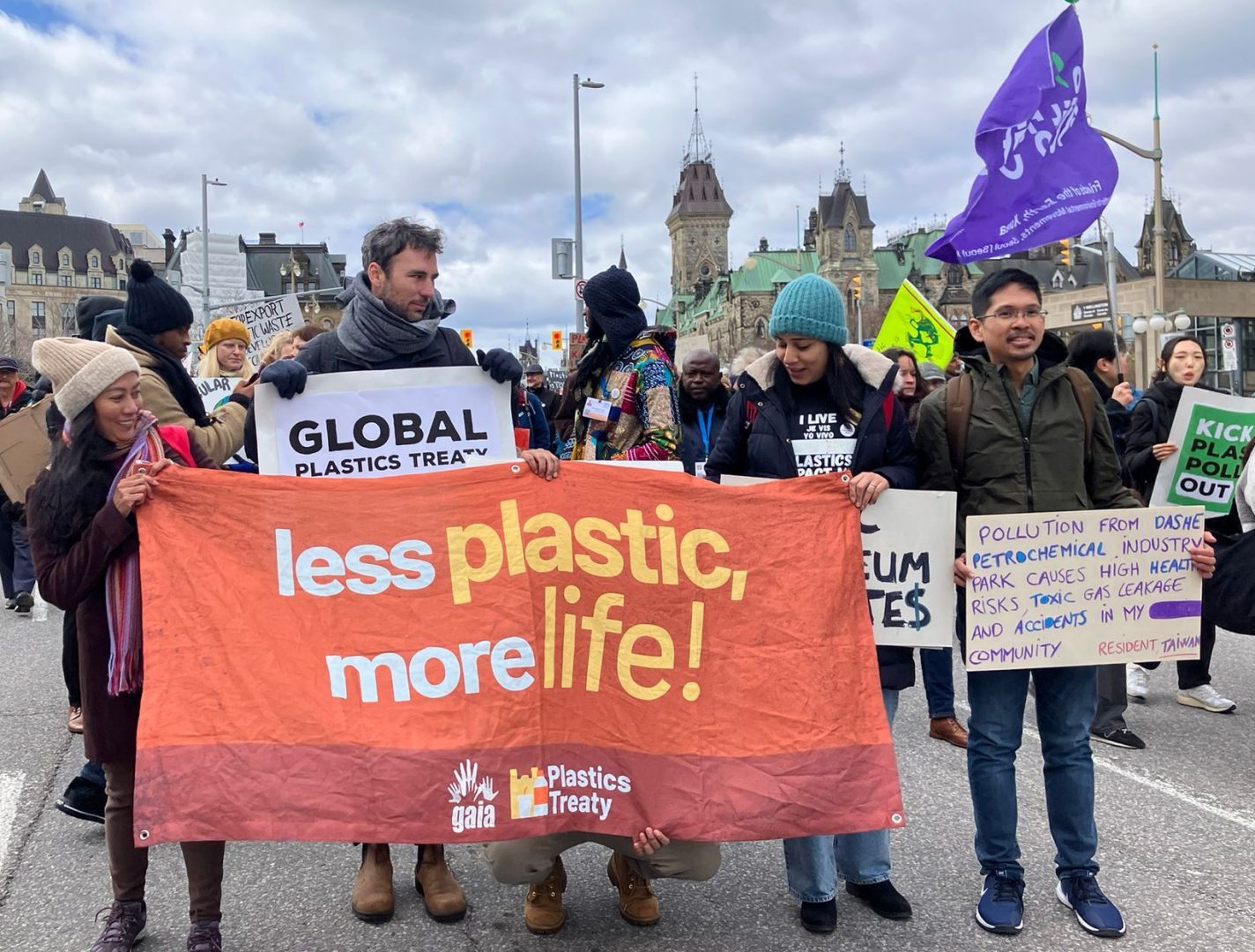
The tides turned at INC-5, and the way forward to an ambitious plastics treaty is now clearer than it’s ever been. At previous INCs, the majority of Member States showed willingness to compromise in the spirit of good-faith negotiations, even as petro-states used multiple tactics to delay and dilute progress towards a meaningful treaty. This time, they fought back.

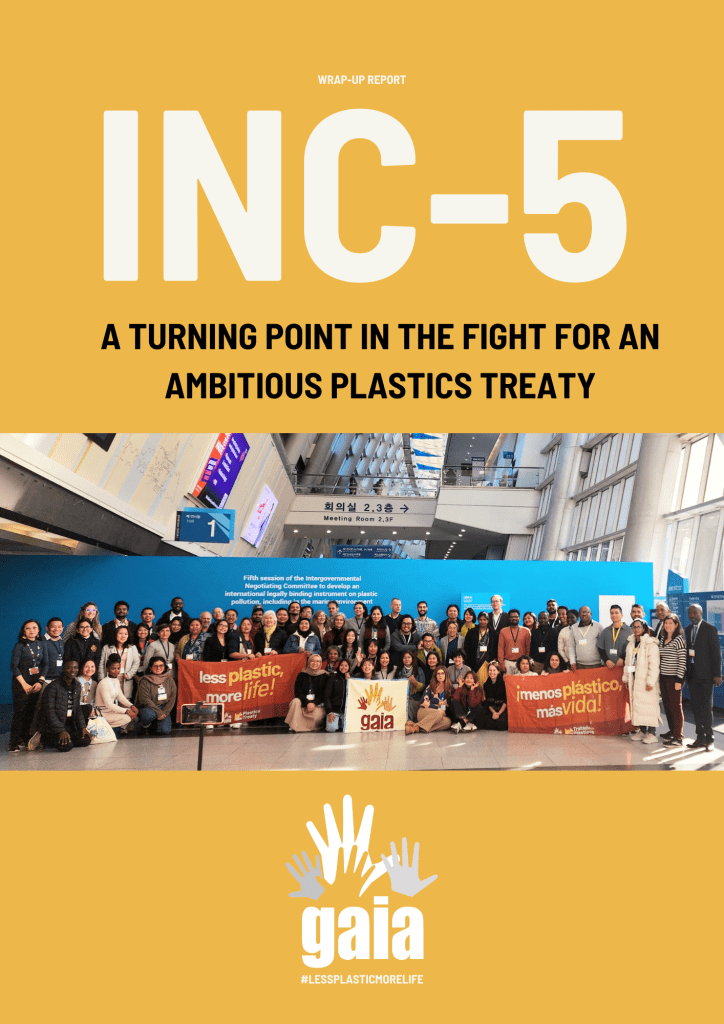
cover to GAIA Plastics Treaty INC-5 Outcomes. Includes group photo of civil society and banner reading Less Plastic More Life

Read GAIA’s report on the outcomes of INC-5, and our network’s impact. The report includes:

  • An analysis of the outcomes of INC-5, the bigger picture, and what’s next
  • A list of GAIA’s daily recaps from INC-5
  • A timeline of progress towards a plastics treaty
  • GAIA’s member engagement
  • GAIA’s media, social media, and advertising impact


GAIA’s press kit for INC-5 contains:

  • Updates on progress towards the treaty between INC-4 and INC-5
  • An analysis of the political climate heading into treaty negotiations
  • Key issues to watch

Global Press Contact: 

Regional Press Contacts: 

Modest Progress Made on Treaty Text, Intersessional Work

FOR IMMEDIATE RELEASE: APRIL 30, 2024

Ottawa, Ontario, Canada– After more than a year of stalling, negotiators finally made progress on the fourth round of plastics treaty talks (INC-4), with a decisive and growing support amongst parties on the need for the treaty to include plastic reduction targets, with over 50 countries in favor. 

“INC-4 marks a turning point in the fight against plastic pollution, despite petro-states’ and industry efforts to block progress and lower ambition.” says Ana Rocha, Global Plastics Policy Director at GAIA. “The drumbeat to reduce plastic production is growing from countries worldwide. More and more leaders are waking up to what the science and our lived experiences tell us: plastic is pollution, and we need to stop it where it starts.”

The credit for the growing sea change on primary plastic polymer (PPP) reduction goes to Global South regions, particularly Africa, Latin America, and small island developing states (SIDS). Rwanda and Peru were the first to call for a plastic reduction target of 40% by 2040. While not high enough to avoid breaching the 1.5°C climate target, Rwanda and Peru’s proposal is the first time a group of countries have put forward a specific target for plastic production cuts. Other outspoken countries include Fiji, Angola, the Philippines, Senegal, Thailand, and Peru.

“Unless we address the realities of the Global South, this problem of plastic pollution will not go away, leaving our people and environments to bear its most detrimental impacts. The African Group of negotiators at INC-4 have shown their strength and unity at INC-4, on behalf of everyone today and future generations to come,” says Merrisa Naidoo, Plastics Campaigner of GAIA Africa.

In another leap forward in the treaty process, countries have begun negotiating on the treaty text itself, for the first time in the INC process, and the long and unwieldy Revised Zero Draft from INC-3 was whittled down into a viable precursor to a final treaty text. In this streamlined draft, GAIA’s key policy priorities are very much in play: reduction of primary plastic polymers, eradication of toxic chemicals in products, a stand-alone financial mechanism, and enshrining a just transition. 

In spite of these gains, or perhaps because of them, the closing plenary was flung into disarray when the Chair’s proposal for intersessional work (meeting between INC-4 and 5) failed to honor the more ambitious proposals put forth by Global South countries, capitulating to the will of the least progressive Member States by putting forward an agenda that excludes PPP.

“Tonight’s upsets show that historical injustices have made their way into the halls of the plastics treaty negotiations,” states Camila Aguilera, Communications Officer for GAIA Latin America and the Caribbean. “The Global South countries who are fighting tooth and nail for a strong plastics treaty have been steamrolled by the will of wealthy nations. The debate over intersessional work is a proxy for these geopolitical divides between the Global North and the Global South.”  

The intersessional proposal limited the scope of talks on the financial mechanism to focusing on existing funding sources and private financing, threatening progress on this make-or-break facet of the treaty.

Arpita Bhagat, GAIA Asia Pacific Plastic Policy Officer, states:  “Global North countries are attempting to shirk responsibility by suggesting that the Global South’s needs can be met through existing financial environmental funds like the GEF, when countries have been clear that existing resources are not enough, nor accessible to those most in-need.”

Also concerning is the promotion of  industry-controlled and largely unregulated Extended Producer Responsibility and plastic credits by entities like the World Bank, Verra, Plastic Credits Exchange and many more. Investigative reports have exposed plastic credits as a greenwashing scheme that exacerbates the plastic problem by burning plastic in cement kilns. 

At the eleventh hour, a compromise was reached for intersessional work with a proposal by Brazil that included options for the establishment of a financial mechanism, fulfilling the request of impacted countries in the Global South.

The question of whether civil society will be included in this critical next step in the process remains unresolved. Jessica Roff, Plastics & Petrochemicals Program Manager at GAIA US and Canada, states, “After multiple assurances of commitment to our inclusion, the US government stayed silent as the chair ignored repeated requests for our inclusion by the more progressive countries.”

Editor’s Note: 

GAIA held a press conference Monday afternoon on Global South perspectives in regards to the treaty process. You can find a recording here

Press contacts:

Claire Arkin, Global Communications Lead

claire@no-burn.org | +1 973 444 4869

###

GAIA is a worldwide alliance of more than 1,000 grassroots groups, non-governmental organizations, and individuals in over 90 countries. With our work we aim to catalyze a global shift towards environmental justice by strengthening grassroots social movements that advance solutions to waste and pollution. We envision a just, zero waste world built on respect for ecological limits and community rights, where people are free from the burden of toxic pollution, and resources are sustainably conserved, not burned or dumped. 

FOR IMMEDIATE RELEASE: 29 April 2024

29 April 2024, Ottawa, Canada – In a powerful demonstration of unity and purpose, the Global Alliance for Incinerator Alternatives (GAIA) hosted a media briefing on the closing day of the fourth session of the Intergovernmental Negotiating Committee (INC-4) on Plastic Pollution. This event brought together a coalition of civil society organizations (CSOs) from the Global South, highlighting the critical issues and imbalances faced by lower-income countries in the treaty negotiations.

Speakers from the Center for Environment Justice and Development (CEJAD) in Kenya, Asociación Nacional de Recicladores in Chile, and River Warrior/GAIA Asia Pacific in Indonesia spotlighted the severe implications of plastic pollution that predominantly impacts their regions. They discussed the skewed dynamics between the Global North and Global South, pointing out the exploitation faced by less economically powerful countries.

Throughout the briefing, the speakers emphasized the need for equitable and effective participation in the treaty negotiations. They provided updates on the current status of these negotiations and discussed the potential implications of the treaty outcomes for their regions. Additionally, they unpacked what a financial mechanism is, the sources of funding, and what this funding can do. The group also stressed the need to be guarded against ‘false solutions’, such as plastic credits and waste-to-energy (WtE) incineration, which they argued impose additional environmental and health burdens on communities in the Global South. Instead, they advocated for genuine changes that address the root causes of plastic pollution.

The briefing also underscored the crucial roles of marginalized groups, including waste pickers and indigenous populations. It stressed the importance of incorporating these communities into the development of solutions that ensure a just transition to sustainable waste management practices. Moreover, the devastating effects of waste colonialism were discussed in detail, providing compelling evidence of how this practice exacerbates environmental crises and infringes upon the health and rights of local communities.

This gathering was not merely a forum to voice concerns but also served as a decisive call to action for leaders of the Global South. The group urged global leaders to recognize and rectify the imbalances that hinder effective international cooperation on this urgent issue.

QUOTES: 

  • Dorothy Otieno, CEJAD, Kenya: We need a dedicated fund to ensure that resources are readily available for developing countries to meet their obligations under the plastics treaty. Kenya, along with other countries in the global south, is dealing with a crisis that we did not create; therefore, we need to ensure that this financial mechanism is put in place to give us a chance to implement the treaty obligations. 
  • Aeshnina Azzahra, River Warrior Indonesia, GAIA Asia Pacific:  Please stop waste colonialism. We, the youth,  want to live in a healthy and plastic-free future. Let us play in a clean river and breathe in fresh air with no microplastics in it. I hope that with this INC, we can all open our hearts and minds to solve plastic pollution.

###

Media Contacts:

GAIA Africa: Carissa Marnce, +27 76 934 6156,  carissa@no-burn.org

GAIA Asia Pacific: Sonia G. Astudillo, +63 9175969286, sonia@no-burn.org

GAIA América Latina: Camila Aguilera, +56 9 5 111 1599; camila@no-burn.org 

GAIA Global: Claire Arkin, +1 973 444 4869, claire@no-burn.org

About GAIA:

GAIA is a network of grassroots groups as well as national and regional alliances representing more than 1000 organizations from 92 countries. With our work we aim to catalyze a global shift towards environmental justice by strengthening grassroots social movements that advance solutions to waste and pollution. We envision a just, Zero Waste world built on respect for ecological limits and community rights, where people are free from the burden of toxic pollution, and resources are sustainably conserved, not burned or dumped. www.no-burn.org

Los líderes mundiales se reunirán este mes para negociar recortes en la producción de plásticos en el marco del Tratado de plásticos

PARA PUBLICACIÓN INMEDIATA: 19 de abril, 2024

Berkeley, California, Estados Unidos– Antes de la cuarta ronda de negociaciones de las Naciones Unidas para un tratado global sobre plásticos que se llevará a cabo del 23 al 29 de abril en Ottawa, el Laboratorio Nacional Lawrence Berkeley (LBNL) publicó un estudio pionero que revela el enorme impacto climático de la producción de plástico. La Alianza Global para Alternativas a la Incineración (GAIA) ha preparado un informe de políticas que muestra cuán rápido el mundo debe reducir la producción de plástico para evitar un calentamiento catastrófico. Las conclusiones del informe refuerzan la importancia de que el tratado de plásticos cubra todo el ciclo de vida del plástico, desde la extracción hasta la eliminación, tal como se consagra en el acuerdo entre 175 países -la Resolución 5/14 de la UNEA-, que constituye la base de las conversaciones en relación con el tratado.

Principales conclusiones:

  • El impacto de los plásticos en el clima comienza con la fase de extracción. Con vistas a comprender, medir, evaluar y abordar en forma cabal el impacto de la contaminación por plásticos, la evaluación y los controles regulatorios deben considerar el ciclo de vida completo, que comienza con la extracción. 
  • El incremento en la producción de plástico por sí solo arruinará los objetivos climáticos internacionales. Incluso si todas las demás fuentes de emisiones de gases de efecto invernadero (transporte, electricidad, agricultura, industria pesada, etc.) se descarbonizaran milagrosa y completamente en 2024, con las tasas de crecimiento actuales, la producción de plásticos primarios por sí sola consumiría por completo el presupuesto mundial de carbono para el año 2060 y, a más tardar, para 2083. 
  • Se requieren recortes profundos y rápidos en la producción de plástico conforme lo establecido en el Acuerdo de París. Para evitar superar el límite de 1,5°C establecido en el Acuerdo de París, a partir de 2024, la producción de plásticos primarios debe disminuirse entre al menos 12% y 17% por año. 

Un punto clave de tensión en las negociaciones hasta el momento tiene que ver con la inclusión de recortes ambiciosos y vinculantes en la producción de plástico en la versión final del tratado. La gran mayoría de los países que participan en el proceso de negociación se han mantenido abiertos a incluir en el tratado objetivos de reducción de la producción. Sin embargo, una minoría reducida pero ruidosa, integrada principalmente por naciones productoras de combustibles fósiles, ha intentado sabotear las conversaciones mediante tácticas de obstrucción, y a través de argumentos que sostienen que la contaminación por plásticos comienza sólo en la etapa de eliminación. A la luz de los nuevos datos del LBNL, la obstrucción de este pequeño grupo pone en peligro la capacidad del mundo para descarbonizarse a tiempo y evitar así un desastre climático.  

La industria petroquímica en sí tiene una presencia significativa en las negociaciones ya que 143 lobistas de la industria  se inscribieron para asistir al INC-3, un grupo más grande que cualquier delegación nacional u organización de la sociedad civil, con lo que lograron amplio acceso a representantes gubernamentales de todo el mundo.   La sociedad civil pide que se los retire de futuras negociaciones a fin de evitar un conflicto de intereses. 

El Dr. Neil Tangri, Director de Ciencia y Políticas de GAIA y Senior Fellow de la Facultad de Políticas Públicas Goldman de la Universidad de California en Berkeley, afirmó lo siguiente: “Mientras los líderes mundiales intentan negociar una solución a la crisis del plástico, la industria petroquímica invierte miles de millones de dólares para empeorar rápidamente el problema. Necesitamos un acuerdo global para detener este crecimiento canceroso, reducir la producción de plástico y marcar el comienzo de un mundo con menos plástico y menos contaminación”. 

El Dr. Sam Adu-Kumi, ex Director del Centro de Gestión y Control de Sustancias Químicas de la Agencia de Protección Ambiental (EPA) de Ghana, sostuvo que “África ha sido una de las regiones más ambiciosas en las negociaciones del tratado de plásticos. Reconocemos el impacto de la contaminación por plásticos en la salud, el medio ambiente y los medios de vida de nuestra gente, y sabemos por experiencia que se necesitan medidas en las etapas iniciales y de producción para permitir el éxito en las fases posteriores respecto de la lucha contra la contaminación por plásticos”.

El Dr. Jorge Emmanuel, profesor adjunto y Research Faculty Fellow de la Universidad Siliman, en Dumaguete, Filipinas, afirmó que: “Filipinas está a la vanguardia tanto del cambio climático, como de la contaminación por plásticos. Las olas de calor, los fuertes tifones e inundaciones empeoran con el paso del tiempo, y la industria petroquímica ha desplazado nuestros sistemas tradicionales con montañas de plástico que envenenan a nuestras comunidades. Si el tratado incluye o no recortes en la producción de plástico no es sólo un debate político, es una cuestión de supervivencia”. 

Contactos de prensa:

Camila Aguilera, Comunicaciones GAIA América Latina 

camila@no-burn.org | +56 9 51111599

Claire Arkin, Comunicaciones Globales

claire@no-burn.org | +1 973 444 4869

Nota editorial: 

Dr. Neil Tangri fue el revisor experto del informe LBNL y las conclusiones del informe de políticas se basan en los datos de dicho reporte. El viernes 19 de abril de 2024, a las 12:00 de la mañana EST, estará disponible un informe político completo en el que se explicará cómo entender estos nuevos datos en el contexto de las negociaciones del tratado sobre los plásticos. Para recibir una copia embargada de este informe, póngase en contacto con claire@no-burn.org (EE.UU) o camila@no-burn.org (América Latina)

Para obtener más información sobre las próximas negociaciones del tratado sobre plásticos (INC-4), consulte nuestra carpeta de prensa

Global Leaders to Meet This Month to Negotiate Production Cuts in Plastics Treaty

FOR IMMEDIATE RELEASE: APRIL 19, 2024

Berkeley, CA, USA– In advance of the fourth round of United Nations negotiations for an international plastics treaty in Ottawa April 23-29, Lawrence Berkeley National Laboratory (LBNL) has released a groundbreaking study revealing the enormous climate impact of plastic production. The report’s findings reinforce the importance of the treaty covering the entire life cycle of plastic, from extraction to disposal, as enshrined in the 175-country agreement Resolution 5/14, which forms the basis for the treaty talks. Global Alliance for Incinerator Alternatives (GAIA) has created a policy brief that shows how rapidly the world must reduce plastic production in time to avert catastrophic warming.

Key Findings:

  • Plastics’ impact on the climate starts with extraction. To fully capture, measure, evaluate and address the impacts of plastic pollution, assessment and regulatory controls must consider the complete lifecycle, beginning with extraction. 
  • Growth in plastic production alone will doom international climate goals. Even if every other source of greenhouse gas emissions – transportation, electricity, agriculture, heavy industry, etc. – were to miraculously and completely decarbonize in 2024, at current growth rates, primary plastic production alone would completely consume the global carbon budget as early as 2060 and no later than 2083. 
  • Deep, rapid cuts in plastic production are required by the Paris Agreement. To avoid breaching the 1.5°C limit set by the Paris Agreement, primary plastic production must decrease by at least 12% to 17% per year, starting in 2024. 

A key tension point in the negotiations thus far is over including ambitious and binding plastic production cuts in the final treaty. The vast majority of countries engaged in the negotiation process have remained open to including production reduction targets in the treaty. However a small but vocal minority, primarily made up of fossil fuel-producing nations, have sought to sabotage the talks through obstruction tactics and by arguing that plastic pollution starts only at the disposal stage. In light of the new data from LBNL, this small group’s obstruction imperils the world’s ability to decarbonize in time to avoid climate disaster.  

The petrochemical  industry itself has had a significant presence at the negotiations– 143 industry lobbyists registered to attend INC-3, a larger group than any national delegation or civil society organization, and has gained extensive access to government representatives from around the world. Civil society is calling for their removal from further negotiations to avoid conflict of interest. 

GAIA Science and Policy Director and Senior Fellow at UC Berkeley’s Goldman School of Public Policy, Dr. Neil Tangri, states: “While global leaders are trying to negotiate a solution to the plastic crisis, the petrochemical industry is investing billions of dollars in making the problem rapidly worse. We need a global agreement to stop this cancerous growth, bring down plastic production, and usher in a world with less plastic and less pollution.” 

Co-author Dr. Sam Adu-Kumi, former Director of the Chemicals Control and Management Centre of the Environmental Protection Agency (EPA) of Ghana, says, “Africa has been one of the most ambitious regions in the plastics treaty negotiations. We recognize the impact of plastic pollution on our people’s health, environment and livelihoods and we know from experience that upstream measures are needed to enable downstream success in combating plastic pollution.”

Co-author Dr. Jorge Emmanuel, Adjunct Professor and Research Faculty Fellow, Silliman University, Dumaguete, Philippines, states, “The Philippines is on the frontlines of both climate change and plastic pollution. Heat waves, powerful typhoons and flooding are getting worse, and the petrochemical industry has displaced our traditional systems with mountains of plastic that poison our communities. Whether the treaty includes plastic production cuts is not just a policy debate. It’s a matter of survival.” 

Press contacts:

Claire Arkin, Global Communications Lead

claire@no-burn.org | +1 973 444 4869

Note to editor: 

Dr. Neil Tangri was an expert reviewer on the LBNL report, and the conclusions cited above are based on that report’s data. The full policy brief can be found here. For more information about the upcoming plastics treaty negotiations (INC-4), please see our press kit

Controversy on Waste: To Burn or Not to Burn?

Canada in the Spotlight as Host of Plastics Treaty Negotiations

FOR IMMEDIATE RELEASE: APRIL 4, 2024

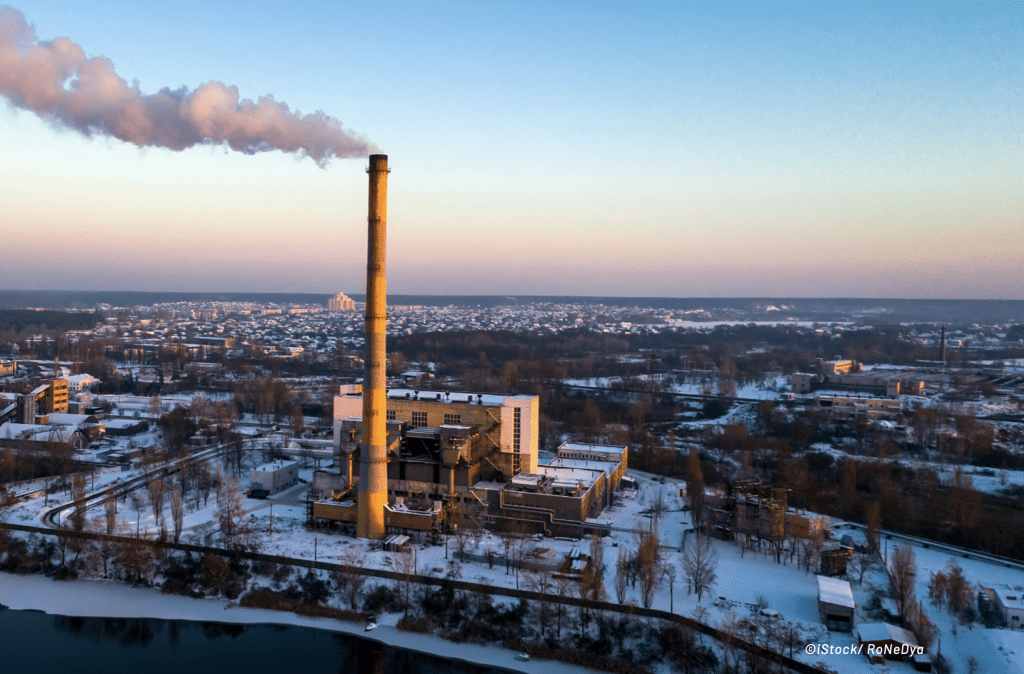
While Canada is set to host the next round of the Global Plastics Treaty negotiations April 23-29, Canadian groups are raising an alarm about the expansion of waste incineration across the country. Dubbed “waste-to-energy” (WTE) by industry, burning waste through methods like incineration, gasification and pyrolysis is a practice that would undermine federal climate, plastics, and waste management policies.

“Canada has goals to end plastic pollution and stop climate change. That means we must close the door to polluting and wasteful garbage incineration,” said Karen Wirsig, Plastics Senior Program Manager at Environmental Defence. “Incineration poses real risks to the environment and human health. Plus, garbage is not a clean or ‘renewable’ energy source and incinerators have been found to emit more greenhouse gasses per unit of electricity than fossil fuels.”

The Town of Pontiac, Quebec, is fighting a proposal for a new waste incinerator to burn garbage from the City of Ottawa, where the treaty negotiations will take place. Other incinerator proposals are surfacing in Brampton, Ontario, and Edmonton, Alberta, among others.

The rise in incinerator proposals follows a report released last year by the federal government and shared with municipal officials that suggests incineration is a climate-friendly approach to waste management. That federal report was recently debunked by research commissioned by Zero Waste BC and GAIA.

Incineration threatens efforts to establish Canada as a leader in tackling plastic pollution, climate change and diversion of organics.

Analysis by the Canadian Zero Waste Coalition shows that:

Report author and environmental engineer Belinda Li, noted, “it is very important that our government supports real solutions like waste prevention and reduction and not costly distractions such as WTE. If we prevent waste from being generated in the first place, we can extend the life of our landfills and make the best use of our existing infrastructure.”

The floundering of experimental WTE plants offers cautionary tales to other communities. “Across Canada incinerators have proven to be costly failures that waste millions of dollars in taxpayer funding, exceed emission limits, never meet operational targets, and delay municipalities from taking actions that would actually reduce and divert organics and post-consumer goods,” says Liz Benneian, founder of the Ontario Zero Waste Coalition. 

For instance, from its inauguration in 2008, until it declared bankruptcy in 2015, the Plasco incinerator in Ottawa burned through $13.5 million in federal and provincial funding plus $8 million per year in municipal subsidies. The plant had numerous operational issues, processed only one third of the waste it promised and racked up 25 records of noncompliance with emission regulations.

More than three-quarters of waste disposed in Canada could have been avoided, recycled, or composted. “Local governments are setting ambitious zero waste targets, but when we burn waste, those goals go up in smoke,” said Sue Maxwell, chair of Zero Waste BC and former municipal councillor. “Proactive municipalities are reducing their waste through zero waste policies and programs.”

“Europe is often cited as a model for WTE but the European Union is turning away from WTE and major European financial institutions have pulled funding from WTE projects,” notes Janek Vähk, Zero Pollution Policy Manager for Zero Waste Europe. “Meanwhile, the EU has established an ambitious target of halving total residual waste by 2030 and WTE would lock in generation of waste over time to keep the incinerators running.”

WTE facilities are often particularly harmful to environmental justice communities. 

“Fenceline communities are badly impacted by particulates and other hazardous air emissions, in addition to truck traffic” noted Dr. Neil Tangri, Science and Policy Director at GAIA,  “Some of the worst impacts are felt in the far north, where First Nations bear extremely high body burdens of persistent organic pollutants such as dioxins from incinerators that biomagnify in the food chain.” 

As all eyes look to Canada later this month, over 40 environmental groups across the country implore the country to be a true leader and reject WTE in favor of zero waste solutions. (link to action page)

For more information about this campaign and to access the coalition’s publications, please visit https://www.no-burn.org/stopping-waste-to-energy-in-canada/ 

CONTACT

Claire Arkin, Global Communications Lead: claire@no-burn.org | +1 973 444 4869

About the Coalition:

The Canadian Zero Waste Coalition is a coalition of environmental groups including the Ontario Zero Waste Coalition, Zero Waste BC, GAIA, Environmental Defence, Zero Waste Canada, Toronto Environmental Alliance, Durham Environment Watch, Waste Watch Ottawa, and Citizens of the Pontiac.

####

About the Campaign

Canada is among the most wasteful countries in the world and most of the waste could be avoided, recycled or composted. Canada has goals to decrease waste by 30% by 2030 and 50% by 2040, to end plastic waste by 2040, and to reduce landfill methane emissions by 50% by 2030. , Reaching even these goals will require ambitious and immediate actions to reduce waste. 

Waste to Energy (WTE) (sometimes called energy from waste) includes different technologies for disposing waste through a high-temperature process such as mass burn incineration, gasification, and pyrolysis. WTE is portrayed as a “climate-friendly” solution for waste management because of the avoided methane emission from landfilling and energy generation potential, however it emits more greenhouse gases than modern landfills when a full accounting of all GHGs is made. Waste minimization is a far better choice for the climate than either landfills or WTE.

Many communities are approached by incineration/thermal technology companies with proposals to build Waste to Energy (WTE) facilities for waste disposal. Local government staff and elected officials, who review these proposals, may not have comprehensive knowledge about WTE or the expertise to thoroughly evaluate these proposals. 

Recently, Environment and Climate Change Canada (ECCC) commissioned a report on Waste to Energy, meant for local governments to use as a guide. This report painted WTE in a favourable light due to a narrow focus. In response to the federal paper, research was conducted for a coalition of environmental non-profit groups using a broader lens to better understand alternatives. 

This webpage is intended to support better actions to tackle waste that reduce the climate, biodiversity, toxics and cost impacts. Further tools and opportunities to take action will be added as they are developed. For more information, please email Denaya Shorter, Senior Director US/Canada Region, at denaya@no-burn.org.

Call to Action

Join 40+ organizations from across Canada and sign our petition calling on the Government of Canada, provinces and territories, and local governments to end waste incineration in Canada. 


Resources

Climate Impacts from Waste to Energy – the Whole Picture

A more fulsome climate analysis of the federal study shows that not only are waste minimization strategies far better for the environment, but cost less as well. Properly managed landfills have lower greenhouse gas (GHG) emissions than the total GHG emissions from WTE, but waste minimization has the most benefits.

Cautionary Tales: Examples from Across Canada 

The federal study also mentioned several examples of thermal treatment of waste. It did not show the many cases where pursuit of these technologies was unsuccessful or resulted in financial, environmental and social issues for the communities. Communities need to understand the risks.

Metro Vancouver – a Case Study 

An analysis of Metro Vancouver’s waste management over the duration of its last solid waste management plan was conducted, looking at waste volumes, costs and GHGs. Results show that a focus on zero waste strategies were successful and cost-effective while incineration was costly with high GHG emissions.

Waste Incineration – What It Is, Why It Is Practiced, Implications and Zero Waste Alternatives

There are many reasons beyond GHGs, cost and effectiveness why WTE is not a solution. These are outlined here, along with an alternative solutions.