Updated as of September 5, 2025
Plastic Pollution is a triple planetary crisis of biodiversity, pollution and climate change. Every stage of the plastic life cycle is also responsible for human rights issues. Safe livelihoods, land rights, Indigenous Peoples rights, right to clean and healthy air, water and access to essential social justice measures especially for the informal workers especially waste pickers are encroached upon starting with raw material extraction, polymer production, transportation, consumption, management as waste and disposal. Low-income and marginalized communities face disproportionate impacts as much of the refineries, producing industries, landfills, recycling plants, and incineration facilities are often located in their vicinity.
Updated as of September 5, 2025
Plastic Pollution is a triple planetary crisis of biodiversity loss, pollution, and climate change. Every stage of the plastic life cycle is also responsible for human rights issues. Safe livelihoods, land rights, Indigenous Peoples’ rights, the right to clean and healthy air and water, and access to essential social justice measures, especially for the informal workers such as waste pickers, are undermined from raw material extraction to polymer production, transportation, consumption, waste management, and disposal. Low-income and marginalized communities face disproportionate impacts as refineries, producing industries, landfills, recycling plants, and incineration facilities are often located in their vicinity.
Global plastic production continues to grow at levels incompatible with planetary boundaries. Plastics for packaging account for 40 percent of all plastics produced, with nearly half of this share coming from Asia. Several countries in the Asia Pacific have enforced single-use plastic bans, though implementation remains riddled with gaps and weak enforcement. Local authorities often lack institutional capacity, reliable data, and financial resources to tackle the crisis. As a result of exposure to increasingly unmanageable levels of plastic flows and associated toxic releases, people face serious impacts affecting their neurological, reproductive, cardiovascular, and endocrine health. The toxic impacts of plastics further burden national budgets while harming communities’ well-being. A study estimates that under a business-as-usual scenario, plastic pollution between 2016 and 2040 could cost between USD 13.7 billion and USD 281.8 trillion in damages.
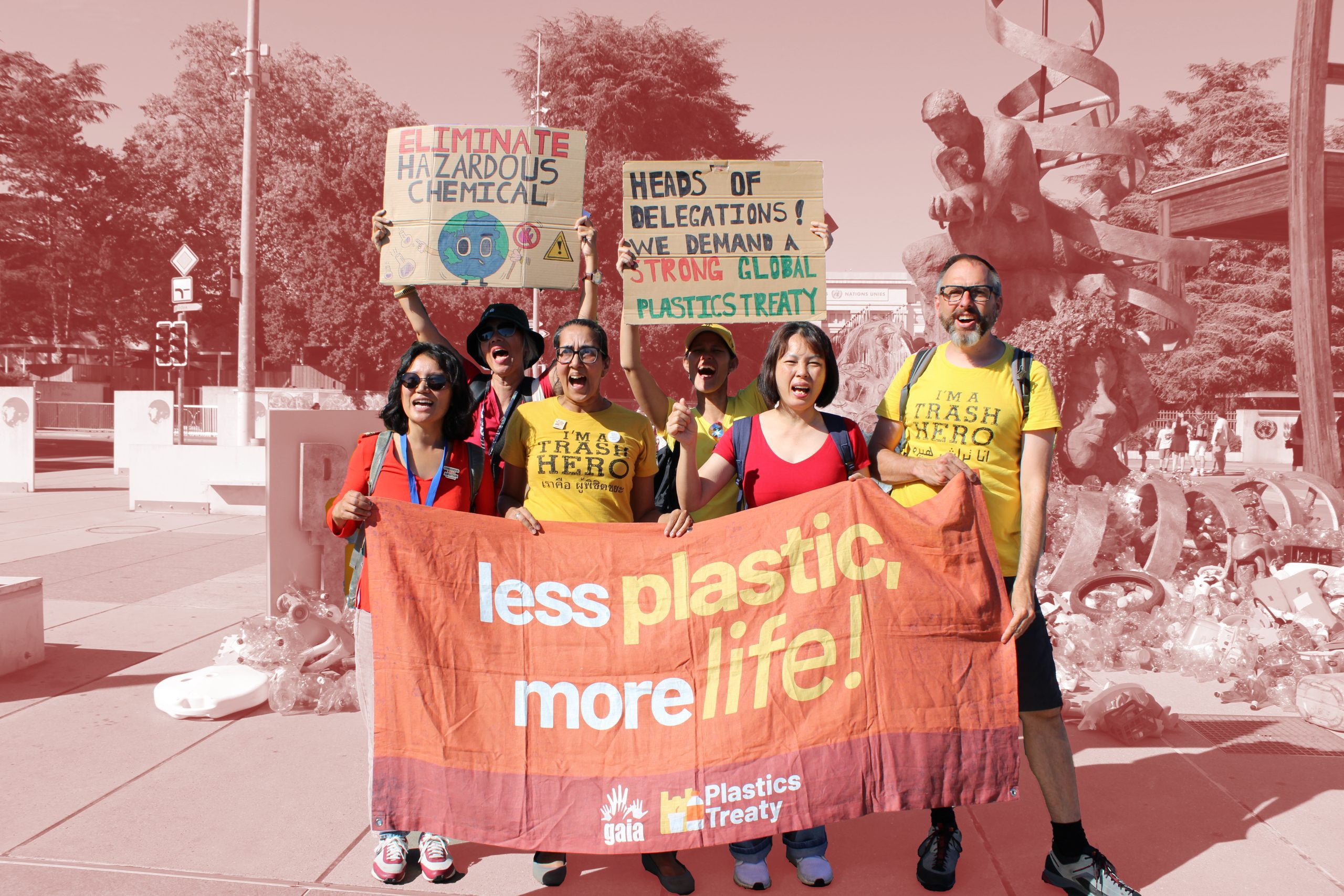
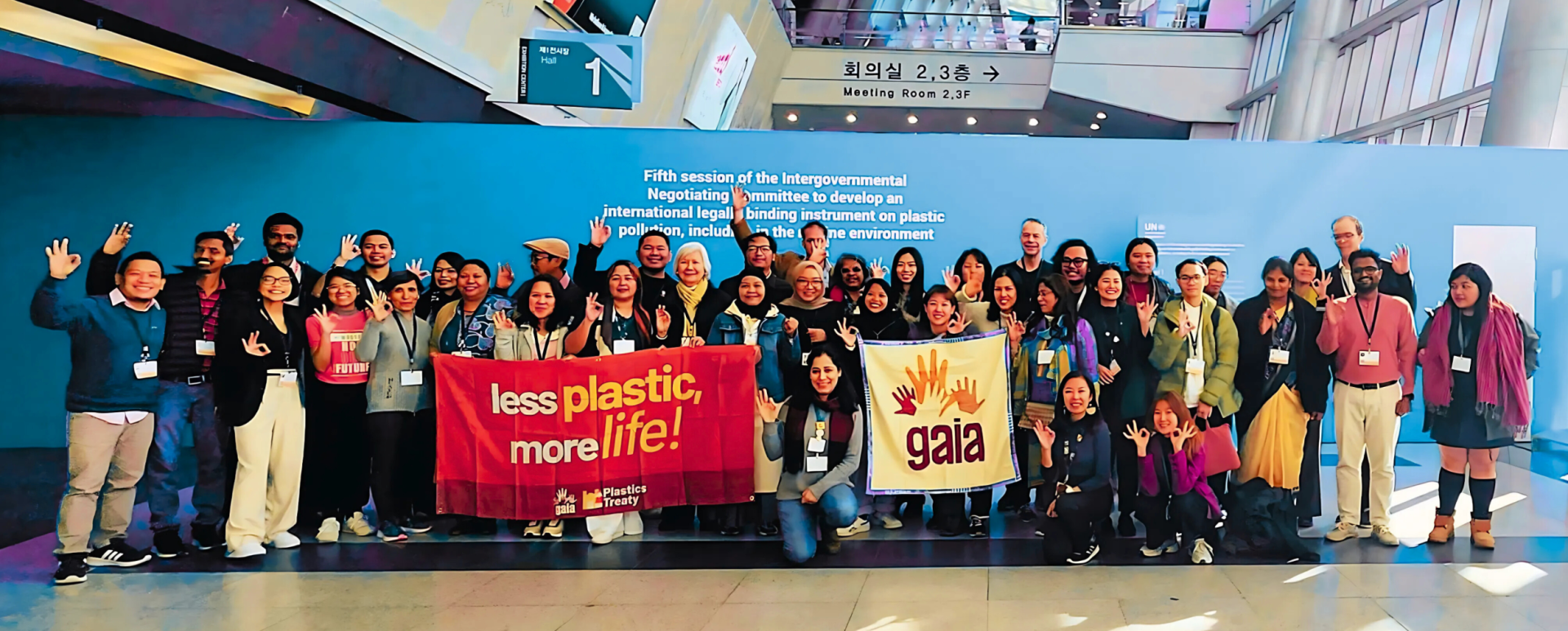
On August 15th, the world woke up to the collapse of a 2.5-year-long process. Six meetings and almost USD 40 million were not enough to arrive at an international legally binding instrument to address plastic pollution. The resumed fifth session of the Intergovernmental Negotiating Committee (INC-5.2), the longest INC meeting to date, turned into a rollercoaster of highs and lows. Much of the negotiation time was spent in informal informals, excluding civil society groups and rightsholders, while formal negotiations only bloated the text, resulting in 1,400+ unresolved brackets. In a last-minute attempt, the Chair resorted to closed-door consultations with select countries, releasing draft treaty texts that ignored country position papers. These drafts were rejected outright by ambitious countries, with some calling them “unacceptable” and even “repulsive.”
The INC process has been marred by obstructionist tactics from bad-faith negotiators, largely associated with the so-called “like-minded group” of countries. They have weaponized consensus-only decision-making to veto progress, blocking controls on polymer production, hazardous chemicals, and plastic products. While ambitious countries and civil society pushed for strong measures, the final drafts were stripped down to downstream waste management, without any mandatory global measures or targets. Civil society groups, Indigenous Peoples, and waste pickers stood united in rejecting these weak outcomes.
A bad process does not lead to a good outcome. The collapse of INC-5.2 shows that an undemocratic and non-transparent process, which bows to the tyranny of a few, cannot reap positive results. Yet, it also demonstrates the strength of the movement: more than 100 ambitious countries stood firm in rejecting weak texts, backed by civil society and rightsholders.
Reduction in plastic production remains essential to stay within safe and just planetary boundaries and to safeguard human and ecosystem health. As per Lawrence Berkeley National Laboratory research, primary plastic production must decrease by at least 12–17 percent per year starting in 2024. The failure of UNEP’s INC process makes it urgent for ambitious countries to strategize together and explore alternative avenues for global action, free from petrostate obstruction.
It is not too late to reverse the path of biodiversity loss, climate change, and public health crises caused by plastics. The momentum we have built, the shift in narratives, and the political ambition unleashed must now be harnessed. Our members have already demonstrated that a toxic-free, zero waste world is possible. The collapse of INC-5.2 is not the end. It is a call for courage, not compromise, in forging the path toward a future free of plastic pollution.