environmental justice

GAIA condemns the Environmental Protection Agency‘s (EPA) official revocation of its 2009 Endangerment Finding (“Finding”) under Section 202(a) of the Clean Air Act. The Finding was based on decades of overwhelming scientific evidence and legal precedent that greenhouse gas emissions (GHG) endanger public health and welfare. The administration argued that the Clean Air Act does not give it legal authority to regulate GHG, thereby destroying the legal foundation upon which vital climate protections were based.

By decoupling greenhouse gas emissions from the documented harm they do to human and environmental health, the administration is flinging open the door for massive deregulation at the federal level. Their initial stated intent for revoking the Finding is to gut motor vehicle emissions regulations. But it won’t stop there.

On Wednesday, the day before officially revoking the Finding, the administration continued to prop up the coal industry in an Executive Order requiring the Pentagon to source energy from coal-fired power plants, following up on their June 2025  proposed “Repeal of Greenhouse Gas Emissions Standards for Fossil Fuel-Fired Electric Generating Units.”

For GAIA and our members working at the intersection of waste and environmental justice, this revocation will limit the tools we have to hold polluters accountable and to protect our communities, and especially Black, Brown, and Indigenous communities where polluting infrastructure is most often sited. 

The waste sector is one of the biggest emitters of methane, a greenhouse gas with 82.5 times the warming potential of CO₂ over a 20-year period.  Ending the Finding will take away the authority of the EPA to regulate methane and co-pollutants from landfills, incinerators, and other waste facilities. Additionally, this will stall progress toward true zero waste systems, such as organics diversion, composting, and nontoxic reuse, that cut methane at the source while advancing climate, health, and equity goals. 

Plastics production and disposal are exponentially expanding  GHG emitters. If plastics were a country, it would be the world’s fifth-largest GHG emitter.  Without EPA authority to regulate GHG emissions, the plastics and petrochemical industry will be free to expand all of the processes–including pyrolysis and gasification–that release extensive GHG emissions, in addition to using toxic chemicals.

This decision is so egregious that numerous organizations have promised to sue the administration, which GAIA fully supports. 

#InvestInZeroWaste: Mobilizing resources to support action and accelerate impact

A global celebration of zero waste solutions across Asia and beyond. Join communities, organizations, and changemakers working together for a waste-free future.

collage of GAIA members holding their reusable tumblers for refuse single use day

Manila, Philippines – Environmental network Global Alliance for Incinerator Alternatives (GAIA) and Break Free From Plastic (BFFP) in Asia Pacific representing thousands of organizations across over 93 countries, express strong disappointment over the Ramon Magsaysay Award Foundation’s panel on November 5, 2025 during the 67th Ramon Magsaysay Awards Festival Season in cahoots with the Asian Development Bank (ADB) which further peddle false solutions to the pollution crisis

In a letter addressed to the foundation, the giant environmental network said that this year’s Ramon Magsaysay Awards, which used to be a space for celebrating environmentally sustainable and just solutions, served as a dagger struck into the hearts of communities fighting for their rights to clean air, soil, water, health, and the environment. These communities have firsthand experience of the toxic impacts of waste-to-energy (WtE) plants, and are fighting to have these removed.

During the event, awardee Ms. Shaahina Ali described incineration as a “transitional solution” to plastic pollution. Ali also said that newer WtE technologies address pollution concerns and that these facilities offer the best option for the Maldives. These messages are promoted by international financial institutions (IFIs), such as the ADB, to legitimize incineration as a formal waste management method in the region. WtE releases high levels of greenhouse gases that worsen the climate crisis. It also threatens food and water systems, damages ecosystems, and exposes communities to rising sea levels and more extreme weather.

The civil society organizations emphasize that ADB remains one of the largest financiers and policy architects promoting WtE incineration in the Asia Pacific. Since the Paris Agreement was adopted by countries in 2015, ADB provided USD 15.3 billion to 49 projects with incineration components and policy reforms institutionalizing false solutions such as plastic credits through loans, grants, equity investments, and technical assistance. ADB’s financing for plastic pollution locks countries into a linear and unsustainable model of plastic production. 

“In a world where urgent actions are needed to address plastic pollution, debt burdens, and limiting the rise in global temperatures to 1.5 degrees Celsius, we urge the Ramon Magsaysay Award Foundation to inhibit from staging unethical, inappropriate, and unjust development alternatives,” said Mayang Azurin, Deputy Director for Campaigns at GAIA Asia Pacific. “RMAF must instead set the development discussions toward empowering community solutions moving toward transformative shifts instead of echoing the agenda of international financial institutions like the ADB and World Bank.”

Civil society organizations also urged the award-giving body to seriously rethink the narratives of what sustainable and just solutions are celebrated in the region by recognizing community voices, and respecting science-based facts and policy directions against what is peddled as solutions by IFIs such as the ADB. International groups offered cross-learning with the award-giving body to navigate complex but solvable problems without resorting to false solutions. 

Civil society leaders from the region have this to say: 

Marian Ledesma, Zero Waste Campaigner, Greenpeace Philippines, said:

“It is disappointing to see a prestigious award for ethical leadership promote waste-to-energy. This is a false solution that harms communities and distracts from real action on plastic pollution. RMAF must widen its understanding of the crisis. Downstream fixes are outdated, and burning waste is dangerous. Communities and institutions across Asia have already shown that upstream solutions, such as reduction and reuse systems, not only work, but bring benefits to communities.”

Arpita Bhagat, Plastic Policy Officer, GAIA Asia Pacific, said: 

“Asian values call for living in balance with nature. Incineration, plastic credits, and offsets do the opposite. They let industries keep polluting while communities bear the cost. These approaches echo a colonial mindset that treats Asia as a dumping ground. By elevating ideas that fuel toxic pollution and the linear take-make-waste model, RMAF undermines the grassroots fight for environmental justice.”

Wahyu Eka Styawan, Campaigner of WALHI Jawa Timur:

“WALHI regrets RMAF’s collaboration with the Asian Development Bank, which is funding waste-to-energy projects in the region. With air quality monitoring support from GAIA, we found PM2.5 spikes around the Benowo WtE plant that exceeded WHO guidelines. This matches Surabaya’s high respiratory infection rates. WtE has worsened environmental and health risks, and ADB’s role in RMAF indirectly reinforces a harmful project.”

Atty. Zelda  Soriano, Founder and Executive Director, Community Legal Help and Public Interest Centre (C-HELP), said:

“RMAF has long honored leaders tackling environmental challenges through community-driven, sustainable solutions. This legacy reflects its core mission. Endorsing waste-to-energy technologies promoted by institutions like the ADB would break from that tradition. It would signal a shift away from genuine, people-centered efforts toward approaches that do not advance real sustainability.”

Shey Levita, Campaigner for False Solutions, Ecowaste Coalition:

“It is troubling that RMAF would even consider waste-to-energy incineration as a solution to the plastics crisis. It is the old habit of hiding the problem instead of confronting its root causes. If RMAF wants to honor true Asian excellence, it should uplift community-led, Filipino-driven zero waste solutions, not props that enable shortcut thinking and more environmental harm.”

###

Note to Editors

  • Full letter to the Ramon Magsaysay Awards Foundation with the full list of signatories is available here.

Press contacts:

GAIA is a worldwide alliance of more than 1,000 grassroots groups, non-governmental organizations, and individuals in over 90 countries. With our work, we aim to catalyze a global shift towards environmental justice by strengthening grassroots social movements that advance solutions to waste and pollution. We envision a just, zero waste world built on respect for ecological limits and community rights, where people are free from the burden of toxic pollution, and resources are sustainably conserved, not burned or dumped. 

#BreakFreeFromPlastic is a global movement envisioning a future free from plastic pollution. Since its launch in 2016, more than 3,500  organizations representing millions of individual supporters around the world,  have joined the movement to demand massive reductions in single-use plastics and push for lasting solutions to the plastic pollution crisis. BFFP member organizations and individuals share the values of environmental protection and social justice, and work together through a holistic approach to bring about systemic change. This means tackling plastic pollution across the whole plastics value chain—from extraction to disposal—focusing on prevention rather than cure and providing effective solutions. www.breakfreefromplastic.org

FOR IMMEDIATE RELEASE: December 1, 2025

Armourdale, Kansas — After months of Armourdale community action, led by RiSE for Environmental Justice (RiSE4EJ), Reworld (formerly Covanta) withdrew its permit application to build a chemical waste processing facility in Armourdale, Kansas. Among other concerns, residents flagged significant deficiencies in the permit filing and raised objections to unpermitted construction. The permit withdrawal comes after residents demanded transparency and accurate information about many key threats to public health, including increased truck traffic, wastewater transport and discharge, and flooding–none of which were addressed in the permit application.

On July 10, 2025, Reworld submitted a Special Use Permit (SUP) application to construct a Materials Processing Facility (MPF) in Armourdale, Kansas, and began construction at the site before any such permit was granted. Led by RiSE4EJ, a local community-based, environmental justice organization, and with support from the Global Alliance for Incinerator Alternatives (GAIA), the Armourdale community spent the past four months organizing community residents–including numerous meetings and trainings, informational sessions, and uplifting community expertise. They have also been working to ensure transparency and to provide information to the boards of commissioners during their evaluation of Reworld’s permit application. This effort turned out community members who provided powerful testimony–some for the first time–at every City Planning Commission permit hearing. 

“This win belongs to the people: to every neighbor who showed up, spoke up, translated, shared flyers, gathered signatures, counted trucks, made calls, and refused to be silenced,” said Beto Lugo Martinez, Executive Director of RiSE4EJ. “It’s proof that grassroots power works and that when communities come together, we can protect our health, our air, and our future.”

“When we work together to uplift and center the voices of the most impacted communities, we wield a powerful tool against the corporations trying to build their dirty, toxic infrastructure near our homes,” said Jessica Roff, Plastics & Petrochemicals Program Manager, US/Canada at GAIA. “Industry already overburdens specific communities–mostly Black, Brown, Indigenous, and lower wealth communities–so it is critical that we hold them accountable for truth and transparency, and when they don’t deliver, they don’t get to operate.” 

City Planning commissioners recognized the potential threats posed by the MPF and required Reworld to provide studies on the facility’s public health and environmental impacts, as well as to hold numerous meetings to engage and hear from community members. After months of delays and failing to comply with these requirements, Reworld withdrew its SUP application from the Planning and Zoning board. 

RiSE4EJ, GAIA, and the Armourdale community will work to ensure that Reworld does not move its toxic proposal to another community down the road.

###

About RiSE 4 Environmental Justice (RiSE4EJ): RiSE4EJ organizes in resistance to chemical exposures, environmental toxins, environmental racism, and ecological destruction to improve and protect the health and well-being of fenceline communities. RiSE4EJ centers on community solutions to dismantle the root causes of injustice through self-determination, affirming the rights of people of color to represent and speak for themselves, and reclaiming a future where our rights to clean air, land, and water are safeguarded.

About the Global Alliance for Incinerator Alternatives (GAIA): GAIA is a worldwide alliance of more than 1,000 grassroots groups, non-governmental organizations, and individuals in over 90 countries. With our work, we aim to catalyze a global shift towards environmental justice by strengthening grassroots social movements that advance solutions to waste and pollution. We envision a just, zero waste world built on respect for ecological limits and community rights, where people are free from the burden of toxic pollution, and resources are sustainably conserved, not burned or dumped. 

Press Contacts:
Beto Lugo Martinez: betomtz.lugo@rise4ej.org
Atenas Mena: atenas@rise4ej.org
María Guillén: mariaguillen@no-burn.org

As we mark GAIA’s twenty-fifth year, we’re taking a moment to honour the people, movements, and everyday acts of courage that shaped this global community. What began as a shared refusal to accept toxic, extractive systems has grown into a vibrant network pushing for justice, circularity, and care at every level.

To celebrate this milestone, Dr. Shahriar Hossain of the Environment and Social Development Organization (ESDO) in Bangladesh offers a poem that traces the quiet power of collective work from the ground up. It’s a reflection on how far we’ve come and a reminder of the roots that hold us steady as we face the years ahead.

Below is his tribute to the movement and everyone who has carried it forward.

Tide & Root: From Ash to Apples

Shahriar Hossain, Ph.D.

Twenty-five years — GAIA rose like tide and root,

quiet muscle, steady pulse, reclaiming our roots.

We flipped ash into seed; we refused to burn tomorrow;

we taught our children: refuse is not fate, but work to borrow.

Neighbors raised banners, set the kitchen table high —

grandmothers with compost scoops, youth mapping every by way.

We unmasked the smoke with stories, petitions, and hands;

we seized what was wasted and re-domesticated care in our lands.

From alley pots to island sands, our palms learned to sort and heal;

we composted histories and pressed them back into the soil.

Rubble of neglect became rich loam, rivers mended, markets steadied,

incinerators weakened as knowledge walked door to door, ready.

Repair, reuse, refuse — we rewove the small economies of home;

each household a workshop, each neighbor a step toward the comb.

A global choir — elders, youth, frontline keepers — braided practice into law;

this resistance cleared the air, cleaned our memory, demanded circular justice for all.

Twenty-five years of grit and grace: ash to apple, shame to neighborhood power.

Let the next decades be fuller, kinder, rooted in each home and hour.

Whole and together — we commit, we keep, we rise: we are the work, the promise, the morning’s steady prize.

FOR IMMEDIATE RELEASE: November 14, 2025

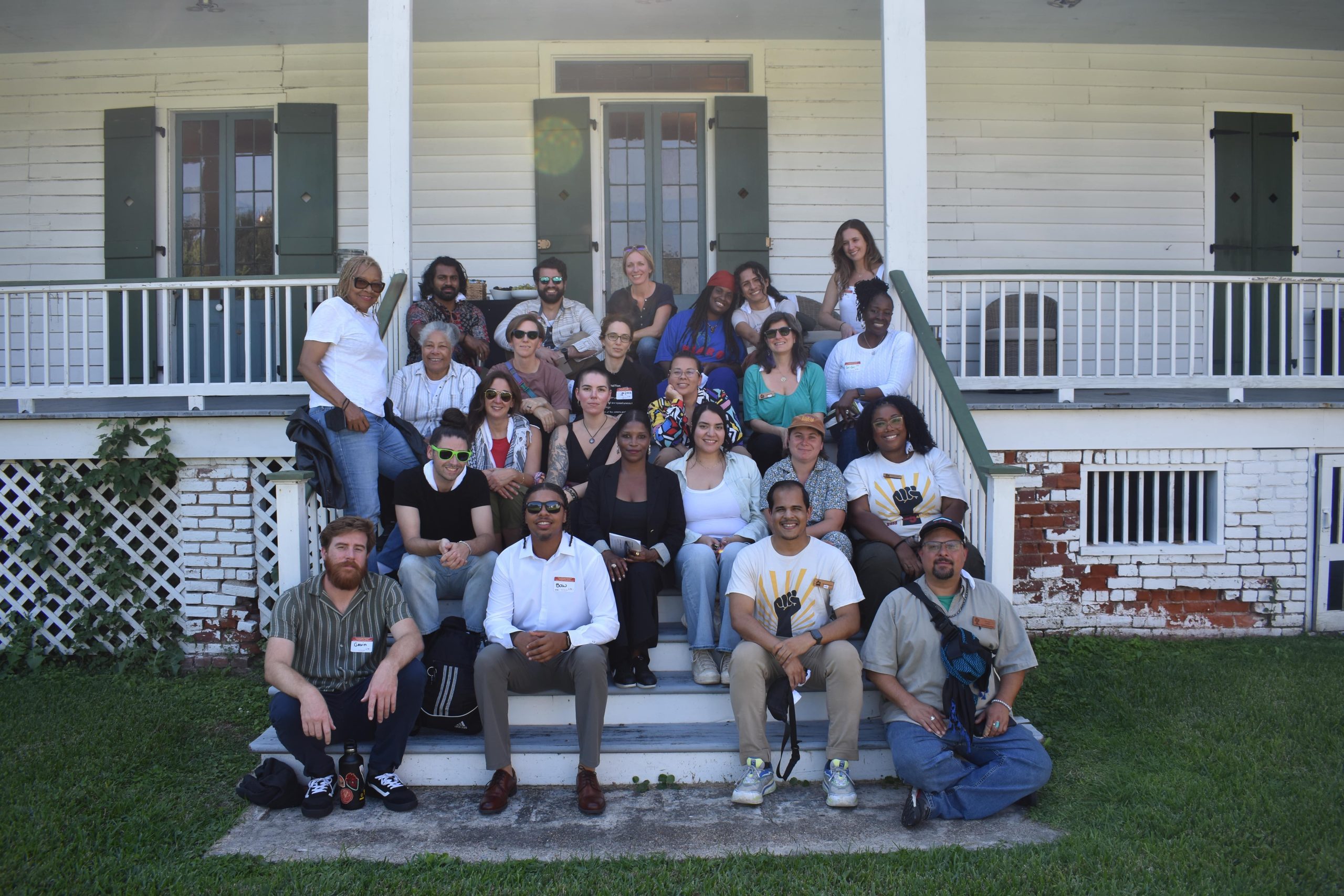
New Orleans, LA — As world leaders meet at COP30 to address the global climate crisis, community leaders on the frontlines of pollution gathered in one of its most visible epicenters. Less than an hour from Louisiana’s notorious “Cancer Alley,” thirteen grassroots organizations from over a dozen states across the United States convened in New Orleans last month to deepen collaboration, political analysis, and shared strategy on landfill methane as part of GAIA’s Methane Reduction and Environmental Justice Cohort

With an investment from the Global Methane Hub, GAIA regranted $675,000 to grassroots organizations advancing community-led strategies to reduce methane emissions from the waste sector, one of the most significant yet overlooked drivers of climate change. Cohort members are proving that effective, equitable climate action begins at the local level through initiatives such as composting, landfill monitoring, food waste prevention, and zero waste policy advocacy.

“The convening created an opportunity to bring the cohort together to deepen connections and strengthen alignment within the program. We saw it as critical to host this space in the Gulf Coast Region, as we recognize the interconnectedness of our landfill methane fights and wider environmental injustices that have devastated these communities for generations,” said Marcel Howard, U.S. & Canada Zero Waste Program Manager at GAIA. “By prioritizing the building of solidarity across the supply chain, we — as a movement — gain more power and traction to fight against the very industries working to destroy our communities.”

The convening took place just an hour from “Cancer Alley,” an 85-mile stretch of the Mississippi River between New Orleans and Baton Rouge that hosts roughly 200 fossil fuel and petrochemical plants, which produce a quarter of the nation’s petrochemical products. The cohort visited the region to learn from local leaders confronting generations of industrial pollution and environmental racism.

Participants were welcomed by The Descendants Project at the Woodland Plantation in St. John the Baptist Parish, where efforts to transform a former plantation into a museum and community space highlight the enduring link between plantation economies and today’s petrochemical industry. The visit highlighted the connection between waste, plastic, and pollution — from the extraction of fossil fuels used to make plastics to the methane emissions from landfills, where those plastics often end up.

According to the EPA, landfills accounted for 17.1% of all methane emissions in the country, with food waste accounting for an estimated 58% of fugitive methane emissions (FME). Methane is a highly potent greenhouse gas and short-lived climate pollutant (SLCP), with 82.5 times the warming potential of CO₂ over a 20-year period. Even modest improvements in organic waste collection and composting can reduce landfill methane emissions by more than 60 percent.

GAIA’s U.S. Methane Reduction & Environmental Justice Cohort at the Woodland Plantation in St. John the Baptist Parish, Louisiana.

Across the country, GAIA’s cohort members are implementing on-the-ground solutions that reduce methane and build community power in several states.

“Connecting with other members of the GAIA Cohort to reduce methane created a sense of solidarity and connection that helps sustain this work. I am bringing back lessons to the communities we support in organizing across the northeast,” said Eva Westheimer, Northern Region Lead Organizer at Slingshot. 

As the climate crisis accelerates, the work of these grassroots organizations demonstrates that the path forward is not only possible, it is already being paved by the people most affected. While global leaders debate how to curb methane, these community-based organizations are already demonstrating that a just, zero waste future is possible and underway, and it is rooted in justice and love for our communities. 

“Being kind and thoughtful to this planet should be as intentional as being mean to it,” said Gi-Gi Hagan-Brown, resident and member of Concerned Citizens of Waggaman, Louisiana.

###

GAIA is a worldwide alliance of more than 1,000 grassroots groups, non-governmental organizations, and individuals in over 90 countries. With our work, we aim to catalyze a global shift towards environmental justice by strengthening grassroots social movements that advance solutions to waste and pollution. We envision a just, zero waste world built on respect for ecological limits and community rights, where people are free from the burden of toxic pollution, and resources are sustainably conserved, not burned or dumped. 

Press contact:

María Guillén, Communications & Network Development Manager, U.S. & Canada

mariaguillen@no-burn.org

[SPANISH VERSION BELOW]

23 October 2025 – Governments are overlooking simple, effective tools to curb methane emissions from waste, analysis of the latest round of national climate plans (NDCs) shows.

GAIA examined 14 NDCs submitted to the UN climate body from countries chosen for their ambition and strong potential to curb emissions with zero waste strategies. All had signed up to the Global Methane Pledge and the Declaration on Reducing Methane from Organic Waste.

While there were some good elements in four of the plans, ten were weak or harmful. No country fully captured the potential emissions savings and social benefits of an effective zero waste strategy.

Key findings:

  • Brazil showed significant progress from its previous NDC, with solid policy framing and concrete measures to manage organic waste.
  • Bangladesh, Chile, Colombia and Nigeria placed increased emphasis on a just transition, including references to job retraining, skills development and addressing the challenges faced by informal workers.
  • However, the majority of plans failed to integrate waste pickers, who have a critical role to play in implementing zero waste strategies.
  • Nepal, Uruguay, Colombia, Morocco, and Bangladesh planned to establish or expand waste-to-energy infrastructure, also known as incineration, which emits carbon dioxide, undermines recycling efforts and displaces jobs.

“It is good to see increased attention on waste sector mitigation potential in national climate plans,” says Doun Moon, policy and research officer at GAIA. “However, too many plans focus on waste disposal rather than prevention or material recovery, often favoring private profits over people. Our research shows that community-led zero waste initiatives are one of the fastest, cheapest ways to cut methane emissions.”

Waste accounts for 20% of human-caused emissions of methane, a potent greenhouse gas. Best practice in waste management, including source separation, composting, bio-stabilization, and bio-cover for dumpsites, can cut these emissions by 95% and provide good jobs.

More broadly, 70% of greenhouse gas emissions come from the material economy. A zero waste strategy that follows the reduce, reuse, recycle hierarchy can cut emissions at every stage of the value chain.

The national climate plans analysed were from Bangladesh, Brazil, Chile, Colombia, Ecuador, Ethiopia, Kenya, Morocco, Nepal, Nigeria, Panama, Uruguay, Zambia and Zimbabwe. The focus is on countries in the Global South, which can leapfrog false solutions like incineration and go straight to zero waste models, with the right finance. Other countries with a similar profile have yet to submit NDCs. See GAIA’s interactive map for the latest country-level analysis of waste management in NDCs.

“We urge governments to embrace zero waste as a climate solution, with waste pickers and communities at its heart,” says Mariel Vilela, director of the global climate program at GAIA. “The upcoming COP30 climate conference is a moment to share success stories and get money flowing to the people making things happen on the ground.”

GAIA has published detailed policy recommendations for Chile, Indonesia and South Africa to put zero waste into action.

Contacts

Doun Moon, policy and research officer, GAIA: doun@no-burn.org 

Sonia Astudillo, global climate communications officer, GAIA: sonia@no-burn.org 

Resources

  1. GAIA NDC Tracker
  2. Global Methane Pledge
  3. Declaration on Reducing Methane from Organic Waste
  4. Zero Waste to Zero Emissions: How Reducing Waste is a Climate Gamechanger (GAIA research)
  5. Methane Matters: A Comprehensive Approach to Methane Mitigation (GAIA research)

About GAIA:

GAIA is a network of grassroots groups as well as national and regional alliances representing more than 1,000 organizations from over 100 countries. With our work we aim to catalyze a global shift towards environmental justice by strengthening grassroots social movements that advance solutions to waste and pollution. We envision a just, Zero Waste world built on respect for ecological limits and community rights, where people are free from the burden of toxic pollution, and resources are sustainably conserved, not burned or dumped. www.no-burn.org

PARA PUBLICACIÓN INMEDIATA

A pesar de los compromisos sobre el metano, los gobiernos presentan planes poco ambiciosos para reducir las emisiones del sector de los residuos

23 de octubre de 2025 – Los gobiernos están pasando por alto herramientas sencillas y efectivas para reducir las emisiones de metano provenientes de los residuos, según revela  un análisis de la Alianza Global para Alternativas a la Incineración (GAIA) sobre la última ronda de planes climáticos nacionales (NDC, por sus siglas en inglés).

GAIA examinó 14 NDC presentados ante el organismo climático de la ONU por países seleccionados por su nivel de ambición y su alto potencial para reducir emisiones mediante estrategias de basura cero. Todos los países analizados habían firmado el Compromiso global sobre el metano y la Declaración sobre la reducción del metano procedente de residuos orgánicos.

Si bien cuatro de los planes incluyeron elementos positivos, diez resultaron débiles o incluso perjudiciales. Ningún país logró aprovechar plenamente el potencial de reducción de emisiones y los beneficios sociales de una estrategia efectiva de basura cero.

Principales hallazgos:

  • Brasil mostró avances significativos respecto a su NDC anterior, con un marco político sólido y medidas concretas para gestionar los residuos orgánicos.
  • Bangladesh, Chile, Colombia y Nigeria  dieron mayor relevancia a la transición justa, incluyendo referencias a la capacitación laboral, el desarrollo de habilidades y la atención a los desafíos que enfrentan los trabajadores informales.
  • Sin embargo, la mayoría de los planes no integraron a los recicladores, actores clave para implementar estrategias de basura cero.
  • Nepal, Uruguay, Colombia, Marruecos y Bangladesh planifican establecer o ampliar infraestructura de incineración de residuos en energía (waste-to-energy), una tecnología que emite dióxido de carbono, socava los esfuerzos de reciclaje y desplaza empleos.

«Es positivo ver una mayor atención al potencial de mitigación del sector de los residuos en los planes climáticos nacionales», señaló Doun Moon, responsable de políticas e investigación de GAIA. «Sin embargo, demasiados planes se centran en la disposición final de los residuos en lugar de la prevención o la recuperación de materiales, priorizando con frecuencia las ganancias privadas sobre las personas. Nuestra investigación muestra que las iniciativas de basura cero lideradas por las comunidades son una de las formas más rápidas y económicas de reducir las emisiones de metano.»

El sector de los residuos representa el 20% de las emisiones de metano de origen humano, un potente gas de efecto invernadero. Las mejores prácticas en la gestión de residuos, como la separación en origen, el compostaje, la bioestabilización y el uso de coberturas biológicas en vertederos, pueden reducir estas emisiones en un 95%, además de generar empleos de calidad.

En términos más generales, el 70% de las emisiones de gases de efecto invernadero provienen de la economía material. Una estrategia de basura cero, basada en la jerarquía de reducir, reutilizar y reciclar, puede reducir emisiones en todas las etapas de la cadena de valor.

Los planes climáticos nacionales analizados procedían de Bangladesh, Brasil, Chile, Colombia, Ecuador, Etiopía, Kenia, Marruecos, Nepal, Nigeria, Panamá, Uruguay, Zambia y Zimbabue. El estudio se centra en países del Sur Global, que tienen la oportunidad de evitar falsas soluciones como la incineración y avanzar directamente hacia modelos de basura cero, con el financiamiento adecuado. Otros países con un perfil similar aún no han presentado sus NDC. Puede consultarse el mapa interactivo de GAIA para ver el análisis actualizado por país sobre la gestión de residuos en los NDC.

«“Instamos a los gobiernos a adoptar la basura cero como una solución climática, con recicladores y las comunidades como protagonistas», afirmó Mariel Vilela, directora del programa climático global de GAIA. «La próxima conferencia climática COP30 es un momento para compartir historias de éxito y canalizar financiamiento hacia las personas que impulsan los cambios sobre el terreno.»

GAIA ha publicado recomendaciones políticas detalladas para Chile, Indonesia y Sudáfrica con el fin de poner en práctica estrategias de basura cero.

Contactos

Doun Moon, responsable de políticas e investigación, GAIA: doun@no-burn.org

Sonia Astudillo, responsable de comunicación sobre el clima global, GAIA: sonia@no-burn.org

Camila Aguilera, responsable de comunicaciones para América Latina: camila@no-burn.org 

Recursos

  1. Rastreador de NDC de GAIA
  2. Compromiso global sobre el metano
  3. Declaración sobre la reducción del metano procedente de residuos orgánicos
  4. De cero residuos a cero emisiones: cómo la reducción de residuos puede cambiar las reglas del juego en materia climática (investigación de GAIA)
  5. El metano importa: un enfoque integral para la mitigación del metano (investigación de GAIA)

Sobre GAIA:

GAIA es una red de grupos de base y alianzas nacionales y regionales que representa a más de 1000 organizaciones de más de 100 países. Con nuestro trabajo, nuestro objetivo es catalizar un cambio global hacia la justicia medioambiental mediante el fortalecimiento de los movimientos sociales de base que promueven soluciones a los residuos y la contaminación. Imaginamos un mundo justo y sin residuos, basado en el respeto de los límites ecológicos y los derechos de la comunidad, en el que las personas estén libres de la carga de la contaminación tóxica y los recursos se conserven de forma sostenible, sin quemarse ni verterse. www.no-burn.org

In 2022, over 1 billion tonnes of food waste was produced worldwide—equivalent to around 132 kg per person. Food loss and waste is an urgent global issue with significant social, economic, and environmental implications. According to the United Nations Environment Programme, this represents an economic loss of more than 1 trillion dollars, affecting actors throughout the value chain, from small and large producers to vendors, distributors, and consumers. Outrageously, almost 800 million people suffer from hunger and 15 million children under five years old are malnourished. 
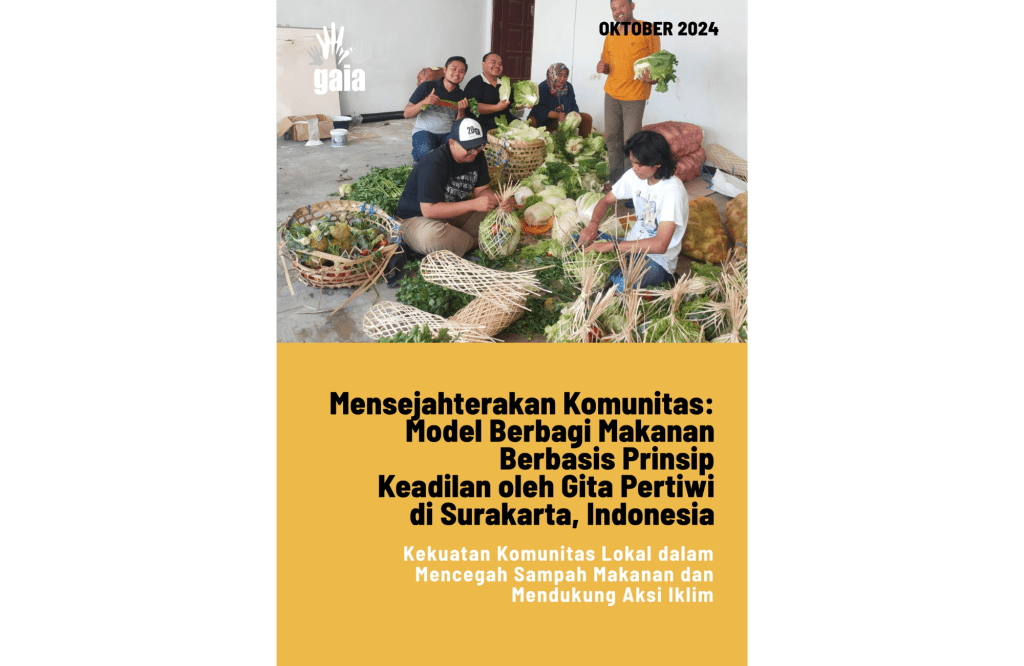
Embracing zero waste strategies linked with food systems is not merely an option—it is necessary to achieve significant climate and social benefits for current and future generations. Strong political action is needed to put in motion a pathway to systemically address food loss and waste. The moment to take bold, decisive action is now. Learn how communities work together to prevent food loss and waste through zero waste practices, while reducing methane emissions and keeping global warming below 1.5°C.


By Mariel Vilella, GAIA Climate Program Director

This week, Addis Ababa is hosting the Second Climate Week, a critical moment for shaping climate commitments ahead of COP30. For the first time, the Sharm el-Sheikh Mitigation Ambition and Implementation Work Programme has dedicated its Sixth Global Dialogue and Investment Event to waste and the circular economy, bringing together governments, city networks, development banks, NGOs, and local organisations to discuss actionable solutions.

We are particularly pleased that Neil Tangri, GAIA’s Science and Policy Director, and Eskedar Awgichew, Executive Director at Eco-Justice Ethiopia are participating on the ground, helping to advance discussions that will influence urban mitigation policies and funding priorities around the world.

For too long, the waste sector has been overlooked in climate action, despite offering some of the most immediate and cost-effective opportunities to reduce emissions. Methane from organic waste, largely sent to dumpsites and landfills, is one of the largest and fastest-reducing sources of greenhouse gases available today. Scaling up zero waste strategies, composting, recycling, and circular economy models could deliver rapid climate benefits, while supporting communities and protecting livelihoods.

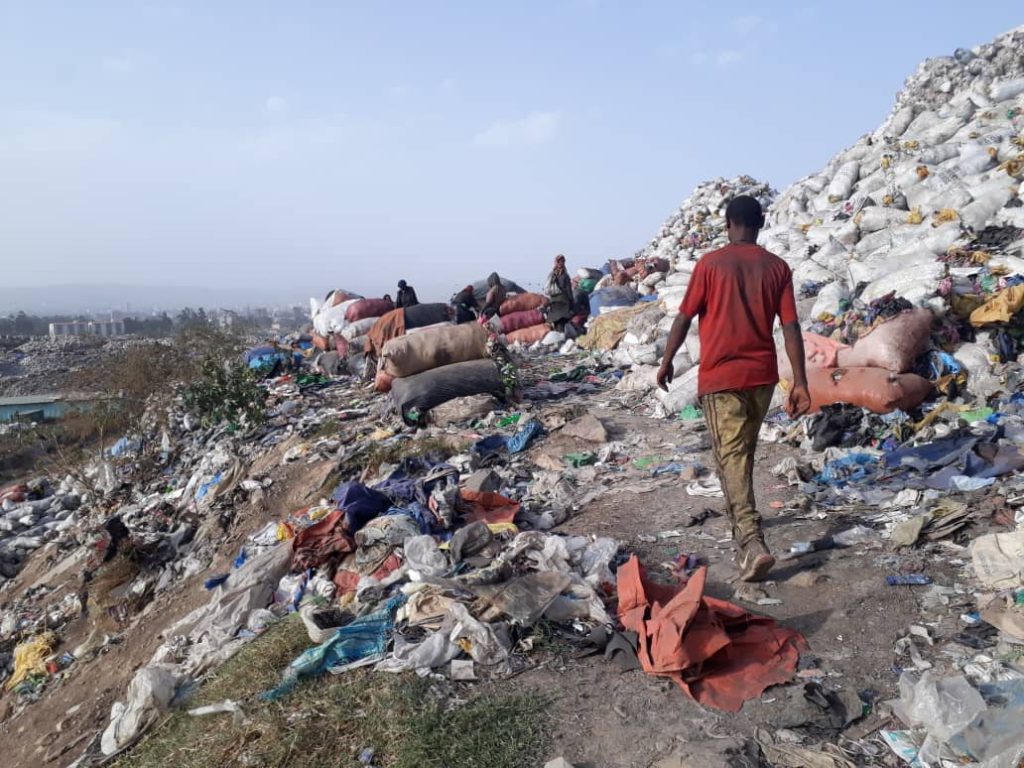
A major conversation this week is around the role of incineration versus zero waste approaches. Evidence from cities in the Global South shows that incinerators often fail to meet expectations. A striking example is Addis Ababa’s Reppie waste-to-energy facility, which was promoted as a groundbreaking solution. The plant was designed to handle 1,400 tons of waste per day but currently processes only 400–700 tons. It produces just half of the electricity promised, requires extra fuel because most of the waste is organic, displaces local waste workers, generates 85 tons of toxic ash daily, and costs $6.2 million to operate each year. This experience is a cautionary tale: investments in incineration can undermine climate goals and social equity.

By contrast, zero waste solutions—composting, recycling, and decentralized systems—are scalable, cost-effective, and inclusive. They reduce emissions, protect communities, and align with the principles of a just transition, ensuring that waste workers and informal recyclers are recognized and supported rather than displaced. Climate action in the waste sector must be inclusive, equitable, and rooted in social and environmental justice.

Another critical dimension is financing. Many local governments and community-based organizations lack access to the resources they need to implement sustainable waste solutions. Climate finance must be direct, inclusive, and designed to support operational costs and long-term sustainability, not just capital-intensive infrastructure projects. Strengthening technical capacity and building local expertise are equally important to ensure that zero waste initiatives succeed and scale effectively.

Innovation also matters. The tools and technologies to mitigate waste methane already exist. The challenge is to implement them in ways that are context-appropriate, accessible, and community-centered, so that both people and the planet benefit. Scaling up circular economy models offers an opportunity for transformative change that goes beyond emissions reductions, building more resilient, equitable cities.

The takeaway is clear: the waste sector offers immediate, cost-effective, and socially just climate solutions. Prioritizing zero waste strategies can achieve rapid methane reductions, support a just transition for workers, and accelerate progress toward COP30 goals. Incineration, in contrast, diverts resources, harms communities, and threatens both climate and justice outcomes.

As delegates gather in Addis Ababa this week, the message is simple: invest in zero waste, not incineration—because the future of climate action and social equity depends on it.