





WHAT IS IT ABOUT? WHY?
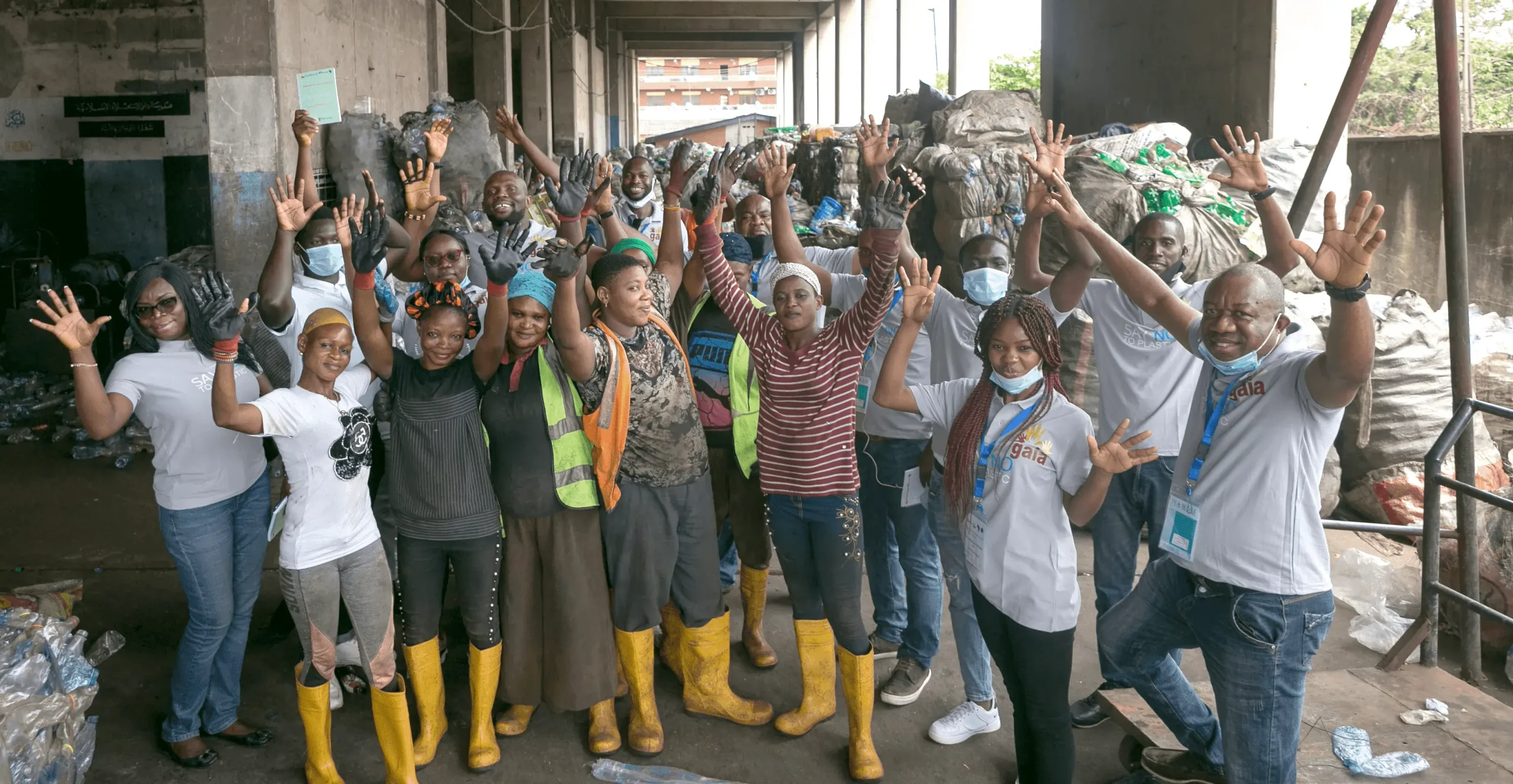
Waste methane reduction is critical for climate change mitigation. According to the IPCC (2023), waste contributes around 20% to human-driven methane emissions which is responsible for nearly 45% current net global warming.Action needs to be aligned with environmental justice (EJ) to avoid exacerbating social divisions and excluding critical stakeholders, especially in the informal sector. Guided by EJ principles, investing in community- and waste picker-led organic waste management projects is faster and cost-effective, and they also generate the greatest co-benefits.
NDCs go beyond just cutting emissions. They are meant to guide the transformation of societies in a fair and sustainable way, including actions on climate adaptation, support for vulnerable communities, and climate financing.
In 2025, stakes are high with the cyclical update of Nationally Determined Contributions (NDCs) – climate action plans that countries create as part of the global effort under the Paris Agreement to limit climate change.Will countries be up to the challenge? GAIA’s NDC Tracker aims to provide quick data and country profiles through the lens of the Environmental Justice Principles for Fast Action on Waste and Methane, which guides policymakers on how to craft programs and policies for tackling methane that can also help address interconnected equity issues. With this tracker, we hope to support communities with monitoring country-level commitments and progress, identifying gaps and opportunities to advance this critical agenda.
GAIA NDC TRACKER TOOL/METHODOLOGY
The tracker follows a set of criteria anchored to the five EJ principles for Fast Action on Waste and Methane. The NDCs submitted by GAIA’s priority countries* on or after November 13, 2024 were rated based on the following components:
*including countries that signed the Global Methane Pledge (GMP) and the Reducing Methane from Organic Waste Declaration (ROW).
EJ principle 1. Respect planetary boundaries to ensure intergenerational equity:up to 16 points
- Waste sector recognition
- ZW Hierarchy
EJ principle 2. Respect for all waste pickers and waste workers: up to 6 points
- Waste picker integration
- Inclusion and participation in decisionmaking
- Financial support for waste pickers
EJ principle 3. Enhance inclusion and build from local knowledge: up to 2 points
- Stakeholder engagement
EJ principle 4. Respond to pollution and environmental harm with accountability: up to 2 points
- No false solutions
EJ principle 5. Support holistic solutions through systems change: up to 4 points
- Co-benefits
- Equity, inclusivity, gender, and race
The analysis is based solely on the text of the NDCs, and does not fully reflect other national waste policies or plans. Each NDC received a green, yellow, or red score as follows:
- Countries with points between 21-30: green
- Countries with points between 11-20: yellow
- Countries with points less than 10: red
For a detailed scoring rubric, please visit: www.no-burn.org/NDC-Tracker-Methodology
Key Findings
Rising Ambition on Waste Methane and Environmental Justice — Yet Gaps Remain
Our analysis of 20 country NDCs, prioritizing updated submissions from signatories to the Global Methane Pledge (GMP) and the Reducing Methane from Organic Waste Declaration (ROW), shows growing recognition of the waste sector’s role in climate mitigation and social equity—alongside important gaps that still need to be addressed.
Overall Trends
- 40% (8 countries) present mixed climate plans for the waste sector, combining positive measures with approaches that risk undermining climate and social outcomes.
- 55% (11 countries) continue to rely predominantly on negative approaches.
- 5% (1 country) has reached the level of a fully positive climate plan according to our criteria.
Progress Since NDC 2.0
Several countries show significant improvements compared to their previous NDCs:
- Brazil has shifted from no recognition of the waste sector to a solid policy framework with concrete measures for organics management.
- Mexico has moved from general waste management improvements to a comprehensive zero waste policy framework, explicitly mandating social and climate justice for workers in waste collection and recycling.
Growing Focus on Environmental Justice and Just Transition
An encouraging number of countries are strengthening commitments to environmental justice and just transition, signaling more inclusive climate pathways:
- Bangladesh commits to developing a national just transition framework and sectoral roadmaps in priority areas, including waste management, with plans for waste picker integration.
- Nigeria highlights opportunities to address challenges faced by informal workers within just transition and sustainable development discussions.
- Chile includes a social pillar for just transition focused on social equity and a fair low-carbon transition, though stronger language on waste picker integration is still needed.
- Colombia incorporates job retraining and skills development for the circular economy sector within its just transition framework.
- Costa Rica emphasizes social inclusion and prioritizes integrating waste pickers into the formal economy, particularly through the creation of green jobs.
Remaining Gaps
Despite this progress, key challenges persist:
- Waste picker integration and social equity remain uneven across NDCs, revealing a gap between rising climate ambition and effective social justice implementation.
Thermal waste-to-energy expansion appears in the plans of Bangladesh, Colombia, Costa Rica, Indonesia, Mexico, Morocco, Nepal, Rwanda, Uruguay, and Zambia. These approaches risk locking communities into polluting, carbon-intensive, and costly infrastructure, undermining opportunities to build healthier communities, create green jobs, and advance genuinely sustainable zero waste solutions.
Towards an environmentally just climate finance for the waste sector
To achieve justice-oriented waste methane reduction policymakers and financiers must redirect resources away from polluting false solutions and toward proven, community-centered approaches.True climate action in the waste sector cannot leave people behind—it must actively integrate waste pickers and waste workers into the design and implementation of waste systems.
The Environmental Justice (EJ) Principles for Fast Action on Waste and Methane provide guidance for governments, financiers, and stakeholders on how to embed justice and equity into climate strategies. At the heart of this effort lies a crucial opportunity: ensuring that NDCs prioritize zero waste solutions and that climate finance is designed to support their effective implementation.
Key Recommendations
-
NDC Integration: Zero Waste as a Climate Priority
Future NDCs must explicitly integrate the waste sector and prioritize zero waste strategies—composting, recycling, and reduction—over harmful technologies such as incineration, in order to achieve rapid methane reductions, unlock co-benefits for communities.
The Way Forward
Climate finance in the waste sector must be environmentally just, socially inclusive, and explicitly tied to NDC commitments on zero waste. This is not only the fastest way to cut methane emissions—it is also the most equitable, cost-effective, and sustainable path forward.
-
Align Climate Finance with NDC Ambition
For NDCs to succeed,climate finance must flow toward zero waste systems. This means creating clear, direct, and inclusive pathways for local governments, waste picker cooperatives, and community organizations that are already delivering effective solutions. Finance should cover operational costs and long-term sustainability, not only capital-intensive infrastructure, and it must strengthen sub-national capacity through training and technical support.
-
Communities at the Center
Municipal solid waste management is a public duty, and the people who sustain these systems—especially waste pickers in the Global South—must be recognized as essential climate actors. Inclusive systems that safeguard their rights and livelihoods are central to delivering both climate and justice outcomes.
-
Co-Benefits as Core Benefits
Zero waste strategies deliver more than methane reductions. They create jobs, protect health, improve urban resilience, and reduce inequality. These
co-benefits are in fact core benefits, and must be fully recognized in NDCs and finance flows.
Key Facts

70%
As much as 70% of global GHG emissions are associated with the materials economy (for extraction, production, distribution, transportation, etc.)

20%
of anthropogenic methane emissions come from the waste sector

95%
Waste methane emissions can be reduced by 95% thanks to source separation, composting, bio-stabilization, and bio-cover for dumpsites in the waste sector.