No Burn - Gaia Home
  • social
  • social
  • social
  • social
Join GAIA Donate
  • About
    • Who We Are
    • Our History
    • Jobs
  • Our Work
    • Climate Justice
    • Zero Waste
    • Plastic
    • Incineration
    • Renewable Energy Storage
  • Our Global Community
    • Africa
    • Asia Pacific
    • Europe
    • Latin America & The Caribbean
    • United States & Canada
  • Going Zero Waste
    • Community Engagement
    • Production & Consumption
    • Smarter Infrastructure
    • Justice & Equity
    • Climate Resilience
    • Zero Incineration
  • Get Involved
    • Events
    • Join GAIA
    • Donate
    • Action Alerts
    • Get Our Updates
  • Tools & Resources
  • News & Alerts
  • social
  • social
  • social
  • social
Join GAIA Donate
  • Who We Are
  • Our History
  • Jobs
Address
1958 University Avenue
Berkeley, CA 94704 USA Phone: +1 510 883 9490 info@no-burn.org
  • Climate Justice
  • Zero Waste
  • Plastic
  • Incineration
  • Renewable Energy Storage
100s
of Zero Waste City commitments
14
movement-building alliances formed
  • Africa
  • Asia Pacific
  • Europe
  • Latin America & The Caribbean
  • United States & Canada
  • Community Engagement
  • Production & Consumption
  • Smarter Infrastructure
  • Justice & Equity
  • Climate Resilience
  • Zero Incineration
"The overlapping crises of our time present an opportunity to build more resilient cities by implementing zero waste models.
  • Events
  • Join GAIA
  • Donate
  • Action Alerts
  • Get Our Updates
Fact Sheets Reports Case Studies Campaign Tools Policy Briefings Webinar Recordings
Latest Resources
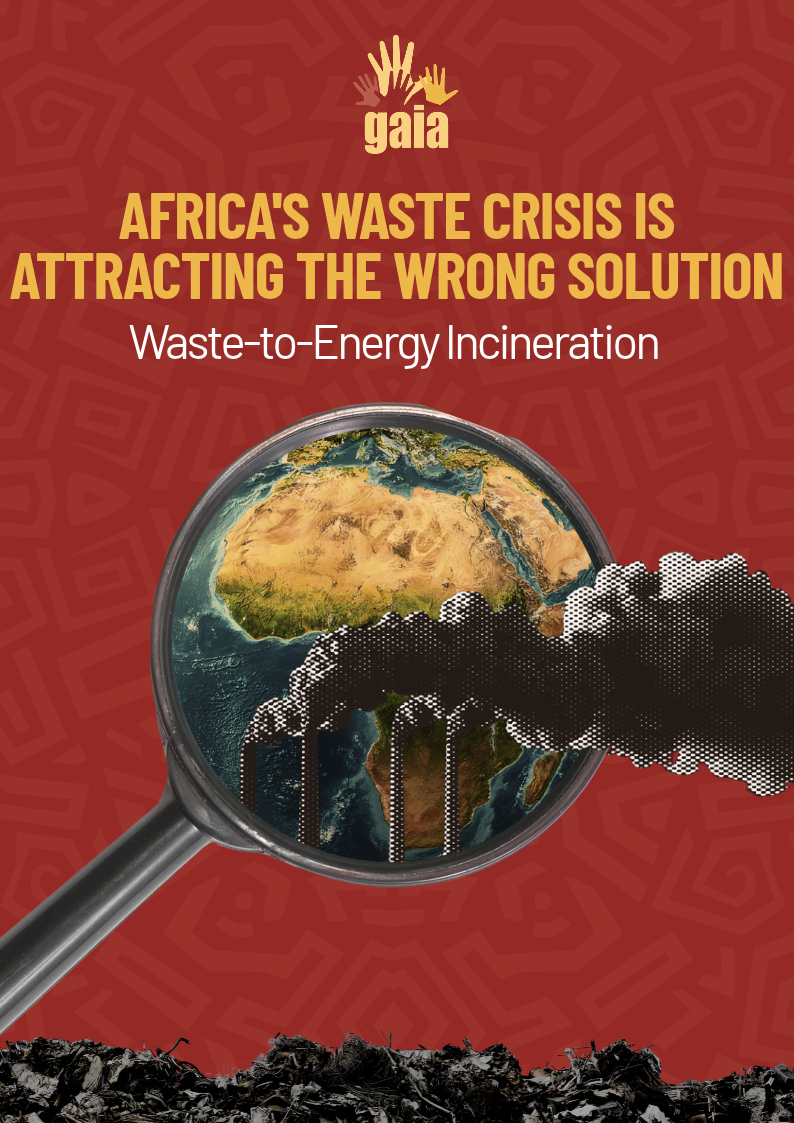
Africa’s Waste Crisis Is Attracting the Wrong Solution: Waste-To-Energy Incineration
icon description
Cover of GAIA’s report Africa’s Waste Crisis Is Attracting the Wrong Solution: Waste-to-Energy Incineration
Africa - Incineration and cement kilns - 15 October 2026

As African cities grapple with a growing waste crisis, waste-to-energy incineration is increasingly being promoted as a solution. This new report examines 15 waste-to-energy projects and proposals across 10 African countries, revealing the environmental, public health, and financial risks of pursuing incineration. And makes the case for prioritising zero waste solutions that address the root causes of the crisis rather than locking cities into decades of costly, polluting infrastructure.

Key findings

  • 15 projects in 10 countries: one plant is operational (Reppie, Ethiopia), two are under construction and twelve are at the approval, financing, planning or proposal stage.
  • Over US$4 billion in combined capital expenditure, for an estimated 520–550 MW of capacity.
  • Public money and public risk: African public funds are the largest source of finance, and long contracts can shift economic risk onto the public sector even when projects are described as private.
  • Waste pickers lose out: interviews near the Koshe dumpsite found a 50% drop in waste pickers’ earnings linked to the Reppie incinerator.

Frequently asked questions

How many waste-to-energy projects are proposed in Africa?

GAIA’s report tracks 15 waste-to-energy projects and proposals across 10 African countries: Egypt, Ethiopia, Ghana, Kenya, Morocco, Nigeria, Sierra Leone, South Africa, Uganda and Zimbabwe. Only one, the Reppie plant in Ethiopia, is operational.

Why is incineration the wrong solution for Africa’s waste crisis?

Most of Africa’s waste is organic and wet, so it burns poorly and may need fossil fuel support. Incinerators release toxic pollutants and ash, cost hundreds of millions of dollars, and lock cities into 25–30 year contracts that require a constant supply of waste.

What does the report recommend instead?

A moratorium on new incineration agreements until independent assessments are done, public disclosure of contracts and impact assessments, formal integration of waste pickers, and investment in source separation, collection, composting and recycling.

Related resources

The Reppie (Ethiopia) and Pomona (Zimbabwe) incinerators are also documented in GAIA’s Burn Book. Learn more in Waste-to-Energy Incineration: The Facts, Costs & Risks and Waste-Burning 101, join the Global Week of Action to Stop Incineration, and read 20 Inspiring Stories of Victory Against Incinerators.

Download This Resource

  • Africas Waste Crisis is Attracting the Wrong Solution ENG

Related Resources

  • REPPIE_WASTE_INCINERATOR
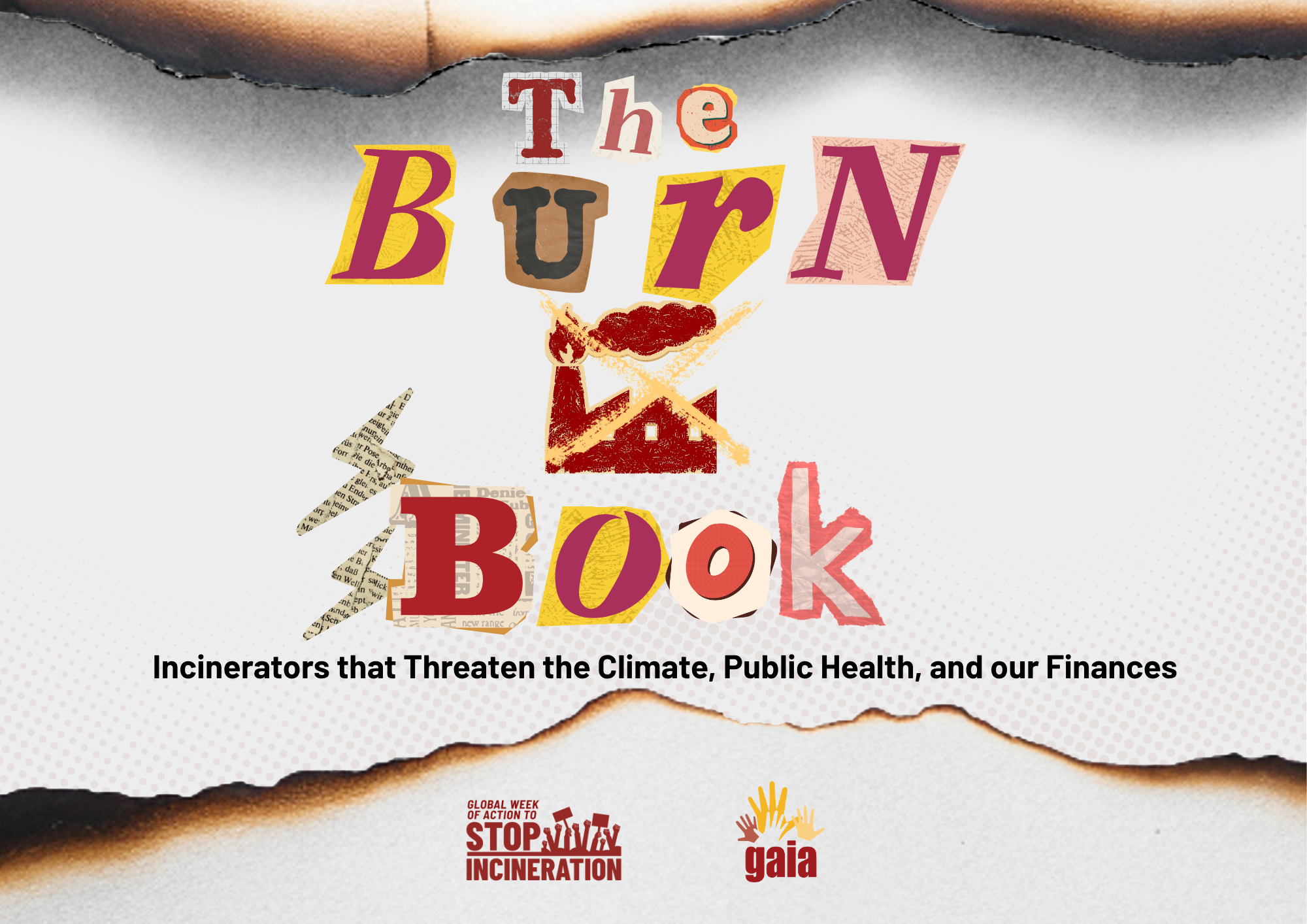
The Burn Book: Incinerators that Threaten the Climate, Public Health, and our Finances
icon description
Cover of GAIA’s Burn Book: 20 incinerators that threaten the climate, public health and our finances
- Incineration and cement kilns - October 13, 2026

This publication analyzed data from twenty incinerators and incinerator proposals worldwide, focusing on public debt and subsidies, climate and air pollution, toxic byproducts, and other common issues surrounding the industry– identifying key patterns that emerged regardless of regional contexts:

  • “Waste-to-energy” incinerators turn waste into toxic air and ash pollution. Based on public data, these incinerators alone produced at least 1.7 million tons of toxic ash per year– the equivalent in weight to 230 Eiffel Towers. There is also significant documentation of air pollutants that threaten human health– including carbon monoxide, nitrous oxide, dioxin, and furans. Many communities surrounding these plants complained of odors, respiratory issues, and ground contamination. 
  • These facilities have a large climate footprint. Despite studies showing that waste-to-energy incineration produces more climate emissions than any other power source, many of the incinerators on the list do not monitor or publicly disclose their emissions levels. The eleven that did have available data release a cumulative 5.5 million metric tons of CO2e per year, the equivalent of 1.3 million passenger cars. 
  • “Waste-to-energy” is a waste of money. The twenty incinerators profiled have racked up nearly $7 billion of investments to date, with a portion of that directly from taxpayers in the form of government subsidies and municipal borrowing. In some cases municipalities are on the hook for millions of dollars in debt that stretches for decades. Waste incinerators are the most expensive form of waste management. 
  • Burning waste undermines waste reduction. Once built, “waste-to-energy” incinerators require large volumes of waste to stay in operation, and many municipalities have “put-or-pay” contracts that disincentivize waste reduction. Much of the material burned in these incinerators could have been composted, recycled, or avoided altogether.  

Frequently asked questions

What is GAIA’s Burn Book?

The Burn Book is a GAIA report that analyzes public data on twenty waste incinerators and incinerator proposals worldwide, looking at public debt and subsidies, climate and air pollution, toxic byproducts and community impacts.

How much pollution do the Burn Book incinerators produce?

Together they produce at least 1.7 million tons of toxic ash per year. The eleven facilities with available climate data emit a cumulative 5.5 million metric tons of CO2e per year, equivalent to 1.3 million passenger cars.

How much money has gone into these incinerators?

The twenty incinerators profiled have attracted nearly $7 billion in investments to date, part of it from taxpayers through government subsidies and municipal borrowing.

Explore the Burn Book

Read the profiles of all twenty facilities in GAIA’s Burn Book blog and the press release on the Burn Book findings. New to the issue? Start with Waste-Burning 101 and Waste-to-Energy Incineration: The Facts, Costs & Risks.

This report was released for the Global Week of Action to Stop Incineration. See how communities are fighting back in 20 Inspiring Stories of Victory Against Incinerators.

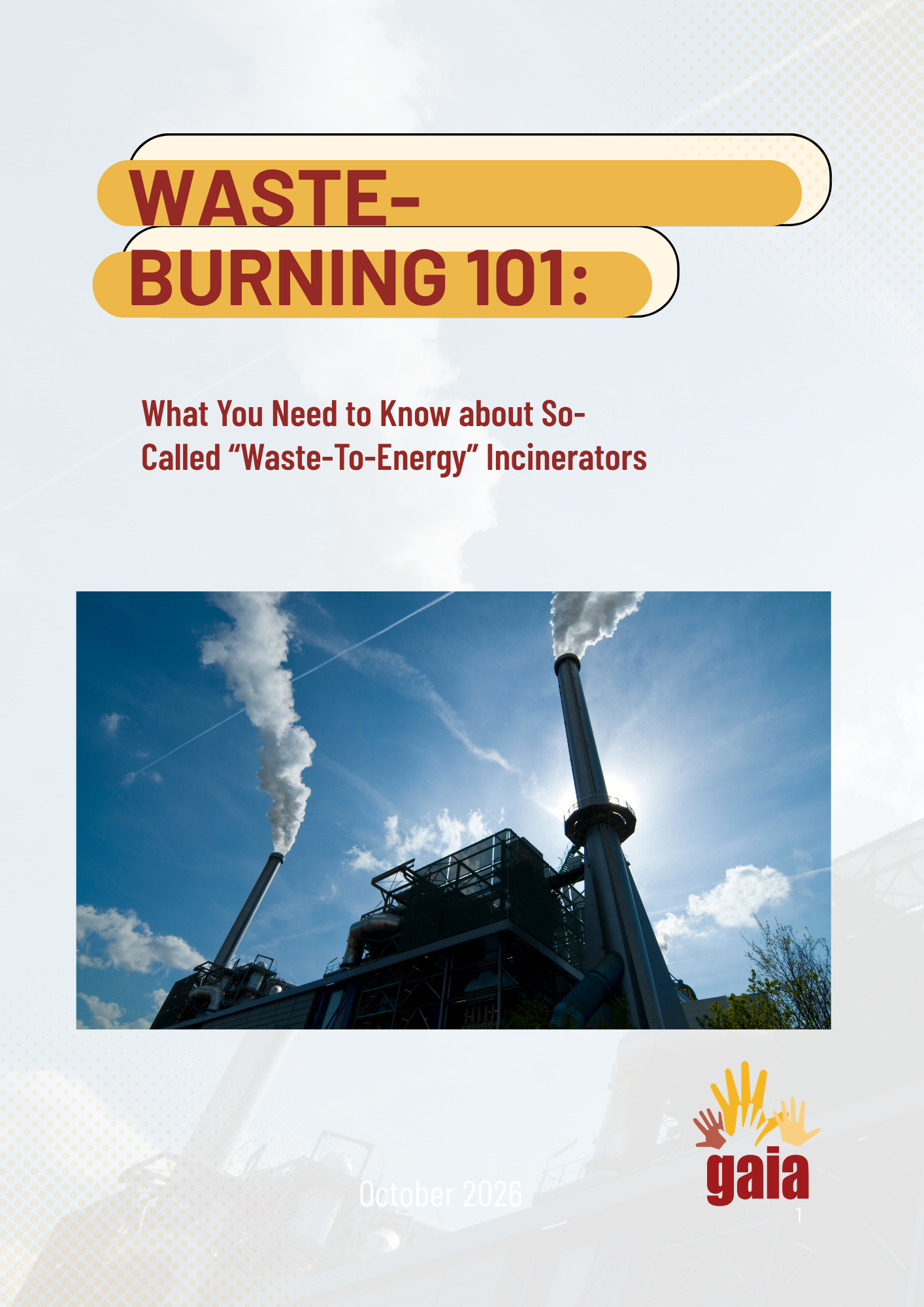
Waste-Burning 101: What You Need to Know about So-Called Waste-to-Energy Incinerators
icon description
cover of a publication that says
- Incineration and cement kilns - 9 October, 2026

This toolkit compiles key facts, data and strategies to help communities and organizers understand the impacts of waste burning, challenge proposed or existing facilities, and engage in waste policy and planning decisions.

Waste-to-energy explained

“Waste-to-energy” is the industry name for incinerators and other facilities that burn waste to generate electricity or heat. Waste-Burning 101 explains why these facilities are a pollution, climate and financial problem rather than a waste solution, and how communities can respond. For a deeper look, read Waste-to-Energy Incineration: The Facts, Costs & Risks.

What’s inside the guide

  • Understanding waste incineration: mass-burn incinerators, pyrolysis and gasification, cement kilns and open burning.
  • The global shift away from incineration: policy changes in Europe, Asia Pacific and the United States.
  • Why incineration is a problem: impacts on health and the environment, the climate, waste reduction, public budgets and environmental justice.
  • Better solutions: how zero waste strategies outperform burning.
  • A community checklist: questions and actions for communities facing a proposed or existing facility.

Frequently asked questions about waste burning

What is waste-to-energy?

“Waste-to-energy” is a marketing term for incinerators and other thermal facilities that burn waste to produce electricity or heat. Burning does not make waste disappear: it turns it into air emissions, greenhouse gases and toxic ash.

What types of waste-burning facilities are there?

The main types are mass-burn incinerators, plastic pyrolysis and gasification plants (often marketed as “plastic-to-fuel” or “chemical recycling”), co-incineration of refuse-derived fuel in cement kilns, and open burning.

Is waste-to-energy renewable or climate-friendly?

No. Incineration is the most carbon-intensive way to manage waste because it burns fossil-derived materials such as plastic. Per unit of electricity, incinerators emit more greenhouse gases than coal.

How can communities stop an incinerator?

Communities can learn who owns and funds the facility, track its pollution, review permits and impact assessments, gather their own evidence, and organize around a clear goal such as denying permits or transitioning to zero waste.

Take action

Use this guide during the Global Week of Action to Stop Incineration, explore the incinerators documented in The Burn Book, and learn from 20 Inspiring Stories of Victory Against Incinerators. Organizing locally? See How Communities Can Refuse Incineration and Win.

GAIA News Meet Our Members Action Alerts Events Press Releases
  • Latest News To Solve the Climate Crisis, We Must Solve the Plastic Crisis Zambia's First National Symposium for Waste Pickers on Plastic Pollution Call to Suspend the Asian Development Bank's Board Deliberations on the Energy Policy 2021
  • Upcoming Events Webinar: Creating effective systems for reuse Webinar: Are we getting closer to a circular economy in Europe?
interior The Zero Waste Masterplan banner image

The Zero Waste Masterplan

United States & Canada - Zero waste - 2020

This toolkit is for policymakers, sustainability professionals, environmental advocates, and grassroots organizers leading their cities into a green and just future through zero waste. (2020)

Download This Resource
  • GAIA_Zero Waste MasterPlan_FINAL
Related Resources
  • The Zero Waste Masterplan. Companion Guide for Organizers
  • #ZeroWasteCities. The Zero Waste Masterplan
  • ZWC-Manual_20200725-1-5.pdf
Our Work
Global Community
Donate

Stay Connected

Sign up for our Global Newsletter to stay up today on our cross regional work.

  • About
    • Who We Are
    • Our History
    • Jobs
    • Contact Us
  • Our Work
    • Incineration
    • Zero Waste
    • Plastic
    • Climate Justice
  • Our Global Community
    • Africa
    • Asia Pacific
    • Europe
    • Latin America & The Caribbean
    • United States & Canada
  • Going Zero Waste
    • Community Engagement
    • Production & Consumption
    • Smarter Infrastructure
    • Justice & Equity
    • Climate Resilience
    • Zero Incineration
  • Tools & Resources
    • Fact Sheets
    • Reports
    • Case Studies
    • Campaign Tools
    • Policy Briefings
    • Webinar Recordings
  • Get Involved
    • Events
    • Join GAIA
    • Donate
    • Get Our Updates
  • News & Alerts
    • GAIA News
    • Meet Our Members
    • Action Alerts
    • Press Releases

Asia Pacific

  • social
  • social
  • social

Africa

  • social
  • social

Europe

  • social
  • social

Latin America and The Caribbean

  • social
  • social
  • social

U.S./ canada

  • social
  • social
  • social
info@no-burn.org

@2026 GAIA. All Rights Reserved.
Privacy Policy | Nonprofit Websites Design by Elevation

Secret Link