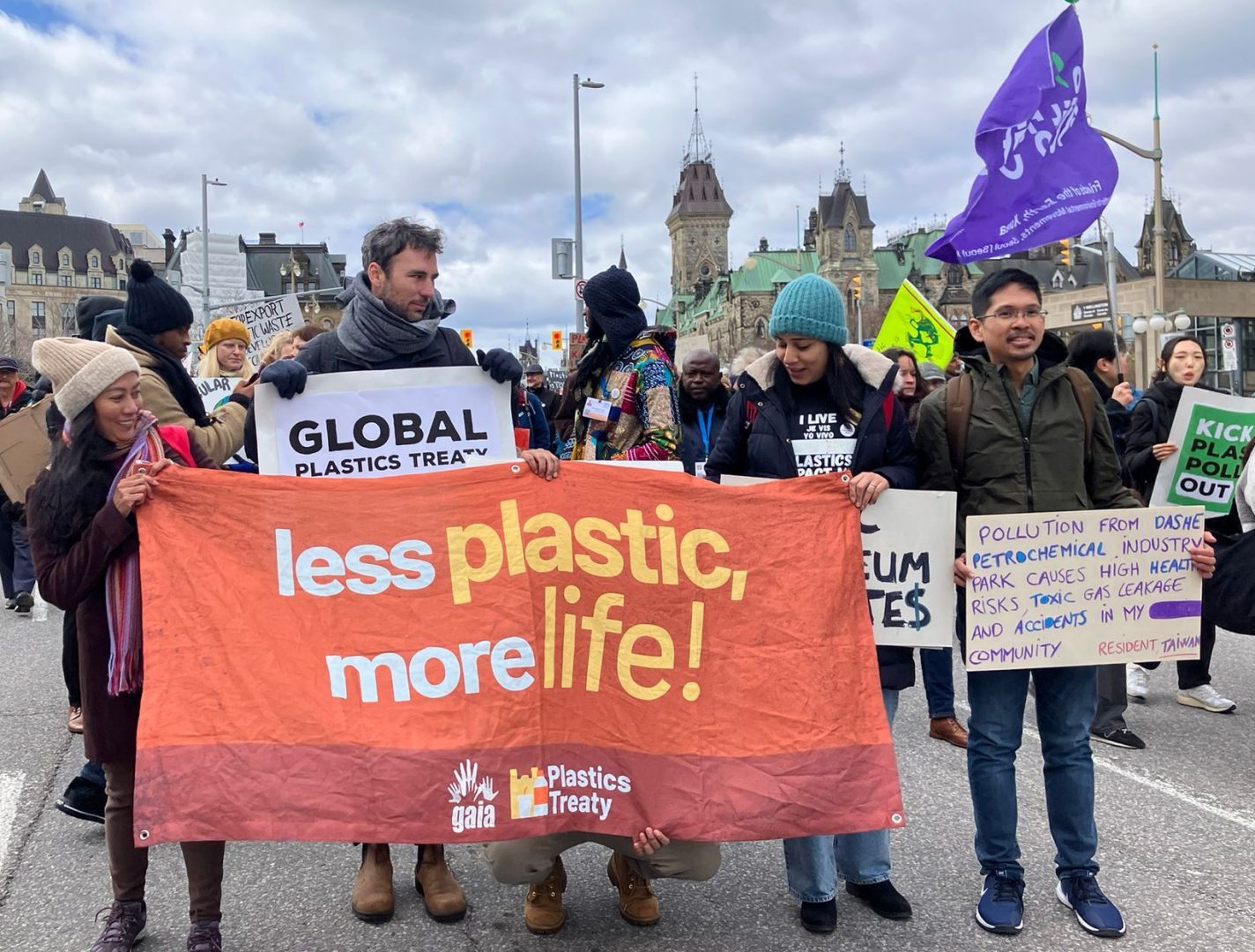
Incineration and cement kilns

Este jueves 28 de abril se realizará la audiencia clave sobre el proyecto WTE Araucanía en el 3er Tribunal Ambiental de Valdivia. Comunidades mapuche, organizaciones ambientales y ciudadanas alertan sobre los impactos ambientales y sociales que traería la instalación del incinerador de residuos en Lautaro, y apuestan por la estrategia basura cero. En la audiencia se decidirá si el proyecto continúa rechazado o se le abre una puerta para una nueva evaluación.

Valdivia, Chile – Este jueves 24 de abril, a las 8:30 horas, se desarrollará una audiencia pública en el 3er Tribunal Ambiental de Valdivia,  a raíz de la reclamación interpuesta por la empresa WTE Araucanía SpA contra el Servicio de Evaluación Ambiental a nivel central, tras el rechazo del proyecto en el Comité de Ministros en diciembre de 2023. El proyecto contempla la instalación de una planta incineradora de residuos domiciliarios en la comuna de Lautaro y, durante una década, ha generado una fuerte oposición política y ciudadana junto a múltiples advertencias desde el mundo científico y ambientalista. “Hemos conocido experiencias de otras ciudades del mundo, como Quebec (Canadá), Stanislaus en el Estado de California (EE.UU), e incluso París (Francia) donde organizaciones ambientales han podido comprobar, a largo plazo, los impactos en la salud y el medio ambiente que generan este tipo de plantas incineradoras de basura”, señala Alejandra Parra, co-fundadora de la Red de Acción por los Derechos Ambientales RADA.

El proyecto de planta WTE (waste to energy) busca tratar 600 toneladas diarias de basura a través de incineración, generando electricidad con el calor producido en el proceso. Sin embargo, esta tecnología ha sido ampliamente cuestionada por generar una electricidad poco eficiente y por sus efectos contaminantes, especialmente en zonas habitadas y agrícolas como la que se encuentra en la comuna Lautaro, región de La Araucanía, donde se pretende emplazar la planta.

Luis Tripaiñan, presidente de la comunidad mapuche de Tripaiñan, comuna de Lautaro asegura que ellos esperan que los jueces rechacen la instalación de la WTE Araucanía. “Es un proyecto que afectaría sobre todo a niños y ancianos, ya que si se instalara se contaminaría el aire y todo lo que nosotros producimos acá como comunidad. Nosotros consumimos lo que generamos en nuestros huertos familiares, el trigo, la verdura, entonces esperamos que se tome conciencia y se rechace nuevamente la instalación”, enfatizó.

Apoyo internacional

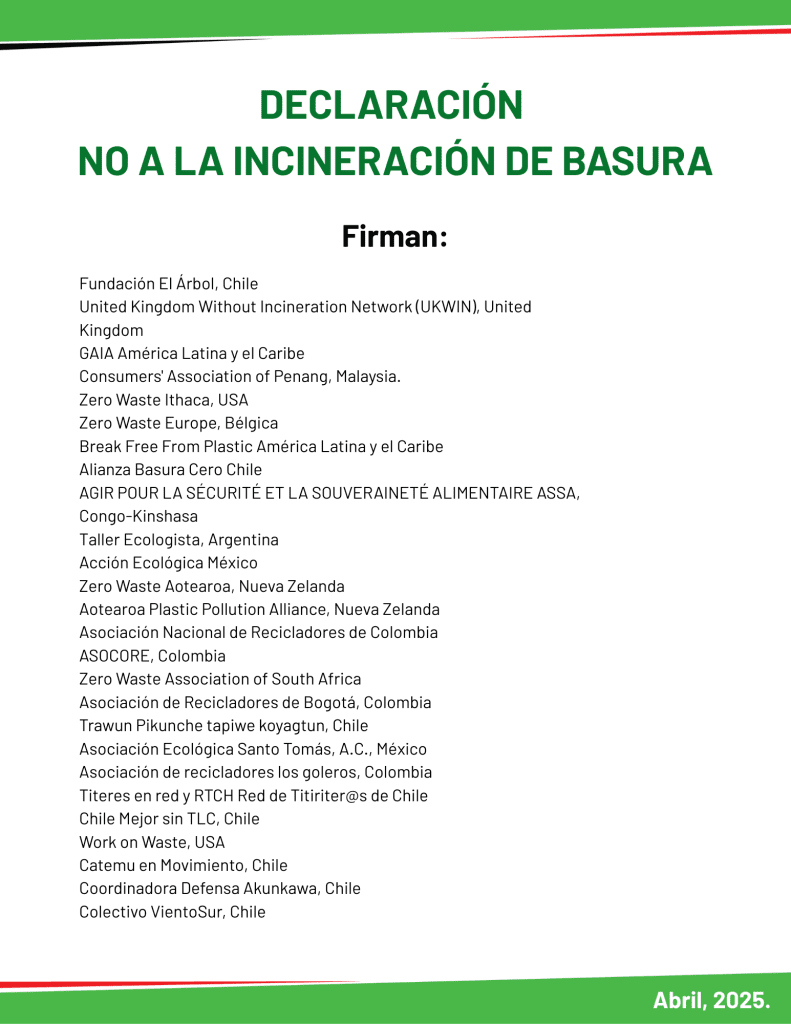
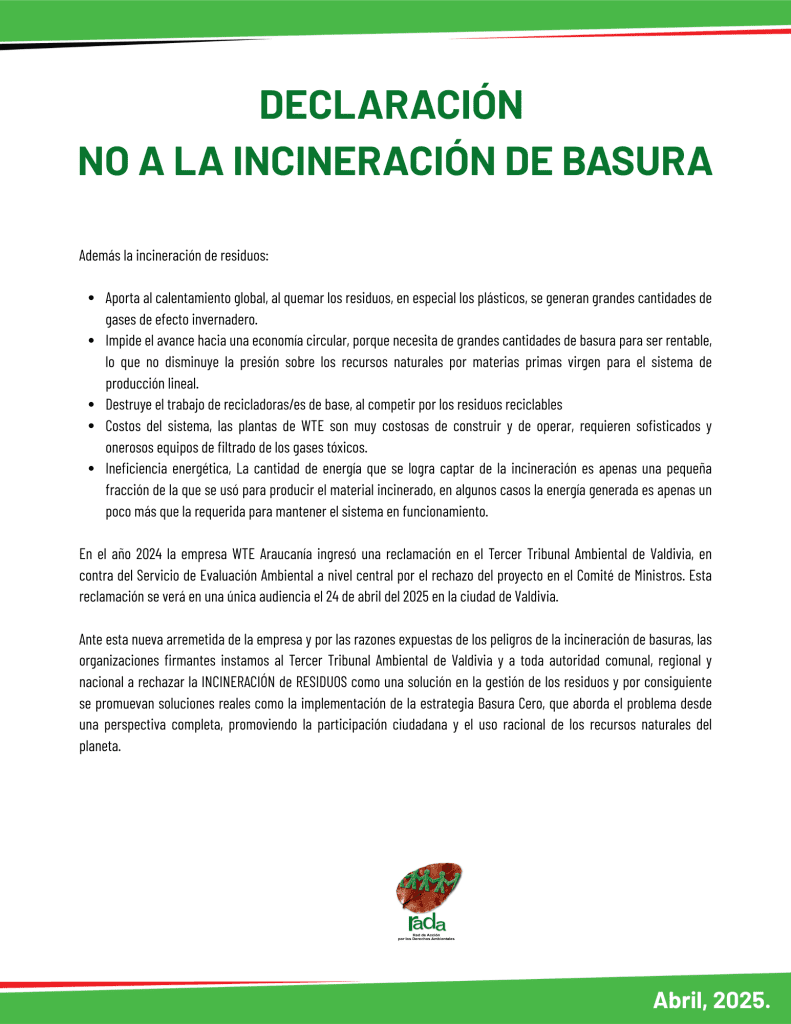
Decenas de organizaciones nacionales e internacionales de países como, Bélgica, Congo, Colombia, Argentina, México, Nueva Zelanda, EE.UU, Ecuador, Nigeria, Alemania, entre muchos otros, han difundido una carta abierta dirigida al 3er Tribunal Ambiental de Valdivia donde declaran su rechazo a las tecnologías de incineración de residuos, incluyendo Waste To Energy y cualquier forma de destrucción térmica de los materiales contenidos en los residuos. En el documento se señala que todas las organizaciones firmantes instan “al Tercer Tribunal Ambiental de Valdivia y a toda autoridad comunal, regional y nacional a rechazar la incineración de residuos como forma de gestión de los residuos y por consiguiente se promuevan soluciones reales como la implementación de la estrategia basura cero, que aborda el problema desde una perspectiva completa, promoviendo la participación ciudadana y el uso racional de los recursos naturales del planeta”

Impactos ecológicos y territoriales 

Expertos internacionales han advertido que la aprobación del proyecto WTE Araucanía podría traer graves consecuencias ambientales en la biodiversidad de la zona. “Las incineradoras no son viables y no resuelven el problema de los residuos, ya que generan impactos negativos en la salud y el medioambiente” señala Janek Vahn, investigador y máster en Ciencias y Políticas Ambientales, según la experiencia que han tenido en países como España y Francia donde diversos estudios han alertado sobre la presencia de contaminantes en el ambiente aledaño a estas instalaciones. En este mismo sentido, señala el especialista, la Comisión Europea ha comenzado a poner su foco en la recolección selectiva y la economía circular como soluciones realmente sostenibles, por sobre la incineración.

Tras casi 9 años la audiencia crucial para el futuro ambiental de Lautaro

La audiencia de este jueves será determinante, ya que el Tribunal Ambiental deberá evaluar los antecedentes técnicos, jurídicos y sociales que fundamentaron hace casi dos años el rechazo del proyecto en el Comité de Ministros, así como los argumentos presentados por la empresa reclamante. En la instancia de este jueves 24 de abril se decidirá si el proyecto continúa rechazado o se le abre una puerta para una nueva evaluación. Recordemos que, anterior al rechazo en el Comité de Ministros, la comisión evaluadora de La Araucanía rechazó de manera unánime el proyecto por considerarlo un riesgo para la salud de la población, porque su instalación perjudicaría las actividades agropecuarias del entorno, no cumple con el plan regulador de Lautaro que establece la prohibición de la instalación de plantas de tratamiento de basura dentro del límite urbano de la comuna, y por falta de consulta indígena a las comunidades mapuche.

En este contexto, organizaciones como la Red de acción por los derechos ambientales RADA, comunidades mapuche y municipios locales han reiterado su llamado a rechazar la instalación del incinerador y avanzar hacia la estrategia Basura Cero, una gestión sustentable de residuos, basada en la reducción a través de la separación de residuos en origen, el compostaje el reciclaje y la economía circular, en lugar de tecnologías contaminantes como la incineración. “Este no es solo un problema local, sino un tema que afecta a toda la región y al país, porque es una señal sobre el tipo de desarrollo que queremos impulsar en torno a la gestión de residuos. Sabemos que los rellenos sanitarios están colapsados y a partir de la experiencia en otros países podemos conocer como la incineración no es una solución sostenible ni deseable para nuestra región ni para el país”, agrega Parra.

La RADA junto a organizaciones locales como la ONG Lafken lif, Alianza basura cero Chile, Asociación Nacional Recicladores de Chile (ANARCH) y comunidades mapuche de Lautaro, invitan a asistir a la audiencia en el 3er Tribunal Ambiental de Valdivia, ubicado en General Lagos #837, de la capital de Los Ríos con el fin de apoyar el resguardo al derecho a vivir en un ambiente libre de contaminación, consagrado en la Constitución chilena y en diversos tratados internacionales suscritos por nuestro país.

Contacto prensa

Natalia Meza Serra – Periodista RADA – +56966612203

Alejandra Parra – cofundadora RADA +56982874234
Francisca López- Periodista Alianza Basura Cero +56977587591
Environmental Groups Expose Lack of Transparency, Cite Health and Climate Risks of WtE Project

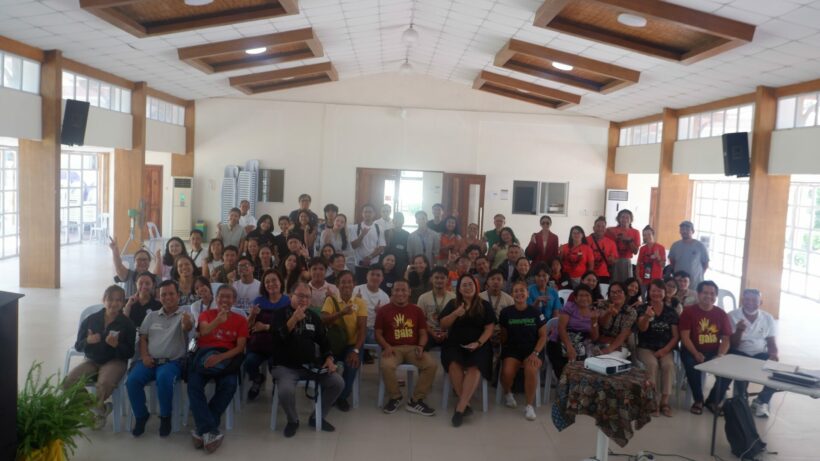
Group pose for a photo
Environment groups in Iloilo City, Philippines call for transparency in city government’s WtE agreement

ILOILO CITY, ILOILO, PHILIPPINESApril 1, 2025 – A proposed Waste-to-Energy (WTE) plant in Iloilo has sparked fierce opposition from a coalition of environmental groups, who warn that the project could do more harm than good. The newly-formed group, “Green-Empowered Movement,” is calling on the local government to come clean about the project’s environmental and health risks, decrying the lack of transparency surrounding its approval process.

Despite mounting concerns, city officials have failed to disclose critical information about the Integrated Solid Waste Management Facility (ISWMF) and its WTE component. The coalition, composed of Green Forum Panay-Guimaras, ILIG Batiano, Greenpeace Iloilo Volunteers, People Against False Solutions, Green EcoWarriors, and Youth Voices Count, Inc., issued a strong statement at today’s Multi-sectoral Environmental Forum and Press Conference at the UP Visayas Little Theater, demanding full transparency and public accountability.

In an open letter addressed to Iloilo City Mayor Jerry Treñas, the group underscored that since  March 2024, when reports surfaced that the Iloilo City government had signed a joint venture agreement (JVA) with Metro Pacific Water Investments Corp for the WtE plant,  requests for project details have been met with silence.

“We REITERATE our call to the Iloilo City Government for absolute transparency on the ISWMF/WtE project and the health and environmental harms of waste incineration.  The city must inform Ilonggos how they decided on such hazardous technology, whether people have been told the risks, and what the city’s plan is to protect the community from health impacts and pollution of waste-to-energy. The city should stop promoting false solutions and make decisions that protect people.” – Romela Gianan, Greenpeace Iloilo Volunteers Coordinator

The coalition criticized the city government’s February 2025 public consultation, arguing that such discussions should have taken place before signing agreements. According to the 2023 guidelines set by the National Development and Economic Authority, stakeholders must be informed of the key terms of a Joint Venture Agreement (JVA) within seven days of negotiation. This did not happen, instead, residents were left in the dark until the consultation, where many voiced their strong opposition.

Further highlighting the transparency issue, Barangay Ingore officials revealed in June 2024 that they were unaware of the WtE project when coalition members visited the site. That same month, the city government was invited to discuss the project at a public forum organized by civil society organizations. Despite confirming attendance, city officials failed to appear, missing a critical opportunity to address public concerns.

“Elected leaders should prioritize the safety of their communities. We want a future – a healthy future for all. Let’s not be greenwashed. A bane is a bane. Let’s protect our communities and the next generations to come.” – Kyla Balibagoso, Lead Convenor of Green EcoWarriors

The ISWMF will be built next to an existing coal plant and will house facilities for anaerobic digestion, refuse-derived fuel (RDF) processing, desalination, and materials recovery. The coalition’s primary concern is the WtE plant and the RDF, which essentially repackages waste as fuel. Both processes emit harmful air pollutants, greenhouse gases, and toxic by-products like ash, which even advanced filtration technologies cannot fully contain. Ash disposal has already been a longstanding environmental issue for Iloilo communities, and the proposed WtE facility will only worsen the issue. 

If these facilities proceed, the coalition warns of severe environmental and health consequences. According to the Iloilo Provincial Health Office, respiratory tract infections are among the leading health concerns in the city. The proximity of WtE plants and RDF co-processing in coal plants can heighten these risks, increasing the likelihood of respiratory illnesses, cancers, and other health complications. Additionally, the ISWMF’s location, less than 50 meters from residential areas, raises concerns about the forced displacement of residents to accommodate the daily transport of waste.

“With Iloilo City considered as among the walkable and progressive cities in the country, these projects defeat the purpose of truly achieving a “green” city. A true green city is one where communities are not only protected but also its resources; this ensures long – term sustainability at the core of true “development”, and not just “industrialization” with no nature – based solutions.” – Queenie Agdalipe, Coordinator of People Against False Solutions 

“Climate change affects everyone, but its impacts are not equally distributed, with marginalized groups often bearing the brunt. We, the youth of Iloilo City, support efforts to build a greener city while urging the local government to ensure an equitable climate justice response that includes and uplifts diverse voices, especially young people of varying SOGIESC. A truly green city must embrace and recognize all the colors of the rainbow.” – Toni Lopez, Executive Director of Youth Voices Count

Beyond environmental and health risks, the coalition fears that Iloilo’s vision of becoming a model green city and a champion of good governance is at stake. By sidelining public participation, transparency, and accountability, the city government is undermining its people and aspirations.

“There is a need to highlight a green environmental agenda in the coming local elections to elect officials who will stand for the people’s welfare and sustainable development.” – Melvin Purzuelo, Executive Director of Green Forum

A Call for Sustainable Waste Solutions

The Green-Empowered Movement argues that WtE incineration and RDF co-processing are dangerous distractions to real solutions. Instead of addressing waste at its source, these perpetuate harmful wasteful production and consumption patterns. The coalition emphasizes that real climate action should focus on waste prevention, sustainable product design, and zero waste systems that empower communities and waste workers.

“Real-world evidence of the failures of WtE incineration and RDF co-processing must not be ignored. Ilonggos do not deserve false solutions that are imposed on them like the pollution-heavy Panay coal plant which seeks to benefit from the current ISWMF proposal by using RDF as feedstock. We are confident that Iloilo City will not be blinded by false promises and will ultimately choose a zero waste path that is just, inclusive, and addresses the root causes of waste through reduction, reuse, and safe recycling. But first, the city government must readily disclose all information about the project, including environmental and social impact assessments, terms of the joint venture agreement, and other pertinent documents.” Brex Arevalo, Climate and Anti-Incineration Campaigner, GAIA Asia Pacific

“The issue of waste management is a rather broad field, which might be motivating many, but it’s also an area that must be met with responsible management and science-based solutions because of its impacts. A lot of data on  WtE incineration having risk hazards, which stays for years, are already out there. The reason for shut down of these facilities in the Global North — notably in 2023, where French health authorities raised concerns about chicken egg contamination near WtE incinerators in Paris, specifically due to elevated levels of persistent organic pollutants (POPs) and PFAS — is a testimony of the adverse health and and environmental risks that comes with them. With Asia being its new market, environmental organizations must be at the forefront of putting a stop to this while ensuring knowledge management and information dissemination among communities, especially stakeholders involved. “ Queenie Agdalipe, Coordinator of People Against False Solutions: an EcoWaste Coalition Movement for Iloilo

“Cities need real solutions that address the waste problem at the source with measures to reduce waste generation and cut plastic production and use. What they don’t need is yet another problem in the form of incineration or WtE – harmful processes that produce pollution and health threats. Instead of compromising the safety of citizens, the Iloilo City government and other LGUs must enact single-use plastic bans and mandate the adoption of reuse systems. Ilonggos and all Filipinos deserve safe and just solutions that put people and planet first.” Marian Ledesma, Zero Waste Campaigner, Greenpeace Philippines 

###

Green-Empowered Movement: Melvin Purzuelo, Green Forum Representative | +63 9162507401 | mbpurz@gmail.com 

GAIA Asia Pacific: Robi Kate Miranda, Communications Officer for Campaigns | +63 9275854157 | robi@no-burn.org

PARA PUBLICACIÓN INMEDIATA: 2 Abril, 2025

Santiago, Chile– Más de cien miembros de la sociedad civil de GAIA (la Alianza Global para Alternativas a la Incineración) de los cinco continentes firmaron una carta dirigida a Anacláudia Rossbach, directora ejecutiva de ONU-Hábitat, en la que piden a la organización que deje de promover la incineración de residuos para la producción de energía (WTE), un enfoque de gestión de residuos perjudicial y ampliamente desacreditado, y que en su lugar promueva soluciones justas y equitativas basura  cero.

La carta llama específicamente la atención sobre la publicación de ONU-Hábitat elogiando la incineración de residuos en su página de LinkedIn el 6 de marzo, así como su inclusión en su página web de mejores prácticas basura cero.

Además de su postura pública, ONU-Hábitat está influyendo en las decisiones de los municipios a favor de la incineración de residuos, contradiciendo la misión de la organización de difundir estrategias probadas para promover el desarrollo urbano.

Por ejemplo, en São Paulo, Brasil, ONU-Hábitat ha financiado a varios consultores proincineración que han promovido la propuesta de construir tres incineradoras WTE en la ciudad, en oposición directa a las organizaciones sin ánimo de lucro locales, los recolectores de residuos y otros grupos comunitarios que piden a la ciudad que invierta en iniciativas basura cero.

La carta describe los impactos en el clima y la salud, los exorbitantes costos y las amenazas a los medios de vida de los recolectores de residuos que genera la WTE.

Wahyu Eka Styawan, miembro de GAIA de WALHI/FoE Indonesia de la región de Java Oriental, afirma: «En Surabaya, Indonesia, la incineración de residuos no ha reducido la cantidad de residuos, sino que ha generado contaminación, con una calidad del aire que a menudo alcanza niveles insalubres. En lugar de un sistema que simplemente quema residuos y crea nuevos problemas, necesitamos un enfoque de basura cero que aborde los residuos a través de la producción y el consumo sostenibles»

«La incineración no resuelve los problemas de los residuos, sino que crea una serie de riesgos para la salud y el medio ambiente, y compromete el desarrollo de políticas para una mayor reutilización, reciclaje y compostaje», afirma Danita Zarichinova, miembro de la junta o coordinadora de ZW en ZaZemiata en Bulgaria y miembro de Zero Waste Europe. «Las plantas de conversión de residuos en energía en Europa emiten dioxinas y gases de efecto invernadero, lo que demuestra que esta supuesta «solución» es, de hecho, costosa tanto para la salud de las personas como para sus bolsillos».

Los miembros de GAIA en todo el Sur global están rechazando la incineración de residuos para generar energía. «Ahora existen métodos alternativos más sostenibles y sin residuos que evitarían los principales peligros para la salud de la incineración, producirían más energía y serían mucho más baratos en términos reales, si se tuvieran en cuenta los costes sanitarios. La incineración de residuos para generar energía es, sin duda, una opción que no se puede plantear en África», afirma el Dr. Leslie Adogame, director ejecutivo de SRADeV Nigeria.

Más de 500 ciudades de todo el mundo están haciendo la transición hacia basura cero a través de políticas o prácticas, como la recogida selectiva, el compostaje y leyes que reducen los envases de un solo uso.

Cecilia Torres, de la organización Mingas por el Mar, describe: «En Ecuador, donde la gestión de residuos sólidos es inadecuada, hemos implementado modelos basura cero en restaurantes costeros de playa, logrando una reducción inmediata de la contaminación plástica en áreas naturales. Además, esto ha fomentado un proceso de aprendizaje positivo, en el que tanto el sector turístico como los visitantes comprenden la importancia de minimizar los residuos, asociándolo con una experiencia de mayor calidad y un importante ahorro de costes».

“ONU-Hábitat no debería promover esta tecnología obsoleta y contaminante cuando afecta a tantas vidas, especialmente en comunidades que ya enfrentan graves injusticias ambientales. Debemos volver a basura cero invirtiendo en sistemas que reduzcan los residuos desde su origen y fomenten la reutilización y el reciclaje de materiales reciclables, en lugar de quemar desechos y generar más contaminación tóxica”, afirmó Nazir Khan, Director Ejecutivo de Minnesota Environmental Justice Table.

Según la experiencia de Fundación El Árbol, Chile, Paulina Romero comenta: «El compostaje comunitario ha surgido como una gran oportunidad para avanzar hacia ciudades basura cero. En 2023, lanzamos el programa “Compostaje comunitario: soluciones colectivas al problema de la basura”. Gracias a esta iniciativa, se ha logrado reducir la cantidad de residuos orgánicos enviados a rellenos sanitarios y, con ello, disminuir las emisiones de gases de efecto invernadero.»

Press contacts:

Camila Aguilera, Comunicaciones, GAIA América Latina y el Caribe  

camila@no-burn.org | +56 9 8913 619

###

GAIA es una alianza mundial de más de 1.000 grupos de base, organizaciones no gubernamentales y particulares de más de 90 países. Con nuestro trabajo pretendemos catalizar un cambio global hacia la justicia medioambiental fortaleciendo los movimientos sociales de base que promueven soluciones a los residuos y la contaminación. Imaginamos un mundo justo, sin residuos, basado 

en el respeto de los límites ecológicos y los derechos comunitarios, en el que las personas estén libres de la carga de la contaminación tóxica y los recursos se conserven de forma sostenible, no se quemen ni se viertan.

FOR IMMEDIATE RELEASE: April 2, 2025

New York, NY– Over one hundred civil society members of GAIA (the Global Alliance for Incinerator Alternatives) across five continents signed onto a letter addressed to Anacláudia Rossbach, Executive Director of UN-HABITAT, calling on the organization to cease its promotion of waste-to-energy (WTE) incineration– a harmful and widely discredited waste management approach– and instead uplift just and equitable zero waste solutions.

The letter specifically called attention to UN-HABITAT’s post praising WTE on its LinkedIn page on March 6, as well as including WTE in its zero waste best practices webpage

In addition to its public stance, UN-HABITAT is influencing municipalities’ decisions in favor of WTE, contradicting the organization’s mission to disseminate proven strategies to promote urban development. 

For example, in São Paulo, Brazil, UN-HABITAT has bankrolled several pro-incineration consultants  who have promoted the proposed build-out of three WTE incinerators in the city, in direct opposition to local non-profits, waste pickers, and other community groups calling for the city to invest in zero waste initiatives instead. 

The letter describes the climate and health  impacts, exorbitant costs, and threats to waste picker livelihoods that WTE poses. 

GAIA member Wahyu Eka Styawan of WALHI/FoE Indonesia East Java region states:  “In Surabaya, Indonesia, waste-to-energy has not reduced waste, but created pollution—with air quality often reaching unhealthy levels. Instead of a system that just burns waste and creates new problems, we need a zero waste approach that addresses waste through sustainable production and consumption.” 

“Incineration does not solve waste problems, but instead creates a range of health and environmental risks, and compromises the development of policies for more reuse, recycling, and composting,” says Danita Zarichinova, Board member or ZW coordinator at ZaZemiata in Bulgaria and Zero Waste Europe member. “Waste-to-energy plants in Europe emit dioxins and greenhouse gases, proving  that this supposed ‘solution’ is in fact costly both to people’s health and their pocketbooks.”

GAIA members throughout the Global South are rejecting waste-to-energy incineration. “There are now more sustainable zero waste alternative methods of dealing with waste which would avoid the main health hazards of incineration, would produce more energy and would be far cheaper in real terms, if the health costs were taken into account. Waste-to-energy incineration is certainly a no-option for Africa,” says Dr Leslie  Adogame, Executive Director of SRADeV Nigeria. 

More than 500 cities around the world are transitioning to zero waste through policies or practices, such as separate collection, composting, and laws that reduce single-use packaging. 

“In Ecuador, where solid waste management is inadequate, we have implemented zero waste models in coastal beach restaurants, achieving an immediate reduction in plastic pollution in natural areas. Additionally, this has fostered a positive learning process, where both the tourism sector and visitors understand the importance of minimizing waste, associating it with a higher-quality experience and significant cost savings,” said Cecilia Torres, Mingas por el Mar, Ecuador. 

“UN-HABITAT should not promote this aging, polluting technology when it harms so many lives, especially in communities already overburdened by environmental injustices. We should go back to zero waste by investing in systems that reduce waste at its source and support the reuse and recycling of recyclable materials, rather than burning waste and creating more toxic pollution,” said Nazir Khan, Executive Director at Minnesota Environmental Justice Table.

Press contacts:

Claire Arkin, Global Communications Lead

claire@no-burn.org | 

###

GAIA is a worldwide alliance of more than 1,000 grassroots groups, non-governmental organizations, and individuals in over 90 countries. With our work we aim to catalyze a global shift towards environmental justice by strengthening grassroots social movements that advance solutions to waste and pollution. We envision a just, zero waste world built on respect for ecological limits and community rights, where people are free from the burden of toxic pollution, and resources are sustainably conserved, not burned or dumped. 


La Alianza Global para Alternativas a la Incineración, de la que forman parte más de 1000 organizaciones de base en el mundo, hace manifiesta su preocupación por un video anónimo que circula en redes sociales, haciendo falsas acusaciones sobre la activista Alejandra Parra, señalando entre otros puntos, que ha “difundido mentiras alarmistas” relativas al proyecto de planta de incineración que pretende construirse en Lautaro, pese a la oposición sostenida por casi una década por la comunidad.


Frente a la cobardía de desarrollar un video lleno de falsedades sin identificación del autor, se nos hace urgente aclarar algunos puntos: 


Sobre las emisiones y la experiencia en Europa:

  • La emisión de dioxinas y furanos no es una “mentira alarmista”, sino un hecho probado en el funcionamiento de este tipo de plantas, que también producen grandes cantidades de CO2. Además, de los residuos que entran en la incineradora, aproximadamente un tercio de la masa original termina en forma de residuos sólidos, principalmente cenizas. 
  • Las principales incineradoras de Suecia figuran en la lista de las «15 principales fuentes individuales de emisión de CO2 fósil en Suecia» (Lundberg, 2020). 
  • Dada la creciente preocupación por el medio ambiente ante este tipo de “soluciones”, la Unión Europea hoy desincentiva  la incineración de residuos*.
  • La experiencia en Europa es que con el conocimiento y tecnología actuales es posible recoger selectivamente y reciclar más del 80% de los Residuos Sólidos Urbanos y para el 20% restante la solución no pasa por quemarlos sino por rediseñarlos o sustituirlos. Esto es corroborado por la legislación europea vigente que marca objetivos y metodologías para rediseñar y reciclar y que hace referencia explícita a no invertir en nueva capacidad incineradora. 
  • En Europa la quema de residuos en incineradoras ha desincentivado gravemente el desarrollo de programas de recuperación, reciclaje y compostaje. Prueba de ello es que el país que más residuos per cápita genera sea precisamente Dinamarca, que ostenta los incineradores más famosos del mundo. 

Sobre la vinculación de Alejandra Parra con grupos vinculados a actos de violencia en la región, es una afirmación injuriosa que no tiene ningún asidero en la realidad.


Sobre “el fracaso” de la estrategia basura cero y de la experiencia en San Francisco:

  • Actualmente la ciudad recupera más de 500 toneladas de residuos orgánicos diariamente, recuperan el 80% de los residuos generados y delegaciones de todo el mundo visitan el exitoso programa basura cero de la Municipalidad, plenamente vigente hoy. 
  • El modelo basura cero está tan difundido internacionalmente que las Naciones Unidas en 2022 emitió una resolución para proclamar el 30 de marzo Día Internacional Basura Cero. 


Sobre la participación de la comunidad:

  • Basta con señalar que, lejos de lo afirmado en el video sobre la baja participación de la comunidad en la campaña contra la instalación del incinerador, la cantidad de observaciones ciudadanas al proyecto fue tan alta (cerca de 18.000 observaciones ciudadanas) que marcó un hito en la historia del proceso de consultas ciudadanas en Chile.

Lo verdaderamente alarmante de este tipo de videos, es que hay una estrategia de desinformación a la comunidad, y de criminalización de las voluntades que ponen su tiempo, conocimiento y energía en beneficio de la vida y de la salvaguarda de los derechos fundamentales. 

Contrario a todas las mentiras difundidas, declaramos nuestra admiración por el trabajo que hace Alejandra y la Red de Acción por los Derechos Ambientales (RADA) de Temuco, el que ha alentado a cada día más comunidades a optar por una gestión integral de residuos, que desincentive el consumo y que apunte a generar soluciones colectivas y territoriales que aborden este problema desde la raíz.

Respaldamos las declaraciones de Alejandra y de la RADA respecto del proyecto WTE Araucanía, y damos fe del profesionalismo con que se han elaborado sus argumentos, basados en investigaciones científicas y experiencias internacionales. La trayectoria de la organización y de nuestra compañera dan cuenta de más de una década de trabajo continuado en la protección del ambiente y los derechos ambientales. 

Alianza Global por Alternativas a la Incineración GAIA

* El Fondo Europeo de Desarrollo Regional y Fondo de Cohesión 2020 no apoya más la inversión en ampliación de capacidad de instalaciones de incineradores; el Fondo de Transición Justa excluye la incineración de residuos por “pertenecer a la parte inferior de la jerarquía de la economía circular de los residuos”, y el Reglamento de Taxonomía 2020 de la UE indica que una actividad que “dé lugar a un aumento significativo de la generación, incineración o eliminación de residuos, excepto la incineración de residuos peligrosos no reciclables” perjudica el objetivo de la transición a una economía circular.

Environmental organizations Zero Waste BCZero Waste Canada, the Canadian Association of Physicians for the Environment BCDoctors for Planetary Health – West Coast, GAIA, and For Our Kids, Burnaby urge Metro Vancouver to phase out its waste incinerator citing economic, environmental, health, and climate impacts 

Vancouver, B.C. (February 26, 2025) — While Metro Vancouver looks to decrease costs, a 2023 study by Zero Waste BC confirms that incineration is the most expensive waste management approach. The Burnaby incinerator is set for costly repairs and maintenance and if the facility is to meet provincial air quality standards, it would require an additional $100 million—above and beyond what is already scheduled. If the facility were to pay its fair share of carbon tax for burning fossil fuel-based plastics, it would face another $10 million in annual costs. 

“By supporting the local economy and circulating materials within the community instead of utilizing tax dollars to burn our resources and harm individuals, we can prioritize human and environmental health in a cost-effective manner and move towards zero waste,” said Sue Maxwell, chair of Zero Waste BC. “Our recent Case Study on Metro Vancouver demonstrated that actions to prevent or divert waste are highly effective, less polluting, and less costly compared to burning waste, which is the worst option.” 

Metro Vancouver’s costs do not encompass the full extent of environmental and health impacts. Incinerators release dioxins, mercury, cadmium, lead, and other pollutants that exacerbate lung diseases such as sulfur dioxide and nitrogen oxides. These pollutants are toxic to young children, impair reproduction, and are associated with heart, lung, and brain diseases. 


Dr. Tim Takaro of CAPE-BC
 emphasizes, “Dioxins are harmful to developing humans and other animals. Many are carcinogenic. Dioxins accumulate in the environment and our bodies, and there are no safe levels. The Burnaby incinerator adds these toxins to our environment and we need to shut it down.” 

 
Dr. Doug Courtemanche of Doctors for Planetary Health – West Coast reinforced the urgency: “Who would want to leave toxins for their children? No one who wants to be a good ancestor would do that. Unfortunately, it is far too easy to get a permit to harm the future.”

 
Over 7,600 people live within 2 km of the incinerator and that does not include the numerous workers that are exposed when they commute to the area each day. Air pollution from the facility not only affects local residents and employees but also extends to downwind communities in the Fraser Valley. Metro Vancouver’s aging incinerator fails to adhere to best practices in minimizing pollution and does not conduct adequate testing for it. 

 
The Burnaby incinerator is the 16th largest emitting facility of fossil-based carbon dioxide in the province, releasing 124,541 tonnes of fossil-based CO2e emissions in 2023 — equivalent to emissions from over 22,000 cars. With biogenic emissions included, its total carbon footprint reached 277,877 tCO2e.

 
Metro Vancouver’s 2022 waste composition study found that 80% of the region’s garbage consists of compostable organics, recyclables, and construction and demolition debris—all materials with existing alternatives available. Numerous actions can be taken by Metro Vancouver, its member municipalities, businesses, and society to reduce waste, rendering the incinerator unnecessary. 


The regional district is currently in the midst of planning its next Solid Waste Management Plan and the recent Ideas Generation phase of the planning process has underscored the diverse range of strategies to reduce waste. “Metro Vancouver has a critical opportunity to phase out the Burnaby incinerator and develop real zero waste solutions,” said Denaya Shorter, Senior Director of the US & Canada Region at the Global Alliance for Incinerator Alternatives (GAIA). “Investing in these proven solutions, rather than locking into costly and polluting greenwashed technologies like incineration, is essential for a just and sustainable future.”


Jamie Kaminski of Zero Waste Canada
 emphasized the benefits of pursuing zero waste systems with a focus on enhancing prevention, reuse, and diversion infrastructure already in place. “This approach can create local jobs and support local businesses while simultaneously reducing waste”. 

With Metro Vancouver developing a new solid waste plan, and not locked into burning waste for its district heating plan nor the contract to operate the incinerator, now is the time to phase out incineration and move towards its financial, climate, air quality, environment, and zero waste goals.

____________________________________________________________________________

Zero Waste BC – Sue Maxwell

Zero Waste Canada – Jamie Kaminski

CAPE-BC – Dr. Tim Takaro

Doctors for Planetary Health – West Coast, Dr. Douglas Courtemanche

Global Alliance for Incinerator Alternatives (GAIA) – Denaya Shorter

For Our Kids, Burnaby – Kate McMahon

La Red de Acción por los Derechos Ambientales, RADA, presentó el 13 de febrero ante la Comisión de Medio Ambiente del Concejo Municipal de Lautaro, y por la tarde ante el pleno del concejo.


La presentación de la mañana, trató sobre la nueva etapa de lucha contra el proyecto WTE Araucanía, empresa que pretende instalar un incinerador de basura en la entrada norte de Lautaro, con capacidad para quemar la basura de toda la región y más. El proyecto ya fue rechazado en la Comisión Evaluadora Ambiental a nivel regional el 2022, y en el Comité de Ministros el 2023. Hoy la empresa reclama en el Tribunal Ambiental de Valdivia, pidiendo que el tribunal anule la resolución del Comité de ministros. La reclamación se verá en una única audiencia el 13 de marzo de 2025 en la ciudad de Valdivia.


En la ocasión Alejandra Parra, master en planificación y bióloga en gestión de recursos naturales, expuso sobre los riesgos de la incineración de basura, las emisiones tóxicas y cancerígenas que inevitablemente generan, y cómo esos contaminantes se bioacumulan en el cuerpo de los seres vivos, y se biomagnifican, pasando de los vegetales a los herbívoros. Las concentraciones más altas finalmente pasan a las personas y los más afectados son los lactantes a través de la leche materna.


En la instancia se desarrolló además un diálogo sobre cómo avanzar en la implementación de la estrategia Basura Cero, para resolver con soluciones de fondo el problema de la basura, invirtiendo en la prevención, educación y sensibilización, y la separación en origen de los residuos compostables y reciclables. Estas dos fracciones forman el 80% de lo que hoy se lleva a disposición final en la región del Bio Bío, con un elevado gasto municipal que podría destinarse a la estrategia basura cero transformándose en un gasto eficiente y eficaz.


Para ello, la RADA hizo entrega de la Hoja de Ruta Hacia Basura Cero, instrumento desarrollado por la Alianza Basura Cero Chile, donde se detallan las etapas para la implementación de esta estrategia, así como las posibilidades de financiamiento fuera de la Municipalidad.


La Comisión de Medio Ambiente presidida por la concejala Carmen Phillips (independiente apoyada por la UDI), reafirmó su rechazo al proyecto y se comprometió a disponer recursos y movilizarse tanto para que el Tribunal Ambiental de Valdivia confirme la resolución de rechazo del proyecto, como para avanzar en la implementación de la estrategia basura cero en la comuna. En la comisión también expresaron firmemente su rechazo los concejales Elías Pantoja (RN), Ricardo Ojeda (RN), Michel Hauri (independiente Amarillos) y Piero Jara (Independiente PPD).


Por la tarde la organización conversó con el pleno del Concejo, donde tanto el alcalde Ricardo Jaramillo como todos los concejales reiteraron el rechazo transversal al incinerador de basura promovido por la empresa WTE Araucanía, confirmando los acuerdos y compromisos asumidos en la mañana por la comisión. En palabras del alcalde: “(Rechazar este proyecto)… me ha jugado en contra, pero cualquier tipo de amistad o cercanía queda a un lado y lo que prevalece es mi investidura como alcalde”.

Más aquí:

by Zoe Knannlein

As the UK closed the doors of its last coal power plant in September 2024, the focus has now turned to the UK’s next dirtiest form of energy production: waste incinerators. While waste-to-energy incinerators have been controversial within the waste sector for years, the protest has been recently mainstreamed when the BBC labelled incineration as the UK’s dirtiest way to make power.

Photo from Zero Waste Europe’s report, Enough is enough: The case for a moratorium on incineration

Waste-to-energy incineration has been heavily confronted all over the world by hundreds of groups and communities for several reasons. In the first place, concerns about health impacts on the local people and the environment have often been the trigger point. Neighbours to incinerators report devastating impact, such as in Runcorn, Cheshire, home to the UK’s largest incinerator, where operator Viridor paid a total of £1m to local families who had complained about noise, smells and other negative effects on their lives.

Air pollution from incinerators includes greenhouse gas emissions contributing to climate change. Shlomo Dowen from the UK Without Incineration Network (UKWIN) stated: “For every tonne of plastic that is incinerated, more than two tonnes of carbon dioxide are being released, as the carbon in the plastic combines with oxygen in the air to produce CO2…[Overprovision of incineration means that] people’s health is being jeopardised for no justifiable reason.”

Moreover, one of the main negative impacts that waste-to-energy incinerators have is that they harm recycling rates to keep their fuel source, seen not just in the UK but globally as well.“ There are already far too many waste incinerators across the UK, meaning that most of what is burned is material that could and should have been recycled or composted,” says Dowen.  

In this sense, the incineration of matter that could have been recycled or composted also harms the UK’s progress towards a circular economy. According to the European Environment Agency: “One of the central pillars of a circular economy is feeding materials back into the economy and avoiding waste being sent to landfill or incinerated, thereby capturing the value of the materials as far as possible and reducing losses.”

As it stands, incinerators are three times more likely to be in the most “deprived and ethnically diverse areas of the UK,” further raising concerns about the impact of pollutants on vulnerable populations.

Despite these threats to the wellbeing of the UK’s people, environment, and economy, there are still currently 41 planned incinerators, 27 of which have obtained environmental permits. In November 2024, Olympic sailing team medallists on the Isle of Portland threatened to quit the site because of plans to build a £150m waste incinerator next to their base. A letter from the athletes to Steve Reed, the UK Government’s Environment Secretary, and Lisa Nandy, the Culture Secretary, reads:

“The plans to build an incinerator raise significant environmental and health concerns, which we believe would harm the quality of Portland’s sailing facilities…We fear that the damage posed by an incinerator could force us to consider leaving Portland altogether.”

Hundreds of protesters gathered to demonstrate against the construction of the incinerator and its adverse effects on the Portland Port. Last October, the Stop Portland Waste Incinerator campaign group started legal efforts against the incinerator. Despite rejection by the Dorset Council, the plans for the Portland incinerator were still approved by the Labour Government in September of 2024.

At Edmonton in North London, redevelopment of the existing outdated incinerator has been halted. The project started in 2022 and was expected to open in 2025, but will reportedly be delayed until 2027. The North London Waste Authority (NLWA), who is leading the project, has blamed global inflation, expensive materials, and rising skilled labour costs as reasons for the project’s delay. 

The new incinerator has been criticised by environmentalists for its increased size, which would increase capacity by 200,000 tonnes. Pressure on the NLWA to stop the scheme has come from members of the Stop the Edmonton Incinerator Now campaign.

Carina Millstone, a spokesperson for the group, said: “It’s not too late for the councils to safeguard their budgets, their climate, air pollution and waste targets, and do the right thing by their taxpayers, by pulling the plug on this outdated, outsized, toxic incinerator.”

The UK’s biggest incinerator at Runcorn in Cheshire is yet another example of an incinerator taking hold of a disadvantaged area. Pollution and disturbances from the incinerator, including flies, rats, smell, and noise, has led to a settlement of £1m ($1.2m) for 180 local residents, or about £4,500 per family after legal costs. The tradeoff? Their acceptance of a strict non-disclosure agreement (NDA) mandating their silence about the adverse effects of the plant.

Viridor, the waste management company that runs the Runcorn plant, refused to comment on the settlement agreement but claimed that the noise and odour of the incinerator remained well within regulations set by the Environment Agency. However, a BBC investigation found breaches of air quality controls increased both at Runcorn and across incinerators in England between 2019 and 2023.

The UK Government is finally starting to wake up to public concerns about there being too many incinerators operating across England. New measures were announced on December 30, 2024 cracking down on incinerators by raising standards. For any new incinerators, developers will have to prove that they will help to lower the amount of non-recyclable waste that’s being sent to landfill and show how the incinerator could be used to deliver heat to homes and/or businesses.

The UK Government has also been shifting focus towards waste that could be recycled but is instead going to landfill or incineration. Recycling rates in England have stagnated as individual households find that keeping track of separate bins is too complicated and that many materials are not being collected for recycling, including food waste and some types of plastic. The continued use of waste-to-energy incinerators threatens the UK’s 2050 net zero emissions goal. With the introduction of several new collection and packaging reforms by the Government to encourage citizens to separate their waste, as well as the transition towards a circular economy, the need for incinerators will be greatly reduced, with only 17.6 million tonnes of non-recyclable waste to be managed by 2042.

Despite the new and stricter regulations, many environmentalists are saying it’s not enough, and still call for a total ban on any new incinerators in England, including Shlomo Dowen from the UK Without Incineration Network (UKWIN).

“Not only do we need a complete ban on new incinerators, I think England needs an incineration exit strategy, like Wales and Scotland. We need to start looking at which incinerators should be decommissioned; those that are least efficient, most polluting, closest to where people live.”

UKWIN continues to advocate for a total ban of new incinerators in the UK, having extended invitations to candidates of both local and national elections to sign a pledge to support recycling by opposing incineration. Nearly 200 local election candidates signed the pledge, followed by 127 Parliamentary candidates, 11 of whom are now MPs.

Per the UKWIN’s findings, the only way to increase recycling rates is to send less to be incinerated. UKWIN has already stopped the construction of 70 proposed incinerators by working together with local anti-incinerator campaigners. For further change and action, they call for policy changes in the form of an immediate moratorium on new waste incineration capacity, a residual waste tax on incineration, and targets to reduce total and residual waste.

Berkeley, CA — Environmental health advocates and global experts are calling on the Indian government to abandon its plan to incinerate toxic waste from the 1984 Bhopal disaster, warning of catastrophic public health risks and environmental harm. 

On the 40th year of the world’s deadliest industrial disaster, the Global Alliance for Incinerator Alternatives (GAIA), along with scientists, toxicologists, and community leaders, is demanding a comprehensive cleanup plan that prioritizes safer, non-incineration technologies — and insists that Dow Chemical, not Indian taxpayers, foot the bill.

As the owner of Union Carbide, Dow has long been called to pay for the full remediation of the site. Advocates say this moment — the 40th anniversary of the tragedy — is a critical opportunity for India to correct decades of inaction and demand justice.

The government’s proposal to burn 345 metric tons of hazardous waste at a facility in Pithampur is being met with fierce opposition. Critics point out that the Pithampur incinerator failed six of its last seven emissions tests, putting nearby communities at risk of exposure to toxic pollutants. They also argue that incinerating a small fraction of the 700,000 metric tons of contaminated soil, water, and waste left behind in Bhopal is a short-sighted, partial measure that will only spread contamination further.

“Bhopal has already experienced two tragedies: first the accident, then 40 years of neglect,” said Paul Connett, an internationally renowned toxicologist and Zero Waste advocate. “Let us avoid a third tragedy of using an incinerator to deal with the residues. In my view, it is essential to use a closed-loop technology like supercritical water oxidation to treat both the contaminated groundwater and the waste stored in pits and warehouses. This elegant technology represents a better future for Bhopal. Incineration is a very crude and dangerous approach that traps us in the past.”

The 1984 Bhopal gas leak, caused by a leak from a Union Carbide pesticide plant (a wholly owned subsidiary of Dow Chemical in February 2001), killed thousands within days and left a lasting toxic legacy that has plagued local communities for four decades. Residents continue to live amid contaminated soil, groundwater, and toxic waste. Yet, rather than forcing Dow to pay for comprehensive cleanup, the Indian government is opting for incineration — a method that is dangerous, outdated, and scientifically unjustifiable based on documented evidence worldwide.

“The tragedy at Bhopal continues today because the contamination continues to spread through the groundwater, and contaminated soils are impacting the communities’ health,” said Jane Williams, Executive Director of California Communities Against Toxics. “Now is the time to create a comprehensive plan for the cleanup of the site and take advantage of advances in technologies that can remediate both the groundwater and the contaminated soils.”

GAIA has repeatedly called on India to partner with the United Nations Environment Programme (UNEP) to conduct a transparent, science-based assessment of the contaminated water, soils, and waste. Experts are pushing for advanced cleanup methods, such as supercritical water oxidation, that can permanently destroy toxic chemicals without creating harmful emissions. Read the full letter here

“Experts all over the world agree that this is a terrible idea, and that safe, non-incineration solutions should instead be pursued. We strongly urge the Indian government to stop this plan and finally hold Dow accountable for the tragedy that has loomed over the area for forty years” said Brex Arevalo, Climate and Anti-Incineration Campaigner at GAIA Asia Pacific.

“Incinerating the Bhopal waste would be adding insult to injury,” said Dr. Neil Tangri of GAIA and the University of California, Berkeley. “Incineration of pesticides and their components will create and release new carcinogenic and mutagenic compounds into the air. After 40 years, the people of Bhopal deserve a real clean-up, not a sham that will cause further health problems.” 

GAIA argues that the people of Bhopal should not have to endure a “third tragedy” caused by short-term, high-risk cleanup methods. Instead, they are calling on the Indian government to adopt proven, non-incineration technologies and hold Dow accountable for the environmental and health harms that have persisted for four decades.

Press contacts:

Robi Kate Miranda, Communications Officer for Campaigns, Asia Pacific
robi@no-burn.org

María Guillén, Communications Coordinator, US/Canada
mariaguillen@no-burn.org

###

GAIA is a worldwide alliance of more than 1,000 grassroots groups, non-governmental organizations, and individuals in over 90 countries. With our work we aim to catalyze a global shift towards environmental justice by strengthening grassroots social movements that advance solutions to waste and pollution. We envision a just, zero waste world built on respect for ecological limits and community rights, where people are free from the burden of toxic pollution, and resources are sustainably conserved, not burned or dumped.