Asia Pacific

FOR IMMEDIATE RELEASE

Year’s worth of sachet use in the Philippines can cover entire Metro Manila 1 foot deep in plastic waste*

New quantitative evidence reveals the extent of plastic pollution in the Philippines

Manila, Philippines (March 7, 2019) —Filipinos use more than 163 million plastic sachet packets, 48 million shopping bags and 45 million thin film bags daily. These numbers were revealed in a new report released today by environmental organization Global Alliance for Incinerator Alternatives (GAIA). The group contends that single-use disposable plastic is the greatest obstacle to sound waste and resource management, and is calling on governments and manufacturers to regulate, and stop producing, single-use plastics.

The report, Plastics exposed: How waste assessments and brand audits are helping Philippine cities fight plastic pollution, uses data from household waste assessments and brand audits (WABA)[1] conducted by Mother Earth Foundation (MEF) in six cities and seven municipalities[2] across the country in the past five years. GAIA extrapolated the data to calculate daily and yearly plastic usage throughout the country in order to provide new quantitative evidence about plastic pollution in the Philippines. The report is being launched ahead of the UN Environment Assembly meeting next week, where plastic pollution will be discussed.

In my village, we do the best we can to manage waste effectively, but plastics remain a problem,” said Mercy Sumilang, of Barangay Talayan in Quezon City. “If all our basic necessities are wrapped in sachets or plastic, we are forced to become part of the problem. This needs to be solved.”

The findings in the report show how cities and municipalities around the Philippines are struggling against plastic residuals. Despite efforts on the part of many localities to institute Zero Waste programs, they still struggle with plastics which prevent them from achieving Zero Waste goals. With the projected increase in plastic production worldwide, including in the Philippines, national governments, as well as local government authorities need robust data and effective strategies to address the looming plastic pollution crisis.

“Cities and municipalities can fight back against plastic pollution using data from waste assessments and brand audits,” said Sonia Mendoza, chairman of Mother Earth Foundation. “Cities can strengthen regulations, improve waste management services, and reduce waste volume and corresponding management costs. They can also use the data to pursue plastic bans or regulations, and to compel companies to acknowledge their liability for plastic pollution.”

According to GAIA, the figures show that the sheer volume of plastic waste generated daily is beyond the capacity of barangays, cities and municipalities to manage, and that the only way to manage single-use plastic is to make less of it. “The problem is the huge amount of single-use plastics being produced—not just the way waste is managed,” said Froilan Grate, executive director of GAIA Asia-Pacific. “Plastic is a pollution problem, and it starts as soon as the plastic is made. Clean-up is left to cities and municipalities who use taxpayers’ money to deal with the waste. Companies create the waste in the form of plastic sachets, and profit from these, in the millions. They must be made accountable for the pollution.”

According to the report, cities and municipalities deal with a greater number of branded plastic waste (at least 54% of total residual waste) than unbranded waste. Ten companies are responsible for 60%, and four multinational companies are responsible for 36%, of all branded waste collected in the sample sites.

With the absence of a national policy on plastics, some local governments in the Philippines have instituted plastic bag regulations. However, branded plastics that include sachets and other primary packaging used by some of the world’s largest manufacturing companies are not covered by bans. GAIA states that if manufacturers were mandated at the national level to reduce production of throwaway plastic packaging, for example through innovations such as alternative delivery systems or reusable packaging, this would address a large part of the country’s plastic waste problem, including plastic waste leakage to rivers and seas.

“The Philippine case is merely a snapshot of what’s happening in other parts of the world,” said Von Hernandez, Global Coordinator of the #breakfreefromplastic movement. “This is a global crisis that needs global interventions. We need policies and strong regulations that would ban single use plastics and hold corporations accountable for their role in perpetuating decades of plastic pollution.”

The report lays out several recommendations for the Philippine government to effectively address plastic pollution, including: standardizing disaggregated data on plastic packaging in waste assessments, as well as including brand information; instituting comprehensive national plastic bag ban and the regulation of other single-use plastic products; mandating companies to redesign products, packaging and delivery systems; and strengthening the ban on waste incineration. GAIA is additionally calling on manufacturing corporations to be transparent about the plastic packaging they produce, assume accountability and liability for their packaging, and immediately stop producing throwaway plastic packaging. //

The report can be downloaded at: https://www.no-burn.org/waba2019

Contact: Sherma Benosa, 0917-815-7570, sherma@no-burn.org

Notes to editors:

[1] Developed by Mother Earth Foundation, WABA is a tool used to obtain detailed information about the types, volume, and number of plastic waste in an area, in order to support strategies to help cities and municipalities deal effectively with solid waste.

[2]  Quezon City, Navotas City, Malabon City, City of San Fernando (Pampanga), Batangas City, Tacloban City, and seven municipalities in the province of Nueva Vizcaya.

*Filipinos discard 163 million plastic sachet packets daily. If each packet were 5cm x 6cm in size and 1mm in thickness, they can be arranged side by side and stacked 312 times (around 1 foot high), covering an area equivalent to the land area of Metro Manila.

About GAIA – Global Alliance for Incinerator Alternatives is a worldwide alliance of more than 800 grassroots groups, non-governmental organizations, and individuals in over 90 countries whose ultimate vision is a just, toxic-free world without incineration. www.no-burn.org

About MEFMother Earth Foundation (MEF) is a non-profit organization actively engaged in addressing waste and toxic pollution, climate change, and other health, and environmental justice issues in the Philippines. It is best known for its advocacy of Zero Waste through the systematic reduction and proper waste management. www.motherearthphil.org

About BFFP –  #breakfreefromplastic is a global movement envisioning a future free from plastic pollution. Since its launch in September 2016, over 1,400 non-governmental organizations from across the world have joined the movement to demand massive reductions in single-use plastics and to push for lasting solutions to the plastic pollution crisis. These organizations share the common values of environmental protection and social justice, which guide their work at the community level and represent a global, unified vision. www.breakfreefromplastic.org.

Further Resources:

By Froilan Grate

Guimaras—that’s the name of the island  where I grew up. Located in Central Philippines, it is blessed with powdery white sand beaches, the sweetest mangoes, and some of the warmest people in the planet. I remember spending my childhood in the island—going on easy hikes and discovering hidden waterfalls and swimming holes, or exploring the surrounding smaller islands. Life was very simple then.

About 18 years ago, I left the island to study in a university in Manila. I took the 19-hour boat ride, which took me from Iloilo to the pier in Manila Bay. To say that I was shocked with what I saw as we approached the pier would be an understatement—instead of the turquoise water that I was used to, the water was almost black. And instead of the colorful coral and fish, waste was floating around, most of it single-use plastic.

That first impression of Manila changed me. At that very instant, I suddenly missed home. But more than feeling homesick, I felt a deep sense of fear creeping into me—for what I saw could also happen to the island I call home. My strong sense of connection to the island, coupled with this fear of what the future holds, led me to actively pursue volunteer opportunities from environmental organizations while studying. And when I had the opportunity to work for one, it felt like a dream come true.

Froilan Grate (center) during a waste assessment and brand audit (WABA) in Quezon City, Philippines. Photo by Jes Aznar for NPR

My first work was for a non-profit conducting training on environmental education. I had the best time working with teachers and students, and talking about the country’s amazing biodiversity and the need to protect it. This experience exposed me to the transformative power of education, especially as a tool to change people’s behavior towards the environment. Then and now, awareness is not the goal but rather a step towards meaningful action. My next job, at Mother Earth Foundation (MEF), gave me the opportunity to realize this.

At MEF, we worked with communities and cities to establish Zero Waste programs. Working with waste workers, community leaders, and local officials, we transformed waste dumps into communal parks. Through waste segregation, local composting, and recycling, communities and cities were able to reduce their waste by as much as 80%. This in turn provided better livelihoods for the waste pickers, reduced incidence of flooding and diseases, and saved cities millions of pesos on waste management costs.

But try as we might, we were still left with waste that was the beyond the capacity of the communities to manage—these 20-30% plastic waste that can neither be composted nor recycled. And a common question we had to deal with when we worked in the communities was, “why are you putting the responsibility of managing these wastes with us and not with the corporations who created them? Tell them to stop making it, and our waste problem is solved.” As a small NGO, it was a question we struggled to answer as well.

And that is the question that we are trying to answer now, in my current work for the Global Alliance for Incinerator Alternatives (GAIA), a worldwide alliance of more than 800 grassroots groups, NGOs, and individuals in over 90 countries whose ultimate vision is a just, toxic-free world without incineration. GAIA, together with Greenpeace and others, are core members of the Break Free From Plastic (BFFP) Movement .

In BFFP, we envision a future free from plastic pollution—and for that to happen we need to rethink the way we use plastic. Cities must implement Zero Waste, ensuring that all wastes are collected, and then compost the organics and recycle as much as possible. We must change our relationship with plastic, doing away with single-use products and disposable packaging— through our individual actions and institutionalized as policy at the local, national, and global level. But most importantly, corporations must do their share in solving this problem.

That is why I welcome this opportunity to join the Rainbow Warrior. This journey is a great way for me to share what we have been saying for the longest time: the issue of plastic pollution might be very visible in the Philippines and other Asian countries, but the problem started somewhere else. It started in boardrooms of the top multinational companies who made the decision to dump products in single-use, non-recyclable packaging like sachets in places where there are no infrastructure to manage them. And I am tired of taking the blame for the consequences of these decisions.

Cities and communities working on Zero Waste are showing that solutions are already happening. Corporations must step up beyond their empty promises and meaningless recycling targets. It’s time for them to put their money where their mouth is. Today, I am joining Greenpeace to ship back the plastic monster that these corporations have created.

Froilan Grate is the Executive Director of GAIA Philippines.

Millions of tonnes of plastic waste leaks into the world’s oceans every year. Though these are local, the problem of plastic production, waste generation, and plastic pollution is global. Global plastic production has increased steadily and has reached 320 million tonnes a year. Of the estimated 8.3 billion tonnes of plastic produced since the 1950s, only 9 percent has been recycled and another 12 percent incinerated. Over the last two decades, the fast-moving consumer goods and processed food industries have become the biggest consumers of low-value plastics for their packaging and delivery systems. Policies aimed at regulating single-use plastics have faced stiff opposition from the plastics and manufacturing industries, which have historically linked the plastic problem exclusively to consumer behavior and poor waste management.

To highlight the pervasiveness of plastics and to ascertain responsibility for the proliferation of problematic plastic packaging in the environment, waste and brand audits were conducted in 250 sites across 15 cities in 18 Indian states in 21 days in May 2018.

This excellent report, authored by Satyarupa Shekhar (Director of Urban Governance at Citizen consumer and civic Action Group or CAG) and Dharmesh Shah, an independent policy researcher provides a critical look at current efforts to curb plastic pollution in India, and offers recommendations to drastically reduce and eventually eliminate plastic pollution. The implementation of the waste and brand audits and the publication of this report is supported by GAIA and the Plastic Solutions Fund.

Download the full report from this link: Are Businesses Ready to Beat Plastic Pollution?

We Can’t Burn Away Our Plastic Problem

By Claire Arkin, Communications Coordinator

When we hear about plastic pollution, it often takes the form of sea turtles with straws up their noses, seals with plastic nets around their necks, and seabirds with soda caps in their stomachs. But as horrible as those images are, unfortunately there is yet another form of plastic pollution that is less visible but no less dangerous.

Today, GAIA joined Center for International Environmental Law along with co-collaborators Earthworks, Tejas, Upstream, Break Free From Plastic, Healthy Babies Bright Futures, and IPEN to release the report, “The Hidden Costs of a Plastic Planet.” This groundbreaking report covers the health impacts of plastic throughout its lifecycle, including from incineration.

Over 12% of plastic is burned in incinerators worldwide, turning one form of pollution into another, whether it be toxic air emissions, ash, or wastewater. The kinds of toxic chemicals released when you burn plastic include dioxins, furans, mercury, persistent organic pollutants such as polychlorinated Biphenyls(PCBs)and a host of others. These chemicals are next to impossible to get rid of– they can travel long distances and get into our soil, water, plants and accumulate in people’s bodies, wreaking havoc on human health.

In South Baltimore, where the infamously polluting Wheelabrator trash incinerator is located, noxious odors are a regular feature in people’s lives, as are the headaches, respiratory illness, and shorter lifespans. The Wheelabrator Baltimore incinerator is the city’s single largest source of industrial air pollution, and its emissions cause an estimated $55 million in health care expenses annually.

In Detroit, the incinerator has exceeded emissions standards over 750 times in the last 5 years alone. Although resident Andrew Kemp is an avid gardener, he has to leave his garden untended if the wind is blowing from the West, bringing incinerator fumes with it. After moving to the neighborhood he developed asthma, and now can no longer play basketball or do any other high-intensity sport. As Kemp says, when you live in Detroit, “It is indeed ironic that many activities that are considered healthy, even doctor prescribed, are hazardous activities.”

Studies show that most incinerators are located in low income communities and communities of color, who must bear the burden of toxic incinerator emissions. As Laura Cortez of East Yard Communities for Environmental Justice, a grassroots organization that fights the nearby incinerator in Long Beach, CA, puts it, “No community should have to breathe in the pollution from other people’s garbage.”

The injustice of incinerator citings are not unique to to the United States, but are plaguing communities around the world. Even the most “state of the art” incinerators in Europe have been shown to have serious problems. Long-term testing of the youngest of Dutch incinerators revealed the plant emits dioxin, furans and toxic pollutants far beyond the limits set by EU laws. In 2013, a study by ToxicoWatch found high concentration of dioxins and furans in eggs of backyard chickens located near the incinerator. Even if these toxic pollutants are captured, they have to go somewhere. The resulting ash may end up in many places: landfills, mixed with cement, dumped on open lands, agricultural lands, and on islands and wetlands, where they migrate into the water supply.

In addition to so-called ‘waste-to-energy,’ other forms of incineration that are less well-known or maligned by the public have started to surface in response to the growing outcry over plastic pollution. Treatments like gasification and pyrolysis or plastic-to-fuel have been increasingly presented as a “solution” to plastic waste, differentiating themselves from conventional incinerators.

However these kinds of approaches bring with them a variety of concerns. Firstly, gasification of waste produces highly toxic carbon monoxide and toxic hydrocarbons in concentrations far above the fatal dosage. These unavoidable by-products of gasification can escape to the air in the case of pressure build-up. Additionally, plastic-derived fuel produces higher exhaust emissions compared to diesel, and is next to impossible to monitor once it is sold to industries with less stringent air pollution control standards.

The trash incineration industry claims it will grow by 5% each year. The plastic industry plans to increase production by 40% in the next decade alone. If all this comes to pass, the incineration industry will double in size by 2025 and burn over 6 million tons of waste per day, the same weight as 5,000 blue whales. If we are to stop this growing cycle of polluting and burning, we need to join incinerator impacted communities in calling out the incinerator and plastic industries for what they are: a load of garbage.

Officials mull plastic bans and other policies to implement RA 9003, curb plastic pollution

Quezon City, 31 January 2019—Hundreds of local government unit (LGU) officials across the country gathered today in a forum in Quezon City to discuss policies that will help bring an end to plastic pollution—and usher in sustainable, Zero Waste Cities in the Philippines.

The forum, held in celebration of Zero Waste Month this January and organized by GAIA Asia Pacific and Mother Earth Foundation, looked into local and national policy actions aimed at reducing single-use plastic, from material substitution by producers to outright bans in cities. Speakers from different countries also showcased success stories of Zero Waste initiatives from the European Union and other parts of the globe, as well as in the Philippines.

Philippine leaders from communities with plastic bag ban share their implementation best practices. (L-R): Councilor Benedict Jasper Lagman, City of San Fernando, Pampanga; Marietta Lomocso, San Carlos City, Negros Occidental; and Cle Bern Paglinawan, Siquijor Province. Photo by Danica Castillo.

Zero Waste is the key to solving the country’s waste problems,” said Froilan Grate, Executive Director of Global Alliance for Incinerator Alternatives (GAIA) Asia Pacific. “When city planners put Zero Waste into action, they can establish resilient and sustainable cities, help fulfill Sustainable Development Goals, comply with RA 9003, and transition to a sustainable circular economy.”

The proliferation of single-use plastic is one of the biggest drivers of plastic pollution. Environmental groups contend that waste should not be addressed through harmful end-of-pipe systems such as landfills and waste incinerators, but through Zero Waste systems. Zero Waste approaches address waste and resources throughout their entire life cycle—from production to end-of-life—with the goal of waste prevention and resource conservation. In the Philippines, Zero Waste principles are at the core of the Ecological Solid Waste Management Act or RA 9003, a landmark law on resource and waste management.

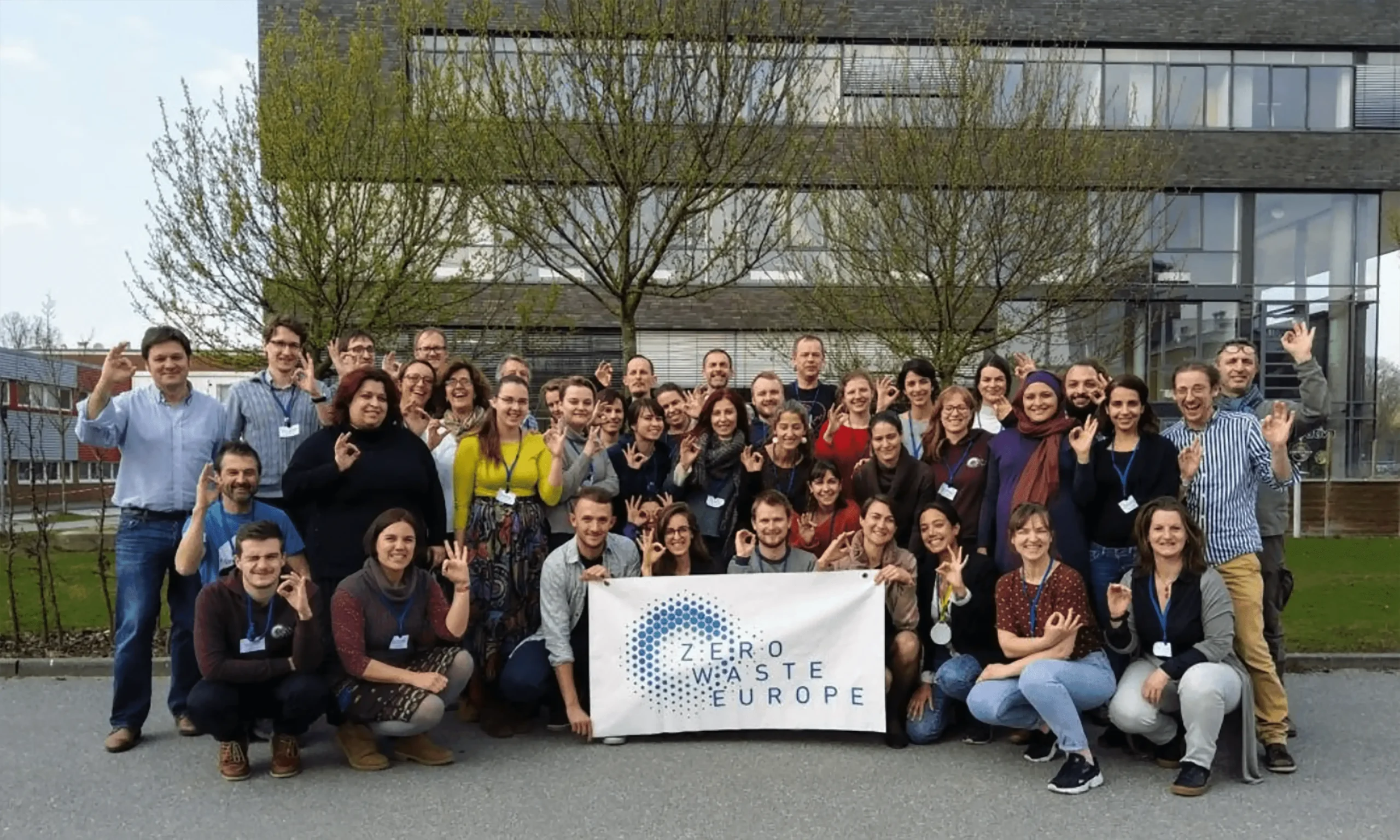
(L-R) Cecilia Allen, GAIA Latin America; Nicky Davies, Plastic Solutions Fund; Delphine Levi-Alvares, Break Free From Plastic; and Joan Marc, Zero Waste Europe

At the forum, GAIA Asia Pacific launched the report “Enabling sustainable cities through Zero Waste: A guide for decision- and policy-makers.” Although RA 9003 was signed into law in 2001, many cities and municipalities are still struggling with compliance. GAIA believes that there is a lack of information available to local and national government officials about practical strategies and policies that can help them fully implement RA 9003. The paper aims to give local government leaders and national lawmakers recommendations for policies that put Zero Waste in action and effectively implement RA 9003 while demonstrating that Zero Waste is both practical and achievable.

Several local governments are already pioneering Zero Waste programs through cost-effective investments in decentralized waste collection, composting, recycling markets, and waste management infrastructure. Experiences of Philippine cities have shown that as long as the right strategies are in place, cities can set up Zero Waste systems that will enable successful implementation within a period of as short as six months, while also achieving significant savings in waste management costs.

Q&A. Merci Ferrer, War on Waste – Break Free From Plastic Negros Oriental (WOW-BFFP Negros Oriental) asks a question during the Q&A. Photo by Danica Castillo.

However, cities continue to struggle in managing non-recyclable waste, mostly single-use plastics such as sachets and other packaging. The cities of San Fernando in Pampanga, and San Carlos in Negros Occidental, for example, are implementing strict and effective plastic bag and styrofoam regulations, but these remain a problem.

Marietta Lomocso of San Carlos City’s Environmental Management Office, shared: “With strong political will and stakeholder engagement, our plastic regulation reduced residual waste by half.” But, she said, challenges persist. “Businesses from neighboring cities bring in plastic packaging because they are not familiar with our plastic regulation. And, we still need to deal with the remaining 50% non-recyclable waste that we collect.

Launched during the forum and the press conference: a mini-documentary on the Zero Waste Cities in the Philippines, a part of the documentary movie, Story of Plastic, to be launched this year. Photo by Jed Alegado

GAIA maintains that businesses need to be part of the solution of reducing plastic waste by not producing single-use packaging and items in the first place. Leaders in national government agencies must also realize they have a crucial role to play by enabling strong policy support at the country level; for example, through mandating extended producer responsibility (EPR) policies, and a national ban on single-use plastics.

Delphine Lévi Alvarès of Zero Waste Europe shared the experience in the European Union (EU) where similar policies are being implemented at a regional level. Europe’s shift to a sustainable circular economy is mandating member countries to pursue reduction, reuse, and recycling as priority actions for waste management.

Lévi Alvarès said that more than 400 cities and municipalities in the EU have commitments to become Zero Waste Cities.  She also explained that producers are obliged by law to cover the costs of plastic waste management and that certain single-use plastics are being phased out as the region pursues a sustainable circular economy. “Zero Waste initiatives in countries like the Philippines are sending a strong message to Europe that the plastics issue must be addressed at the global level. Major manufacturing industries based in Europe and other countries in the global north should eliminate single use plastics in all regions where they work, including Asia.” she said.

The speakers flash the Zero Waste sign. (L-R, Front) Marietta Lomocso, San Carlos City, Negros Occidental; Prigi Arisandi, Ecoton, Indonesia; Froilan Grate, GAIA Asia Pacific; Delphine Levi-Alvares, BFFP Europe; Nicky Davies, Plastic Solutions Fund; Joan Marc Simon, Zero Waste Europe; and Xavier Sun, Wild at Heart, Taiwan. (Back) Magdalena Donoso, GAIA Latin America; Niven Reddy, GAIA Africa; Von Hernandez, Break Free From Plastic; Stiv Wilson, Story of Stuff; Mao Da, China Zero Waste Alliance; and Cecilia Allen, GAIA Latin America. Photo by Danica Castillo.

GAIA’s Zero Waste Cities Forum is part of several collaborative dialogues among local government officials in the Asia Pacific region to share experiences about Zero Waste implementation strategies. Outside the Philippines, several cities in the region have hosted, or expressed their interest to host, their own Zero Waste Cities events, including Bandung, Indonesia (Zero Waste Cities Conference 2018) and Penang, Malaysia (Zero Waste Cities Conference 2019 later in the year). GAIA, in partnership with grassroots organizations, has been supporting cities in pursuing ecological strategies to promote segregation and reduce waste volumes, specifically plastic pollution, to reduce and eventually eliminate dependence on harmful end-of-pipe waste disposal systems.

The report “Enabling sustainable cities through Zero Waste: A guide for decision- and policy-makers.” is available at https://no-burn.mystagingwebsite.com/

FOR MORE INFORMATION:

Sherma Benosa, Communications Officer, GAIA-AP, +63 917 815 7570, sherma@no-burn.org

The Global Alliance for Incinerator Alternatives (GAIA) is a global network of more than 800 grassroots groups, NGOs and individuals. We envision a just, zero waste world built on respect for ecological limits and community rights, where people are free from the burden of toxic pollution, and resources are sustainably conserved, not burned or dumped. We work to catalyze a global shift towards ecological and environmental justice by strengthening grassroots social movements that advance solutions to waste and pollution.

Mother Earth Foundation (MEF) is an NGO that works to promote education and awareness of the people on environment protection and proper waste management, reduction of waste, segregation at source composting and recycling towards a zero waste society. http://www.motherearthphil.org/

DOWNLOAD NOW. At the forum, GAIA Asia Pacific released this policy paper which provides a menu of policies that governments can adopt to break free from plastic and become truly Zero Waste.

By Sherma E Benosa

“I’ve already got loads of things to do, and you also want me to segregate my waste?” The man, perhaps in his mid-60s, sounded and looked annoyed. We asked him to segregate their waste before giving them to the waste collector next time.

“It’s only difficult in the beginning, ‘Tay,” our group leader, Shelley Carbonel, one of the Program Managers of Mother Earth Foundation, replied in a calm voice. “When you get used to doing it, it will be easier,” she added, her hands busy segregating the man’s waste for him.

Still, the man continued complaining, at one point blaming the government for the dirty surroundings. I looked over at Shelley and admired her cool. At the time, I was already exasperated. I know the man’s outbursts were getting to my groupmates as well. But like me, they were trying their best to look unaffected.

Earlier that day, we overheard a husband, perhaps in his early 50s, telling his wife, “Let them do it” when the latter asked him if he had segregated their waste. By “them,” he meant us, thinking we were garbage collectors. We were in fact a group LGU and environmental NGO representatives participating in an 11-day course on Implementing Community Zero Waste Program dubbed Zero Waste Academy.

The first batch of Zero Waste Academy graduates pose with the staff of Mother Earth Foundation and Global Alliance for Incinerator Alternatives. Photo by Froilan Grate.

Hearing the husband’s response, my face immediately flushed, my ears refusing to believe I heard him right. Seriously, he couldn’t expect other people to segregate their waste for them, no?

But the husband meant it, as he did not budge when Shelley offered to show him how to segregate their waste so that they would know how to do it next time. The wife showed some interest. She even called a child, aged about 9 or 10 years, from inside their house to watch us segregate their waste. “So you’d learn,” she told the child.

“All you need to do is immediately put your waste in the correct bins. Waste segregation only becomes hard if you mix the garbage first and then segregate later,” Shelley continued talking calmly, her gloved hands segregating the waste into recyclable, food waste, garden waste, residuals, special waste, and other categories. She was being helped by some of my fellow participants and the barangay counselor (village leader), Orlando Pedro, who joined us that day. But long before we finished working on their waste, the wife and the child had gone back inside, leaving us right outside their door.

I felt slighted. You don’t leave people outside your door just like that! I looked over at my companions, all visibly tired, but trying to stay in high spirit. It did not help that the Manila weather was too hot—34°C, but felt like 40°C. It was humid too. It was only 10am in the morning, but I was already feeling like I was going to faint anytime.

Then I looked at the barangay counselor. He was already drenched in his sweat. But like Shelley, he too was working quietly, looking unaffected despite having witnessed the attitude of some of his constituents. I wondered what he really really felt inside, and what thoughts were running in his mind.

When they finished segregating, I picked up some of the sacks with segregated garbage and moved them to the next house. As I walked, sacks in hand and the husband’s words still ringing in my ears, I wondered about the other group, whose members included international participants. Were they meeting resistance as well? How were they dealing with it?

Sharing of Expertise. Tini Martini Tapran of Yayasan GSSI, Indonesia , shares with the group a unique organics waste management technology that they are using in Bandung, Indonesa, the biopori.

This was the toughest part of the course. We were at Day 9, doing step 7 of the MEF 10 Steps to Establishing Community Zero Waste Program. The step is Dry-Run and Evaluation of Systems.

Ran by Mother Earth Foundation (MEF) and the Global Alliance for Incinerator Alternatives (GAIA) where I work as Communication Officer for Asia Pacific, the course is an intensive workshop comprising hands-on activities and interaction with communities, complemented with orientations and discussions on relevant issues such as waste-to-energy technologies and healthcare waste, and skill-share on organic waste management techniques.

For this workshop, MEF phased the implementation of their ongoing Zero Waste program in select barangays in Malabon City, Philippines to make the workshop activities coincide with implementation schedules, thus allowing us to observe and take part in the actual implementation of each step on the ground.

Before embarking on our first community exposure, we were forewarned that there will be challenges and difficult people.

“We cannot tell you what exactly will happen once you go to the communities because what you will be experiencing there will be the real thing,” Froilan Grate, MEF President and GAIA Asia Pacific Regional Coordinator, warned us.

Being forewarned does not remove the sting when you’re at the receiving end of unpleasant attitude. But it does make you automatically shift to ‘maximum tolerance mode’ and allow you to not be too affected.

The good thing was that our community experience was not always this bad. In fact, it was generally great. On Days 2 and 3, we did barangay profiling and baselining where we talked to barangay officials about their implementation of the ecological solid waste in their barangay. We talked about systems that are in place and the challenges they meet in implementing the law. The Philippines has a law on ecological solid waste management which decentralizes municipal solid waste management down to the barangay level.

What language barrier? Malaysian delegate, Theeban Gunasekaran doing the survey using the local language. The survey questions are both in English and Filipino. Photo by Sherma Benosa.

On Day 4, we did random survey, where we talked to households about how they manage their waste, and what they thought about strict implementation of waste segregation as provided for by law. On Day 5, we did waste collection for the waste assessment and brand audit (WABA). And on Day 8, prior to the Dry Run, we did house-to-house information education campaign (IEC).

All these activities presented challenges. The hot weather was among the constants. But we were never met with any issue. In fact, we had a lot of fun. During the survey, Theeban Gunasekaran, a participant from the Consumers Association of Penang (Malaysia), gamely tried to do the survey using the local language, as the survey questionnaire was both in English and Tagalog/Filipino. He found reading the local language easy, as Tagalog and Bahasa Indonesia/Malaysia have a lot of similar words.

During the IEC, after we have watched how the MEF staff would conduct it, I asked the foreign delegates in our group if they’d want to do it in the local language. “I could write the script for you,” I offered them.

Theeban and Suseela Nagappan (also from CAP) readily said yes. Darwin Annadurai (Consumers Action Group, India), on the other hand, preferred to do it in English.

I watched the locals as they listened to the “Tagalog-speaking” foreigners, taking note of their nods and facial expressions to know if they understood what was being said to them. It looked to me that not only the foreigners but also the locals were enjoying the experience.

Then on Day 7, we built demo-composting techniques at the MRF in Fort Bonifacio, Taguig City. This was in lieu of the actual building of MRF, which is step 5 of the MEF 10 Steps. None of the barangays had already identified a place to put an MRF, so we instead created composting setups. This was to be the legacy of our batch.

One group of participants pose with the trash they collected during their door-to-door waste collection. They were at step 7 of the process: “Dry-Run and Evaluation of Systems.”

We were divided into three groups. Group 1, consisted of Filipinos and Indonesians, introduced the katakura composting, which is ideal for home use. My group (Group 2), which consisted of Filipinos, Malaysians, and our sole Indian participant, chose to showcase vermi-wash, an innovation introduced to the group by the delegates from CAP. Group 3, which is an all-Filipino group, chose to build box composting unit, which is ideal for community use.

The preparation for the construction of the demo techniques revealed a funny side of the participants: competitiveness. Each group wanted to shine, and we all had fun trying to outdo one another. But whereas we were competitive, we were also supportive of each other, wanting the others to succeed as well. Thus, everyone was always ready to provide support to the others whenever needed.

Everyone shared their expertise, too, which made the workshop even richer. CAP participants shared their amazing work on organics management. Tini Tapran of GSSI Indonesia, talked about biopori, a composting technique which doubles as flood control. Fictor Ferdinand of YPBB talked about using black soldier fly to manage kitchen waste. Darwin shared his knowledge on solar composting technique.

Hands-on. Waste Assessment and Characterization Survey. Photo by Theeban Gunasekaran (CAP, Malaysia)

Merci Ferrer, who used to work as Executive Director of Health Care Without Harm and is co-founder of War on Waste Dumaguete (Philippines), talked about managing health care waste. Ochie Tolentino of Eco-Waste Coalition, shared her experiences in fighting incinerators.

Another challenging part of the course was the waste assessment and brand audit (WABA), which we did on Day 11—the last day of the workshop. We were supposed to leave for Malabon early, but it rained the previous night, and it was still raining the morning we were scheduled to do it. The situation had us very concerned, because Malabon is a flood-prone area. Fortunately, the rains eventually abated.

Maricon Alvarez, Program Manager of MEF in charge of the whole Academy, had to look for another barangay where we could do the WABA because the original location was flooded. Luckily, they were able to find a good place, and after a few minutes’ delay, we were given the go signal to travel to Malabon.

The actual conduct of WABA was overwhelming. There were many categories into which we were to segregate the waste. Recyclables, for example, were to be segregated into hard plastic, PET bottle, bottle cover, paper, carton, and many other categories. Residuals were to be segregated into packaging, plastic bags, styro, and other categories. Plastic packaging was further segregated according to brand for the brand audit. At first it was confusing, then we got the hang of it. Later on, it was a mix of hard work and a bit of play to make things lighter.

Then, as we concluded the WABA, we too concluded the workshop.

I remember, sometime near the end of the course, on Day 10, Froilan asked us: “Do you think Malabon could become Zero Waste?”

Immediately, the scenes of the past days played in my mind in rapid succession: the old man, the indifferent husband, the people who seemed to have resigned to their house standing on a flooded estero (waterway) filled with garbage, and their indifference to their waste. It would require hard work, my mind answered.

JEEPNEY RIDE. SOME LIGHT MOMENT. On their way to one of the communities, the participants got to ride the jeepney. Photo by Sherma Benosa.

But then I also thought of the people who were cooperative, those who segregated their waste as they were taught. I also thought of the community organizations on the ground who were helping in the barangays, and of course the cooperative barangay officials. Then my mind centered on Counselor Pedro who, at the end of that difficult Day 9, told the group as we evaluated and reflected on our experience: “Some people were uncooperative, but many were. So I think… there is hope. We can make our barangay Zero Waste!”

I remembered his words taking me by surprise. If I couldn’t say I already admired him as he worked silently alongside Shelley, I have to say he earned my respect just for choosing to look at the positive rather than the negative. By that gesture alone, he effectively made us feel much better, and made us realize that we can do things if we are determined enough.

Then I thought of the MEF staff, especially the community organizers, and their dedication to their cause. I know for a fact that rain or shine, they would do their best to make things work.

Hands-on. Waste Assessment and Brand Audit. Photo by Theeban Gunasekaran.

Kaya ba? Is it possible?” Again, I heard Froilan’s voice.

I looked around and saw everyone’s smiling faces. I smiled, too, to no one in particular, and together with my fellow participants, we chorused: “Yeeesss!”

Froilan nodded his head, visibly pleased. Maybe like me, he too heard the conviction in our voices.

—-

Sherma E. Benosa is the communications officer of GAIA for Asia Pacific.

Mandaluyong City, Philippines, 9 November 2018 — Green groups today challenged the Asian Development Bank (ADB) to live up to its stated mandate and stop financing any form of waste incineration. Incineration, including so-called “waste-to-energy” (WTE) incineration, is a dangerous, costly, and unsustainable method of treating waste. The groups contend that ADB is flouting local and international laws by promoting incineration, and that the bank should facilitate—instead of obstruct—Asia-Pacific’s transition toward a sustainable circular economy.

The call came during the launch of the report ADB and Waste Incineration: Bankrolling Pollution; Blocking Solutions [1] published by the Global Alliance for Incinerator Alternatives (GAIA). The report is a critical review of how ADB promotes investments in WTE incineration despite documented negative impacts of these facilities on public health, environment, economy, and the climate.[2] Joining the launch to call for the bank to pull out of waste incineration funding were No Burn Pilipinas, EcoWaste Coalition, Break Free From Plastic, Greenpeace, Healthcare Without Harm, Mother Earth Foundation, and the Philippine Movement for Climate Justice (PMCJ).

“Incinerator financing is a classic example of ADB’s schizophrenic funding policy,” said Lea Guerrero, GAIA climate and clean energy campaigner. “The bank is using public money to promote dirty and destructive projects that serve to prevent countries in the region from pursuing solutions that conserve resources, protect health and which do not harm the climate. This report challenges ADB to innovate, not incinerate: the world is already moving away from incineration and transitioning to a sustainable circular economy. ADB should follow suit and fund just, equitable Zero Waste systems that will enable this transition.”

The report shows that WTE incinerator facilities advanced by ADB present significant investment risks, fail to comply with key provisions of the bank’s safeguard standards as well as core pillars of the bank’s poverty reduction strategy, and present a lack of accountability to the very people within member countries it is mandated to serve. In Asia, the bank is the leading agency that is bringing the failed incineration model from the Global North. It also proactively partners with waste incineration companies to build WTE incinerators in the region. These facilities lock countries into enormous (and onerous) debts for environmentally and publicly harmful projects with exploitative “put-or-pay” contracts that obstruct the adoption of best practices for dealing with resources and waste.

The bank recommends waste incineration to countries through its technical assistance (TA) projects, such as in the Philippines.

“In the Philippines, ADB’s pro-incinerator policies contravene the country’s Clean Air, Ecological Solid Waste Management, and Renewable Energy laws,” said Glenn Ymata, No Burn Pilipinas campaign manager. “Aside from clearly going against its safeguard standards, ADB is potentially locking cities and municipalities, already stretched for funds, into decades of wastage and indebtedness. It is business as usual for ADB and it has been the same for over 50 years.”

Last October, the bank announced that its lending portfolio has no place for “dirty energy”.[3] Green groups assert that WTE incineration is dirty energy and should not be financed by the bank. “ADB’s funding of incinerators is based on the industry lie that WTE incineration is renewable energy,” said of PMCJ. “WTE incineration is polluting, carbon intensive, and takes investments away from real RE solutions. It should not be part of the ADB’s portfolio.”###

Read the Executive Summary HERE.

CONTACTSherma Benosa | Communications Officer, GAIA Asia Pacific | +63 9178157570 sherma@no-burn.org

NOTE TO EDITORS

[1] https://www.no-burn.org/wp-content/uploads/2021/03/ADB-and-Waste-Incineration-GAIA-Nov2018.pdf

[2] The report highlights that incinerators 1) have adverse impacts on the health and wellbeing of people and the environment ; 2) contribute to climate change; 3) damage local and national economies; and 4) obstruct resource sustainability. WTE incineration is the most expensive way to manage waste and generate electricity and perpetuate the unsustainable “take, make, waste” linear economic model that abets climate change and pollution. At present, incinerator and WTE incinerator facilities are seeing a phaseout in Europe in recognition that incineration is not compatible with a sustainable, low-carbon, and resource-efficient circular economy.

[3] https://www.adb.org/news/op-ed/no-place-dirty-energy-adb-s-climate-vision-yongping-zhai

When you talk of Zero Waste communities in Indonesia, three cities come to mind: Bandung, Cimahi, and Soreang. These cities, which used to struggle with managing their waste, have in recent years become leaders in Zero Waste program implementation.

The implementation was so impressive that, just a year after the cities started their pilot, they became proud hosts to the International Zero Waste Cities Conference held last March. Attended by over 300 delegates from different parts of the world, the conference allowed the cities to showcase the communities that have taken the road to Zero Waste.

These cities’ incredible transformation was thanks in no small part to GAIA member organization, Yayasan Pengembangan Biosains dan Bioteknologi (YPBB).

YPBB is a non-profit environmental organization based in Bandung, Indonesia. Established in 1993, YPBB’s vision is to “achieve a high quality of human life through an organic lifestyle.” It promotes sustainable living, recycling and composting, waste segregation, and strong involvement of the district government as well as the communities in the implementation and advancement of zero waste policies and programs. YPBB also believes in the importance of practical education to mainstream the concept of Zero Waste in people’s everyday lives. This highly cooperative approachwhere community members are not just participants but leaders in their neighborhoods’ transition to Zero Wasteis the key to YPBB’s success.

Through partnerships with government leaders and community members, YPBB has created simple and elegant solutions to the pileup of garbage and fast-growing landfills that are plaguing Indonesian cities. By focusing on reducing the amount of waste generated, together with diligently segregating the waste at source, these cities can get rid of their trash problems once and for all.

YPBB found that in Bandung, the third largest city in Indonesia, the 2.5 million people living in the city produce around 1,500-1,600 tons of waste every day. Bandung’s local government already allotted IDR 137 billion for waste transportation per year. More than half of household waste in the city, or 63%, is organic waste. Recyclable materials come in second at 23% while the remaining 14% are residual waste. This means that Bandung City can potentially reduce the amount of household waste brought to landfills by as much as 86% and bring down its waste collection, transportation and landfill tipping fee expenses to just USD 17.1 million (IDR 19 billion) per year. Potential savings can later be utilized in hiring more waste workers and in developing more collection, decentralized recycling and composting facilities.

YPBB then developed a decentralized waste management model piloted in Coblong Sub-district, Cibeunying Kaler Sub-district and Babakan Sari in Bandung and all districts in Cimahi City, and in Soreang district in Bandung Regency through the program Zero Waste Cities. The program envisions a “systematic, scalable, thorough, and sustainable waste management system.”

Within a short period of time, YPBB was able to deliver transformative results. Within just the first year, #ZeroWasteCities reached 3,640 households or around 14,560 people. The program was responsible for keeping 950 kg of waste each day out of landfills, saving about IDR 63 million (USD 4,300) in transportation costs for that year. While this is already an impressive achievement, YPBB wants to further increase their success rate by working with governments to create conducive regulatory and financing policies for Zero Waste approach.

The current success rate (and the money it saved the city) did not go unnoticed by local officials. The new mayors of Bandung and Cimahi have so much confidence in the program that they want to expand it. Bandung City has committed to doubling the waste management budget of kelurahan to about IDR 200 million per RW (rukun warga or subdivision) per year, while the Cimahi government is also in the process of increasing financial support for decentralized waste management.

The Bandung Regency head recently created a regulation for villages to allocate budget and create local regulation on waste management. With the additional budget, RWs, in cooperation with local leaders, can now invest more resources in additional waste workers and infrastructure.

With the support of local governments and a dedicated group of community leaders, YPBB is leading the way to a Zero Waste Indonesia.

“We see our Zero Waste campaign as a way to contribute towards an ecologically sustainable global civilization. We are very lucky because we are in the moment where we get significant support from many parties to transform the lives of thousands of people towards sustainable Zero Waste system, and hopefully millions of people in near future,” said David Sutasurya, Executive Director of YPBB.

“This requires intense work and time, but we know it’s worth it since we are in the critical time of saving humankind and our fellow creatures from unbearable climate change. Utilizing this moment to create change in such a short time is key to safeguarding the future of our loved ones and future generations.”

Bali, Indonesia, 12 Oct 2018 — Today, over 400 organizations and individuals in more than 50 countries called on international financial institutions (IFIs) meeting this week in Bali, Indonesia, to stop funding waste incinerators, and instead prioritize projects that focus on Zero Waste solutions.

The call came ahead of the Global Infrastructure Forum on 13 October where 10 IFIs and the UN have organized a meeting to discuss their take on the world’s infrastructure agenda. Environmental groups are submitting a global petition to oppose the recent trend of so-called development financing that has seen the aggressive promotion of waste incinerators in the Global South.

“Although our country is hosting this year’s conference, we refuse to host an incineration plant that will maintain a linear economy and systematically destroy our nation’s precious resources,” says David Sutasurya, Executive Director of Yayasan Pekembangan Biosains dan Bioteknologi (YPBB). “Many Indonesian cities are already pursuing Zero Waste initiatives, which are proven to be a sustainable and actionable approach to solving our country’s waste problems. The banks should support such efforts instead of harmful end-of-pipe systems.”

A key focus of the forum is to mobilize partners’ financial resources to fund infrastructure projects for developing countries, particularly from the private sector.

Many concerned civil society groups are keeping a close and vigilant watch on IFIs because of the troubling legacy of negative environmental and social impacts their projects and policy advice have had on communities and citizens, particularly in the Global South. Many of these IFIs are funded by industrialized countries who wield a strong influence on the policies of poorer nations.

A key concern about the infrastructure financing of these banks are their focus on massive centralized waste incinerators or the so-called “waste-to-energy” facilities, which has had devastating consequences for the climate, human health, and local economies.

Many of these IFIs already funded or promoted waste incinerators in countries in the global South.

“Environmental justice groups around the world are asking development banks to stop funding incineration because it is bad for public health, bad for the environment, bad for the climate and bad for the economy, jeopardizing the livelihoods of millions of waste pickers around the world,” says Niven Reddy, Regional Coordinator for GAIA Africa. “Incineration has proven to be a failed model in the Global North and should not be peddled in the Global South.”

In Europe, the EU has put another nail in the coffin for incinerators: the waste legislation implementation report published by the EC last month instructed countries to introduce measures to phase out residual waste treatment including, among others, incineration. Joan Marc Simon, Executive Director of Zero Waste Europe states, “Support for Incineration is fading and it is agreed that it is not part of the Circular Economy plan of the European Union. EU policymakers are focusing instead on supporting reduction, reuse and recycling. IFIs should learn from Europe’s mistakes and stop promoting waste incineration in other parts of the world.”

A recent World Bank report (What A Waste 2.0) confirms that decades of incineration has not helped decrease global waste volumes, but instead has abetted the global waste crisis.

This year’s Global Infrastructure forum comes at a time when the world is grappling for urgent solutions to address escalating waste volumes and the worsening climate change impacts brought on by reckless consumption,” said Lea Guerrero, Climate and Clean Energy Campaigner at GAIA Asia Pacific. “Waste incineration is part of the unsustainable system that has led the planet to the brink of the waste and climate catastrophes. Multilateral banks that purport to enable sustainable development should no longer fund waste incineration and should instead enable countries to transition to an economy where the conservation of natural resources and Zero Waste is prioritized.”

NOTE TO THE EDITOR
For example, the Asian Development Bank promotes and funds incinerators in Asia[i]; IBRD (International Bank for Reconstruction and Development, part of World Bank), is funding and supporting incinerators in South America; and African Development Bank promotes and funds the construction of medical waste incinerators all over the continent.

[i] https://www.adb.org/projects?terms=waste+to+energy

CONTACT

Sherma Benosa, Communications Officer, GAIA Asia Pacific, sherma@no-burn.org, +63 917 8157570

Claire Arkin, Campaign and Communications Associate, GAIA, claire@no-burn.org, 510-883-9490 ext: 111