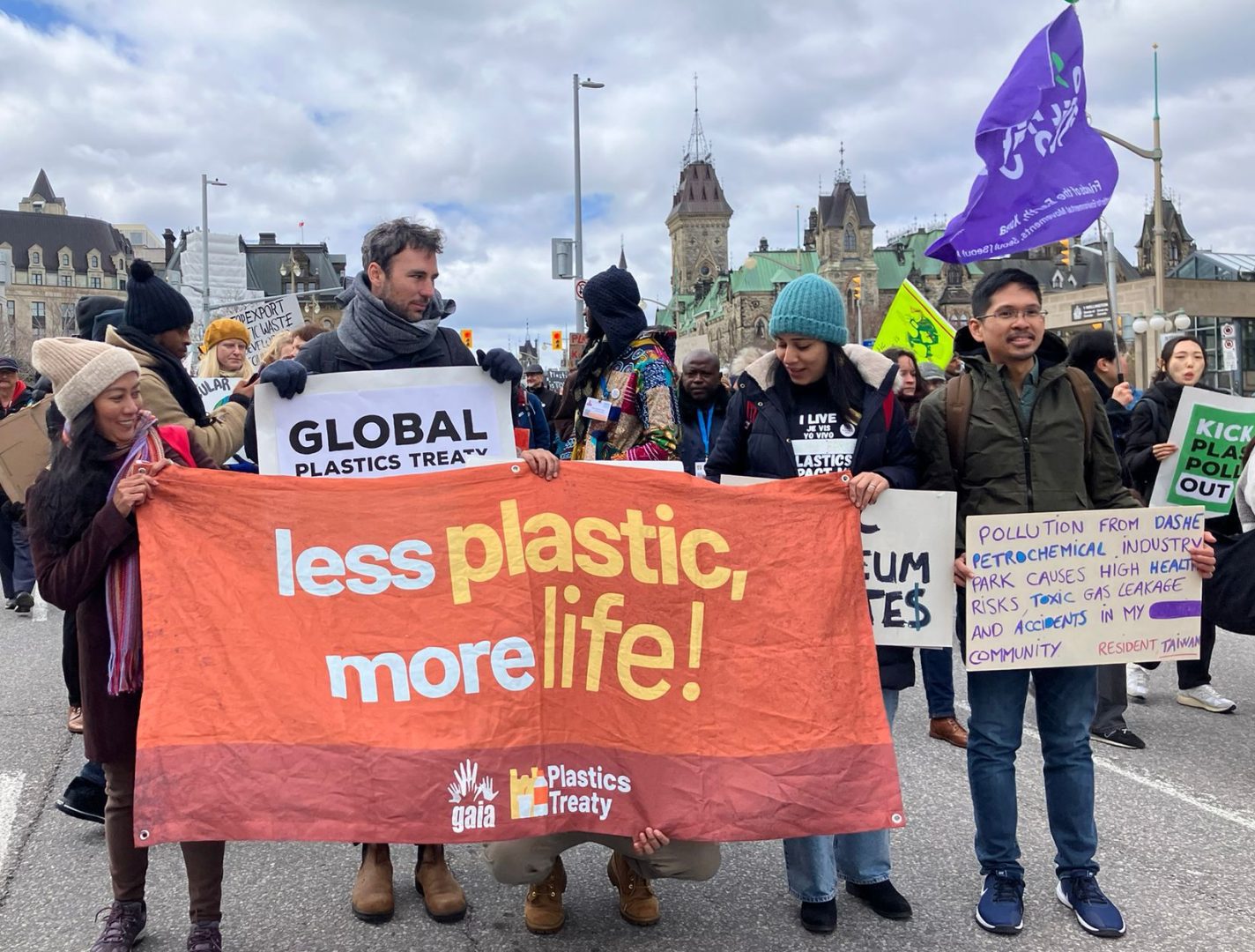
Asia Pacific

Manila, Philippines – Environmental network Global Alliance for Incinerator Alternatives (GAIA) and Break Free From Plastic (BFFP) in Asia Pacific representing thousands of organizations across over 93 countries, express strong disappointment over the Ramon Magsaysay Award Foundation’s panel on November 5, 2025 during the 67th Ramon Magsaysay Awards Festival Season in cahoots with the Asian Development Bank (ADB) which further peddle false solutions to the pollution crisis

In a letter addressed to the foundation, the giant environmental network said that this year’s Ramon Magsaysay Awards, which used to be a space for celebrating environmentally sustainable and just solutions, served as a dagger struck into the hearts of communities fighting for their rights to clean air, soil, water, health, and the environment. These communities have firsthand experience of the toxic impacts of waste-to-energy (WtE) plants, and are fighting to have these removed.

During the event, awardee Ms. Shaahina Ali described incineration as a “transitional solution” to plastic pollution. Ali also said that newer WtE technologies address pollution concerns and that these facilities offer the best option for the Maldives. These messages are promoted by international financial institutions (IFIs), such as the ADB, to legitimize incineration as a formal waste management method in the region. WtE releases high levels of greenhouse gases that worsen the climate crisis. It also threatens food and water systems, damages ecosystems, and exposes communities to rising sea levels and more extreme weather.

The civil society organizations emphasize that ADB remains one of the largest financiers and policy architects promoting WtE incineration in the Asia Pacific. Since the Paris Agreement was adopted by countries in 2015, ADB provided USD 15.3 billion to 49 projects with incineration components and policy reforms institutionalizing false solutions such as plastic credits through loans, grants, equity investments, and technical assistance. ADB’s financing for plastic pollution locks countries into a linear and unsustainable model of plastic production.

“In a world where urgent actions are needed to address plastic pollution, debt burdens, and limiting the rise in global temperatures to 1.5 degrees Celsius, we urge the Ramon Magsaysay Award Foundation to inhibit from staging unethical, inappropriate, and unjust development alternatives,” said Mayang Azurin, Deputy Director for Campaigns at GAIA Asia Pacific. “RMAF must instead set the development discussions toward empowering community solutions moving toward transformative shifts instead of echoing the agenda of international financial institutions like the ADB and World Bank.”

Civil society organizations also urged the award-giving body to seriously rethink the narratives of what sustainable and just solutions are celebrated in the region by recognizing community voices, and respecting science-based facts and policy directions against what is peddled as solutions by IFIs such as the ADB. International groups offered cross-learning with the award-giving body to navigate complex but solvable problems without resorting to false solutions.

Civil society leaders from the region have this to say:

Marian Ledesma, Zero Waste Campaigner, Greenpeace Philippines, said:

“It is disappointing to see a prestigious award for ethical leadership promote waste-to-energy. This is a false solution that harms communities and distracts from real action on plastic pollution. RMAF must widen its understanding of the crisis. Downstream fixes are outdated, and burning waste is dangerous. Communities and institutions across Asia have already shown that upstream solutions, such as reduction and reuse systems, not only work, but bring benefits to communities.”

Arpita Bhagat, Plastic Policy Officer, GAIA Asia Pacific, said:

“Asian values call for living in balance with nature. Incineration, plastic credits, and offsets do the opposite. They let industries keep polluting while communities bear the cost. These approaches echo a colonial mindset that treats Asia as a dumping ground. By elevating ideas that fuel toxic pollution and the linear take-make-waste model, RMAF undermines the grassroots fight for environmental justice.”

Wahyu Eka Styawan, Campaigner of WALHI Jawa Timur:

“WALHI regrets RMAF’s collaboration with the Asian Development Bank, which is funding waste-to-energy projects in the region. With air quality monitoring support from GAIA, we found PM2.5 spikes around the Benowo WtE plant that exceeded WHO guidelines. This matches Surabaya’s high respiratory infection rates. WtE has worsened environmental and health risks, and ADB’s role in RMAF indirectly reinforces a harmful project.”

Atty. Zelda Soriano, Founder and Executive Director, Community Legal Help and Public Interest Centre (C-HELP), said:

“RMAF has long honored leaders tackling environmental challenges through community-driven, sustainable solutions. This legacy reflects its core mission. Endorsing waste-to-energy technologies promoted by institutions like the ADB would break from that tradition. It would signal a shift away from genuine, people-centered efforts toward approaches that do not advance real sustainability.”

Shey Levita, Campaigner for False Solutions, Ecowaste Coalition:

“It is troubling that RMAF would even consider waste-to-energy incineration as a solution to the plastics crisis. It is the old habit of hiding the problem instead of confronting its root causes. If RMAF wants to honor true Asian excellence, it should uplift community-led, Filipino-driven zero waste solutions, not props that enable shortcut thinking and more environmental harm.”

###

Note to Editors

  • Full letter to the Ramon Magsaysay Awards Foundation with the full list of signatories is available here.

Press contacts:

GAIA is a worldwide alliance of more than 1,000 grassroots groups, non-governmental organizations, and individuals in over 90 countries. With our work, we aim to catalyze a global shift towards environmental justice by strengthening grassroots social movements that advance solutions to waste and pollution. We envision a just, zero waste world built on respect for ecological limits and community rights, where people are free from the burden of toxic pollution, and resources are sustainably conserved, not burned or dumped.

#BreakFreeFromPlastic is a global movement envisioning a future free from plastic pollution. Since its launch in 2016, more than 3,500 organizations representing millions of individual supporters around the world, have joined the movement to demand massive reductions in single-use plastics and push for lasting solutions to the plastic pollution crisis. BFFP member organizations and individuals share the values of environmental protection and social justice, and work together through a holistic approach to bring about systemic change. This means tackling plastic pollution across the whole plastics value chain—from extraction to disposal—focusing on prevention rather than cure and providing effective solutions. www.breakfreefromplastic.org
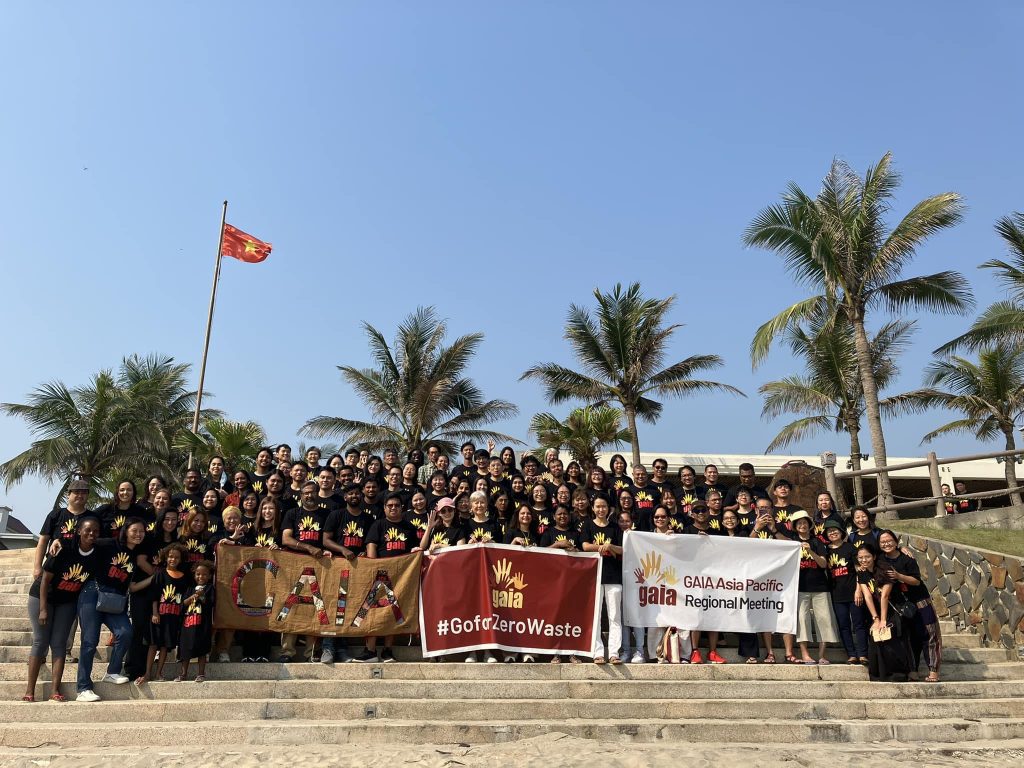
As we mark GAIA’s twenty-fifth year, we’re taking a moment to honour the people, movements, and everyday acts of courage that shaped this global community. What began as a shared refusal to accept toxic, extractive systems has grown into a vibrant network pushing for justice, circularity, and care at every level.

To celebrate this milestone, Dr. Shahriar Hossain of the Environment and Social Development Organization (ESDO) in Bangladesh offers a poem that traces the quiet power of collective work from the ground up. It’s a reflection on how far we’ve come and a reminder of the roots that hold us steady as we face the years ahead.

Below is his tribute to the movement and everyone who has carried it forward.

Tide & Root: From Ash to Apples

Shahriar Hossain, Ph.D.

Twenty-five years — GAIA rose like tide and root,

quiet muscle, steady pulse, reclaiming our roots.

We flipped ash into seed; we refused to burn tomorrow;

we taught our children: refuse is not fate, but work to borrow.

Neighbors raised banners, set the kitchen table high —

grandmothers with compost scoops, youth mapping every by way.

We unmasked the smoke with stories, petitions, and hands;

we seized what was wasted and re-domesticated care in our lands.

From alley pots to island sands, our palms learned to sort and heal;

we composted histories and pressed them back into the soil.

Rubble of neglect became rich loam, rivers mended, markets steadied,

incinerators weakened as knowledge walked door to door, ready.

Repair, reuse, refuse — we rewove the small economies of home;

each household a workshop, each neighbor a step toward the comb.

A global choir — elders, youth, frontline keepers — braided practice into law;

this resistance cleared the air, cleaned our memory, demanded circular justice for all.

Twenty-five years of grit and grace: ash to apple, shame to neighborhood power.

Let the next decades be fuller, kinder, rooted in each home and hour.

Whole and together — we commit, we keep, we rise: we are the work, the promise, the morning’s steady prize.

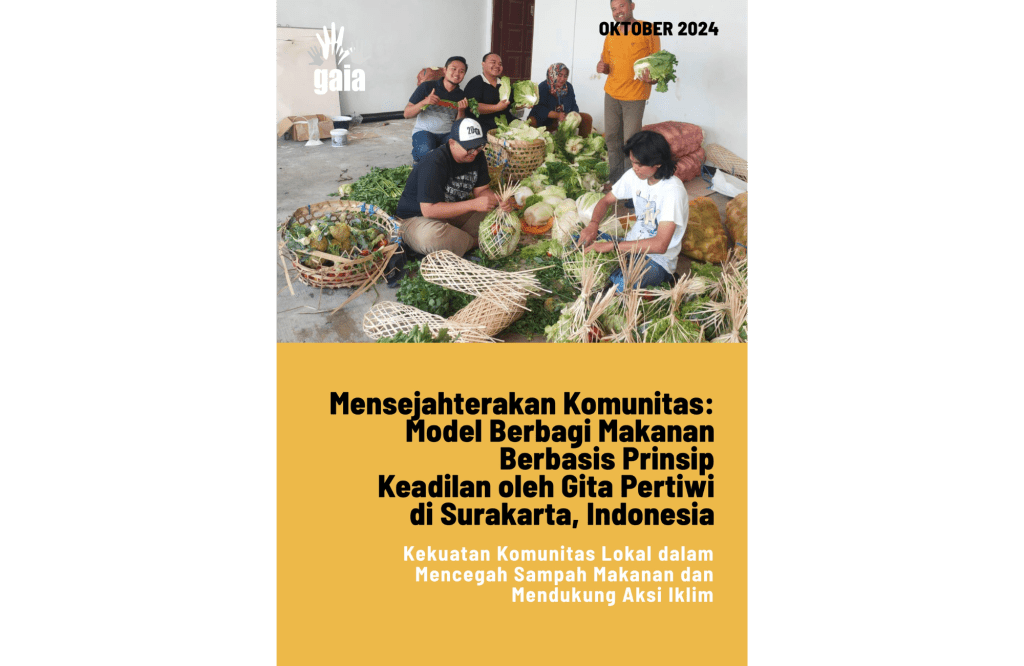
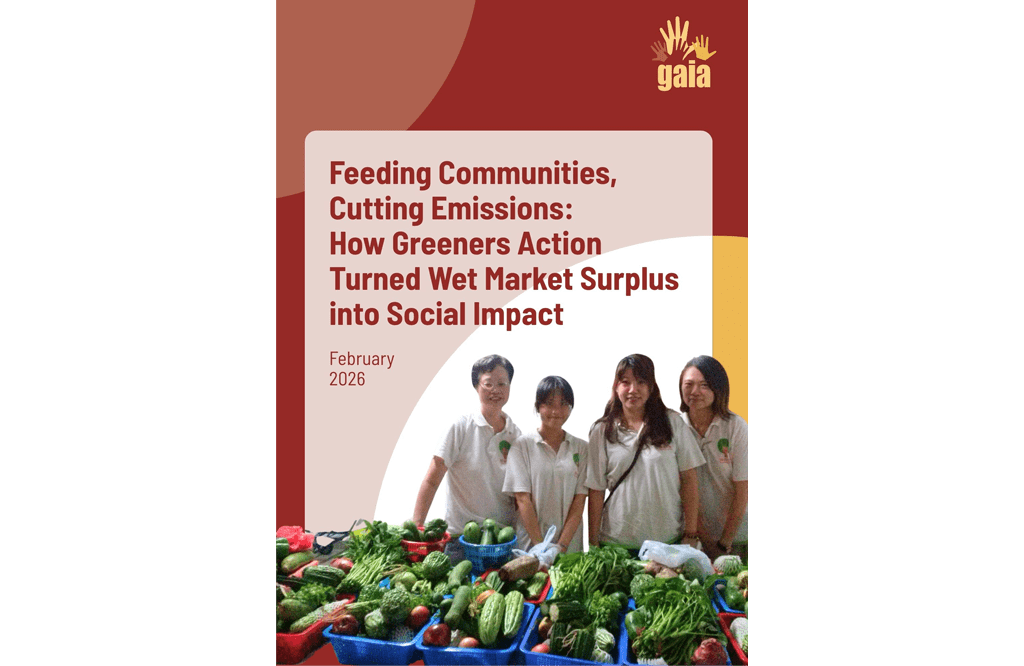
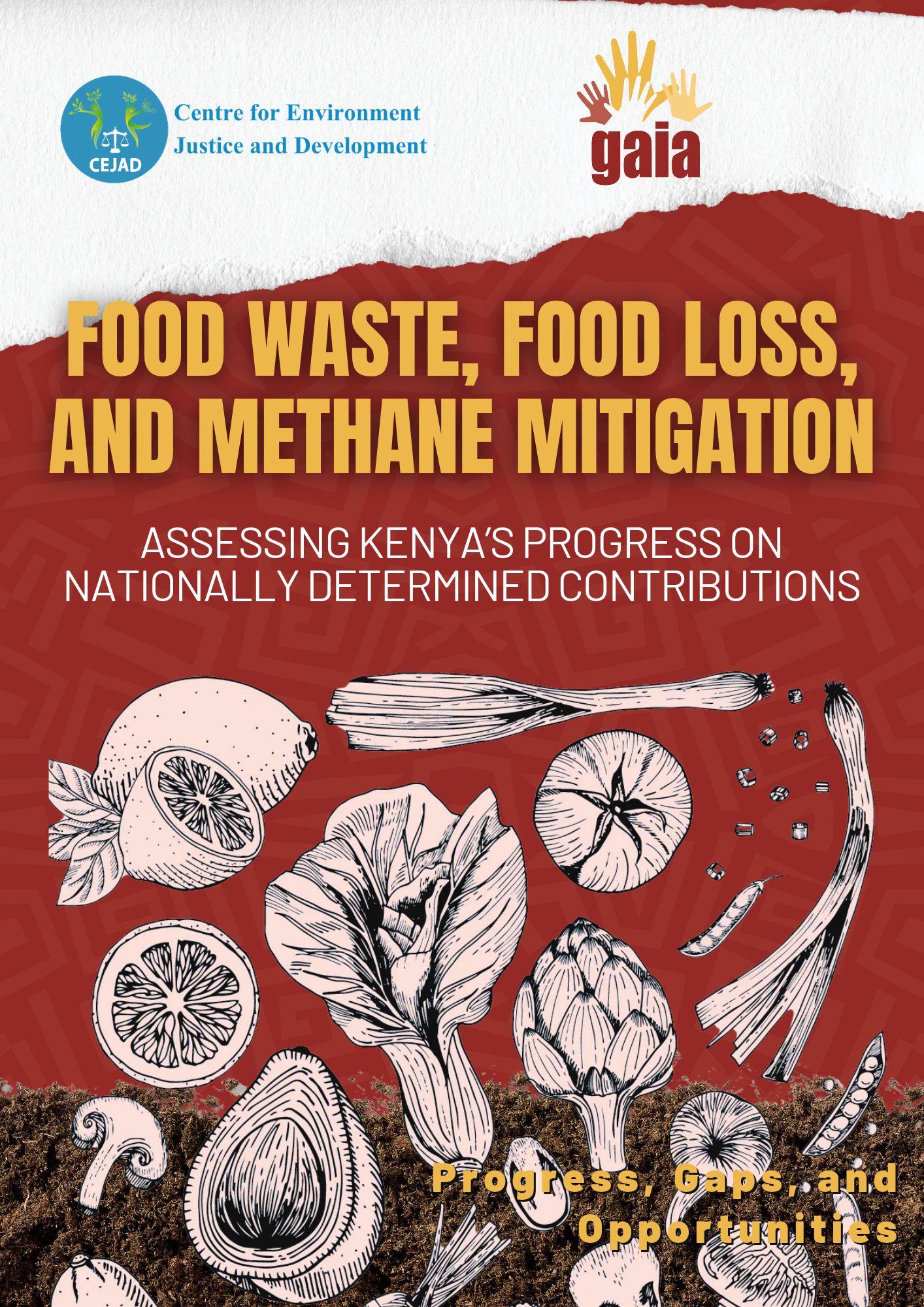
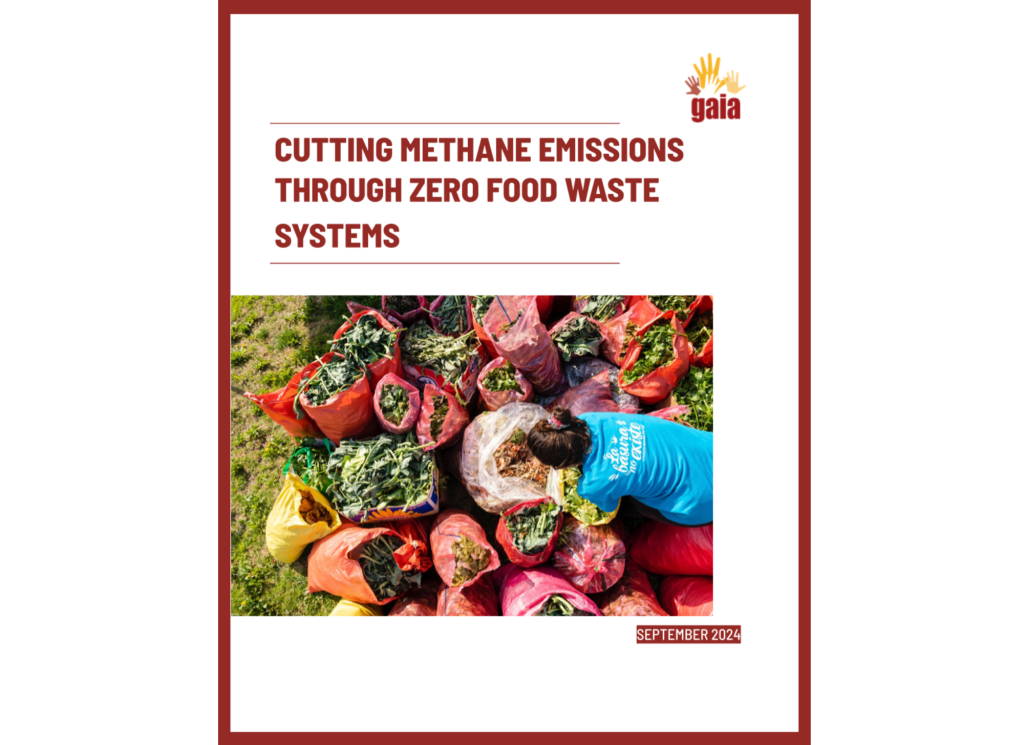
In 2022, over 1 billion tonnes of food waste was produced worldwide—equivalent to around 132 kg per person. Food loss and waste is an urgent global issue with significant social, economic, and environmental implications. According to the United Nations Environment Programme, this represents an economic loss of more than 1 trillion dollars, affecting actors throughout the value chain, from small and large producers to vendors, distributors, and consumers. Outrageously, almost 800 million people suffer from hunger and 15 million children under five years old are malnourished. 

Embracing zero waste strategies linked with food systems is not merely an option—it is necessary to achieve significant climate and social benefits for current and future generations. Strong political action is needed to put in motion a pathway to systemically address food loss and waste. The moment to take bold, decisive action is now. Learn how communities work together to prevent food loss and waste through zero waste practices, while reducing methane emissions and keeping global warming below 1.5°C.


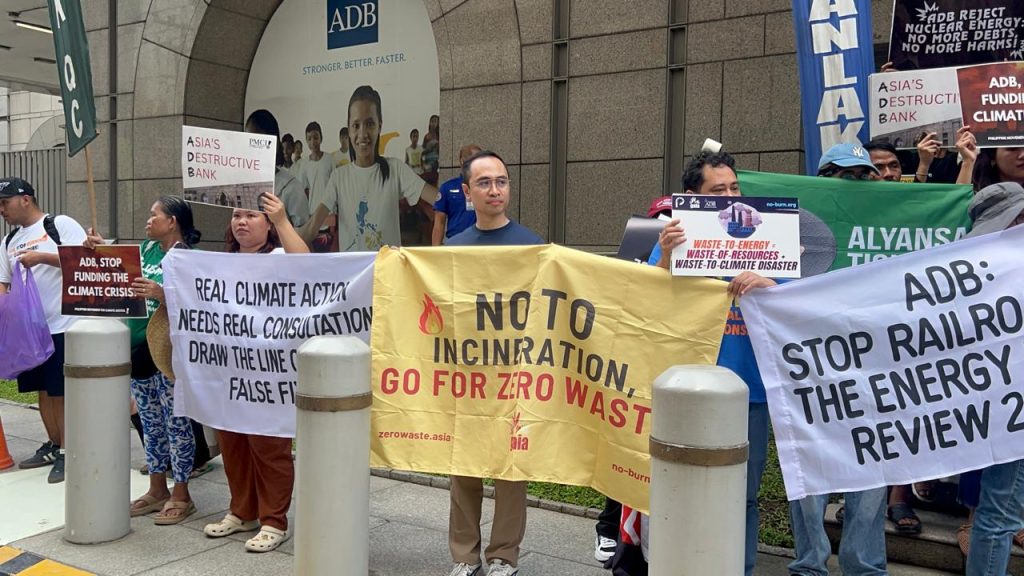
Photo: NGO Forum on ADB

Mandaluyong City, Philippines – 14 August 2025 – Today, environmental advocates and community members gathered outside the Asian Development Bank (ADB) headquarters to oppose the Bank’s proposed revisions to its Energy Policy. The changes are being introduced in a railroaded process and could lead to increased funding for waste incineration, mining, and nuclear power development, and other contentious energy projects across Asia.

The ADB is in the final stages of its midterm Energy Policy review, with the Board expected to vote on the updated policy in October 2025. Apart from failing to prioritize waste reduction, reuse, and recycling before burning waste for energy development as committed in the Bank’s Energy Policy, it is even expanding waste-to-energy (WTE) incineration.  The Bank proposes to burn a fraction of waste in power plants called co-firing biofuels. GAIA says it delays the much-needed termination of coal plants, generates more greenhouse gases (GHG) and other toxic emissions, and disincentivizes efforts towards environmentally preferred methods in the waste hierarchy. 

“We looked to the ADB to set an example in climate leadership and clean energy investment  — not take us backward,” said Brex Arevalo, GAIA Asia Pacific’s Climate and Anti-incineration Campaigner. “The Bank’s willingness to support these false solutions shows a shocking disregard for resource conservation, health, and climate change. How many more resources will the ADB burn on a dying planet?”

The Bank also proposes repurposing coal plants into municipal WTE incineration facilities or to burn fully with biomass materials. “Given that even problematic waste streams with toxic content like processed plastic wastes and spent tires are now being considered as biomass, the Bank is wasting scarce public funds on prolonging the agony of coal-impacted communities by turning them into WTE plants ”, Arevalo said. 

Attaching carbon capture storage facilities to WTE plants is also being proposed by the Bank. Another expensive and untested technology that only delays much-needed closure of high carbon-emitting technologies, according to  Zero Waste Europe. 

Community concerns aren’t just unfounded fears— they are supported by hard evidence.  A recent citizen-led air quality study in Surabaya, Indonesia, Ogijo, Nigeria, and Dumaguete, Philippines, found particulate matter pollution near waste-burning plants reaching up to eight times above WHO safety limits. In Dumaguete, experts estimate shutting down a local pyrolysis-gasification plant could prevent nearly 180 premature deaths annually.

“These numbers represent people’s lives—children with breathing difficulties, farmers exposed to dangerous air, waste workers in the facility, and elders living in unsafe conditions,” said Merci Ferrer, Co-convenor of War on Waste-Break Free From Plastic (WoW-BFFP) Negros Oriental. “Communities have been ignored for too long, and the time for empty promises is over.” As a result of the study of WoW-BFFP Negros Oriental, the newly elected Dumaguete Mayor, Manuel Sagarbarria,  has ordered the facility to stop its operations. 

And, beyond air pollution, the health risks of waste incineration extend into the escalating climate crisis. Heatwaves — periods of unusually high temperatures — are becoming more frequent and deadly, especially in densely populated areas like Delhi, India. Between 2013 and 2022, over 10,600 deaths in India were attributed to heat-related causes, disproportionately affecting vulnerable groups such as the elderly, children, and outdoor workers. WTE incinerators themselves contribute to this problem by releasing large amounts of heat during their high-temperature processes.

Protesters demanded that the ADB immediately phase out its support for WTE incineration and other false solutions and instead back proven, community-centered approaches: reducing waste before it’s created, composting organic waste to cut methane emissions, and investing in clean, renewable energy that protects both people and the environment.

In the past year alone, other international financial institutions like the World Bank and the Asian Infrastructure Investment Bank (AIIB) had terminated several proposed WTE incineration projects due to their high risks from community resistance to lack of financial viability.  

“Energy Policy Review for this year, rushed by the ADB, only shows how corporate interests are being put on the pedestal over people and the planet,” said Nazareth Del Pilar of NGO Forum on ADB. “Instead of closing gaps in its policy, the Bank is slipping in dangerous provisions that deepen debt, sideline human rights, and abandon justice-centered solutions.”

PHOTOS HERE 

###

Media Contacts:

Brex Arevalo, Climate and Anti-incineration Campaigner, GAIA Asia Pacific | albrecht@no-burn.org | +639983510912Dan Abril, Communications Associate, GAIA Asia Pacific | dan@no-burn.org | +639174194426

Global South Member States and Civil Society during GAIA’s INC-5.2 Global South Media Briefing. ©Camila Aguilera

Geneva, Switzerland– Demonstrating strong unity, Global South Member States and Civil Society called for ambitious, legally binding global measures to curb plastic production, in a media briefing on the closing day of the second part of the fifth session of the Intergovernmental Negotiating Committee (INC-5.2), held by the Global Alliance for Incinerator Alternatives (GAIA). 

The event brought together civil society organizations (CSOs) from across the Global South, including the Association de l’Education Environnementale pour les Futures Générations- Tunisia, C4 Center – Malaysia, and Acción Ecológica Mexico. It also featured distinguished delegates from Ethiopia and Fiji, including Hiwot Hailu, Chief of Staff at the Environmental Protection Authority of the Federal Democratic Republic of Ethiopia, and Dr. Sivendra Michael, Permanent Secretary at Fiji’s Ministry of Environment and Climate Change.

This gathering took place against the backdrop of the Chair’s latest text, released yesterday, which was universally rejected by countries and civil society groups. The text leaves out a key article on reducing plastic production, going against the treaty’s mandate to address plastics across their full life cycle, amongst other pressing issues. This position shaped the demands voiced by the panelists during the media  briefing.

Merrisa Naidoo, GAIA Africa’s Plastics Program Manager, stressed that a flawed process cannot deliver good outcomes. “Consensus is not democracy. It ignores the will of the vast majority of member states and, unfortunately, has to cater to the wish list of the petro-states and fossil fuel industry”. 

This sentiment was further emphasised by Semia Gharbi, Chairperson & Co-Founder, Association de l’Education Environnementale pour les Futures Générations, who stated that the article on health in the Chair’s text was deleted in the current version. “We have to remind our delegates that we must protect the environment. With a growing plastic crisis, we cannot ignore science”. 

SiPeng Wong  of C4 Center in Malaysia stated, “If we don’t control the amount of waste being produced, it will end up exported to my country and region. In Southeast Asia, the volume of waste that reaches our backyard is unmanageable”. SiPeng  noted that Malaysia alone receives over 415 million kg of waste from Global North countries.

“ Without reducing the generation of waste, we will end up having to manage it”. 

Dr. Larisa de Orbe of Acción Ecológica México powerfully expressed that plastic pollution already exceeded the limits of what people and nature can handle.” Our government must negotiate free from industry pressure in order to truly safeguard the health and well-being of current and future generations”. 

During the briefing, distinguished Member State representatives addressed questions about the role of Global South leadership in the treaty process. They were asked whether the critical priorities of the Global South were reflected in the Chair’s latest draft text, their reactions to it, and how civil society can support efforts to uphold ambitious commitments.

Responding to the question, Distinguished delegate from Fiji, Dr. Sivendra Michael, Permanent Secretary, Ministry of Environment and Climate Change, Fiji Government, said, “ The last iteration of the text, which came out yesterday, we know is a serious regression from the UNEA Mandate 5/14 given to us as governments. We all agreed at UNEA 5 that we would address the full lifecycle of plastic”. 

Furthermore, he highlighted, “There are many metaphors that we use, but one is that we can’t continue mopping the floor without turning the tap. We need legally binding global measures to control production. 

Distinguished delegate from Ethiopia, Hiwot Hailu,  Chief of Staff, Federal Democratic Republic of Ethiopia, Environmental Protection Authority, commented on the supportive role played by civil society within the INC-5.2, calling them the engine of our negotiating process. 

“We need civil society to continue to be a partner, providing pressure from the outside to ensure negotiations don’t lose sight of our shared goals, and to continue advocacy for a legally binding plastic treaty that protects people and our planet,” stated the distinguished delegate from Ethiopia. 

Note to Editor: 

You can find a recording here.

*The following ambitious measures with strong international support were cut from the Chair’s text (amongst others): 

  • Over 100 countries support plastic production cuts 
  • Over 100 countries support a binding product and harmful chemicals phaseouts 
  • Almost 130 countries support a dedicated article on health 
  • Over 150 countries support a strong financial mechanism

Visit GAIA’s Plastics Treaty Page:www.no-burn.org/plastics-treaty-gaia/ 

Press contacts:

Global: Claire Arkin | Claire@no-burn.org | +1 (973) 444 4869

Africa: Carissa Marnce | carissa@no-burn.org | +27 76 934 6156

Latin America: Camila Aguilera | Camila@no-burn.org | +56 9 8913 6198

Asia & the Pacific: Robi Kate Miranda  | robi@no-burn.org I +63 927 585 4157

###

GAIA is a worldwide alliance of more than 1,000 grassroots groups, non-governmental organizations, and individuals in over 90 countries. With our work we aim to catalyze a global shift towards environmental justice by strengthening grassroots social movements that advance solutions to waste and pollution. We envision a just, zero waste world built on respect for ecological limits and community rights, where people are free from the burden of toxic pollution, and resources are sustainably conserved, not burned or dumped. 

Jueves, 13 de agosto de 2025

Rueda de prensa del Sur Global con delegaciones de Estados Miembros

Acompaña a delegados de Estados Miembros y a integrantes de la sociedad civil del Sur Global en una rueda de prensa sobre la ambición del Sur Global en las negociaciones del tratado de plásticos, el jueves 14 de agosto de 2025 a las 11:00 a. m. hora de Ginebra, en el Edificio E, Sala XXVII (27). Este evento será transmitido en vivo; registro aquí.

Condena universal al texto “inaceptable” del presidente

A solo un día de que terminen las negociaciones del tratado de plásticos, países y sociedad civil rechazaron de forma unánime el último texto propuesto por el presidente como base para continuar las discusiones.

Ana Rocha, directora global de políticas sobre plásticos de GAIA, afirmó: “Este nuevo texto le está enviando un mensaje claro al mundo: no nos importa tu salud. No nos importa la ciencia. No nos importan los derechos humanos. No nos importa tu futuro. Solo nos importa el consenso.”

Lee la declaración completa
Lee declaraciones de otros miembros del Movimiento Break Free From Plastic

Estados Miembros luchan por la ambición en el plenario

El proceso del presidente para elaborar este último borrador refleja la falta de transparencia y de procesos democráticos que han caracterizado su conducta en los INC anteriores. Mientras la mayoría de los Estados Miembros estaban ocupados en los grupos de contacto y reuniones informales, se elaboró un nuevo texto que redujo el nivel de ambición por debajo del mínimo que cualquiera esperaba ver.

En el plenario, los Estados Miembros criticaron durante más de tres horas la escasa ambición del texto.

Juan Carlos Monterrey Gómez, jefe de la delegación de Panamá, declaró sobre el texto: “Nuestras líneas rojas, y las de la mayoría de los países representados en esta sala, no solo fueron pisoteadas, también fueron escupidas y quemadas… Esto no se trata de cerrar un tratado a cualquier costo. Se trata de cerrar una herida que dejamos abierta en los pulmones de las personas, en nuestros ríos, en nuestros océanos. Pero el texto presentado aquí hace que esa herida sea fatal y no lo aceptaremos. Esto es repulsivo. No es ambición, es rendición, y no vamos a vender el futuro de las próximas generaciones por un texto tan débil como este.”

Lee nuestra declaración completa

Ver declaraciones de países en el plenario
Ver declaración del Dr. Sivendra Michael – Secretario Permanente del Ministerio de Medio Ambiente y Cambio Climático, Gobierno de Fiyi


Sociedad civil en acción

Hoy, mientras los Estados Miembros ingresaban al plenario, pueblos indígenas, jóvenes, líderes comunitarios del Sur Global, científicos y otros miembros de la sociedad civil coreaban:
“¡Usa tu voz, usa tu poder!”

Como afirmó Thais Carvajal, de la Alianza Basura Cero Ecuador: “Ningún tratado es mejor que un mal tratado. Si salimos del INC-5.2 sin un texto acordado, significa que los Estados Miembros ambiciosos se plantaron y se negaron a ceder ante los intereses de los combustibles fósiles. Si dan ese valiente paso, la sociedad civil les respaldará.”

Más información:

Para más información visita nuestro sito web GAIA’s webpage 

La cumbre en Ginebra reveló los siete países que más plástico producen: cuáles son y por qué rechazan un tratado global

CNN en español | La posición de los países de América Latina en el Tratado Global de Plásticos

Break Free From Plastic POPLite

Contacto: 

Camila Aguilera | camila@no-burn.org | +56 9 8913 6198


Recibe noticias diarias del tratado de plasticos desde el inc 5.2

Media Contacts

Global Press Contact: 

Regional Press Contacts: 

About GAIA 

GAIA is a worldwide alliance of more than 1,000 grassroots groups, non-governmental organizations, and individuals in over 90 countries. With our work we aim to catalyze a global shift towards environmental justice by strengthening grassroots social movements that advance solutions to waste and pollution. We envision a just, zero waste world built on respect for ecological limits and community rights, where people are free from the burden of toxic pollution, and resources are sustainably conserved, not burned or dumped. 

Follow us on YouTube, Twitter, Facebook, Instagram, BlueSky, and LinkedIn for live updates during INC-5, and our regional accounts:

GAIA Africa: Instagram, Facebook

GAIA LAC: Instagram, Facebook, Twitter, LinkedIn

GAIA Asia Pacific: Instagram, Facebook, LinkedInGAIA US Canada: Instagram, Facebook, Twitter

August 13, 2025 | Wednesday

Global South Media Briefing with Member State Delegates  

Join Member State Delegates and members of civil society from the Global South for a press conference on Global South ambition in the plastics treaty negotiations Thursday, August 14, 2025 at 11 pm Geneva Time at Building E, Room XXVII (27). This event will be livestreamed, register here.

Universal Condemnation of the Chair’s “Unacceptable” Text

With just one more day left of the plastics treaty negotiations, countries and civil society universally rejected the Chair’s latest proposed text as an unacceptable basis for further negotiations. Ana Rocha, GAIA Global Plastics Policy Director states, “This new text is sending a clear message to the world: we do not care about your health. We do not care about the science. We do not care about human rights. We do not care about your future. We only care about consensus.”

Read the full statement.
Read statements from other members of the Break Free From Plastic Movement

Member States Fight for Ambition in Plenary

The Chair’s process for creating this latest draft reflects the lack of transparency and democratic processes that have come to define his conduct over the past INCs. While most Member States were kept busy in Contact Groups and informals, a new text was crafted, moving the needle of ambition below the bare minimum that anyone expected to see.

In plenary, Member States criticized the low ambition of the text for over three hours. Juan Carlos Monterrey Gomez, Head of the Panama delegation stated of the text, “Our redlines and redlines of the majority of countries represented in this room were not only stomped, they were spat on and they were burned…This is not about closing a treaty at any cost. It is about closing a wound that we’re leaving open in people’s lungs, in our rivers, in our oceans. But the text presented here makes that wound fatal and we will not accept it. This is repulsive. It is not ambition, it is surrender, and we will not sell out future generations for a text as weak as this.”

Read our full statement. 

Watch Country statements in plenary

Watch a statement  from Dr. Sivendra Michael – Permanent Secretary for the Ministry of Environment and Climate Change, Fiji Government

Civil Society in Action

Today as Member States entered plenary, Indigenous Peoples, youth, Global South community leaders, scientists, and other members of civil society chanted, “Use your voice, use your power!” 

As Thais Carvajal of  Alianza Basura Cero Ecuador states,  “No treaty is better than a bad treaty. If we come out of INC-5.2 without an agreed upon text, it means that ambitious Member States stood up and refused to compromise to fossil fuel interests. If they take that brave step, civil society will have their backs.” 

For more information: 

PHOTOS/VIDEOS

Get daily updates on-the-ground at plastics treaty negotiations INC 5.2

Available in English and Spanish.

QR code that leads to a whatsapp channel for daily updates

Media Contacts

Global Press Contact: 

Regional Press Contacts: 

About GAIA 

GAIA is a worldwide alliance of more than 1,000 grassroots groups, non-governmental organizations, and individuals in over 90 countries. With our work we aim to catalyze a global shift towards environmental justice by strengthening grassroots social movements that advance solutions to waste and pollution. We envision a just, zero waste world built on respect for ecological limits and community rights, where people are free from the burden of toxic pollution, and resources are sustainably conserved, not burned or dumped. 

Follow us on YouTube, Twitter, Facebook, Instagram, BlueSky, and LinkedIn for live updates during INC-5, and our regional accounts:

GAIA Africa: Instagram, Facebook

GAIA LAC: Instagram, Facebook, Twitter, LinkedIn

GAIA Asia Pacific: Instagram, Facebook, LinkedInGAIA US Canada: Instagram, Facebook, Twitter

Martes, 12 de agosto de 2025

¿En Ginebra? ¡No te pierdas la conferencia de prensa del Sur Global con delegados de Estados Miembros!
Acompaña a delegados de los Estados Miembros de Etiopía, Fiyi y Panamá, junto con miembros de la sociedad civil del Sur Global, en una conferencia de prensa sobre la ambición del Sur Global en las negociaciones del tratado sobre plásticos.

 Miércoles 13 de agosto de 2025, a las 16:00 (hora de Ginebra), Edificio E, Sala XXVII (27).

Oradores:

  • Hiwot Hailu – Jefa de Gabinete, EPA de la RFDE (Autoridad de Protección Ambiental de la República Federal Democrática de Etiopía)
  • Dr. Sivendra Michael – Secretario Permanente del Ministerio de Medio Ambiente y Cambio Climático, Gobierno de Fiyi
  • Juan Carlos Monterrey Gómez – Jefe de la delegación de Panamá

A lo largo de los cinco procesos del INC hemos visto crecer la ambición de muchos Estados Miembros, liderados por países del Sur Global, a pesar de los esfuerzos concertados de algunos Estados para impulsar un tratado débil. En esta sesión reanudada, las apuestas son altas, pero la ambición es aún mayor. GAIA, junto con nuestros líderes de la sociedad civil y representantes de Estados Miembros del Sur Global, exige que sigamos apostando por la ambición y no permitamos que este tratado sea definido por quienes se benefician de la industria del plástico.

La UE habla sobre el “drama” de las negociaciones

La Comisionada de Medio Ambiente, Jessika Roswall, y el Ministro de Medio Ambiente de Dinamarca, Magnus Heunicke, participaron en una conferencia de prensa donde enfatizaron que la Unión Europea está aquí para cerrar un acuerdo. Sin embargo, también mencionaron varias veces que la discusión hasta ahora ha sido difícil y pidieron que “todas las partes sean pragmáticas, se sienten a la mesa y hagan compromisos”.

Magnus afirmó:

“Hubo drama ayer, habrá mucho más drama en los próximos días. Porque esto es tan importante, es crucial. Y realmente es difícil. Estamos invirtiendo políticamente en esto, estamos aquí desde la UE para lograr un acuerdo, pero si buscan drama, quédense aquí, porque va a haber mucho más drama. Sin embargo, este drama debería terminar en un acuerdo.”

Es casi seguro que habrá drama en los últimos dos días de negociaciones, pero esperamos que quienes lo provoquen sean países ambiciosos, dispuestos a hacer todo lo posible para asegurar un tratado sólido.

El presidente del INC no logra dar confianza en la reunión con observadores

El presidente del INC, Luis Vayas Valdivieso, realizó una breve reunión con observadores con el objetivo de asegurar que el INC-5.2 está en el camino correcto para lograr un tratado antes del jueves, a pesar de la falta de funcionamiento que ha marcado esta y anteriores ediciones del INC bajo su liderazgo. Explicó que estaba reuniéndose con un pequeño grupo de alrededor de 30 países, y que pidió a algunos colegas dirigir reuniones para avanzar en los temas que bloquean las negociaciones.

Pidió a la sociedad civil ayudar a encontrar puntos en común y zonas de aterrizaje, una tarea complicada considerando que un pequeño grupo de países ha mostrado total falta de disposición para ceder en prácticamente cualquier punto, y que el presidente no está dispuesto a cambiar la forma en que se desarrollan las negociaciones para romper el bloqueo del “consenso”. No abrió el micrófono a preguntas de los observadores.

La secretaria del INC, Jyoti Mathur-Filipp, incluso bromeó diciendo que el viernes podríamos saltar todos al lago para celebrar un tratado bien hecho. No hace falta decir que, por ahora, nadie está preparando el traje de baño.

HAC & Friends se reúnen

Ministros o jefes de delegación de más de 60 países participaron el martes en una recepción de alto nivel de la High Ambition Coalition (HAC) & Friends. Según los organizadores, el encuentro tuvo como objetivo “brindar una oportunidad para que los miembros intercambien opiniones y, sobre todo, movilizar y reunir a representantes de alto nivel de países que persiguen un instrumento internacional jurídicamente vinculante, ambicioso y eficaz sobre la contaminación por plásticos.”

Se enviaron invitaciones a todos los países ambiciosos. El éxito del tratado dependerá de que este grupo se mantenga alineado y trabaje unido para superar las estrategias de los países con baja ambición.

Sociedad civil en acción

La sociedad civil advierte: ¡Basta de esconderse detrás del consenso!

El martes por la mañana, mientras los ministros llegaban al Palacio de las Naciones, miembros de la sociedad civil organizaron una protesta silenciosa, sosteniendo carteles con el mensaje:

“¡Dejen de esconderse detrás del consenso! ¡Muestren valentía por las futuras generaciones!”

La juventud africana alza la voz

En este Día Internacional de la Juventud, se lanzó un poderoso video con voces de jóvenes africanos exigiendo acciones firmes en el INC-5.2 para lograr un Tratado Global sobre Plásticos que sea fuerte, justo y equitativo.

“¡Del Sahara al Serengeti, África Libre de Plásticos Ya!”

La ciencia es clara: los recortes en la producción de plásticos deben mantenerse

La Coalición de Científicos realizó una conferencia de prensa donde expuso la importancia de mantener un artículo sobre reducción de la producción de plásticos, basándose en el consenso científico de que la contaminación plástica es una amenaza demasiado grande para ser gestionada sin objetivos sólidos de reducción.

Megan Deeney, de la London School of Tropical Medicine, declaró:

“Se liberan químicos en todo el ciclo de vida de los plásticos, y eso comienza con la extracción de materias primas. Las comunidades en zonas de impacto, las comunidades de primera línea e indígenas y los trabajadores son los primeros y, a menudo, los más afectados, pero todos estamos expuestos… Podemos elegir actuar ahora o esperar hasta que sea mucho peor y mucho más difícil revertir la situación.”

Para más información:

Más información en la página web de GAIA:
Entrevista a María Esther Briz en Radio Centro Ecuador.

Brasil decepciona em Genebra ao evitar compromisso contra poluição dos plásticos

Entrevista a Thais Carvajal de la Alianza Basura Cero Ecuador

PlastiCo Project en Pluma Verde

Escritura Crónica – Qué está pasando con el Tratado global de plásticos

Break Free From Plastic POPLite

Contacto: 

Camila Aguilera | camila@no-burn.org | +56 9 8913 6198


Recibe noticias diarias del tratado de plasticos desde el inc 5.2

Media Contacts

Global Press Contact: 

Regional Press Contacts: 

About GAIA 

GAIA is a worldwide alliance of more than 1,000 grassroots groups, non-governmental organizations, and individuals in over 90 countries. With our work we aim to catalyze a global shift towards environmental justice by strengthening grassroots social movements that advance solutions to waste and pollution. We envision a just, zero waste world built on respect for ecological limits and community rights, where people are free from the burden of toxic pollution, and resources are sustainably conserved, not burned or dumped. 

Follow us on YouTube, Twitter, Facebook, Instagram, BlueSky, and LinkedIn for live updates during INC-5, and our regional accounts:

GAIA Africa: Instagram, Facebook

GAIA LAC: Instagram, Facebook, Twitter, LinkedIn

GAIA Asia Pacific: Instagram, Facebook, LinkedInGAIA US Canada: Instagram, Facebook, Twitter

August 12, 2025 | Tuesday

In Geneva? Don’t Miss the Global South Media Briefing with Member State Delegates! 

Join Member State Delegates from Ethiopia, Fiji, and Panama, and members of civil society from the Global South for a press conference on Global South ambition in the plastics treaty negotiations Wednesday, August 13, 2025 at 4pm Geneva Time at Building E, Room XXVII (27).

Speakers include: 

Hiwot Hailu- Chief of Staff, FDRE EPA [Federal Democratic Republic of Ethiopia- Environmental Protection Authority]

Dr. Sivendra Michael – Permanent Secretary for the Ministry of Environment and Climate Change, Fiji Government

Juan Carlos Monterrey Gomez, Head of Panama delegation

Over the last five INC processes, we’ve seen rising ambition from many member states, led by countries in the Global South, despite a concerted effort from a few states to push a weak treaty. At this resumed session, the stakes are high but the ambition is higher. GAIA and our leaders from civil society and member states of the Global South demand that we continue to lean on ambition and not let this treaty be defined by those who profit from the plastic industry. 

The EU Speaks Out About the “Drama” of the Negotiations

Environment Commissioner Jessika Roswall and Danish Environment Minister Magnus Heunicke spoke at a press conference where they emphasized: the EU is here to make a deal. However they did also mention several times that the discussion so far has been difficult, and entreated that “all parties be pragmatic and come to the table and make compromises.” 

Magnus stated, “There was drama yesterday, there’s going to be a lot more drama in the days to come. Because this is so important, it’s crucial. And it is really difficult. We are investing in it politically, we are here from the EU to make a deal, but if you’re looking for drama, stay here, because a lot more drama is going to happen, but this drama should end up in a deal.” There is sure to be drama in the last two days of negotiations, but we hope that the ones stirring up the drama will be ambitious countries doing everything in their power to secure an ambitious treaty.… 

The Chair Fails to Reassure in Observer Meeting 

INC Chair Luis Vayas Valdivieso held a short meeting with Observers with the aim of reassuring us that INC-5.2 is on the right track to a treaty by Thursday, despite the dysfunction that has dominated this and previous INC’s under his watch. He stated that he was meeting with a small group of around 30 countries, and asked some colleagues to lead meetings to advance on issues blocking negotiations. He urged civil society to help find common ground and reach landing zones– quite a task given that one small group of countries has shown an unwillingness to budge on just about anything, and the Chair is unwilling to change the way negotiations take place to break through the consensus deadlock. He did not open the floor for questions from Observers. INC Secretary Jyoti Mathur-Filipp even went as far as to joke that we would all soon be able to jump into the lake together on Friday to celebrate a treaty well- done. Needless to say, no one is grabbing their bathing suits just yet. 

HAC & Friends Meet 

Ministers or Heads of Delegations representing over 60 countries attended a High Ambition Coalition (HAC) & Friends High-level Reception on Tuesday. According to the organizers, the reception was meant to: “provide an opportunity for Members to exchange views, and moreover to galvanise and rally high-level representatives from countries pursuing an ambitious and effective international legally binding instrument on plastic pollution.” Invitations were extended to all ambitious countries. The success of a treaty depends on this group remaining aligned and working together to outmaneuver low-ambition countries. 

Civil Society in Action

Civil society warns: Stop Hiding Behind Consensus

On Tuesday morning, as Ministers arrived at the Palais des Nations, civil society members organized a silent protest, holding up signs calling for countries to “stop hiding behind consensus! Show courage for future generations!”

African Youth Speak Out

This International Youth Day, a powerful new video has been released – and it carries the voices of young Africans demanding bold action at INC5_2 for a Strong, Just & Equitable Global Plastics Treaty. “From the Sahara to the Serengeti, Plastic Free Africa Now!” 

The Science is Clear: Plastic Production Cuts Must Stay

The Scientist Coalition held a press conference where they discussed the importance of retaining an article on plastic production reduction based on the scientific consensus that plastic pollution is too big of a threat to be managed without strong reduction targets. 

Megan Deeney of London School of Tropical Medicine stated, “Chemicals are released across the entire plastics life-cycle and that begins with raw material extraction. And here fenceline and frontline and Indigenous communities and workers are the ones hit first and often hardest, but we are all exposed… We could choose to do this now, or we can wait until it’s that much worse, and that much harder to come back from.” 

For more information: 


Get daily updates on-the-ground at plastics treaty negotiations INC 5.2

Available in English and Spanish.

QR code that leads to a whatsapp channel for daily updates

Media Contacts

Global Press Contact: 

Regional Press Contacts: 

About GAIA 

GAIA is a worldwide alliance of more than 1,000 grassroots groups, non-governmental organizations, and individuals in over 90 countries. With our work we aim to catalyze a global shift towards environmental justice by strengthening grassroots social movements that advance solutions to waste and pollution. We envision a just, zero waste world built on respect for ecological limits and community rights, where people are free from the burden of toxic pollution, and resources are sustainably conserved, not burned or dumped. 

Follow us on YouTube, Twitter, Facebook, Instagram, BlueSky, and LinkedIn for live updates during INC-5, and our regional accounts:

GAIA Africa: Instagram, Facebook

GAIA LAC: Instagram, Facebook, Twitter, LinkedIn

GAIA Asia Pacific: Instagram, Facebook, LinkedInGAIA US Canada: Instagram, Facebook, Twitter