Asia Pacific

 At INC-5, WE WON, even if they didn’t lose

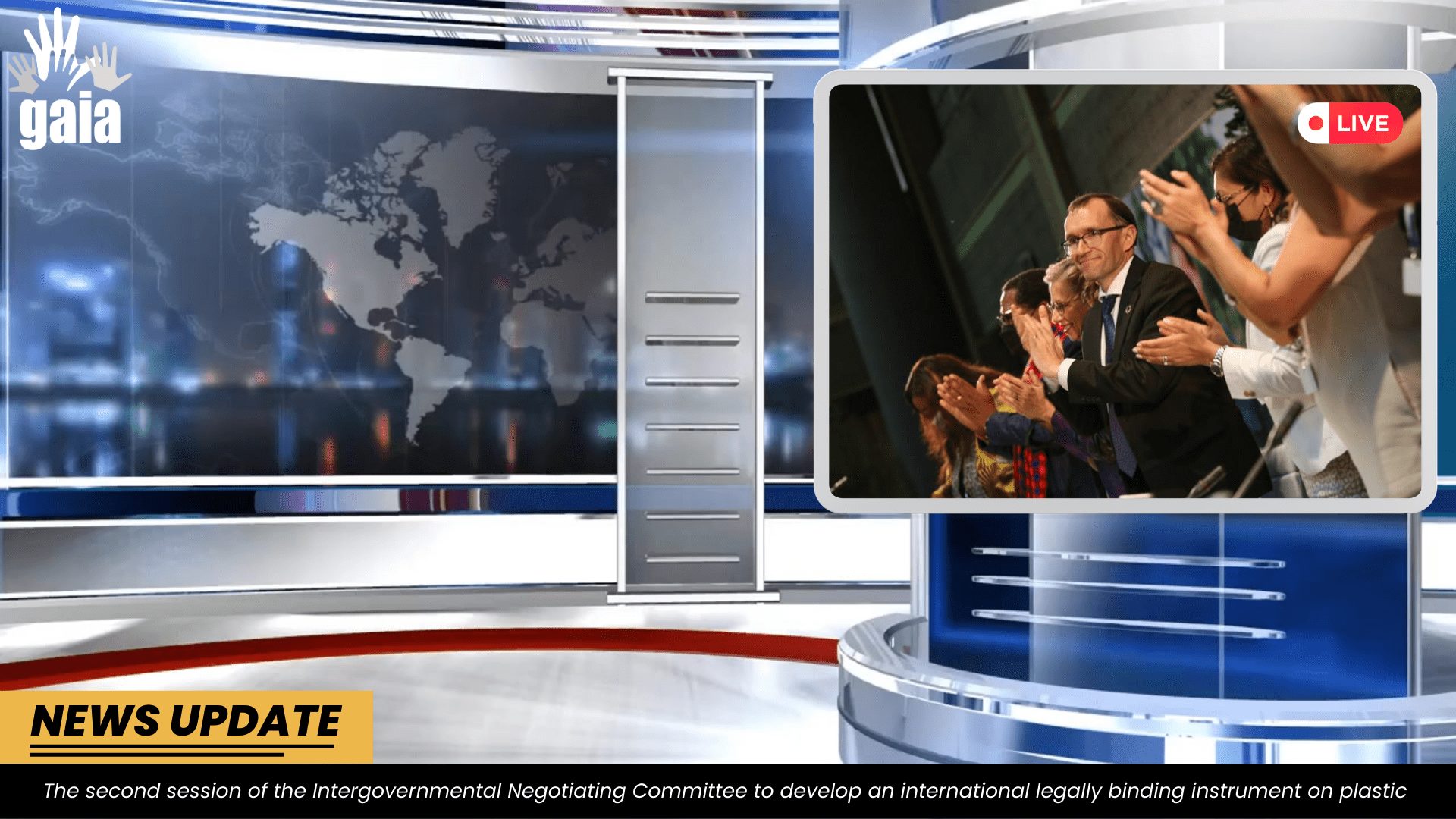
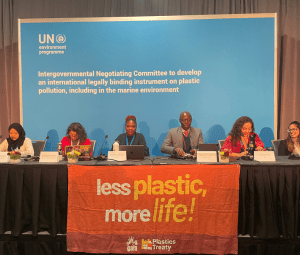
The fifth and last scheduled session of the Intergovernmental Negotiating Committee (INC-5) for an international instrument on plastic pollution was suspended in the early hours of December 2nd. This was a result of an ineffective process – which allowed a handful of countries to block progress—there is much to be hopeful for.  

Since the negotiations began two years ago in Punta del Este with INC-1, INC-2 in Paris, INC-3 in Nairobi, and INC-4 in Ottawa early this year, the petrochemical, plastic polymer and chemical industry’s influence has been a dark shadow preventing fruitful discussions. Precious negotiation time was wasted in the first two INCs on procedural issues. At INC-3, the same bad faith negotiators exposed themselves as the like-minded group of countries who ensured that all decisions were made through consensus alone, this gave veto power to any country to object and thereby block finalization of the text. 

The result is that even after five rounds of negotiations, divergences in opinion remained and lack of consensus meant that no agreement was reached at INC-5.

But we have much to celebrate! 

Over 100 countries, including PSIDS, New Zealand, Australia, Philippines and Bangladesh, EU, Ecuador, Ghana, and Rwanda came together for the first time in the negotiations to demand a treaty with binding targets on plastic polymer production. Their collective stance sent a powerful message: “No treaty is better than a weak one.” Civil society’s steadfast support was instrumental in fueling their resolve.

A call for reform

One of the major takeaways was frustration from nearly all delegations—both progressive and otherwise—at the slow pace of negotiations. The need for a more inclusive, transparent process was a concern raised by all. Civil society, rightsholders, Indigenous Peoples, Waste Pickers, and scientists were excluded from the discussions for over 2.5 days as the Chair resorted to informal, bilaterals, and informal informal as a last resort to get countries to reach an agreement. 

So, what’s next?

INC-5 was suspended, which would mean it will continue as INC-5.2, with the Chair’s text released on December 1 as the basis for negotiations. Since the negotiations are based on consensus-based decision-making – “Nothing is agreed until everything is agreed.” This means the entire text is still bracketed (indicating lack of agreement) and subject to change at INC-5.2. However, we have a new starting point. Details about the location and date of INC-5.2 will likely be decided by January 2025.

Where should our energy lie?

Remind your INC country focal points that progress will only happen if the process is fixed, voting is called or we will go in circles forever. The plastic crisis demands urgent action! We cannot allow more time to be wasted. We must continue to support our champion countries and High Ambition coalition who stood courageously in the face of bullies. We must demand meaningful participation of all states, rightsholders, and civil society. 

Something to look forward to in 2025

The fight against plastic pollution is at a critical juncture. The urgency of this triple planetary crisis—impacting biodiversity, climate, and human health—demands bold, unified action. INC-5 ended in tears, but they were tears of resilience and hope.

As we prepare for 2025, let us build on this momentum. INC-5  has shown that the majority of countries do not want a weak treaty and are not going to compromise just to get a text over the line. Let’s continue to demand an ambitious, binding treaty that addresses the plastic pollution crisis!

Thank you for all your commitment and support. We’ll keep you updated on the next steps as they unfold in the coming weeks.

Our goals for the global plastics treaty are: 

  1. Address plastic pollution across the full life cycle of plastics, starting with extraction of fossil fuels, as mandated by UNEA resolution 5/14

  2. Center the treaty on the principles of human right to a clean environment, human right to health and environmental justice

  3. Recognize the role of Waste Pickers, informal workers and all affected communities especially Indigenous Peoples & Global South communities through Just Transition

  4. Agree on phasedown of plastic production through binding global and national targets

  5. Traceability and transparency of chemicals present in plastics to ensure safe standards for redesign, recycling and reuse and  phasing out hazardous chemicals including polymers based on a hazard & group based approach

  6. Define environmentally and socially-sound management of plastic wastes that upholds environmental justice and human rights and protects planetary boundaries

  7. Binding global design, reuse, EPR and environmentally and socially-sound waste management standards and targets, periodically-strengthened based on latest independent evidence

  8. Set up a new dedicated fund for treaty implementation and compliance that excludes funding for plastic credits, dodgy accounting schemes and polluting technologies

  9. End cross-border trade in plastic waste

  10. Hold polluters and producers accountable through global standards for Extended Producer Responsibility (EPR), and a Global Plastic Pollution Fee on polymer producers

  11. Only specific and time-bound exemptions, no blanket exemptions

  12. Prevent regrettable substitutes such as bio-based and compostable plastics

Resources: 

Zero Waste Academy: The Global Plastics Treaty Track

GAIA Asia Pacific and the Global plastics team are inviting participants to join the Global Plastic Treaty track under the Zero Waste Academy’s policy and advocacy track online. The program aims to provide knowledge and tools for engaging in the Global Plastic Treaty process and will include lectures, seminars, live discussions, and interactive sessions. The track consists of a general/core phase, followed by cross-cutting themes and a specialization phase, culminating in a campaign proposal for national advocacy and movement building. The track is asynchronous, and participants can complete it at their own pace. Register here: https://forms.gle/Q4nzhLTkWkeWbV629


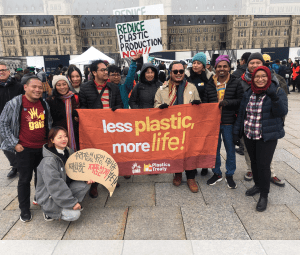
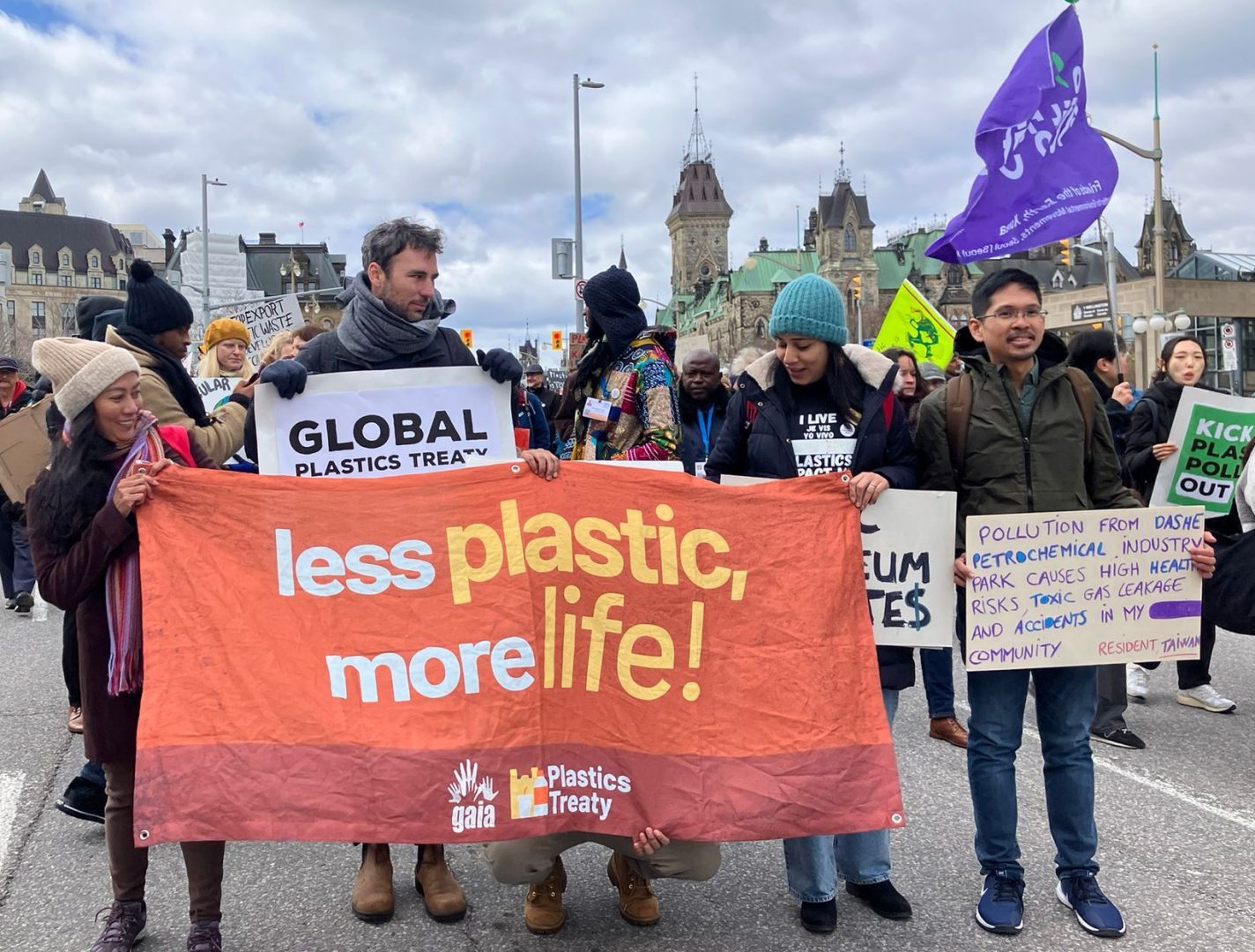
Ahead of the crucial fourth session of the Intergovernmental Negotiating Committee (INC-4), hundreds of activists, indigenous leaders, and environmentalists gathered in Ottawa to demand strong actions against plastic pollution as part of a proposed Global Plastics Treaty.
Cookies designed to look like plastic credit cards
Civil society groups employ striking tactics, such as distributing cookies shaped like credit cards, to emphasize that people consume the equivalent of a credit card’s weight in plastic each week, advocating for significant reductions in plastic production at INC-4.
On the closing day of the fourth session of the #GlobalPlasticsTreaty negotiations, GAIA brought voices from the Global South into the spotlight. From Kenya to Chile to Indonesia, community leaders shared heartfelt stories of their battles with plastic pollution and waste colonialism.
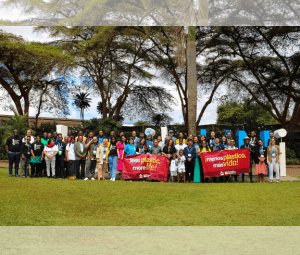
As the third Intergovernmental Negotiating Committee (INC) on Plastic Pollution kicks off in Nairobi, Kenya this November, GAIA and various civil society organizations join forces to champion a strong and binding Global Plastics Treaty.
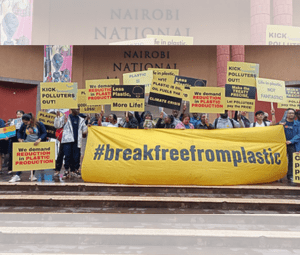
On November 12, Break Free From Plastics walked the streets of Nairobi in a Movement March organized by Zero Waste Durban, Kenya National Waste Pickers Welfare Association, Fridays for Future Kenya, and Greenpeace Africa, calling for a strong Global Plastics Treaty that drastically cuts plastic production.
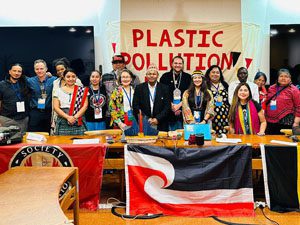
At the Indigenous Peoples INC CAUCUS Side Event during INC-3 in Nairobi, Kenya:
Indigenous voices resonate as they unveil the impact of colonialism, capitalism, and plastic pollution on their communities and ecosystems.
Representatives from civil society organizations in the Global South provide perspectives on the second session of the Intergovernmental Negotiating Committee on Plastic Pollution.
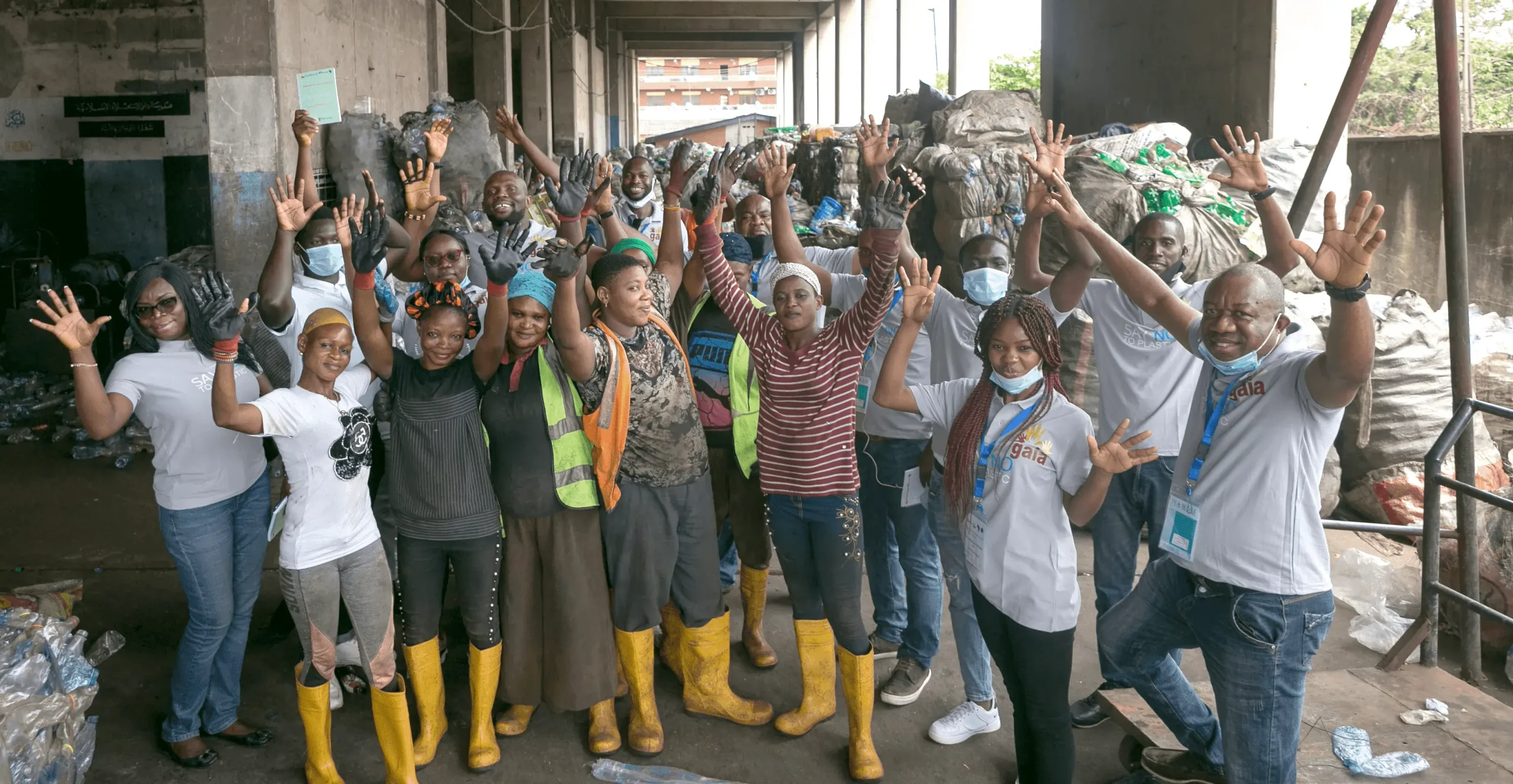
Campaigners and waste pickers from across the world made their voices heard outside the UN Global Plastics Treaty negotiations.
Indigenous peoples hailing from diverse corners of the globe organized a side event where they released their demands, urging nations to embrace a comprehensive and binding treaty that effectively tackles the urgent plastic pollution crisis.

No More Excuses, ADB! Prioritize Sustainable Solutions and Stop Funding Harmful Waste-to-Energy (WtE) Incinerators

02 May 2023 –  The Asian Development Bank (ADB) is increasingly promoting waste-to-energy (WtE) projects in its energy and urban development portfolios as a way to achieve low-carbon economies and sustainable cities. However, according to GAIA Asia Pacific, this approach will have negative consequences for the environment and informal workers in the waste sector in the region. They are likely to be the hardest hit by the Bank’s preference for WtE incinerators as a waste and climate solution.

After months of civil society campaigning on the environmental and social risks of WtE, ADB has approved its Energy Policy aimed at supporting low-carbon transition in the region still identifying WtE as a priority investment but emphasizing that priority goes to reducing waste generation, then exploiting the options for reusing and recycling materials, then using waste to recover energy or usable materials and securing livelihoods . However, ADB approved a 20 million USD loan for a WtE project in Binh Duong Province, Vietnam without clearly following the order of priority. This is very disappointing because ADB’s previous 100 million loan WtE project in Can Tho (Vietnam) has failed to comply with its safeguards policy, particularly on dioxins monitoring — a highly toxic substance acknowledged by the Stockholm Convention and the World Health Organization (WHO).  WtE incinerators also figure as a replacement fuel in ADB’s Energy Transition Mechanism (ETM) for repurposing of early-retired coal-fired power plants. 

WtE incinerators displace waste pickers that provide important roles in the segregation, collection, transport, storage, and recycling of waste. WtE plants are designed to operate and burn resources for at least 20 years. They are highly dependent on dry, mostly recyclables, especially plastic — which is derived from fossil fuels.  They rely on income from selling recyclables and as a result, divert waste from landfills causing environmental pollution and methane emissions. “In some cases, the establishment of WtE incinerators can also lead to the displacement of waste pickers from their homes and communities, exacerbating their already precarious economic situation,” said Yobel Novian Putra, GAIA Asia Pacific’s Climate and Clean Energy Campaigner.  

The ADB must prioritize sustainable waste management solutions such as composting, recycling, and waste reduction programs. These solutions not only reduce the amount of waste sent to landfills or incinerators, but they also create local job opportunities and reduce greenhouse gas emissions. Furthermore, prioritizing sustainable solutions empowers communities to manage their waste and supports the informal waste sector, creating a more equitable and just transition.

“Financing for WtE incinerators works against waste pickers. ADB must recognize the rights of waste pickers including their historical, social, and economic contributions they provide to society. To date, ADB’s WtE incinerator and waste management projects have not considered the impacts of their interventions on waste pickers’ livelihoods,” said Kabir Arora, National Coordinator of the Alliance of Indian Waste Pickers. “Instead, they must support communities’ efforts towards recognition of waste pickers and a full range of programs to ensure that interventions are fair for waste pickers. 

AIW stressed that ADB’s just transition program must emphasize supporting waste pickers and other workers who are most vulnerable to occupation disruption from waste management investments and climate change. It must build and improve upon systems that waste pickers have already established while guaranteeing, better and decent work, social protection, more training opportunities, appropriate technology transfer, support for infrastructure and organizing of workers, and greater job security for workers at all stages of the waste sector. Arora further added that waste pickers groups must be part of the design, monitoring, and evaluation of projects. 

Putra stressed, “WtE incinerators are not a solution to the pressing issues of waste and energy. They release nearly 1.1 tonnes of carbon dioxide (CO2) into the atmosphere for every tonne of waste burnt. In many studies, an incinerator emits more greenhouse gas than a coal-fired power plant.” 

These emissions also pose serious health risks to nearby communities, emitting harmful pollutants such as dioxins, furans, and heavy metals, which can cause respiratory problems, cancer, and developmental disorders. Moreover, the toxic ash and other waste products generated by such facilities pose a significant challenge to safe disposal.

Investing in WtE incinerators comes at a significant financial cost, increasing waste management expenses, and posing a significant financial risk to cities and municipalities. Taxpayers bear the burden of these costs through false subsidies taken from national and local government budgets to sustain the operation of incinerators for 20-25 years.

Further, Deputy Director of GAIA Asia Pacific Mayang Azurin argued for the urgent need to redirect funding towards sustainable solutions. “Continued financing of WtE incinerators, carbon storage, and other false solutions is not the path to decarbonization and Asia’s recovery and energy transition,” she said. “There is no time to waste. It is urgent that we prioritize the health of our planet and communities over corporate interests.”

GAIA AP urges ADB to reaffirm its commitment to sustainable development and shift funding towards proven zero waste solutions. GAIA calls ADB to cease funding harmful waste-to-energy incinerators and prioritize sustainable waste management solutions that empower communities and protect the health of the environment and communities.

SOURCES: 

Arora, K. (2022 October 4). Global Plastics-Treaty: Waste Pickers Ready to Talk. WIEGO

Coca, N. (2022 October 24). Why informal workers are opposing waste-to-energy technology in South-East Asia. Equal Times. Last accessed 2023 April 24.

GAIA (ND) The Hidden Climate Polluter: Plastic Incineration. GAIA. Last accessed 2023 April 24

GAIA (2012 February). Incinerators: Myths and Facts About Waste-to-Energy Incinerators [Fact Sheet]

GAIA (2018 Nov). ADB & Waste Incineration: Bankrolling Pollution, Blocking Solutions. 

GAIA (2022). Zero Waste to Zero Emissions

IJgosse, J. (2019 August). Waste Incineration and Informal Livelihoods: A Technical Guide on Waste-to-Energy Initiatives. WIEGO. 

IPEN (2017 April 200)  Toxic Ash Poisons Our Food Chain. Last Accessed 2023 April 24.

Muffet, C., Bernhardt, C., Kelso (2019 May 15). The Hidden Cost of Plastic. CIEL

NGO Forum on ADB. (2021 October 18). NGO Forum on ADB’s Critique of the ADB’s 2021 Energy Policy Working Paper. Last accessed 2023 April 24.

Robb. E., (2020 September 2020) No Time To Waste: The Climate Impacts of Incineration and Waste-to-Energy. Zero Waste Europe. Last accessed 2023 April 24

Roberts-Davis, T.L., (2022 December) The Asian Development Bank’s Transition Mechanism. Fair Finance Asia and the NGO Forum on ADB.

RELATED NEWS:

Zero Waste Asia Newsroom: #ADBIncheon Updates #1

Zero Waste Asia Newsroom: #ADBIncheon Updates #2

Zero Waste Asia Newsroom: #ADBIncheon Updates #3

NGO Forum on ADB: Civil Society Groups Speak Out at ADB Annual Meeting

The Reality of AID Network: More than a hundred CSOs demand people-centered solutions over intersecting economic, development and climate challenges

Relief Web: CSO Collective Statement for the 56th ADB Annual Meeting

We, the undersigned alliances and organizations, are deeply concerned about the integrity of the statements recently released by the Japan International Cooperation Agency for its lack of accountability on past and present efforts in promoting and investing in false solutions to waste management and climate in Davao City. In the articles, it has disclaimed its support for the WTE incinerator project as it impedes the rights of affected communities to receive adequate information, to be heard, to seek redress and file complaints to accountable institutions.

Since 2010, JICA has been instrumental in the entry of Waste-to-Energy (WTE) incinerators in Davao City. The development assistance which began as a Collaboration Program with the Private Sector for Disseminating Japanese Technology[1] commenced in March 2018 with the signing of the Japanese Government and the Republic of the Philippines of a grant agreement worth PhP 2.052 billion to fund the construction and operation of a PhP 5.23 billion WtE incinerator in the City. The remaining project cost of around PhP 3 billion will be covered by the Philippine Government which was already requested for release through a resolution by the Davao City Council in August 2022 — an amount equivalent to more than 60 percent of the entire annual budget of the Department of Environment and Natural Resources.

The feasibility report of the WTE project in Davao[2] stressed that the absence of prior experience in managing and operating WTE facilities is a big hurdle in the Philippines, and the limited capacity of the municipality to cover the cost of waste treatment with WTE technology. It also added that proper legal and regulatory scheme are all required to implement the first project of full-scale WTE facility[3].

These statements indicate a recognition of the legal barriers put in place by the Filipino people through our Congress to safeguard our health and the environment as stated in the Clean Air Act and the Solid Waste Management Act.

Yet, JICA has continued promoting its Japanese technology despite a standing legal ban on incinerators now being defended by environmental advocates in the Supreme Court and in the midst of City-wide opposition to the project. JICA’s assistance flowed to systematically undermine the policy barriers for the entry of this Japanese technology into our waste management system. JICA has directly engaged in the development of waste management guidelines, supported interagency meetings to discuss implementation arrangements for its project[4], and facilitated learning tours of government officials and waste regulators to WTE incinerator sites in Kitakyushu City, Japan. This cooperation continued without access to information and meaningful consultations that city residents have continued to oppose[5].

As rightly identified in the feasibility study, 50% of the area is afforested or tropical forest of which 43% is used for agriculture where bananas, pineapples, coffee, and coconuts cover most of these agricultural areas. When operationalized, the WTE incinerator will produce globally known harmful byproducts such as dioxins, furans, mercury that will have dire implications to crop and soil health, air quality, the ecosystems, health and food security.

The WTE incinerator is not the answer to our City’s limited capacity for collection and segregation that was identified in the project feasibility. We would hope that development institutions like JICA see their support to capacitate our local governments to fully implement the Ecological Solid Waste Management Act and the provision of financing for existing Zero Waste systems and innovations that are deemed to be a just and more appropriate option for managing our waste.

We respectfully urge JICA to withdraw its support for Waste-to-Energy in Davao City and elsewhere in the country in respect to our ban on incinerators. We also encourage JICA to ensure transparency and accountability in their development projects to ensure that the benefits of the development vision are equitably shared with and for disadvantaged groups. ###


[1] This landing site from JICA’s website shows the agency’s involvement since 2010. https://www.jica.go.jp/english/our_work/social_environmental/id/asia/southeast/category_c.html

[2] Final Report. Collaboration Program with the Private Sector for Disseminating Japanese Technology for Waste-to-Energy system in Davao City published by the Republic of the Philippines Davao City Environment and Natural Resources Office, May 2016

[3] Fund for P2B waste-to-energy project in Davao City still available, Manila Bulletin, 22 January 2023

[4] The Project for Capacity Development on Improving Solid Waste Management through Advanced/Innovative Technologies. DENR Newsletter January 2021

[5] Petition to Davao City Council and Mayor Sebastian Duterte “No to WTE incineration in Davao! Go for genuine zero waste solutions!” by No Burn Davao

Download our Open Letter Here.

One of the leading causes of climate change is unmanaged waste and at the recently held COP27 last November 2022, the continuing struggle to reach the Global Methane Pledge, which recognizes that reducing methane, a greenhouse gas over 80 times as potent as CO2, is critical to achieving the Paris Climate Agreement’s goal of limiting global warming to 1.5˚C.

Waste is the third largest source of methane, primarily from landfilling organic waste. Tackling this greenhouse gas globally remains on the agenda of countries committed to put forward the Global Waste Initiative 50, which hopes to catalyze both adaptation and mitigation solutions by treating and recycling 50% of the waste produced by 2050. Both the Global Methane Pledge and the Global Waste Initiative 50 signal how countries are recognizing the potential of Zero Waste to help meet climate targets affordably and effectively by introducing better waste management policies.

Zero Waste, therefore, is an essential tool for climate adaptation, particularly for communities on the frontlines of the climate crisis. Approaches such as composting to reduce pollution prevents disease vectors and boosts soil resilience while also combating floods and droughts that threaten food security. Such approaches also create jobs while lowering waste management costs. These and other affordable, fast-acting Zero Waste strategies are vital and should be included in international climate financing to ensure that money is going to communities already building grassroots climate solutions, not to polluting waste management projects.

To date, more than 25 cities across the region have established Zero Waste models, showcasing innovations in source separation, organics management, materials recovery, and plastic regulation. Several of these cities have also incorporated waste assessment brand audits (WABA)*. In their baseline studies, exposing plastic waste as one of the most problematic aspects of their waste streams. With various government initiatives such as plastic bans to reduce the number of carrier bags and plastic straws, challenges in dealing with the volume of single-use plastics (SUPs) render governments to spend millions of funds in transportation costs for landfilling, or even incineration.

These pressing issues and concerns, from addressing climate challenges, reducing gaps, and highlighting impactful initiatives and policies to meet our global targets, serve as the focal agenda in this year’s International Zero Waste Cities Conference 2023 (IZWCC 2023). Held previously in Malaysia (2019), the Philippines proudly takes on the hosting conference baton this year.

Aptly themed Zero Waste to Zero Emission, the International Zero Waste Cities Conference will gather government officials, civil society organizations, and Zero Waste communities and practitioners from cities in India, Indonesia, the Philippines, Vietnam, South Korea, the United States, Europe, and Africa in a two-day conference at Seda Hotel, Quezon City on 26 – 27 January 2023.

For details, visit izwcc.zerowaste.asia.

Zero Waste Month celebrations originated in the Philippines in 2012 when youth leaders issued a Zero Waste Youth Manifesto calling for, among other things, the celebration of a Zero Waste Month. This was made official when Presidential Proclamation No. 760 was issued, declaring January as Zero Waste Month in the Philippines. It was then promoted widely by NGOs and communities that had already adopted this approach to manage their waste.

In a time when disinformation is the norm, it has become a rare opportunity to find points of truth. Global crises, especially waste management problems, are undeniably evident almost everywhere. It continues to propagate in communities consequently affecting their environment, livelihood, and health. With the government bodies and large-scale corporations not taking action to address the problem, it becomes a vicious cycle with no clear end.

This is why in continuing the observance of the International Zero Waste Month, the Global Alliance for Incinerator Alternatives (GAIA) Asia Pacific is hosting the Zero Waste Film Fest available online and in cinemas this January. The festival screens full-length features and documentaries as well as short films from the wide network of the alliance: Philippines, Bangladesh, India, Indonesia, and Malaysia, to mention a few.

With the goal to properly educate the population with science-based and community-oriented facts, the stories examine the roots of the waste pollution and how community members are fighting for their lives to make changes. It also solidifies GAIA’s vision that Zero Waste is possible when communities and the government work together through a number of case studies from across the Asia Pacific region.

“We hope to make this more than just an eye opener but also a trigger for people to tap on their communities and knock on businesses and corporations so they can start making changes towards the Zero Waste vision. The answer is already there, we just have to utilize resources and help everyone know that there are alternatives to polluting systems.” Froilan Grate, GAIA Asia Pacific Coordinator said. The alliance believes that with an improved mindset and action towards waste management, there is great opportunity for greater problems to be solved such as that of climate challenges.

Stream the featured films of the virtual film fest via Zero Waste TV from January 9 to 31, 2023. Join in the fun of watching it on the big screen with like-minded game changers on January 27, 2022, 6 to 9:30 PM at Trinoma Activity Center in Quezon City.

Zero Waste Month celebrations originated in the Philippines in 2012 when youth leaders issued a Zero Waste Youth Manifesto calling for, among other things, the celebration of a Zero Waste Month. This was made official when Presidential Proclamation No. 760 was issued, declaring January as Zero Waste Month in the Philippines. It was then promoted widely by NGOs and communities that had already adopted this approach to manage their waste.

***

GAIA is a network of grassroots groups as well as national and regional alliances representing more than 1000 organizations from 92 countries. For more information, visit www.no-burn.org and zwmonth.zerowaste.asia or follow GAIA Asia Pacific on social media: Facebook, Twitter, Instagram, YouTube, and TikTok.

CONTACT

Sonia G. Astudillo, Senior Communications Officer, +63 9175969286, sonia@no-burn.org

Dan Abril, Communications Associate, dan@no-burn.org

Exposing the truth behind the plastic crisis through a brand audit 

The Global Alliance for Incinerator Alternatives (GAIA) Asia Pacific took a bold step forward in unveiling the truth behind the plastic pollution crisis through a waste assessment and brand audit (WABA)* and media briefing event on January 24, 2023 as part of International Zero Waste Month 2023. 

With participation from Ocean Conservancy, this event shed more light on the narrative impact of the GAIA network’s brand audits. Ocean Conservancy had published a report in 2015* that put blame on Asian countries as the main drivers of plastic pollution in the ocean and positioned incineration as a solution to the plastic crisis. They retracted the report in July 2022, recognizing the harm it caused.

“We, at the Global South, have carried the weight and responsibility of waste for too long while our reality and the community solutions we have developed are ignored,” said Froilan Grate, GAIA Asia Pacific Coordinator.  “This brand audit with GAIA, Mother Earth Foundation, Ecowaste Coalition, and Ocean Conservancy shows the commitment to work towards reducing waste, moving away from false solutions, acknowledging the work happening on the ground, and most important, restoring justice where it was previously overlooked.”    

Since Ocean Conservancy’s retraction of the report, the two organizations have been engaging in a restorative justice process to acknowledge and address the harm done by the report, and join forces to expose false solutions and drive accountability among plastics producers. 

“We cannot solve the plastic pollution crisis without reducing virgin plastic production, especially single-use plastics,” said Nicholas Mallos, Ocean Conservancy’s  Vice President of Ocean Plastics. “This has to be our first priority. We are grateful for the incredible work that GAIA has done to shed light on this issue, and hope to learn from their members. We look forward to working together by leveraging each of our organizations’ strengths to eliminate plastic pollution.”  

For years brand audit reports have shown that consumer brands based in the Global North have been overproducing single-use plastics and flooding Asian markets with disposable, throwaway packaging, at the expense of citizens and local governments who end up footing the bill and enduring the long-lasting environmental health effects associated with plastic pollution. 

Von Hernandez, Global Coordinator of the #breakfreefromplastic movement said, “For years, the public has been conditioned to believe that the problem of plastic pollution, now manifesting in the unprecedented, pernicious, and wide-ranging contamination of all life on the planet, was caused by their undisciplined ways and the failure of governments to institute and implement proper waste management systems. Our brand audits have now exposed the real causes of this crisis – and it is mainly due to the irresponsible and predatory practice by corporations of saturating our societies with single-use plastics of all kinds with no consideration about how they can be managed in an environmentally safe and benign manner.” 

“In addition,  Ecowaste Coalition campaigner Coleen Salamat said that, “The real issue is the export of waste and waste-to-energy (WtE) incineration technologies to developing countries,” In the Philippines and in the rest of Asia, “We are faced with truckloads of waste that we have no means of handling. From products packed in sachets to WtE incineration projects, and waste colonialism* has sadly become a norm.” 

“It is never too late to turn things around. Communities around the world are discovering the power of Zero Waste solutions. Through the restorative justice process, we will continue to expose the truth of the waste crisis and it will be more than just a wake-up call to fast-moving consumer goods (FMCGs) and purveyors of false narratives, but cold water splashed over their faces,” said Grate. “The Zero Waste solutions that we have and been doing all these years will be enough for our lawmakers to rethink their policies to turn the tide against waste and the climate crisis.” 

***

* Waste Assessment and Brand Audit (WABA) is a methodical process of collecting and analyzing waste to determine the amount and types of waste generated by households and cities and identity which brands are responsible for producing certain percentages of the collected waste. Plastics Exposed details how waste assessments and brand audits help Philippine cities tackle plastic waste. 

* In 2015, the  US-based non-profit Ocean Conservancy published the report, Stemming the Tide. This has since been retracted by Ocean Conservancy.  

* Waste colonialization is the practice of exporting waste, from the higher-income countries to lower-income countries who are ill-equipped to handle this waste which places the burden of plastic and toxic waste on the environment, communities, and these countries’ informal waste sector, especially in the Global South.   

On January 9, 2023, the Global Alliance for Incinerator Alternatives (GAIA) Asia Pacific together with Ecowaste Coalition and the Interfacing Development Interventions for Sustainability (IDIS) – Davao and in partnership with Ecoteneo, Masipag Mindanao, Panalipdan Youth-Davao, and Saligan-Mindanaw stood together with affected farmers, residents, and concerned members of the community as they opposed the pending construction of a waste-to-energy (WtE) incinerator in Davao City.

In August last year, the City Council of Davao unanimously approved a WtE facility funded by the Japan International Cooperation Agency (JICA) despite a national ban on incineration as provided for by the Ecological Solid Waste Management Act and the Clean Air Act. Proposed to be constructed on ten hectares in Barangay Biao Escuela in Tugbok District, the facility will stand close to the barangay’s school, agricultural lands, and a few hundred meters away from the relocation site of the affected communities.

During a people’s forum held in January 9, the organizations have spoken out against the city government’s plan for a WtE incinerator, stating that the facility will only impact people’s health and Davao’s rich biodiversity, particularly its already fragile watersheds.

According to Gary Villocino of Masipag, a network of farmers in Davao, “The construction of this facility will not only be dangerous to people’s health but will also destroy valuable agricultural land. Land that could be used to cultivate resources for the community.”

Mark Peñalver of IDIS-Davao adds, “When it comes to WtE incineration, the bottom line is this: not only is it a dangerous way to produce energy, it’s also incredibly harmful to the environment. What’s more, incineration is not a renewable or sustainable energy source. In fact, it actually produces more greenhouse gasses than coal. So not only is incineration a bad choice for the environment, but it’s also not a wise choice from a climate perspective.”

Randy Catubag Irog of the Mintal Resource Collectors Association (MiRCA) in Barangay Mintal, despite fearing repercussions for disagreeing with the project, stated his disapproval and highlighted that there are more sustainable approaches that are helpful to the community and the environment. “We collect recyclables and sell them for profit and WtE will only teach future generations to be lazy as it undermines recycling efforts if waste can be simply burned away.”

Communities cited that the City’s waste composition is 50 percent organic waste which cannot be burned in the proposed type of WtE technology. Advocates point out that the WtE project is also not a financially viable project for JICA, the city government and the private sector.

Peter Damary of the start-up enterprise, Limadol, shared that Davao needs to focus on segregation at source. “Davao’s case, around 50 percent of waste is composed of food waste. If removed from the waste stream through composting, it eases the burden on landfills and leaves other waste available for recycling. Further, the environmental value composting contributes to methane reduction can not be ignored.”

Citing the efforts of other barangays in the country, GAIA Asia Pacific’s Zero Waste Coordinator in the Philippines, Archie Abellar shares that individuals and communities in Davao are similarly gradually adapting Zero Waste strategies to combat waste. From composting to opting for refills instead of single-use plastics or sachets, there is a conscious effort from the grassroots to veer away from practices that harm the planet.

He concludes, “WtE incineration is a band-aid solution and will only make matters worse in the long run. JICA has not examined existing options on waste management in the City and have promoted an expensive and harmful technology. We call on JICA and the local government to support zero waste systems as they offer inclusive, effective and sustainable approach to the City’s waste problem .”

###

Zero Waste Month celebrations originated in the Philippines in 2012 when youth leaders issued a Zero Waste Youth Manifesto calling for, among other things, the celebration of a Zero Waste Month. This was made official when Presidential Proclamation No. 760 was issued, declaring January as Zero Waste Month in the Philippines. It was then promoted widely by NGOs and communities that had already adopted this approach to manage their waste.

***

GAIA is a network of grassroots groups as well as national and regional alliances representing more than 1000 organizations from 92 countries.

For more information, visit www.no-burn.org or follow GAIA Asia Pacific on social media: Facebook, Twitter, Instagram, YouTube, and TikTok.

CONTACT

Dan Abril I Communications Associate I Global Alliance for Incinerator Alternatives (GAIA) – Pacific I dan@no-burn.org I +63917 419 4426

Archie Abellar I Zero Waste Philippine Coordinator I Global Alliance for Incinerator Alternatives (GAIA) – Pacific I archie@no-burn.org I +63908 770 0681

Environmentalists worldwide are stepping up their efforts to call businesses and global leaders to phase out single-use plastic (SUP) to address plastic pollution and the climate crises. Onsite and online actions are organized in key cities around the world on January 6 to mount the Refuse Single Use Day.

Led by the Global Alliance for Incinerator Alternatives (GAIA), Zero Waste youth, and their allies expressed their demand to eliminate the production of SUPs. Around 400 million tonnes of plastic are produced every year, yet less than 10 percent are recycled. Continued plastic production and consumption heats up global climate temperatures, depletes our resources, intoxicates the environment and creates public health issues, feeds incinerators, and chokes landfills and oceans. The most problematic form of plastic is SUP meant for one-time use such as cups, cutleries, bottle drinks, plastic stirrers and plastic bags.

Refuse Single Use Day is the opening of International Zero Waste Month (IZWM) as GAIA together with its members and allies, doubled down on their commitment to creating a global movement that puts an end to waste pollution. The IZWM is a historic moment for the movement, built on its decades-long campaign to design and manage products and to avoid and eliminate the volume and toxicity of waste materials.

Back in 2014, then Philippine President Benigno “Noynoy” Aquino III designated the month of January of every year as National Zero Waste Month through Presidential Proclamation No. 760. The observance also coincides with the signing anniversary of the Philippine Republic Act 9003 known as the “Ecological Solid Waste Management Act of 2000”. Both efforts were envisioned to address waste pollution.

Fast forward to 2020, GAIA Asia Pacific led the Zero Waste Month celebration in the region culminating in a global celebration this 2023.

Kicking the month-long celebration of Zero Waste wins, the 1st ever Refuse Single-Use Day is envisioned to galvanize leaders to declare a phase-out of SUPs and craft an ambitious Global Plastics Treaty. Refuse Single-Use Day is designed to coincide with the IZWM to underscore the importance of paving the path towards a Zero Waste future.

With the theme Zero Waste to Zero Emissions, this month-long celebration hopes to highlight the connection between waste and climate, and highlight proven Zero Waste solutions as powerful climate action. Implementing Zero Waste strategies can reduce overall greenhouse gas emissions from waste of up to an average of 84%.

This Refuse Single-Use Day, GAIA Asia Pacific is posing the challenge not only to individuals but also to communities, organizations, and institutions to take the pledge and take action for the environment. It’s time to refuse and say no to single-use cups, cutlery, plastic bags, and more. Share your stories on our Facebook page. https://web.facebook.com/refusesingleuseday

***

GAIA is a network of grassroots groups as well as national and regional alliances representing more than 1000 organizations from 92 countries. For more information, visit www.no-burn.org or follow GAIA Asia Pacific on social media: Facebook, Twitter, Instagram, YouTube, and TikTok.

CONTACT

Sonia G. Astudillo, Senior Communications Officer, +63 9175969286, sonia@no-burn.org

Dan Abril, Communications Associate, dan@no-burn.org

Interview with Jane Bremmer by Dan Abril

Photo courtesy of the Alliance for a Clean Environment (ACE)

Jane Bremmer is one of Asia Pacific’s prominent and outspoken environmental advocates. However, with two Arts degrees and a Sound Design major, her involvement in environmental activism was something she didn’t quite expect or envision. She shares, “We had just moved into an old house with our 4-month-old baby and we were planning on a ceramics business when we discovered we were living next door to Western Australia’s worst contaminated site – a massive 38000 m3 pit of waste oil.” 

Heavily involved in social activism back in university, Jane was not the type to hold herself back; and so, together with others in the community, they formed a group and managed to get the site cleaned up and relocate those residents most affected by the contamination.

Known then as The Bellevue Action Group, it soon joined with other communities facing environmental justice threats and morphed into the Alliance for a Clean Environment (ACE) 

25 years later, the alliance has seen ordinary folks become heroes: from holding industrial polluters to account to getting involved in campaigns against waste-to-energy (WTE) incinerators, and climate change.  As ACE’s pioneer, Jane Bremmer sat with us to discuss the joys and challenges that come with coordinating and leading such an alliance.  

What are ACE’s main ongoing campaigns? 

ACE continues to support environmental justice communities facing pollution threats. In addition, we have two large WTE incinerator proposals here in Western Australia (WA) and so to counteract their waste disposal narrative, we are focused on supporting Zero Waste Campaigns here. 

Aside from that, we are also working on the impacts of pesticide use in both agricultural and urban environments.  A lot of people are interested because they are tired of seeing children’s playgrounds drenched in pesticides.  

What are your biggest accomplishments/achievements?

Our campaign on contaminated sites resulted in the state government introducing the first-ever Contaminated Sites Act. This was a great achievement and outcome for our campaign, ensuring no community in the future would face the same situation.

ACE was also able to prevent a fifth brickworks from being built in an already heavily industrial-impacted neighbourhood where air quality had long been compromised. We consider that every time that our government listens to us, and acts to protect our health and environment,  it is a win for us!

In 2005, ACE was also bestowed with a Sunday Times Pride of Australia Award for the Most Outstanding Environment Work Award. 

Photo courtesy of the Alliance for a Clean Environment (ACE)

What challenges are you facing?  How is your work impacted by the COVID crisis?

ACE is a very independent voice and one of the significant challenges of an environmental justice campaigner is that you are often criticizing corporations and the government – and that is not a great way to make friends or get funding. In WA, mining corporations fund everything, even the academe is very industry-captured here and as such, it is very difficult for us to get the financial support we need. 

Another concern is that the world is changing very rapidly and people have less time now and people are feeling jaded and cynical. Compared to 20 years ago, people were more willing to take action and get involved in their local communities to defend their health and environment. Today, people are less interested and often accept government and industry platitudes without question. 

Our working model is to focus on providing resources that frontline communities need to raise awareness and engage their own communities and connect with experts and other contributors. 

COVID posed another problem, people became reluctant to meet – Australia has been so lucky dealing with the pandemic but I understand that the pandemic caused so much stress to so many other people, especially in the Asia Pacific (AP) region. 

What are the main environmental issues that your country/region is facing?

There are many issues but climate change is right at the top. The fossil fuel industry, the petrochemical industry, and the pesticide industry are a deadly trio that wreaks havoc on climate, economics, trade, and people’s health. 

How do you see your organization’s work evolving in the next years? 

ACE is currently considering its future right now. Our membership often fluctuates according to the campaign – so whether we will still be ACE in 10 years or evolved into another organization, I don’t know. People retire and move on.  My hope is that I will see me and my colleagues in our old age sitting in the back while all these awesome, young, energetic campaigners will take up the reins and lead ACE forward. Whatever happens in the future, ACE will still be around in some shape or form. This oasis will always be here. 

What are your thoughts on the waste crisis that many countries in your region (and in the world) are living in right now?

Every single state in Australia is facing an incinerator threat. Two big ones have already been approved in WA, while New South Wales (NSW), Victoria, and Queensland are now facing numerous incinerator threats. South Australia (SA) meanwhile, has been quietly burning waste all this time and has massive expansion plans for refuse-derived fuel (RDF). The ‘waste disposal sector’ dominates in Australia driving a narrative of false solutions like waste incineration while failing to invest in sustainable Zero Waste policies and redefining a Circular Economy to enshrine waste burning. The waste disposal industry does not talk about Zero Waste and as such, government finances are funneled into waste incinerator projects and not source segregation. 

Photo courtesy of the Alliance for a Clean Environment (ACE)

I have a bit of hope here though. Industry heads have acknowledged that they do not have a social licence to operate in Australia. When they say that, I know that we are being effective. 

While Australia’s world-first waste export ban was a step in the right direction, it is simply enabling further waste dumping in the AP region through a simple redefinition of waste as a fuel commodity that can continue to be exported. This will exacerbate the global waste crisis and push incineration projects into the AP region. This will be a disaster for our climate, health, and environment. The vulnerable equatorial region on our planet is no place for dangerous highly polluting waste incinerators. The AP region knows how to implement Zero Waste policy and have long been leaders in this area. They just need respect and support to scale up. Imagine a world without waste incinerators or coal industries!

To look at the other positives: Australia has seen some major waste policy improvements such as single-use plastic (SUP) bans, container deposit schemes, extended producer responsibility (EPR) schemes, and now has a national food and garden organics (FOGO) programme diverting this waste from landfills to composting. 

Do you collaborate with partners in other regions? If so, how?

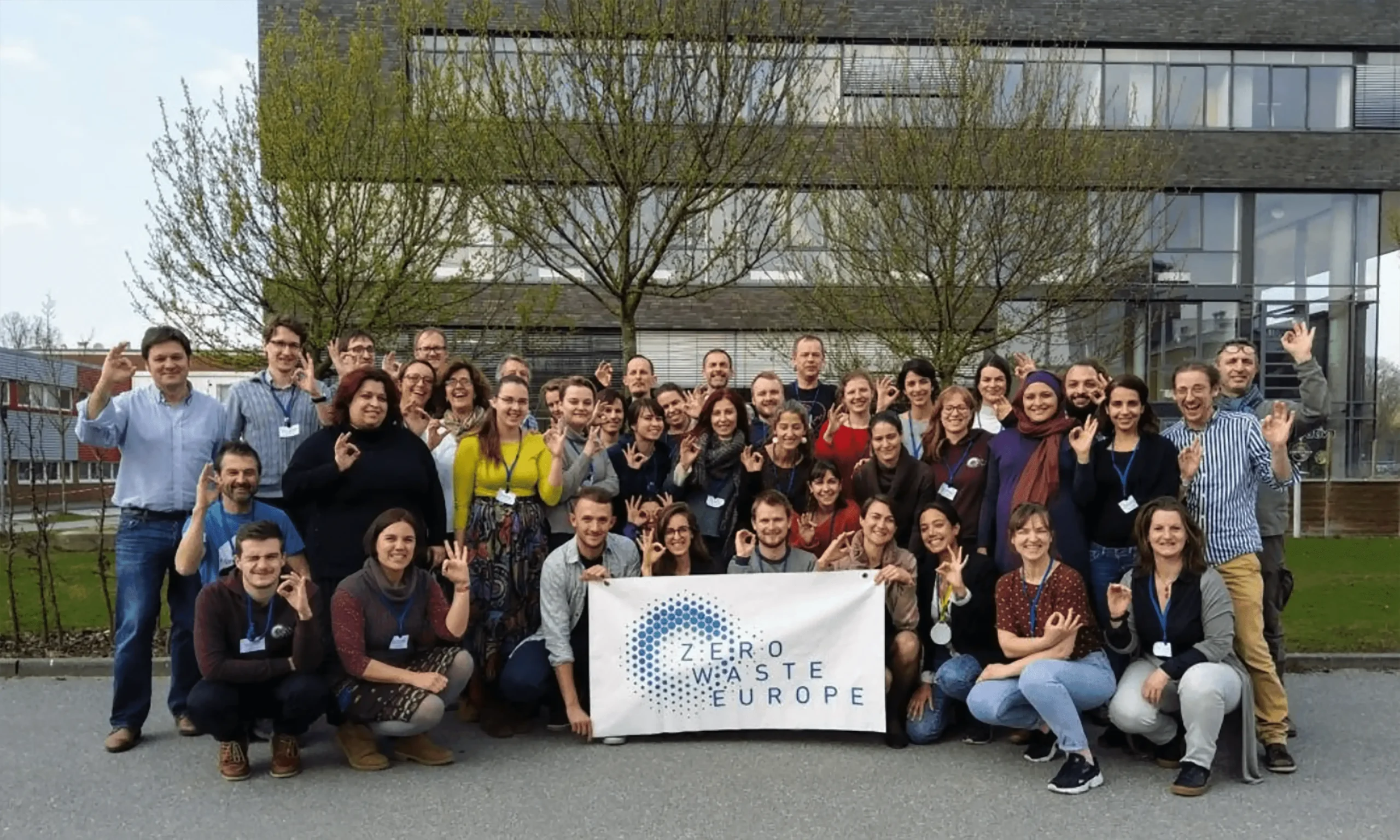
We work with a number of other organizations – from local groups such as the Conservation Council of WA to international networks as the Basel Action Network (BAN), International Pollutants Elimination Network (IPEN), Zero Waste Europe (ZWE), and of course the Global Alliance for Incinerator Alternatives (GAIA).

Photo courtesy of the Alliance for a Clean Environment (ACE)

How does your work on waste relate to social justice?

Most environmental justice threats disproportionately impact Indigenous peoples (IPs) and other minority groups and Australia is no exception.  It is well-documented that communities hosting industries in their neighborhoods are often negatively impacted by those industries. ACE’s fight against air pollution is a battle for human rights. Everyone has a right to clean air, water, and soil. 

Who do you admire most in environmental work (in your country or in the world)?

There are so many great women in Australia and around the world who work for environmental justice, whether it’s petrochemicals, pesticides or plastic. They deserve much more recognition. Noting the work of  Dr Mariann Lloyd- Smith who founded the National Toxics Network (NTN), Lois Marie Gibbs, who lifted the lid on dioxin and its impact on communities in the US, Theo Colburn and her incredible work on Endocrine Disrupting Chemicals, and  Rachel Carlson who wrote “Silent Spring”. I have come to cherish and rely on them all. 

There are lots of incredible women who are doing amazing things in environmental justice spaces and a lot of women are simply standing up for their kids and communities – and they inspire me to keep going. 

Photo courtesy of the Alliance for a Clean Environment (ACE)

The Alliance for a Clean Environment (ACE) is in need of funding to continue its work on exposing the threat of waste incinerators and its campaign against the use of pesticides in urban areas. Reach out to ACE via their website or their Facebook group to learn more.