




At INC-5, WE WON, even if they didn’t lose
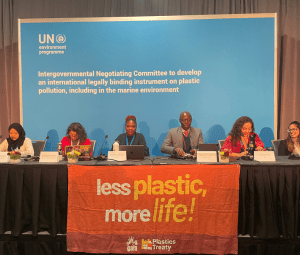
The fifth and last scheduled session of the Intergovernmental Negotiating Committee (INC-5) for an international instrument on plastic pollution was suspended in the early hours of December 2nd. This was a result of an ineffective process – which allowed a handful of countries to block progress—there is much to be hopeful for.
Since the negotiations began two years ago in Punta del Este with INC-1, INC-2 in Paris, INC-3 in Nairobi, and INC-4 in Ottawa early this year, the petrochemical, plastic polymer and chemical industry’s influence has been a dark shadow preventing fruitful discussions. Precious negotiation time was wasted in the first two INCs on procedural issues. At INC-3, the same bad faith negotiators exposed themselves as the like-minded group of countries who ensured that all decisions were made through consensus alone, this gave veto power to any country to object and thereby block finalization of the text.
The result is that even after five rounds of negotiations, divergences in opinion remained and lack of consensus meant that no agreement was reached at INC-5.
But we have much to celebrate!
Over 100 countries, including PSIDS, New Zealand, Australia, Philippines and Bangladesh, EU, Ecuador, Ghana, and Rwanda came together for the first time in the negotiations to demand a treaty with binding targets on plastic polymer production. Their collective stance sent a powerful message: “No treaty is better than a weak one.” Civil society’s steadfast support was instrumental in fueling their resolve.
- At least 126 countries supported the demand for an independent, dedicated fund proposed by Africa, GRULAC, Fiji, Cook Islands, and Micronesia– yet the Chair’s text undermines it with weak, optional language that fails to provide adequate funds for developing countries
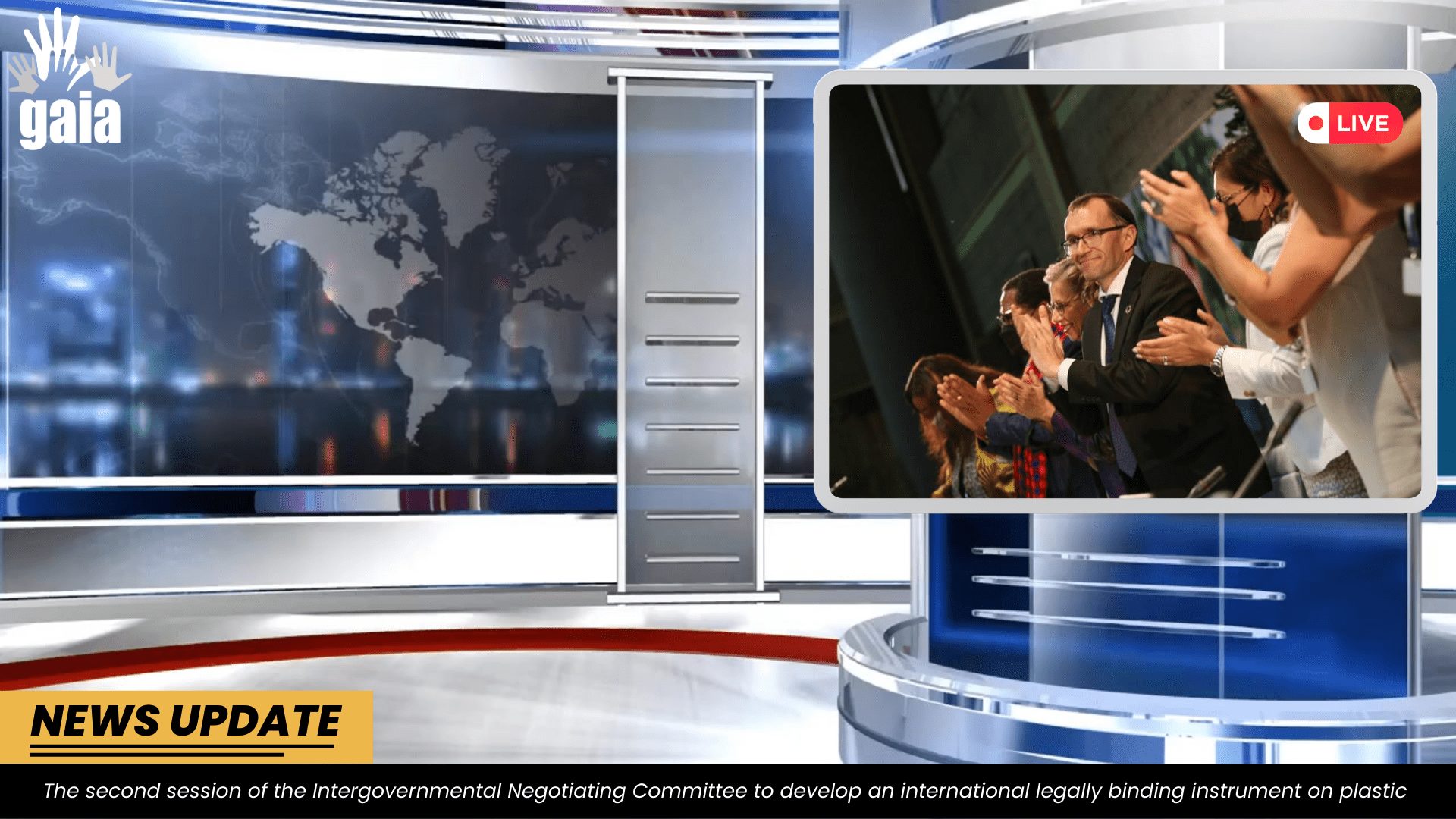
- Rwanda, speaking on behalf of 85 countries, demanded a strong treaty, receiving a standing ovation that lasted nearly three minutes.
- Mexico listed 94 countries demanding an ambitious treaty in the final plenary
- Panama’s Juan Carlos Monterrey, alongside delegates from Fiji on behalf of the Pacific Small Island Developing States, delivered powerful, heartfelt interventions that galvanized the room!
- In the Asia Pacific region, the Philippines, Bangladesh, Australia, New Zealand, Fiji, Cook Islands and the entire PSIDS emerged as champions for strong, binding provisions and targets.
- Fiji’s Hon Amenatave V Yauvoli calls out procedural processes and informal meetings which restrict the engagement of small delegations, observers, rightsholders & scientists
- Asia reclaimed itself as the home of Zero Waste solutions with multiple Reuse events and the launch of Unpacking Reuse in Asia report – a collaborative effort from GAIA and BFFP AP and Asia Reuse Consortium
- Strong reuse provision supported by Bangladesh and the Philippines
A call for reform
One of the major takeaways was frustration from nearly all delegations—both progressive and otherwise—at the slow pace of negotiations. The need for a more inclusive, transparent process was a concern raised by all. Civil society, rightsholders, Indigenous Peoples, Waste Pickers, and scientists were excluded from the discussions for over 2.5 days as the Chair resorted to informal, bilaterals, and informal informal as a last resort to get countries to reach an agreement.
So, what’s next?
INC-5 was suspended, which would mean it will continue as INC-5.2, with the Chair’s text released on December 1 as the basis for negotiations. Since the negotiations are based on consensus-based decision-making – “Nothing is agreed until everything is agreed.” This means the entire text is still bracketed (indicating lack of agreement) and subject to change at INC-5.2. However, we have a new starting point. Details about the location and date of INC-5.2 will likely be decided by January 2025.
Where should our energy lie?
Remind your INC country focal points that progress will only happen if the process is fixed, voting is called or we will go in circles forever. The plastic crisis demands urgent action! We cannot allow more time to be wasted. We must continue to support our champion countries and High Ambition coalition who stood courageously in the face of bullies. We must demand meaningful participation of all states, rightsholders, and civil society.
Something to look forward to in 2025
The fight against plastic pollution is at a critical juncture. The urgency of this triple planetary crisis—impacting biodiversity, climate, and human health—demands bold, unified action. INC-5 ended in tears, but they were tears of resilience and hope.
As we prepare for 2025, let us build on this momentum. INC-5 has shown that the majority of countries do not want a weak treaty and are not going to compromise just to get a text over the line. Let’s continue to demand an ambitious, binding treaty that addresses the plastic pollution crisis!
Thank you for all your commitment and support. We’ll keep you updated on the next steps as they unfold in the coming weeks.
Our goals for the global plastics treaty are:
-
Address plastic pollution across the full life cycle of plastics, starting with extraction of fossil fuels, as mandated by UNEA resolution 5/14
-
Center the treaty on the principles of human right to a clean environment, human right to health and environmental justice
-
Recognize the role of Waste Pickers, informal workers and all affected communities especially Indigenous Peoples & Global South communities through Just Transition
-
Agree on phasedown of plastic production through binding global and national targets
-
Traceability and transparency of chemicals present in plastics to ensure safe standards for redesign, recycling and reuse and phasing out hazardous chemicals including polymers based on a hazard & group based approach
-
Define environmentally and socially-sound management of plastic wastes that upholds environmental justice and human rights and protects planetary boundaries
-
Binding global design, reuse, EPR and environmentally and socially-sound waste management standards and targets, periodically-strengthened based on latest independent evidence
-
Set up a new dedicated fund for treaty implementation and compliance that excludes funding for plastic credits, dodgy accounting schemes and polluting technologies
-
End cross-border trade in plastic waste
-
Hold polluters and producers accountable through global standards for Extended Producer Responsibility (EPR), and a Global Plastic Pollution Fee on polymer producers
-
Only specific and time-bound exemptions, no blanket exemptions
-
Prevent regrettable substitutes such as bio-based and compostable plastics
Resources:
- Why medical products must not be excluded from the Global Plastics Treaty In a comment to medical journal The Lancet, a group of academics called on delegates at INC-5 to ensure plastic products for medical and public health uses are not given a free pass.This article comes in response to the blanket exemption for plastic productions in healthcare which would exclude them from any binding controls.
- New database of food-contact chemicals (not just from plastics) found in human tissues/liquids from the Food Packaging Forum. Many chemicals of concern come from biobased materials, many of which are marketed as safer alternatives to plastics – but they are not necessarily safer and there is much greenwashing involved. This information altogether makes a strong case to push reuse using safe, known materials like stainless steel and glass.
- Planet Tracker report on financial risks to investors from toxic impact of chemicals industry
- Scientists’ Coalition has a new one-pager out on essential elements for the treaty
- CIEL briefs on treaty structure, design and timelines
- CIEL’s comparison table outlining the evolution of the drafts of the future plastics treaty, including the Chair’s non-papers
Zero Waste Academy: The Global Plastics Treaty Track
GAIA Asia Pacific and the Global plastics team are inviting participants to join the Global Plastic Treaty track under the Zero Waste Academy’s policy and advocacy track online. The program aims to provide knowledge and tools for engaging in the Global Plastic Treaty process and will include lectures, seminars, live discussions, and interactive sessions. The track consists of a general/core phase, followed by cross-cutting themes and a specialization phase, culminating in a campaign proposal for national advocacy and movement building. The track is asynchronous, and participants can complete it at their own pace. Register here: https://forms.gle/Q4nzhLTkWkeWbV629
Resources



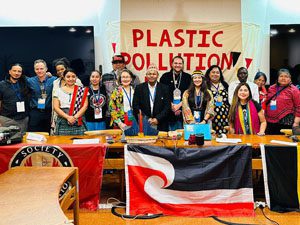
Indigenous voices resonate as they unveil the impact of colonialism capitalism and plastic pollution on their communities and ecosystems