








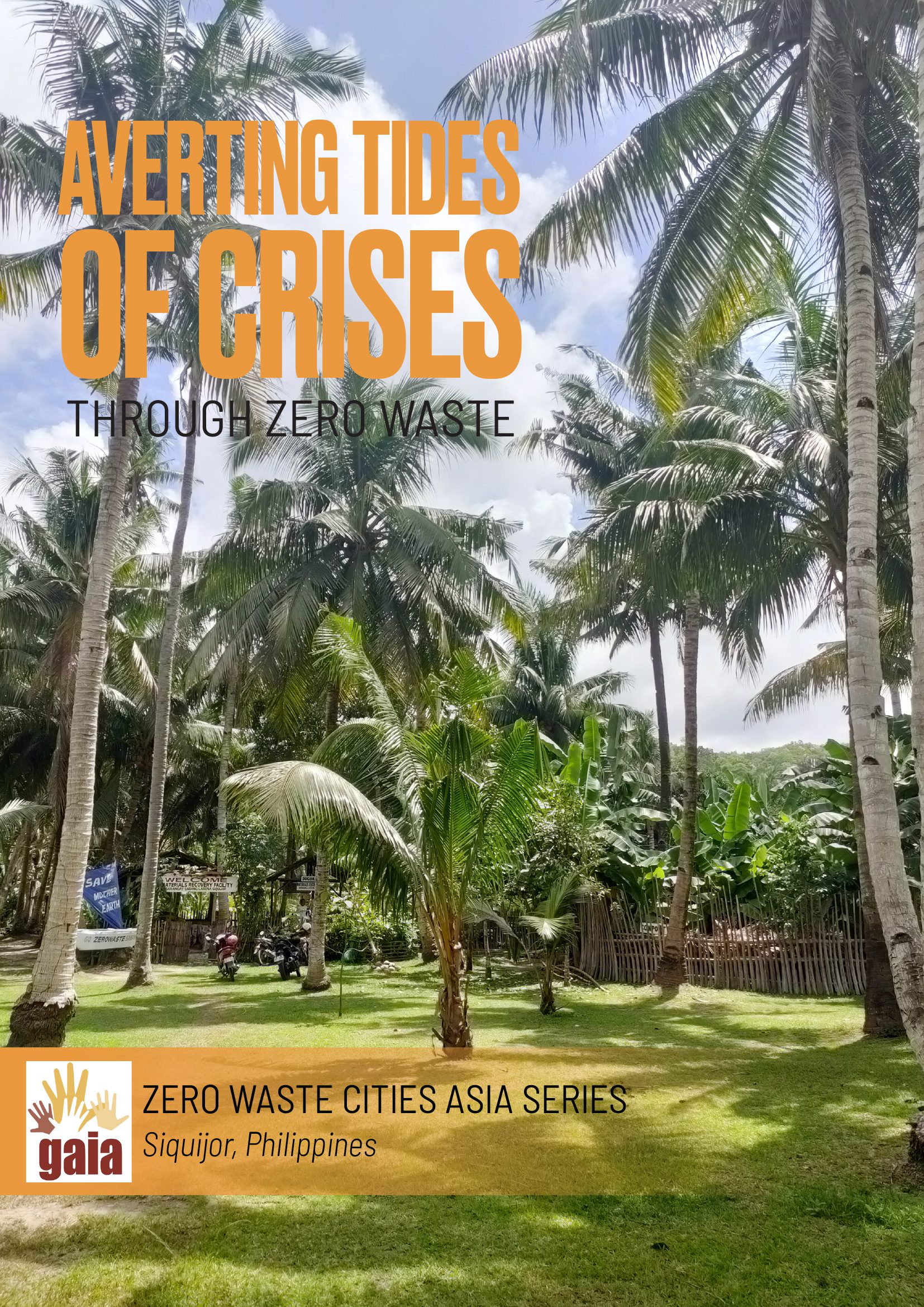

Island Solutions: Three Philippine Islands Show What Real Zero Waste Looks Like
Proving Zero Waste works—even in islands
PRESS RELEASE
08 June 2025 – Philippines – Island communities face extra challenges in waste management, but the success of three Philippine island communities — Isla Verde in Batangas City, Apo Island, and Siquijor — shows that Zero Waste can be adapted to address local needs. The experiences of these biodiversity hotspots, documented by GAIA Asia Pacific, show that strong political willpower, sound planning, and grassroots action can create real, lasting change — offering replicable models for other island nations looking to protect their people and their marine resources.
Supported by Mother Earth Foundation (MEF), and War on Waste – Break Free From Plastic-Negros Oriental (WOW-BFFP NegOr), these islands show how reducing waste on land is essential to protecting the marine ecosystems they rely on.
In Isla Verde Island, located 45-minutes by boat from the Batangas port, waste diversion jumped from just 852 kg/day in 2019 to 13,763 kg/day by 2022, following the city’s adoption of MEF’s 10-step Zero Waste program. This was not a blank-slate effort—the city already had an environmental code and a 10-year solid waste plan—but implementation was uneven. The local government admitted to facing challenges when it came to implementing their program in an island setting. Their partnership with MEF provided the structure and monitoring muscle to close the gaps, which included massive information, education, and communication (IEC) campaigns, household composting, and the activation of previously non-functional barangay MRFs. Verde Island now reports 70% compliance in household waste segregation, up from 30%.
Siquijor, a province dependent on tourism, faced its own crisis when its landfill hit capacity. The geology of the island ruled out the possibility of constructing a new landfill. In response, the province enforced existing ordinances and launched a province-wide Zero Waste program. Today, 89 of the 134 barangays operate their own MRFs, and waste diversion has increased to 60%. Households are managing their own biodegradable waste, and grocery stores and public markets are compliant to the SUP bans. While compliance dipped slightly post-elections, momentum remained strong—helped by youth engagement efforts, the formation of a local waste workers’ association, and continued training for village leaders and enforcement units like Bantay Dagat.
Meanwhile, Apo Island, a small community off Negros Oriental known for its marine sanctuary, now also stands out for its waste system. It became the country’s first officially recognized Zero Waste island barangay in 2022. The shift began with a local ordinance and survey that flagged waste as a top concern, followed by partnerships with WoW-BFFP NegOr and MEF. By 2021, the island had decentralized waste collection, built four strategically placed MRFs, and achieved 53% waste diversion. The compliance rate to waste segregation is now at 99%.
Across these communities, the drivers of success are consistent: clear policies, technical support, active monitoring, and coordination with waste workers and residents. These are not perfect stories—but they are real ones. As the Philippines and the world grapple with mounting plastic and residual waste, the lessons from Vista Verde, Siquijor, and Apo Island offer scalable models grounded in implementation, not just intention.
###
MEDIA CONTACTS
Mother Earth Foundation (MEF) Philippines: Rap Villavicencio, Deputy Director for Programs | +639175304808 | rap@motherearthphil.org
War on Waste-Break Free From Plastic Negros Oriental (WoW-BFFP NegOr): Merci Ferrer, Coordinator | +639176553498 | merci.ferrer@gmail.com
Global Alliance for Incinerator Alternatives (GAIA) Asia Pacific: Ambily Adithyan, Zero Waste Cities | +91 7838748722 | ambily@no-burn.org
Global Alliance for Incinerator Alternatives (GAIA) Asia Pacific: Dan Abril, Communications Officer for Programs | +639174194426 | dan@no-burn.org
About GAIA
GAIA is a network of grassroots groups as well as national and regional alliances representing more than 1000 organizations from 92 countries. With our work we aim to catalyze a global shift towards environmental justice by strengthening grassroots social movements that advance solutions to waste and pollution. We envision a just, Zero Waste world built on respect for ecological limits and community rights, where people are free from the burden of toxic pollution, and resources are sustainably conserved, not burned or dumped.
About Mother Earth Foundation (MEF) Philippines
Mother Earth Foundation PH is a non-stock, non-profit organization actively engaged in addressing waste and toxic pollution, climate change, and other health and environmental justice issues. It is best known for its advocacy of Zero Waste through the systematic reduction and proper management of waste.
About War on Waste-Break Free From Plastic (WOW-BFFP) Negros Oriental
WoW-BFFP NegOr is a collective of NGOs, academics, and individuals in Negros Oriental focused on addressing waste management challenges. They work on various initiatives, including advocating for stronger enforcement of waste regulations, supporting zero-waste projects, and raising public awareness about proper waste disposal practices.
