Climate

Delegates and Policy Experts React to the Chair’s Proposed Treaty Text

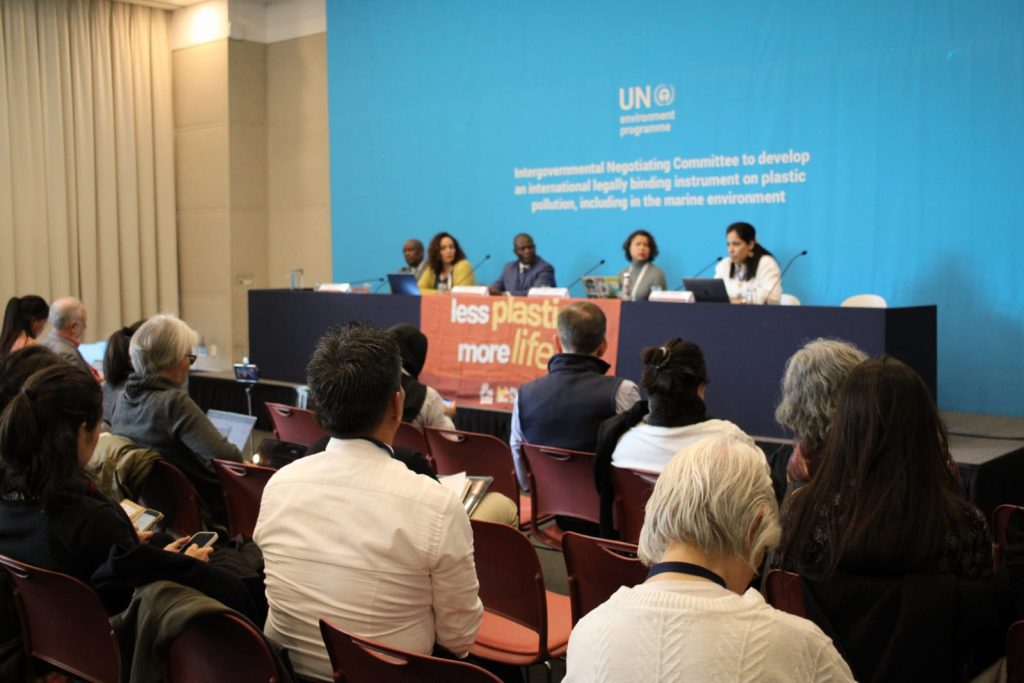
Busan, South Korea – Global South delegates and civil society leaders spoke at a press conference at BEXCO Convention Center this afternoon, to share their outlook on the negotiations thus far and what it means for the Global South. In the hour before the press conference, the Chair released his latest paper, which proposes text for the treaty to serve as a basis for the final bout of negotiations. 

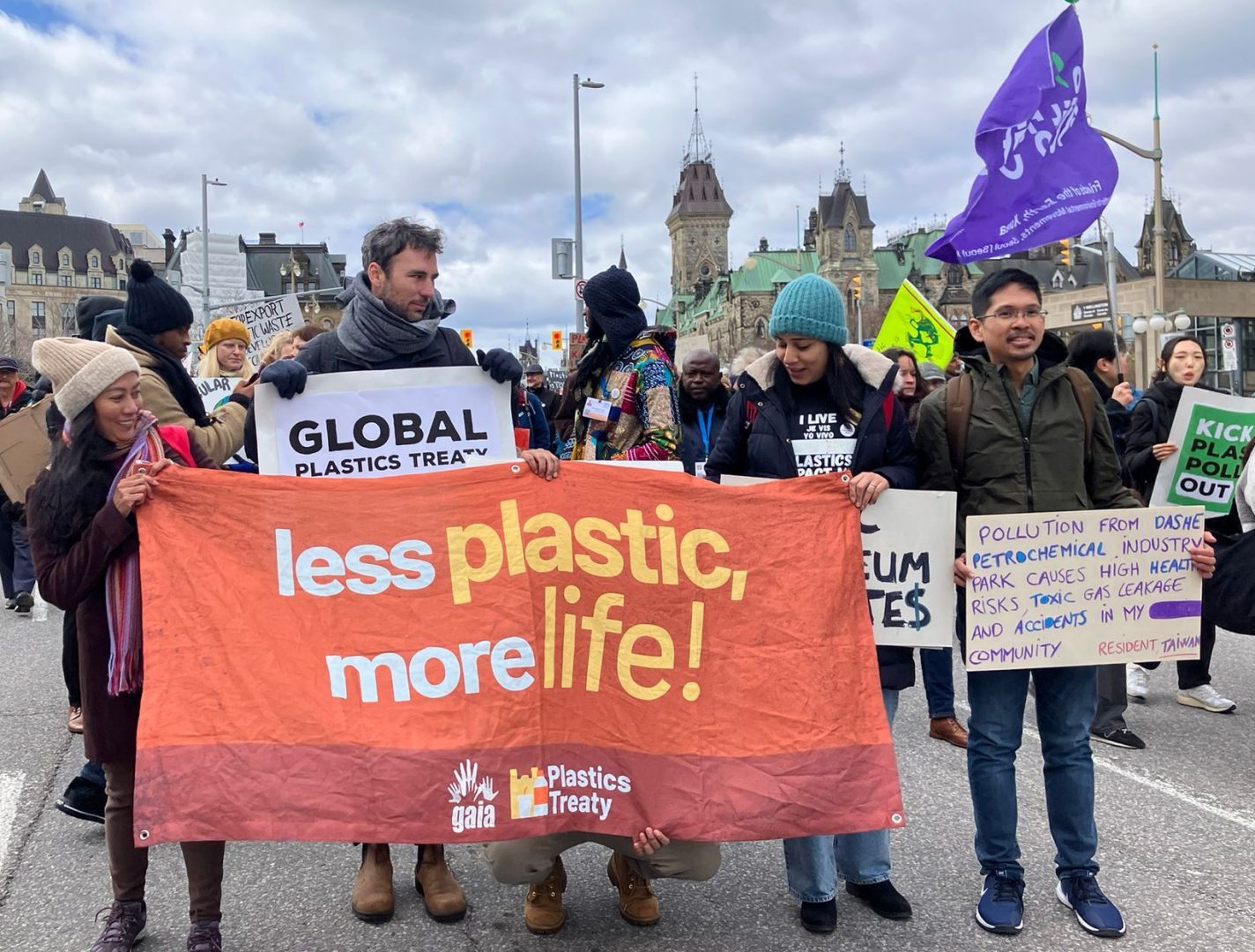
Arpita Bhagat, Plastics Lead at GAIA Asia Pacific states: “The Chair’s latest text is unacceptable to the majority of Global South countries and the billions of people they represent: people who are fighting for their lives for a strong treaty. Nor is it acceptable to people harmed by plastics in the Global North, including environmental justice, front and fenceline communities, and Indigenous Peoples who have long been sidelined in the process. It is not a reflection of the will of the vast majority of Member States, who support ambitious measures in a legally-binding, global instrument. Once again, as throughout this process, the Chair has bent to the will of the petrochemical states while dismissing the demands of the majority, in a completely non-transparent, exclusionary process. This is a matter of life and death, especially for Global South communities. Member States will not roll over and play dead. As long as ambitious countries hold on to their principles, civil society will have their backs.” 

Cheikh Ndiaye Sylla, National Focal Point for Senegal, states, “This version of the text is…not acceptable…For life cycle, we have to negotiate this from the polymer, meaning the production. It is legally binding as per the title…No text is better than bad text.”  

Dr Sam Adu-Kumi, Negotiator for Ghana, states, “The whole world is looking up to us…they are expecting something better that will protect the environment, human health, our brothers and sisters, and our young populations….So we are not here to accept anything short of an ambitious treaty.” 

These elements in the new text are particularly problematic:

On core obligations:

  • Plastic production (“Supply”): the Chair’s text does not represent the strong language Panama and more than 100 other countries proposed, including a global target on production reduction; it is full of weak text options, such as referring to a reduction target as  “aspirational.” This critical article must be strengthened with national targets. 
  • Chemicals of concern: The Chair has stripped away systematic controls on toxic chemicals from this article, where we need the strongest measures to address the fundamental threat posed by chemicals of concern. 
  • Waste management: the waste hierarchy has been removed; and “energy recovery” – code for waste-burning technologies– remains.

On means of implementation:

  • Financial mechanism: At least 126 countries support an independent, dedicated fund– the most widely supported provision in the instrument– yet the Chair’s text undermines it with weak, optional language that fails to provide adequate funds, such as through a polymer production fee.

The treaty infrastructure is weak:

  • No right to vote: The Chair’s text fails to give countries the right to vote, ensuring further paralysis of the process. This is not the “start and strengthen” treaty that we were promised. 

The week in Busan started with petrochemical states threatening to derail the process if Member States exercised their right to call for a vote, which brought us to this point. Continuing the work in an INC 5.2  will only be worthwhile with a transparent process where states put an end to the tyranny of the minority.  

As we confront the potential failure of the negotiations, we remind Member States that, as they themselves have stated, no deal is better than a bad deal.

Contact:

Claire Arkin, Global Communications Lead

claire@no-burn.org | +1 973 444 4869

###

GAIA is a worldwide alliance of more than 1,000 grassroots groups, non-governmental organizations, and individuals in over 90 countries. With our work we aim to catalyze a global shift towards environmental justice by strengthening grassroots social movements that advance solutions to waste and pollution. We envision a just, zero waste world built on respect for ecological limits and community rights, where people are free from the burden of toxic pollution, and resources are sustainably conserved, not burned or dumped.

References: 

For more information about GAIA’s treaty advocacy, please visit  no-burn.org/unea-plastics-treaty, follow us on LinkedIn, and read our Press kit.

30 de noviembre de 2024: Día 6 del INC-5

El juego de la espera

Durante los últimos dos días, las negociaciones sobre el tratado de los plásticos han sido en gran medida una caja negra para los observadores, las comunidades de primera línea, los recicladores y las naciones y grupos de los Pueblos Indígenas. El Presidente del INC y los Estados miembros han estado enclaustrados en «reuniones informales» y «bilaterales» a puerta cerrada, mientras que las comunidades de primera línea, los recicladores y las naciones y grupos de Pueblos Indígenas se han quedado al margen, preguntándose si el ambicioso tratado por el que hemos luchado durante los últimos dos años sigue sobre la mesa. Mientras tanto, los diplomáticos toman decisiones en nombre de las mismas personas cuyas vidas y comunidades se ven más afectadas por este sistema de producción y consumo masivos de plástico.

La absoluta falta de transparencia en las negociaciones es una prueba más de que el proceso es rehén de unos pocos Estados, que comparten la misma línea de pensamiento, principalmente estados petroleros. No hay forma de saber a qué países está atendiendo el Presidente y a cuáles está excluyendo, reproduciendo así, exactamente los mismos desequilibrios geopolíticos y coloniales que han alimentado la crisis de los plásticos, y contradiciendo directamente sus promesas de un proceso de negociación del tratado abierto y transparente. Para colmo de males, es muy probable que mientras la sociedad civil debe conjeturar sobre el destino del tratado desde fuera, la industria de los combustibles fósiles está incluida en estas sesiones a puerta cerrada, escondiéndose a plena vista entre las delegaciones de los países.

Esta no es la primera vez que la sociedad civil ha sido excluida de las negociaciones críticas – también se nos prohibió asistir a los trabajos intersesionales antes del INC-5, y hay innumerables ejemplos de la semana pasada y a lo largo de los INC que ejemplifican cómo el PNUMA y el Presidente tienen poco interés en garantizar que los titulares de derechos, los recicladores, los Pueblos Indígenas, los jóvenes, los científicos y los líderes de la justicia ambiental tengan un asiento en la mesa.

El próximo documento oficioso (non paper del Presidente será un reflejo de las conversaciones que ha elegido tener, y aquellas que no. Esperamos que el documento sea representativo de la ambiciosa mayoría, y no un apaciguamiento para aquellos pocos que no tienen ningún interés real en acabar con la contaminación por plásticos.

Las consultas informales a puerta cerrada se han prolongado hasta bien entrada la noche y se han centrado en algunas de las cuestiones más polémicas, como la producción y la financiación.

El plástico es colonización: Los pueblos indígenas se manifiestan en el INC-5

Hoy, el Foro Internacional de los Pueblos Indígenas sobre el Plástico dio  una rueda de prensa en  BEXCO de Busan para poner de relieve los efectos desproporcionados de la contaminación por plásticos en los pueblos indígenas a lo largo del «ciclo de la muerte» del plástico, la falta de transparencia en las negociaciones, su exclusión injusta del proceso y la importancia vital de consagrar los derechos y el liderazgo indígenas en el tratado final.

Juan Mancias, de la Sociedad de Naciones Nativas, habló de lo absurdo que resulta que los países no sean capaces de llegar a un consenso sobre la necesidad de frenar la producción de plástico: «No hubo ‘consenso’ cuando decidieron empezar a fabricar plásticos».

Tori Cress, de la Sociedad de Naciones Nativas y copresidenta del Foro Internacional de los Pueblos Indígenas sobre el Plástico, describió los efectos devastadores que las arenas bituminosas de Canadá han tenido en las comunidades indígenas de la zona: «Si pasas tiempo en la región de las arenas bituminosas lo olerás, no puedes escapar de él, es ineludible. Los Dene, Métis y el pueblo Cree han sido testigos a lo largo de su vida de la destrucción del agua de la que bebían cuando eran niños».

Jo Banner, cofundadora y codirectora del Proyecto Descendientes, declaró: «Entré en la tienda de comestibles de al lado de mi hotel y encontré algo que era una locura. Era un solo huevo, en un recipiente de plástico; ¡había más plástico que huevo! Y pensé: por ésto es por lo que nos estamos muriendo. Un huevo en un recipiente de plástico… La industria quiere hacernos creer que nos estamos muriendo por válvulas cardíacas y piezas de cohetes espaciales y no digo que eso no forme parte de lo que hace el plástico, pero al fin y al cabo nos estamos muriendo por tonterías, por pequeñeces como sorbetes.»

Matt Perryman, coordinador y científico indígena de la Coalición Tāngata Whenua por un Tratado sobre el Plástico Eficaz, se refirió a cómo los derechos de los pueblos indígenas fueron ignorados a lo largo del proceso del tratado: «El hecho de que la industria pueda sentarse en las salas de toma de decisiones con los gobiernos, tomando decisiones sobre nuestro futuro, sobre nuestros hijos, mientras nos expulsa activamente. ¿Se espera que estemos de acuerdo con la total falta de transparencia que estamos viendo? No está bien, y tenemos que asegurarnos de que lo entiendan».

Contacto de prensa:

Camila Aguilera | América Latina y el Caribe

camila@no-burn.org | +56 9 8913 619

Claire Arkin | Global

claire@no-burn.org | +1 973 444 4869

Recursos

INC-5 Day 6: November 30, 2024

The Waiting Game

For the past two days, negotiations on the plastics treaty have largely been a black box to observers, frontline communities, wastepickers, and the Indigenous Peoples nations and groups. The INC Chair and Member States have been cloistered away in closed-door “informals” and “bilaterals” while frontline communities, wastepickers, and the Indigenous Peoples nations and groups have been left out in the cold, wondering whether the ambitious treaty that we have fought for over the past two years is still on the table. Meanwhile diplomats make decisions on behalf of the very people whose lives and communities are most impacted by this system of mass production and consumption of plastic. 

The utter lack of transparency in the negotiations is further evidence of a  process that is being held hostage by a few like-minded mainly petro-states. There is no way of knowing which countries the Chair is catering to and which he is excluding, therefore replicating the exact same geopolitical and colonial power imbalances that have fueled the plastics crisis, and directly contradicting his promises of an open and transparent treaty negotiation process. To add insult to injury, it is highly likely that while civil society must conjecture about the fate of the treaty from the outside, the fossil fuel industry is embedded in these closed-door sessions, hiding in plain sight among country delegations.  

This is not the first time that civil society has been excluded from critical negotiations– we were also barred from attending intersessional work in advance of INC-5, and there are countless examples from the past week and throughout the INCs exemplifying how UNEP and the Chair have little interest in ensuring that rightsholders, waste pickers, Indigenous Peoples, youth, scientists, and environmental justice leaders have a seat at the table. 

The Chair’s next non paper will be a reflection of the conversations he has chosen to have, and the conversations he hasn’t. We hope that the paper will be representative of the ambitious majority, and not an appeasement to those few who have no actual interest in ending plastic pollution. 

Closed-door informal consultations ran well into the night, focusing on some of the most contentious issues including production and finance. 

Plastic is Colonization: Indigenous Peoples Speak Out at INC-5

Today, the International Indigenous Peoples’ Forum on Plastics held a press conference at BEXCO in Busan, to highlight the disproportionate impacts of plastic pollution on Indigenous Peoples throughout the plastic “death cycle,”  the lack of transparency in negotiations, their wrongful exclusion from the process, and the vital importance of enshrining Indigenous rights and leadership in the final treaty. 

Juan Mancias of the Society of Native Nations discussed the absurdity of countries not being able to reach consensus about the need to curb plastic production: “There was no ‘consensus’ when they decided to start making plastics.” 

Tori Cress, Society of Native Nations and Co-Chair of the International Indigenous Peoples’ Forum on Plastics, described the devastating impacts that Canada’s tar sands have had on Indigenous communities in the area: “If you spend time in the tar sands region you will smell it,  you can’t escape it, it’s inescapable.  Dene, Métis, and Cree people in their lifetime have witnessed the destruction of the water that they used to drink from as children.” 

Jo Banner, Co-Founder and Co-Director of The Descendents Project stated,  “I went into the convenience store next to my hotel, and I found something that was crazy. It was a single egg, in a plastic container; there was more plastic than there was egg! And I’m thinking, this is what we are dying for. An egg in a plastic container…The industry wants to make us want to think that we’re dying for heart valves and space rocket parts and I’m not saying that’s not part of what plastic makes, but at the end of the day we are dying for foolishness, for straws.” 

Matt Perryman, Coordinator and Indigenous Scientist-Tāngata Whenua Coalition for an Effective Plastics Treaty, addressed how Indigenous Peoples rights were ignored throughout the treaty process: “The fact that industry can sit in decision-making rooms with governments, making decisions about our future, about our children, while actively pushing us out. The total lack of transparency that we’re seeing we’re expected to be ok with? It’s not ok, and we need to make sure that they understand that.” 

Contact:

Claire Arkin, Global Communications Lead

claire@no-burn.org | +1 973 444 4869

References: 

For more information about GAIA’s treaty advocacy, please visit  no-burn.org/unea-plastics-treaty, follow us on LinkedIn, and read our Press kit.

29 de noviembre de 2024: Día 5 del INC-5

Declaración de GAIA sobre el Non paper 4 del Presidente

Busan, Corea del Sur- Después de días de lentos avances en las negociaciones del tratado de plásticos (INC-5), los facilitadores de los cuatro grupos de contacto donde se están llevando a cabo las negociaciones entregaron un texto propuesto al Presidente del INC. Esta tarde, el presidente ha publicado una nueva versión del borrador («non paper»), que se convertirá en la base de las negociaciones de los dos últimos días del INC-5.

Ana Rocha, Directora de Política Global de Plásticos de GAIA, afirma:

«El último documento oficioso (non-paper) del Presidente muestra los múltiples caminos que podría tomar el tratado. Uno sería histórico: por primera vez, el texto incluiría opción de un tope a la producción de plástico, un testimonio de los 103 países y una sociedad civil unida que exigen su inclusión.

El otro camino parece desalentador. Un tratado débil, no vinculante, con un mecanismo financiero débil, que promueva la eliminación sin lógica de sustancias químicas preocupantes, sin ningún lenguaje significativo sobre salud, derechos humanos o derechos de los Pueblos Indígenas, una puerta abierta a falsas soluciones, como a la incineración de residuos, y que de pase libre para algunas de las industrias más contaminantes.

Las «reuniones informales», secretas y entre bastidores, que precipitaron este documento oficioso, muestran claramente que el Presidente está jugando con favoritismos, atendiendo a los pocos países de mala fe y a los grupos de presión (grupos de lobby) presentes en la sala, mientras excluye a la sociedad civil, a los titulares de derechos y a los países del Sur global que lideran un tratado ambicioso.

Un mal proceso no conduce a un buen resultado. Para conseguir el tratado sobre plásticos necesario para vencer la amenaza existencial de la contaminación por plásticos, los países que defienden un tratado ambicioso no deben ceder a presiones arbitrarias de tiempo y a los pocos saboteadores que piden «consenso» por encima de justicia. Éstos países deben estar dispuestos a salir del punto estancamiento e insistir en votar a favor del tratado que apoye la mayoría de los Estados miembros y, si es necesario, estar dispuestos a abandonar un mal acuerdo. Mientras los países que lideran un tratado ambicioso mantengan sus principios, la sociedad civil los respaldará».

Contacto de prensa:

Camila Aguilera | América Latina y el Caribe

camila@no-burn.org | +56 9 8913 619

Claire Arkin | Global

claire@no-burn.org | +1 973 444 4869

Recursos

INC-5 Day 5: November 29, 2024

GAIA’s Statement on the Chair’s Non Paper 4

Busan, South Korea– After days of halting progress in plastics treaty negotiations (INC-5), the facilitators of the four contact groups where negotiations are taking place delivered proposed text to the Chair of the INC. The chair then released a new iteration of a draft (“non paper”) this afternoon, meant to become a basis for negotiations in the final two days of INC-5. 

Ana Rocha, Global Plastics Policy Director of GAIA, states: 

“The Chair’s latest non paper shows multiple paths that a treaty could take. One would be historic– for the first time, the text includes the option for a plastic production cap,  a testament to the 103 countries and a united civil society demanding its inclusion. 

The other path looks grim. A weak, non-binding treaty with an anemic financial mechanism, the illogical removal of chemicals of concern, no meaningful language on health, human rights, or rights of Indigenous Peoples, an open door to false solutions like waste incineration, and a free pass to some of the most polluting industries. 

The secretive, behind-the-scenes “informals” that precipitated this non paper clearly show that the Chair is playing favorites– catering to the few bad-faith countries  and lobbyists in the room while excluding civil society, rights holders, and Global South countries leading ambition on the treaty. 

A bad process does not lead to a good outcome. In order to land the plastics treaty needed to beat the existential threat of plastic pollution, countries championing ambition must not bow to arbitrary time-pressures and the few bullies calling for “consensus” over justice.  They must be willing to break the deadlock and insist on voting for the treaty the majority of Member States support, and if necessary, be willing to walk away from a bad deal. As long as ambitious countries hold to their principles, civil society will have their backs.” 

Contact:

Claire Arkin, Global Communications Lead

claire@no-burn.org | +1 973 444 4869

References: 

For more information about GAIA’s treaty advocacy, please visit  no-burn.org/unea-plastics-treaty, follow us on LinkedIn, and read our Press kit.

28 de noviembre de 2024: Día 4 del INC-5

Los países convergen en torno a la reducción del plástico y la financiación

Hoy, Panamá (cuya poderosa intervención en la sesión plenaria de ayer provocó vítores en toda la sala de conferencias) presentó un ambicioso texto interregional en nombre de 91 países de todos los continentes, incluidos muchos países de África, América Latina y el Caribe, la Unión Europea, el Reino Unido, Australia y Nueva Zelanda. El número de países que apoyaron la propuesta pronto se elevó a 102.

El texto señala:í

1. La Conferencia de las Partes, en su primera sesión, adoptará en un anexo un objetivo mundial para reducir la producción de polímeros plásticos primarios a niveles sostenibles.

2. Cada Parte adoptará medidas en todo el ciclo de vida de los plásticos para alcanzar el objetivo mundial mencionado en el apartado 1.

3. Cada Parte comunicará datos estadísticos sobre su producción, importaciones y exportaciones de polímeros plásticos primarios y sobre las medidas adoptadas para alcanzar el objetivo mundial mencionado en el apartado 1. 

4. La Conferencia de las Partes, en su primer período de sesiones, adoptará el formato, el calendario, las metodologías y las orientaciones para la aplicación del presente artículo.

5. La Conferencia de las Partes examinará cada cinco años, sobre la base de una evaluación científica y económica realizada por un órgano subsidiario, los progresos realizados en la aplicación del presente artículo y, según proceda, actualizará el objetivo mundial a que se hace referencia en el párrafo 1.

También está tomandoimpulso la propuesta sobre mecanismos financieros presentada por el Grupo Africano de Negociadores y el GRULAC, que cuenta con el apoyo de 126 países. (ver el resumen de ayer para más detalles).

El consenso mata la democracia

Un pequeño pero ruidoso grupo de países, principalmente petroleros, se ha esforzado sistemáticamente por bloquear las negociaciones en todo momento. Desgraciadamente, el hecho de que la mayoría de los Estados miembros apoyen los recortes de la producción de plástico no romperá por sí solo el bloqueo. Estos países deben unirse para romper con el círculo de la toma de decisiones basada en el «consenso», donde unos pocos actores pueden atrincherarse hasta que el tratado pierda su sentido. Las disposiciones relativas a la votación son una baza esencial para atraer a las partes más obstruccionistas a la mesa de negociaciones.

La norma para las disposiciones de votación se ha establecido en muchas otras negociaciones internacionales que han tenido éxito, como el Convenio de Minamata sobre el mercurio y los Convenios de Rotterdam y Estocolmo.

Contacto de prensa:

Camila Aguilera | América Latina y el Caribe

camila@no-burn.org | +56 9 8913 619

Claire Arkin | Global

claire@no-burn.org | +1 973 444 4869

Recursos

INC-5 Day 4: November 28, 2024

Countries Converge around Plastic Reduction, Finance

Today, Panama (whose powerful intervention at plenary yesterday elicited cheers throughout the conference hall) introduced an ambitious cross-regional text submission on behalf of 91 countries across continents, including many countries in Africa, Latin America and the Caribbean, the European Union, the United Kingdom Australia and New Zealand. The number of countries supporting the proposal soon swelled to 102. 

The text reads: 

1. The Conference of the Parties shall, at its first session, adopt in an annex a global target to reduce the production of primary plastic polymers to sustainable levels. 

2. Each Party shall take measures across the full lifecycle of plastics to achieve the global target referred to in paragraph 1. 

3. Each Party shall report statistical data on its production, imports and exports of primary plastic polymers and the measures taken to achieve the global target referred to in paragraph 1.

4. The Conference of the Parties shall, at its first session, adopt the format, timing, methodologies and guidance for the implementation of this Article. 

5. The Conference of the Parties shall, every five years, based on a scientific and economic assessment by a subsidiary body, review progress in the implementation of this Article and, as appropriate, update the global target referred to in paragraph 1.

There is also increasing momentum around the proposal on financial mechanisms proposed by the African Group of Negotiators and GRULAC, with 126 countries in support. (see yesterday’s recap for details). 

Consensus Kills Democracy

A tiny but vocal group of mainly petro-states have been systematically working to tank the negotiations at every turn. Unfortunately, the fact that the majority of Member States support plastic production cuts will not on its own break the blockade. These countries must stand together to break the spell of “consensus”-based decisionmaking, where a few bad actors can dig in their heels until the treaty is rendered meaningless. Provisions for voting are an essential bargaining chip that can serve to bring the more obstructive parties to the negotiating table. 

The standard for voting provisions has been set in many other successful international negotiations like the Minamata Convention on mercury, and the Rotterdam and Stockholm Conventions.

Contact:

Claire Arkin, Global Communications Lead

claire@no-burn.org | +1 973 444 4869

References: 

For more information about GAIA’s treaty advocacy, please visit  no-burn.org/unea-plastics-treaty, follow us on LinkedIn, and read our Press kit.

27 de noviembre de 2024: Día 3 del INC-5

Plenario de balance: Los países ambiciosos alzan la voz ante la falta de avances y los actores de mala fe

La sesión plenaria de hoy tenía por objeto hacer un balance de los progresos realizados en los cuatro grupos de contacto, con declaraciones preparadas por los copresidentes de cada uno de ellos. Lo que se ha producido ha sido un recrudecimiento de las tensiones que llevaban días latentes, e incluso podría decirse que han ocurrido desde principios del INC. Los países lamentaron el estancamiento de las conversaciones en los grupos de contacto, y aquellos más ambiciosos manifestaron abiertamente su frustración ante el reducido número de Estados miembros que, según ellos, negocian de mala fe. Por lo visto en anteriores plenarias y en el INC, cabe suponer que se refieren a los petroestados que se autodenominan «grupo de ideas afines». Muchos hicieron hincapié en que el tiempo para lograr un tratado sólido se agota rápidamente y en la urgencia de la crisis que el proceso del tratado pretende resolver.

Una intervención especialmente contundente fue la de Juan Carlos Monterrey, de Panamá:

“Para nuestros colegas que argumentan que la producción no forma parte del mandato, permítanme hacer una corrección. La producción forma parte del ciclo de vida completo del plástico… Cada vez que dudamos en estas negociaciones, cada vez que suavizamos nuestra ambición, más plástico se filtra en la tierra, y en nosotros…». La contaminación por plástico no es sólo una crisis, es un asalto a nuestro planeta, a nuestra gente y a nuestro futuro. Y sin embargo, aquí estamos, pasando de puntillas sobre la verdad. Esquivando la ambición e ignorando la urgencia que exige actuar».

Otros países también se pronunciaron. Mauricio Cabrera Leal, de Colombia, declaró que »…varias partes parecen estar retrasando las discusiones y conduciéndonos por un camino que no nos permitirá alcanzar un acuerdo constructivo. Esto altera el ritmo de nuestro proceso, pero amenaza también con diluir los esfuerzos necesarios para hacer frente a esta crisis. Como mínimo, creemos que todos los participantes deben trabajar de buena fe».

Muchos países se refirieron a la ruptura del proceso de negociación del tratado, sobre todo teniendo en cuenta que los Estados miembros están proponiendo un nuevo lenguaje a cualquier hora del día o de la noche (ver el resumen de ayer para más detalles), en lugar de trabajar con el documento existente de la presidencia, que estaba destinado a agilizar las negociaciones; a medida que se acerca la fecha límite para cerrar un texto del tratado, las opciones deberían reducirse, no ampliarse.

La ghanesa Lydia Obenewa Essuah, en nombre del Grupo Africano de Negociadores, presentó una propuesta sensata para contrarrestar este problema y defendió la participación de los observadores, que se ha visto desmesuradamente limitada:

1) Fijar una fecha límite para la presentación de textos en cada Grupo de contacto.

2) Dar un mandato a los copresidentes para que combinen el texto de todas las presentaciones basándose en las intervenciones en la sala, cuando se hayan explorado todas las vías, y elaboren un proyecto de texto para las negociaciones.

3) Ajustar el tamaño de las salas para acomodar a los Estados miembros y a los observadores.

Los Pueblos Indígenas recuperan el micrófono

En este INC, la sociedad civil ha tenido muy poco acceso a las negociaciones, y cuando conseguimos entrar en la sala, los países respaldados por la industria tienen un tiempo de ilimitado, mientras que las comunidades afectadas se ven obligadas a permanecer al margen. Es habitual que el Presidente conceda tiempo durante la sesión plenaria para que los miembros de la sociedad civil puedan intervenir. Sin embargo, este no ha sido el caso en este INC hasta que el Foro de los Pueblos Indígenas sobre el Plástico forzó la cuestión esta noche. El grupo se puso en pie con los puños en alto, exigiendo a la Presidencia que se les escuchara, y pronto una multitud de miembros de la sociedad civil se reunió a su alrededor en solidaridad.

En lugar de reconocer las perspectivas únicas e importantes que tienen los titulares de derechos en las negociaciones y permitirles hablar, el Presidente invitó a Rusia, Arabia Saudí y otros países afines a discutir sobre cuándo se entrega el texto al grupo de redacción jurídica. Sólo Tuvalu utilizó su tiempo para implorar al Presidente que dejara hablar a los Pueblos Indígenas.

Finalmente, el Presidente cedió a la presión de la sociedad civil y concedió al Foro de los Pueblos Indígenas unos minutos para hablar. Lisa Bellanger, representante del Foro, declaró : «El tratado mundial de plásticos debe reconocer nuestros derechos y dar prioridad a nuestras voces y soluciones a esta crisis…. El tratado debe promover activamente las contribuciones de los Pueblos Indígenas, proporcionando una plataforma para nuestra participación plena y efectiva en la toma de decisiones y la aplicación del tratado como titulares de derechos, no como partes interesadas… No hay ningún reconocimiento de los derechos de los Pueblos Indígenas en este documento, sólo referencias a nuestros conocimientos. Pedimos a los Estados miembros que defiendan plenamente los derechos de los Pueblos Indígenas. Un tratado débil es un tratado fallido».

Las ambiciosas propuestas sobre financiación y reducción de la producción cobran impulso

Algunas propuestas interesantes de los bloques de negociación del Sur lobal han ido ganando impulso en las negociaciones del tratado. Ayer, el Grupo Africano de Negociadores (AGN), el Grupo de América Latina y el Caribe (GRULAC), Fiyi, las Islas Cook y Micronesia publicaron un documento de sesión en el que piden un nuevo fondo específico para aplicar el tratado sobre los plásticos, cuya financiación proceda principalmente de los países desarrollados, cuyas empresas son las que más se han beneficiado de la crisis de los plásticos. (Para más información sobre los mecanismos financieros, ver nuestro informe político).

Más de 100 países apoyaron la propuesta de financiación del Grupo Africano que se tomará como base de las negociaciones en el Grupo de Contacto 3. Sin embargo, está surgiendo una clara división entre los países desarrollados/donantes, que abogan por una mayor financiación del sector privado, utilizando las estructuras de financiación existentes como el FMAM, proporcionando fondos en forma de préstamos y haciendo que las contribuciones de los donantes sean voluntarias, y los países en desarrollo/receptores, que quieren un fondo específico para proporcionar una financiación pública adecuada. (ver la sección de mecanismos financieros de nuestro kit de prensa para más detalles).

Los Pequeños Estados Insulares en Desarrollo del Pacífico (PEIDP) pidieron un objetivo global de reducción del 40% para 2040, en comparación con los niveles de 2025, y 45 países africanos también pidieron una reducción de la producción, así como medidas estrictas en materia de rendición de cuentas y presentación de informes.

Una economía postplástica: Modelos de reutilización en Asia

En el centro de convenciones donde se están celebrando las negociaciones del tratado sobre los plásticos, los coorganizadores del Consorcio de Reutilización de Asia (GAIA Asia Pacific, DietPlastik Indonesia y Break Free From Plastic) organizaron un acto para presentar un informe exhaustivo titulado«Unpacking Reuse in Asia» («Desembalaje de la reutilización en Asia»), que subraya los esfuerzos pioneros en toda la región y ofrece soluciones escalables para abordar la crisis mundial de los plásticos. Mientras continúan las negociaciones para el tratado sobre los plásticos, el informe subraya la urgente necesidad de disposiciones del tratado que aborden el ciclo de vida completo de los plásticos, al tiempo que se centran en las soluciones de reutilización como componentes críticos para la eliminación progresiva de los plásticos, que es fundamental para hacer frente a l contaminación por plásticos.

Infiltración de la industria

Extracto del comunicado de prensa del Center for International Environmental Law :

Un nuevo análisis del Centro para el Derecho Ambiental Internacional (CIEL) – apoyado por el Foro Internacional de Pueblos Indígenas sobre Plásticos (IIPFP), la Red Internacional de Eliminación de Contaminantes (IPEN), el movimiento Break Free From Plastic, la Alianza Global para Alternativas a la Incineración (GAIA), Greenpeace, la Stop Tobacco Pollution Alliance (STPA), la Scientists’ Coalition for an Effective Plastics Treaty, y la Uproot Plastics Coalition (Corea) – y basándose en la lista provisional de participantes en el INC-5 del Programa de las Naciones Unidas para el Medio Ambiente (PNUMA), constata que:

  • 220 grupos de presión de combustibles fósiles y de la industria química están registrados para asistir al INC-5, el más alto en cualquier negociación para el tratado sobre plásticos hasta ahora analizado por CIEL, más que el anterior máximo de 196 grupos de presión identificados en el INC-4.
  • Los grupos de presión de la industria química y de los combustibles fósiles juntos serían la delegación más grande en el INC-5, superando significativamente en número a los 140 representantes de la República de Corea. Los grupos de presión también superan en número a las delegaciones de la Unión Europea y todos sus Estados miembros juntos (191), así como a los 89 representantes de los Pequeños Estados Insulares en Desarrollo del Pacífico (PSIDS) en una proporción de más de dos a uno y a los 165 delegados de toda la región de América Latina y el Caribe (GRULAC), respectivamente.
  • En las delegaciones nacionales se identificaron 16 grupos de presión
  • Dow (5) y ExxonMobil (4) estuvieron entre las empresas químicas y de combustibles fósiles mejor representadas, con numerosos grupos de presión que asistieron a las conversaciones.
  • Los grupos de presión de la industria química y de combustibles fósiles superan en número a la Coalición de Científicos por un Tratado Efectivo sobre el Plástico en una proporción de tres a uno, y al Grupo de los Pueblos Indígenas en casi nueve a uno.

Los créditos de plástico, desacreditados

GAIA y Break Free From Plastic publicaron un informe político de dos páginas en el que se exponen las últimas investigaciones académicas y reportajes de investigación que demuestran que las compensaciones y los créditos de plástico no abordarán la contaminación por plásticos ni canalizarán la financiación hacia donde más se necesita de forma estable, fiable y a largo plazo.

Contacto de prensa:

Camila Aguilera | Camila@no-burn.org | +56 9 8913 6198

Recursos

INC-5 Day 3: November 27, 2024

“Stocktake” Plenary: Ambitious Countries Sound the Alarm on Lack of Progress, Bad Faith Actors

Today’s plenary was meant to take stock of the progress made in the four contact groups, with prepared statements from the co-chairs of each contact group. What ensued was a flare-up of tensions that had been simmering for days, and one could even argue since the early INC’s. Countries lamented how talks have stalled in contact groups, and the more ambitious countries openly stated their frustrations at the small number of Member States who they claim are negotiating in bad faith. From previous plenaries and INC’s, it is safe to assume that they are referring to the petro-states calling themselves the “like-minded group.” Many emphasized the rapidly vanishing time to clinch a strong treaty, and the urgency of the crisis the treaty process seeks to solve. 

One particularly strong intervention came from Juan Carlos Monterrey of Panama:

“For our colleagues that argue that production is not part of the mandate, let me correct the record. Production is part of the full life cycle of plastic… Every time that we hesitate in these negotiations, every time that we soften our ambition, more plastic seeps into earth, and into us… Plastic pollution is not just a crisis, it is an assault on our planet, our people, and our future. And yet here we are, tip-toeing around the truth. Sidestepping ambition and ignoring the urgency that demands action.” 

Other countries also spoke up. Mauricio Cabrera Leal of Colombia stated that, “…a number of parties seem to be delaying discussions, and leading us down a path which will not enable us to reach constructive agreement. This disrupts the rhythm of our process but threatens to also dilute the efforts needed to face up to this crisis. At minimum, we believe that all participants should work in good faith.” 

Many countries spoke up about a breakdown in the treaty negotiations process, particularly given that Member States are proposing new language at any time of the day or night (see yesterday’s recap for details), instead of working with the existing paper from the chair, which was meant to streamline negotiations– as the deadline looms closer to clinch a treaty text, the options should be contracting, not expanding.  

Ghana’s Lydia Obenewa Essuah on behalf of the African Group of Negotiators had a sensible proposal to counteract this issue, and stood up for the participation of observers, which has been unconscionably limited

1) Have a deadline for text submission in each Contact Group

2) Give a mandate to the co-Chairs to combine text from all submissions based on the interventions in the room, when all avenues have been explored and produce a draft text for negotiations 

3) Adjust the size of rooms to accommodate member states and observers

Indigenous Peoples Take Back the Mic

This INC, civil society has been given very little access to the negotiations, and when we do gain entry into the room, industry-backed countries are given boundless airtime, while affected communities are forced to remain on the sidelines. It is customary for the Chair to provide time during plenary for civil society members to speak. However, this has not been the  case at this INC until the Indigenous Peoples’ Forum on Plastics forced the issue tonight. The group rose to their feet with their fists in the air, demanding to the Chair that they be heard, and soon a crowd of civil society members gathered around them in solidarity. 

Instead of acknowledging the unique and important perspectives that rightsholders have in negotiations and allowing them to speak, the Chair invited Russia, Saudi Arabia and other like- minded countries to quibble about when text is delivered to the legal drafting group. Only Tuvalu used its time to implore the Chair to let the Indigenous Peoples speak. 

Finally the Chair caved to civil society pressure and gave the Indigenous Peoples Forum just a few minutes to speak. Lisa Bellanger, a representative of the Forum, stated, “The global plastics treaty must recognize our rights and prioritize our voices and solutions to this crisis.… The treaty must actively promote Indigenous People’s contributions, providing a platform for our full and effective participation in decisionmaking and implementation of the treaty as rightsholders, not stakeholders… There is no recognition of the rights of Indigenous Peoples in this document, only references to our knowledge. We call on Member States to fully uphold the rights of Indigenous Peoples. A weak treaty is a failed treaty.” 

Ambitious Proposals on Finance and Production Reduction Gain Momentum

Some exciting proposals from Global South negotiating blocs have been gaining momentum in treaty negotiations. Yesterday, the African Group of Negotiators (AGN), Group of Latin America and the Caribbean (GRULAC), Fiji, the Cook Islands, and Micronesia released a Conference Room Paper calling for a new dedicated fund to implement the plastics treaty, with funding provided primarily from developed countries whose corporations have profited most from the plastics crisis. (For more information about financial mechanisms, see our policy brief.) 

100+ countries supported the African Group finance proposal to be taken as a basis of negotiations in Contact Group 3, however there is a clear division emerging between developed/donor countries, who are advocating for more private sector funding, utilizing existing funding structures like the GEF, providing funds in the form of loans, and making donor contributions voluntary, and developing/recipient countries, who want a dedicated fund to provide adequate public financing.  (see financial mechanisms section of our press kit for details). 

Pacific Small Island Developing States (PSIDS) called for a global target of 40 per cent reduction by 2040, compared to 2025 levels, and 45 African countries also called for production reduction, as well as stringent measures on accountability and reporting.

A Post-Plastic Economy: Reuse Models in Asia

At the convention center where the plastics treaty negotiations are taking place, co-convenors of the Asia Reuse Consortium—GAIA Asia Pacific, DietPlastik Indonesia, and Break Free From Plastic— hosted an event to release a comprehensive report entitled, ‘Unpacking Reuse in Asia,’ which underscores pioneering efforts across the region and offers scalable solutions to address the global plastics crisis. As negotiations for the plastics treaty continue, the report underscores the urgent need for treaty provisions that address the full lifecycle of plastics while centering reuse solutions as critical components to phaseout plastics which is critical to address plastic pollution.

Industry Infiltration

Excerpt from Center for International Environmental Law press release

A new analysis from the Center for International Environmental Law (CIEL) — supported by International Indigenous Peoples’ Forum on Plastics (IIPFP), the International Pollutants Elimination Network (IPEN), the Break Free From Plastic movement, the Global Alliance for Incinerators Alternatives (GAIA), Greenpeace,  the Stop Tobacco Pollution Alliance (STPA), the Scientists’ Coalition for an Effective Plastics Treaty, and the Uproot Plastics Coalition (Korea) — and based on the United Nations Environment Programme’s (UNEP) provisional list of INC-5 participants, finds that:

  • 220 fossil fuel and chemical industry lobbyists are registered to attend INC-5, the highest at any negotiation for the plastics treaty so far analyzed by CIEL, more than the previous high of 196 lobbyists identified at INC-4.
  • Fossil fuel and chemical industry lobbyists taken together would be the largest single delegation at INC-5, significantly outnumbering the host Republic of Korea’s 140 representatives. Lobbyists also outnumber the delegations from the European Union and all of its Member States combined (191) as well as the 89 representatives from Pacific Small Island Developing States (PSIDS) more than two to one and 165 delegates from the whole Latin American and Caribbean region (GRULAC), respectively.
  • 16 lobbyists were identified in national delegations
  • Dow (5) and ExxonMobil (4) were among the best-represented fossil fuel and chemical companies with numerous lobbyists attending the talks.
  • Chemical and fossil fuel industry lobbyists outnumber the Scientists’ Coalition for An Effective Plastic Treaty by three to one, and the Indigenous Peoples’ Caucus by almost nine to one.

Plastic Credits Discredited 

As plastic credits continues to be promoted both within the negotiations space and on the periphery, GAIA and Break Free From Plastic has released a 2-page policy brief laying out the latest academic research and investigative reporting showing how plastic offsets and credits will not tackle plastic pollution or channel finance to where it is most needed in a stable, long term and reliable way.

Contact:

Claire Arkin, Global Communications Lead

claire@no-burn.org | +1 973 444 4869

References: 

For more information about GAIA’s treaty advocacy, please visit  no-burn.org/unea-plastics-treaty, follow us on LinkedIn, and read our Press kit.