Asia Pacific

Wild at Heart: Meet Them and Know Why They are Wildly Ambitious

Interview with Robin Winkler by Sonia Astudillo and Dan Abril

Taiwan’s Wild at Heart’s story is as provocative as its name suggests. Founded by a former commercial lawyer turned environment activist, the organization is driven by its philosophy of respect for all life.

The organization’s founder, Robin Winkler, was at the height of his legal career when he had an epiphany. “I had big clients who employed very nice people. However, the employers – my clients – were not people, they were basically machines programmed to make as much money as possible with as little cost as possible – often attributes of people who are ‘not nice’.”

On Human Rights Day – December 10, 2003 Wild at Heart Legal Defense Association Taiwan was officially launched and was subsequently registered as a civic organization under Taiwan law with the primary purpose of lending legal support to marginalized communities affected by short term development objectives of government and industry. Translated to Chinese, “Wild at Heart” has a number of possible interpretations, one of which Robin recounts is “extremely ambitious, wild at heart, and taking action” Indeed, listening to Robin recounting Wild at Heart’s journey and work – it certainly sounds ambitious. 

“Wild started with myself and two others. Now there are three full-time lawyers and six to eight other colleagues.” Eighteen years later, Wild at Heart Legal Defense Action is one of the three organizations in Taiwan that focus on both human and non-human environmental justice from a legal perspective.

 We sat with Robin one afternoon and in between his discussions of eastern philosophical thought and western sociological theories, he shared Wild at Heart’s struggles and how the organization continues to fight for the people, the animals, and the planet.  

What are Wild at Heart’s top priorities?

There are many answers to this question but essentially our priorities are based on redistribution of resources to serve interspecies and intergenerational justice.

Quite simply we aim to alert people to our dependence on the “Others” – other generations both past and present, other species, other phenomena, and how our culture is destroying our base. Humans might try to reflect more on what we have and by doing that is driving so many to extinction. Creating is important, but that comes naturally from our existence. We also need to resist – that is paraphrasing Gandhi. 

Another ‘Gandhism’ that informs Wild’s mission is “The earth provides enough to satisfy every being’s needs, but can never provide enough to meet any person’s greed.”

What are the main ongoing campaigns? 

Many projects relate to indigenous people and the lands they have belonged to for thousands of years. A prime example is a case that began even before Wild was established. It involves the government and industry taking land belonging to the Truku tribe and using that land to mine minerals and produce cement. 

We also work with fishers and farmers whose livelihoods are constantly under assault when someone decides their lands or waters can be more “efficiently” used for industrial development or energy projects. 

Since 2007 we have been trying to stop a fossil fuel development project on the northwest coast of Taiwan that threatens a seven thousand-year-old algal reef, and more recently, through education, lobbying and litigation, we are trying to bring attention to the plight of a small group of  (around 65) critically endangered subspecies of endemic dolphins. 

 Our work is far-reaching and our current campaigns are based on what interests our colleagues when local people approach us, or as in the case of the dolphins, what we identify as important). If I were to name an overarching theme it might be the continuous threat of industrial development on Taiwan’s biodiversity. 

What are your biggest accomplishments/achievements?

 Very few ‘accomplishments’ are done on our own. Together with many, many other groups and individuals we stopped the construction of petrochemical and steel plants and have had some success in litigation, for example, getting legal standing recognized for people living next to a planned incineration facility. 

Our first case using the law to address the theft of land from the Truku, began in 2003 and continues to this day. There have been some victories along the way, but one must be careful in claiming ‘victory’ as the developers and their government obligors are always ready to seize on opportunities for short term exploitation. We have been successful, again, working with other organizations and individuals, in forcing a much higher level of transparency and disclosure by government and private industry.  

But the real contribution of Wild has probably been to bring attention to the fact that the judiciary may provide an avenue of relief to those deprived of environmental and social justice. This possibility of relief often comes after extensive effort and energy has been expended on lobbying and media work but has failed to move the Executive and Legislative branches from their service to short term commercial interests. 

There are currently three environmental justice groups in Taiwan. Wild to a certain extent played a role in the formation of the other two, and the three groups frequently cooperate.

What challenges are you facing?  How is your work impacted by the COVID crisis?

The pandemic has been horrible in terms of packaging and other single-use products because the industry can readily exploit the misconception that their products are somehow safer. In an ironic twist, our Environmental Protection Administration, which was at one time quite active in trying to reduce waste, has been using the very high collection rates stemming from the use of single-use items since the pandemic, to take credit for unprecedented “recycling”.  

For a couple of months, the pandemic also caused delays in the courts. Government meetings have almost all gone online which has its good and bad points. Overall the pandemic slowed consumption and thus we had a dip in adverse human impact on the environment, but I think that many public interest groups such as Wild have suffered a sharp decline in community support as a result of the pandemic, i.e., support from the community in the form of donations is way down.

What are the main environmental issues that your country/region is facing?

In many ways, Taiwan seems to be regressing on environmental issues from when Wild first began in 2003. Much of the early enthusiasm for composting and waste reduction programs are falling off and the government started massive privatization of so-called “environmental services” such as waste disposal, water treatment, and so on. These projects frequently end up incentivizing waste by obligating the government to meet certain minimum thresholds so that the private entity reaches its desired economic objectives. This results in many otherwise recyclable items (e.g., leaves, kitchen/food scraps, paper) going to the incinerator. This not only truly ‘wastes’ resources, but in the case of food scraps, it constitutes a high portion of what goes into the incinerators and severely compromises the efficiency of the incineration process. 

Natural gas has been a critical component of the ruling party’s energy policy for decades and they have managed to persuade most of the population and the media that it is “clean energy”, conveniently ignoring its life cycle and the fact that this is fossil fuel. By promoting natural gas as clean energy, the government has caused divisions within the environmental and social justice community, with several NGOs supporting the government’s new liquefied natural gas projects.

How do you see your organization’s work evolving in the next few years? 

In 5 years, I hope all the problems we discussed are taken care of and the existence of groups such as Wild at Heart is no longer needed. However, I do not see that happening in five years’ time.  To be more practical – based on what I have observed – there is a growing awareness of overconsumption, destructive energy policies, and social and environmental justice. With that, I can see that in five or ten years – we will receive support from communities and more people will actually start working in public interest advocacy groups such as Wild because more people will see this as important and meaningful work.

What are your thoughts on the waste crisis that many countries in your region (and in the world) are living in right now?

One of the worst aspects of our modern industrial civilization is the waste trade. Waste from Europe and North America are exported to Asia and they expect receiving countries to clean it up for them. In nature, there is no waste, yet our industrial society has built a major component of our economy and society around the generation of waste. Groups that promote the waste trade and things like waste incinerators are very well organized. That’s a cue to us that we need to be savvier and move at the regional level as well. There must be cooperation among us. For Taiwan, however, this presents a problem. Our situation is unique in that Taiwan is not in the United Nations and our civil society, or NGO community is not very well integrated with our foreign counterparts. We are rather isolated and don’t reach out enough to other countries.

How does your work on waste relate to social justice?

We fight and speak for marginalized sectors that are often neglected by the mainstream. Those marginalized sectors of course include non-human species, whose languages humans either do not understand or ignore. Hopefully, we can do something to buy some time for these fellow earthlings. More specifically, we are now litigating against the government’s plans to install industrial waste incineration in a remote part of Taiwan that is home to members of the Atayal tribe. 

Who do you admire most in the environmental work (in your country or in the world)?

There are so many people that I admire but Jane Goodall certainly comes to mind. On a somewhat higher level the ‘admiration award has to go to the collective consciousness of all the humans and all the Others, for their/our resilience in the face of such a brutal and relentless assault against the Earth by those dedicated to the pursuit of short term and short-sighted profits.


Vietnamese Civil Society Organization Joins Groups in Over 70 Countries in Open Letter Demanding Leaders Stop Burning and Dumping and Transition to a Just Circular Economy

Hanoi, VietnamAn analysis published today by the Global Alliance for Incinerator Alternatives (GAIA) finds that while Vietnam is embracing several waste reduction strategies in its climate plans, its inclusion of “waste-to-energy” incineration undermines the country’s attempts to reduce greenhouse gas emissions.  The burning of one tonne of municipal waste releases 1.7 tonnes of carbon dioxide (CO2) into the atmosphere. According to the Intergovernmental Panel on Climate Change (IPCC), waste management is one of three sectors with the greatest potential to reduce temperature rise in the next 10-20 years.

As part of the 2015 Paris Agreement, national governments agreed to submit plans that explain what strategies their country will employ to help reduce greenhouse gas emissions in line with the 1.5˚C target. These plans are called Nationally Determined Contributions, or NDCs, and many countries submitted updates this year in preparation for the annual UN climate talks (COP 26).

Vietnam’s NDC has several positive signs around their approach to waste management, such as the mention of composting, better source-separation, reuse, and recycling. However, the NDC does also reference “waste-to-energy” incineration, which has been shown to be the most harmful form of waste management, from a climate and human health perspective. In fact, waste incineration emits more climate pollution than coal-fired power plants. The country has several waste-burning projects in the pipeline funded by international financial institutions like Asian Development Bank, and the World Bank in Hanoi and the Bac Ninh province that have not undergone stakeholder consultations. 

The plan also includes “refuse-derived fuel,” where waste is burned in cement plants, industrial boilers, and other non-conventional burning facilities. These burning sites often do not have even the inadequate pollution controls of “waste-to-energy” incinerators, leading to dangerous emissions of not only greenhouse gases but other hazardous chemicals like heavy metals, particulate matter, and carbon monoxide, threatening the health of surrounding communities. 

Key Findings

  • Vietnam includes waste-burning (“waste-to-energy”, pyrolysis and gasification, chemical recycling, etc.) in its NDC, undermining climate goals. 
  • Plastic is made from 99% of fossil fuels, and by current projections will consume 13% of the 1.5C carbon budget by 2050, yet Vietnam has not proposed any bans or restrictions on its use and/or production.
  • Separate collection of organic waste followed by composting is the most effective means to reduce emissions of methane, a greenhouse gas 81 times more powerful than CO2 (over 20 years). Vietnam has thankfully joined the 35 countries proposing these strategies. 
  • Despite having a significant sector of informal waste workers, Vietnam has omitted any discussion of environmental justice, gender and equity, rights for informal workers, or community engagement for the waste sector, missing the chance to fight poverty and create thousands of good jobs

Quach Thi Xuan, coordinator of the Vietnam Zero Waste Alliance states, “We applaud Vietnam for including waste among prioritized sectors for GHG mitigation in its NDC for 2021-2030, however, Vietnam envisions not reduction, but considerable growth (19% in 2020-2030) in emissions from this sector under its domestic funding scenario. We think that Vietnam could set a much more ambitious goal if the right solutions to waste emissions reduction are pursued: for example, the complete phase-out of single-use plastic by 2040 and of incineration by 2050, both of which cause significant emissions. We also propose inclusion of goals for the comprehensive implementation of waste segregation as stated in the Law.”

Vietnam Zero Waste Alliance has joined over 300 GAIA organizational members around the world in an open letter to COP-26 delegates, demanding that they close the emissions gap to ensure temperatures do not rise above 1.5ºC, exclude “waste-to-energy” incineration from climate plans, stop petrochemical expansion, fossil fuel extraction, and reduce plastic production, and avoid schemes like carbon trading and offsets under the guise of a “net zero” framework. World leaders must also hold the petrochemical and plastic polluter companies accountable for plastic pollution and climate change. Just today the Break Free From Plastic movement released their annual global Brand Audit report, finding that Coca Cola Company and PepsiCo are ranked as the world’s top plastic polluters for the 4th consecutive year. 

The good news is that zero waste is an effective, affordable, inclusive and proven strategy to help prevent climate catastrophe, and hundreds of cities are already leading the way. The open letter advocates real zero targets where greenhouse gas emissions are phased out completely, and an investment in a zero waste circular economy. This would include transitioning from a single-use to a reuse-based approach to products and packaging, as well as robust social protection and income for waste pickers and workers. 

Dr. Neil Tangri, Science and Policy Director at GAIA, states: “With the climate crisis growing more urgent and deadly every day, governments are missing an important chance to employ zero waste as a common-sense, affordable strategy toward zero emissions and a sustainable economy. Ending bad practices such as the burning of waste and the overproduction of plastic will create new job and business opportunities in reuse, repair, recycling, and organics treatment.” 

Resources:

Press contacts:

Quach Thi Xuan |  Coordinator of Vietnam Zero Waste Alliance

quachthixuan@gmail.com | +84(973)322-325

Sonia Astudillo | Asia Pacific Regional Communications Officer

sonia@no-burn.org  |  +63 917 5969286

Claire Arkin, Global Communications Lead

claire@no-burn.org | +1 ‪(856) 895-1505

###

GAIA is a worldwide alliance of more than 800 grassroots groups, non-governmental organizations, and individuals in over 90 countries. With our work we aim to catalyze a global shift towards environmental justice by strengthening grassroots social movements that advance solutions to waste and pollution. We envision a just, zero waste world built on respect for ecological limits and community rights, where people are free from the burden of toxic pollution, and resources are sustainably conserved, not burned or dumped. 

By Marlet Salazar

Coming from a career in fashion and graphic design, Roxane Uzureau introduced in 2019 a novel food delivery idea—a membership-based service wherein customers can order their food in reusable containers using an app. 

Wanting to embrace the local culture but struggling with the disposable packaging and vast amount of waste from the takeaway way of life, Roxane realised that if she were to tackle one aspect first, it had to be food.  Hence, she founded barePack.

“I have always been quite sensitive to the notion of waste,” she said. “It’s something that genuinely upsets me. Everything has an environmental cost, even what you consider free.” 

The idea of membership-based service has been going around for years, but an app- and membership-based service that works across many delivery platforms is novel, making Singapore the world’s first to have a solution that caters for all its major delivery platformsFoodpanda, Deliveroo and Grab.

“There is an unmet need for those who don’t want to sacrifice the environment (and their health) for convenience,” Roxane explained.

The positive response from consumers encouraged Roxane to keep going. 

Roxane’s biggest challenge has been changing the mindset of restaurant owners, especially those that have been in business for a long time. 

“We had to convince restaurants that we had a solution that would work,” she said. “It was so different and novel. We had first adopters who we leveraged for social proof to get others who are less keen on board, and even big chains that typically would be averse to changing their operations.”

Roxane said the service is free for the businesses because the consumers, who are the members, are the ones paying for it, but they had to prove to restaurant owners that they could implement barePack without repercussions on their operations and that it would answer the needs of increasingly conscious consumers whose top complaint, according to restaurants barePack spoke with, pertains to unsustainable packaging.

To spread the word and raise awareness of the service, Roxane said that they did a fair bit of marketing and communications for the businesses—all at no cost—to show that they were ready to put in all the effort needed to convert customers and make it a fruitful collaboration.

But businesses have a bottom line to protect which prevented them from embracing sustainable operations. 

Adoption rates improved when the company introduced the rewards system and entered into partnerships. Finding like-minded businesses have been hard but barePack eventually found businesses that are willing to try something new.

Culture and beliefs are also some of the challenges barePack have to contend with. Some people feel that reusables are less hygienic than single-use containers. But Roxane argues customers cannot be too sure that single-use is cleaner than reusables.

“The WHO (World Health Organization) states that the best way to protect yourself from diseases is to wash your hands and surfaces with soap and water,” she said. “As such, reusable containers like ours that are cleaned by restaurants are almost guaranteed to be clean. Can you say as much about the single-use container?”

The COVID-19 pandemic that forced governments to impose lockdowns to curb the spread of the virus allowed barePack to promote their novel idea. Locked in their houses, people resorted to deliveries which significantly increased packaging waste. During the circuit-breaker months in Singapore, where Roxane and barePack are based at the moment, she realized that she needed to collaborate with the delivery service companies foodpanda and Deliveroo. 

“Bring your own schemes were halted in many restaurants because of the risk of contamination from accepting to handle customer containers but barePack doesn’t require taking in a container from a consumer by a food handler and as such we maintain our service in almost every single location,” Roxane said.

According to Roxane, the collaborations with foodpanda and Deliverooand the newest to come onboard: Grabwere pivotal in getting more visibility and buy-in from restaurants and consumers alike.

Like most businesses, barePack is also affected by the pandemic. Seeing that there was less foot traffic, Roxane said they upped their ability to offer food delivery in barePack containers. 

“With Deliveroo, we offered a deposit mode for customers who did not want to become members yet and made it free to use the service as a member during COVID-19,” she said. “Since then, we resumed pricing but kept a monthly free trial period and then a low 99 cents/month membership. We did more education on the safety of reuse versus disposables to really show how there is no science to back the safety of single-use and to crush that perception. We added over twice as many restaurants to be more accessible, in the COVID period alone, moving from just 30 locations to over 80 and now over 100.

Roxane said that they are guided by their mission of replacing the millions of disposables used every day in food and beverage takeaway and delivery.

“We want to empower consumers to change their habits for a healthier and more sustainable life without having to give up on the things they enjoy such as food on the go and late-night delivery,” she said. “We believe in kindness: to each other, the planet, our partners, our customers.”

Facebook: https://web.facebook.com/barePack.co/

_____________________

This article is part of the book, BUSINESS UNUSUAL: Enterprises paving the way to Zero Waste, a collection of feature articles on select enterprises in Asia Pacific that practice and promote Zero Waste principles. Published by Global Alliance for Incinerator Alternatives, the publication may be downloaded for free at no-burn.org/business-unusual

By Marlet Salazar

by Salve Canale

Bandung, Indonesia, home of the non-profit Yayasan Pengembangan Biosains dan Bioteknologi (YPBB), one of the pioneering Zero Waste organizations in Indonesia, is also home to Zero Waste stores. Refill centers, bulk stores, and organic stores dot the area. Pioneering of these stores is YPBB’s very own, Toko Organis (organic shop).

Established in 2014, Toko Organis has been selling everyday products without relying on sachets and other single-use plastic packaging, long before Zero Waste became a buzzword in these parts of Indonesia. 

Prior to launching the store, YPBB conducted a simple research on the waste generated by households in the community. They found that plastic sachets and other plastic packaging made up a significant fraction of inorganic household waste. 

To address this, they thought of piloting a store that would sell basic needs without using plastic. They believed that if such a store existed, sachet consumers could make the switch. Hence, the birth of Toko Organis.

Toko Organis carries products that are available in the market, as well as environmentally friendly products produced by the community, such as organic bath soaps, loofahs, bamboo cutlery, bamboo coffee filters, reusable shopping bags, and so on. They also refill products that are usually bought in sachets ranging from detergents, clothing fragrances, shampoo, body wash, sauces, and snacks. Among their best sellers are the lerak seeds (soapberry), which is known as a natural detergent. 

Unlike typical Zero Waste stores criticized for being niche, Toko Organis is affordably priced. Their products are easy on the pocket—as though the consumers are buying in the conventional markets, but without the single-use plastics. 

But while it is a store—and the pioneer Zero Waste store in Indonesia, no less—Toko Organis has no plans of expanding or opening other branches. “[What we want to be is] become a part of a Zero Waste store collective or Zero Waste store alliance which we help organize and have a big impact on the climate of mainstream business,” said Muhammad Fatchurrahman, known to friends as Fatik, Business Developer at Toko Organis.

He explained: “YPBB is an organization that focuses on environmental issues, especially on waste problems. We know that there are many mainstream movements today, especially in business practice that already understand environmental issues. We want to be directly involved in this circle to participate in eliminating today’s wasteful business-as-usual practices and mainstreaming a more sustainable business model.”

Initiated as part of the YPBB Zero Waste lifestyle program, Toko Organis serves as a disruptive business model to promote a Zero Waste lifestyle. Aside from selling products, the store offers waste management tools to help customers expand Zero Waste in their respective households. They have organic management tools like takakura composting box and biopore drills – used for making biopori holes for composting – as well as refill bins. 

According to Fatik, Toko Organis is currently working on a toolkit on how to adopt Zero Waste principles in a business setting. The book discusses environmental issues and business practices 101. “Almost all of the YPBB program participants want to access our Zero Waste supporting tools to live a Zero Waste lifestyle. So, Toko Organis aims to facilitate this by making our Zero Waste products and methods accessible,” Fatik said.

Fatik shared that consumers who have visited their store have positively reacted to it. “They think that if there were more of us, they won’t need to worry about the amount of waste that they generate every time they shop,” he said.

Like many other shops, Toko Organis was also affected by the COVID-19 pandemic. For two months, they had to close their physical shop. “In those two months, the management team tried to make adjustments in their online store to accommodate their customers. We continue to operate via delivery service,” Fatik said.

Toko Organis eventually reopened, putting in place all the necessary health protocols.

The pandemic has shifted most of the activities online, so it provides opportunities for initiatives like Toko Organis and other bulk/Zero Waste stores in Indonesia to gain momentum and spread our impact even more,” Fatik said. “People are starting to see that this is a growing business, that there are better ways to shop.”

Facebook: https://web.facebook.com/TokoOrganis1

Instagram: https://www.instagram.com/tokoorganisypbb/

_____________________

This article is part of the book, BUSINESS UNUSUAL: Enterprises paving the way to Zero Waste, a collection of feature articles on select enterprises in Asia Pacific that practice and promote Zero Waste principles. Published by Global Alliance for Incinerator Alternatives, the publication may be downloaded for free at no-burn.org/business-unusual

Tapping its members expertise for a good cause, always for a good cause.

Interview with Nindhita Proboretno and A. Vancher Dipatiukur by Sonia G. Astudillo

Whenever we meet our members from Indonesia, I am always in awe.  At first, I thought it was my fascination with Indonesian books and authors like Pulang by Leila Chudori and Vengeance is Mine by Eka Kurniawan but the more I got to know them, the more I know the reasons behind it.

Nindhita Proboretno and Vancher Dipatiukur, Aliansi Zero Waste Indonesia (AZWI) Co-Coordinator and Communication Officer, respectively, share my view, “Every member organization of AZWI has their expertise and our role as the secretariat is to amplify that.  AZWI is a very good resource because for every environment issue, we have someone to refer it to.”  They said emphasizing that YPBB Bandung takes the lead on Zero Waste modeling, Nexus 3 on waste trade, incineration, and research, ICEL on regulations and advocacies related to law, Gerakan Indonesia Diet Kantong Plastik on plastic bag regulation, PPLH Bali on school education, ECOTON on research and advocacy, Greenpeace Indonesia and Walhi (Friends of the Earth) on people movement, and Komunitas Nol Sampah Surabaya on advocacy and education and public campaign.  “Our role is to connect all the pieces of the puzzle,” said Nindhita.

Established in 2016, AZWI has 9 member organizations: Environmental Conservation Organization (ECOTON) in East Java, Gerakan Indonesia Diet Kantong Plastik (GIDKP) in Jakarta, Greenpeace IndonesiaIndonesian Centre for Environmental Law (ICEL) in Jakarta, Komunitas Nol Sampah Surabaya in East Java, Nexus3 Foundation in Bali, Pusat Pendidikan Lingkungan Hidup (PPLH) Bali, Wahana Lingkungan Hidup Indonesia (WALHI) in Jakarta, and YPBB Bandung.

These organizations harmonize their efforts in mainstreaming Zero Waste strategies, with emphasis on the waste management hierarchy, material life cycle, circular economy, and correct use of the Zero Waste approach.

AZWI was first conceptualized in 2016 after the Break Free From Plastic movement meeting in Tagaytay, Philippines.  In 2017, Indonesia was faced with plans from the government to build incinerators in seven cities.  CSOs got together and filed for a judicial review of waste-to-energy incineration.  “The members decided to build an alliance to make the campaign stronger.  At that time, it was really hard to fight against WtE especially since it is backed by the government,” said Nindhita.”  The campaign was successful because the review ordered a stop to the project.  We received support from GAIA who wrote support letters stating the dangers of incineration.  However, currently we are again faced with more proposals, this time in 12 cities.”

What are AZWI’s top priorities?

Our top priority is to amplify the work of our members in promoting Zero Waste solutions and rejecting false solutions.  We work on six issues: Countering false solutions (e.g. waste-to-energy incineration, chemical recycling, ecobrick, plastic asphalt, oxo-degradable plastic etc.), waste trade, single-use plastic reduction, Zero Waste Cities, upstream advocacy, and fair transition.

The way we work is we look at what our members have done, and we amplify that and also look at the gaps that need to be filled.

What are AZWI’s ongoing campaigns?

There is Project BøOST under the Plastic Solutions Fund.  It stands for Ban the big 5, ø waste, pOlicy advocacy, and STop false solutions.  This is a 3-year project and all nine organizations are involved in the project.  As the Secretariat, we look at how we can collaborate with each other.  We want all organizations to achieve the desired outcome.  So far, everything is working well.

What is AZWI’s biggest accomplishment or achievement?

It is the judicial review wherein civil society filed a petition for review to the Supreme Court demanding a revoke of Presidential Regulation No. 18 of 2016 on the Acceleration of Waste-to-Energy (WtE) Power Plants in seven cities.  It was the tipping point of AZWI.  We succeeded in rejecting the presidential regulation promoting waste-to-energy incineration in the country.

What challenges are you facing?  How is your work impacted by the COVID crisis?

The main challenge currently is in implementing the projects in the proposal.  With COVID, we had to reschedule activities and meeting events shifted to webinars.  The outcome is not the same because there are things that are easier to achieve in a face-to-face meeting.  With everything online now, coordination is more challenging.  Communication between each other is handled slowly and it is mostly because of the pandemic.

What are the challenges working as an alliance?  

All the members have their own expertise and uniqueness.  The challenge is how to make them work as one or come out with one voice.  When campaigning, we make sure that the campaign is aligned with the work of all the other members.

Time too is another factor.  Members are busy with the work of their organizations.  Decision-making takes a while.  We managed though.  For anything urgent, we approach them individually.

What about the benefits of being in an alliance?

As an alliance, the work has more impact.  If you are campaigning alone, the impact is not that strong.  But if you bring in AZWI and all the members, with its pool of expertise, the campaign will have more weight and chances of success is much higher.  Add to that is the feeling of being part of a bigger community.

How do you see your organization’s work evolving in the next years?  

After the new secretariat was formed, it is much better than before.  We are still developing.  We want to make it bigger and for people to know about us.  We are running towards the target.  We will continue to contribute and address environmental issues.  Our projects such as expanding Zero Waste City model, promoting Zero Waste policies and solutions, and Ban the Big 5 (5 single-use plastic: plastic bag, plastic straw, sachet, styrofoam, microbeads) will become huge.

Globally, for now the secretariat is formalizing how everything works.  Hopefully in the next year, we want AZWI to be involved in global platforms.

With regards to membership expansion, we have been receiving proposals from organizations to join.  There is an ongoing discussion on what are the requirements and the process.  That is the direction we want to go to if we want to amplify the work and combat plastic.

How do you envision a just and equitable recovery from COVID-19?  How can your organization’s work be part of the solution?

Even during the COVID-19 pandemic, we continued our work on waste issues.  To counter the government’s push for incinerators, AZWI has developed communication materials and hosted webinars to inform the public about the dangers of these burning machines.  Meanwhile, YPBB Bandung has initiated conversations about improving the welfare of waste pickers and collectors.

What are your thoughts on the waste crisis that many countries in your region (and in the world) are living right now?

The waste crisis is not yet over – and it will not be solved by burning waste.  The Indonesian government still continues to push for WTE incinerator proposals in 12 cities in the country, even though it’s not the real answer to our waste problems.  Many waste pickers and collectors – our frontliners in this waste crisis – meanwhile remain excluded from the formal work sector, thus not getting enough livelihood support.  In Indonesia, for example, many collectors still rely on voluntary fees paid by households, which are not enough to support their families.

How does your work on waste relate to social justice?

Just transition is one of our strategic issues.  We know that there are people working and living near the landfill.  The question is, if they do not work as waste pickers, what will they do?  In AZWI, we try to address that by supporting communities and the local people.


Interview with Liam Prince by Sonia Astudillo and Dan Abril

Troubled by mounting plastic waste, Liam Prince, a music major and jazz artist – together with his partner Hannah Blumhardt made the life-changing switch to go Zero Waste (ZW).

Beginning with the goal of living without producing any rubbish, Liam and Hannah soon discovered that going Zero Waste was not at all arduous and in return, they found that the project allowed them to save money and eat healthily. “It was a positive experience and we wanted to learn more about Zero Waste solutions.”

There was no turning back.

The couple then launched The Rubbish Trip – a ZW roadshow offering free workshops and presentations to communities, workplaces, and schools around New Zealand. Now six years later, Liam is the Chair of a very dynamic and proficient network of ZW advocates and researchers, the Aotearoa Plastic Pollution Alliance (APPA).

Here, he talks passionately about APPA’s role in facilitating conversations and collaborations between disparate groups of people and how he envisions a future where APPA is connecting national and international ZW advocates.

A brief history of APPA 

APPA came into being through simultaneous initiatives of groups of scientists and researchers. Out of a preliminary group of 8 people, three can be considered as the core:  Dr Trisia Farelly, an environmental anthropologist, Dr Erik Behrens who works for the National Institute of Water and Atmospheric Research (NIWA), and Ella van Gool, a doctoral student in marine research.

Ella was the chairperson of APPA in the early days. Recently, she wrote a blog post on one of APPA’s influential and impactful members, Richelle Kahui-McConnell. Richelle was really interested in linking western science and traditional Māori and Pasifika approaches to plastic waste and pollution. She provided a great foundation for APPA and contributed essential values with regards to indigenous worldviews to the organization.

Currently, APPA has 40 members composed of individuals, organization representatives, and council or local government staff who work on many issues around ZW using different approaches to reach the joint goal.

What are APPA’s top priorities?

We have monthly meetings where we get to know each other and stay up to date on everyone’s work, and learn about local and international issues. We also organize and host occasional events. In our first year as an official organization, we held a public meeting at the Museum of New Zealand Te Papa Tongarewa and we invited panelists to speak on plastic pollution, and held another for Plastic Free July in 2020. Right now, we are organizing another conference for both APPA and non-APPA members in Wellington later this year.

We also do advocacy work, particularly in government consultations on plastic policies, landfill levies, environmental management of reserves and more. Last year the government proposed the phase-out of hard-to-recycle SUPs. It was a very encouraging proposal and we support the banning of SUPs but we also pushed for action on a wider range of products and recommended phasing them out sooner than proposed. Recently, we submitted to the New Zealand Climate Change Commission when they released their first draft on a pathway to reduce emissions. We emphasized the need to implement ZW and circular economy policies with a focus on consumption-based emissions. The Commission has subsequently adopted a number of these proposals we and others in the ZW community called for.

What are APPA’s biggest accomplishments/achievements?

We have scientists with few avenues to share their plastic pollution research and we also have artists who produce art on plastic pollution – artists often do not get the chance to speak to scientists and vice versa. APPA is the meeting point in the middle. We provide the platform for collaboration.

Many of our members are leading experts in their area, involved in influential reports and strong international collaborations.  For example, many contributed, but one member was involved in the core committee of Rethinking Plastics, a very influential paper that the New Zealand government used many times for proposals since it was published. Having our members involved in those spaces and then those members feeding other APPA members the information, we create an ecosystem for learning from each other and influencing other members’ perspectives and taking those perspectives back to their own spaces where they can create change.

What challenges are you facing?  How is your work impacted by the COVID crisis?

COVID-19 hasn’t affected us much except we are seeing PPE in the streets and it washes up on beaches. Unfortunately, those materials are lightweight and can easily escape into the environment.

New Zealanders are very concerned about plastic pollution, but are often confused about which are the best alternatives. Some are switching to alternatives that are not necessarily better. We recognize that single-use products of any material are not the solution. Plastic is a massive problem and we need to change; but we also have to be careful and be aware that our proposed changes do not cause other unwanted problems.

How do people respond to alternatives? Are there people who support incineration?

Like elsewhere, there was a push for developing WtE incinerators, particularly at the local government level. None has been successful so far. There could be a number of reasons, one is that we don’t produce enough feedstock for incinerators; second, is that people in government are sceptical, and third, it is not economically viable. The previous Associate Minister for the Environment in charge of the waste portfolio, Eugenie Sage, herself said that “Incinerators treat the atmosphere like a landfill.”

What are the main environmental issues that your country/region is facing?

The plastic waste which we produce is hard to recycle within New Zealand and large quantities escape  into the environment. Ocean currents are one reason why some of New Zealand’s waste is found along coastlines of Pacific Islands. In effect, the tourism and fisheries of those countries are being affected.

Pacific countries are also vulnerable to rising sea levels as a consequence of climate change. Their contribution to climate change and increases CO2 levels is small compared to New Zealand and Australia, which should be held more accountable and more strongly support climate mitigation efforts of island nations.

Currently, Pacific Island countries are involved in developing an international plastic pollution strategy through the UN, and organisations like the Pacific Island Forum are leading this work for this region. Australia and New Zealand are members but it is led by smaller Pacific Island countries.

How do you see your organization’s work evolving in the next years? 

We are working to raise APPA’s profile and make the best use of the group’s expertise. Our members have so much untapped potential. We also want to be seen as an organisation where business and government can come for advice on how to move away from plastic use. If we can grow our collective expertise and our credibility, then maybe someday, an APPA conference will be a venue where people who are working in this space will want to be in.

How does your work on waste relate to social justice?

We import plastic resins, as well as many manufactured plastic products, and we don’t have regulations to ensure that those are sourced from places with set environmental and ethical standards. There is no transparency about whether or not we import from places where there is documented evidence that marginalized and BIPOC communities are being harmed by the local plastic industry.

We are essentially a colonial society.  We brought our economic and legal system and imposed them on Māori society.  Plastic packaging and the way we deal with waste are harmful and are imposed on a society that didn’t have those practices before. In some cases, government authorities took Māori land for public works and used it to build landfills, and we live with the consequences of that today. It is continuing colonization.

Who do you admire most in the environmental work (in New Zealand or the world)?

Tina Ngata is very inspirational. She is a leading indigenous people’s rights activist in Aotearoa. She advocates Māori knowledge and traditions in tackling the plastic waste problem.

She is a good communicator and very amazing. She says what needs to be said and she speaks a lot of truth even though it’s uncomfortable for a lot of people. I respect her for her work.

Zero Waste Aotearoa has done a lot of work for decades, and has a wide network of people working on plastic pollution and ZW. They also have activities that go to the grassroots and up to local governments and businesses.

Para Kore does brilliant work supporting Māori communities towards Zero Waste. Through going back to traditional Māori knowledge and traditions, both Māori and non-Māori communities are learning to go Zero Waste. Right now, they have nearly 500 Marae under their ZW programmes. It is hugely valuable  to be able to communicate the importance of ZW from a Māori perspective.


Championing environmental rights in Sri Lanka: The Centre for Environmental Justice

Interview with Indika Rajapaksha by Rohini Malur of Hasiru Dula


The Centre for Environmental Justice (CEJ)’s vision is quite straightforward: “Justice for all.” And for over 15 years, the organisation has proven its commitment to its vision and goals. From addressing deforestation to tackling illegal plastic waste, CEJ has become a staunch protector of social and environmental justice.  Established in 2004 by a group of concerned citizens, comprising Chandana Jayakody, Ravindranath Dabare, Hemantha Withanage, and Dilena Pathragoda, CEJ’s aim was to protect the environment, ensure equal environmental rights for all people, and promote ecological sustainability by supporting environmentally sound community activities. Over time, environmental justice became their broad umbrella term to cover these rights.  Since then, the CEJ has grown to have a tight team of 14 members. We sat down with CEJ’s Environment Official, Indika Rajapaksha to discover more about CEJ and the amazing work they do. As the Environmental Officer, Indika is a member of the science team: “The science team has to be vigilant of what is going on in the country: local issues and developments in the international arena. We try to find solutions and do advocacy. If that fails, we go — that’s where the — team comes in.”

What are CEJ’s top priorities?

While the CEJ is concerned with several environmental issues, our first priority in Sri Lanka is to address deforestation and development-related environmental destruction. Large tracts of forest land in Sri Lanka are earmarked by the government for development and as such, threatens both the local biodiversity as well as indigenous land rights.  CEJ also works on issues of waste management – we target both open dumping and waste incineration. Waste incineration is being proposed as an “efficient” mode of waste management in the country, but we strongly oppose this.  CEJ’s broad-ranging efforts don’t stop there though, we extend our reach to lead in paint, coal-power plants, and also nearby communities affected by these issues. We also do advocacy against dental amalgam and we are working with dentists to phase out dental amalgam in the coming years. We work to ensure that environmental laws are upheld and solutions to issues are being developed.

What are the main ongoing campaigns? 

In June 2021, a ship full of chemicals and other goods – the Singapore-flagged X-Press Pearl capsized off the Sri Lankan coast. The environmental and local results were catastrophic and for several months, animal carcasses have washed up on our shores. The CEJ filed a fundamental rights petition in the Sri Lankan Supreme Court to investigate how the X-Press Pearl came to be in Sri Lankan waters and to hold the shipowner and other agencies responsible. CEJ also wrote to the US Special Rapporteur, requesting a UN investigation on the damage caused by the disaster.   

What are CEJ’s biggest accomplishments/achievements?

We have significant wins under our belt. Among these, the Wilpathu Judgement is an important win, resulting in the indictment of a minister who was engaged in clearing 3000 hectares of forest lands. The legal action was filed in 2015 against Conservator General of Forest, former Minister Rishard Badiuddin for his part in the deforestation of Wilpattu national park.  Another big victory was the Waste containers sent back to the UK. It’s a significant achievement for two reasons: first, it’s the culmination of a two-year court case and second, a developing nation such as Sri Lanka won against a First World nation!

What challenges are you facing?  How is your work impacted by the COVID crisis?

The most immediate effect of COVID-19 has been on our connection with communities. Due to the restrictions, we couldn’t meet or mobilize and had to rely on second-hand information for news.  Medical-related plastic wastes is another problem brought about by the pandemic.  The pandemic had also made people hesitant to reuse shopping bags and restaurants, which previously used reusable items switched to disposables. We have to work on those issues. However, one of the bigger challenges we now face is the economic crisis. Food items are limited or sold at exorbitant prices.

What are the main environmental issues that your country/region is facing?

There is an eroding concern for the exploitation of natural resources. Currently, there’s a huge demand for sand, soil, minerals, and land for development and it puts increased pressure on the environment. Encroachment of forests is also a big concern. So much forest cover is lost and the domino effect is showing in natural disasters: Worsening typhoons, floods lasting for days. This is because most of Sri Lanka’s natural protection is being killed.”

How do you see your organisation’s work evolving in the next few years? 

The CEJ has an established presence in Sri Lanka with a robust team of researchers, advocates and campaigners. I can see sustaining our capacity to continue this work for a long time. We always face these crises head-on and we never fail to do our advocacy work. In four years, hopefully, we might be the most prominent environmental organisation in Sri Lanka – but to achieve this, we also need to expand our research and communications team. Some people may not know who we are yet but we are working to improve our reach.    

What are your thoughts on the waste crisis that many countries in your region (and in the world) are living in right now?  

The issues in Sri Lanka mirror her regional neighbours. Even in other countries in the region like India, Nepal, Bangladesh – we have good solid waste management laws but they are not implemented properly. A lack of political will and the vested interests of those in authority are against our favour.  Political stability is also a concern. Our minister is working hard to win those campaigns but we really don’t have consistency because when the government changes hands, the new government does not even consider the work of the previous administration.

Do you collaborate with partners in other regions? If so, how?

We are a member of The Friends of the Earth (FOE) network, which has a large connection of grassroots activist organisations around the world. As a network, we work on climate change, the waste trade, and food sovereignty, clean energy, etc. Sometimes, we also organise webinars to share our experience with the region and increase advocacy and solidarity. As a network, in times of disasters or tragic events, we also unite and provide support to members in need.

How does your work on waste relate to social justice?

The CEJ’s modus operandi is to work at the policy level but we also include affected communities. On a proposed landfill, we had several concerns regarding the sites – and we needed the support of the communities that would be affected. We also reached out to the people who were affected by the collapse of the Meethotamulla garbage mountain and provided legal assistance. We receive complaints from the locals on large open dumps of waste creating environmental and social issues and we try to find solutions within our reach.

Who do you admire most in the environmental work (in your country or in the world)?  

Some months back, I got acquainted with Pearl Protectors. They work on waste and coastal areas. I haven’t worked with them but I’ve seen what they contribute to environmental work. Their work on protecting the oceans and coastal areas is admirable.

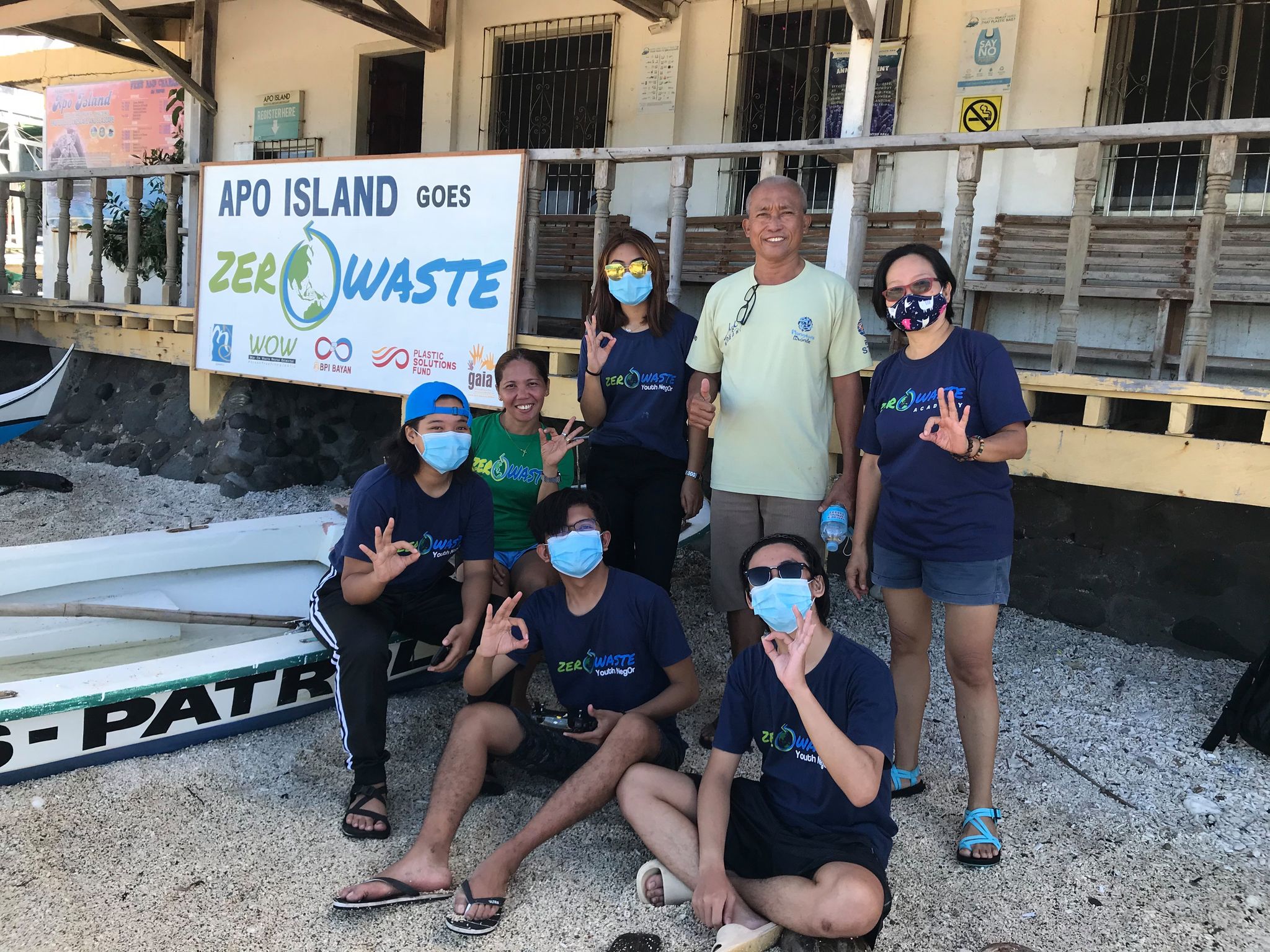
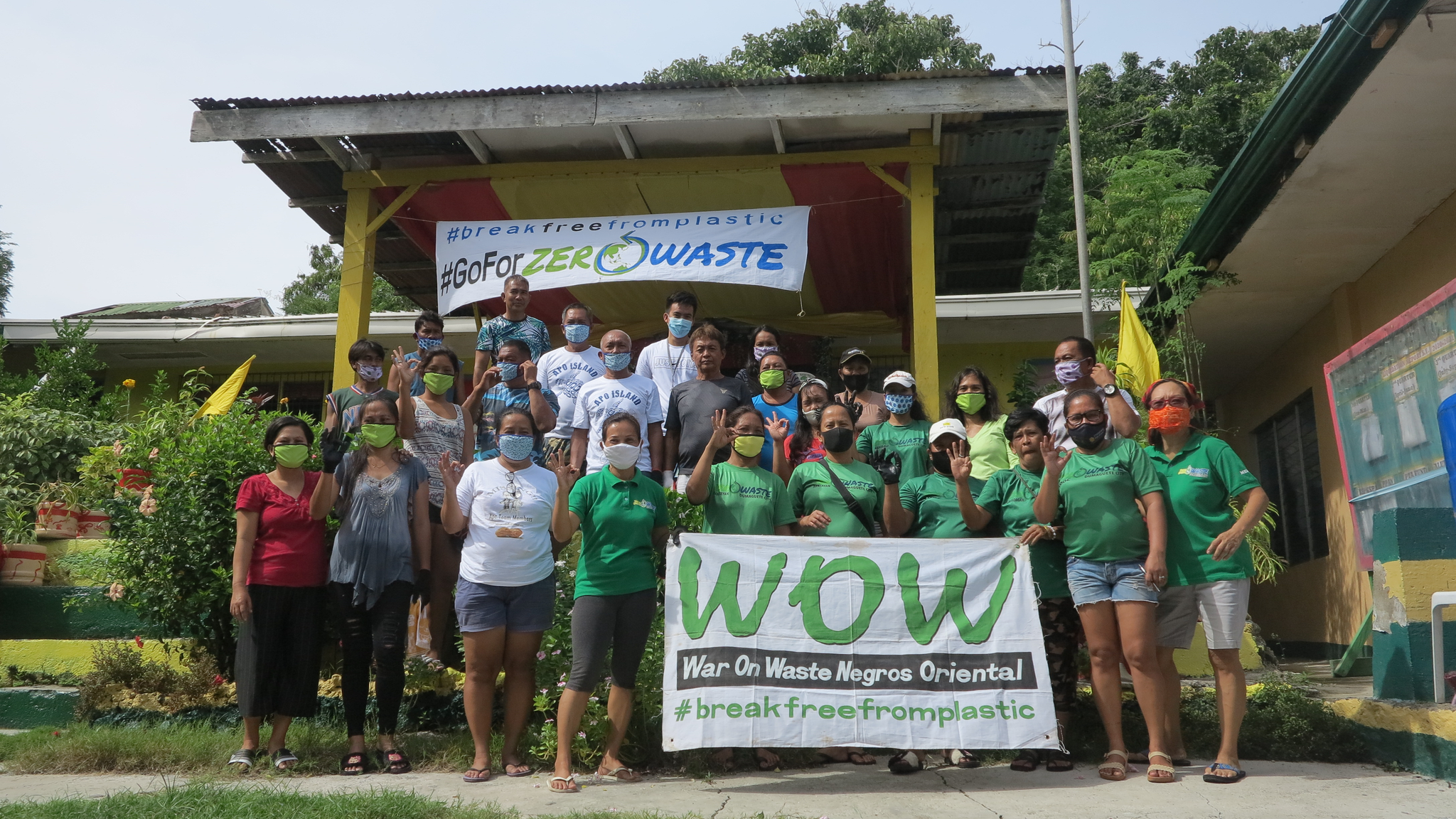
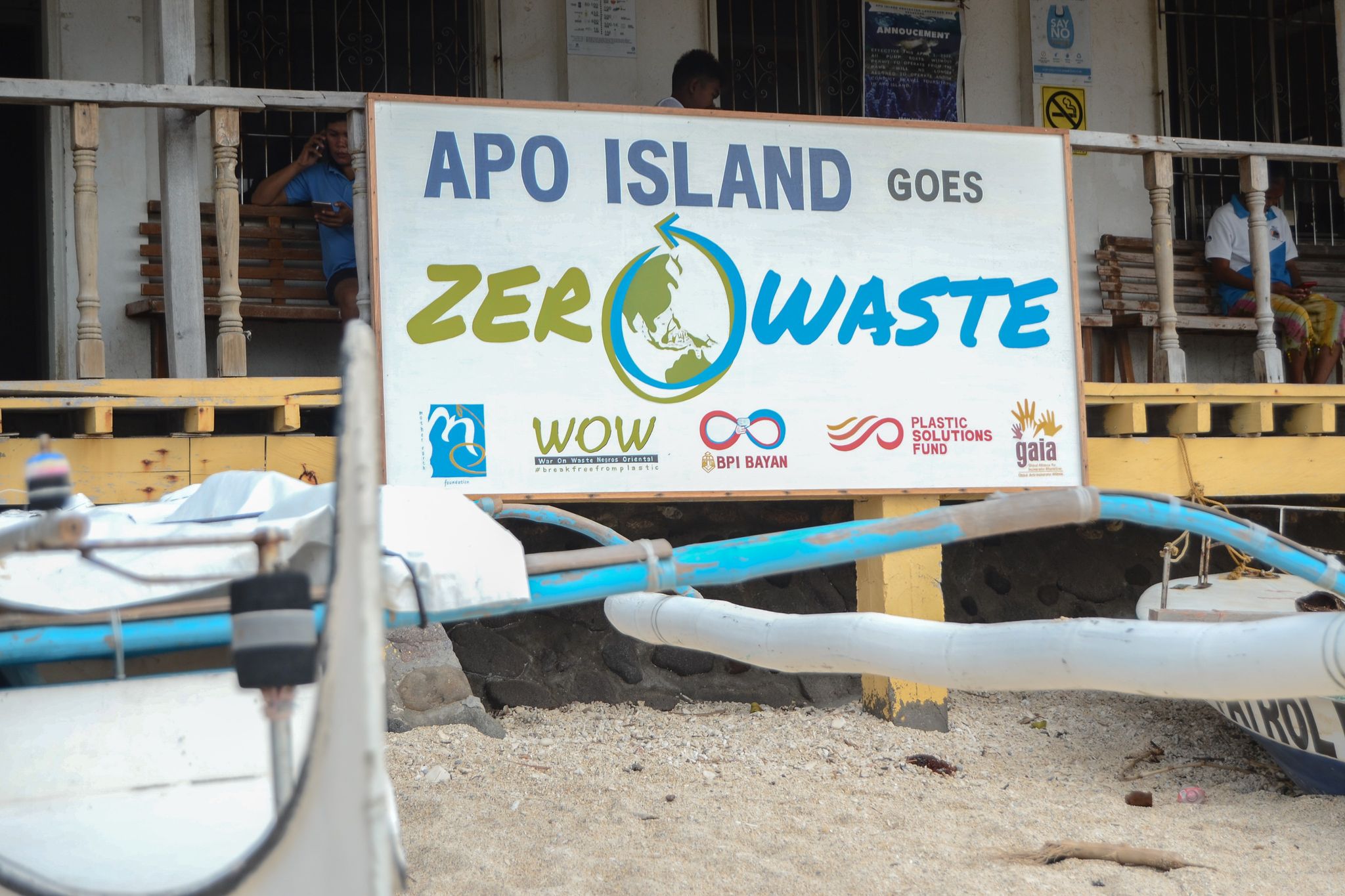
18 September 2021, Philippines–After a year of successfully sustaining its Zero Waste efforts, Apo Island—a barangay (village) in Dauin municipality in Negros Oriental, Philippines—is now tagged as the county’s 1st Zero Waste Island Barangay. 

“The community is proud of what they have achieved in their first year of adopting Zero Waste system and practices,” said Merci Ferrer of War On Waste (WOW) Negros Oriental-Zero Waste Cities Project Manager. She hopes that a better normal will be on the horizon soon, to better celebrate both small and big victories in the war on wastes. 

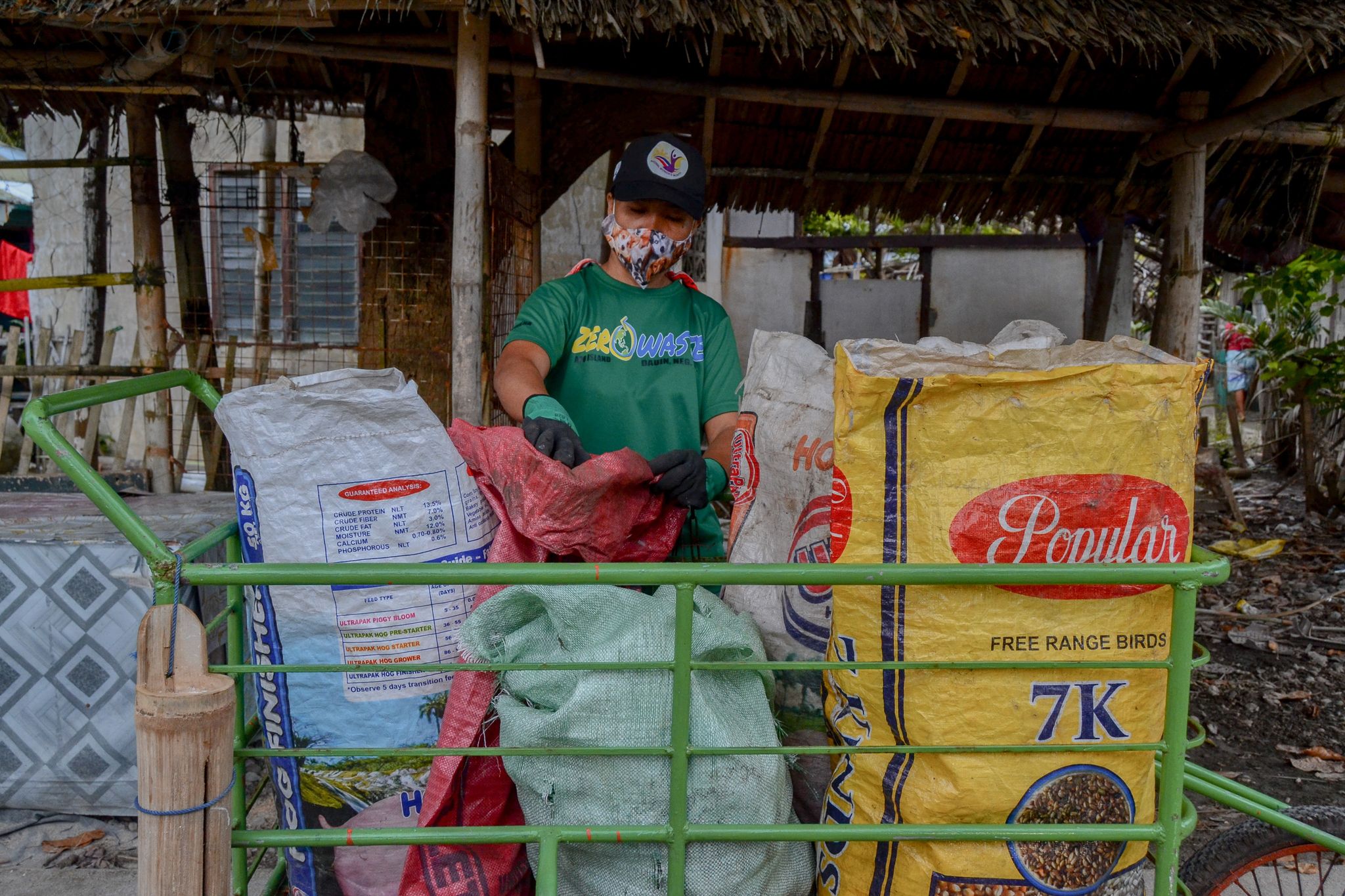
In 2020, Apo Island adopted waste management systems and practices introduced by WOW Negros Oriental in their community. These systems and practices include the conduct of information campaigns to inform households about proper waste segregation at source, implementation of door-to-door segregated waste collection system, use of composting methods, establishment of a decentralized Materials Recovery Facility (MRF) where organic wastes are composted and recyclables are aggregated for junk shop sale, and community members training on waste assessment and brand audits to identify waste composition to help design a waste management system that will work for the island.

“We want to recognize Apo Island for their amazing work on their Zero Waste journey. We want to acknowledge their hard work and to encourage them to sustain it and do more. This is unique: Apo Island is the first Zero Waste Island Barangay  in the Philippines,” said Froilan Grate, GAIA’s Asia Pacific Regional Coordinator.  

To date, Apo Island has seven waste workers, four MRFs, and an ordinance regulating single-use plastics in the island. Moreover, residents in the island now rinse and dry out their plastic bottles, food cans, and other recyclables before throwing them away. Further, residents in Apo Island, including waste collectors and barangay  leaders, expressed their steady support for the Zero Waste Cities Project (ZWCP).

However, despite the consistent efforts of Apo Island, its residents continue to face challenges caused by the inaction of its neighboring communities. “Even if we keep the surroundings clean, because we live on an island, there are times when the strong winds and waves bring the trash from our neighboring towns and communities  onto our shores. This is because our current comes from the northeast of the island; sometimes, the garbage from those areas end up in our shoreline,” said Mario Pascobello, a village leader from Apo Island.  

This 2021, WOW – ZWCP is working to have at least one Zero Waste store and Zero Waste Elementary and High Schools. WOW Negros Oriental also continues to support  Apo women through its livelihood project which uses discarded clothing.

The ZWCP is an initiative of GAIA Asia Pacific and 10 member collaborators from India, Indonesia, and the Philippines and is funded by the Plastic Solutions Fund. The project was brought in Apo Island by WOW Negros Oriental in their village in 2020. It is aimed at promoting decentralized solid waste management, enabling waste reduction policies, identifying and reducing wastes, and creating jobs in collecting and handling recyclable materials and processing at local recyclers, waste depots, and compost facilities.

Apo Island is a tourist destination in the Philippines known for its white beaches, dive spots, and marine sanctuary. It also serves as a living marine laboratory to several universities inside and outside of the country. 

[All photos courtesy of War on Waste – Break Free From Plastic Negros Oriental]

Check out Apo Island Goes Zero Waste video.

Media Contacts:

Sonia Astudillo, Communications Officer, Global Alliance for Incinerator Alternatives (GAIA) Asia Pacific  I sonia@no-burn.org I +63 917 5969286

Merci Ferrer,  Co-convenor, War on Waste Break Free From Plastic Negros Oriental – Philippines, Zero Waste Cities Project- Dumaguete – Negros Oriental, Philippines I merci.ferrer@gmail.com I +63 917 6553498

About GAIA  |  Global Alliance for Incinerator Alternatives is a worldwide alliance of more than 800 grassroots groups, non-governmental organizations, and individuals in over 90 countries whose ultimate vision is a just, toxic-free world without incineration. www.no-burn.org and www.zerowasteworld.org

About War on Waste – Negros Oriental  | WOW is a collective of NGOs, academics and individuals brought together by our passion to help solve waste management challenges in Dumaguete and Negros Oriental.

September 15, 2021 – In a media briefing exclusive for Vietnam journalists, the Global Alliance for Incinerator Alternatives (GAIA) Asia Pacific and the Vietnam Zero Waste Alliance (VZWA) launched a Public Service  Announcement (PSA) video revealing uncomfortable truths about waste incineration, also known as Waste-to-Energy incinerators.

Featuring distinguished professor and environmental scientist, Dr. Jorge Emmanuel, the PSA deflates the arguments offered by proponents of incinerators. “Waste-to-energy (WTE) is simply waste incineration in disguise. It burns tonnes of municipal wastes to generate energy while emitting massive amounts of toxic pollutants and greenhouse gases.” 

In the Global South, waste incineration  is being peddled as a quick-fix solution to waste problems. However, its supposed benefits are far outweighed by health, economic, and environmental costs on cities and communities.

In the PSA video, Dr. Emmanuel substantiates the fears and highlights that waste incinerators do fail in living up to their promises. “Even when governments adopt international emission standards, it doesn’t guarantee that dangerous emissions aren’t being released, especially in developing countries where there is no technical capacity to monitor emissions continuously.” 

In Vietnam, incinerators were introduced as a means to control waste produced by rapid urbanization. Dr Xuan Quach, coordinator of VZWA shared, “Vietnam is home to both large and small-scale incinerators. They collectively burn over 500 tonnes of waste a day. It is worrying that even in Europe where standards are high, waste incinerators have been recorded to generate CO2 , dioxins, and furans.”

Incinerators feed on highly combustible waste like plastic. Mostly made from fossil fuels, plastics that are burned in incinerators will add more than 850 million metric tons of greenhouse gases to the atmosphere—equal to the pollution from 189 new 500-megawatt coal-fired power plants. In Vietnam and the rest of Asia, meanwhile, Dr Quach noted that about half of municipal waste is composed of organic discards, which should be composted instead of incinerated.

 “The calorific value and recovery efficiency of waste incinerators are dismal. We burn a lot of useful material to generate insufficient energy.” She expounds, “These facilities also take away resources that can be recycled, reused, or repurposed – and it affects the livelihoods of sectors that rely on recycling and materials recovery.”

A report released by GAIA found that waste incinerators come into conflict with the waste picking sector as it diverts valuable materials such as plastic, cardboard, paper, and textiles away from waste workers and waste pickers thus disrupting their livelihood and source of income.

In the report, “Zero Waste and Economic Recovery: The Job Creation Potential of Zero Waste Solutions,” GAIA estimates that more jobs can be created from repair, reuse, recycling and composting activities, compared to those that just focus on burning and landfilling waste. By adopting zero waste systems, Ho Chi Minh City, for example, would create at least 18,000 jobs.

Reiterating GAIA’s report and the sentiments of communities affected by waste incinerators, Froilan Grate, regional coordinator of GAIA Asia Pacific states, “Waste incineration is not a magical solution. In truth, waste incinerators would add fuel to the already ravaging flames of toxic wastes, air pollution, and climate change. In comparison, by opting for a Zero Waste path, we would save valuable resources, provide employment, and avoid getting locked into long-term contracts that would zap the economies of municipalities dry. For environment, climate and social justice, Zero Waste is the way to go.”

###

“Waste Burning Exposed”  is a 5-minute Public Service Announcement produced by the Global Alliance for Incinerator Alternatives (GAIA) Asia Pacific with support from the Pacific Environment. Directed by award-winning Filipino director, Ray Gibraltar with animation and technical support provided by Awestruck Productions – a group of young and talented filmmakers from Negros Oriental, Philippines.

Media Contacts:

Sonia Astudillo, Communications Officer, Global Alliance for Incinerator Alternatives (GAIA) Asia Pacific  I sonia@no-burn.org I +63 917 5969286

About GAIA  |  Global Alliance for Incinerator Alternatives is a worldwide alliance of more than 800 grassroots groups, non-governmental organizations, and individuals in over 90 countries whose ultimate vision is a just, toxic-free world without incineration. www.no-burn.org and www.zerowasteworld.org

About Vietnam Zero Waste Alliance  | Vietnam Zero Waste Alliance is a network of organizations and citizens who share a strategy for applying Zero Waste practices to better manage solid waste, reduce plastics, save natural resources and protect Vietnam’s environment. 

Related resources:

IN VIETNAMESE:

Dập tắt ngọn lửa và phơi bày các sự thật

GAIA Châu Á Thái Bình Dương và Liên minh Không Rác Việt Nam tiết lộ sự thật về việc đốt rác 

Ngày 15 tháng 9 năm 2021 – Trong một cuộc họp báo dành riêng cho các nhà báo Việt Nam, Liên minh Toàn cầu về Giải pháp Thay thế Lò đốt Châu Á Thái Bình Dương  (GAIA)  và Liên minh Không Rác Việt Nam (VZWA) đã đưa ra Thông điệp vì lợi ích của công chúng (PSA) kéo dài 5 phút tiết lộ những sự thật khó chịu về việc đốt rác cũng như các lò đốt rác phát điện. 

Với sự tham gia của giáo sư – nhà khoa học môi trường nổi tiếng, Tiến sĩ Jorge Emmanuel, Thông điệp vì lợi ích của công chúng đã loại bỏ các lập luận của những người ủng hộ lò đốt. “Biến Chất thải thành năng lượng (WTE) chỉ đơn giản là việc đốt chất thải một cách trá hình. Nó đốt hàng tấn chất thải đô thị để tạo ra năng lượng đồng thời thải ra một lượng lớn chất ô nhiễm độc hại và khí nhà kính. “

Ở khu vực Nam bán cầu, việc đốt chất thải đang được coi là một giải pháp khắc phục các vấn đề về chất thải nhanh chóng. Tuy nhiên, những lợi ích giả định của nó không thể vượt qua các chi phí về sức khỏe, kinh tế và môi trường đối với các thành phố và cộng đồng.

Trong “Thông điệp vì lợi ích của công chúng”, Tiến sĩ Emmanuel đã chứng minh những nỗi sợ hãi và nhấn mạnh rằng các lò đốt rác không thực hiện được lời hứa của họ. “Ngay cả khi các chính phủ áp dụng các tiêu chuẩn khí thải quốc tế, điều đó cũng không đảm bảo rằng lượng khí thải nguy hại sẽ không được thải ra, đặc biệt là ở các nước đang phát triển, nơi không có năng lực kỹ thuật để giám sát phát thải liên tục.”

Ở Việt Nam, lò đốt rác được đưa vào sử dụng như một cách thức để kiểm soát rác thải do quá trình đô thị hóa nhanh chóng. Tiến sĩ  Quách Thị Xuân, điều phối viên của Liên minh Không Rác Việt Nam chia sẻ: “Việt Nam là nơi có các lò đốt quy mô lớn và nhỏ nói chung – chúng đốt hơn 500 tấn rác thải mỗi ngày. Điều đáng lo ngại là ngay cả ở châu Âu, nơi có các tiêu chuẩn cao, đã có sự ghi nhận về việc các lò đốt rác thải tạo ra khí nhà kính, dioxin và furan”.

Các lò đốt rác sử dụng chất thải dễ cháy như nhựa. Phần lớn các chất thải này được làm từ nhiên liệu hóa thạch, nhựa được đốt trong các lò đốt sẽ tạo ra thêm hơn 850 triệu tấn khí nhà kính cho bầu khí quyển – tương đương với mức ô nhiễm gây ra bởi 189 nhà máy nhiệt điện than có công suất 500 megawatt mới. Trong khi đó, Tiến sĩ Xuân lưu ý rằng khoảng một nửa lượng rác thải đô thị ở Việt Nam và các khu vực còn lại của châu Á là rác hữu cơ, chúng nên được ủ làm phân compost thay vì đốt.

Các nghiên cứu cũng phát hiện ra rằng khí thải độc hại có thể được gây ra từ việc vận hành không thành công vì rác thải có chất lượng thấp. Tiến sĩ Xuân cho biết thêm, “ở Việt Nam và các khu vực còn lại của châu Á, thành phần rác nhựa và các vật liệu dễ cháy khác chỉ chiếm 20-30% tổng số chất thải”.

“Nhiệt trị và hiệu suất thu hồi năng lượng của các lò đốt chất thải rất kém. Chúng ta đốt rất nhiều vật liệu hữu ích trong khi không tạo ra đủ năng lượng ” – Tiến sĩ giải thích. Những lò đốt này cũng lấy đi các nguồn tài nguyên có thể được tái chế, tái sử dụng hoặc dùng cho mục đích khác – và nó ảnh hưởng đến sinh kế của các ngành dựa vào tái chế và thu hồi vật liệu.”

Một báo cáo do GAIA công bố cho biết rằng các lò đốt rác có mâu thuẫn với lĩnh vực thu gom rác thải vì nó lấy đi các vật liệu có giá trị như nhựa, bìa cứng, giấy và vải dệt mà lẽ ra được thu gom bởi các công nhân môi trường và người nhặt rác do đó làm gián đoạn sinh kế và nguồn thu nhập của họ.

Trong báo cáo “Mô hình Không Chất Thải và Phục hồi Kinh Tế: Tiềm năng tạo việc làm của các giải pháp từ Mô hình Không Chất Thải”, GAIA ước tính rằng nhiều việc làm hơn có thể được tạo ra nhờ các hoạt động sửa chữa, tái sử dụng, tái chế và ủ phân compost; so với những hoạt động chỉ tập trung vào đốt và chôn lấp chất thải. Ví dụ, Thành phố Hồ Chí Minh sẽ tạo ra ít nhất 18.000 việc làm bằng cách áp dụng hệ thống Mô hình Không Chất Thải.

Nhắc lại báo cáo của GAIA và cảm nhận của cộng đồng bị ảnh hưởng bởi lò đốt rác thải, Froilan Grate, điều phối viên GAIA ở khu vực Châu Á Thái Bình Dương cho biết: “Đốt rác không phải là một giải pháp kỳ diệu. Trên thực tế, các lò đốt rác sẽ đổ thêm dầu vào ngọn lửa tàn phá vốn đã bao gồm chất thải độc hại, ô nhiễm không khí và biến đổi khí hậu. Trong khi đó, bằng cách chọn Mô Hình Không Chất Thải, chúng ta sẽ tiết kiệm được các nguồn tài nguyên quý giá, cung cấp việc làm và tránh bị bó buộc vào các hợp đồng dài hạn khiến nền kinh tế của các thành phố trở nên cạn kiệt. Vì môi trường và công bằng xã hội, Mô Hình Không Chất Thải chính là giải pháp cần thực hiện.

###

“Phơi bày sự thật về đốt rác thải” là một thông điệp được đưa ra vì lợi ích của công chúng kéo dài trong 5 phút do Liên minh Toàn cầu về Giải pháp Thay thế Lò đốt (GAIA) Châu Á Thái Bình Dương thực hiện với sự hỗ trợ từ Pacific Environment. Thông điệp này được chỉ đạo bởi đạo diễn người Philippines từng đoạt giải thưởng, Ray Gibraltar và sự hỗ trợ kỹ thuật và hoạt hình được cung cấp bởi Awestruck Productions – một nhóm các nhà làm phim trẻ và tài năng đến từ Negros Oriental, Philippines.