In this discussion paper, GAIA and SOMO synthesise insights from our June 2026 virtual learning circle on lithium-ion battery overproduction. The session brought together more than twenty participants from industry, research, civil society, labour organisations, and affected community advocates — spanning China, Latin America, Europe, and the United States. Global manufacturing capacity for lithium-ion batteries is now estimated at two to five times greater than current demand — a structural gap expected to persist well into the 2030s. This paper asks: what is driving it, who pays the price, and what can we do about it?
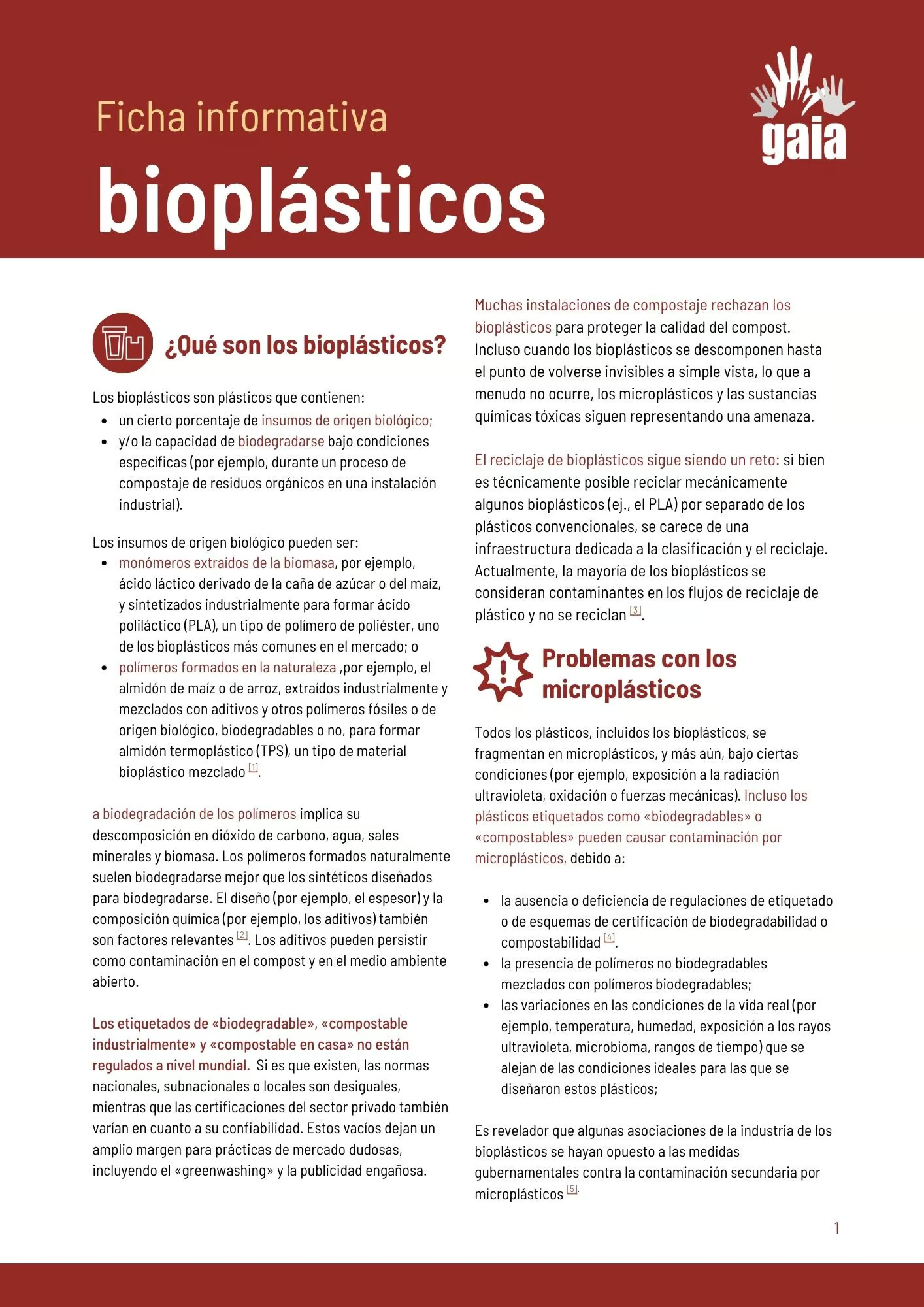
«Bio» no significa que sea bueno o seguro. Con demasiada frecuencia, el énfasis en el uso de los bioplásticos sirve sólo para encubrir con argumentos ecológicos la sobreproducción masiva de plásticos de un solo uso o de corta vida útil. Los bioplásticos actuales son, en su gran mayoría, sustitutos lamentables de los plásticos convencionales de un solo uso, que terminan en los vertederos y perpetúan la contaminación por microplásticos.
Related Resources
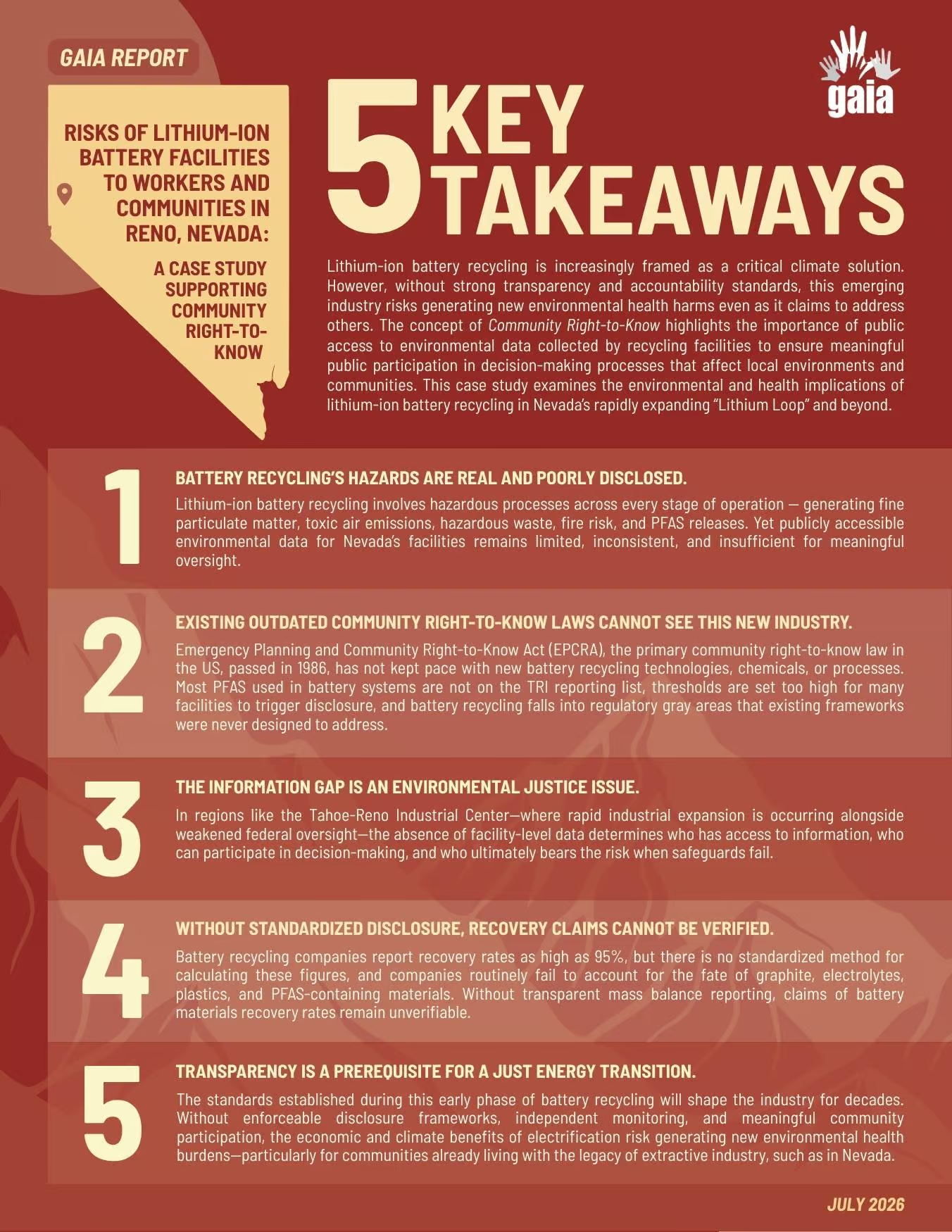
5 Key Takeaways of Case Study: Risks of Lithium-ion Battery Facilities to Workers and Communities in Reno, NV
United States & Canada - Batteries -
The concept of Community Right-to-Know underscores the importance of public access to environmental data collected by recycling facilities to ensure meaningful public participation in decision-making processes that affect local environments and communities. This fact sheet highlights the five key takeaways of the report, Risks of Lithium-ion Battery Facilities to Workers and Communities in Reno, which examines the environmental and health implications of lithium-ion battery recycling in Nevada’s rapidly expanding “Lithium Loop” and beyond.
Manila – The Global Alliance for Incinerator Alternatives (GAIA) – Asia Pacific condemns the continued promotion and commitment of the Asian Development Bank (ADB) to invest in Waste-to-Energy (WTE) incinerators. It has also relentlessly shaped country and regional energy and climate policies and guidelines to include this polluting technology as a renewable or clean source of energy.
The ADB has conducted the last four days of the Asia Clean Energy Forum (ACEF) as a virtual marketing platform for the WTE industry and its backers to sell this technology to governments and development planners. While WTE promoters enjoyed speaking spaces to promote its false solutions, there was no space provided for communities and grassroots organizations to challenge the purported promises of environmental, social, and financial opportunities from WTE incinerators and to be heard on how these technologies impact their health, jobs, and their environment. In summary, the ACEF has been nothing but an arena for industry polluters in shaping the narrative of what a low-carbon energy mix should look like for the region.
Investing in WTE incinerators undermines national and global goals to keep temperatures at 1.5 degrees and achieve resilience amid the urgency to act strongly on climate, health, and fiscal emergencies in the region. Incinerators are dirtier than the rest of the grid. Per unit of electricity output, they emit 3.8 times as much greenhouse gases — 1.9 times as much carbon dioxide, 15 times as much nitrous oxide and methane, and 66 times as much biogenic carbon dioxide as the grid average. WTE incinerators are also known to create persistent organic pollutants as byproducts of their operations.
The ACEF’s silence on the impacts of WTE incinerators on poor and marginalized communities. WTE incinerators are always placed beside low-income communities that cause long-term, multi-generational health impacts from toxic air and groundwater pollution. WTE also threatens informal workers in the waste sector and poses a threat to the generation of green jobs as these facilities wipe out opportunities by burning waste that should have been up for recycling. WTE destroys the resilience of the poor and marginalized communities and should have no place in the just transition.
Instead of bringing toxic energy and unsustainable debts, we urge the ADB to invest more in environmental waste management priorities which begins with waste reduction, reuse, to recycling instead of incinerating precious and finite resources.
The ADB, as a development bank, whose aim is to eradicate poverty and achieve sustainable development in the region should also cease in shaping the narrative that industry polluters are the drivers of innovation on energy, waste, and inclusion. This narrative negates the existing Zero Waste practices and communities that sustainable waste management patterns in the Asia Pacific.
We are also deeply concerned that the newly-adopted ADB Energy Policy 2021, which states that investments in WTE incinerators shall flow only after meeting the following requirements 1) after careful consideration of their political, social, and environmental contexts and in accordance with international conventions, 2) provided that the feedstock for combustion results from a prudent order of waste management priorities, and lastly 3) first reducing waste generation, then exploiting the options for reusing and recycling materials, remains to be an empty promise. To date, we have not seen any guidance framework to ensure that these precautionary measures and priorities are in place. We strongly call for the immediate implementation of this policy requirement immediately.
We call on the ADB to stop undermining national and global development objectives and align its investment policy to the requirements of the Paris Agreement, international instruments, and other development objectives for a truly just and resilient path to net zero. ####
Yobel Novian Putra, GAIA Asia Pacific Climate & Clean Energy Associate yobel@no-burn.org
Interview with Nguyen Thi Nhat Anh by Sonia G. Astudillo and Dan Abril
The Centre for Social Research and Development (CSRD), a self-funded NGO based in Hue Vietnam, works to seek justice for vulnerable communities, especially women. A team of four women with diverse backgrounds from environmental science, economics, and public policy, these women are passionate about seeing other women excel not just in Hue but also in their project sites in adjacent provinces in Central Vietnam and lower Mekong.
GAIA sat down with Nhat Anh, CSRD’s Director and one of the youngest directors in the network, to talk about their work and future plans.
Nhat Anh is a GAIA-BFFP Asia Pacific Communications Officers Fellow whose graduate school thesis on water management motivated her to pursue environmental NGO work and leave her life in Hanoi to join CSRD in Hue city.
What are CSRD’s top priorities?
Top of our list is women waste workers especially those in the informal sector. We conduct action research to identify issues related to them such as a lack of benefit and support from the government. Our focus has always been on women and how they are affected or will be affected by climate change.
Why women? Because while Kinh women in Vietnam are a power within the family, they are almost always the most vulnerable in the community especially in the rural, mountainous areas and in the informal sectors.
What are the main ongoing campaigns?
We are doing research on the current waste direction in Hue city. This will guide us in our projects in the coming years. In this project, we also have some activities to seek sustainable livelihood initiatives whose aim is directed towards a circular economy and supporting waste workers in generating additional income.
In the past, we also conducted trainings on preventing sexual violence for women.
Aside from being one of the few organizations in the network working on women empowerment, what are your biggest accomplishments/achievements?
One is promoting women waste workers’ role in Hue’s waste value chain, especially waste pickers in informal sector in An Dong ward through feminist participatory action research (FPAR). In the FPAR project, we treat our participants (women waste workers) as co-researchers. We try to understand everything about waste from the perspectives of women who are working directly with waste every day. After that, we can understand their demand and capacity to have suitable suggestions or support.
What challenges are you facing? How is your work impacted by the COVID crisis?
Last year, COVID delayed our activities and we could not work with the communities. We cannot organize the women and not everyone has gadgets to communicate and coordinate the work. In 2021, the government too became so strict with people’s mobility because of COVID 19. To overcome that, we partnered with the local government to organize the communities and it helped us move our work forward.
What are the main environmental issues that your country/region is facing?
Our landfills are filling up. There are waste treatment facilities near rice fields. Landfills in Vietnam are nearly filled. Because of this, the health of the residents, including women waste workers, are impacted seriously from the waste leakage and smoke from burning waste.
How do you see your organization’s work evolving in the next few years?
In the next 5 years, we still focus on climate change and waste management. Our target groups are still vulnerable women, not only women impacted by climate change but also women in waste informal sector. We also want to raise public awareness on the vulnerability of these women. They are strong women, but they still need empathy from others.
Finally, we also want to apply the concept of a circular economy in the Zero Waste communities and see it being applied in people’s livelihood.
What are your thoughts on the waste crisis that many countries in your region (and in the world) are living in right now?
When I participated in the AP Comms Officers Fellowship – it changed my way of thinking. In addressing the waste issue, we can maybe start from consumption but let’s not also forget the importance of the production side. Humans buy a lot in the inevitable trend of modern consumerism and it is not always easy to change their habits but we are trying with the communications campaigns on waste. I think it is necessary to pay attention to companies and how they manufacture their products, and to make them accountable. However, we need to balance both sides, because without demand for unnecessary single-use items, we can lessen our use and production of it.
Education is the key, especially schools in the K-12 system, and even universities. My young brothers see my behaviors and feel quite abnormal in comparison with their friends. But, luckily, they still form some good habits such as refusing unnecessary nylon bags. This is just a small example to demonstrate the importance of education at home and at school. I think to make greater impacts, we need a Zero Waste curriculum embedded in the formal education system. Here, students can gain updated knowledge on sustainable development and global issues like climate change, and they also have chances to practise Zero Waste at class level. I believe in the youngsters, they are the future of our Earth!
Along with this bottom-up approach, we also need to promote appropriate policies at school, district, provincial and national levels from top-down view. Policies pave the way for teachers’ initiatives to be replicated. However if teachers and students themselves don’t want to change, the policy, no matter how good, is difficult to implement effectively. Therefore, we need consensus from stakeholders at all levels.
Do you collaborate with partners in other regions? If so, how?
We work closely with the local government and the Vietnam Women’s Union, a socio-political organization that represents the voice of women, to promote policies and programs which bring better benefits to vulnerable women. The Union is a mass organization in all levels, from central government to villages, and they play the role of implementer for so many policies related to women.
We also work with other organizations in the region depending on the kind and sector of projects in progress.
How does your work on waste relate to social justice?
Our work with women waste workers is social justice. Women waste pickers are informal employees and receive terrible income without social and health insurance. Women waste pickers contribute to the recycling sector and yet they are usually left to live in poverty.
We work to strengthen their capabilities and enable them to earn more income in a sustainable and circular way. There are lots of solutions all over the world, but the best solution are activities which meet the demand and capacity of local people and can be run by themselves. Therefore, local action is very important in our work.
I believe that waste management is better for women because women are more in touch with the domestic path. Women leading the waste management system can lead to better understanding and then better support to women waste workers in both formal and informal sectors.
Who do you admire most in the environmental work (in your country or in the world)?
I admire so many people. Everyone has strong points. But it is women waste pickers whom I consider our silent heroes. Not known but they contribute a lot to protect our Mother Gaia. When I organize meetings with them, I feel their positive energy. Women waste workers take pride in their work, and know that this work not only caters for them but also protects the natural environment. Their tasks might seem menial but are for our Earth.
A drop of water makes our ocean so we need small but regular efforts from every individual, especially waste collectors and pickers, to keep our Earth green.
_________
Interested in empowering women waste workers in Vietnam? Check out www.csrd.vn and support their ongoing internal research on waste production to identify the value chain of waste, production, and consumption. More funds can support other sectors that this all-women team want to investigate. CSRD is a member of the Vietnam Zero Waste Alliance (VZWA), a network of organizations and citizens who share a strategy for applying Zero Waste practices to better manage solid waste, reduce plastics, save natural resources, and protect Vietnam’s environment.
Photos courtesy of CSRD-Hue
The United Nations Environment Assembly adopts the proposal to create a mandate addressing plastic pollution at every stage and recognizes role of informal waste workers during its fifth session in Nairobi (UNEA 5.2)
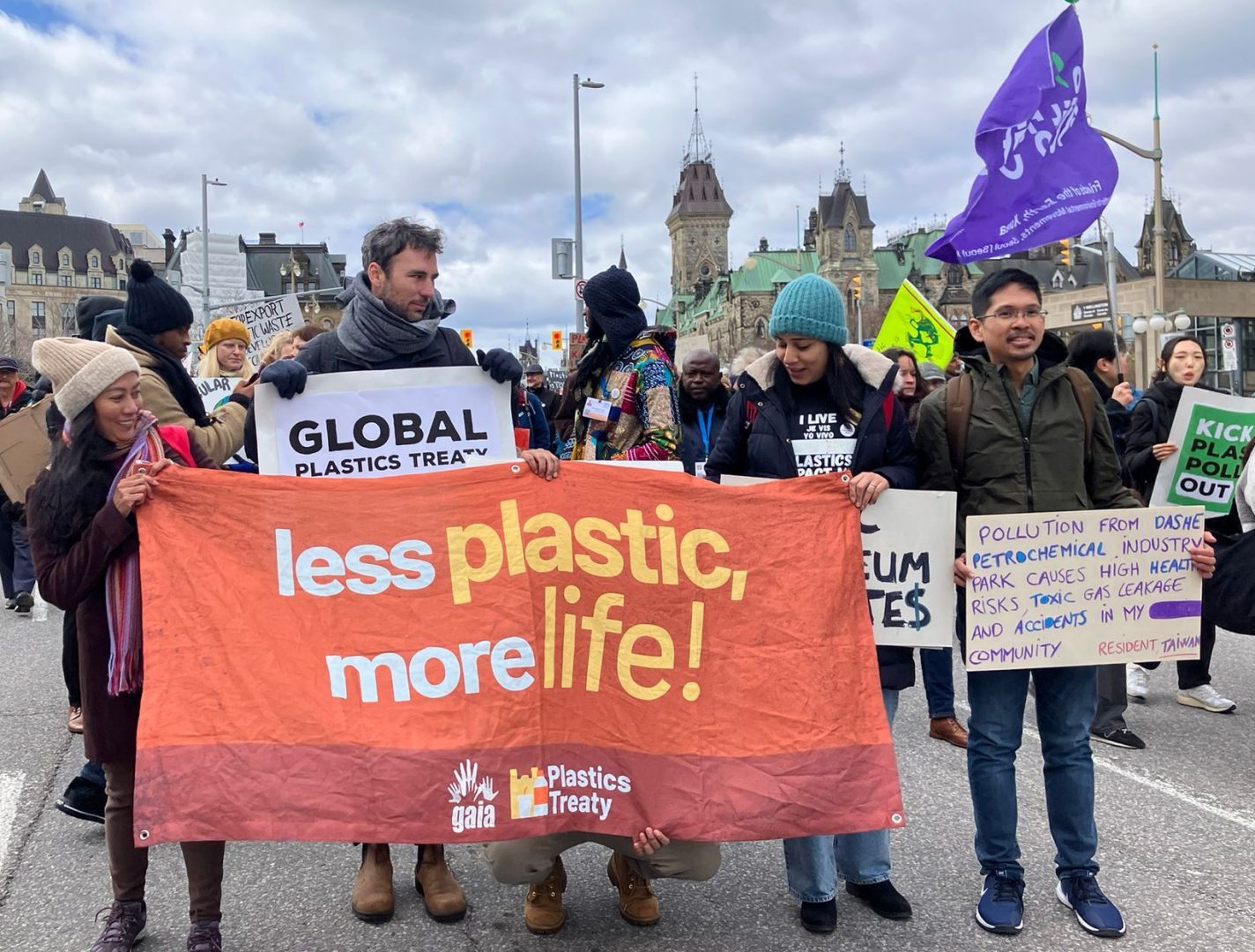
MANILA— The Global Alliance for Incinerator Alternatives (GAIA) and the #breakfreefromplastic movement welcome the adoption of the landmark mandate calling for the development of a global plastics treaty which was adopted during the resumed fifth session of United Nations Environment Assembly (UNEA 5.2).
The mandate titled, “End plastic pollution: Towards an international legally binding instrument”, opens the negotiating table for governments to come up with a legally binding treaty that covers the entire life cycle of plastic.
This treaty, which is urgently needed to address the plastic crisis at a global scale, is expected to be developed and finalized over the next two years, led by the International Negotiating Committee (INC).
If plastic production and use continue to grow at its current rate, its greenhouse gas emissions by 2030 could be equivalent to the emissions of more than 295 new 500-megawatt coal-fired power plants. At this rate, emissions throughout the plastics life cycle threatens any possibility of meeting global climate targets. Moreover, plastic pollution goes beyond national borders. Toxic plastic particles contaminate water, air, and the food chain, ultimately harming human health.
Advocacy groups across Asia Pacific reiterate the call for a Global Plastics Treaty that:
addresses the full lifecycle of plastics and its impacts
integrates the voices and experiences of waste pickers
provides accessible and transparent data on plastic production
enforces strong Extended Producer Responsibility (EPR) with clear upstream targets
has clear language against false solutions such as incineration, chemical recycling, among others.
“We are elated that the contribution of informal waste workers is finally being recognized by this governing body,” Froilan Grate, GAIA Asia Pacific Coordinator, said. “This is an important milestone. Our members and communities have shown for years how critical their role is in achieving Zero Waste. .“ We hope that this opens the door for more discussions on their livelihood, protection, and security
Ahead of UNEA 5.2, more than two hundred environmental groups in the Break Free From Plastic (BFFP) movement and the Global Alliance for Incinerator Alternatives (GAIA) in Asia Pacific, and over 1 million people across the world, urged their respective governments to support the call towards a legally binding plastics treaty that covers not only marine plastic pollution but the full life cycle of plastics—from extraction, production, use, and disposal to remediation.
Quotes from environmental organizations and leading experts can be accessed here.
EARTH Thailand: Banking on citizen science towards environmental activism and protection
Interview with Penchom Saetang by Sonia G. Astudillo and Dan Abril
Filing an EIA lawsuit. Photo courtesy of EARTH Thailand
For Penchom Saetang, Executive Director of EARTH Thailand, it all started in the 1991 chemical explosion in the port of Klong Toey in Bangkok that ripped chemical warehouses and shanties in the area. With over 23 kinds of chemicals stored in the warehouses and a newly established military government, “the Thai officers could not handle the explosion, nor identify the kind and volume of chemicals present.”
Together with like-minded friends, Penchom organized a public seminar to explore the situation and demand the government to release information about the explosion and provide assistance to the victims. By the end of 1991, a Toxic Chemical Committee was formed to assist victims, discuss industrialization issues, assess existing industrial policies, and provide support for banning hazardous chemicals.
From the committee, this Liberal Arts and Journalism graduate, set up the Campaign for Alternative Industrial Network (CAIN) in 1998 and eleven years later in 2009, CAIN gave way to Ecological Alert and Recovery or simply, EARTH Thailand which was registered as a foundation.
From 3 to 4 staff, EARTH now has 10 regular employees and while it has the same objectives and mission as CAIN’s, the work has greatly expanded with more activities like environmental monitoring in communities, tools to analyze chemicals in the environment, and more experts in the field who can provide assistance including legal assistance to the community.
GAIA sat down with Penchom to talk about EARTH’s project, plans, challenges, and successes.
What are EARTH Thailand’s top priorities?
We promote social and environmental justice to communities affected by bad waste management, illegal dumping, and communities that are being affected by hazardous waste recycling. We also work with communities affected by the waste trade of plastic scraps and other scraps. In 2008, the Thailand and the Japanese government were entering into a contract on economic partnership or the form of free trade agreement. We learned that the draft bipartite contract would allow waste trade and that once we enter into the partnership, Japan can send in their waste to Thailand. We could not stop the partnership because a number of Asian countries already signed it. That was the first time we had a campaign against the waste trade. Since then, we wanted to know the impacts related to waste imports. We found that Thailand imported huge volumes of plastic waste from other countries and there was an increase in this importation in 2018 when China signed the Sword Policy banning the import of plastic and other materials.
Ban Plastic. Photo courtesy of EARTH Thailand
What are EARTH Thailand’s main and ongoing campaigns?
We work on the waste importation issue. This includes plastic, electronics, metal scraps, and other hazardous waste. We are also opposing the recycling of electronics and hazardous waste and also pushing for the Basel ban amendment ratification.
There are several waste-to-energy project proposals in the country and we are opposing that too.
We have several citizen science projects on environment, health, and reducing industrial pollution. What we do is we provide support to communities to have environmental monitoring and sampling and support them by producing reports that they can use to push the government to solve environmental issues in the area.
We also work with partners on other issues such as mercury and sustainable development.
What are your biggest accomplishments/achievements?
What we do is strengthen the community and give them a better solution / stronger negotiation to their problem. Our role in supporting the communities has stimulated/encouraged the actions of the environmental and health agencies.
Some concrete achievements like in 2002, we succeeded in the campaign in calling for additional health damage compensation provided to the chemical explosion victim of 1991 from the government.
We are also a part of the social movement to support the Minamata Convention and Basel Convention. We supported the government to ratify the Minamata Convention and the Thai government now had accession to the Minamata Convention. This year the government is considering ratifying the Basel Ban Amendment. And now we are campaigning to end the plastic scrap importation to Thailand and we hope it will succeed.
Using the citizen science approach, we have set up environmental monitoring activities in different communities. This can empower the communities in their fight with industrial pollution and toxic waste problems in a number of communities.
We do research to support lawsuits of communities against the hazardous waste recycling case and in 2020 one community in Ratchaburi Province which had fought for almost 20 years against the recycling company won a class-action lawsuit against the recycling company
There are three levels to our work:
Community which includes training, consultancy, data gathering, and simplifying information for their use in environmental movement
Connecting with international network such as IPEN, GAIA, and CSOs in Thailand
Policy Advocacy and law improvement which involves advocating for environmental law.
Photo courtesy of EARTH Thailand
What challenges are you currently facing? How is your work impacted by the COVID crisis?
There are many. There are external factors such as in the earlier period of our activities, we found that we cannot coordinate with agencies such as environmental agencies that should be working on industrial pollution. There was no collaboration there. Recently, it is getting better but still challenging because the biggest environmental policies are being dominated by industrial investors or big businesses. It is difficult to overcome them, particularly in the legal & policy areas.
With regards to waste management, plastic waste is very challenging, especially at the policy level. Local political parties and authorities didn’t want to enforce measures to encourage the general public to reduce plastic waste. Plastic reduction is still on a voluntary base. We still have a lot to do to solve the plastic issue.
With environmental justice, our problem is the mentality and attitude of the government and judicial authority. The process takes a long time. We need a platform for dialogue to change attitudes and mindsets on environmental justice. We need to think about how we can enter into their way of thinking. Corruption is also a big challenge.
Internally, EARTH has a big problem with staff turnover. Most of the staff stay short term and often move to other fields such as the government or private sectors or pursue higher education. Every time it happens, I have to start again and train new staff on how to analyze data, do advocacy work… It is hard for us to continue working efficiently and to conduct effective campaigns. In fighting the hazardous waste and pollution issue, we still need more knowledge and technical things to strengthen our action and campaign.
The budget is also difficult because we have to raise funds. Projects last for four years at most and we have to comply with all the requirements of the funding agencies and it is difficult to handle everything.
With the pandemic, we cannot move and do environmental monitoring, particularly in impacted areas. Project implementation could not happen and there are an increasing number of online meetings and conferences.
What are the main environmental issues that your country/region is facing?
There are big issues such as environmental contamination/deterioration by industrial pollution, the state of marginalized people and their land rights and then there are dam constructions and climate change related to deforestation. Lots of things but now the big challenge we have in Thailand is about special economic development. It is a big and tough challenge for CSOs and many communities. Thailand just declared 3 provinces under the Eastern Economic Corridor (ECC) when they will receive a special period in investment and we know those industrial investments do not always go well with environmental protection. The government also announced more than 20 special economic zones across the country and those have all become pollution hotspots.
KhonKaen hotspot. Photo courtesy of EARTH Thailand
Farmers and agriculturists are affected, then the marginalized groups who are discriminated against under different laws but even more so with the special economic zone, and then labour groups discriminated against on their daily wage and no risk protection to chemical exposure, and then migrant workers who are the worst of.
Tha Thum Hotspot. Photo courtesy of EARTH Thailand
These economic zones bring in big investors and corporations and all types of investments from multinational corporations. We observe from 2018 that there have been an increasing number of waste recycling being promoted and constructed in the EEC area. We launched a campaign against dirty recycling this 2021 and call for more regulations and measures to control toxic emissions. Beyond air pollution, other problems from waste recycling are wastewater, land contamination, and illegal dumping. Waste recycling is now one of the big problems of EARTH Thailand aside from WTE projects and waste dumping.
Lawsuit against dirty recycling. Photo courtesy of EARTH Thailand
How do you see your organization’s work evolving in the next few years?
We try to promote the citizen scientist team to have better technical knowledge with some scientific tools which can help them provide environmental monitoring and analyzing contamination in areas, provide good reports, and teach negotiating power to communities to policy and decision-makers.
We hope to develop local communities to campaign against dirty recyclers. We can build the citizen scientist team to provide training support and provide consultancy to affected communities. In parallel, we have to move on and advocate for other policy changes such as the modification of the environmental laws.
We will also campaign for Extended Producer Responsibility (EPR) and continue working on it along with the circular economy.
Photo courtesy of EARTH Thailand
Citizen science is very important because when we talk about health, the environment, and science, people have the belief that those things fall in the hands of scientists, economists, and academic institutions. When we want to do environmental monitoring, the community doesn’t have the skill to do that. But we have to fight environmental problems. Citizen scientists need to work with the community. If we don’t have a device, we can’t do anything and we can’t ask for assistance from academic institutions for free. People need to depend on people. If we’re fighting pollution, we need to strengthen citizen science and use our knowledge and provide support to affected communities.
Citizen science approach is used by many countries to empower the negotiation skills of the people.
What are your thoughts on the waste crisis that many countries in your region (and in the world) are living in right now?
Waste importation from the west is still happening. Thailand and other countries in the region are targets for dumping due to corruption in these countries and the low labour cost.
Plastic waste is related to consumption and economic “development”. We have to keep watching this issue because it will be a big crisis in the future even if countries have policies and similar goals to reduce.
I call this the crisis of recycling. Low-income countries such as Cambodia, Laos, Myanmar, and other low-income countries in Africa are dealing with the plastic waste trade because richer countries can send their waste to them in the guise of recycling and there are no environmental regulations to control this.
Who inspires you the most in the environmental work (in your country or in the world)?
I respect and admire those who contribute to public interest and social well being, no specific idols. I learned from some teachers and friends during my schooling and undergraduate life and I wanted to do something related to public interest like them. After graduation, I initially was not interested in environmental work. But later, I realized that in this area, I can do something for the greater good.
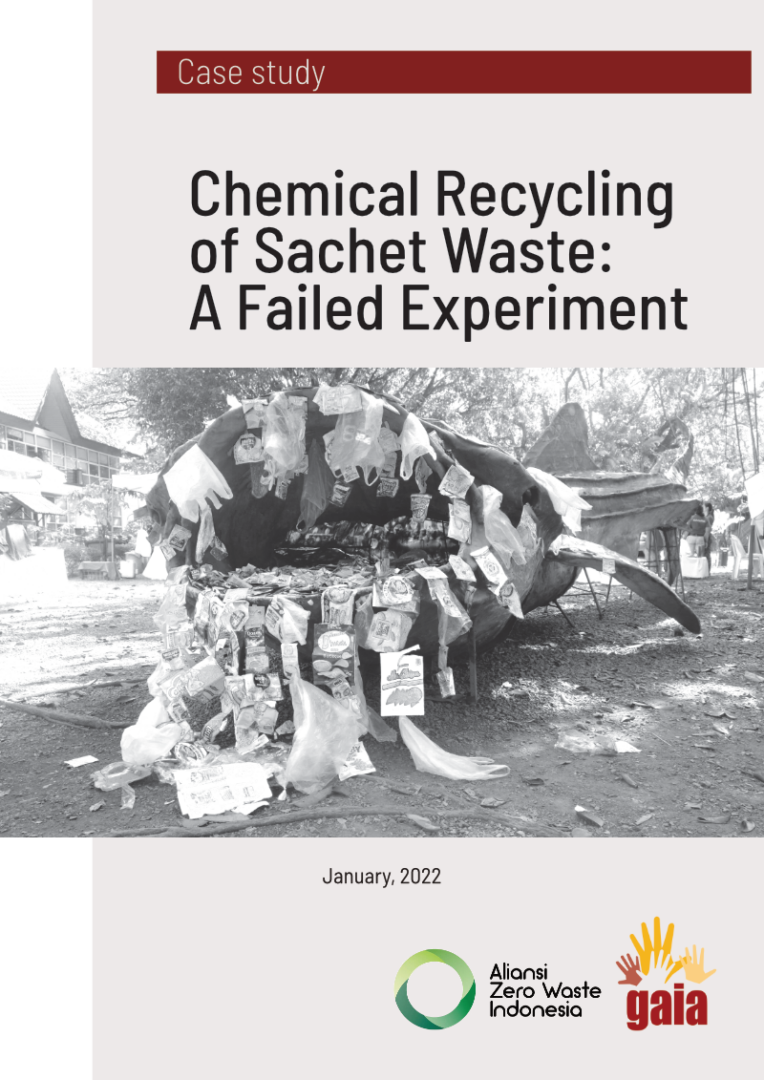
In response to the unprecedented plastic pollution crisis, fast-moving consumer goods companies and the petrochemical industry have supported and promoted countless miraculous-sounding technologies, pushing back on their bad reputations as major plastic polluters. CreaSolv is Unilever Indonesia’s flagship project on this front, and the media has touted it as an example of a technological innovation that can solve the entire global plastic waste problem by recycling the lowest-value plastic.
Two years after the highly-celebrated launch of the pilot plant in Indonesia in 2017, however, the fuss around the CreaSolv project quieted down as the company secretly shuttered the operation. Reports from local investors revealed multi-layered fallout of the CreaSolv project, from the logistical difficulties of sachet collection through challenged economics around the end products.
November 24, 2021 – In a new Public Service Announcement (PSA), Waste Burning Exposed, the Global Alliance for Incinerator Alternatives (GAIA) Asia Pacific revealed truths regarding waste-to-energy (WtE) incinerators.
Featuring distinguished professor and environmental scientist, Dr. Jorge Emmanuel, the PSA deflates the arguments offered by proponents of incinerators. “WtE is simply waste incineration in disguise. It burns tonnes of municipal wastes to generate a small amount of net energy while emitting massive amounts of toxic pollutants and greenhouse gases.”
Similar to other countries in the Global South, waste incinerators are peddled in the Philippines, despite a national incinerator ban, as a solution to managing waste. In a privilege speech in September 2020, Senator Sherwin Gatchalian proposed including WtE facilities in managing and treating the country’s growing waste. Citing “sustainability” and “stability”, he justified that “incinerators do not only minimize waste but also generate energy.”
However, environmental NGOs, private individuals, and communities have raised concerns stating that the supposed benefits are far outweighed by the health, economic, and environmental costs on cities and communities.
Dr. Emmanuel substantiates the fears that waste incinerators do fail in living up to their promises. “Continuous monitoring of the state-of-the-art waste-to-energy plant in Harlingen, Netherlands revealed dioxin levels exceeding legal limits so much so that grass and eggs in farms up to 10 km away had high amounts of dioxins. Even when governments adopt international emission standards, it doesn’t guarantee that dangerous emissions aren’t being released, especially in developing countries where there is no technical capacity to monitor emissions continuously.”
Yobel Novian Putra of GAIA Asia Pacific adds, “There are several waste incinerator proposals in the Philippines and all proposals claim that incinerators are clean and safe. What they don’t tell is that even in Europe, where standards are high, waste incinerators have been recorded to emit highly toxic pollutants — such as dioxins and heavy metal — and release immense amounts of CO2.”
“Further”, Putra adds, “Incinerators feed on highly combustible waste like plastic. Mostly made from fossil fuels, plastic that are burned in incinerators will add more than 850 million metric tons of greenhouse gases to the atmosphere—equal to the pollution from 189 new 500-megawatt coal-fired power plants.”
Dr. Emmanuel agrees, pointing out that “waste-to-energy incinerators are the most emission intensive form of energy generation, generating more total carbon emissions per kWh that coal, oil or natural gas.” They also undermine clean renewable energy sources such as solar and wind.
In the Philippines and the rest of Asia, Dr. Emmanuel notes that about half of municipal waste is composed of organic discards, which should be segregated at source and composted instead of incinerated.
“The calorific value and recovery efficiency of waste incinerators are dismal. We burn a lot of useful material to generate insufficient energy.” He expounds, “These facilities also take away resources that can be recycled, reused, or repurposed – and it affects the livelihoods of sectors that rely on recycling and materials recovery.”
A report released by GAIA found that waste incinerators come into conflict with the waste picking sector as it diverts valuable materials such as plastic, cardboard, paper, and textiles away from waste workers and waste pickers thus disrupting their livelihood and source of income.
Reiterating GAIA’s report and the sentiments of communities affected by waste incinerators, Putra stressed that, “Waste incineration is not a magical solution. In truth, waste incinerators would add fuel to the already ravaging flames of toxic wastes, air pollution, and climate change. In comparison, by opting for a Zero Waste path, we would save valuable resources, provide employment, and avoid getting locked into long-term contracts that would zap the economies of municipalities dry. For environment, climate and social justice, Zero Waste is the way to go.”
###
“Waste Burning Exposed” is a 5-minute Public Service Announcement produced by the Global Alliance for Incinerator Alternatives (GAIA) Asia Pacific with support from the Pacific Environment. Directed by award-winning Filipino director, Ray Gibraltar with animation and technical support provided by Awestruck Productions – a group of young and talented filmmakers from Negros Oriental, Philippines.
Media Contacts:
Sonia Astudillo, Communications Officer, Global Alliance for Incinerator Alternatives (GAIA) Asia Pacific I sonia@no-burn.org I +63 917 5969286
About GAIA | Global Alliance for Incinerator Alternatives is a worldwide alliance of more than 800 grassroots groups, non-governmental organizations, and individuals in over 90 countries whose ultimate vision is a just, toxic-free world without incineration. www.no-burn.org and www.zerowasteworld.org
NOTE:
In the report, “Zero Waste and Economic Recovery: The Job Creation Potential of Zero Waste Solutions,” GAIA estimates that more jobs can be created from repair, reuse, recycling and composting activities, compared to those that just focus on burning and landfilling waste.” Citing the City of San Fernando By adopting zero waste systems, for example, the City of San Fernando, Pampanga managed to divert 80 percent of its waste and resulted in savings of USD 677, 404.00 in waste disposal alone.”
Related resources:
CIEL [2019] Plastic & Climate: The Hidden Cost of a Plastic Planet. CIEL. Washington DC, USA. Last accessed on September 15, 2021 at https://www.ciel.org/plasticandclimate/
GAIA [N.D.] Zero Waste and Economic Recovery. GAIA. Last accessed on September 15, 2021 at https://zerowasteworld.org/zerowastejobs/
IJgosse, J [2019] Waste Incineration and Informal Livelihoods: A Technical Guide on Waste-to-Energy Initiatives. WIEGO Technical Brief No. 11. Manchester, UK: WIEGO.
Against the backdrop of a global plastic pollution crisis, a growing number of cities and municipalities in the Philippines have passed ordinances that ban shopping bags and other single-use plastics (SUPs). These initiatives remain woefully inadequate, however, in solving the problem of plastic waste. The country lacks a national plastics policy that will harmonize initiatives and steer it towards a more sustainable, circular economy.
Exciting evidence from a nationwide survey showing that majority of Filipinos are aware of the problem concerning plastics — and in fact support the idea of regulating SUPs — strongly suggests a window of opportunity to pass key legislation on plastics.
Single-use plastics are a growing concern in the Philippines, but it is the sachets—small, sealed packaging—that are particularly alarming. Comprising an estimated 52% of the residual plastic waste stream, sachets have been accumulating in the environment, where they defile the natural landscape, choke waterways, harm wildlife, and threaten livelihoods like tourism and fisheries. Filipinos use a staggering amount—around 164 million per day.
Sachets are widely perceived as affordable, convenient, and indispensable, but only because their true costs are externalized, unaccounted for by corporations that have profited handsomely from the sachet economy, and disproportionately paid for by society.
We, the Global Alliance for Incinerator Alternatives-Asia Pacific, strongly urge the Board of Directors of the Asian Development Bank to conduct a more rigorous examination of the final revised version of the ADB Energy Policy (R-Paper).
After months of advocacy, the ADB has finally introduced restrictions for investments on Waste-to-Energy (WTE) incineration stating that:
“ ADB will support waste-to-energy investments for heat or electricity, provided that the feedstock for combustion results from a prudent order of waste management priorities. Waste-to-energy investments can improve local environments and health in cities and rural areas by removing the environmental hazards caused by open waste dumping and open burning. ADB will support projects that promote a circular economy and consider holistically the order of priorities— first reducing waste generation, then exploiting the options for reusing and recycling materials, then using waste to recover energy or usable materials, followed by sanitary engineered landfilling as the last option. ADB support for waste-to-energy investments will promote sustainable livelihood opportunities for the poorest of the poor working along the waste value chain and at landfills. The potential environmental and social impacts of waste-to-energy investments will be managed by using the best internationally available technologies in the design and operation of such projects in accordance with international conventions.” (Paragraph 73, R-papert 2021 ADB Energy Policy)
We are firm that WTE incineration should not have a place in ADB’s Energy Policy aimed at accelerating Asia’s energy transition.
Investment in WTE incinerators induces the exploitation of resources in the face of a climate emergency. Instead of prioritizing investment in waste reduction measures and reuse-refill models, ADB chooses to promote expensive and harmful WTE incineration as a clean energy option to governments looking for “cost-effective” waste management solutions. Yet, several studies show that WTE incineration plants burn mostly recyclable or compostable waste which can be addressed through cost-saving, community-empowering, environmentally-sound and climate-friendly zero waste solutions.
Burning plastic waste through WTE incinerators is a climate disaster. A metric tonne of plastic waste burned releases about a tonne of CO2 into the atmosphere. By 2050, the production and disposal of plastic could generate 56 gigatons of emissions, covering as much as 14 percent of the Earth’s entire remaining carbon budget.