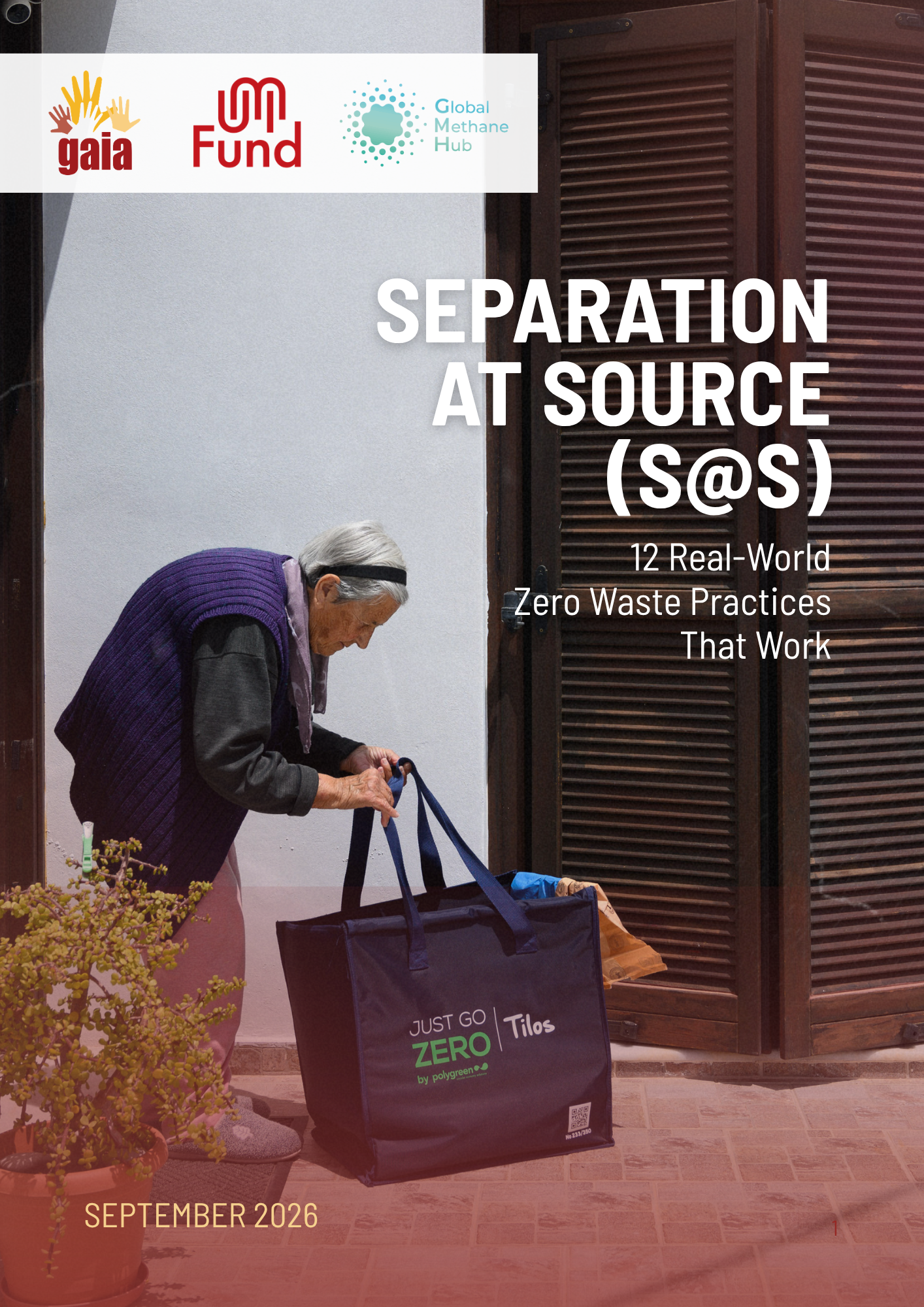






Separation at Source (S@S): 12 Real-World Zero Waste Practices That Work
- Climate -Establishing waste separation at source (S@S) is the foundation of zero waste systems. It means separating different types of waste—such as organic, recyclable, and residual materials—at the point where waste is generated, keeping materials clean and preventing contamination. This publication presents 12 diverse successful cases from five regions: Africa (Tanzania), Asia (India, The Philippines), Europe (Greece, Slovenia, Italy), North America (USA), and Latin America (Costa Rica). The communities featured range in scale, from Tilos Island with a permanent population of 700 residents, to megacities such as Bengaluru, where the zero waste systems reach approximately 2 million people. Across these jurisdictions, source separation rates vary according to local mandates and frameworks, ranging from 30-33% organic waste diversion in Portland to outstanding rates of 80- 95% in places such as Varkala, San Fernando, and Dar es Salaam, and reaching 100% in Tilos Island.