







29 October 2025 – Residents and waste pickers in the city of Barueri, Sao Paulo state, are fighting Brazil’s first major incinerator project. Proposed in 2010, the plant is now under construction despite fierce opposition. It is set to burn 300,000 tonnes of unsorted household waste a year from Barueri and the surrounding area, and generate electricity. This undermines the national policy to reduce, reuse and recycle waste where possible, leading to worse outcomes for the climate, energy costs and jobs.
- A zero waste strategy* for Barueri would cut 3 million tonnes CO2e by 2060 compared to incineration, GAIA modelling shows. That’s like taking 650,000 cars off the road for a year. While either scenario cuts methane emissions from landfill sites, burning the waste generates large volumes of carbon dioxide, while composting and recycling do not.
- As a source of power, incinerators are expensive. Electricity from burning waste in Brazil costs more than three times as much as the average wind or solar farm, public energy auction data shows.
- Recycling employs more than 800,000 waste pickers organised in cooperatives across the country, while incinerators are automated and generate few jobs.
There are two live lawsuits against the municipality, the companies involved in the Barueri incinerator project, and the environmental licensing agency (CETESB).
A popular action, filed by residents, challenges the validity of the environmental licence and the loosening of state and municipal legislation. Specifically, the change to the city’s urban zoning law permitting the incinerator to be built in a densely populated area.
The second lawsuit, filed by Instituto Futuro, disputes the legality of the ongoing construction works. The installation licence for the Barueri incinerator expired in 2021.
“The implementation of incinerators in Brazil is marked by laxity and disregard for environmental legislation,” says Karoline Santana, lawyer and member of SOS Barueri Collective, “but also by the struggle of organized civil society. We won’t stop fighting.”
Waste is a climate issue. A fifth of human-driven methane emissions come from waste and 70% of total global emissions come from the material economy.
The Barueri project is one of several big, expensive incinerators planned in Brazil and hundreds around the world. Incinerators lock in carbon dioxide emissions, sideline waste pickers and undermine recycling efforts. There is a better way: community-led zero waste initiatives can create good jobs, cut emissions at every step of the value chain and build resilience to climate impacts.
Globally, 94% of finance for cutting methane emissions from waste goes to incinerators like Barueri’s. The upcoming COP30 climate conference in Brazil is an important moment for governments and financiers to back genuine zero waste strategies.
“Zero waste isn’t just the right environmental and climate choice – it’s a smarter investment with lasting benefits for communities,” says Victor Argentino, solid waste expert at Instituto Pólis. “We need to rethink finance for people, not for private profit and outdated technocratic solutions.”
*The zero waste scenario involves composting 80% of organic waste and recycling 48% of recyclables, based on industry best practice and local context.
Contacts
Karoline Santana, Lawyer and Member of SOS Barueri Collective (speaks Portuguese, can text in English): +55 11 98379-2013
Tânia Mara Moraes, Environmental Project Manager and Member of the SOS Barueri Collective (speaks Portuguese, can text in English): +55 11 94776-9862
Victor Argentino, Solid Waste Expert at Instituto Pólis (speaks Portuguese, English): victor.argentino@polis.org.br
Neil Tangri, Science and Policy Director at GAIA (speaks English): neil@no-burn.org
Sonia Astudillo, Global Climate Comms Officer at GAIA: sonia@no-burn.org
Resources
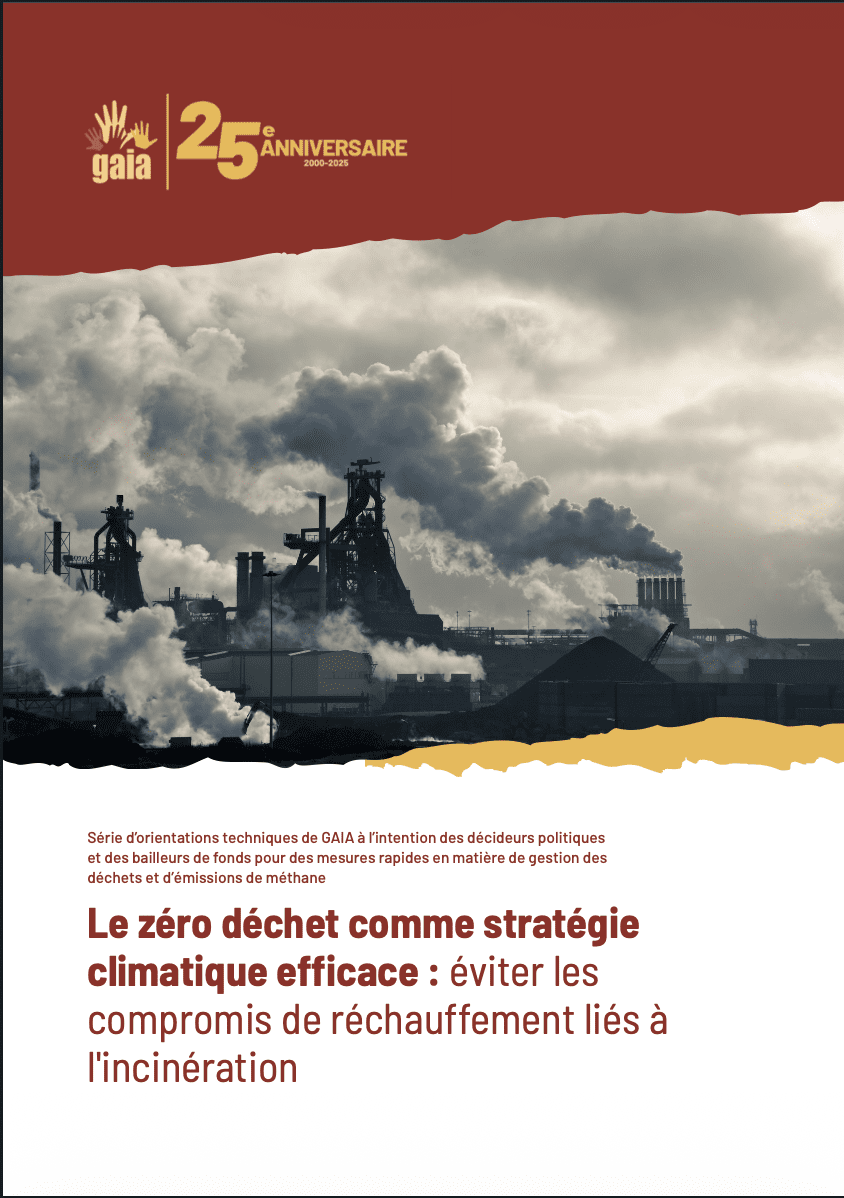
- Zero Waste as An Effective Climate Strategy: Avoiding Warming Tradeoffs from Incineration (GAIA modelling for three cities including Barueri)
- Zero Waste to Zero Emissions: How Reducing Waste is a Climate Gamechanger (GAIA research)
- SOS Barueri campaign information (in Portuguese)
- Waste not: Time to rapidly scale methane abatement finance in the waste sector (CPI research)
About GAIA:
GAIA is a network of grassroots groups as well as national and regional alliances representing more than 1,000 organizations from over 100 countries. With our work we aim to catalyze a global shift towards environmental justice by strengthening grassroots social movements that advance solutions to waste and pollution. We envision a just, Zero Waste world built on respect for ecological limits and community rights, where people are free from the burden of toxic pollution, and resources are sustainably conserved, not burned or dumped. www.no-burn.org