








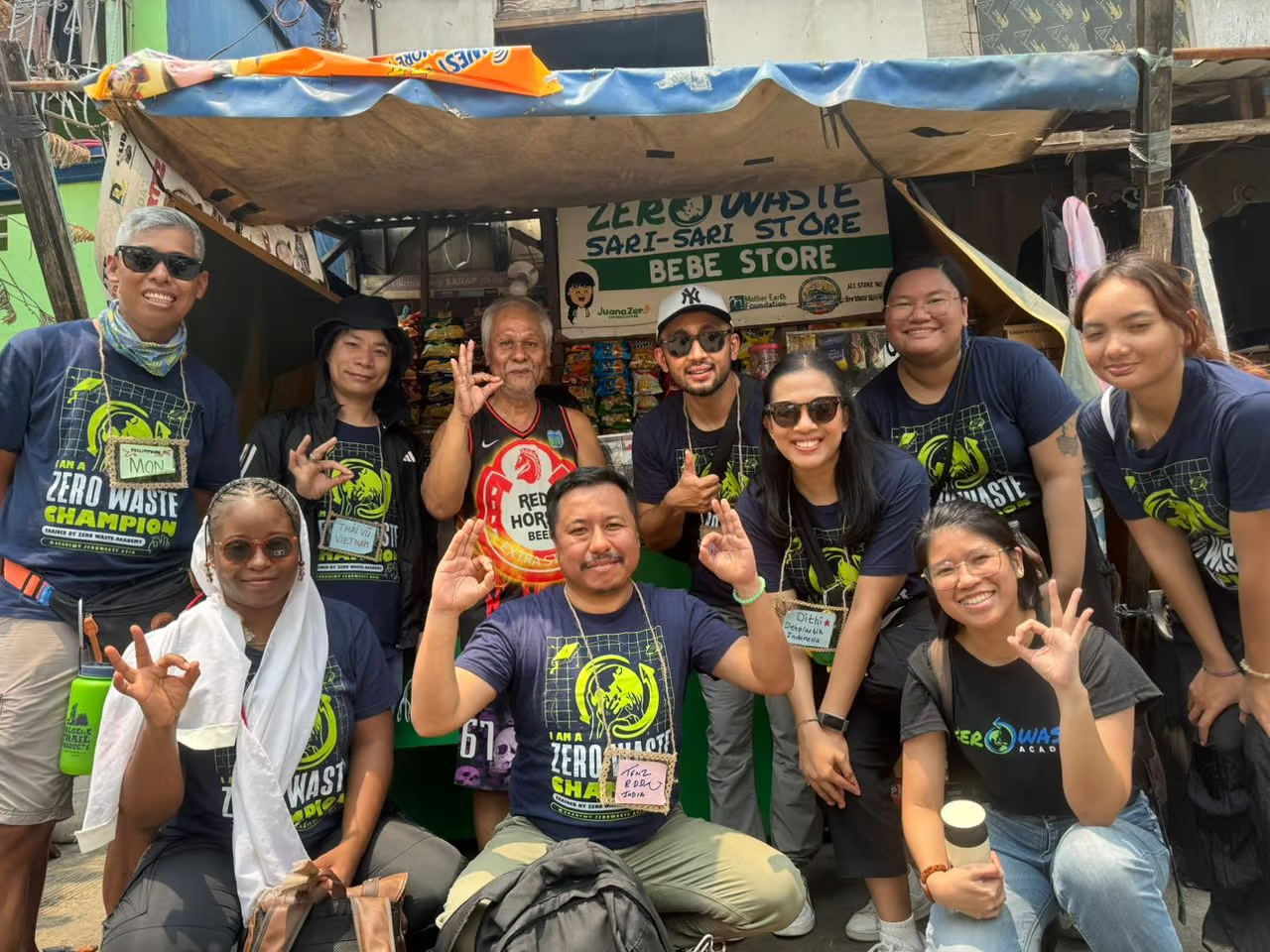
For 10 days in the Philippines, environmental advocates from across the world moved through neighbourhoods before sunrise with waste pickers, sorted discarded plastics by hand, observed community composting systems, and studied how ordinary residents are helping to build functioning zero-waste communities.
This included six environmental organisations from Africa (Uganda, Tanzania, Nigeria, Ghana and Togo.) The experience, participants from Africa say, challenged long-held assumptions about waste management and offered practical lessons that could help African communities confront the growing crisis of plastic pollution.
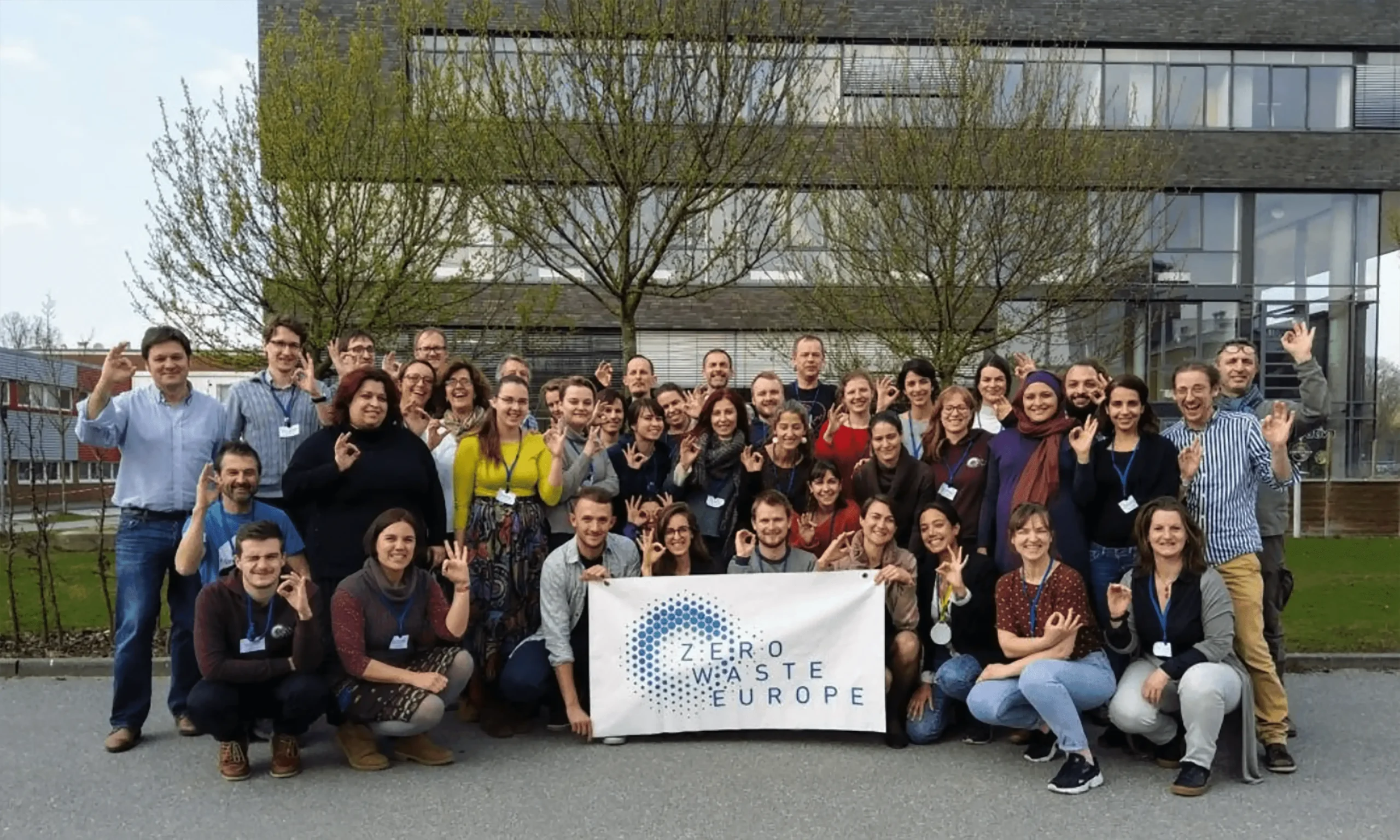
The Asia-Pacific Zero Waste Academy, co-organised by the Mother Earth Foundation and GAIA Asia Pacific, brought together 36 participants from 12 countries for an intensive training programme on community-level zero-waste implementation. Through workshops, field visits and study tours, participants were exposed to waste segregation systems, reuse and refill models, composting initiatives and material recovery facilities operating across communities in the Philippines.
The programme sought to demonstrate that zero waste “is not just a concept, it is a system we can build”.
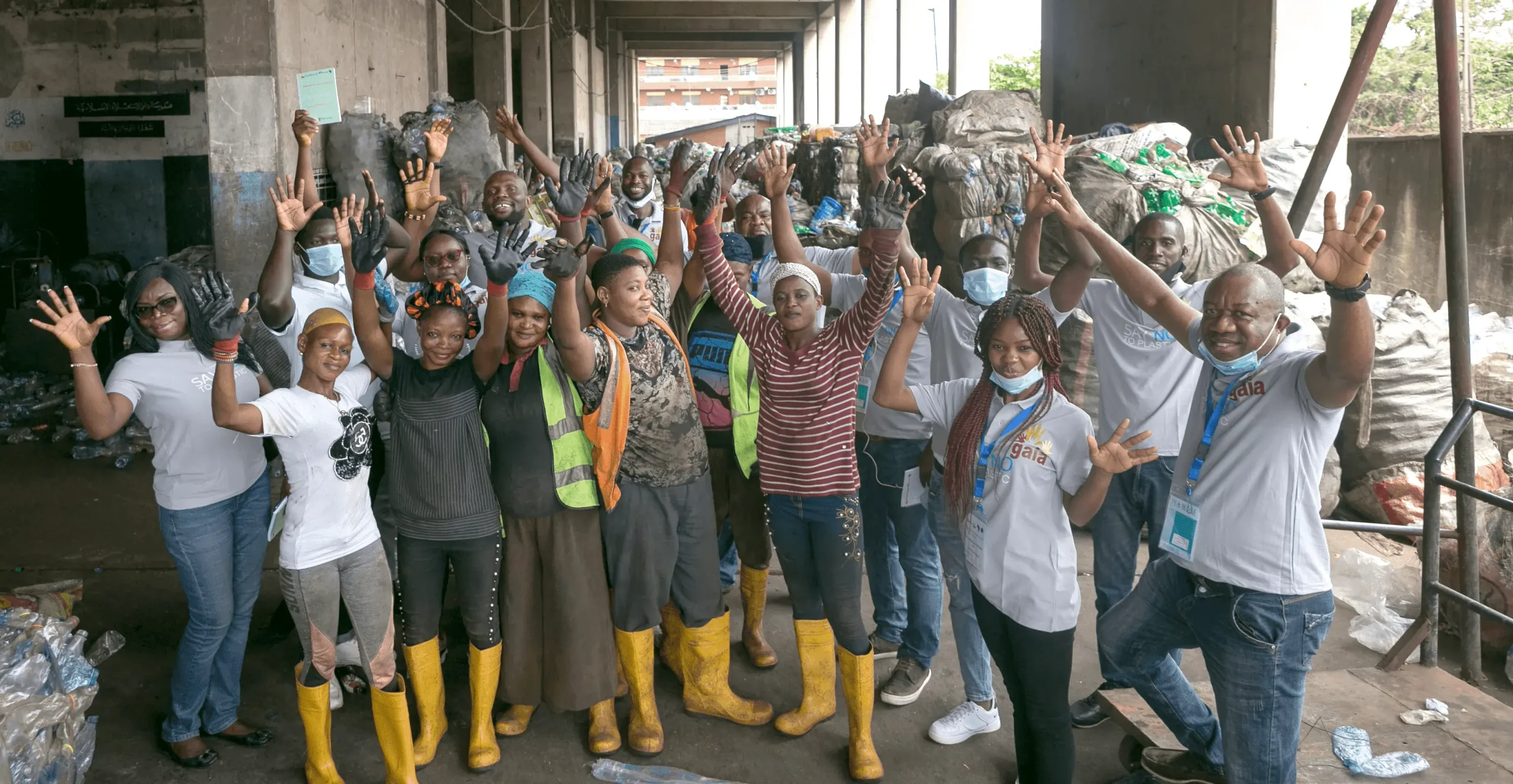
Participants engaged directly with waste pickers and community waste workers in barangays such as San Agustin, where they participated in waste collection exercises, monitoring activities, and community education campaigns. They also conducted baseline surveys and observed how local governments and residents collaborate to sustain waste management systems.
Visits to material recovery facilities in Dampalit, Malabon City, San Fernando, and Barangay Malpitic in Pampanga offered practical insights into waste-sorting, recycling, and reduction systems. Attendees later travelled to Dumaguete City for dialogues with members of the Dumaguete Waste Workers Association and the Philippines National Waste Pickers Alliance, where discussions focused on the social and economic dimensions of zero-waste systems.
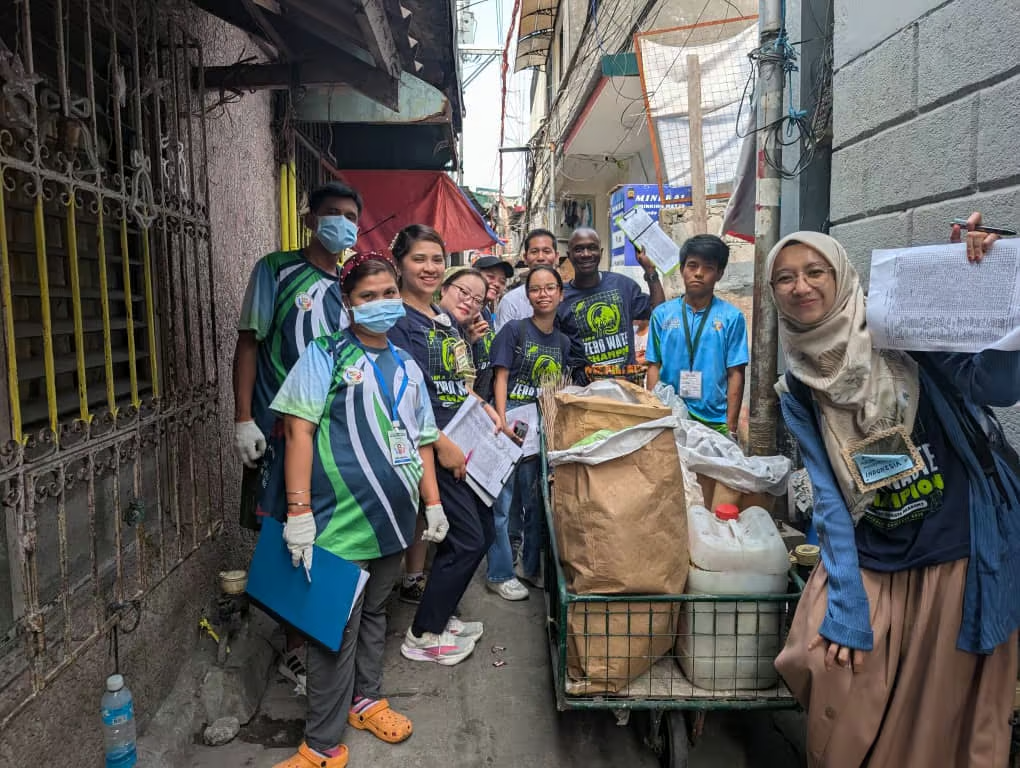
For End Plastic Pollution, Mazingira Plus, Up Cycle It Ghana, NGO Jeunes Verts Togo, and CODAF, the experience challenged assumptions about what is required to build sustainable waste systems.
Abdalla Mikulu, executive director of Mazingira Plus in Tanzania, said the academy deepened his understanding of how women-led community systems are addressing plastic pollution and organic waste challenges.
“I was especially inspired by the adaptability of reuse and refill models across different local contexts and their role in reducing single-use plastics,” he said. “It reinforced that zero waste systems can be designed to fit both low- and high-income communities through context-specific approaches.”
Participants also undertook Waste Assessment and Brand Audits (Waba), sorting through discarded packaging to trace patterns of production and consumption. The exercise examined how single-use packaging travels across borders into local communities and highlighted the structural systems driving plastic pollution.
The academy concluded with “The Great Challenge”, during which participants designed practical zero waste implementation plans. The African participants presented a model for implementing a zero waste system in a community in Togo, focusing on reuse, refill systems and organic waste management.
Nirere Sadrach, founder of End Plastic Pollution Uganda, described the programme as an opportunity to gain practical knowledge that could strengthen zero-waste projects in Uganda.
“It was an opportunity to experience the practice of waste segregation, reuse, refill and composting, and to work with waste pickers and community leaders to ensure the functionality of the zero waste model,” he said.
For Melody Enyinnaya of CODAF Nigeria, the academy marked “a paradigm shift”.
“Witnessing communities in Malabon, San Fernando and Siquijor living proof that zero waste is not a distant ideal but an achievable, everyday reality, powered by strong legislation, community ownership and remarkably simple infrastructure, has completely transformed how I approach our work in Nigeria,” she said.
She argued that African countries require “stronger political will, better data, and communities that are trusted and empowered to lead” rather than expensive technologies.
Frank Sekyere of Upcycle It Ghana said the programme demonstrated that adopting zero waste approaches was “a necessary step towards a sustainable future”.
“The hands-on experience, particularly with the 10 steps to zero waste implementation, was truly eye-opening,” he said. “Every effort, no matter how small, plays a vital role in creating a cleaner, more sustainable world.”
Raissa Oureya of the NGO Jeunes Verts Togo said the academy demonstrated that zero-waste communities can be built with locally available resources and strong local leadership.
“I am returning motivated and full of energy to implement the zero waste project in my municipality, Golfe 4,” she said. “Zero waste is not perfect, but it’s possible.”
ENDS.