The Inflation Reduction Act: A pivotal opportunity to push back against false solutions

The Inflation Reduction Act (IRA) channels $270 billion in tax credits for climate investments but raises concerns about incineration—a false solution to waste disposal that could generate 637.7 million tonnes of CO2e emissions over two decades, further harming the environment and disadvantaged communities.

By: Marcel Howard (Zero Waste Program Manager, US/Canada) and Jessica Roff (Plastics & Petrochemicals Program Manager, US/Canada)

Key Highlights

  • The Inflation Reduction Act (IRA) is primarily a tax bill. Of the promised $369 billion in climate investments, $270 billion will come in the form of tax credits1
  • Incineration is one of the most polluting and expensive waste disposal systems. Industry2 often greenwashes incineration as  “waste-to-energy”3 despite producing minimal amounts of usable energy and massive energy input
  • By measuring the lifecycle climate impacts of incineration accurately, the Department of the Treasury can deny polluting facilities billions in tax credits intended for actual sustainable energy solutions and ultimately delay or block their construction or expansion
  • If industry succeeds in propping up incinerators for 20 years, they will produce 637.7 million tonnes of climate-change-inducing CO2e emissions and further exacerbate toxic pollution and environmental racism4
  • Pairing new subsidies for incinerators with incentives for EVs is perverse
  • Turning waste, including fossil fuel-derived plastics, into jet fuel is dangerous and does not decarbonize air travel 
  • Two-thirds of US incinerators are located in states that include incineration in their renewable energy portfolio
  • The IRA allocated billions of dollars in lending subsidies specifically meant to drive reinvestment in low-wealth and environmental justice communities. Environmental justice, frontline, and fenceline groups should consider applying for these IRA lending programs

Background

The United States (US) has a waste problem compounded by a plastic problem. For decades, we have been handling our waste in ways that harm communities, our climate, and the natural world. Federal, state, and municipal governments continue to site waste incinerators of all forms in Black, brown, indigenous, and lower-wealth communities — plaguing them with decades of harmful air emissions, high levels of greenhouse gasses, toxic waste, accidents, and other health and safety-related concerns. From fossil fuel extraction to final waste product disposal, the entire production process damages these communities and numerous others. Across the board, incineration is one of the most polluting and expensive waste disposal systems.

Industry often greenwashes incineration as  “waste-to-energy” despite producing minimal amounts of usable energy and leverages this greenwashing to access billions of dollars in federal, state, and local green, renewable, and sustainable energy subsidies and tax breaks.
Against this backdrop, the Biden Administration signed the Inflation Reduction Act (IRA) into law on August 16, 2022. Many agencies are already approving and funding false solutions under the IRA. The Department of Energy (DOE) is funding new carbon capture programs at nearly $3.5 billion and allocating $1.2 billion of Justice40 money to develop direct air capture facilities. We are in a pivotal moment where the US must decide if it will take critical steps to lower greenhouse gas and toxic emissions and move toward a truly sustainable future or will continue to subsidize the dirtiest industries to annually emit millions of tonnes of new CO2 and other dangerous air pollutants.

IRA Overview

The Biden Administration claims its 755-page IRA is the most comprehensive climate bill in US history that is supposed to “make a historic commitment to build a new clean energy economy.” Its provisions on climate change mitigation, clean energy, and energy innovation dominate headlines, as it raises nearly $800 billion from multiple sources. President Biden said, “With this law, the American people won and the special interests lost.” To ensure this is true and stop the incinerator lobby and other special interests from cashing in on a new pool of taxpayer money, the federal government must implement critical changes to its business-as-usual model.

The IRA is primarily a tax bill. Of the promised $369 billion in climate investments, $270 billion will come in the form of tax credits. Before the IRA, Congress awarded tax credits to specific technologies (including incinerators) regardless of greenhouse gas emissions or community harm. Beginning in 2025, however, their eligibility will depend entirely on the Department of Treasury (Treasury) determining that they are zero-emission technologies. By measuring the lifecycle climate impacts of incineration accurately, Treasury can deny polluting facilities billions in tax credits intended for actual sustainable energy solutions and ultimately delay or block their construction or expansion.

Threats & False Solutions

Lifelines to Old, Failing Incinerators

Corporate polluters are corrupting the IRA, lobbying to weaken its rules and definitions to qualify for billions in new subsidies to expand and retrofit existing incinerators, most of which have been operating for an average of 32 years. It is nearly impossible to construct new conventional incinerators due to cost and community opposition, so industry is focused on expansion and modification. If industry succeeds in propping up incinerators for 20 years, they will produce 637.7 million tonnes of climate-change-inducing CO2e emissions and further exacerbate toxic pollution and environmental racism. 

Codifying False and Greenwashed Definitions

The incinerator lobby’s goal is to maximize subsidies, profits, and expansion and to use the IRA and other climate bills as a subsidized path to an undeserved sustainable image upgrade. In the context of the IRA, federal agencies such as the Treasury, the Department of Energy (DOE), and the Environmental Protection Agency (EPA) can either categorize incineration as the dirty, expensive, polluting process it is or bolster industry’s claims that incineration produces sustainable energy. If the federal government supports industry’s definitions in the earliest stages of IRA implementation, they will frame agency action and provide billions in tax credits, likely being codified for many climate laws, including the IRA.

IRA Breakdown & Opportunities for the Incinerator Lobby 

The incinerator lobby is working to undermine all aspects of the IRA, specifically focusing on (1) the Renewable Fuel Standard (RFS), (2) Sustainable Aviation Fuel (SAF), and (3) IRA lending programs. 

Renewable Fuel Standard (RFS)

In consultation with the Department of Agriculture and DOE, EPA implements the Renewable Fuel Standard (RFS) program. The RFS program is a “national policy that requires a certain volume of renewable fuel to replace or reduce the quantity of petroleum-based transportation fuel, heating oil, or jet fuel.” The four renewable fuel categories under the RFS are biomass-based diesel, cellulosic biofuel, advanced biofuel, and total renewable fuel. Although long limited to liquid fuels like ethanol, Biden’s EPA is in the process of allowing electricity from certain types of bioenergy to generate eligible credits. Under the current proposal, electric vehicle manufacturers would contract with power producers to generate highly profitable RFS credits.

Pairing new subsidies for incinerators with incentives for EVs is perverse. While support for electric vehicles is vital, it must not be fueled by dirty energy nor sacrifice frontline and fenceline communities. Incinerator interests recently launched a lobbying campaign to secure these incentives. Fortunately, EPA is not required to allow incinerator electricity into the program and has recently tabled an industry-backed eligibility proposal. But, only public pressure on Biden’s EPA and key Administration climate deciders will ensure they don’t approve such proposals.

Sustainable Aviation Fuel (SAF) 

As one of the most generous IRA incentives, the Sustainable Aviation Fuel Tax Credit (SAF) poses an urgent environmental justice concern. The credit increases in value for lower lifecycle emissions fuels. Treasury’s implementation will determine if this approach succeeds or fails. Industry interests are pushing to make the credit friendlier– and more lucrative–to a new generation of incinerators masquerading behind greenwashing like “pyrolysis,”  “chemical or advanced recycling,” and “plastic-to-fuel.” Turning waste, including fossil fuel-derived plastics, into jet fuel is dangerous and does not decarbonize air travel. 

Although the new aviation production tax credit theoretically excludes petroleum-based feedstocks like plastic, industry is pressuring the Administration to interpret the law to maximize benefits for incineration-based aviation fuels. President Biden and Treasury must decisively determine that plastic-derived fuel — including that derived from pyrolysis oil or any other product of chemical recycling/pyrolysis/gasification — is ineligible for these tax credits.

Lending Programs

The IRA allocated billions of new dollars to EPA and DOE, in particular, to expand existing lending programs and launch entirely new ones. Like the rest of the IRA, these programs’ climate and justice benefits depend on implementation. EPA is in charge of the new Greenhouse Gas Reduction Fund (GGRF), arguably the most important non-tax provision of the IRA. Worth $37 billion, it will be divided into three separate programs. EPA released broad, unenforceable guidelines in April 2023, suggesting they will focus lending on distributed generation, building decarbonization, and transport. These guidelines will not ensure the money is appropriately allocated, so EPA must prioritize applicants working on proven zero waste approaches. 

DOE is in charge of The Energy Infrastructure Reinvestment (EIR) Program, a new loan guarantee program with $250 billion that must be spent before 2026. It can fund energy infrastructure upgrades and the reopening of defunct energy infrastructure, both of which industry could coopt to support their ongoing incineration and chemical recycling plans. DOE must refuse to consider any incinerator applications to guarantee industry does not use loopholes to access clean energy tax credits. 

In July, the Republican-led House Appropriations Committee passed the Interior, Environment, and Related Agencies budget for Fiscal Year 2024. Their budget supports chemical recycling while cutting massive amounts from EPA’s budget and the IRA’s environmental justice efforts, including a nearly $4 billion EPA budget cut (a 39% reduction over 2023), reneging on the IRA’s $1.35 billion promised in environmental and climate justice grants.

Call to Action 

The incinerator lobby is so desperate for money and a government-greenwashed reputation that they launched a new, big-money–astroturf5 network, including DC power brokers and local government enablers. The combined movements6 for climate justice don’t have industry money, but we have people power, the truth, and a prime opportunity to fight against this industry push. There are three key areas in which to counter industry’s agenda: (1) Treasury engagement, (2) state-level renewable portfolio standards, and (3)  IRA lending subsidies. 

Treasury Engagement

As the Washington Post exposed in May 2023, the incinerator industry is among polluting industries racing to position themselves as green to access billions in subsidies and tax credits. In the last year alone, industry launched two trade groups to push their message: the Waste-to-Energy Association and the Circular Economy Coalition. Both have made comments to access benefits for incinerators under the Inflation Reduction Act, or considered prioritizing it. Industry is dedicated to getting Treasury to qualify incinerators as renewable, despite overwhelming evidence that incinerators are extremely polluting. 

It is critical to engage with Treasury as it develops policies, rules, regulations, and procedures to implement the IRA. If Treasury determines this most costly and polluting form of energy is zero emission, it will set an appallingly low bar within the IRA that will exacerbate rather than address the climate crisis, perpetuating and compounding the issues we currently face, and permanently scarring the Biden Administration legacy.

State-level Renewable Portfolio Standards 

The IRA has broad implications, reaching far beyond the federal level of government. Defeating federal government incinerator giveaways in the IRA and other federal climate initiatives will strengthen communities fighting state and local government incinerator giveaways. Currently, different states provide a patchwork of policies and incentives related to incineration. Perhaps most notable are state Renewable Portfolio Standards (RPS). Twenty-nine states, the District of Columbia, and four US territories have an RPS. Each RPS has its own renewable electricity targets, defines what technologies qualify as renewable, designates particular technologies as higher or lower tier within the mix, and enables the trading or sale of renewable energy credits. Two-thirds of US incinerators are located in the 26 US states and territories that include incineration in their renewable energy portfolio. Showing industry’s power, scope, and connections at both the federal and state levels of government. It also shows an entrenched mentality that incineration is a clean energy solution. It is imperative that the IRA does not follow suit.

IRA Lending Subsidies

Along with Treasury engagement, environmental justice, frontline, and fenceline groups should consider applying to IRA lending programs. The Greenhouse Gas Reduction Fund (GGRF) and DOE’s Energy Infrastructure Reinvestment (EIR) Program offers billions of dollars for projects specifically meant to drive reinvestment in low-wealth and environmental justice communities. Both programs provide an opportunity to fund proven zero waste solutions that push back against false solutions, like incineration. 

The Greenhouse Gas Reduction Fund (GGRF): The GGRFis a $27 billion investment program designed to achieve the following: “ (1) Reduce greenhouse gas emissions and other air pollutants;  (2) deliver benefits of greenhouse gas, and air pollution-reducing projects specifically to low-wealth and disadvantaged communities; and (3)  mobilize financing and private capital to stimulate additional deployment of greenhouse gas and air pollution reducing projects.” The GGRF is being implemented via three grant competitions, which include: (1) the National Clean Investment Fund, (2) the Clean Communities Investment Accelerator, and (3) the Solar for All Fund.”7 

The National Clean Investment Fund: “The National Clean Investment Fund competition will provide grants to 2-3 national nonprofit clean financing institutions7 capable of partnering with the private sector to provide accessible, affordable financing for tens of thousands of clean technology projects across the country.To learn more about the program and how to apply, visit Grants.gov. Application packages must be submitted on or before October 12, 2023, at 11:59 PM (Eastern Time) through Grants.gov.

The Clean Communities Investment Accelerator: “The Clean Communities Investment Accelerator competition will provide grants to 2-7 hub nonprofits that will, in turn, deliver funding and technical assistance to build the clean financing capacity of local community lenders working in low-wealth and disadvantaged communities so that underinvested communities have the capital they need to deploy clean technology projects.” To learn more about the program and how to apply, visit Grants.gov. Application packages must be submitted on or before October 12, 2023, at 11:59 PM (Eastern Time) through Grants.gov. 

DOE Energy Infrastructure Reinvestment (EIR) Program: “The EIR Program provides $250 billion for projects that retool, repower, repurpose, or replace energy infrastructure that has ceased operations or enable operating energy infrastructure to avoid, reduce, utilize, or sequester air pollutants or greenhouse gas emissions.” To learn more about the program and how to apply, visit Energy.gov. Individuals interested in applying should request a no-cost pre-application consultation with a member from DOE’s Loan Programs Office. 

USDA Empowering Rural America (New ERA) Program: “The ERA program provides $9.7 billion for projects that help rural Americans transition to clean, affordable, and reliable energy intending to improve health outcomes and lower energy costs for people in rural communities.” To learn more about the program and how to apply, visit USDA.gov. Individuals interested in applying should submit a Letter of Interest (LOI) by September 15, 2023.  

Conclusion 

On paper, the Biden Administration’s IRA may be the most comprehensive climate legislation in history, but it also has the immense potential to be a climate destroyer. We are at a crossroads where the Administration and all other levels of government have the power to use the IRA for its stated purpose to “confront the existential threat of the climate crisis and set forth a new era of American innovation and ingenuity to lower consumer costs and drive the global clean energy economy forward.” To make the promise a reality, the Administration — including all the executive agencies, particularly Treasury, Energy, and EPA — cannot succumb to industry greenwashing lobbying.

The Biden Administration must accurately measure the lifecycle climate and health impacts of all forms of incineration and its products (including pyrolysis and gasification) and unequivocally determine that it is not a source of clean energy or a safe way to make jet fuel. It will be up to our ever-expanding movement to hold the Administration accountable to the ideal of the IRA and ensure it is not another greenwashed handout to industry — and that its tax credits and funding go to sustainable solutions that benefit the Black, brown, indigenous, and low wealth communities as it initially intended. 

For more information on the Inflation Reduction Act and its lending programs, visit our fact sheet here.


Resources 
  1. As a tax bill, the categories and definitions of processes are critical because they will determine if a process is covered under it. Historically, there have been some good and some bad determinative definitions (including currently for chemical recycling). ↩︎
  2.  Industry refers to the plastics, incinerator, fossil fuel, and chemical industries who are all perpetuating the plastic waste problem ↩︎
  3.  Industry labels waste-to-energy (WTE) a number of different ways including: plastic-to-fuel (PTF), plastic-to-energy (PTE), refuse-derived-fuel, etc. ↩︎
  4.  This is entirely dependent on if the federal government places incinerators into favorable categories for purposes of massive amounts of tax credits and de facto subsidies. ↩︎
  5.  Astroturfing is the practice of hiding the sponsors of a message or organization (e.g., political, advertising, religious, or public relations) to make it appear as though it originates from, and is supported by, grassroots participants. ↩︎
  6.  The movement includes, but is not limited to – and is always open to expand – the environmental justice movement, climate movement, conservation movement, public health movement, plastics movement, etc. ↩︎
  7. The deadline for the Solar for All Competition has recently been extended to October 12, 2023. Please review this link for additional information: https://www.epa.gov/newsreleases/biden-harris-administration-launches-7-billion-solar-all-grant-competition-fund#:~:text=The%20Solar%20for%20All%20competition,%2C%20Tribal%20governments%2C%20municipalities%2C%20and ↩︎
FOR IMMEDIATE RELEASE: December 15, 2025

Berkeley, CA — The Global Alliance for Incinerator Alternatives (GAIA) is proud to announce the 2025 recipients of its U.S. Environmental Justice Action Microfunds. Sixteen grassroots partners across the country were selected for their leadership in advancing transformative zero waste solutions, strengthening community power, and confronting pollution threats in frontline communities.

Made possible through an investment from the Cloud Mountain Foundation, the microfunds provide $2,500 in flexible support for frontline and community-based organizations advancing environmental and waste justice in regions overburdened by polluting waste infrastructure. Awardees are addressing impacts related to incineration, so-called chemical recycling, plastics and petrochemicals, landfills and methane, battery-related issues, and more. This year’s awardees are launching projects ranging from youth-led environmental leadership and community education to site fights, expansion of reuse systems, and local zero waste infrastructure. This year’s initiatives reflect the importance of zero waste solutions as cities grapple with the shortcomings of recycling and mounting plastic pollution.

“Frontline communities have the solutions to our waste crisis, and they are leading some of the most effective strategies that make a real impact. GAIA is honored to help resource these efforts and uplift the solutions that are already working,” said Denaya Shorter, Senior Director of the US & Canada Region at GAIA.

The 2025 U.S. Environmental Justice Action Microfunds recipients include:

  1. ZW Ithaca will expand Ithaca and Tompkins County’s Bring Your Own (BYO) foodware reuse network by hiring a coordinator to strengthen and grow the BYO sticker program.
  2. Sustainable Community Farms will establish the Food-Energy-Water (FEW) Ambassador program in Detroit to train middle and high school students in environmental leadership, connect school and community-based learning through outdoor projects at Sustainable Community Farms, and empower youth to advocate for more sustainable efforts in their communities.
  3. Center for Environmental Transformation will educate Camden residents on the health detriments of living near waste incineration facilities like Reworld (formerly Covanta). Through a six-part workshop, CET will provide workbooks and include an “environmental tour” highlighting the local incinerator.
  4. Heirs to Our Ocean (H2OO) will use microfunds to support the youth members of the U.S. Youth Action Council for the UN Ocean Decade (U.S. YAC UNOD) and their efforts to tackle plastic pollution through brand audits, policy, and movement building.
  5. Post-Landfill Action Network (PLAN) will use microfunds to support four cohorts of the Reusable To-Go ROI Calculation Course, which will train student leaders at 16–24 campuses to conduct ROI analyses and logistics plans for college campus reusable dining systems that replace single-use plastics.
  6. Cherokee Concerned Citizens will use microfunds to support the “Relocation to Restoration” initiative by helping residents of Pascagoula, Mississippi, relocate from high-risk areas adjacent to major facilities, including the Chevron Refinery, the Enterprise gas processing plant, Gulf LNG, Bollinger, and the Mississippi Phosphates Superfund site, and restore these areas into native Gulf Coast habitats.
  7. Buckeye Environmental Network (BEN) will hold a one-day statewide convening in Ohio to train and connect community members fighting chemical recycling plants and petrochemical expansion, providing workshops on site-fighting strategies, permit review, public comment, and communication skills to strengthen local campaigns and statewide collaboration.
  8. People of Red Mountain will use microfunds to support travel, lodging, and food expenses for members of People of Red Mountain, a grassroots group committed to protecting sacred lands from lithium mining in the McDermitt Caldera, for the 12th Annual Oak Flat March/Run.
  9. ZW Detroit will engage Detroit-area residents, youth, elders, and local partners through education and workshops on methane reduction, food waste prevention, and air quality, providing practical tools to reduce climate impact and improve public health.
  10. Breathe Free Detroit will use microfunds to support capacity and participation in quarterly county meetings that oversee the waste management plan and the implementation of the first U.S. model of city-run decentralized composting.
  11. Physicians for Social Responsibility PA will strengthen grassroots power in Pennsylvania by educating and organizing communities impacted by incinerators and landfills, providing workshops, canvassing materials, and policy support to help residents build leadership and advance local ordinances.
  12. New Jersey Environmental Justice Alliance (NJEJA) will support community farms in South New Jersey in engaging and educating local communities on zero waste principles, deepening partnerships, co-launching sustainable reuse and circular economy initiatives, and sharing a replicable, community-led model for building zero waste solutions.
  13. Damascus Citizens for Sustainability will work to prevent a proposed county “waste-to-energy” incinerator by educating and organizing residents, working with local groups, and promoting alternatives such as recycling, composting, and waste reduction.
  14. Rise for Environmental Justice (RiSE4EJ) will use microfunds to support a site fight and build capacity to defend a recent win against a proposed chemical recycling facility by Reworld (formerly Covanta) in the EJ community of Armourdale, KS.
  15. Baltimore Compost Collective will transform a new property into a zero waste hub offering local composting, youth green jobs training, and community workshops to reduce waste, build leadership, and promote a healthier Baltimore.
  16. Our ZW Future will support Zero Waste Rio Grande Valley, the South Texas branch of OZWF, in training five colonia residents in zero waste practices and cooperative business development, advancing economic mobility, and launching a pilot zero waste cooperative that benefits families across the Valley.


The 2025 Environmental Justice Action Microfunds represent GAIA’s continued commitment to resourcing community-led strategies that address pollution at its source while strengthening local leadership and long-term capacity. GAIA looks forward to supporting these partners as they advance effective, community-centered zero waste solutions.

Additional Quotes:

“It is our goal to equip and fortify residents so that they can hold these industries accountable for their crimes against health and the environment. Without the strength and determination of committed individuals, we get nowhere. When communities win, we all win.” — Tonyehn Verkitus, Executive Director, Physicians for Social Responsibility Pennsylvania 

“We are grateful for GAIA’s investment in the youth leaders of the U.S. Youth Action Council for the UN Ocean Decade, who are organizing to confront plastic pollution at the source through science, policy, and community leadership. This support will help ensure youth are leading action to shape the solutions our climate, shared ocean, and communities urgently need.”
Emily Berglund, Executive Director, Heirs To Our Ocean

“We’re deeply grateful for GAIA’s EJ Microfunds and proud to be among this cohort of frontline zero waste and environmental justice projects. With this support, Zero Waste Ithaca will strengthen and grow our Bring Your Own foodware reuse network and expand our BYO sticker program.” — Yayoi Koizumi, Founder, Zero Waste Ithaca

“Stay positive, stay centered, and we can overcome.”
Barbara Weckesser, Cherokee Concerned Citizens

Press contact:

María Guillén, Communications & Network Development Manager, U.S. & Canada

mariaguillen@no-burn.org

###

GAIA is a worldwide alliance of more than 1,000 grassroots groups, non-governmental organizations, and individuals in over 90 countries. With our work, we aim to catalyze a global shift towards environmental justice by strengthening grassroots social movements that advance solutions to waste and pollution. We envision a just, zero waste world built on respect for ecological limits and community rights, where people are free from the burden of toxic pollution, and resources are sustainably conserved, not burned or dumped. 

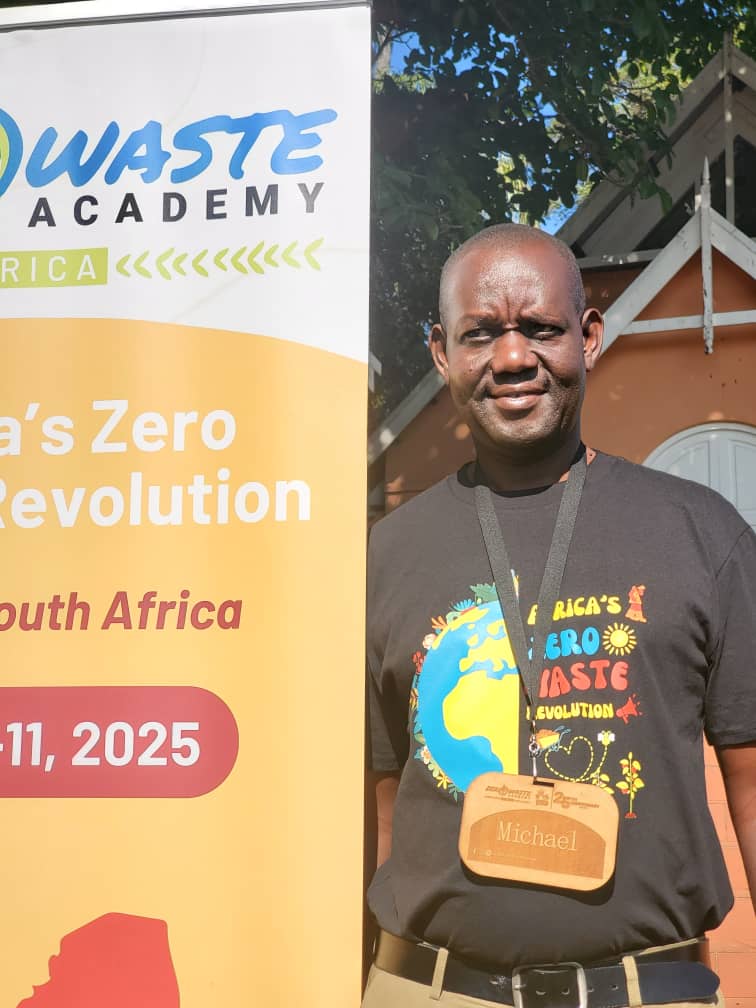
Por Michael Anguria, 2025, participante en la Academia basura cero África  

Me llamo Michael Anguria y soy de Uganda. Durante mi juventud, allá por 1992, viví en el campamento de Ngora después de haber sido desplazado por la guerra.  En medio de los tiroteos y las minas terrestres, el campamento estaba cubierto de heces humanas, plásticos y residuos en kaveera (bolsas plásticas desechables), mientras que los cadáveres sin enterrar se descomponían y apestaban. Las enfermedades tales como la disentería y la diarrea se propagaban rápidamente, llevándose la vida de muchos niños, mujeres embarazadas y personas que padecían enfermedades como la hipertensión y la diabetes. No había letrinas y más de 100.000 personas habitaban el lugar sin vivienda ni servicios sanitarios adecuados, lo que provocó la muerte de muchos.

Un hedor insoportable emanaba de las lagunas de agua estancada que se habían formado en el campamento, impregnadas de un olor nauseabundo a botellas de plástico, restos de comida, kaveera, heces humanas y cuerpos sin vida, lo que atraía enjambres de moscas y mosquitos. En el campamento, no existían los recicladores, lo que provocaba la contaminación del agua y del aire, y degradaba el medio ambiente. Se produjeron escaramuzas, tiroteos y combates entre los soldados del gobierno y los rebeldes, lo que resultó en una prestación de servicios sociales deficiente y en abusos y violaciones de los derechos humanos por parte de ambos bandos.

En el plano emocional y psicológico, crecí entre dificultades, traumas y experiencias terribles. Tras sobrevivir a ello, me propuse crear una organización dedicada a ayudar a las personas que enfrentan adversidades, como la guerra, y a empoderar a los recicladores y recolectores formales. Quise también luchar por la paz, la justicia, los derechos sobre la Tierra y el medio ambiente, los derechos de los mineros artesanales a cielo abierto, y de los recicladores, así como defender la justicia ambiental y climática, y los derechos y la salud de las poblaciones marginadas y desfavorecidas como los recicladores y recolectores. Así nació SAF-TESO en 2009, una ONG comprometida con la protección ambiental y la sostenibilidad.

Después de experimentar circunstancias tan insoportables en mi vida, quedaba otro gran enemigo al que todos debemos combatir: el cambio climático que ha provocado un sufrimiento inmenso a la población de todo el planeta, y países pobres como Uganda se ven gravemente limitados por este enemigo global debido a los elevados niveles de contaminación por plásticos y bolsas desechables, así como por la deforestación.

En la actualidad SAF-TESO se centra en promover prácticas resilientes al clima, además del empoderamiento y el desarrollo de capacidades, mediante la formación en habilidades esenciales para la gestión de residuos, como la recolección, clasificación, segregación y el compostaje destinado a la producción de fertilizantes orgánicos mediante la cría de la mosca soldado-negra. También capacitamos a recicladores y a poblaciones vulnerables en primeros auxilios para mejorar la respuesta ante desastres, y empoderar a pequeños agricultores mediante sistemas de alerta temprana.

En SAF-TESO, somos conscientes de la importancia que tiene la sostenibilidad ambiental y la participación comunitaria, y centramos nuestros esfuerzos en la agricultura inteligente con respecto al clima, el desplazamiento de poblaciones debido a factores climáticos, y la comunicación a través de la investigación y la toma de decisiones basada en datos, historias, artículos y blogs, la incidencia en las políticas, y la educación climática con miras a promover un cambio de mentalidad y actitud hacia la sostenibilidad ambiental.

Nuestra visión de impacto social se centra hoy día en empoderar a los recicladores y recolectores de residuos para crear aldeas y comunidades basura cero en Teso y Karamoja, promover el uso de cocinas mejoradas para reducir la deforestación y fomentar la innovación en el reciclaje y la reutilización, con el propósito de disminuir los residuos en rellenos sanitarios y vertederos, a fin de lograr hogares limpios y una economía circular.

La capacitación presencial de la academia basura cero de GAIA, celebrada en Durban, Sudáfrica, del 7 al 11 de julio, sirvió como modelo y motor para encaminar a SAF-TESO hacia el cambio social, un espacio donde constructores de puentes, emprendedores sociales y agentes de cambio como yo podemos hacer realidad nuestras visiones.

La capacitación de GAIA potenció mis esfuerzos por acelerar un desarrollo sostenible, al brindarme los conocimientos, habilidades y herramientas necesarias para resolver problemas, y poder modificar las soluciones brindadas por SAF-TESO, así como mejorar mis capacidades de liderazgo a través de la mentoría, a fin de generar un cambio social duradero.

La participación en la capacitación presencial basura cero de GAIA en Durban me brindó una plataforma de conocimientos diversos y oportunidades para relacionarme con agentes de cambio social, establecer redes de colaboración a largo plazo, que pueden ayudar a obtener financiación para SAF-TESO, permitiéndonos así implementar nuestra visión a escala global. Esto se puede lograr a través de la narración, la redacción y la publicación de historias, blogs y artículos sobre basura cero, lo que a su vez impulsará el desarrollo sostenible en Uganda y otros países.

Esta no es solo una lucha por alcanzar la meta de basura cero, sino una batalla por la justicia, la dignidad y la vida misma. Por ello, en 2025, la Academia basura cero de GAIA África fue el lugar ideal para relacionarme con personas con ideas afines que comparten mi pasión por el medio ambiente, la justicia climática y el cambio social.

La capacitación de la academia basura cero de GAIA resultó ser una oportunidad fantástica para fortalecer mis habilidades de liderazgo mediante herramientas y recursos que me ayudarán a transformar mi trabajo en un cambio social duradero en materia de justicia ambiental y climática, algo que hoy en día dista mucho de ser una realidad en Uganda.

El actual vacío en las políticas, leyes y marcos regulatorios en Uganda en materia de justicia ambiental y climática podría abordarse a través de muchas más oportunidades de colaboración con la academia basura cero de GAIA. He adquirido conocimientos que me han permitido alcanzar un éxito significativo a través del aprendizaje continuo, la adaptación y el desarrollo de habilidades. La capacitación de la academia de GAIA me brindó oportunidades para establecer colaboraciones estratégicas, ya que cuenta con numerosos sistemas que permiten aprovechar la tecnología digital.

Por lo tanto, es un espacio para personas como yo que tendemos puentes entre naciones, impulsamos el cambio social, y que somos emprendedores que fomentan cambios de mentalidad para construir un camino hacia el éxito, mediante una aceleración de modelos de negocio, ideas innovadoras y estrategias que apoyen mi misión y la visión de mi organización en materia de justicia ambiental y climática, junto con el desarrollo sostenible.

La academia basura cero de GAIA representa un recorrido vital para adquirir sabiduría colectiva, y constituye un entorno único para relacionarse con personas afines que comparten la misma pasión por el cambio social. Funciona como un espacio de intercambio de conocimientos especializados que impulsa transformaciones significativas en materia de justicia ambiental y climática en Uganda.

Agradezco sinceramente al equipo de GAIA por apoyar a SAF-TESO en la materialización de nuestra visión en el camino hacia basura cero.

FIN.

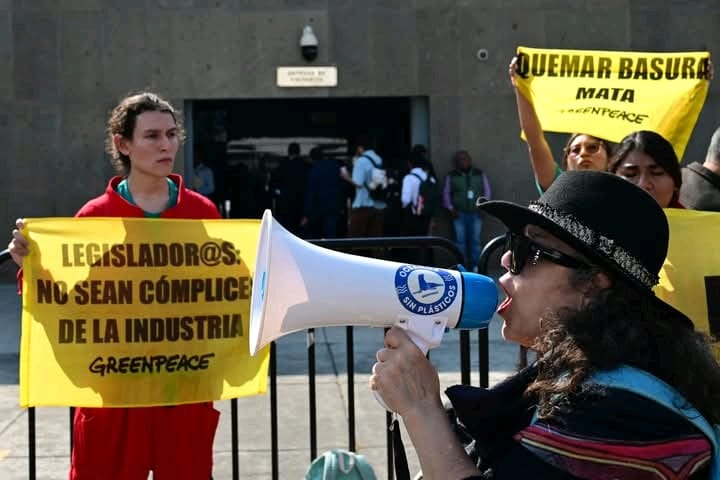
Ciudad de México, 9 de diciembre de 2025. – Organizaciones de la sociedad civil se manifestaron frente a la Cámara de Diputados para denunciar la aprobación “fast track” y “en lo oscurito” de la nueva Ley General de Economía Circular, impulsada por los diputados Ricardo Monreal y Raúl Bolaños Cacho Cué y elaborada por la Secretaría de Medio Ambiente y Recursos Naturales (SEMARNAT) junto con el sector privado.

Con pancartas que decían “LEY DE ECONOMÍA CIRCULAR = LICENCIA PARA CONTAMINAR” y “QUEMAR BASURA MATA”, activistas exigieron frenar de inmediato el avance legislativo de esta iniciativa y abrir un proceso real de consulta pública con comunidades, especialistas y sociedad civil.

Las organizaciones Acción Ecológica, El Poder del Consumidor, Fronteras Comunes, Asociación Ecológica Santo Tomás, No Es Basura (NEB) y Greenpeace México denunciaron que esta ley es una “simulación” y que su elaboración excluyó por completo la participación ciudadana, violando el Acuerdo de Escazú, que obliga al Estado mexicano a garantizar la participación pública en asuntos ambientales.La propuesta también incumple obligaciones judiciales previas, incluyendo un amparo que ordena legislar para prohibir los plásticos de un solo uso.

Las organizaciones calificaron la ley como un “retroceso ambiental y social”, y señalaron cuatro motivos clave por los que no debe ser aprobada:

1. Apuesta por la incineración y no por la prevención

La iniciativa sitúa a la termovalorización (incineración de basura) como eje central, ignorando el principio básico de la economía circular: el mejor residuo es el que no se genera.

Las organizaciones recalcan que este proceso no es limpio ni renovable, genera gases de efecto invernadero, dioxinas y furanos altamente tóxicos, y requiere grandes volúmenes de basura, incluidos materiales reciclables. Mientras tanto, alternativas como el ecodiseño, la reducción de envases o la reutilización pueden evitar contaminación, reducir emisiones y generar más empleos que la incineración.

2. Privilegia intereses económicos sobre la salud y el ambiente

Aunque la iniciativa se presenta como ambiental, privilegia criterios económicos. La Secretaría de Economía tendría un rol central en aprobar acuerdos, dejando en segundo plano la salud, la protección ambiental y los derechos humanos.

Además, abre la puerta a “falsas soluciones”, como bonos verdes y créditos de carbono, que permiten a las empresas evitar cambios reales en sus procesos contaminantes.

3. Mantiene el modelo lineal y debilita la Responsabilidad Extendida del Productor (REP)

La propuesta no busca transformar la forma en que se diseñan, producen o consumen los productos. No incorpora medidas para promover durabilidad, reparación y reutilización.

Sin estas herramientas, el país continúa atrapado en el modelo de “usar y tirar”, que depende de extracción constante de recursos y genera altos costos ambientales y económicos.

Si bien se menciona la REP, su implementación sería gradual y flexible, excluyendo impactos sociales y de salud vinculados a todo el ciclo de vida de los productos.

4. Excluye a la sociedad civil y omite la salud pública

La ley carece de indicadores sanitarios, mecanismos de transparencia y trazabilidad de sustancias químicas peligrosas, y tampoco considera una coordinación con el sector salud.

Para las organizaciones, omitir la voz de las comunidades genera leyes injustas, poco efectivas y sin legitimidad social. Ignorar la salud pública solo incrementa desigualdades y eleva costos futuros en atención médica.

Las organizaciones advirtieron que la iniciativa es contraria al mandato principal de SEMARNAT: proteger el ambiente y la salud de la población. En lugar de promover la reducción de residuos y la transición hacia modelos sostenibles, la ley normaliza prácticas contaminantes y debilita el marco legal existente, y afirmaron, no responde a la magnitud del desafío socioambiental del país.

México – Organizaciones de la sociedad civil han manifestado su profunda preocupación ante la nueva iniciativa de Ley General de Economía Circular, presentada recientemente en la Cámara de Diputados por Ricardo Monreal y Raúl Bolaños Cacho Cué. La propuesta elaborada por SEMARNAT en conjunto con el sector privado, se presenta como un avance ambiental, pero su contenido revela un enfoque centrado en beneficios económicos y extractivos, dejando en segundo plano la protección del ambiente, la salud pública y los derechos de las comunidades.

Según las organizaciones, la iniciativa contradice los principios que México ha defendido en espacios internacionales como la COP30, y carece de la ambición climática señalada por la propia Secretaría de Medio Ambiente, encabezada por Alicia Bárcena.

“La iniciativa presentada es una simulación que bajo el disfraz de la economía circular deja una carta abierta para que los actores con intereses económicos continúen con sus prácticas contaminantes. No protege la salud ambiental de manera efectiva. Al no incluir indicadores sanitarios; verdaderos esquemas de transparencia y trazabilidad de sustancias químicas peligrosas, ni la coordinación con el sector salud. Además, al establecer esquemas voluntarios y distintivos artificiales para la industria, deja desprotegida a toda la población y a los ecosistemas frente a los riesgos derivados de la contaminación producida en todo el ciclo de vida de los productos”, agregó Larisa de Orbe, Directora de Acción Ecológica México.

Una ley que prioriza quemar basura antes que prevenirla

Una de las principales críticas es que la iniciativa apuesta por la termovalorización, es decir, la quema de residuos, sin priorizar la prevención de su generación. Esto va en contra del principio básico de la economía circular: el mejor residuo es el que no se genera. Aunque incluye la Responsabilidad Extendida del Productor (REP), las organizaciones advierten que su implementación queda sujeta a acuerdos graduales y flexibles, lo que podría retrasar la asunción real de responsabilidades por parte de las industrias. Además, la Secretaría de Economía tendría un rol decisivo en dichos acuerdos, reforzando un sesgo económico por encima del bienestar ambiental y sanitario.

El documento también permite que las empresas utilicen compensaciones ambientales basadas en falsas soluciones, como bonos verdes o créditos de carbono, que sólo prolonga la contaminación.

Por otro lado, las organizaciones señalan que la propuesta sustituye acciones reales de reducción y prevención, normaliza tecnologías contaminantes y carece de medidas para promover el rediseño, durabilidad, reparación y reutilización de productos. Esto, dicen, perpetúa el modelo de producción lineal y la obsolescencia programada.

“Esta iniciativa niega al consumidor la información necesaria para ejercer su derecho a un consumo más responsable… permanece una política que favorece una forma de producción con profundas externalidades ambientales y sociales que pagamos todos”, afirmó Alejandro Calvillo, director de El Poder del Consumidor.Otro punto crítico es la modificación de la Ley General para la Prevención y Gestión Integral de los Residuos bajo el argumento de armonización. En realidad, denuncian, esto debilita la legislación existente al introducir principios que favorecen la termovalorización, pese a su impacto negativo en la salud y en los territorios donde se pretende implementar.

Un proceso excluyente y contrario al Acuerdo de Escazú

Las organizaciones también denuncian que el proceso de elaboración de la iniciativa excluyó a la sociedad civil, pese a la obligación legal de participación pública establecida en el Acuerdo de Escazú. Además, incumple resoluciones judiciales, como el amparo ganado por Greenpeace México, El Poder del Consumidor y Acción Ecológica, acompañadas de la Asociación Ecológica Santo Tomás, Fronteras Comunes y No es Basura; que establece la obligación legislativa de prohibir plásticos de un solo uso.

“En su forma actual, la iniciativa representa un retroceso ambiental y social… hacemos un llamado urgente a SEMARNAT y legisladores a corregir el rumbo, abrir el proceso a la ciudadanía y no avanzar con esta ley”, declaró Viridiana Lázaro, de Greenpeace México.

“La nueva iniciativa que busca tropicalizar el concepto de economía circular, solo gestiona los residuos sin evitar su producción. Esto sin importar que las prácticas ahí plasmadas expongan la salud y el ambiente de los mexicanos. Las y los legisladores que se dicen preocupados por el pueblo deben demostrarlo, y rechazar esta iniciativa promovida desde las oficinas de la Semarnat”, señaló José Manuel Arias de la Asociación Ecológica Santo Tomás, A.C.

“Durante este año, no hemos visto ninguna iniciativa que pretenda poner fin al problema real, que es evitar la producción; está iniciativa escrita por SEMARNAT, empresas e industrias, no es la excepción. No hay una intención real para legislar por la prohibición de plásticos de un solo uso, una legislación para regular las sustancias químicas peligrosas y sobre todo, acciones para prevenir la exposición a sustancias y este tipo de materiales nocivos para la salud humana y el medio ambiente. Es lamentable que la Secretaría encargada de velar por el medio ambiente y la salud presente proyectos de ley que perpetúan el daño”, comentó Claudia Romero de Fronteras Comunes.

Finalmente, las organizaciones coinciden en que México tiene la oportunidad de construir una legislación que priorice la salud, reduzca emisiones, minimice residuos y proteja a las comunidades. Sin embargo, advierten que la iniciativa presentada representa un retroceso y urge corregir el rumbo antes de avanzar en el proceso legislativo.

Boletín de prensa disponible aquí

par Tening Cissé, Responsable financements et partenariats, adansonia.green

Lors du dernier cycle de négociations sur la pollution plastique, l’INC-5.2, tenu à Genève en août 2025, la prise de décision par consensus, une règle qui non seulement symbolise l’unité mais impose l’unanimité , s’est une fois de plus avérée être un obstacle au progrès. Sans surprise, un groupe restreint de pays producteurs de pétrole et de plastique a bloqué l’adoption de mesures substantielles dans le traité mondial sur les plastiques, laissant le monde attendre, une fois de plus, les actions urgentes nécessaires pour faire face à la crise de la pollution plastique.

Le consensus devient un droit de veto lorsqu’il est interprété comme une obligation d’unanimité. Autrement dit, lorsqu’un seul pays, y compris ceux qui bénéficient des industries que nous devons transformer, peut bloquer les avancées collectives nécessaires. Un seul État peut ainsi empêcher une décision, même si la majorité est prête à agir. Dans le cadre du traité mondial sur les plastiques, certains États exigent que toutes les décisions, même les plus substantielles, soient prises par consensus. Résultat : les règles de procédure paralysent le processus et les obligations clés du traité restent dans l’incertitude.

Si rien ne change, des sessions supplémentaires, INC-5.3, INC-5.4, etc., ou une voie alternative, pourraient devenir nécessaires pour avancer, à condition que le mécanisme de vote majoritaire prévu dans les règles de procédure soit enfin activé. Le moment d’agir, c’est maintenant!

Depuis l’INC-2, une coalition de pays producteurs de pétrole et de plastique bloque systématiquement les propositions les plus ambitieuses pour en finir avec la pollution plastique, notamment : des mesures globales visant à réduire la production de plastique à la source, un mécanisme solide et dédié pour les moyens de mise en œuvre, ainsi que l’élimination des produits plastiques les plus problématiques ou dangereux, y compris ceux contenant des substances chimiques préoccupantes. Leur stratégie repose sur un attachement obstiné au consensus. Pourtant, les articles 37 et 38 du projet de règlement intérieur, négociés et acceptés, indiquent clairement que si le consensus échoue, les décisions peuvent être prises par un vote à la majorité des deux tiers. Ces dispositions légitimes et convenues sont ignorées, conférant un pouvoir disproportionné à une minorité bruyante et créant un dangereux précédent dans les négociations environnementales internationales à rebours de tout ce que représente le multilatéralisme !

Les tactiques d’obstruction vont bien au-delà du simple refus de voter : contestations du quorum, vérifications excessives des accréditations, motions dilatoires c’est à dire des manœuvres procédurales destinées uniquement à retarder ou bloquer le processus et renvoient souvent à des questions juridiques déjà tranchées. Ces manœuvres ralentissent les débats, épuisent les petites délégations et empêchent l’adoption de textes ambitieux, pourtant indispensables pour mettre fin à la pollution plastique sur l’ensemble de son cycle de vie. Ce scénario rappelle les blocages historiques d’autres conventions environnementales, où l’insistance sur le consensus a paralysé les décisions pendant des décennies. La Convention-cadre des Nations Unies sur les changements climatiques en est un exemple particulièrement frappant : une dépendance excessive au consensus nuit gravement à l’efficacité des traités.

Les conséquences de ce jeu de pouvoir sont ressenties quotidiennement par ceux qui sont les plus vulnérables et les plus touchés par la pollution plastique. Au Sénégal, la pollution plastique constitue une crise environnementale, sanitaire et économique urgente. Les communautés locales, les femmes, les jeunes et les pêcheurs sont les premiers affectés, mais leurs voix restent marginalisées dans les négociations. Le Sénégal fait partie des pays de la région qui se sont montrés clairs sur les questions procédurales et soutient fermement le vote majoritaire lorsque le consensus ne peut être atteint. Dakar souligne que l’unanimité accorde un droit de veto à une petite minorité et bloque les avancées sur des sujets urgents. Le Sénégal insiste pour que les articles 37 et 38, qui permettent la prise de décision à la majorité des deux tiers en l’absence de consensus, soient respectés. En défendant le vote majoritaire, le Sénégal veille à ce que les négociations reflètent la position majoritaire, permettent des engagements ambitieux et contraignants, et empêchent que les voix du Sud global soient reléguées au second plan. Comme l’a déclaré le représentant sénégalais Cheikh Ndiaye Sylla lors de l’INC-2 : « le consensus tue la démocratie ».

Le cycle de vie du plastique, de l’extraction à l’élimination, est une source majeure de pollution et d’injustice. Composé à 99 % de combustibles fossiles, le plastique émet des gaz à effet de serre et libère des substances toxiques. Sa dégradation produit des microplastiques qui contaminent les sols, les eaux et les chaînes alimentaires. Les additifs tels que le BPA, les phtalates ou les retardateurs de flamme sont liés à des cancers, des troubles hormonaux et neurologiques, ainsi qu’à des atteintes au développement. Les communautés africaines en première ligne, à South Durban, Odimodi et Kabale, subissent déjà ces impacts : maladies respiratoires, contamination des sols et des eaux, déplacements forcés.

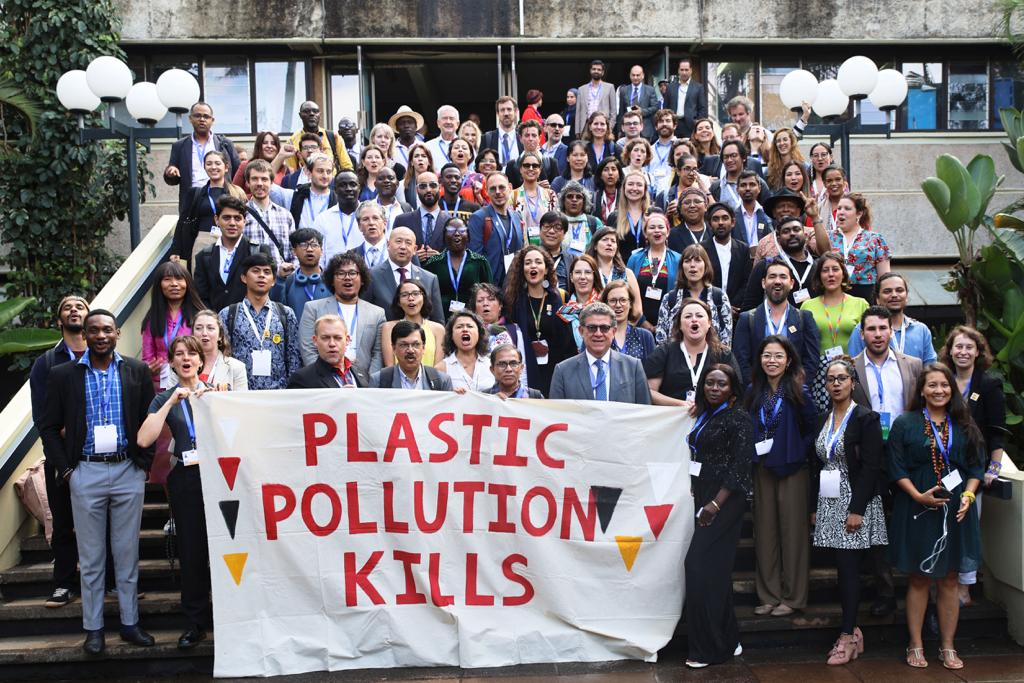
Lors de la dernière session à Genève, la société civile a envoyé un message clair : réparez le processus, tenez votre promesse, mettez fin à la pollution plastique. Les récupérateurs et récupératrices de déchets, les scientifiques, les jeunes, les femmes et les ONG ont appelé les négociateurs à faire preuve de courage et à activer le vote majoritaire lorsque le consensus est impossible. Un traité fort, soutenu par la majorité, vaut mieux qu’un traité faible dicté par une minorité. La crédibilité du multilatéralisme et l’avenir de la planète sont en jeu.

Les priorités du traité sont claires : réduire la production de plastique à la source, éliminer les substances toxiques, garantir la transparence et la traçabilité tout au long du cycle de vie, mettre en place des règles mondiales contraignantes, assurer un financement stable et prévisible, et soutenir une transition juste pour les communautés affectées. Ces éléments ne sont pas négociables : ils déterminent l’efficacité, l’équité et la durabilité du traité.

Il est temps d’oser. Oser activer les mécanismes de vote déjà existants. Oser reconnaître que l’ambition ne peut être sacrifiée au nom d’un consensus paralysant. Oser débloquer un multilatéralisme qui fonctionne. Oser défendre un traité qui protège les populations et la planète. Sans réduction de la production de plastique ni financement dédié, le traité serait une coquille vide. En dépassant l’impasse du consensus, la communauté internationale pourra enfin adopter un instrument à la hauteur de l’urgence écologique; un traité dont les peuples du monde, en particulier ceux du Sud global, pourront être fiers.

À l’heure où les ministres de l’Environnement et d’autres dirigeants mondiaux se réunissent à l’UNEA-7, la septième session de l’Assemblée des Nations Unies pour l’environnement, du 8 au 12 décembre 2025 à Nairobi, au Kenya, sur le thème « Promouvoir des solutions durables pour une planète résiliente », il est essentiel de leur rappeler que la crise de la pollution plastique continue de menacer notre santé et celle de notre planète. On ne peut parler de résilience planétaire sans traiter la crise croissante de la pollution plastique, l’un des facteurs majeurs de la crise planétaire actuelle.

Les solutions durables pour une planète résiliente doivent s’appuyer sur une approche fondée sur la science et centrée sur les droits humains, tout en visant une transition juste et la justice environnementale. Ce sont des éléments fondamentaux pour garantir que les solutions durables placent les intérêts des populations et de la planète au cœur des décisions.

Les pays doivent continuer à appeler à l’urgence de mettre en place un instrument mondial capable de réguler les plastiques, un instrument qui puisse nous sauver, nous et la planète, de la pollution plastique. Ils doivent s’appuyer sur l’élan qui a permis l’adoption de la Résolution 5/14 lors de l’UNEA 5.2 et créer une fois pour toutes un traité efficace sur les plastiques.

Le monde attend encore un traité ambitieux qui traite l’ensemble du cycle de vie des plastiques et protège la santé humaine et l’environnement !

FIN.

By Tening Cissé, Head of funding and partnerships, adansonia.green 

During the most recent round of the plastic pollution talks, INC-5.2  held in Geneva in August 2025, decision making by consensus which  – a rule that not only  symbolizes unity but imposes unanimity – once again became an obstacle to progress. Unsurprisingly, a minority group of oil and plastic producing countries blocked substantive measures from being achieved in the global plastics treaty, leaving the world waiting yet again for the urgent action needed to confront the plastic pollution crisis. 

Consensus becomes a veto when it is interpreted as unanimity –  in other words, when any country, including the ones benefiting from the industries we need to revamp, can block needed collective progress. A single country can block a decision, even if the majority is ready to act. In the context of the global plastics treaty, some states demand that all decisions, even the most substantive, be made by consensus. The result: procedural rules stall and key treaty obligations remain in limbo.

If nothing changes, supplementary sessions, INC-5.3, INC-5.4, etc or an alternate pathway, may be necessary to move forward provided the majority voting mechanism outlined in the rules of procedure is finally activated. The time to act is now!

Since INC-2, a coalition of oil and plastic-producing countries has consistently stalled the most ambitious proposals to end plastic pollution, specifically on: global measures that reduce plastic production from the source, a strong dedicated mechanism for means of implementation, and phasing out of the most problematic or harmful plastic products, including those containing chemicals of concern. Their strategy relies on an obstinate commitment to consensus. Yet, Articles 37 and 38 of the draft rules of procedure agreed by the negotiators clearly state that if consensus fails, decisions can be made by a two-thirds majority vote. These legitimate and agreed provisions are being ignored, granting disproportionate power to a loud minority and setting a dangerous precedent in international environmental negotiations, which goes against everything that multilateralism stands for!

Obstruction tactics go beyond refusing to vote: quorum challenges, excessive accreditation checks, dilatory motions – procedural maneuvers introduced solely to stall or delay the process – and appeals to legal issues that have already been settled. These maneuvers delay debates, exhaust small delegations, and prevent the adoption of ambitious texts urgently needed to end plastic pollution across its full lifecycle. This scenario echoes historical blockages in other environmental conventions, where the insistence on consensus has paralyzed decisions for decades The UN Framework Convention on Climate Change is a particularly stark example of how over-reliance on consensus hampers treaty effectiveness. 

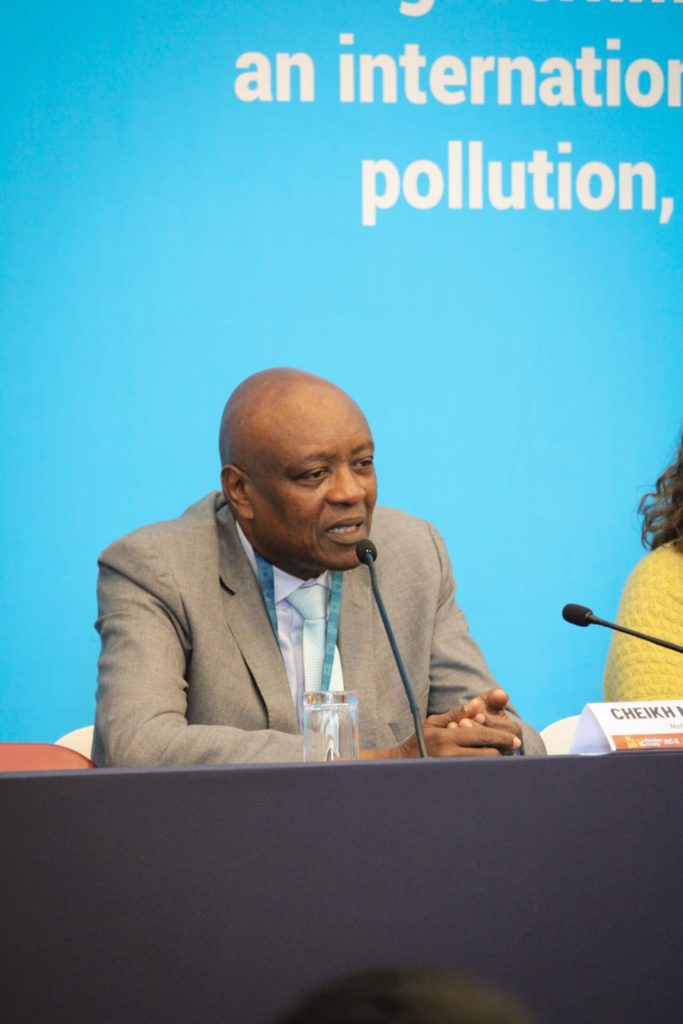
The consequences of this power game are felt by those most vulnerable and affected on the ground daily by the wrath of plastic pollution. In Senegal, plastic pollution is an urgent environmental, health, and economic crisis. Local communities, women, youth, and fishers are the first affected, yet their voices remain marginalized in negotiations. Senegal has been one of the countries in the region on clarity on procedural issues, and strongly supports majority voting when consensus cannot be reached. Dakar emphasizes that requiring unanimity grants a veto to a small minority and stalls progress on urgent issues. Senegal insists that Articles 37 and 38, which allow decisions by a two-thirds majority in the absence of consensus, be respected. By advocating for majority voting, Senegal ensures that negotiations reflect the majority view, enable ambitious, enforceable commitments, and that the voices of the Global South are not sidelined. As Senegal’s representative Cheikh Ndiaye Sylla stated during INC-2, “consensus kills democracy.”

The lifecycle of plastics, from extraction to disposal, is a major source of pollution and injustice. Made from 99% fossil fuels, plastics emit greenhouse gases and release toxic substances. Their breakdown produces microplastics that contaminate soils, waters, and food chains. Additives such as BPA, phthalates, and flame retardants are linked to cancer, hormonal and neurological disorders, and developmental harm. African frontline communities, in South Durban, Odimodi, Kabale already suffer these impacts: respiratory illnesses, soil and water contamination, and forced displacement.

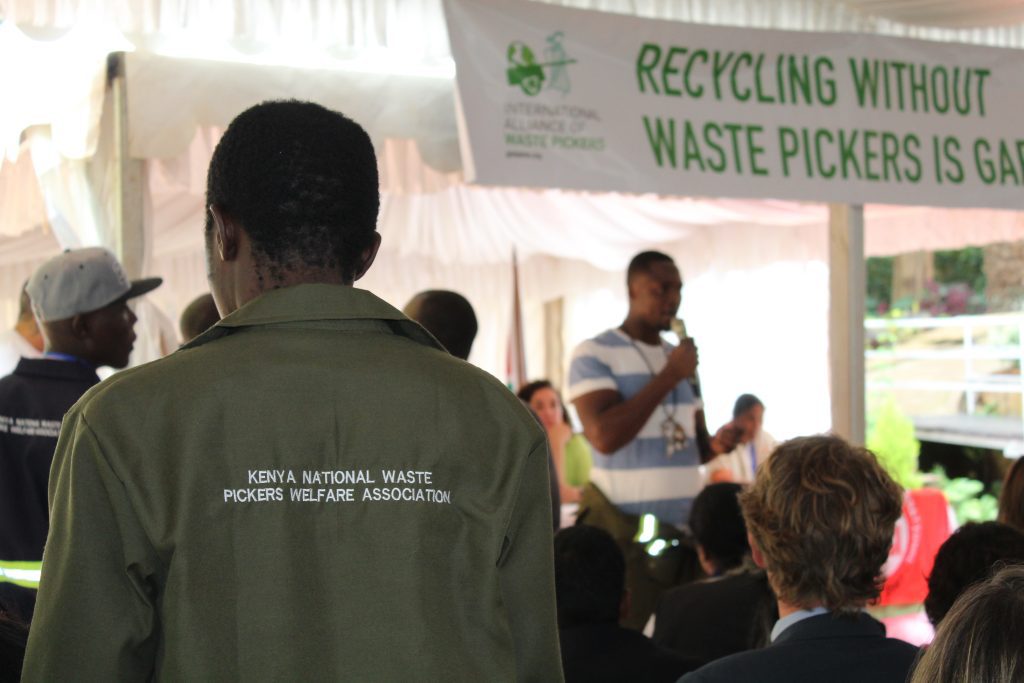
At the last Geneva session, civil society sent a clear message: fix the process, keep your promise, end plastic pollution. Waste pickers, scientists, youth, women, and NGOs called on negotiators to show courage and invoke majority voting when consensus is impossible. A strong treaty, backed by the majority, is better than a weak treaty dictated by a minority. The credibility of multilateralism and the future of the planet are at stake.

The treaty’s priorities are clear: reduce plastic production at the source, eliminate toxic chemicals, ensure transparency and traceability across the lifecycle, implement binding global rules, secure stable and predictable financing, and support a just transition for affected communities. These elements are non-negotiable; they determine the treaty’s effectiveness, fairness, and sustainability.

It is time to dare. Dare to activate the voting mechanisms already in place. Dare to recognize that ambition cannot be sacrificed for the sake of a paralyzing consensus. Dare to unlock a multilateralism that works. Dare to defend a treaty that protects people and the planet. Without reductions in plastic production or dedicated financing, the treaty would be an empty shell. By overcoming the consensus deadlock, the international community can finally adopt an instrument commensurate with the ecological emergency, a treaty the people of the world, particularly those in the Global South, can be proud of.

As environmental ministers and other world leaders gather at UNEA-7, the seventh session of the United Nations Environment Assembly, from December 8–12, 2025, in Nairobi, Kenya, under the theme “Advancing sustainable solutions for a resilient planet,”it is essential to remind them that the plastic pollution crisis continues to threaten our health and the health of our planet. We cannot talk about planetary resilience without addressing the growing plastic pollution crisis, a major contributor to creating the planetary crisis.
Sustainable solutions for a resilient planet must have a science-based and human rights-centered approach that also aims for just transition and environmental justice. These are fundamental to ensuring that sustainable solutions have the interests of people and the planet at their core.   

Countries must continue calling for the urgency of delivering a global instrument to regulate plastics, one that can save us and the planet from plastic pollution. They must follow through on the commitment that helped pass Resolution 5/14 at UNEA 5.2 and create an effective Plastics Treaty once and for all.


The world is still waiting for an ambitious treaty that addresses the full life cycle of plastics, protects human health, and the environment! 

ENDS.

En el Día internacional de los suelos GAIA se suma al esfuerzo de cuidar su preservación y resaltar su vínculo con la gestión de los residuos orgánicos.

El Día internacional de los suelos se celebra desde 2013 y este año tiene como lema “Suelos sanos para ciudades saludables”. Si bien la fecha oficial es el 2013, sus orígenes se remontan al año 2002 gracias al impulso de la Unión Internacional de Ciencias del Suelo (IUSS), la cual propuso este evento en el marco de la creación de un foro colaborativo que surgió ante la necesidad de compartir experiencias sostenibles para recuperar un suelo que pensábamos era un recurso infinito

Algunos datos importantes para tener en cuenta:

  • Más del 95% de nuestros alimentos y 15 de los 18 elementos básicos químicos esenciales para las plantas proceden del suelo.
  • Hoy en día el 33% de los suelos están degradados. La erosión y una inadecuada gestión del mismo altera el equilibrio natural de la Tierra, desaprovechando recursos hídricos y reduciendo el nivel de vitaminas y nutrientes de los alimentos que producimos.
  • Las prácticas sostenibles de gestión del suelo mejoran su salud, reducen la erosión y la contaminación; y mejoran la infiltración y el almacenamiento del agua. 
  • Estas prácticas también preservan la biodiversidad, mejoran la fertilidad y contribuyen a la retención de carbono, desempeñando un papel crucial en la lucha contra el cambio climático.

El vínculo entre  los suelos  y los residuos sólidos municipales no es evidente hoy en día. Incluso, históricamente las aguas servidas se utilizaban para renovar la fertilidad de los suelos aledaños a las ciudades para poder producir alimentos. 

Se podría decir que es casi como cuando se barren las hojas caídas de los árboles, se embolsan y luego se eliminan de parques, césped o jardines. Se altera el ciclo natural de descomposición y reintegro de la materia orgánica al ciclo de la vida. 

Cuando se piensa en el suelo, casi siempre se asocia con el campo y la naturaleza. No obstante, rara vez nos detenemos a pensar que el suelo de las ciudades también es fundamental.

Este Día Mundial del Suelo 2025 pone el foco en los paisajes urbanos con el tema “Suelos sanos para ciudades saludables”. Bajo el asfalto, los edificios y las calles, existe un suelo que, si es permeable y está cubierto de vegetación, ayuda a absorber el agua de lluvia, regular la temperatura, almacenar carbono y mejorar la calidad del aire. Pero cuando se sella con cemento, pierde estas funciones, haciendo que las ciudades sean más vulnerables a inundaciones, calor extremo y contaminación.

En este sentido, basura cero busca no solamente que pensemos en los residuos con un análisis crítico, sino que ofrece también acciones reales para habitar de forma saludable y sostenible nuestras ciudades.

¿Cómo podemos cuidar de mejor manera los suelos que nos alimentan y nos acompañan?

Separar nuestros residuos en nuestro día a día resulta ser clave para poder gestionar la fracción biodegradable de los residuos (habitualmente denominados residuos orgánicos, o RROO). Al separar los restos de nuestra alimentación, del plástico, el cartón, aluminio, vidrios, etc., estamos contribuyendo a que la municipalidad, recicladores, otros agentes, o nosotros mismos podamos hacer un tratamiento adecuado o un retiro diferenciado de esta fracción, permitiendo que exista una gestión específica de estos residuos, lo que facilita el reintegrar materia orgánica, nutrientes y minerales a suelos que producen alimentos, parques o jardines. 

¿Qué métodos de tratamiento de residuos orgánicos existen?

Históricamente los residuos orgánicos se han compostado, pero  también con el paso del tiempo se han utilizado métodos más específicos como el vermicompostaje, la digestión anaeróbica y la producción de larvas de mosca soldado negra. Todos los métodos ofrecen uno o más subproductos, aprovechables para nutrir los suelos, generar energía y/o inclusive producir nuevas formas de alimentación animal. 

¿Sabías que además al separar tus residuos, contribuyes a que estos no produzcan metano?

El metano es uno de los gases de efecto invernadero más importantes en la actualidad, y al mismo tiempo un “problema” de relativamente fácil solución, que puede ser implementada de forma descentralizada, y en función de diferentes volúmenes (o toneladas), climas, y presupuestos.

Entender cuántos residuos orgánicos se tienen que gestionar, con cuánto espacio, presupuesto de inversión y operación, con cuántas personas y maquinarias se cuentan, qué normativas y reglamentos existen en las ciudades, es fundamental para diseñar un sistema descentralizado que ofrezca la posibilidad de que toda la ciudadanía pueda separar sus residuos y disfrutemos de los círculos virtuosos que esta modalidad de tratamiento ofrece.

¿Por qué es tan importante separar los residuos?

Porque de esta manera se facilita la valorización de esta fracción fértil y nutritiva; y porque evitamos contribuir a la contaminación de los suelos con microplásticos y los productos químicos nocivos asociados a su producción. 

¿Cuáles son los círculos virtuosos de la gestión diferenciada de los residuos orgánicos ?

En base al trabajo que nuestras membresías y aliados desarrollan, vemos que el aprovechamiento del compost, el humus, o del digestato de los biodigestores, empiezan a desarrollarse proyectos comunitarios urbanos o rurales, en donde la alimentación saludable pasa a ser un tema central. Quienes hayan producido tomates, lechugas, flores o hierbas medicinales, saben que el resultado se aprecia y valora mucho más, porque vemos cómo el fruto de la dedicación y el cariño, la tierra nos ofrece comida sana en nuestros platos, y nos recuerda un vínculo ancestral con la madre Tierra. 

Los vínculos que vecinos y vecinas forjan al encontrarse en torno a una compostera comunitaria, por ejemplo, son relaciones sociales sumamente importantes, creativas y valiosas, y desde allí se desprenden habitualmente el interés en almacenar y cuidar semillas ancestrales, y recetas para cuidar cultivos de plagas y enfermedades. Cuidar una huerta o un jardín hoy en día es también un espacio educativo, en sí mismo, e inclusive un oasis de paz y salud mental que es muy útil y necesario en esta vida moderna. 

En el Día internacional de los suelos, les invitamos a conocer el documento técnico Residuos orgánicos Municipales: Estrategias para reducir las emisiones de metano, y a que todos aportemos con nuestro granito de arena para hacer esta solución una realidad habitual, y que sus beneficios se observen en lindas huertas y espacios de producción de alimentos en toda América Latina. 

Why Second-Life Batteries Deserve a Strong Policy Framework

By Lien De Brouckere, GAIA Global Batteries Lead

December 9, 2025

With over one hundred million electric vehicle (EV) batteries expected to be nearing retirement by the early 2030s, governments around the world have an urgent window of opportunity to decide: will these batteries become the backbone of a rapid, equitable, just energy transition — or risk becoming part of a next wave of e-waste landing in the Global South?

A new frontier for battery policy: intelligently sequencing second-life before recycling

Second-life policy that can extend a used EV battery’s life by 10 or more years is one of the most promising and least mature frontiers in the global battery landscape. Around the world, EV deployment is accelerating, but the policies governing what happens to those batteries at end-of-life lag behind

In most regions, when policies go beyond transport electrification, the focus remains narrowly on recycling — a promise to recover metals to feed the next generation of production. While recycling is an important step in material recovery, adopting only this single-track approach risks prematurely shredding batteries that still hold 70–80% of their capacity, discarding not only valuable materials, but also the embedded emissions that went into their manufacture.

What is more, recycling technologies for EV batteries are still maturing; many technical and economic challenges must be overcome to achieve advertised recovery rates at scale, and to minimize air, water and toxicity hazards for the environment, workers and frontline communities. 

Supporting second-life use does not mean abandoning recycling targets; it means sequencing them intelligently. Policies should require a “next best use” assessment in line with the zero waste hierarchy: first, consider reuse; then repurposing; and recycling only when no higher-value option remains

Repurposing viable EV batteries — for a “second life” — as stationary storage to capture the intermittent energy produced by solar panels and wind turbines can extend the batteries’ useful life by 10 or more years. This in turn reduces demand for new materials and batteries, provides greater greenhouse gas (GHG) emissions savings than directly going to recycling, and supports delivering affordable renewable energy to communities who may otherwise be priced out of the clean-energy transition.

To unlock that second life potential, we need coherent, enabling policies that value repurposing of viable batteries before premature recycling.

GAIA visits RePurpose Energy in Davis, California

battery repurposing: RePurpose site visit
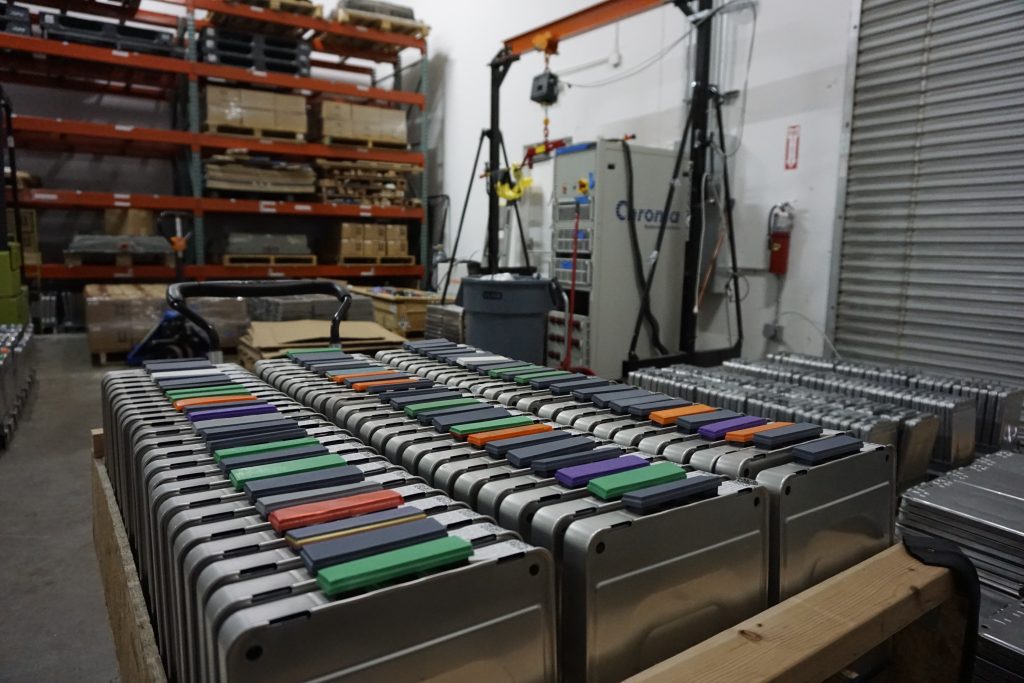
Nissan Leaf battery modules at RePurpose Energy in Davis, California. Photo by Elijah Clarke.

China is likely the only country today with a dedicated second-life policy. Though even there, an extensive informal recycling and waste sector competing for used batteries risks complicating implementation of official state policy. In the EU, the Batteries Regulation is one of the few policies that attempts to cover all stages of the battery life cycle — from design to repurposing, battery passports and recycling. While this comprehensive scope is laudable, the EU Batteries Regulation also took years to develop, and practical mechanisms for its implementation are still emerging.

Elsewhere, most discussion on national frameworks often falls back on Extended Producer Responsibility (EPR) rules typically written for waste management, not for repurposing. This mismatch stifles entrepreneurship. For example, small-scale start up repurposing firms can face onerous fire-safety certifications dependent on access to proprietary Original Equipment Manufacturer (OEM) data, as is the case in the US.

Other barriers to repurposing include restrictive waste classifications, and limited access to battery data. The result is a policy vacuum where profit and privileged OEM contracts — rather than sustainability goals centering people and the environment — tend to determine a battery’s fate.

Why second-life matters for the Global South

The Global North’s unregulated battery waste has implications for the Global South. While transportation cost and logistics hinder effective end-of-life collection and waste management, used EVs and end-of-life batteries retain significant monetary value. This drives exports to the Global South where less expensive labor and weak regulations lead to risky repairs, informal disposal, pollution, and high safety risks and environmental harms.

Many EV batteries are functionally non-repairable due to proprietary parts and a lack of access to information, turning them into hazardous waste. This worsens risks of waste colonialism and presents a lost opportunity for furthering a just and equitable transition. Weak enforcement of transboundary waste rules allows shipments of low-quality used batteries under the guise of “reusable goods,” while countries with limited regulatory capacity shoulder the safety and environmental risks.

At the same time, these same regions stand to benefit from distributed energy storage powered by repurposed batteries — providing backup for health centers, schools, and community microgrids using stored energy from solar panels and wind turbines. Enabling  the expansion of viable distributed energy storage systems powered by repurposed batteries requires robust collection and transportation logistics, strong safeguards for traceable exports, and local refurbishing capacity grounded in equity principles.

Binding bilateral and multilateral agreements could ensure strong accountability for exported batteries, while local downstream supply chain actors (such as importers, distributors, producers and others) — responsible for safe collection, assessment, and eventual disposal by “return to sender” — can keep both responsibility and economic opportunity closer to home.

The data barrier

Assessing a used EV battery’s viability for repurposing depends in large part on access to battery data, including its specifications, its chemistry, structural configuration, state of health, and history of use. Yet today, OEMs tightly guard access to this data, even when it’s essential for safe disassembly, remanufacturing, repurposing, recycling and battery end-of-life. 

Without transparency, emergency crews, dismantlers, repurposers, and recyclers are left blindfolded — disassembling packs at high cost and risk to personal health and safety. GAIA members in the Philippines have seen first-hand how this lack of access to battery data can lead to grave risks in informal settings.  

GAIA members in the Philippines on Why EV Waste is a Zero Waste Issue

Policies must mandate fair and equitable access to battery data, including:

  • State of Health (SoH);
  • Specifications and test results at the time of manufacture;
  • Use history, including exposure to heat or impact;
  • Chemical composition and potential hazards.

A major technical bottleneck lies in battery designCell-to-pack configurations — common in next-generation EVs for cheaper and faster production — are nearly impossible to disassemble, repair, repurpose or recycle effectively, making repurposing more onerous, costly and dangerous. Policy can change that.

EPR and ideally bespoke second-life policy schemes should reward modular and repairable designs with lower compliance fees, tax incentives, or import preferences — and conversely penalize non-modular, single-use designs that obstruct repurposing. Modular design not only facilitates second-life applications but also simplifies eventual recycling, closing the loop more efficiently.

Embedding repurposing into battery waste policy

Without deliberate policy intervention, the risk is high that most retired EV batteries will flow into closed-loop recycling systems controlled by a few large corporations, and feed waste colonialism. If national and multi-lateral policies continue to lag, we risk turning a cornerstone of the clean-energy transition into a new form of extractive waste trade.

But if policymakers and automakers act now — aligning design, data, and governance — second-life batteries can become an important connective tissue between transport electrification and energy access, between climate mitigation and social justice. By embedding reuse and repurposing into the core of battery policy and design, governments and industry can help deliver on electrification that doesn’t end with the first charge.

El 24 de octubre tuvimos la oportunidad de conocer a parte del equipo de la Asociación para la promoción y el Desarrollo de la Comunidad, CEIBA, y de conocer dos proyectos muy valiosos para el país que son articulados por la oficina de Chimaltenango en el Lago de Atitlán. Los proyectos que impulsa la Asociación para la promoción y el desarrollo de la comunidad en Guatemala son variados, y en particular los proyectos visitados vinculan los residuos con la producción de alimentos y la soberanía alimentaria.  

Por un lado CEIBA es parte de la comisión de seguridad alimentaria de la municipalidad, que impulsa y promociona el cambio de comportamiento en torno a la soberanía alimentaria entre familias con desnutrición. Con el objetivo entonces de mejorar la productividad, y la variedad de los alimentos consumidos, la comisión se enfoca en generar educación desde los establecimientos educacionales hasta llegar a la comunidad en torno al lago. Otro de los objetivos, es el empoderamiento de las mujeres para organizar la venta de canastas agroecológicas en el sector, proyecto que se inició durante la pandemia. Además, visitamos un proyecto de parcela demostrativa de agroecología en donde los residuos orgánicos son transformados en abono para la nutrición de suelos y cuidado de los cultivos. 

El segundo proyecto que conocimos es “Biofábrica”, que incentiva el uso de bioles en la comunidad, con el objetivo de disminuir el uso de agroquímicos, y el incentivo a la productividad de mujeres indígenas, quienes utilizan sus prácticas ancestrales de cultivo en la zona de Concepción.

Conoce más sobre el trabajo de CEIBA:

www.ceibaguate.org.gt

https://www.instagram.com/asoceiba