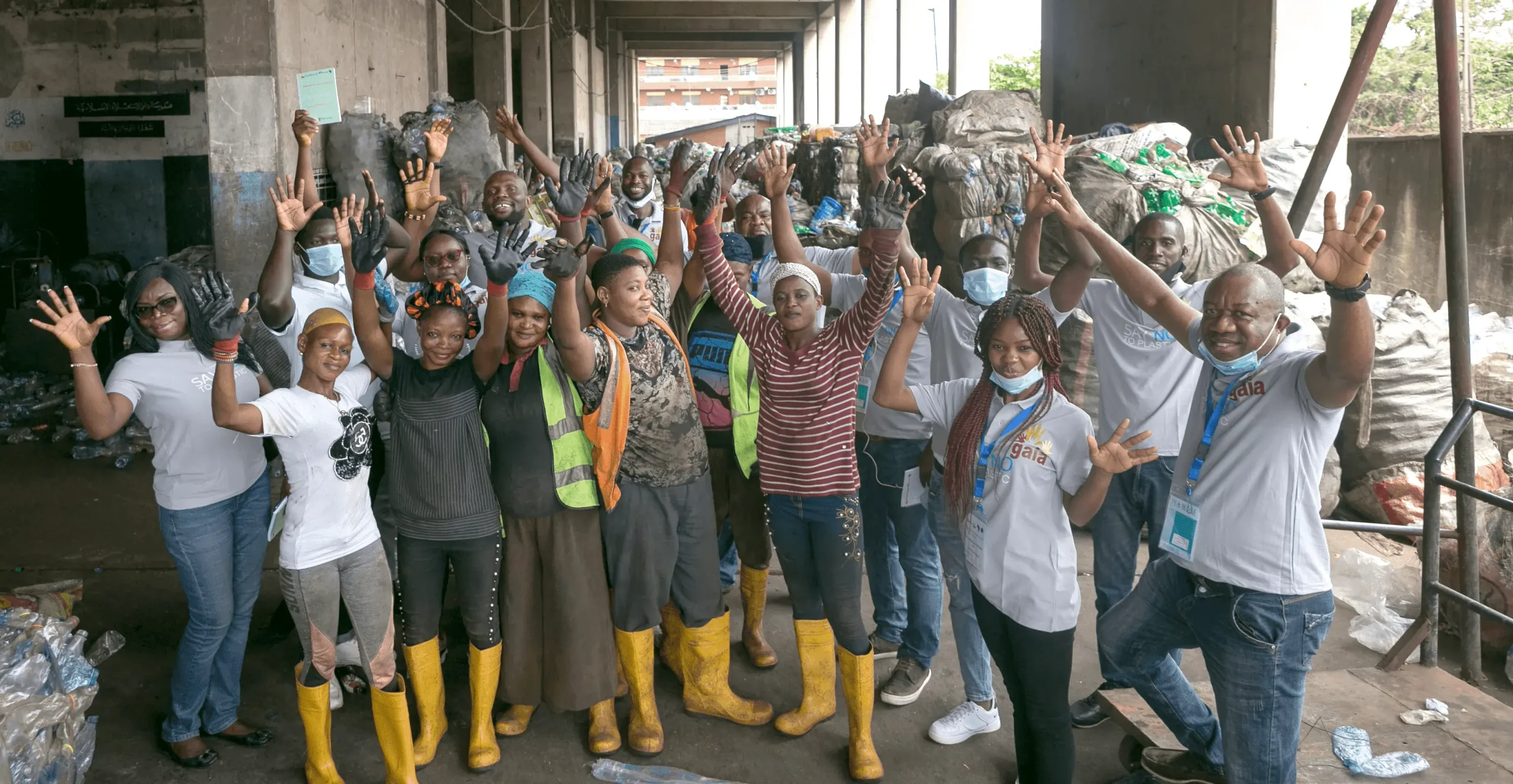
waste pickers

By Mariel Vilella, GAIA Climate Program Director

This week, Addis Ababa is hosting the Second Climate Week, a critical moment for shaping climate commitments ahead of COP30. For the first time, the Sharm el-Sheikh Mitigation Ambition and Implementation Work Programme has dedicated its Sixth Global Dialogue and Investment Event to waste and the circular economy, bringing together governments, city networks, development banks, NGOs, and local organisations to discuss actionable solutions.

We are particularly pleased that Neil Tangri, GAIA’s Science and Policy Director, and Eskedar Awgichew, Executive Director at Eco-Justice Ethiopia are participating on the ground, helping to advance discussions that will influence urban mitigation policies and funding priorities around the world.

For too long, the waste sector has been overlooked in climate action, despite offering some of the most immediate and cost-effective opportunities to reduce emissions. Methane from organic waste, largely sent to dumpsites and landfills, is one of the largest and fastest-reducing sources of greenhouse gases available today. Scaling up zero waste strategies, composting, recycling, and circular economy models could deliver rapid climate benefits, while supporting communities and protecting livelihoods.

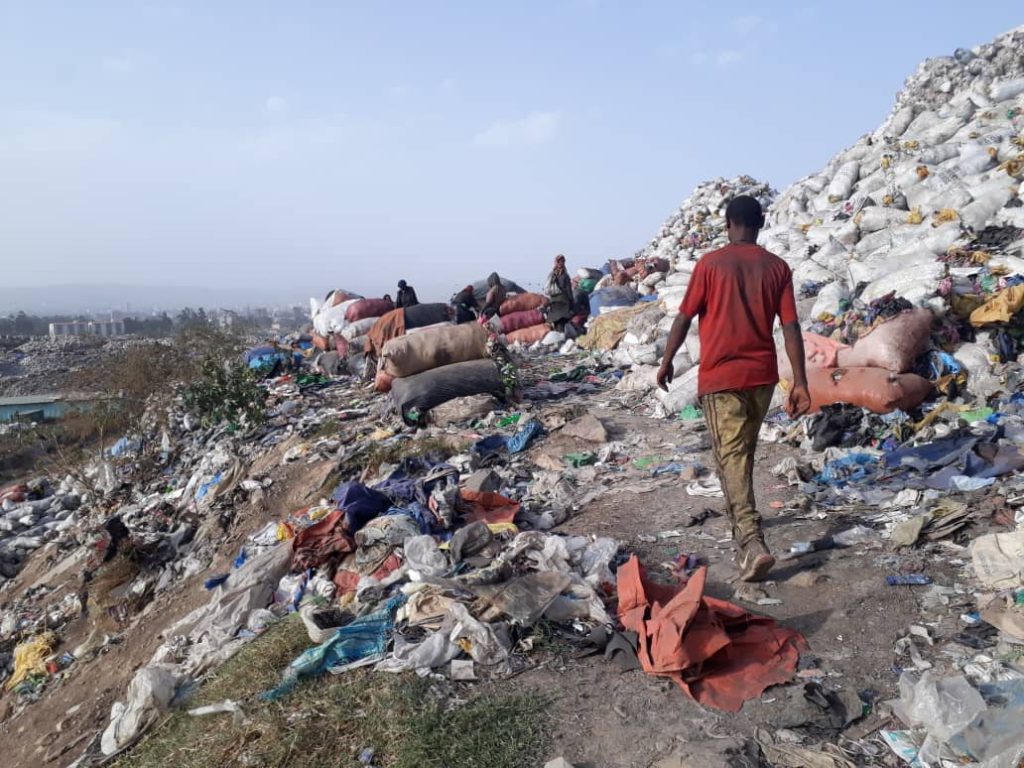
A major conversation this week is around the role of incineration versus zero waste approaches. Evidence from cities in the Global South shows that incinerators often fail to meet expectations. A striking example is Addis Ababa’s Reppie waste-to-energy facility, which was promoted as a groundbreaking solution. The plant was designed to handle 1,400 tons of waste per day but currently processes only 400–700 tons. It produces just half of the electricity promised, requires extra fuel because most of the waste is organic, displaces local waste workers, generates 85 tons of toxic ash daily, and costs $6.2 million to operate each year. This experience is a cautionary tale: investments in incineration can undermine climate goals and social equity.

By contrast, zero waste solutions—composting, recycling, and decentralized systems—are scalable, cost-effective, and inclusive. They reduce emissions, protect communities, and align with the principles of a just transition, ensuring that waste workers and informal recyclers are recognized and supported rather than displaced. Climate action in the waste sector must be inclusive, equitable, and rooted in social and environmental justice.

Another critical dimension is financing. Many local governments and community-based organizations lack access to the resources they need to implement sustainable waste solutions. Climate finance must be direct, inclusive, and designed to support operational costs and long-term sustainability, not just capital-intensive infrastructure projects. Strengthening technical capacity and building local expertise are equally important to ensure that zero waste initiatives succeed and scale effectively.

Innovation also matters. The tools and technologies to mitigate waste methane already exist. The challenge is to implement them in ways that are context-appropriate, accessible, and community-centered, so that both people and the planet benefit. Scaling up circular economy models offers an opportunity for transformative change that goes beyond emissions reductions, building more resilient, equitable cities.

The takeaway is clear: the waste sector offers immediate, cost-effective, and socially just climate solutions. Prioritizing zero waste strategies can achieve rapid methane reductions, support a just transition for workers, and accelerate progress toward COP30 goals. Incineration, in contrast, diverts resources, harms communities, and threatens both climate and justice outcomes.

As delegates gather in Addis Ababa this week, the message is simple: invest in zero waste, not incineration—because the future of climate action and social equity depends on it.

GLOBAL STUDY PROVES INCINERATORS WORSEN CLIMATE IMPACTS WHILE COMMUNITIES PUSH FOR JUST SOLUTIONS

(SPANISH AND PORTUGUESE TRANSLATION BELOW)

[PRESSCON RECORDING]

Addis Ababa, Ethiopia  – 04 September 2025 — From Asia to Latin America to Africa, communities are at the frontlines of both climate impacts and the fight against false solutions in waste management. A new report released by the Global Alliance for Incinerator Alternatives (GAIA), launched this Second Climate Week in Africa, demonstrates that zero waste offers the clearest, most effective path forward—outperforming incineration and other “business-as-usual” practices in reducing long-term climate impacts.

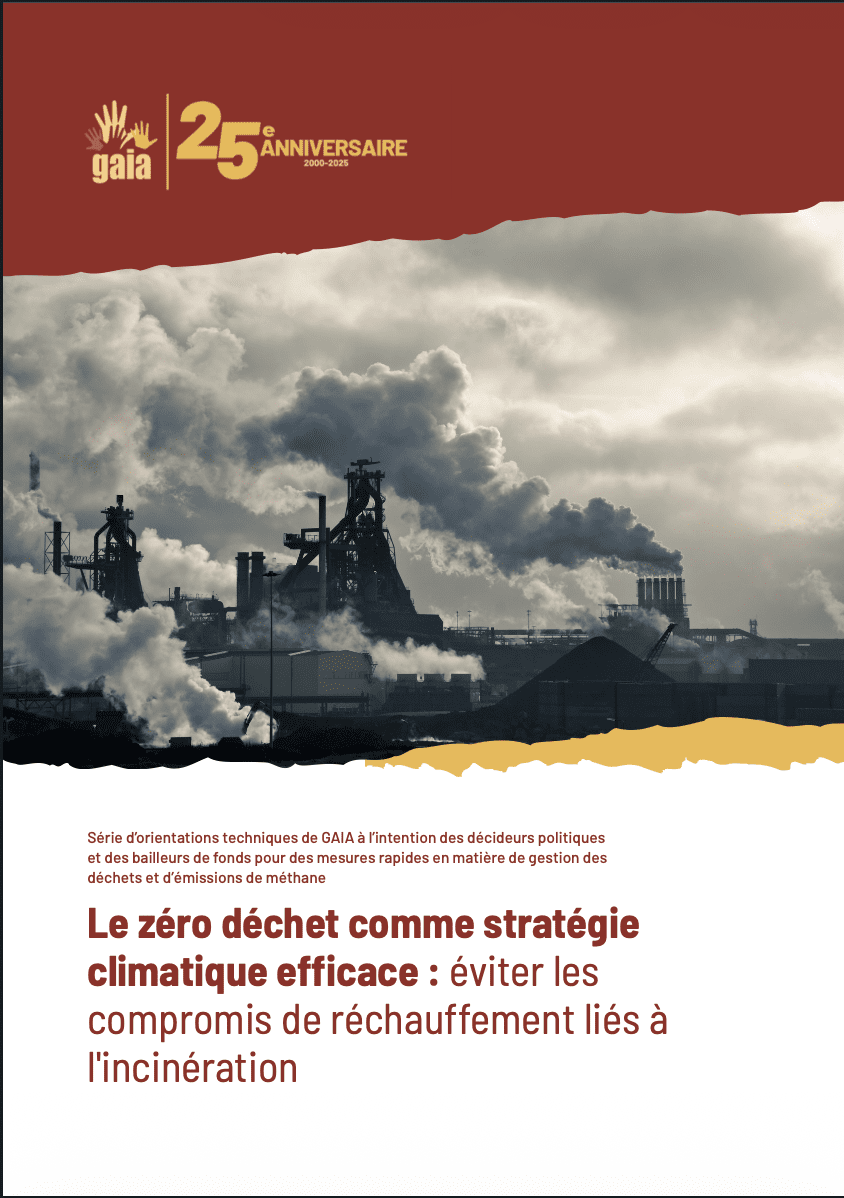
The publication, Zero Waste as an Effective Climate Strategy: Avoiding Warming Tradeoffs from Incineration, is one of the four GAIA Technical Guidance Series for Policymakers and Financiers on Fast Action on Waste and Methane. It examines the long-term global warming impacts of three waste management approaches: open dumping and landfilling, waste-to-energy (WTE)  incineration, and zero waste systems that include source separation, composting, and recycling.

Drawing from case studies in Lagos, Nigeria; Barueri, Brazil; and Quezon City, Philippines, the report applies the Solid Waste Emissions Estimation Tool (SWEET) and the FaIR climate model to project temperature outcomes through 2060. The findings are irrefutable: zero waste is the most effective and resilient strategy to reduce climate impacts from the waste sector. Unlike incineration, which trades short-term methane reductions for increased carbon dioxide emissions, zero waste delivers rapid methane cuts without creating new warming problems.

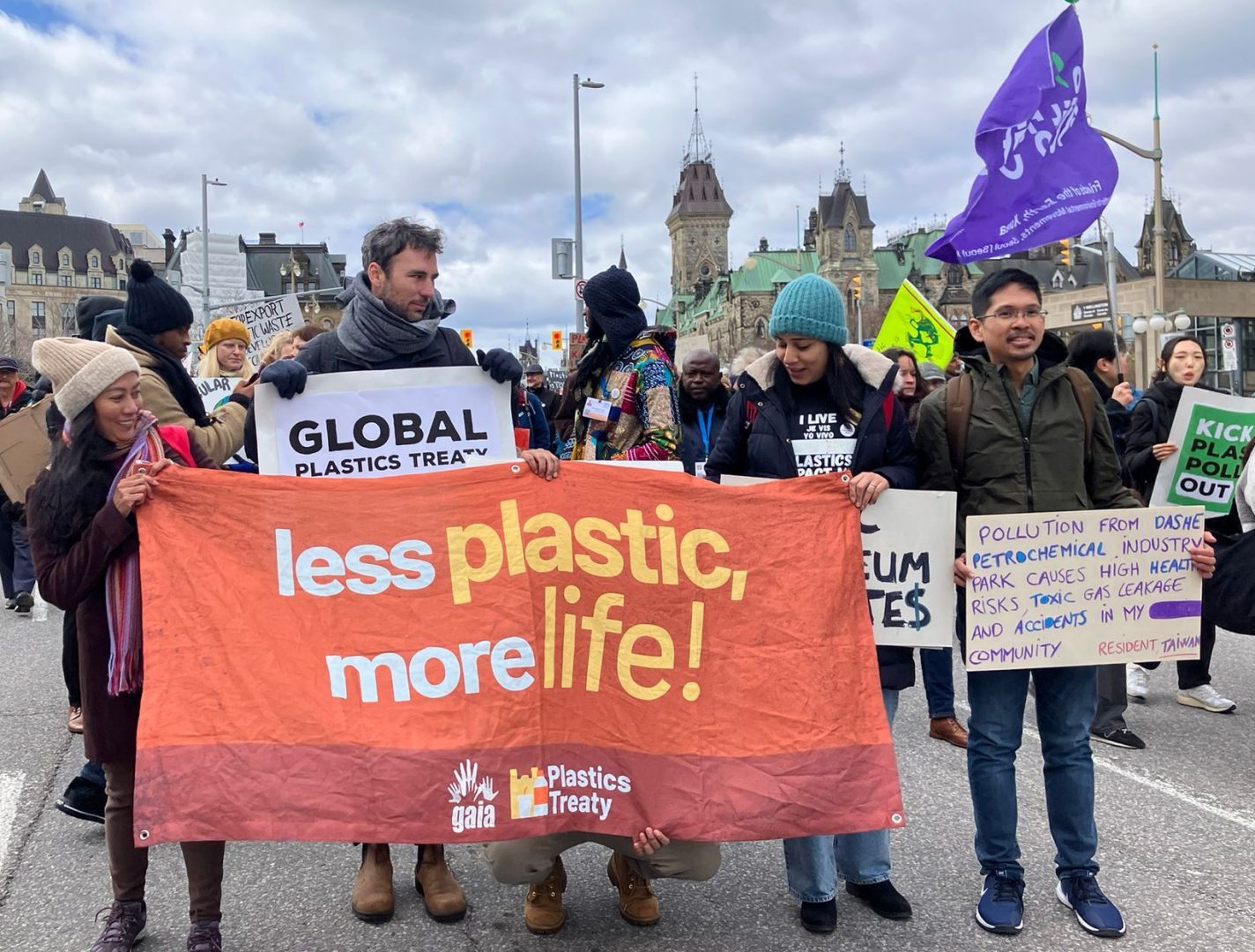
Beyond the data, the report spotlights how frontline communities in all three regions are resisting incinerator projects and advancing decentralized zero waste systems. These movements show how climate solutions can deliver environmental justice, social co-benefits, and a just transition for wastepickers.

The report comes at a pivotal moment. In Latin America, Brazil—host of the upcoming COP—is facing local battles over incineration even as it positions itself as a climate leader. In Asia, cities like Manila are at the forefront of both incineration threats and zero waste innovation. And in Africa, governments are weighing climate finance options that will determine whether communities are locked into polluting infrastructure or supported in building resilient zero waste systems.

For GAIA, the message is clear: Zero Waste offers the fastest, fairest, and most cost-effective way to cut methane emissions, and it must be at the center of global climate strategies.

SPEAKERS QUOTES: 

The Global Methane Pledge is a promise we cannot afford to break. Our findings show that zero waste delivers the rapid methane reductions the world needs to meet climate targets, without the carbon penalty of incineration. If governments are serious about keeping warming under 1.5°C, zero waste must be at the heart of their plans heading into COP30. – Neil Tangri, Science and Policy Director of GAIA

Communities in Africa are rejecting incinerators because we see firsthand the toxic smoke, the health risks, and the debt they bring. We deserve climate solutions that clean our air, not poison it. Zero waste programs protect our children’s health, create real jobs, and keep decision-making in the hands of local people. – Weyinmi Okotie, GAIA Africa

Waste pickers have been the backbone of recycling in our cities for decades. As validated by these findings, they are already showing us real climate solutions. Supporting zero waste also means dignity, stable livelihoods, and a just transition for workers. Incineration does the opposite by burning this all away. – Brex Arevalo, Climate and Anti-Incineration Campaigner, GAIA Asia Pacific

As Brazil prepares to host Conference of the Parties (COP) 30, we have a chance to show the world that climate leadership means rejecting dirty technologies. Investing in zero waste can slash methane emissions, create thousands of green jobs, and align with Brazil’s pledge to protect our people and our planet. – Rafael Eudes, Zero Waste Alliance Brazil

Cutting methane quickly is critical to slowing climate change, and zero waste strategies gives us the tools to do it without causing new problems. Incinerators may look like an easy fix, but they simply swap one greenhouse gas for another and lock communities into decades of pollution. – Mariel Vilella, the Global Climate Program Director of GAIA

MEDIA CONTACTS:

Sonia Astudillo, Global Climate Communications Officer, Global Alliance for Incinerator Alternatives (GAIA) I sonia@no-burn.org I +63 917 5969286

Dan Abril, Communications Officer for Programs, GAIA Asia Pacific | dan@no-burn.org  | 

Ibrahim Khalilulahi Usman, Africa Communications Associate, GAIA Africa | khalil@no-burn.org

GAIA is a worldwide alliance of more than 1,000 grassroots groups, non-governmental organizations, and individuals in over 90 countries. With our work we aim to catalyze a global shift towards environmental justice by strengthening grassroots social movements that advance solutions to waste and pollution. We envision a just, zero waste world built on respect for ecological limits and community rights, where people are free from the burden of toxic pollution, and resources are sustainably conserved, not burned or dumped. 

[SPANISH ]

LA ESTRATEGIA BASURA CERO ES MÁS EFECTIVA QUE LA INCINERACIÓN EN LA REDUCCIÓN DE LA CONTAMINACIÓN CLIMÁTICA

UN ESTUDIO GLOBAL DEMUESTRA QUE LAS INCINERADORAS AGRAVAN EL IMPACTO CLIMÁTICO, MIENTRAS LAS COMUNIDADES EXIGEN SOLUCIONES JUSTAS

Addis Abeba, Etiopía 4 de septiembre de 2025 —Desde Asia hasta América Latina y África, las comunidades están en la primera línea tanto de los impactos climáticos como de la lucha contra las falsas soluciones en la gestión de residuos. Un nuevo informe publicado por la Alianza Global para Alternativas a la Incineración (GAIA), presentado durante la Segunda Semana del Clima en África, demuestra que la estrategia basura cero ofrece el camino más claro y eficaz para avanzar, superando a la incineración y otras prácticas «habituales» en la reducción de los impactos climáticos a largo plazo.

La publicación, titulada «Basura cero como estrategia climática eficaz: Evitando las compensaciones de calentamiento global derivadas de la incineración», es una de las cuatro series de orientaciones técnicas de GAIA para responsables de políticas y financiadores sobre la acción rápida en materia de residuos y metano. En ella se examinan los efectos a largo plazo del calentamiento global de tres enfoques de gestión de residuos: vertidos a cielo abierto y rellenos sanitarios, incineración para la producción de energía a partir de residuos (WTE) y sistemas de basura cero que incluyen la separación en origen, el compostaje y el reciclaje.

A partir de estudios de casos en Lagos (Nigeria), Barueri (Brasil) y Quezon City (Filipinas), el informe aplica la herramienta de estimación de emisiones de residuos sólidos (SWEET) y el modelo climático FaIR para proyectar los resultados de temperatura hasta 2060.  Los hallazgos son irrefutables: basura cero es la estrategia más eficaz y resiliente para reducir los impactos climáticos del sector de los residuos. A diferencia de la incineración, que intercambia la reducción de metano a corto plazo por un aumento en las emisiones de dióxido de carbono, basura cero  logra recortes rápidos de metano sin generar nuevos problemas de aumento de la temperatura.

Más allá de los datos, el informe destaca cómo las comunidades de primera línea de las tres regiones se resisten a los proyectos de incineración y promueven sistemas descentralizados de basura cero. Estos movimientos muestran cómo las soluciones climáticas pueden aportar justicia medioambiental, beneficios sociales colaterales y una transición justa para los recicladores de base.

El informe llega en un momento crucial. En América Latina, Brasil, anfitrión de la próxima COP, se enfrenta a batallas locales sobre la incineración, incluso cuando se posiciona como líder climático. En Asia, ciudades como Manila están a la vanguardia tanto de las amenazas de la incineración como de la innovación en materia de basura cero. Y en África, los gobiernos están sopesando opciones de financiamiento climático que determinarán si las comunidades quedan atrapadas en infraestructuras contaminantes o si se les apoya en la construcción de sistemas resilientes de basura cero.

Para GAIA, el mensaje es claro: Basura cero ofrece la forma más rápida, justa y rentable de reducir las emisiones de metano, y debe estar en el centro de las estrategias climáticas globales.

CITAS DE LOS PONENTES:

El Compromiso Global sobre el Metano es una promesa que no podemos permitirnos incumplir. Nuestros hallazgos demuestran que la estrategia basura cero proporciona la reducción de metano rápida que el mundo necesita para cumplir los objetivos climáticos, sin la penalización de carbono que supone la incineración. Si los gobiernos se toman en serio el objetivo de mantener el calentamiento por debajo de 1,5 °C, basura cero debe ocupar un lugar central en sus planes de cara a la COP30. – Neil Tangri, director de Ciencia y Política de GAIA

Las comunidades africanas rechazan las incineradoras porque vemos de primera mano el humo tóxico, los riesgos para la salud y la deuda que conllevan. Merecemos soluciones climáticas que limpien nuestro aire, no que lo envenenen. Los programas de basura cero protegen la salud de nuestros hijos, crean puestos de trabajo reales y mantienen la toma de decisiones en manos de la población local. – Weyinmi Okotie, GAIA África

Los recicladores han sido la columna vertebral del reciclaje en nuestras ciudades durante décadas. Tal y como demuestran estos hallazgos, ya nos están mostrando soluciones climáticas reales. Apoyar la basura cero también significa dignidad, sustento estable y una transición justa para los trabajadores. La incineración hace lo contrario al quemarlo todo. – Brex Arevalo, activista por el clima y contra la incineración, GAIA Asia Pacífico

Mientras Brasil se prepara para acoger la Conferencia de las Partes (COP) 30, tenemos la oportunidad de mostrar al mundo que el liderazgo climático significa rechazar las tecnologías contaminantes. Invertir en basura cero puede reducir drásticamente las emisiones de metano, crear miles de empleos verdes y alinearse con el compromiso de Brasil de proteger a nuestra gente y nuestro planeta. – Rafael Eudes, Alianza Basura Cero BrasilReducir rápidamente las emisiones de metano es fundamental para frenar el cambio climático, y las estrategias de basura cero nos proporcionan las herramientas para hacerlo sin causar nuevos problemas. Las incineradoras pueden parecer una solución fácil, pero simplemente sustituyen un gas de efecto invernadero por otro y condenan a las comunidades a décadas de contaminación. – Mariel Vilella, directora del Programa Climático Global de GAIA

[PORTUGUESE]

A ESTRATÉGIA DE RESÍDUO ZERO É MAIS EFICAZ DO QUE A INCINERAÇÃO NA REDUÇÃO DA POLUIÇÃO CLIMÁTICA

ESTUDO GLOBAL COMPROVA QUE INCINERADORAS AGRAVAM OS IMPACTOS CLIMÁTICOS, ENQUANTO COMUNIDADES PRESSIONAM POR SOLUÇÕES JUSTAS

Adis Abeba, Etiópia 04 de setembro de 2025 — Da Ásia à América Latina e África, as comunidades estão na linha de frente tanto dos impactos climáticos quanto da luta contra falsas soluções na gestão de resíduos. Um novo relatório publicado pela Aliança Global para Alternativas à Incineração (GAIA), apresentado durante a Segunda Semana do Clima em África, demonstra que a estratégia de resíduo zero oferece o caminho mais claro e eficaz para avançar, superando a incineração e outras práticas “habituais” na redução dos impactos climáticos a longo prazo.

A publicação, intitulada Resíduo Zero como estratégia climática eficaz: Evitando as compensações do aquecimento global derivadas da incineração, é uma das quatro séries de orientações técnicas da GAIA para responsáveis por políticas e financiadores sobre a ação rápida em matéria de resíduos e metano. Nela são examinados os efeitos de longo prazo do aquecimento global de três abordagens de gestão de resíduos: lixões a céu aberto e aterros sanitários, incineração para a produção de energia a partir de resíduos (WTE) e sistemas de lixo zero que incluem a separação na origem, a compostagem e a reciclagem.

Com base em estudos de caso em Lagos, Nigéria; Barueri, Brasil; e Quezon City, Filipinas, o relatório aplica a Ferramenta de Estimativa de Emissões de Resíduos Sólidos (SWEET) e o modelo climático FaIR para projetar os resultados de temperatura até 2060. As conclusões são irrefutáveis: Resíduo zero é a estratégia mais eficaz e resiliente para reduzir os impactos climáticos do setor de resíduos. Ao contrário da incineração, que troca reduções de metano de curto prazo por aumento das emissões de dióxido de carbono, resíduo  zero proporciona cortes rápidos de metano sem criar novos problemas de aquecimento.

Além dos dados, o relatório destaca como as comunidades da linha de frente nas três regiões estão resistindo aos projetos de incineradores e promovendo sistemas descentralizados de resíduo zero. Esses movimentos mostram como as soluções climáticas podem proporcionar justiça ambiental, benefícios sociais e uma transição justa para os catadores.

O relatório chega em um momento crucial. Na América Latina, o Brasil — anfitrião da próxima COP — enfrenta batalhas locais sobre a incineração, mesmo se posicionando como líder climático. Na Ásia, cidades como Manila estão na vanguarda tanto das ameaças da incineração quanto da inovação do resíduo zero. E na África, os governos estão avaliando opções de financiamento climático que determinarão se as comunidades ficarão presas a infraestruturas poluentes ou serão apoiadas na construção de sistemas resilientes de resíduo zero.

Para a GAIA, a mensagem é clara: o desperdício zero oferece a maneira mais rápida, justa e econômica de reduzir as emissões de metano e deve estar no centro das estratégias climáticas globais.

CITAÇÕES DOS PALESTANTES:

O Compromisso Global com o Metano é uma promessa que não podemos quebrar. Nossas descobertas mostram que resíduo zero proporciona as rápidas reduções de metano de que o mundo precisa para cumprir as metas climáticas, sem a penalidade de carbono da incineração. Se os governos estão seriamente empenhados em manter o aquecimento abaixo de 1,5 °C, resíduo zero deve estar no centro de seus planos para a COP30. – Neil Tangri, Diretor de Ciência e Política da GAIA

As comunidades na África estão rejeitando os incineradores porque vemos em primeira mão a fumaça tóxica, os riscos à saúde e as dívidas que eles trazem. Merecemos soluções climáticas que limpem nosso ar, não o envenenem. Os programas de resíduos zero protegem a saúde de nossas crianças, criam empregos reais e mantêm a tomada de decisões nas mãos da população local. – Weyinmi Okotie, GAIA África

Os catadores têm sido a espinha dorsal da reciclagem em nossas cidades há décadas. Conforme validado por essas descobertas, eles já estão nos mostrando soluções climáticas reais. Apoiar resíduo  zero também significa dignidade, meios de subsistência estáveis e uma transição justa para os trabalhadores. A incineração faz o oposto, queimando tudo isso. – Brex Arevalo, ativista climático e anti-incineração, GAIA Ásia-Pacífico

Enquanto o Brasil se prepara para sediar a Conferência das Partes (COP) 30, temos a chance de mostrar ao mundo que liderança climática significa rejeitar tecnologias sujas. Investir no resíduo zero pode reduzir drasticamente as emissões de metano, criar milhares de empregos verdes e se alinhar com o compromisso do Brasil de proteger nosso povo e nosso planeta. – Rafael Eudes, Aliança Resíduo Zero Brasil

Reduzir rapidamente o metano é fundamental para desacelerar as mudanças climáticas, e as estratégias de resíduo zero nos dão as ferramentas para fazer isso sem causar novos problemas. Os incineradores podem parecer uma solução fácil, mas eles simplesmente trocam um gás de efeito estufa por outro e prendem as comunidades a décadas de poluição. – Mariel Vilella, Diretora do Programa Climático Global da GAIA

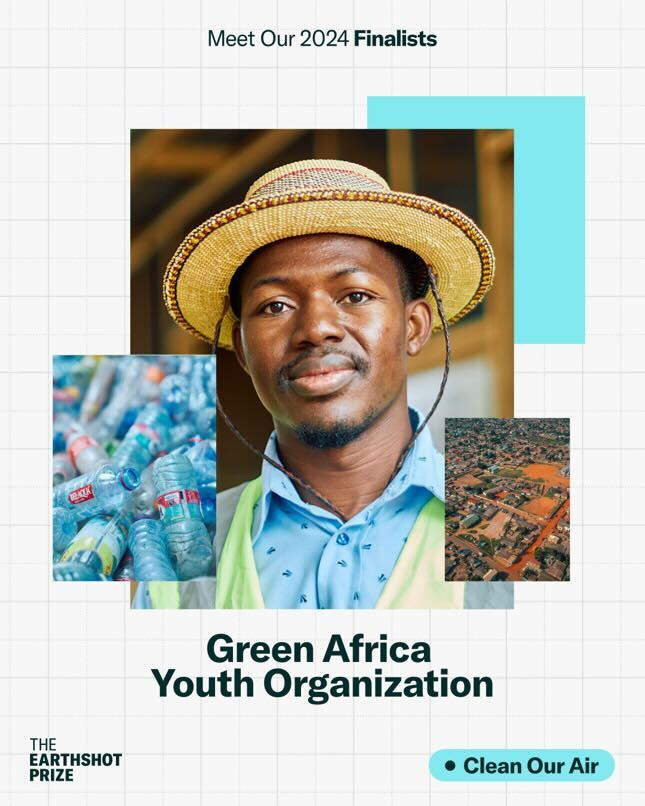
In a groundbreaking achievement, the Green Africa Youth Organization (GAYO) has been nominated as a finalist for the prestigious Earthshot Prize, marking the first time a youth group has reached this stage. Founded in 2014, GAYO is a youth-led nonprofit based in Accra, Ghana, dedicated to empowering young Africans to spearhead climate action and environmental conservation. Their innovative Zero Waste Model has earned them a spot in the Clean Our Air category, highlighting their commitment to improving air quality and addressing climate challenges in vulnerable communities across Africa.

Desmond Alugnoa, Co-Founder of GAYO, expressed the organization’s honor in being recognized among global changemakers, emphasizing the importance of youth-driven initiatives in creating a healthier, cleaner future. The Zero Waste Model, which has already created over 250 green jobs in Accra since 2022, aims to revolutionize waste management by promoting waste collection, sorting, recycling, and the production of green goods and services. This model not only addresses the pressing issue of air pollution but also opens up new employment opportunities in the waste management sector.

The Earthshot Prize, established by Prince William and the British Royal Foundation in 2020, seeks to spotlight and scale innovative solutions to the planet’s most pressing environmental challenges. GAYO’s nomination underscores the potential of grassroots efforts to inspire lasting environmental change on a global scale. As the Earthshot Prize Awards Ceremony approaches in Cape Town, South Africa, GAYO stands as a beacon of hope and a testament to the power of youth-led initiatives in safeguarding our planet.

For more information, contact comms@greenafricayouth.org or call +233 54 069 9164.

On September 21, 2024, the vibrant city of Dar es Salaam witnessed an engaging event that brought together communities, schools, and organizations in a unified mission to combat waste and promote environmental conservation for World Cleanup Day 2024. The Let’s Do It Tanzania cleanup event, spearheaded also by our member Nipe Fagio, was a resounding success, showcasing the power of collective action in creating a cleaner and healthier environment.

A Day of Unity and Purpose

The event saw an impressive turnout, with 2,604 dedicated volunteers converging at seven strategically identified sites across Dar es Salaam. Armed with gloves, bags, and an unwavering commitment to the cause, these volunteers embarked on a mission to rid their surroundings of waste and raise awareness about the critical importance of waste management.

Remarkable Achievements

The results of the cleanup were nothing short of remarkable. Volunteers collected a staggering 1,953 bags of waste, amounting to a total weight of 22,366.52 kilograms. This monumental effort not only transformed the cleanliness of the targeted areas but also sent a powerful message about the impact of community-driven initiatives.

Volunteers during World Cleanup Day 2024

Community Spirit in Action

The success of the cleanup event can be attributed to the incredible spirit of collaboration and dedication displayed by all participants. Schools, local businesses, and community groups came together, demonstrating that when people unite for a common cause, significant change is possible. The event also served as an educational platform, enlightening participants and onlookers about the importance of proper waste disposal and environmental stewardship.

Looking Ahead

While the achievements of World Cleanup Day 2024 are commendable, they also highlight the ongoing need for sustained efforts in waste management and environmental conservation. Nipe Fagio remains committed to driving positive change and will continue to organize initiatives that inspire and mobilize communities towards a cleaner, greener future.

Join the Movement

Nipe Fagio extends heartfelt gratitude to all the volunteers, partners, and supporters who made this event possible. The success of World Cleanup Day 2024 is a testament to what can be achieved when we come together with a shared vision. As we look to the future, let us all pledge to maintain the momentum and work towards a Tanzania where waste is managed responsibly, and the environment is cherished and protected.

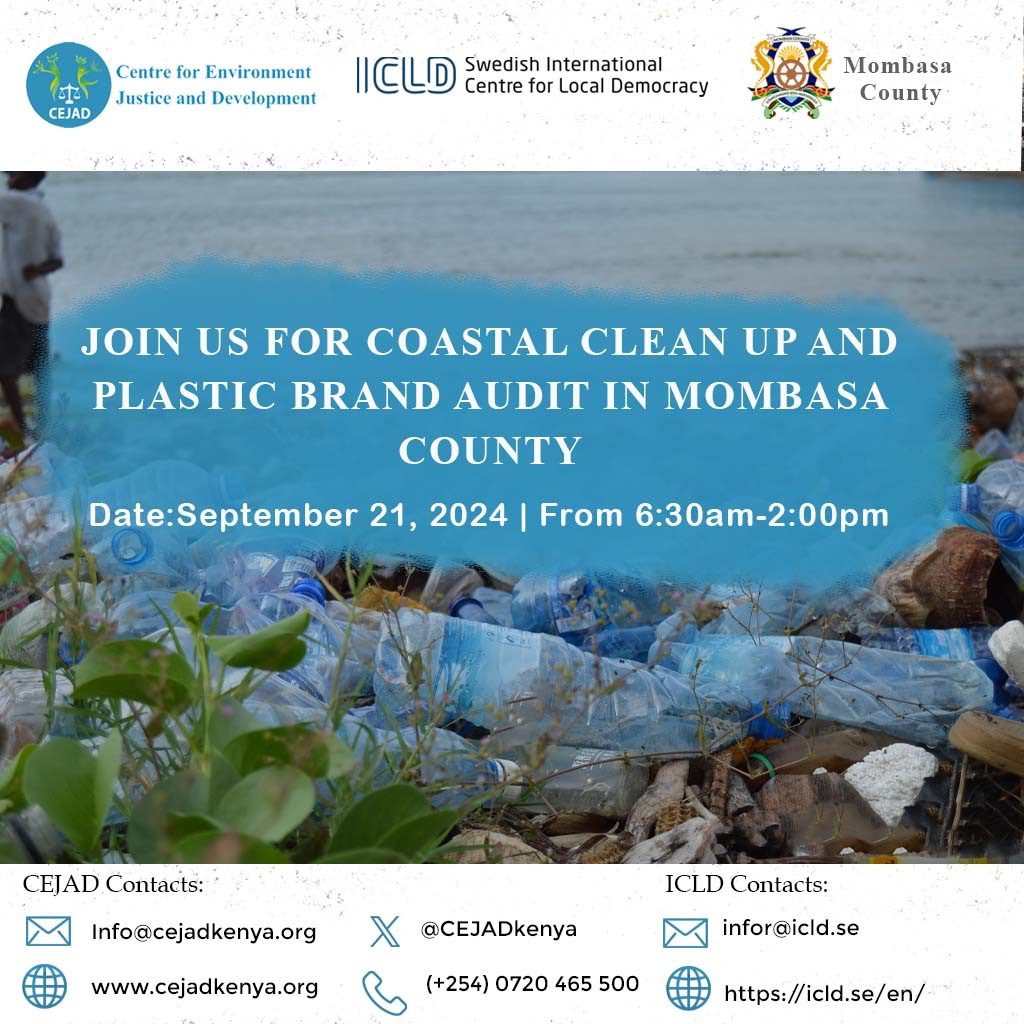
CEJAD and waste pickers to carry out plastic brand audit in Mombasa during World Coastal Cleanup Day

September 20, 2024, is marked as World Coastal Cleanup Day—a global effort aimed at removing trash from aquatic environments to reduce environmental pollution. To commemorate this day, CEJAD has joined hands with numerous organizations as part of the International Coastal Cleanup Committee, Kenya Chapter, to coordinate and collaborate on this initiative.

CEJAD’s involvement in the cleanup effort goes beyond just removing waste. We are partnering with waste worker groups and civil society organizations in Mombasa to conduct a plastic brand audit in Mombasa, Kenya.

The Objective

The primary objective of the brand audit is to identify the companies and brands most responsible for environmental and marine plastic pollution. The data collected from this audit will be used to advocate for better plastic waste management, including pushing for inclusion of waste pickers in Extended Producer Responsibility (EPR) programs and promoting the use of environmentally friendly packaging alternatives.

Prior to the cleanup and brand audit, CEJAD will host a Democracy Lab on September 20, 2024, focusing on the topic of “Privatization of Waste Management in Mombasa County – Opportunities for waste pickers.” This forum will provide waste workers with an opportunity to learn about the county’s waste management plans, the progress made so far, and how the needs of waste pickers can be incorporated into a just transition under these plans.

On International Coastal Cleanup day, participants and volunteers will begin with a beach cleanup, followed by the brand audit. The audit will involve documenting the brands of plastic waste collected using a digitized form adapted from the Break Free From Plastic initiative. CEJAD will then analyze the data and publish a report with key findings and recommendations.

In the meantime, CEJAD and the Advisory Committee are finalizing the Brand Audit Plans. This includes training volunteers on how to use the digitized application for data entry.

#AfricaForZeroWaste

By Patricia Namwanga Kizito.
About Project Kollekt.
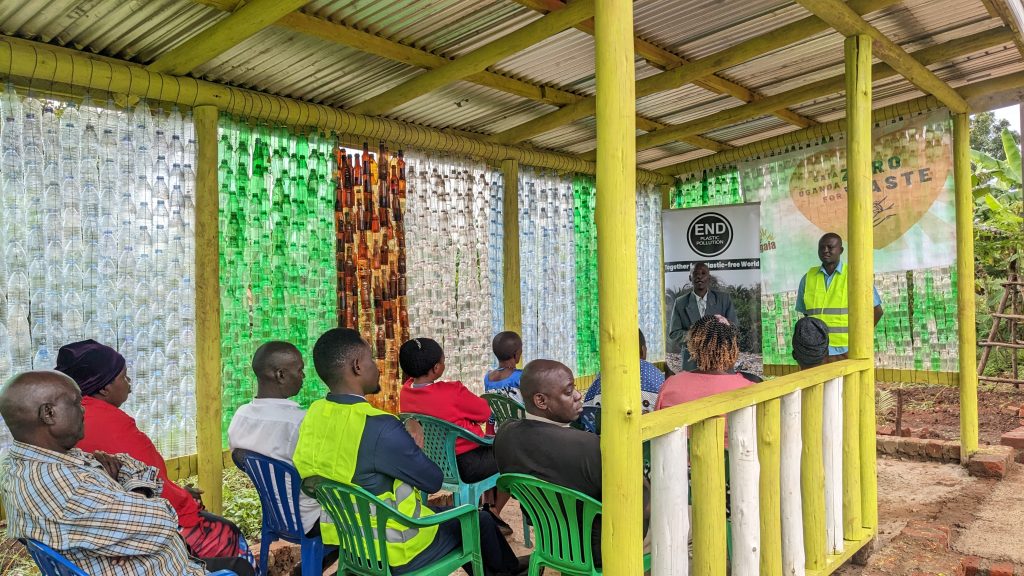
Through the Project Kollekt initiative, End Plastic Pollution – Uganda in partnership with the Global Alliance for Incinerator Alternatives and Break Free from Plastic has established The Kollekt Village in Masuulita Town, Wakiso District as a center to demonstrate, promote and mainstream zero waste model implementation in Local communities.

The Kollekt Village has been developed with facilities including:
– A material recovery facility for waste handling with a demonstration space and chambers for separating plastic waste by types and content.
– A plastic waste recovery program involving waste pickers with a facility to collect, sort and store recovered materials.
– A space provided for local waste pickers to involve in the zero-waste model implementation.
– A community gathering space for meeting, training, and sensitization of waste pickers so as to support and empower them to organize. A space for organic waste management with compositing chambers. The space ran onsite projects including Compositing, Black Soldier Flies farming, gardening / vertical farming demonstration and a program for small holder farmers to learn about compositing, organic farming and making organic fertilizers.

In addition to the Material Recovery Facility, The Kollekt Village features spaces for:
– Community gathering, meetings and a training center.
– A space has been provided to establish a reuse and refill shop for locals, youth and women groups as well as local artisans to showcase their materials.
– A library, resources and learning center to be stocked with reading materials, educational materials, Research works on different environmental issues and materials on zero waste.

Why the waste sector.
The waste sector offers a prime opportunity for countries like Uganda to take action that can protect the environment, reduce polluted waste, reduce emissions, strengthen climate resilience systems, provide substantial health and unlock economic benefits. With the zero waste approach, local communities are put at the center of action to address the impact of poor waste management. The zero waste policy is not about stopping the waste coming into the community only, but also about building up local communities and creating jobs that can enable them to thrive.

Why Go for Zero Waste; what is the expected impact.
With the zero-waste approach, End Plastic Pollution seeks to address issues including poor waste management, climate crisis, agriculture and food security, biodiversity loss, livelihood improvement and deliver economic development. There will be increased awareness and sensitization and education initiatives to equip youth, waste pickers and local leaders with practical knowledge to implement and develop zero waste models for their communities.
The mitigation potential of the waste management sector is largely underestimated. Yet curbing waste generation and implementation of better waste management strategies avoids emissions throughout the lifecycle of material goods – from extraction to end of life. Zero waste systems have been proven versatile strategies that aim to continually reduce waste through – source reduction, separate collection, composting and recycling.

Why zero waste intervention is crucial for combating climate change.

Through the zero waste approach communities can build resilience to climate change impacts like flooding, deter disease transmission, improve soil health, and deliver economic opportunities. The waste sector has been identified as one of the contributors to the 9.1 million tonnes greenhouse gasses from Greater Kampala Metropolitan Area reported as of 2020 with an exponential growth rate of 55% from 2020 – 2030 reaching 14.6 million tons of carbon. The project seeks to address the issue of poor solid waste management practices which was identified by the Uganda government as one of the lead drivers of climate change vulnerability.


As the climate crisis deepens urgent action on all fronts is required to both eliminate greenhouse gas emissions and adapt to a rapidly changing climate.

  1. For Climate Mitigation.
    Zero waste systems contribute to greenhouse gas emissions reductions in 3 ways: source reduction, materials separation, collection and proper management / recovery of plastic waste and organic waste to avoid landfill methane emissions.
  2. For Climate Adaptation.
    Zero waste systems help communities to build resilience against the increasingly frequent extreme weather events and health hazards brought by climate change. Poor waste collection and management are among the factors that leave communities particularly exposed to these events.
    With zero waste systems local communities can become more resilient by mitigating floods, reducing disease transmission, and improving soil, water and air quality.

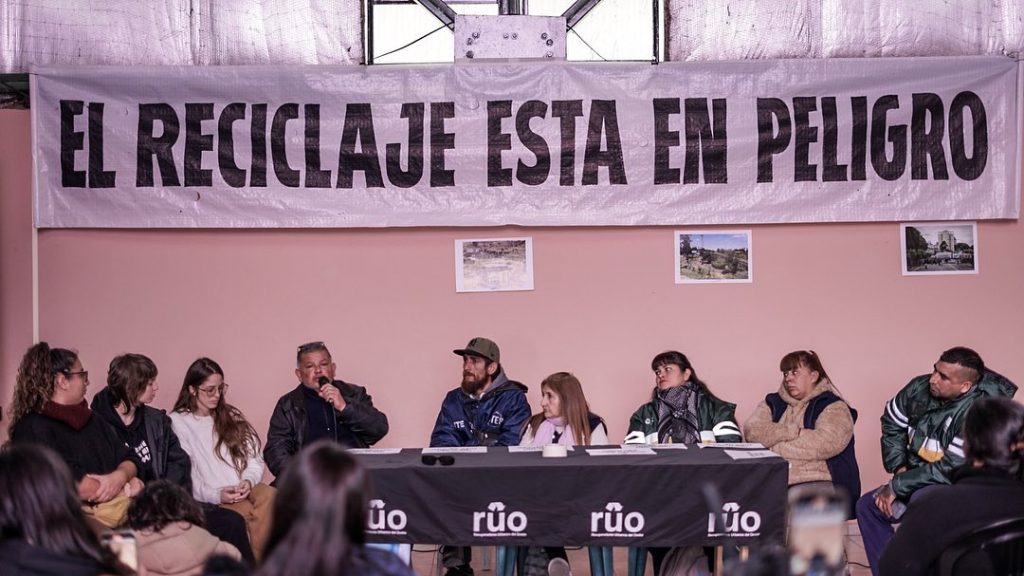
Conversamos con Francisco Dorbessan representante de la FACCyR y militante del movimiento de trabajadores excluidos, para saber por qué el reciclaje está en peligro en Argentina.
Sergio Sánchez, presidente FACCyR en conferencia de prensa “El reciclaje está en peligro”
© Federación Argentina de Cartoneros, Carreros y Recicladores – UTEP

El trabajo de las y los recicladores de base de Argentina o cartoneros, como se les conoce localmente, ha sido por años un ejemplo mundial de inclusión y reconocimiento de recicladores de base en programas basura cero y de un crecimiento sostenido del nivel de organización del sector. 

En 2002, la ley N° 992 incorporó a los recicladores de base en el servicio público de higiene urbana como prestadores de la recolección diferenciada y derogó una ordenanza que prohibía la actividad, y en 2005  ley N° 1854, conocida como ley de “Basura Cero”, estableció la garantía y prioridad para el sector en la recolección y el procesamiento de materiales reciclables y habilitó créditos y subsidios para el sector, para la adquisición de bienes de capital. 

Sin embargo, a menos de un año del nuevo gobierno de Javier Milei, cambios como la Ley Base recientemente aprobada por diputados, la persecución policial que están viviendo recicladores independientes y el aumento de la importación de celulosa, ponen en riesgo el trabajo de miles de cartoneras y cartoneros de Argentina, y todos los logros alcanzados en 20 años de lucha incesante por la consolidación de de un sistema de reciclaje inclusivo y efectivo. 

Debido a esto, la Federación Argentina de Cartoneros, Carreros y Recicladores (FACCyR) junto a más de 100 organizaciones ambientalistas han denunciado la situación y   presentaron las alarmas que genera las recientes decisiones políticas:

  1. La disolución del  Ministerio de Ambiente no es un  cambio formal, sino la decisión de desjerarquizar  el cuidado del ambiente, atentando contra  la legislación nacional e internacional.  
  2. El gobierno no está ejecutando los préstamos BID, concedidos para el cierre de basurales a cielo abierto, dejando obras paralizadas. 
  3. Disolvió el ministerio de  Desarrollo Social, y con él Argentina Recicla, un programa que impulsó el reciclado con inclusión de cartoneros y cartoneras en todo el país.
  4. Habilitación de la importación de residuos sin exigir que las empresas cumplan con la resolución conjunta N°6/23 del Ministerio de Economía y del Ministerio de Ambiente, que obligaba a las empresas a requerir el material en el mercado interno para que en caso de no estar disponible se autorizaran las importaciones. Esto ha generado una caída en los precios de los materiales y una paralización en la actividad de la industria recicladora por sobre stock de materiales. Además genera un impacto económico-financiero porque significa un incremento de la salida de divisas del país, para la importación de estos materiales. 
  5. Disolución del programa Argentina Recicla, del ex Ministerio de Desarrollo Social. Además de la desinversión que genera en el sector, implica que los 2.500 millones de pesos que se han ejecutado en la gestión anterior queden obsoletos (420 millones directos al programa para equipamientos y capacitaciones de cooperativas y municipios y 2000 millones de pesos en subsidios directos a cartoneros y cartoneras a través del Programa Potenciar Trabajo).

Por otro lado, alertaron también sobre los impactos ambientales que tiene la debilitación de las estructuras de recicladores. Argentina ya cuenta con más de 5 mil basurales a cielo abierto, y si las/os más de 180.000 cartoneros que recuperan diariamente un promedio de 150 toneladas de residuos no pueden desarrollar su trabajo, podría conducir a la proliferación de microbasurales, al aumento de las emisiones de gases efecto invernadero y el colapso de los rellenos sanitarios, con el consecuente aumento del gasto municipal por su enterramiento. 

Más en:

By Green Knowledge Foundation – Nigeria.

In the heart of Pessu Market, a transformative initiative is underway, led by the Green Knowledge Foundation in Nigeria. The “Zero Waste Market and Anti-Incineration Campaign” aims to address the pressing issues of waste management and environmental pollution, promoting sustainable practices and raising awareness about the hazards of incineration in Nigeria. This project is not just about cleaning up; it’s about creating a sustainable future for the community and beyond.

For over 30 years, the slaughterhouse at Pessu Market has been a significant contributor to waste generation and environmental pollution. The excessive use of wood for slaughtering processes, improper waste disposal, and the detrimental effects of the resulting smoke on workers’ health, as well as the health of the surrounding community, have necessitated urgent action. The absence of an alternative source for heating water has exacerbated the reliance on fuelwood, making the need for a comprehensive solution even more critical.

In response to these challenges, the project adopts a holistic approach to tackling waste management and energy needs while promoting the concept of zero waste. The Green Knowledge Foundation has been working diligently to engage market associations and community leaders, ensuring the long-term sustainability of these initiatives. The buy-in and endorsement by the local government authority have been pivotal, providing free land for the construction of a biodigester. Additionally, the enthusiastic support from market executives has been instrumental in driving the project forward, ensuring smooth execution and sustainability.

The project has already seen significant progress. The initiation phase, which included a project inception meeting with stakeholders and a site assessment at the Pessu Market slaughterhouse, has been completed. Stakeholders have been identified and engaged, setting the stage for the next phases. The design and construction phase is well underway, with the biodigester system and solar-powered system designs completed. Procurement of materials and equipment is ongoing, and the construction and installation of the biodigester and solar-powered system are in progress.

Parallel to the construction efforts, the waste management education phase is also moving forward. Educational materials have been developed, and organizations and NGOs for training of trainers have been identified. The training session has been completed, and the training and sensitization of market users are set to commence next week.

Despite the progress, the project has faced challenges. Scheduling meetings with stakeholders and trainers required the input and agreement of market executives, causing some delays. Additionally, waiting for independent engineers to confirm work done at each milestone delayed the continuation of construction. The lesson learned here is to carry out independent measurements alongside the construction process rather than waiting for deliverables or milestones.

Currently, the project is in the waste management education phase, focusing on training market users and preparing for the anti-incineration campaign while the construction of the biodigester and solar-powered heating system continues. The next steps include completing the construction and installation of the systems, finishing the training of market users, launching the anti-incineration campaign, and continuing to monitor progress and evaluate impact.

The project is progressing steadily, with key activities either completed or ongoing. The next phase will focus on training market users and launching the anti-incineration campaign, marking a significant step towards a sustainable and waste-free future for Pessu Market.

By Association for Education and Environment in the Great Front (AEEFG) – GAIA Member, Tunisia.
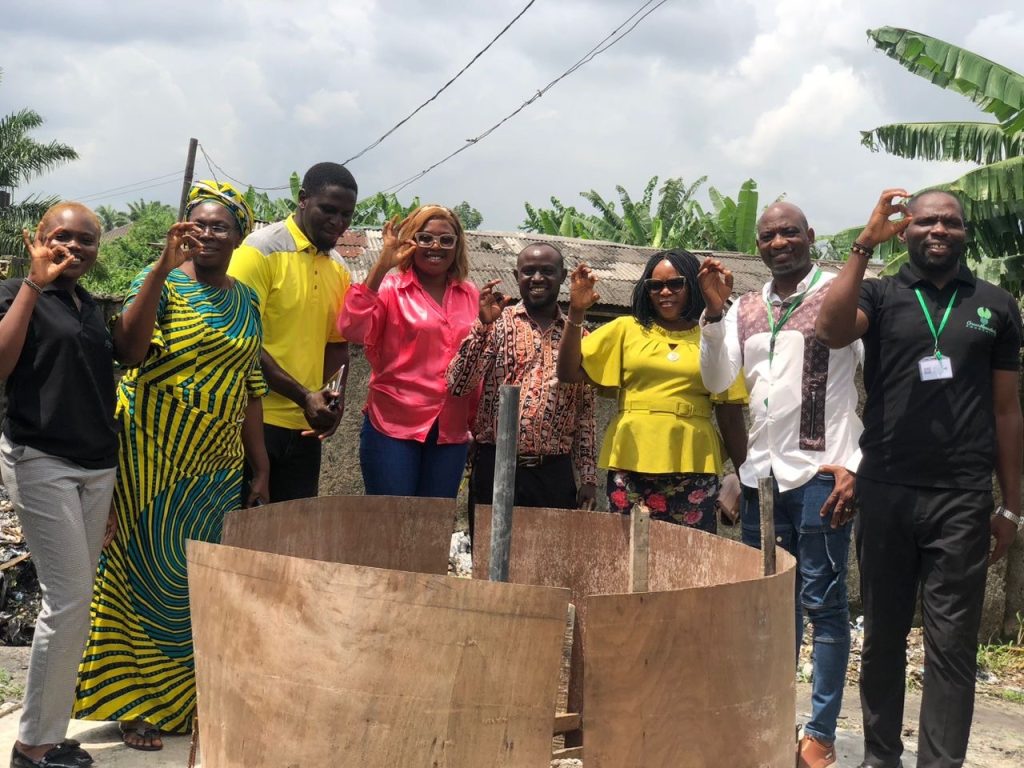
In the picturesque municipality of Takelsa, nestled in the rural region of northern Tunisia, a transformative initiative is underway. The Takelsa Zero Waste project, spearheaded by the Association for Education and Environment in the Great Front (AEEFG), aims to revolutionize waste management through innovative technologies and community awareness efforts. This project seeks to address the pressing waste management issues that have long plagued the area, where inadequate collection infrastructure has led to waste accumulation in streets and public spaces.

For over two years, AEEFG has been actively working to improve the environmental landscape of Takelsa. The project initially focused on encouraging women in agriculture to adopt sustainable practices, such as replacing plastic packaging with certified natural materials. Building on this success, the Takelsa Zero Waste project now aims to enhance waste management using Geographic Information System (GIS) and remote sensing technologies. The specific objectives include establishing a GIS system for waste data collection, improving waste collection planning and management, and creating a model area for waste selection and collection.

The project’s strategy began with a thorough assessment of the municipality’s waste management practices. This initial phase provided crucial insights into the areas requiring immediate attention and laid the foundation for subsequent actions. Collaborative meetings with municipal authorities followed, fostering a spirit of cooperation and shared understanding of the project objectives. These sessions were instrumental in co-creating strategies for the effective integration of the project’s application functionalities.

Armed with insights from these collaborative efforts, the project team embarked on extensive field studies to validate their findings and gather additional data. These on-ground investigations were crucial in refining the approach and ensuring that the solutions were tailored to the specific needs of the community. With a comprehensive understanding of the challenges and requirements, the team proceeded to develop the Takelsa Zero Waste application. This user-friendly platform empowers both citizens and administrators to actively participate in waste management efforts.

As the application development phase nears completion, the final step involves validation by municipal authorities and relevant stakeholders. This process will ensure that the application meets the desired standards of functionality and usability before its full-scale implementation. The project has already seen significant progress, with a series of meetings and field visits conducted in close collaboration with municipal authorities. These gatherings have served as crucial forums to discuss project progress, encountered challenges, and necessary measures to ensure the ongoing success of the initiative.

Looking ahead, the next steps for the Takelsa Zero Waste project include the final validation of the application, training sessions for citizens and municipal members, and a community awareness campaign. These efforts aim to inform Takelsa citizens about the existence of the application and encourage its usage. Additionally, a waste sorting model will be developed in collaboration with waste management experts, defining the best practices to be implemented in the community.

The Takelsa Zero Waste project is not just about achieving a 100% waste collection rate; it is about fostering a culture of sustainability and community engagement. By leveraging innovative technologies and empowering local citizens, the project aims to create a cleaner, more sustainable future for Takelsa.

Quezon City, Philippines – As the Philippines approaches its 126th year of independence, the newly established Philippine National Waste Workers Alliance (PNWWA) urges lawmakers to enact a Magna Carta for Waste Workers to secure vital legislative protection. This significant move seeks to recognize the indispensable work of waste workers and waste pickers and address the social and economic challenges they face daily.

Formed in February 2024, PNWWA is a coalition of 12 waste worker organizations representing over a thousand members across the archipelago. Their unified voice underscores the need for legislative action to improve the working conditions and safeguard the rights of waste workers and waste pickers nationwide. 
“We are calling for, among others, just compensation and social benefits and protection because we provide essential services to society. We are as deserving of such benefits and protection as any other worker, perhaps even more so. Without us, society will not function efficiently,” said Aloja Santos, Dumaguete Women Waste Workers Association (DWWWA) president and PNWWA founding president. 

In February, during a national consultation with waste workers organized by Mother Earth Foundation (MEF) with the support of the Global Alliance for Incinerator Alternatives (GAIA) Asia Pacific, which resulted in the establishment of PNWWA, participants formulated 10 priority demands that must be reflected in a draft Magna Carta. These demands were shaped by extensive consultations with waste workers conducted by MEF over the years.

The demands are: 

  1. Enforcement of Labor Standards (Pagpapatupad ng mga Pamantayan ng Paggawa) 
  2. Hazard Pay (Bayad sa Panganib)
  3. Health Insurance and Services (Seguro at Serbisyong Pangkalusugan)
  4. Humane and Safe Working Conditions (Makatao at Ligtas na Kalagayan sa Pagtatrabaho)
  5. Job Security (Seguridad sa Trabaho)
  6. Just Compensation  (Tamang Pasahod)
  7. Meaningful Participation in Policy Spaces (Makabuluhang Pakikilahok sa mga Usaping Pampolisiya)
  8. Right to Organize (Karapatang Mag-organisa)
  9. Social Benefits and Protection (Kapakinabangan at Proteksyong Panlipunan)
  10. Training (Pagsasanay)

Following the consultation, a Magna Carta for Waste Workers was drafted and PNWWA presented it to Senator Loren Legarda. As the author and principal sponsor of the Ecological Solid Waste Management Act, Senator Legarda with her legal team immediately studied the proposed legislation and filed the bill on April 17, 2024, which is now pending in the Committee on Labor, Employment and Human Resources Development.

“I acknowledge the validity of the demands of the waste workers — their call for fair treatment, job security, and access to essential services resonates deeply with the principles of justice and equity. These are valid concerns that warrant attention and action, and I am committed to working collaboratively in finding solutions that ensure a just transition for all,” Senator Legarda said.

Atty. Christopher John C. Menguito, Managing Trustee of the Philippine Earth Justice Center explained the importance of integrating these solutions into the law through magna carta as he said, “The purpose of the law is to make the lives of the people better.”

As the world faces multiple environmental crises and ecological collapse, the contribution of waste workers and waste pickers as frontliners in combating waste pollution is needed now more than ever. Data reveals that methane, a potent greenhouse gas, accounts for about 30% of the rise in global temperature since pre-industrial times, and in 2021, anthropogenic waste is among the major sources of methane emissions. In Metro Manila alone, waste generation contributes 22.2%, 24.5%, and 26.7% to the Philippines’ solid waste in 2010, 2014 and 2020, respectively. This underscores the power waste workers wield towards ensuring a sustainable and waste-free future. From composting to diverting reusable materials away from landfills, they play a vital part in waste management and recycling, offering practical and cost-effective solutions to address both waste and climate issues. 

“This moment underscores the importance of recognizing waste workers and waste pickers as frontline environmental defenders. We must prioritize their rights and ensure they have full labor protections under the law. This commitment sets the foundation for collaborative advocacy, fostering a truly inclusive and just transition, said Sonia Mendoza, Chair of Mother Earth Foundation. 

“The Magna Carta for Waste Workers is a powerful tool in fostering significant change not only in the Philippines but for the whole Southeast Asian region. Waste workers and waste pickers are claiming their rights, making their voices heard and their presence felt. Their desire and determination to be part of the process are crucial in the shift towards a sustainable waste management system. Together, we are forging a future where we do not leave anyone behind,” Froilan Grate, Regional Coordinator of the Global Alliance for Incinerator Alternatives (GAIA) Asia Pacific, emphasized. 

Additional quotes below:

From the Members of the Philippine National Waste Workers Alliance (PNWWA)

The members of the PNWWA shared their clarion call during the Press Conference for the Magna Carta of Waste Workers, acting for their independence, as they cried in unison “Kalayaan mula sa polusyon, kahirapan, at basurang sistema! Itaguyod ang pantay na karapatan para sa manggagawa sa basura! (Freedom from pollution, poverty, and wasteful systems! Uphold equal rights for waste workers!)” The call came as waste workers aim to break free from the cycle of poverty and take charge of their dignity and rights.

From the EcoWaste Coalition

While the EPR law holds promise for including waste workers, especially the informal waste sector by integrating them into formal waste management systems by encouraging their participation in the ‘product waste recovery programs aimed at effectively preventing waste from leaking to the environment’ as stated in Sec. 6, Article 1 B.6 of the law, its success depends on the proper implementation by the different stakeholders. 

We encourage obliged enterprises or large enterprises and LGUs implementing the EPR Law to include the waste workers organization, in the following: 

1. Under Section 4, composition of the National Solid Waste Management Commission

2. Under Section 6 Article 2.B: in the creation of Producer Responsibility Organizations by the obliged enterprises. 

The EPR Law should align with RA 9003 and the National Framework Plan for the Informal Waste Sector that fully integrates the waste workers to safeguard their rights and well-being.

Efforts made by duty bearers and obliged enterprises should support the inclusion of waste workers at all levels of decision-making: from the Barangay Ecological Solid Waste Management Committee up to the National Solid Waste Management Commission. They must ensure inclusivity, collaboration, and fair compensation for the waste workers that are reflective of their responsibilities, skills, and the hazardous nature of their work, accompanied by comprehensive benefits that prioritize their health and safety. 

From Secretary, Maria Antonia Yulo-Loyzaga, Department of Environment and Natural Resources (DENR) 

In the global response to climate change and environmental pollution, the green transition will have gainers and losers with new (green) jobs being created and other jobs being lost. For the informal waste sector, this presents an opportunity to enhance worker agility and competitiveness to undertake new occupations and respond to the changing nature of jobs towards a circular economy, just transition, and resilience for the future of work.

The Department of Environment and Natural Resources (DENR) recognizes the significant contribution of workers in the informal waste sector in delivering better environmental outcomes. As we strengthen the implementation of the Ecological Solid Waste Management Act and the Extended Producer Responsibility (EPR) Act, we make sure that we do not leave the waste workers behind. We aim to integrate the informal waste sector into the value chain, including transforming the collection and sorting of waste into formal activities and enterprises that are supported under the EPR system. We advocate for the reskilling and upskilling of waste workers so they can benefit in the transition to a low-carbon economy.

We welcome the Magna Carta of Waste Workers bill since DENR supports the formalization of waste workers’ rights and benefits, and the professionalization of the sector. The inclusion of the waste sector in the enforcement of labor laws, and the creation of supporting policies that are responsive to the needs of waste workers are key to enhancing their socioeconomic well-being allowing them to benefit and contribute better to our shared goals. By supporting this bill, we make them partners in sustainable development in our commitment to a just, inclusive, and resilient future for all.

From Mayor Vilma B. Caluag, City of San Fernando, Pampanga

The City Government of San Fernando, Pampanga, under our leadership, is supporting—with complete pride—the creation and submission of the Magna Carta of Philippine Waste Workers, spearheaded by the Philippine National Waste Workers’ Association (PNWWA) and various non-government organizations. 

Our support for PNWWA strongly speaks to our drive to help our waste workers move and fight for their rights, and this is anchored on our call for inclusivity and protection across all sectors. 

In our local government unit, we make sure that our waste workers, from our garbage collectors down to our segregators, get their rights, including the provision of personal protective gear, just compensation and benefits, health and wellness programs, and fair treatment, along with various privileges such as additional allowances and recreational activities. 

These actions were made possible out of our belief that no one should be left behind, and with the help of the NGO partners of our City Environment and Natural Resources Office across Asia Pacific, we hope that these practices may also inspire other localities to take a move towards the protection of waste workers.

The City of San Fernando is extending its utmost gratitude to the people and groups behind this movement, and rest assured that we are one with you in this measure heading to the realization of labor rights and environmental justice and protection. 

 In fighting for our waste workers’ dignity and rights, Kayabe yu kami.

Discover more about our waste pickers and waste workers and their advocacy towards a just transition

———

PHILIPPINE NATIONAL WASTE WORKERS ALLIANCE (PNWWA) is an alliance composed of 12 waste workers groups representing over a thousand waste workers across the Philippines. Established in February 2024, the Alliance is working for the recognition and protection of their rights and welfare.

MOTHER EARTH FOUNDATION PH is a non-stock, non-profit organization actively engaged in addressing waste and toxic pollution, climate change, and other health and environmental justice issues. It is best known for its advocacy of Zero Waste through the systematic reduction and proper management of waste. 

GLOBAL ALLIANCE FOR INCINERATOR ALTERNATIVES (GAIA) is a network of grassroots groups as well as national and regional alliances representing more than 1,000 organizations from 92 countries. With our work, we aim to catalyze a global shift towards environmental justice by strengthening grassroots social movements that advance solutions to waste and pollution. Through our members, we support waste picker and waste worker groups in implementing Zero Waste solutions, and in their fight for a just transition towards a Zero Waste future. 

PHILIPPINE EARTH JUSTICE CENTER  (PEJC) is a group of environmental lawyers advocating for environmental justice and a balanced ecology through legal assistance, policy research, policy reforms, and strengthening the capabilities of local communities.

ECOWASTE COALITION is a network of more than 150 groups advocating for a Zero Waste society in the Philippines. They aim to address issues related to waste, climate, and chemicals through research, information dissemination, training, and advocacy.