








Contributed by Victor Hugo Argentino, Instituto Polis
As the world wakes up to the critical importance of reducing methane emissions to stabilize the climate, all eyes are on Brazil. The country emits 5.5% of global methane emissions, making it the 5th largest emitter globally. The waste sector is the second largest source of methane in Brazil, at 16%, and while 65.6 million tons of municipal solid waste is collected yearly, 45.6% of which is organic, only 0.6% is composted: landfills receive 71.6% and dumps 26.4%.
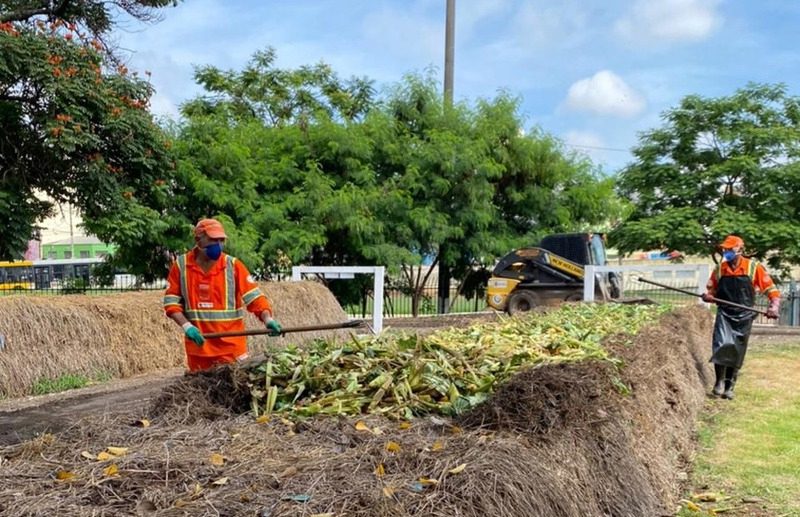
Sao Paulo composting site. Source: Sao Paulo City Hall
In the past, composting projects in Brazil’s big cities were unsuccessful, largely because they disregarded local contexts and inappropriately handled the waste. This led to an overall distrust in composting and similar technologies for organic waste management. Therefore, to engage society and decision makers and build capacity and public support to shift this situation, in 2020, the non-profit organization and GAIA member Instituto Pólis launched the São Paulo Compost, Cultivate campaign. The campaign is supported by 58 international, national and local partners in the biggest city of Brazil, São Paulo.
In 2023, the movement escalated to the national level, with more than 200 organizations penning a letter for the Ministry of Environment and Climate Change of Brazil demanding organic waste management and climate mitigation in the waste sector. As a result, in recognition of Polis’ expertise, the Ministry signed a technical cooperation agreement with the NGO to advance organic waste recycling, waste picker integration, and greenhouse gas mitigation country-wide.
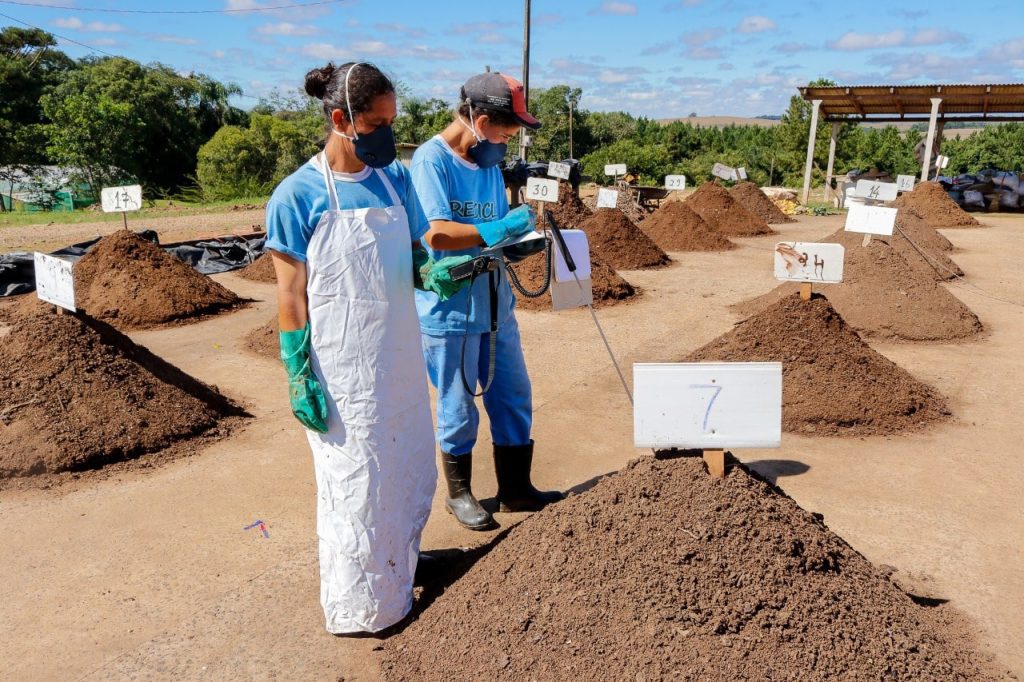
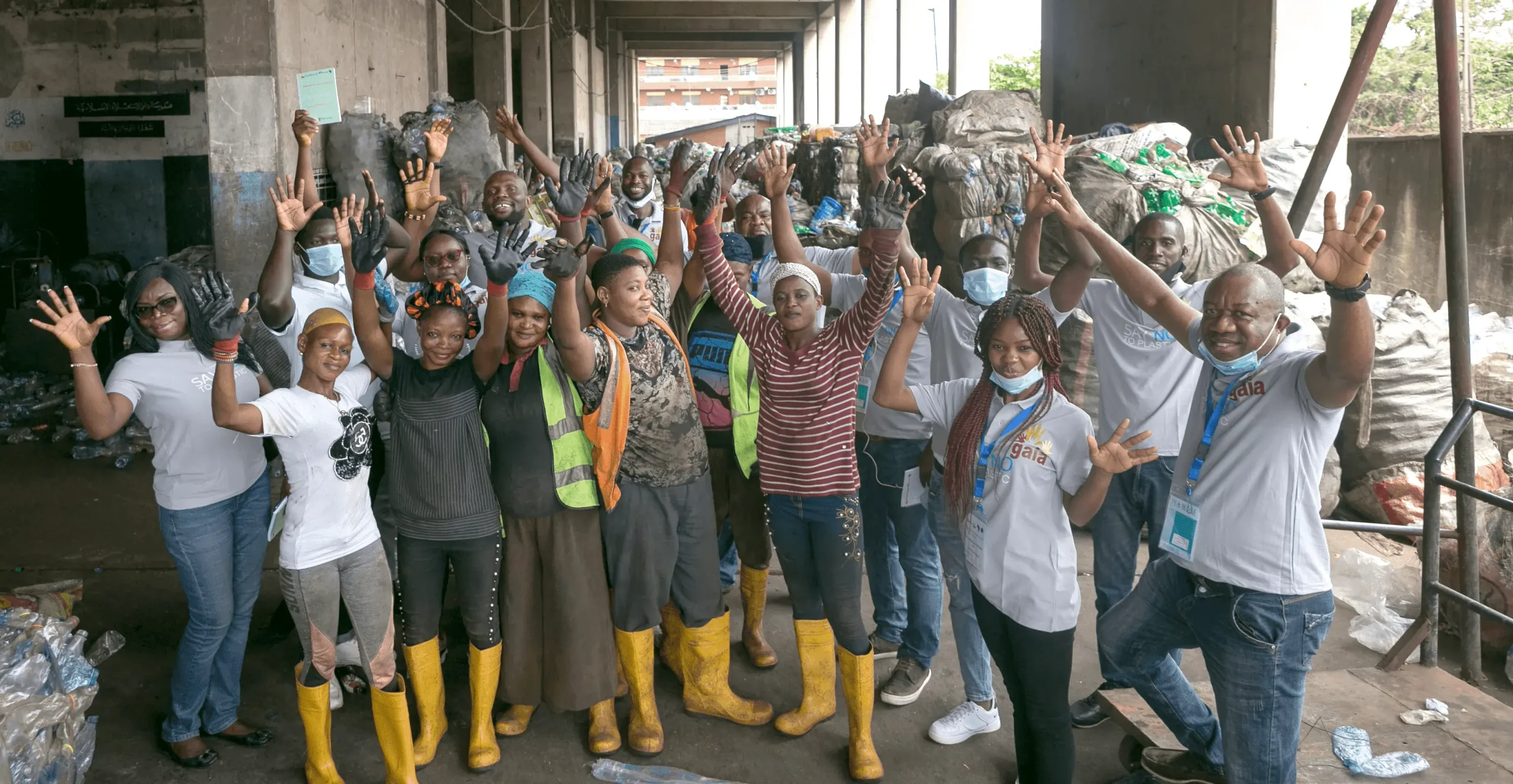
ACAMARTI waste pickers. Source: Tibagi City Hall
In the past, composting projects in Brazil’s big cities were unsuccessful, largely because they disregarded local contexts and inappropriately handled the waste. This led to an overall distrust in composting and similar technologies for organic waste management. Therefore, to engage society and decision makers and build capacity and public support to shift this situation, in 2020, the non-profit organization and GAIA member Instituto Pólis launched the São Paulo Compost, Cultivate campaign. The campaign is supported by 58 international, national and local partners in the biggest city of Brazil, São Paulo.
In 2023, the movement escalated to the national level, with more than 200 organizations penning a letter for the Ministry of Environment and Climate Change of Brazil demanding organic waste management and climate mitigation in the waste sector. As a result, in recognition of Polis’ expertise, the Ministry signed a technical cooperation agreement with the NGO to advance organic waste recycling, waste picker integration, and greenhouse gas mitigation country-wide.
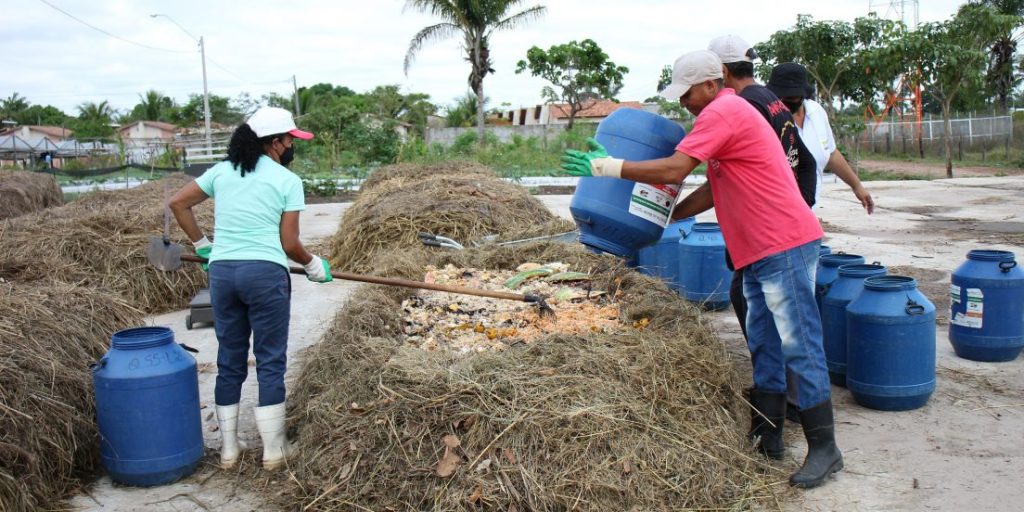
Farmers participate in the Poe No Balde Project. Source: Aline Sousa
Brazilian institutions lack the practical and theoretical knowledge to properly address methane emissions from the waste sector at the scale needed to meet global climate pledges. In order to accelerate the capacity-building needed, Instituto Pólis has launched the initiative, “Brazil Compost and Cultivate.” The program is supported by the Global Methane Hub, which aims to reduce methane emissions in the waste sector by increasing organic waste diversion from disposal. The project is based on three frameworks: implementation and technical assistance; capacity building, and research.
This initiative identifies, strengthens, and accelerates existing food loss and waste prevention and recycling projects to understand their barriers, limitations, and potential to develop a national strategy for organic waste composting with key stakeholders and the Brazilian Ministry of Environment and Climate Change. Meanwhile, Pólis promotes locally-based novel approaches, such as employing waste pickers in organic waste management and composting.
Local governments, companies, waste pickers and community leaders are also being trained and encouraged to develop local projects. All lessons learned are being systematized into an open knowledge hub to democratize the access of information, in order to instrumentalize local communities to build solutions based on local knowledge. For example, the Bucket Revolution in Florianópolis solved a rat infestation problem that had led to the death of 2 children, by implementing an efficient organic waste collection and composting system, demonstrating the importance of empowering local communities to lead.

Neighborhood bucket revolution. Source: CEPAGRO
The first project that Pólis embarked upon was a study of novel models of composting in cities: integrating recycling, agriculture and housing. These systems represent what a just transition would look in the waste sector, integrating waste pickers, farmers and citizens. In this case studies, not only was organic waste diverted from landfills, but the projects also led to cost-savings and fair jobs with higher wages.
The study observed two waste pickers cooperatives: VerdeCoop (Entre Rios City) composts 180 tonnes per month with only 12% contamination in separate collection, despite the lack of support from local governments. CooperCicla works with 21 municipalities, composting 250 tonnes per month.
The study shows that composting with waste pickers generates around 19 jobs (10 to 28) per 10,000 treated tonnes, more than private composting (10 jobs) and around 11 times more than landfills and incinerators. These two waste picker-run systems were also found to be cheaper than linear solutions like landfilling and incineration, and the most viable option to end dumps in Brazil.
Other cities have developed composting systems with local and urban farmers, such as Põe no Balde project (Marabá city) and Santiago City. The latter developed a local currency to exchange organic waste for food in farmer-run local street markets. The study served as the main reference for the national government to launch a 1.5 million dollar fund to subsidize other municipalities to replicate this novel system.

Source: Santiago Prefecture
Instituto Polis’s work building capacity for organics management in accordance with environmental justice principles has remarkable momentum. The unrivaled success of existing organics management projects demonstrates that with further resources and governmental support, the country can achieve a just transition for methane action in the waste sector, with waste pickers and front-line communities leading the charge.