







“Temperature records that were not meant to be broken have fallen, one after the other, day by day… Meeting the goals of the Paris Agreement would require greenhouse gas emissions to be halved by 2030 and net zero emission to be reached by 2050.” —Inger Andersen, Under-Secretary-General of the United Nations and Executive Director of the United Nations Environment Programme
Dire warnings have been issued: the world is facing a climate emergency, and governments around the world are called to “shift into emergency gear;” otherwise, we may face disastrous consequences.
Scientists believe that we still have time to avert this impending catastrophe. But as the years pass, the window to do action is becoming narrow. We must act fast to shift to new, sustainable frameworks and systems.
But while we must move swiftly, we must do things right. The transition needs to be inclusive. And just. The International Labour Organization (ILO) defines ‘just transition’ as “Greening the economy in a way that is as fair and inclusive as possible to everyone concerned, creating decent work opportunities and leaving no one behind.”
Without a just transition, the sectors already excluded by the current system may be left behind. If that happens, they will become even more vulnerable to the adverse effects of climate change. Their exclusion may result in them losing their livelihoods, and in turn, in their further deprivation and marginalization.
Zooming In on Workers in the Waste Sector

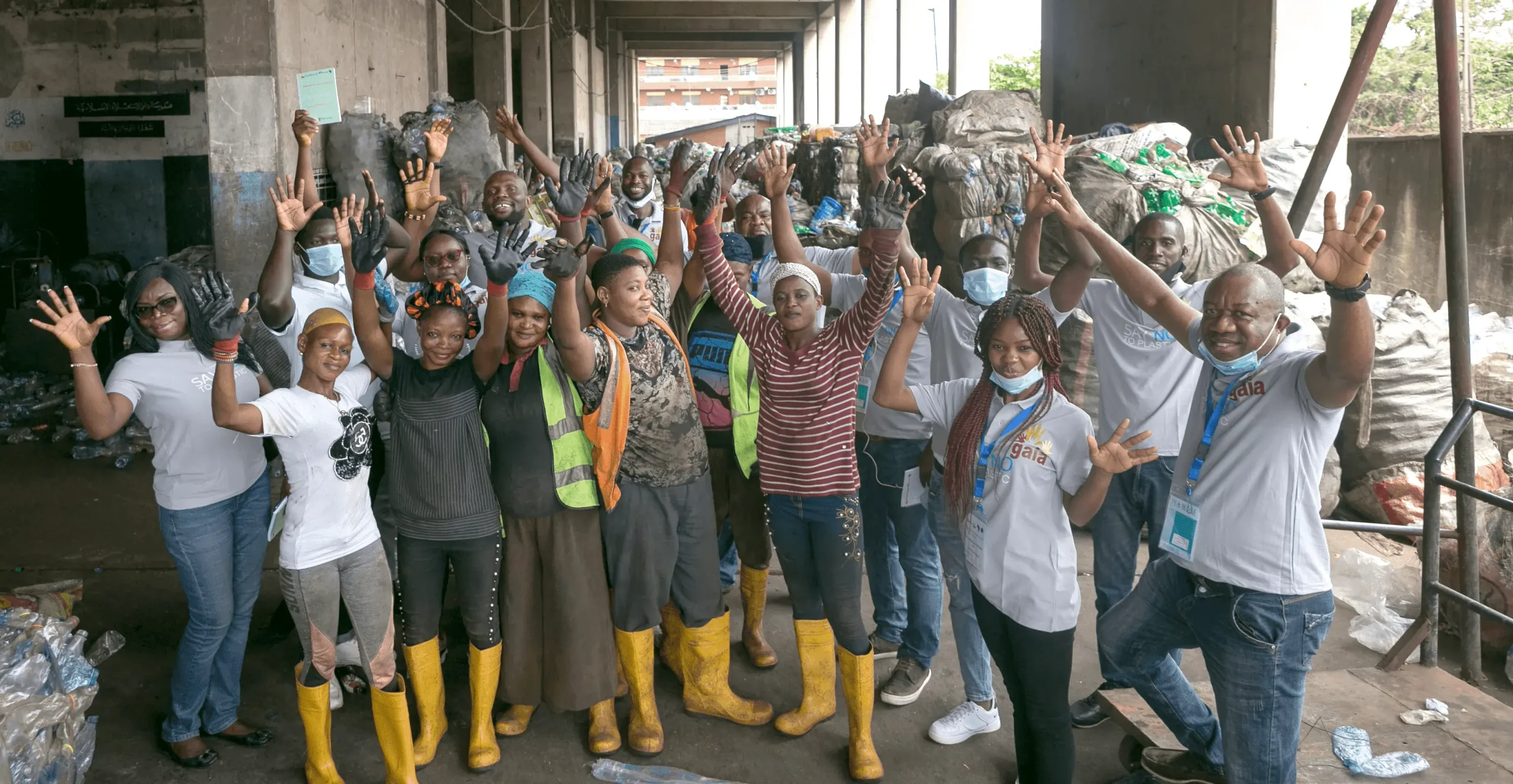
Among the sectors that stand to suffer the most from the twin crisis that is plastic pollution and climate change are the waste workers, waste pickers, and other informal workers in the recycling value chain — the very people who play a crucial role in waste management and climate change mitigation, often with little to no compensation.
Waste pickers save millions of dollars for their cities and communities and contribute to environmental and human health. Yet, not only are their roles and contributions unrecognized, they are also not included in conversations on the very work that they do, and the very issues affecting them. Their expertise in waste management remains largely untapped and even ignored. And while they are among the segments of society needing social protection and support, they are largely excluded. In many places, they do not have access to healthcare, education, and other basic services.
Through our just transition work, we at GAIA Asia Pacific, aim to ensure that waste workers and waste pickers are not only meaningfully consulted but more importantly, that they become active participants and decision-makers in waste management issues. Waste pickers and waste workers must be at the front and center of conversations and decision-making on waste management issues — their voices heard, their expertise tapped, and their leadership recognized. Only when this happens will policies and programs be truly anchored on realities on the ground.
“We hope we can be enrolled in some kind of pension scheme and get more support for our medical needs. I worry about my grandchildren. Their father does not support them. What would happen to them when I’m gone and I’m not able to leave them something? So you see, a form of pension would be a big help.” — Asha Baban Zombade, Waste Picker from Pune, India
As we shine the spotlight on the waste workers, waste pickers, and other informal workers in the recycling value chain during the final week of the International Zero Waste Month (IZWM) celebration, we invite you to listen to their stories. May we have a deeper appreciation of their contributions and understanding of how they may be supported so that they can live with dignity as they continue with the work that they find meaningful in that better and just world.
We also invite you to support them in whatever way you can.
Support Our Waste Workers and Waste Pickers. Below are GAIA members working with waste pickers and waste workers
MOTHER EARTH FOUNDATION (PHILIPPINES)
Nearly four years ago, Mother Earth Foundation (MEF) launched Project Tuloy, an initiative dedicated to aiding waste workers who play a crucial role in waste collection and sanitation services within our Zero Waste communities. During the COVID19 pandemic, they launched Kusina ni Juan, a community kitchen designed to provide nutritious, freshly cooked meals served in reusable containers for waste workers. They also have a long-running scholarship program for children of waste workers. Through the program, they have supported over 200 children, providing them with gadgets for e-learning and additional allowance that enabled them to purchase school supplies.
Donations can be made through Paypal, as well as via bank transfers to our RCBC and BPI accounts (accessible from any bank through online transfers). Kindly forward a copy of your donation receipt to act@motherearthphil.org to ensure proper acknowledgment. Your generosity will make a meaningful impact on the lives of those dedicated to maintaining our communities Zero Waste and sustainable.
Donate here:
BANK ACCOUNT
Bank: Security Bank
Type of account: Savings
Branch: Congressional Avenue, Quezon City, Philippines
Name of account: FOR LOVE OF MOTHER EARTH INC
Account number: 0-0000-2822-8193
Facebook | Mother Earth Foundation PH | Facebook
CHINTAN CHINTAN ENVIRONMENTAL RESEARCH AND ACTION GROUP
(NEW DELHI, INDIA)
Chintan reduces waste and consumption, manages solid and electronic waste, and advocates around materials, waste, and consumption. It uses waste as a tool to fight poverty, child labor, gender-based violence, and exclusion and climate change, while creating green livelihoods. Chintan pushes back and combats unsustainable consumption. Its work directly supports the UN’s Sustainable Development Goals 1, 2, 3, 4, 5, 6, 11, 12, 13, 14, 17.
Help Chintan by supporting #COVIDmekabadi
The United Nations says in these times of COVID, handling waste is an essential service, without which we can all get more ill. Wastepickers do this for us in India. Delhi’s 50,000 wastepickers need our support as they protect us.
DONATE HERE: #COVIDmekabadi | Chintan (chintan-india.org)
HASIRU DALA (BANGALORE, INDIA)
Hasiru Dala, which means Green Force, is a social impact organization that works with waste pickers and other waste workers to ensure a life with dignity.
Donations to support waste pickers
Waste pickers and other informal waste workers are among the most marginalized communities across the country. Despite this, their work of removing waste from the streets to sell to scrap dealers and recyclers makes them unsung and silent environmentalists whose work supports municipal waste management with little to no reward.
Your donations will go to support our programs, which fall broadly across social security, livelihoods, housing, health and nutrition, advocacy, children’s education and safety.
KKPKP/SWACH (Pune, India)
A Trade Union of Waste Pickers
KKPKP has advocated for the unclean occupations scholarship program at the state government level. They may be reached at https://kkpkp.org/sample-page/timeline-of-change/
STREE MUKTI SANGHATANA (MUMBAI, INDIA)
Established in 1975, Stree Mukti Sanghatana has been working towards women empowerment for over four decades. The play ‘Mulgi Zali Ho’ (Girl is Born) opened doors for women to interact and share their problems with us. The family counseling centers, in-house monthly publication “Prerak Lalkari”, programs for adolescents, daycare centres, programs for waste pickers, and solid waste management commenced operations to enable sustainable livelihood for women.
Yaksa Pelestari Bumi Berkelanjutan (YPBB)
War on Waste – Break Free From Plastic (WOW-BFFP) – Negros Oriental