







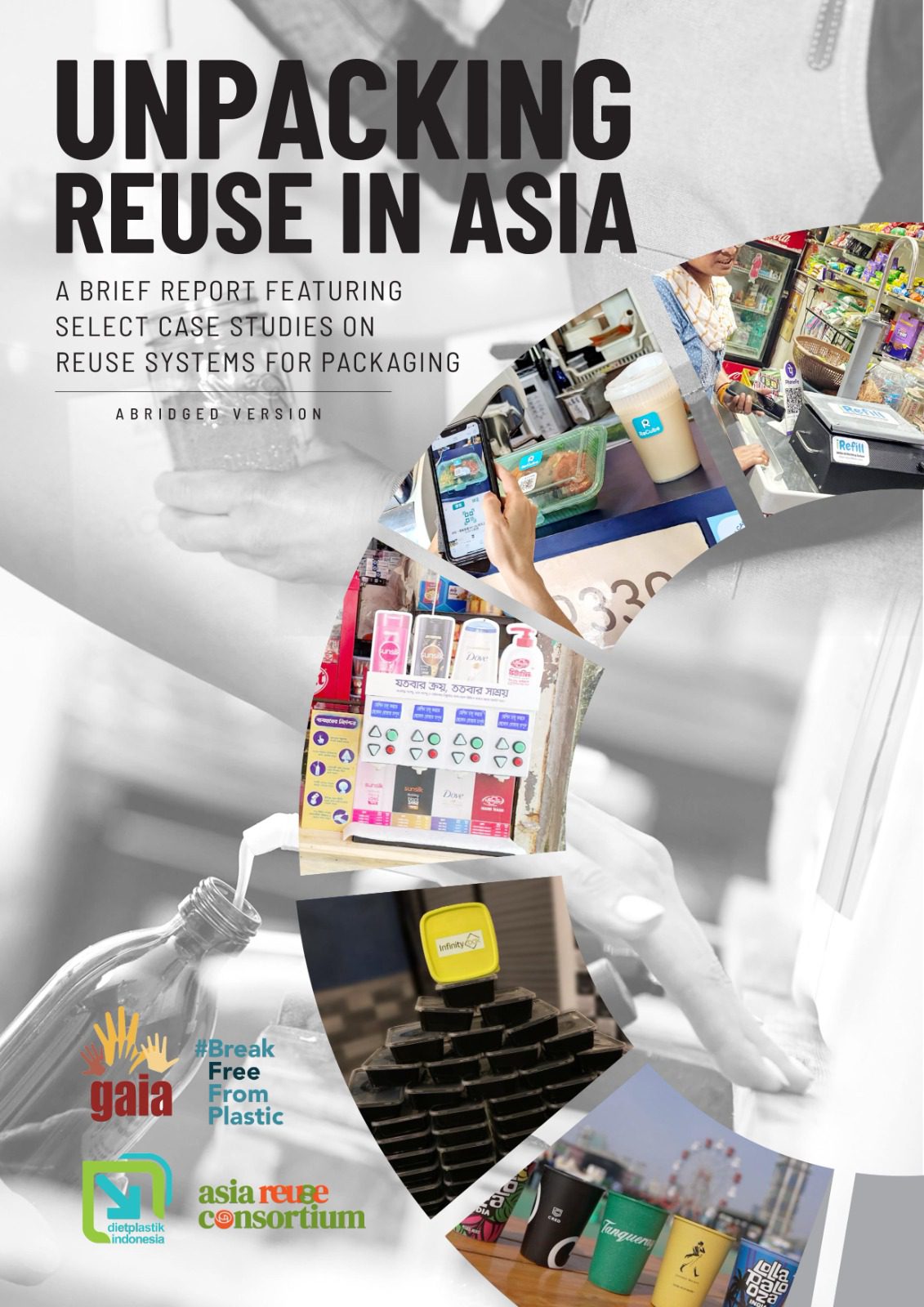
Unpacking Reuse in Asia
A BRIEF REPORT FEATURING SELECT CASE STUDIES
ON REUSE SYSTEMS FOR PACKAGING
Unpacking Reuse in Asia celebrates the diverse and vibrant reuse solutions across the region…
The report highlights community-led refill initiatives and return systems with established infrastructure and the pivotal role of informal workers.
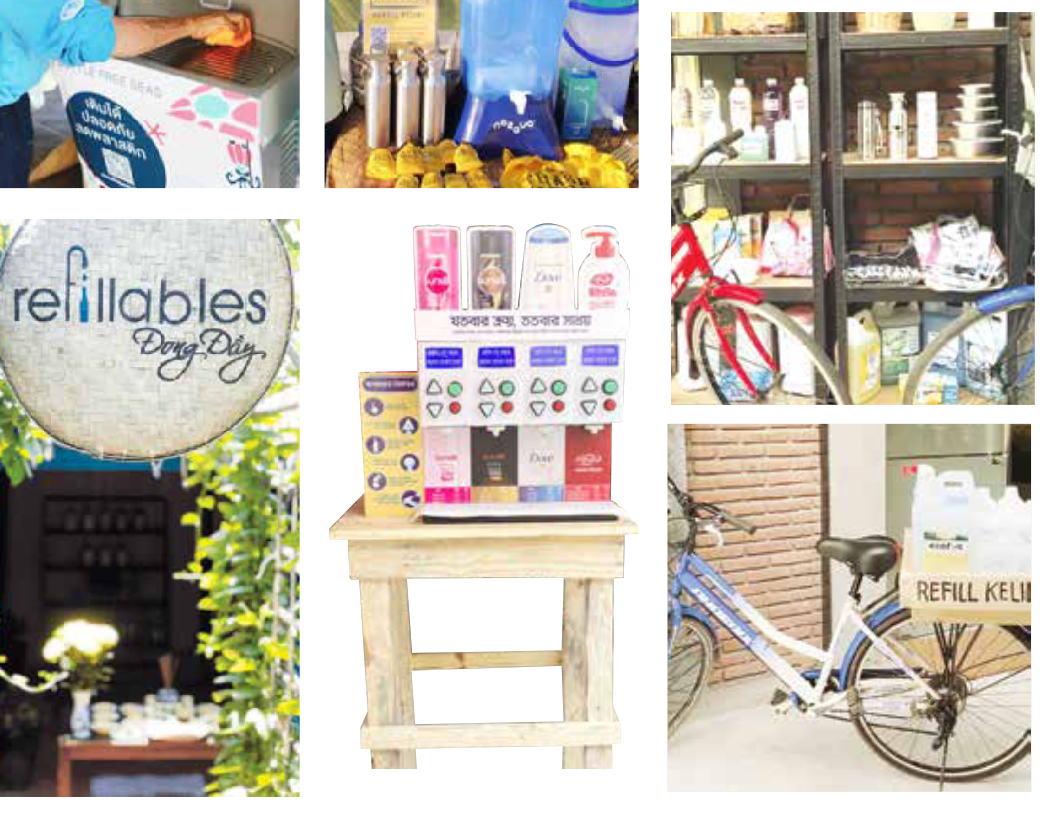
About this publication…
“Asia is home to a vibrant reuse economy with innovative solutions that have existed for centuries and are now evolving to tackle single-use plastics. This report shines a spotlight on these efforts, showcasing Asia’s leadership in sustainable practices and demonstrating how refill and return systems are transforming the way we consume, presenting scalable and localized solutions to plastic pollution, while supporting livelihoods and environmental justice.”

Rahyang Nusantara
Deputy Director, Dietplastik Indonesia
“The study highlights that Return and Refill systems operate uniquely across different contexts, requiring tailored solutions to address community-specific needs for maximum impact and adoption. For reusable packaging, the focus must go beyond the material’s reusability to include the infrastructure and processes that enable packaging to be reused multiple times for the same purpose. Effective reuse systems also demand collaboration across the entire supply chain to ensure seamless and efficient functioning.”

Ambily Adithyan
Regional Zero Waste Cities Officer, GAIA Asia Pacific
“The treaty must recognise that reuse systems fit at a nexus of corporate accountability, strong governance, labor and livelihood rights, and the ultimate responsibility for and costs of transitioning to reuse systems lies with governments, producers, and retailers. It is important that the plastic treaty recognise and accord high priority to mandate reuse systems which ensure that waste pickers and workers in informal and cooperative settings are integrated into the system.”

Pinky Chandran
Asia Pacific Regional Coordinator, Break Free From Plastic
Press Release
Asia’s Reuse Revolution: A Blueprint for Tackling Plastic Pollution
“Unpacking Reuse in Asia”: A New Report Highlighting Regional Solutions to Combat Plastic Pollution
Busan, South Korea — 27 November 2024 – Plastic pollution has reached a critical tipping point, but Asia is leading the charge with innovative reuse and refill systems that prove we can move beyond single-use plastics. With the fifth round of negotiations of the Intergovernmental Negotiating Committee to develop an international legally binding instrument on Plastic Pollution ongoing in Busan, South Korea, co-convenors of the Asia Reuse Consortium—GAIA Asia Pacific, DietPlastik Indonesia, and Break Free From Plastic—are releasing a comprehensive report entitled, ‘Unpacking Reuse in Asia,’ which underscores pioneering efforts across the region and offers scalable solutions to address the global plastics crisis.
From the Philippines’ “Kuha sa Tingi” initiative, where consumers bring reusable containers to buy daily essentials, to India’s Crockery and Cutlery Banks, which eliminate the need for disposable tableware at events, these systems underscore the environmental and economic benefits of reuse.
“Asia is home to a vibrant reuse economy with innovative solutions that have existed for centuries and are now evolving to tackle single-use plastics,” says Rahyang Nusantara, Deputy Director of DietPlastik Indonesia. “This report highlights Asia’s leadership in sustainable practices and demonstrates how refill and return systems are transforming consumption patterns while supporting livelihoods. The study underscores the need for a strong, legally binding global plastics treaty to support Return and Refill systems with clear, consistent frameworks,” says Ambily Adithyan, Zero Waste Cities Program Officer at GAIA Asia Pacific. “Such a treaty must define reuse systems effectively, establish ambitious targets, and ensure the infrastructure and collaboration needed for seamless implementation.”
As negotiations for the plastics treaty continue, the report underscores the urgent need for treaty provisions that address the full lifecycle of plastics while centering reuse systems as critical components of global plastic pollution solutions.
Pinky Chandran, Asia Pacific Regional Coordinator at Break Free From Plastic, notes, “The treaty must recognize that reuse systems fit at a nexus of corporate accountability, strong governance, labor and livelihood rights, and the ultimate responsibility for and costs of transitioning to reuse systems lies with governments, producers, and retailers. It is important that the plastic treaty mandates reuse systems that ensure waste pickers and workers in informal and cooperative settings are integrated into the system.”
Regional Highlights: Leaders in Reuse
Hong Kong
In Hong Kong, reuse is at the forefront of addressing disposable waste. According to Kelvin Tsui, Co-founder and CEO of ReCube Limited, “Reusable tableware rental systems are vital in driving Hong Kong’s shift toward a circular economy, addressing the pressing issue of disposable waste. We’ve demonstrated that reuse can be both practical and convenient, making it easy and accessible for everyone.”
India
In India, reuse systems are creating opportunities for sustainable event management. The report puts the spotlight on Crockery and Cutlery Banks, which have gained traction for their ability to eliminate single-use plastics at gatherings.
These localized and context-based solutions illustrate the need for a comprehensive approach to reuse, particularly in packaging. Adithyan adds, “There is no one-size-fits-all approach. The focus must go beyond the material’s reusability to include the infrastructure and processes that enable packaging to be reused multiple times for the same purpose. Effective reuse systems also demand collaboration across the entire supply chain to ensure seamless and efficient functioning.”
The Philippines
In the Philippines, community-driven initiatives like “Kuha sa Tingi” are transforming how people consume. Marian Ledesma, Zero Waste Campaigner at Greenpeace, highlights its significance: “Reuse and refill systems like ‘Kuha sa Tingi’ prove that true sustainability is achievable and economically viable. These initiatives should inspire global leaders to champion a just transition to a reuse-based economy.”
Thailand
“To fight the single-use culture, reuse is key—and people are ready. We urgently need legal support for inclusive, safe reuse systems, which are too often overshadowed by flashy innovations,” says Salisa Traipipitsiriwat, Senior Campaigner/SEA Plastics Project Manager at the Environmental Justice Foundation. “Reuse is already part of our lives; it must be preserved, expanded, and made mandatory in waste reduction policies, and this report gives you everything you need to know to make Reuse possible.”
Vietnam
Vietnam’s Refillables Dong Day program exemplifies the circular economy in action. According to Hanh Vu and Alison Batchelor, Co-owners of the initiative, “Return systems go far beyond minimizing landfill waste; they safeguard natural resources for future generations. This is a call for businesses and communities to embrace a more symbiotic relationship with our environment.”
A full version of the report, set to be released in 2025, will provide a comprehensive roadmap for scaling these proven systems globally, inspiring bold actions against plastic pollution.
###
Press contacts
Ambily Adithyan, Zero Waste Cities Program Officer, GAIA Asia Pacific
ambily@no-burn.org
Dan Abril, Communications Associate, GAIA Asia Pacific
dan@no-burn.org | +639174194426
GAIA is a worldwide alliance of more than 1,000 grassroots groups, non-governmental organizations, and individuals in over 90 countries. With our work we aim to catalyze a global shift towards environmental justice by strengthening grassroots social movements that advance solutions to waste and pollution. We envision a just, zero waste world built on respect for ecological limits and community rights, where people are free from the burden of toxic pollution, and resources are sustainably conserved, not burned or dumped.