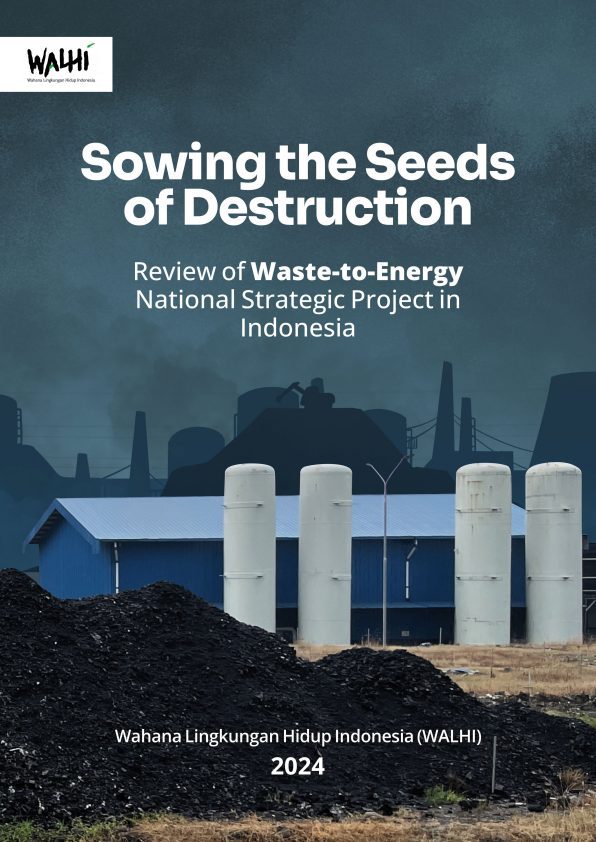




Sowing the Seeds of Destruction: Review of Waste-to-Energy National Strategic Project in Indonesia
- -Indonesia is pushing Waste-to-Energy (WtE) as a core waste management strategy, especially in major cities like Jakarta, framing it as a climate-friendly and technologically advanced solution. Backed by presidential decrees and supported by international finance institutions like the Asian Development Bank (ADB), WtE is included in the country’s Enhanced Nationally Determined Contribution (NDC) and Just Energy Transition Partnership (JETP) as part of its efforts to reduce greenhouse gas emissions.
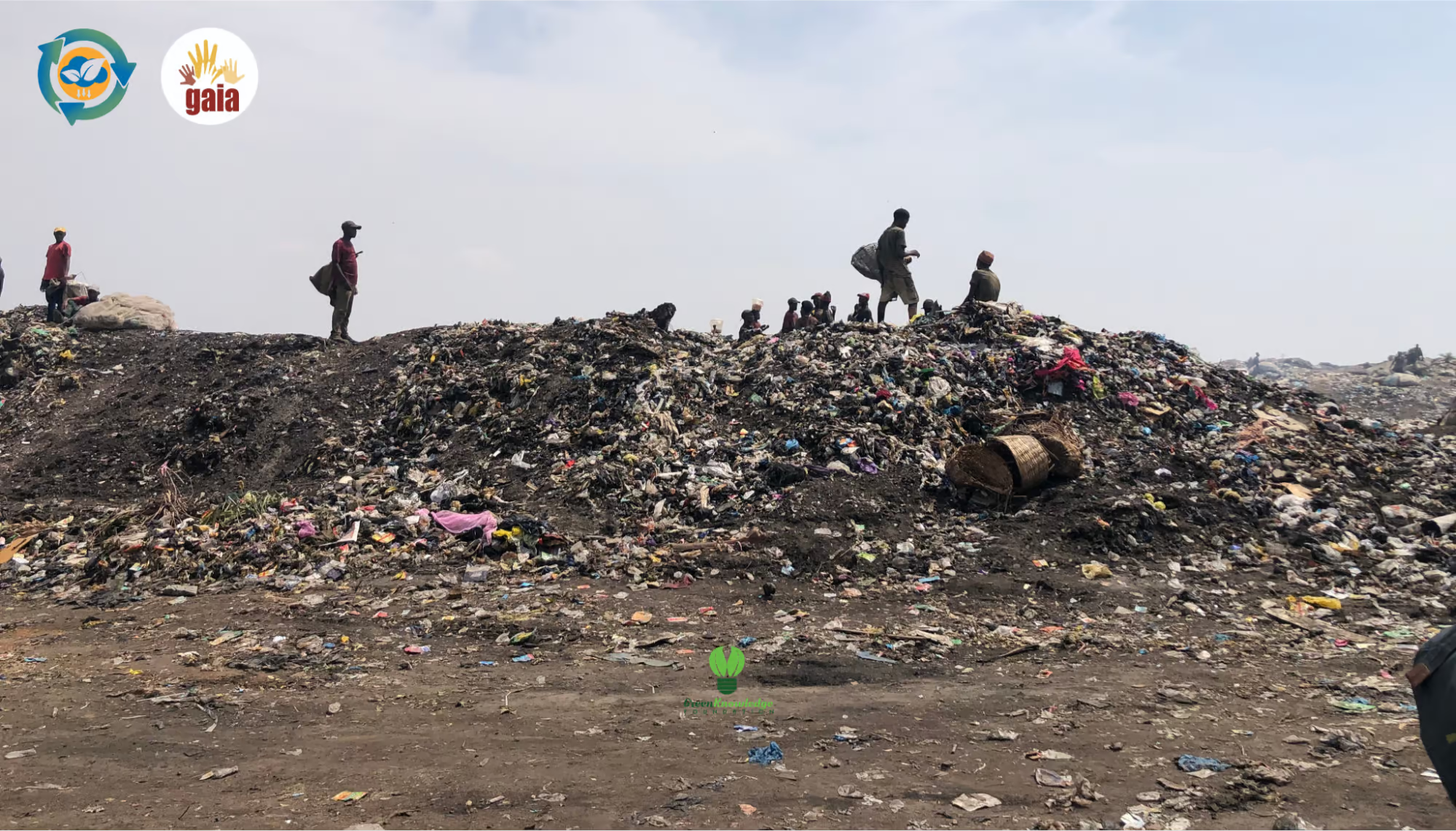
However, this climate narrative is increasingly being challenged. Critics argue that WtE emits up to 70% more greenhouse gases than landfilling, especially considering methane’s high global warming potential. Additionally, prioritizing WtE has diverted public resources away from more sustainable and lower-emission solutions such as waste reduction, composting, and Zero Waste approaches. Despite this, WtE continues to receive fast-tracked permits, land access, and government subsidies.
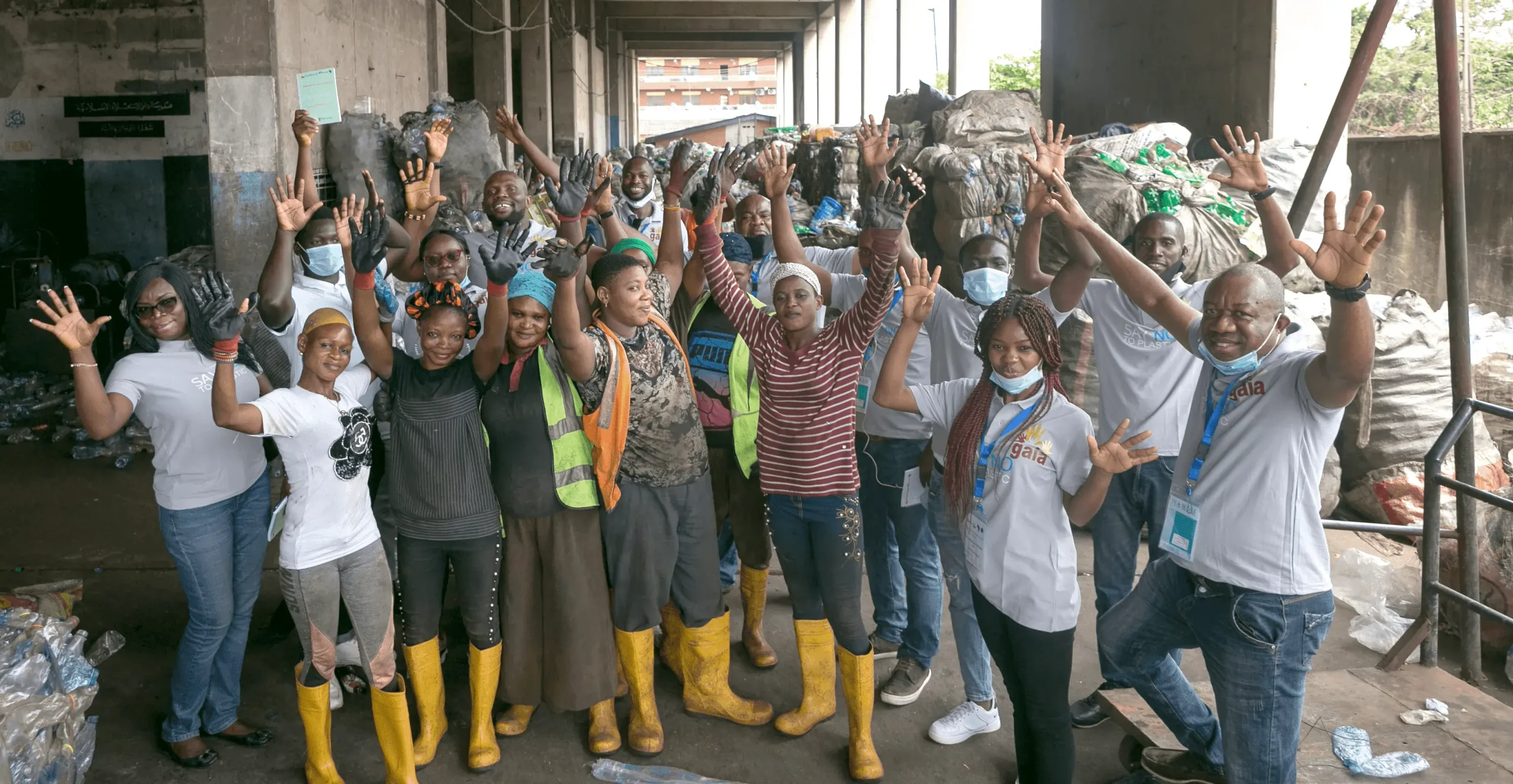
Ultimately, Indonesia’s case reflects how WtE is being greenwashed as a climate solution, despite the environmental and social risks it carries—especially for frontline communities and informal waste workers.
A recent report from Wahana Lingkungan Hidup Indonesia (WALHI), “Sowing the Seeds of Destruction”, offers a critical analysis of WtE in Indonesia and its impacts on health, equity, and the climate.