Asia Pacific


“Temperature records that were not meant to be broken have fallen, one after the other, day by day… Meeting the goals of the Paris Agreement would require greenhouse gas emissions to be halved by 2030 and net zero emission to be reached by 2050.” —Inger Andersen, Under-Secretary-General of the United Nations and Executive Director of the United Nations Environment Programme

Dire warnings have been issued: the world is facing a climate emergency, and governments around the world are called to “shift into emergency gear;” otherwise, we may face disastrous consequences.

Scientists believe that we still have time to avert this impending catastrophe. But as the years pass, the window to do action is becoming narrow. We must act fast to shift to new, sustainable frameworks and systems. 

But while we must move swiftly, we must do things right. The transition needs to be inclusive. And just. The International Labour Organization (ILO) defines ‘just transition’ as “Greening the economy in a way that is as fair and inclusive as possible to everyone concerned, creating decent work opportunities and leaving no one behind.”

Without a just transition, the sectors already excluded by the current system may be left behind. If that happens, they will become even more vulnerable to the adverse effects of climate change. Their exclusion may result in them losing their livelihoods, and in turn, in their further deprivation and marginalization.

Zooming In on Workers in the Waste Sector

Among the sectors that stand to suffer the most from the twin crisis that is plastic pollution and climate change are the waste workers, waste pickers, and other informal workers in the recycling value chain — the very people who play a crucial role in waste management and climate change mitigation, often with little to no compensation. 

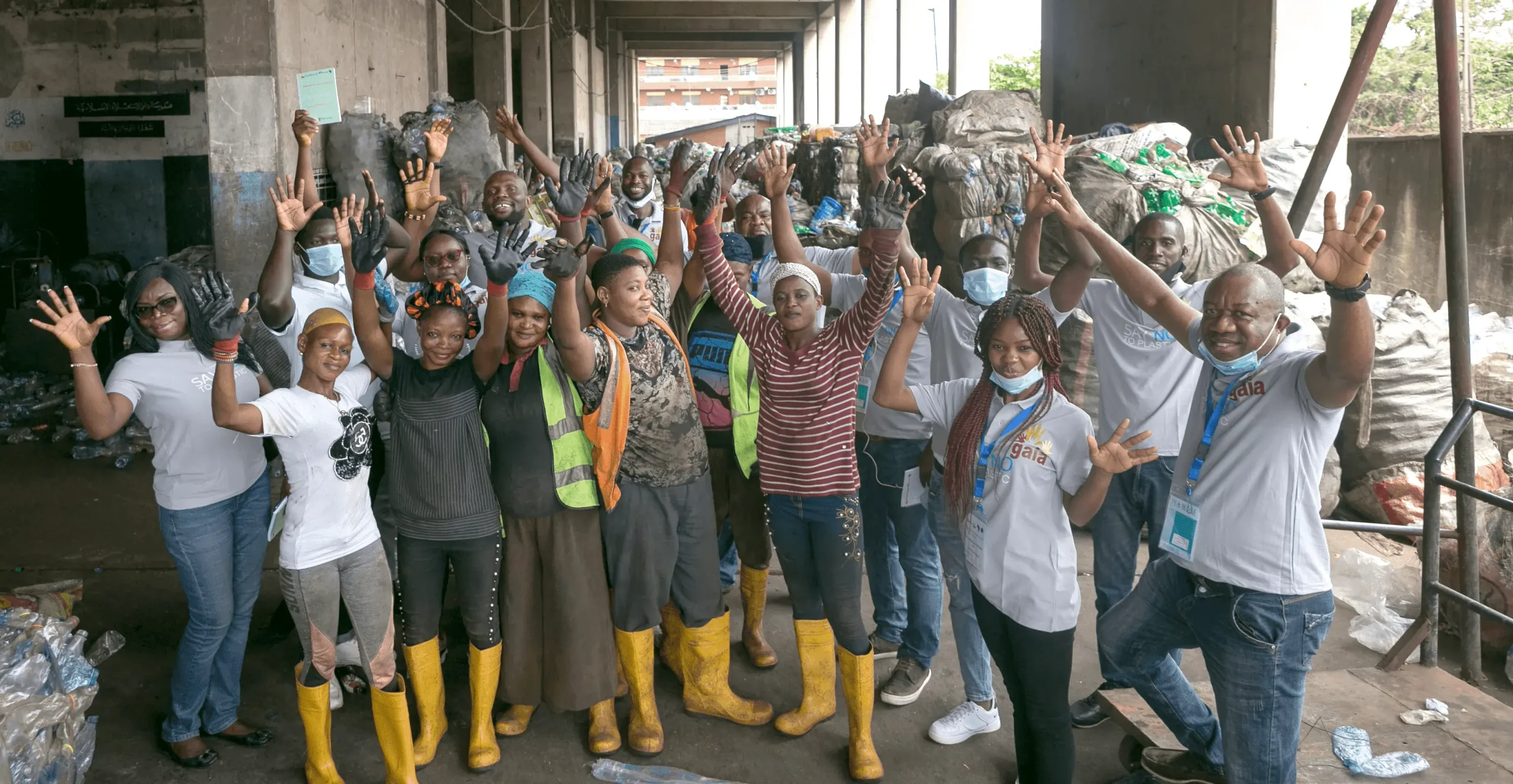
Waste pickers save millions of dollars for their cities and communities and contribute to environmental and human health. Yet, not only are their roles and contributions unrecognized, they are also not included in conversations on the very work that they do, and the very issues affecting them. Their expertise in waste management remains largely untapped and even ignored. And while they are among the segments of society needing social protection and support, they are largely excluded. In many places, they do not have access to healthcare, education, and other basic services.

Through our just transition work, we at GAIA Asia Pacific, aim to ensure that waste workers and waste pickers are not only meaningfully consulted but more importantly, that they become active participants and decision-makers in waste management issues. Waste pickers and waste workers must be at the front and center of conversations and decision-making on waste management issues — their voices heard, their expertise tapped, and their leadership recognized. Only when this happens will policies and programs be truly anchored on realities on the ground. 

“We hope we can be enrolled in some kind of pension scheme and get more support for our medical needs. I worry about my grandchildren. Their father does not support them. What would happen to them when I’m gone and I’m not able to leave them something? So you see, a form of pension would be a big help.”Asha Baban Zombade, Waste Picker from Pune, India

As we shine the spotlight on the waste workers, waste pickers, and other informal workers in the recycling value chain during the final week of the International Zero Waste Month (IZWM) celebration, we invite you to listen to their stories. May we have a deeper appreciation of their contributions and understanding of how they may be supported so that they can live with dignity as they continue with the work that they find meaningful in that better and just world. 

We also invite you to support them in whatever way you can.

Support Our Waste Workers and Waste Pickers. Below are GAIA members working with waste pickers and waste workers

MOTHER EARTH FOUNDATION (PHILIPPINES)

Nearly four years ago, Mother Earth Foundation (MEF) launched Project Tuloy, an initiative dedicated to aiding waste workers who play a crucial role in waste collection and sanitation services within our Zero Waste communities. During the COVID19 pandemic, they launched Kusina ni Juan, a community kitchen designed to provide nutritious, freshly cooked meals served in reusable containers for waste workers. They also have a long-running scholarship program for children of waste workers. Through the program, they have supported over 200 children, providing them with gadgets for e-learning and additional allowance that enabled them to purchase school supplies.

Donations can be made through Paypal, as well as via bank transfers to our RCBC and BPI accounts (accessible from any bank through online transfers). Kindly forward a copy of your donation receipt to act@motherearthphil.org to ensure proper acknowledgment. Your generosity will make a meaningful impact on the lives of those dedicated to maintaining our communities Zero Waste and sustainable.

Donate here:

PAYPAL

BANK ACCOUNT
Bank: Security Bank

Type of account: Savings

Branch: Congressional Avenue, Quezon City, Philippines

Name of account: FOR LOVE OF MOTHER EARTH INC

Account number: 0-0000-2822-8193

Facebook | Mother Earth Foundation PH | Facebook

CHINTAN CHINTAN ENVIRONMENTAL RESEARCH AND ACTION GROUP

(NEW DELHI, INDIA)

Chintan reduces waste and consumption, manages solid and electronic waste, and advocates around materials, waste, and consumption. It uses waste as a tool to fight poverty, child labor, gender-based violence, and exclusion and climate change, while creating green livelihoods. Chintan pushes back and combats unsustainable consumption. Its work directly supports the UN’s Sustainable Development Goals 1, 2, 3, 4, 5, 6, 11, 12, 13, 14, 17.

Help Chintan by supporting #COVIDmekabadi

The United Nations says in these times of COVID, handling waste is an essential service, without which we can all get more ill. Wastepickers do this for us in India. Delhi’s 50,000 wastepickers need our support as they protect us.

DONATE HERE: #COVIDmekabadi | Chintan (chintan-india.org)

HASIRU DALA (BANGALORE, INDIA)

Hasiru Dala, which means Green Force, is a social impact organization that works with waste pickers and other waste workers to ensure a life with dignity.

Donations to support waste pickers

Waste pickers and other informal waste workers are among the most marginalized communities across the country. Despite this, their work of removing waste from the streets to sell to scrap dealers and recyclers makes them unsung and silent environmentalists whose work supports municipal waste management with little to no reward. 

Your donations will go to support our programs, which fall broadly across social security, livelihoods, housing, health and nutrition, advocacy, children’s education and safety.

Support Waste Pickers

KKPKP/SWACH (Pune, India)

A Trade Union of Waste Pickers

KKPKP has advocated for the unclean occupations scholarship program at the state government level. They may be reached at https://kkpkp.org/sample-page/timeline-of-change/

STREE MUKTI SANGHATANA (MUMBAI, INDIA)

Established in 1975, Stree Mukti Sanghatana has been working towards women empowerment for over four decades. The play ‘Mulgi Zali Ho’ (Girl is Born) opened doors for women to interact and share their problems with us. The family counseling centers, in-house monthly publication “Prerak Lalkari”, programs for adolescents, daycare centres, programs for waste pickers, and solid waste management commenced operations to enable sustainable livelihood for women.

Yaksa Pelestari Bumi Berkelanjutan (YPBB)

War on Waste – Break Free From Plastic (WOW-BFFP) – Negros Oriental

Ecowaste Coalition

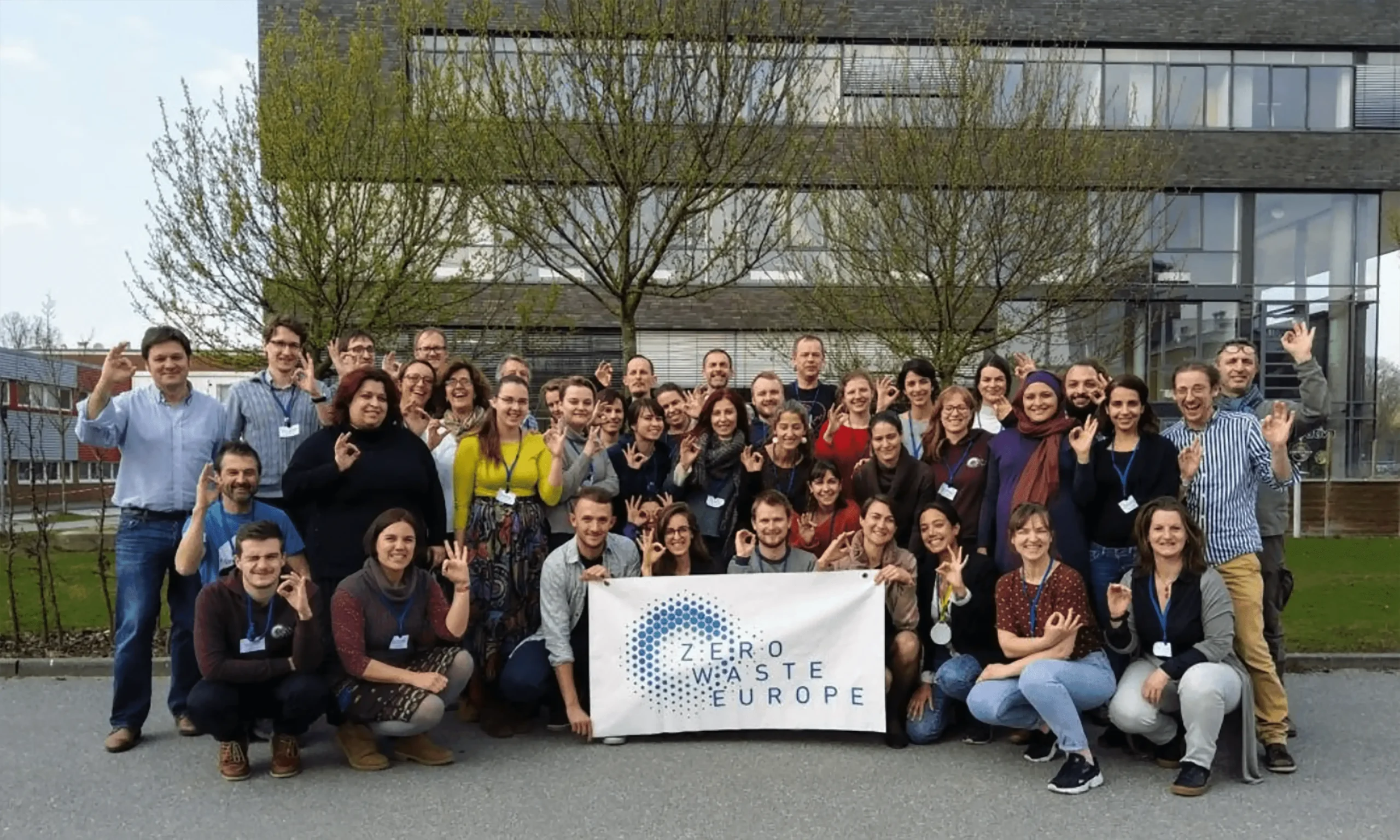
Zero Waste Is Possible. Zero Waste Is Now!

January 3, 2024 –  As communities worldwide grapple with the escalating challenges of waste management and environmental degradation, International Zero Waste Month (IZWM) 2024 takes center stage, offering practical solutions to the escalating crisis.  Under the theme “#ChooseReuse: A Pathway for a Just Zero Waste Future”, this year’s IZWM emphasizes the pivotal role of reuse in forwarding social and environmental equity.

In contrast to single-use plastics (SUPs), reuse is a system that intentionally designs products and packaging for multiple lifecycles. At its core, reuse offers economic benefits and significantly reduces environmental impact. 

The urgency to shift towards reuse becomes even more apparent when considering that around a third of plastic packaging leaks into the environment. With reuse systems, there is a potential to cut plastic pollution by 30 percent by 2040.

IZWM also confronts false solutions to the crisis, such as waste-to-energy (WtE) incineration and plastic credits, which are deemed environmental and health hazards, lacking scalability and failing to address the root cause of plastic pollution.

In response, Zero Waste emerges as a science-based solution, advocating for a departure from harmful waste management technologies and adopting strategies such as reuse, repair, proper waste segregation, and composting.

Zero Waste not only addresses environmental concerns but also creates more livelihood opportunities. A GAIA report reveals that Zero Waste activities generate more green jobs compared to traditional waste management, offering higher wages and more permanent positions.

Moreover, Zero Waste champions principles that ensure a fair shift towards practices that address social disparities in waste management, particularly those affecting vulnerable communities. The campaign aims to instill a sense of global responsibility, urging businesses to abandon harmful practices and policymakers to put waste pickers and workers at the center of the discussions on matters that influence their livelihoods and well-being.

Recognizing the importance of waste pickers and their role in environmental protection, the IZWM highlights the need to provide them with the tools to advocate for their communities. This just transition, characterized by transparency, inclusivity, and equity, is emphasized to ensure that no one is excluded, benefiting both society and the environment.  

“Waste pickers are at the forefront of waste management.  We need to recognize their contributions and make sure they are part of the conversations,” says GAIA Asia Pacific Regional Director, Froilan Grate. “Waste pickers and other informal workers play a crucial role in saving resources and reducing waste. When we talk about a ‘just transition,’ we stress the importance of waste pickers in policy discussions, we recognize their expertise as critical contributors to resource conservation and waste reduction, and we have to ensure that no one is left behind.”

To illustrate Zero Waste as a viable solution, IZWM showcases numerous grassroots groups, national and regional alliances, as well as cities worldwide that have successfully implemented Zero Waste systems, rejected WtE incinerators, and combated plastic pollution.

Throughout the month-long event, a diverse array of activities will unfold, including workshops, Reuse Tours, film screenings, and public discussions. The schedule for the entire month is divided into weekly themes:

  • WEEK 1: Launch (Jan 1-5)
  • WEEK 2: BARRIERS TO ZERO WASTE (Jan 6-12): #RefuseSingleUse
  • WEEK 3: SOLUTIONS WEEK (Jan 13-19): #ChooseReuse Week 
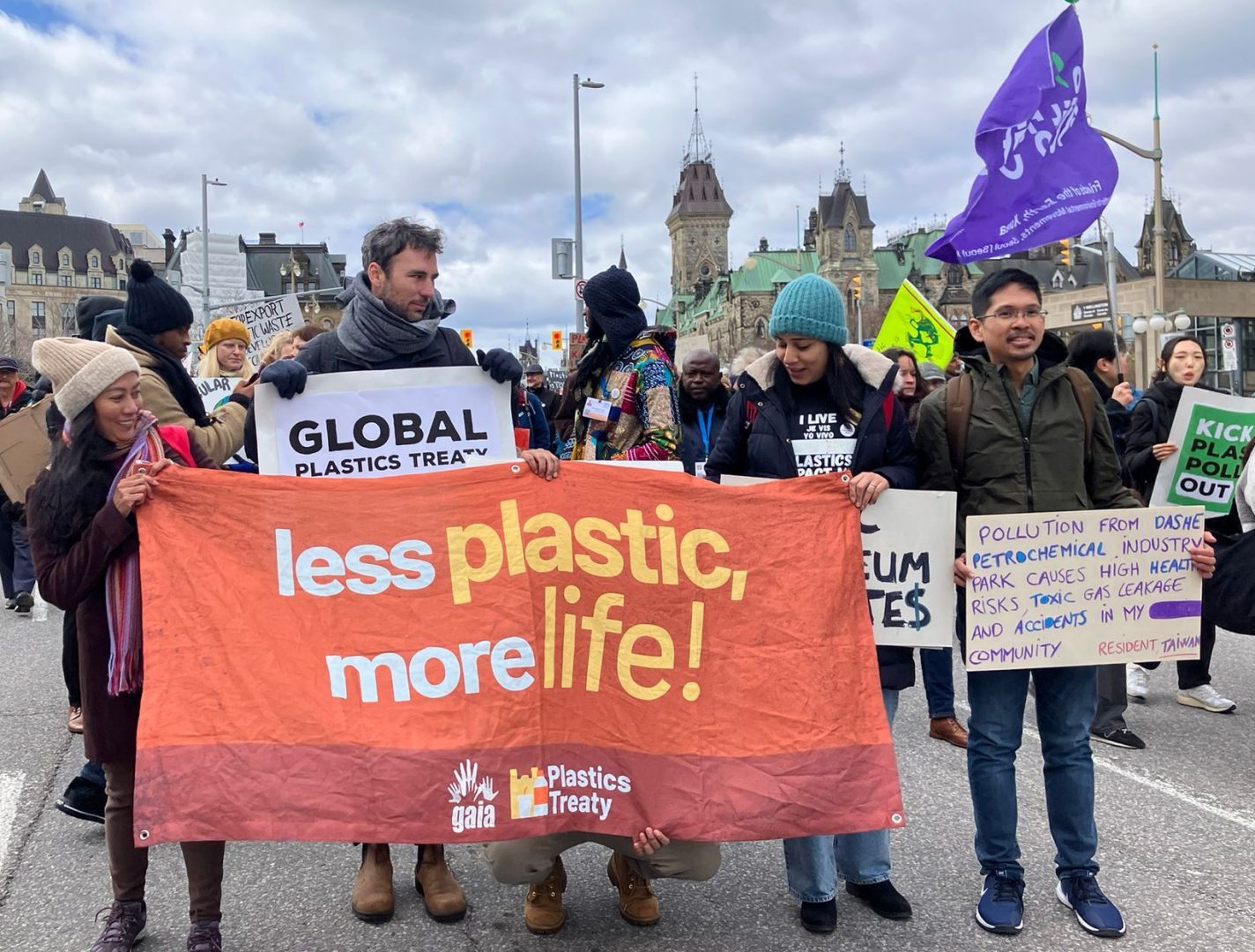
  • WEEK 4: FALSE SOLUTIONS WEEK (Jan 20-26): #NoBurn, #NoTrashTalk #LessPlasticMoreLife
  • WEEK 5: HUMANS OF ZERO WASTE (Jan 27-31): #JustTransition

As we navigate the month’s diverse array of activities, let us embrace the principles of Zero Waste and work together towards a sustainable future. By rejecting false solutions and championing inclusive, science-based approaches, we can build a world where waste is minimized, livelihoods are enhanced, and our shared environment thrives. Zero Waste is not just a concept; it is possible and it is now.

For a full list of events, check out our microsite: http://zwmonth.zerowaste.asia

###

The International Zero Waste Month

Zero Waste Month celebrations originated in the Philippines in 2012 when youth leaders issued a Zero Waste Youth Manifesto calling for, among other things, the celebration of a Zero Waste Month. This was made official when Presidential Proclamation No. 760 was issued, declaring January as Zero Waste Month in the Philippines. It was then promoted widely by NGOs and communities that had already adopted this approach to manage their waste. In 2023, GAIA celebrated the 1st International Zero Waste Month with over 200 activities in Asia Pacific and other parts of the globe. 

Por Soledad Mella, ANARCH. Colabora: Camila Aguilera, GAIA Latin America y Caribe.

(English version follows)

A veces se dice que el trabajo de las y los recicladores es una labor invisible. Sin embargo, es más apropiado decir que es una labor invisibilizada. Las y los recicladores del mundo somos tan visibles como los residuos que se apilan en los vertederos y como los efectos del cambio climático que experimentamos cada vez más seguido, el sistema que no nos reconoce como trabajadores es  lo que nos invisibiliza.

En América Latina, un continente donde la gestión de residuos a menudo desafía las capacidades espaciales y económicas de las ciudades, los recicladores se erigen como pilares fundamentales para la reducción de residuos, y al mismo tiempo contribuir a combatir el cambio climático. 

Las y los recicladores sabemos bien que las mejores estrategias de gestión de residuos son los sistemas de basura cero. Nuestro trabajo no está condicionado a un material en particular o a una mayor generación de residuos, sino todo lo contrario, la reducción en origen de materiales de un solo uso, la recolección diferenciada, y el reciclaje no tóxico, también son objetivos para las agrupaciones de recicladores.

Debido a esto, cuando los recicladores hablamos de transición justa no lo hacemos centrándonos ni en la cantidad de residuos ni en el acceso a un material en particular, sino que hacemos referencia a asuntos concretos relacionados con el reconocimiento, la visibilidad,  la integración, y la generación de oportunidades. 

En este sentido, la recuperación de residuos orgánicos hoy se abre como una gama de oportunidades para las y los recicladores. Una oportunidad que no estábamos viendo en forma transversal, a pesar de que sí tenemos compañeros comenzando a trabajar en el tema. Si bien la necesidad de reducir las emisiones de metano abre puertas, las necesidades para que podamos lograrlo son las mismas que tenemos cuando nos referimos a nuestro trabajo recuperando residuos sólidos domiciliarios, que son: financiamiento, infraestructura, maquinaria, transporte de logística, apoyo de un equipo técnico y administrativo, y capacitación. Con estas necesidades cubiertas, la recuperación de material orgánico puede entregar nuevas oportunidades no solo a recicladores, sino a más mujeres y hombres que pueden encontrar aquí una oportunidad de trabajo.  Por eso cuando se implementan políticas realmente orientadas a la justicia social y a la transición justa, esperamos que éstas garanticen derechos esenciales, entornos de trabajo seguros y saludables y contar con un acceso justo a los residuos. 

La Asociación de Recicladores de Chile, un gremio que agrupa a 5.000 recicladores, representando a un universo de 60.000 mil recicladores en todo el país, con 54 dirigentes regionales, desea embarcarse con mucha fuerza y compromiso en el tratamiento de residuos orgánicos. Primero con aquellos que cuentan con acceso a terreno, y luego con más recicladores cuando empecemos a ver los resultados de las políticas de inclusión y transición justa. Recordemos que nuestros compañeros que se encuentran actualmente trabajando en rellenos sanitarios y vertederos, deben entrar en un proceso de recambio frente a lo que significa el cierre de estos espacios. Esperamos que este proceso de cierre y transformación se traduzca en una oportunidad, en la que se pueda invertir y por qué no, convertir estos rellenos/vertederos en espacios de tratamiento de residuos orgánicos.

Las y los recicladores necesitamos -y queremos- que se generen las oportunidades que nos permitan hacernos cargo de los residuos sólidos domiciliarios y ahora también de los orgánicos en el marco de las leyes que se están implementando en nuestros países. Pero como mencioné anteriormente, las ambiciones de recuperación deben ir de la mano de las ambiciones de los gobiernos locales en cuanto a  inclusión e inversión.


Soledad Mella – National Association of Waste Pickers of Chile ANARCH

By Soledad Mella, ANARCH/RED Lacre. Contributor: Camila Aguilera, GAIA Latin America & the Caribbean.

It is sometimes said that the work of waste pickers is invisible. However, it is more appropriate to say that it has been made invisible. The waste pickers of the world are as visible as the waste piling up in landfills and the effects of climate change that we are experiencing more and more often. The system that does not recognize us as workers is what makes us invisible.

In Latin America, a continent where waste management often defies the spatial and economic capacities of cities, waste pickers stand as key pillars for waste reduction, and at the same time contribute to combating climate change.

Waste pickers know well that the best waste management strategies are zero waste systems. Our work is not dependent on a particular material or increased waste generation. On the contrary, the reduction of single-use materials at source, differentiated collection, and non-toxic recycling are also objectives for waste pickers’ groups.

Because of this, when waste pickers talk about just transition, we do not focus on the quantity of waste or access to a particular material, but rather we refer to concrete issues related to recognition, visibility, integration, and the creation of opportunities.

In this sense, the recovery of organic waste now opens up a range of opportunities for waste pickers. This is an opportunity that we were not seeing in a cross-cutting way, even though we do have colleagues starting to work on organics. While the need to reduce methane emissions opens doors, the needs for us to achieve this are the same as those we have when we refer to our work recovering household solid waste, which are: financing, infrastructure, machinery, transport logistics, support from a technical and administrative team, and training. With these needs covered, the recovery of organic material can provide new opportunities not only to waste pickers, but to more women and men who can find a job opportunity here.  So when policies that are truly oriented towards social justice and just transition are implemented, we expect them to guarantee essential rights, safe and healthy working environments and fair access to waste.

The Asociación de Recicladores de Chile (National Association of Waste Pickers of Chile ANARCH), a group of 5,000 waste pickers, representing a universe of 60,000 thousand waste pickers across the country, with 54 regional leaders, wants to embark with great strength and commitment on organic waste management. First with those who have access to land, and then with more waste pickers as we begin to see the results of inclusion and just transition policies. Also let’s remember that our colleagues who are currently working in landfills and dumpsites must enter into a process of readjustment in the face of what the closure of these spaces means. We hope that this process of closure and transformation will translate into an opportunity to invest in and, why not, convert these landfills into spaces for organic waste treatment.

We waste pickers need – and want – opportunities to be created that allow us to take care of household solid waste and now also organic waste within the framework of the laws that are being implemented in our countries. But as I mentioned earlier, recovery ambitions must go hand in hand with local government ambitions for inclusion and investment.

Contributed by Movimento Nacional de Catadores de Materiais Recicláveis (MNCR)

The fight for environmental justice is strong in Brazil, and a powerful example is the social movement MNCR (Movimento Nacional de Catadores de Materiais Recicláveis or the National Movement of Waste Pickers), which has been organizing recyclable material collectors throughout Brazil for roughly 20 years. They seek to uplift waste pickers as important members of society, and fight for recognition, inclusion and appreciation of the work that they do.

Aline Sousa, CENTCOOP


For two decades, MNCR has played a crucial role in organizing waste pickers across the country. Their main platforms are advocating for independence and solidarity for the oppressed class, fighting against incineration and privatization of waste, minimizing environmental impacts, and building popular power to sustain the planet. 


Currently, it is estimated that there are between 800 thousand and 1 million waste pickers in Brazil. Around 1664 municipalities throughout the country have adopted separate collection, where waste pickers are responsible for 30% of the total mass collected. Also, 42% of these municipalities exclusively rely on waste pickers to carry out this activity. These professionals clearly play an essential role in waste management in Brazil.

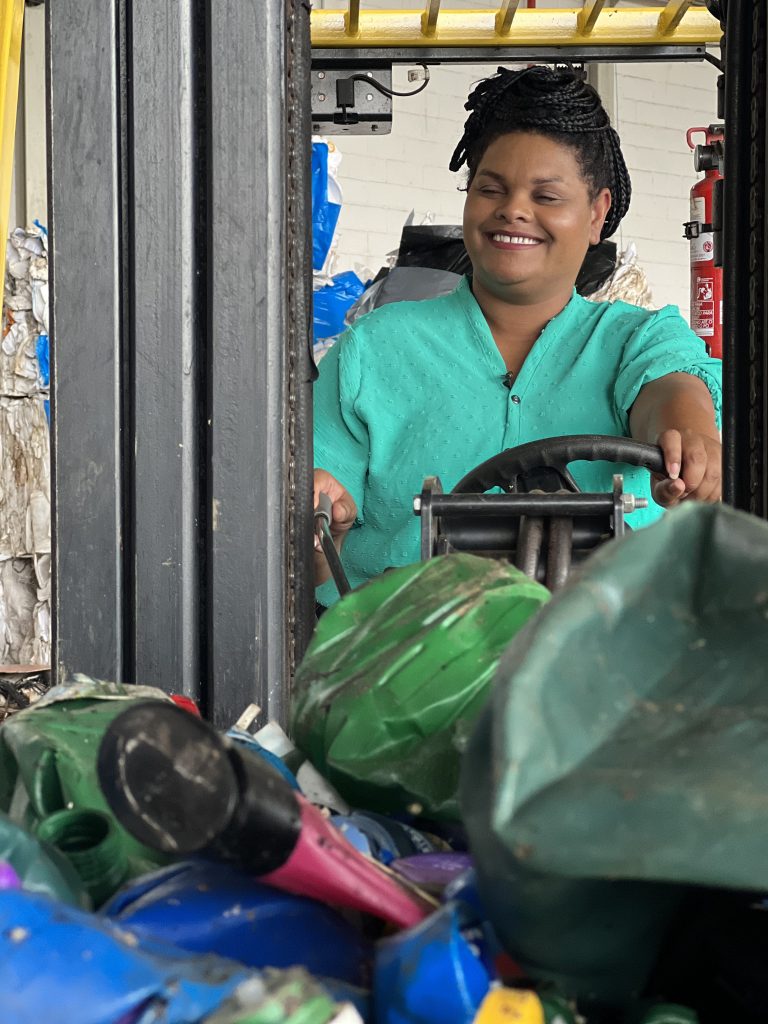
One of the most prominent heroes of the movement is Aline Souza, who is currently serving her third term as President and Director of the Central das Cooperativas de Trabalho de Catadores de Materiais Recicláveis do Distrito Federal – CENTCOOP, and is a state representative of the National Movement of Waste Pickers of Federal District (MNCR-DF) and the National Secretariat for Women and Youth of Unicatadores.

The verb to rebuild and preserve has been part of Aline’s life since she was a child. At the age of 14, she started helping her grandmother with her recycling work, and since then she has worked in the sector, making recycling a way to transform her life and the lives of the people who work with her. She is part of the third generation of waste pickers in her family and is the mother of seven children. As a teenager, she dreamed of studying law. During the pandemic, she managed to get a 90% scholarship to study law, but today she has stopped her studies due to personal and professional demands.

Her grassroots organization is called CENTCOOP, made up of 23 waste picker cooperatives. The CENTCOOP advocates for the social recognition of waste pickers, strengthens environmental education on recycling and the shared solid waste management, and contributes to the development of waste picker-led collection systems. 

In 2023, CENTCOOP launched CREAR/DF – Centro de Referência em Educação Ambiental do Distrito Federal (Reference Center for Environmental Education in the Federal District), to educate the public on waste separation, engaging civil society, the private sector, public authorities and waste picker cooperatives to increase the quality of the solid waste that arrives at the cooperatives. Approximately 60% of the waste that the cooperatives in the Federal District currently receive is contaminated, and becomes refuse. Therefore educating and informing the population is key to improving segregated collection and municipal solid waste (MSW) management for a circular economy.

Proper waste management is not only an essential municipal service,  but a lynchpin for the climate. Today, Brazil collects 65.6 million tons of MSW yearly. Although 45.6%of waste collected is organic, only 0.4% is composted. Currently, only 2% is diverted from disposal: landfills receive 71.6% of the total waste collected and dumps 26.4%. The country emits 5.5% of global methane emissions, with the waste sector accounting for 16%, placing organic waste disposal as the second largest source of methane emissions in Brazil.

With this in mind, CENTCOOP has been developing a project to divert organic waste from the landfill in order to mitigate emissions from this sector, through the creation of a composting plant and a organic waste separate collection scheme, supported by the Pólis Institute and the Global Methane Hub (GMH). 


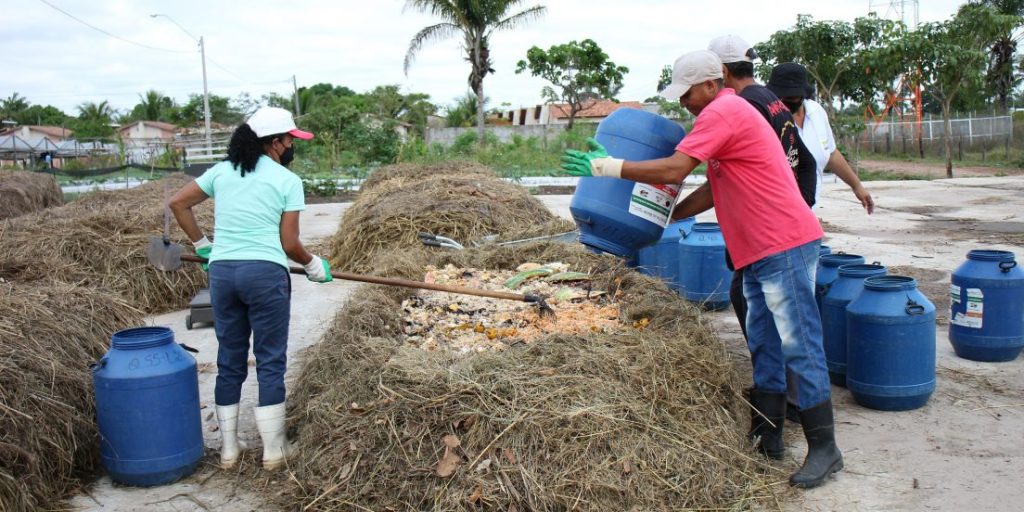
Today, composting systems operated by waste pickers generate three to five times more jobs than landfills, highlighting the potential for expanding these operations. Composting not only has a positive impact on the local economy, but also recognizes organic solid waste as an economic asset with social value. This generates work and income and promotes citizenship, as advocated by the National Solid Waste Policy (PNRS). 

In addition to valuing the main players in the MSW management system and the most vulnerable population, the new MSW management models– which include waste picker-led composting operations– are part of a just transition and have a positive impact on the economy. The role of waste pickers is fundamental, not only as a legal priority in MSW management, but as drivers of social technologies that increase recycling and boost local development. The Environmental justice principles demonstrated by MNCR provide dignity and job creation for marginalized groups, while reducing methane emissions from the waste sector and promoting a circular economy.


Contributed by Trivandrum Municipal Corporation (TMC)

The Zero Waste Story of Trivandrum, India

Trivandrum is the capital city of Kerala, the southernmost state of India. In 2011, the city was hit hard by the shutdown of its only municipal landfill at Vilappilsala (in the city outskirts) after locals protested the mismanagement of waste at the site. It was then that the city’s local body decided to shift its waste management practices to a decentralized system. The Trivandrum Municipal Corporation (TMC) is the largest local self-government institution with 100 wards, about 1 million in population, and an area of 214.86 sq. km.  Being the capital city, there is also a floating population of 200 thousand per day. The city produces around 423 tons of waste per day out of which more than 70 percent is organic waste.

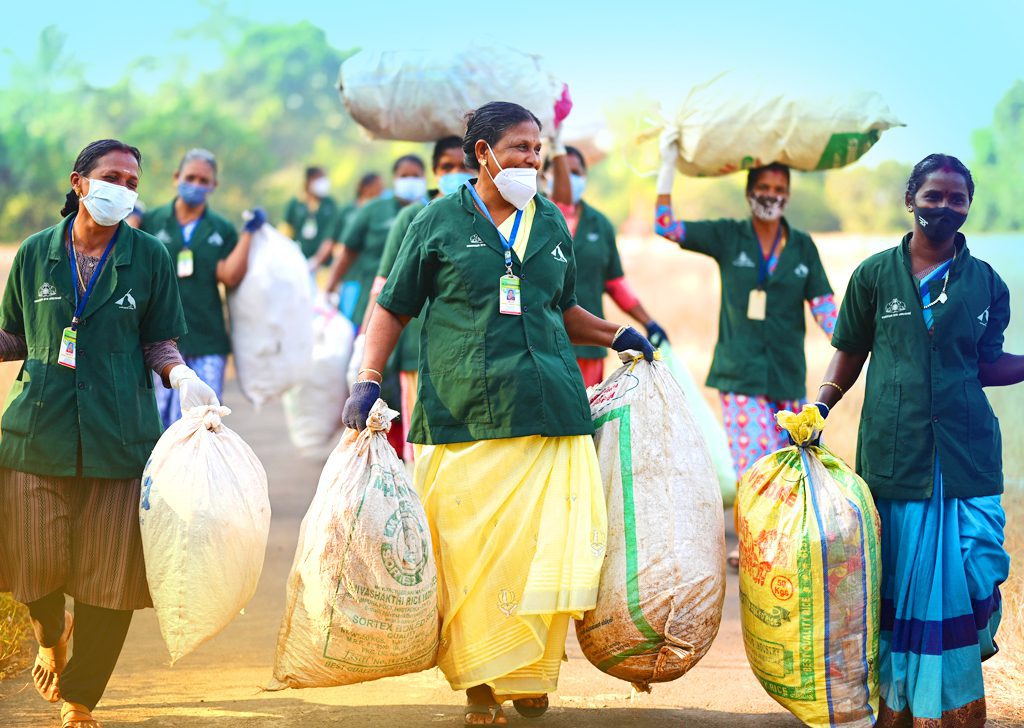
The decentralized waste management system of TMC introduced segregated collection of waste ensuring source-level composting and decentralized resource recovery. This is done with the help of 1,139 ‘Haritha Karma Sena’ (Green Action Force) members who are tasked to collect non-biodegradable waste materials from each household. For this, they earn a user fee of Rs.100 per month from each house that they visit. The Haritha Karma Sena (HKS) members, 90 percent of whom are women, visit every house twice a month for plastic collection. The municipal corporation also has a calendar made for non-biodegradable waste collection according to which the people should hand over different types of waste material to HKS in allotted months (for example, old cloth, bags, and sandals in October). The collected non-biodegradables are then sent to authorized recyclers.

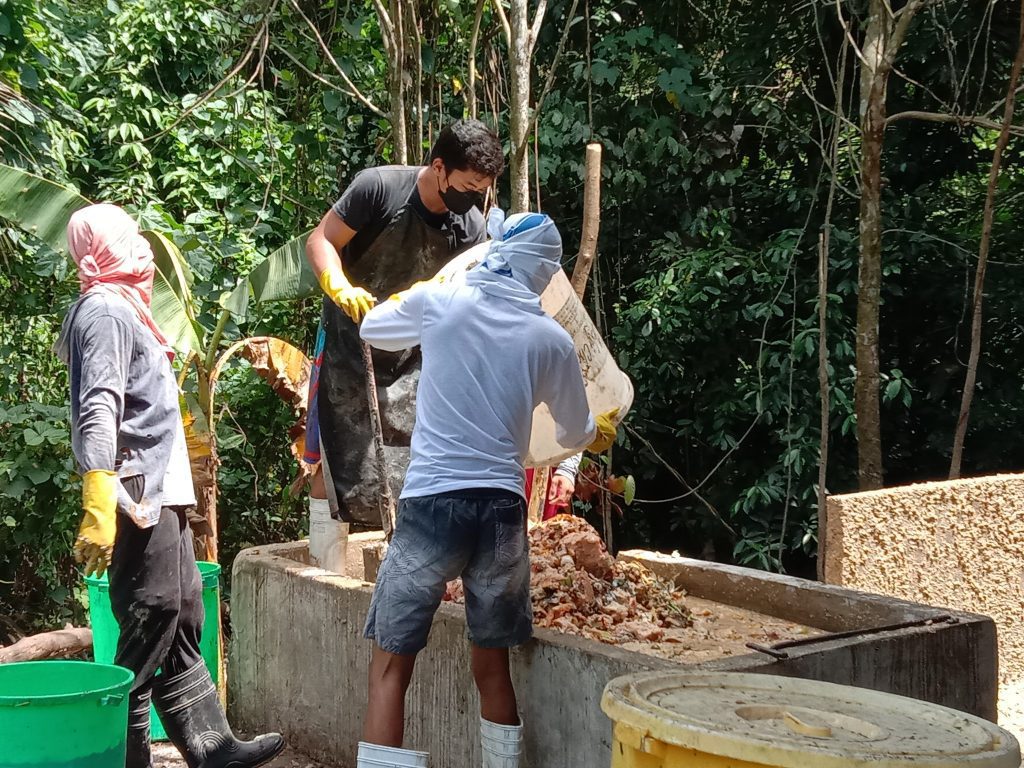
The city follows source-level composting for organic waste. Each household has access to bio-waste management facilities provided by the local body, such as composting bins or kitchen bins, pipe compost, biogas plants, etc. which are provided at a highly subsidized cost. Communities or households who do not have enough space to plant such source-level composting facilities can drop their bio-waste at the nearby aerobic bins. There are close to 60 aerobic bins distributed to the 100 wards in the city. These aerobic bins have trained staff who process the waste to convert it to compost that is used for urban farming. Bulk generators like hotels, restaurants, commercial establishments, community halls, and institutions are also responsible for segregating their waste at source. They then have to hand over their non-bio waste to the HKS and wet waste to authorized pig farmers or plant owners who process and use it for animal feed.

The city also introduced a ‘Green Protocol,’ (a set of measures to reduce waste generation), the first in India to do so. A large group of youth leaders called the Green Army volunteers assist the city corporation to enforce the Green Protocol at all major events and festivals, raise awareness against littering, promote alternative products, and many more vital activities. 

This formalization of decentralized resource recovery, source-level segregation, and composting are examples of zero waste solutions that are based on the principles of environmental justice:

  1.     The Green Protocol measures and promotion of alternative products through Green Army youth volunteers’ awareness campaigns are meant to advance the commitments of governments, the public, and private institutions to reducing consumption, thereby reducing their carbon footprint. This is a major step towards respecting planetary boundaries and ensuring intergenerational equity.
  2.     The HKS helps to keep the city clean and aids every household to manage their waste responsibly. The mandatory user fee payment to HKS, forming the HKS consortium, pays for green uniforms, necessary equipment for safe waste collection, and training sessions to HKS to convert them to Green Technicians who can provide technical assistance to every household and institution in using source-level composting technologies. These initiatives show how the city corporation ensures and promotes respect for workers in the field of waste management. They are not seen as waste pickers but as a part of the city corporation’s enforcement force.
  3.     Trivandrum’s decentralized waste management infrastructure also enhances inclusion– many HKS members and Green Army volunteers are from different social backgrounds. The city corporation also makes sure that all communities in the city have access to the facilities and technologies for waste management.
  4.     The officials of the corporation’s health wing have a day and night patrolling squad to prevent littering. The squad acts as an enforcement agency that imposes a fine for non-compliance. The state has introduced a new scheme that rewards 10 percent of the punishment fine to responsible individuals who report such violations, with evidence, to the squad. These measures ensure that there is accountability for environmental harm.
  5.     These practices’ combined yields generate income for waste management facilitators or HKS, leading to a just transition. It ensures a sense of responsibility among the public, especially the youth, in managing waste. The program also promotes a critical narrative shift amongst the general populous– that what we see as trash is actually a resource. This systemic point of view has led to increased adoption of holistic solutions for zero waste.

The TMC has ensured stakeholder participation in solid waste management and has adopted creative and scientific methods for methane reduction, which undoubtedly make the city a model in solid waste management that can be followed by other states and nations through necessary modifications that suit their local characteristics.


References

https://www.downtoearth.org.in/news/waste/ten-zero-waste-cities-how-thiruvananthapuram-cleaned-up-its-act-68539

https://haritham.kerala.gov.in/wp-content/uploads/2020/01/Thiruvananthapuram-1.pdf

https://www.thehindu.com/news/national/kerala/accidental-shift-to-decentralised-waste-management-helps-thiruvananthapuram/article66675058.ece

https://www.newindianexpress.com/cities/thiruvananthapuram/2023/mar/26/thiruvananthapuram-corporation-budget-gives-thrust-to-green-initiatives-2559568.html

https://timesofindia.indiatimes.com/city/thiruvananthapuram/civic-body-to-develop-smart-waste-management-system/articleshow/101793009.cms

https://english.mathrubhumi.com/news/kerala/waste-dumped-near-operation-theatre-tvm-corporation-slaps-rs-10k-fine-on-govt-hospital-1.8968704

https://timesofindia.indiatimes.com/city/thiruvananthapuram/improper-waste-disposal-892-establishments-served-notice/articleshow/99199073.cms


Contributed by Mahesh Pandya, Paryavaran Mitra

Paryavaran Mitra’s Efforts to Promote Zero Waste

India’s remarkable journey of economic growth and development has brought with it a modern dilemma – an escalating plastic waste crisis. The rapid industrialization and urbanization of the country have significantly increased the consumption of plastic products leading to dire consequences on the environment.

When we dive into statistics it shows us the real picture of the problem and the urgent need for sustainable solutions:

  • India has an annual production of plastic of over 20 million tonnes.
  • Single-use plastics account for a substantial portion of the plastic waste generated in India. These items often end up in landfills, water bodies, and streets.
  • According to estimates, India recycles only about 60% of the total plastic waste generated.
  • With over 60,000 tons of plastic waste entering the marine ecosystem annually.
  • Burning of plastic waste releases harmful toxins into the environment risking biodiversity.

The characteristic appearance of Paryavaran Mitra on plastic waste awareness and working with stakeholders are some small yet efficacious steps towards the abatement of plastic pollution.

Waste Connect on 20th January 2023 was a stakeholder meeting organized by Paryavaran Mitra in which waste pickers, environmentalists, and experts from various fields participated. The discussion was regarding regular stable income, better working conditions for rag pickers, upliftment of the waste picker community, and ensuring a better linkage between different stakeholders. The final decision was to represent each issue to the municipal corporation together.

Due to the intervention of Paryavaran Mitra, the Government of Gujarat declared a welfare policy for waste pickers. If they collect single-use plastics and multi-layer plastic then they will get 3 Rs. per kilo up to 15 kg per day maximum for 15 days in a month. But that’s not sufficient and we are trying our best to increase the limits of days, volume, and price.

Paryavaran Mitra is demanding the government to segregate waste at its source. As in most cities of Gujarat, segregation does not happen at the source.

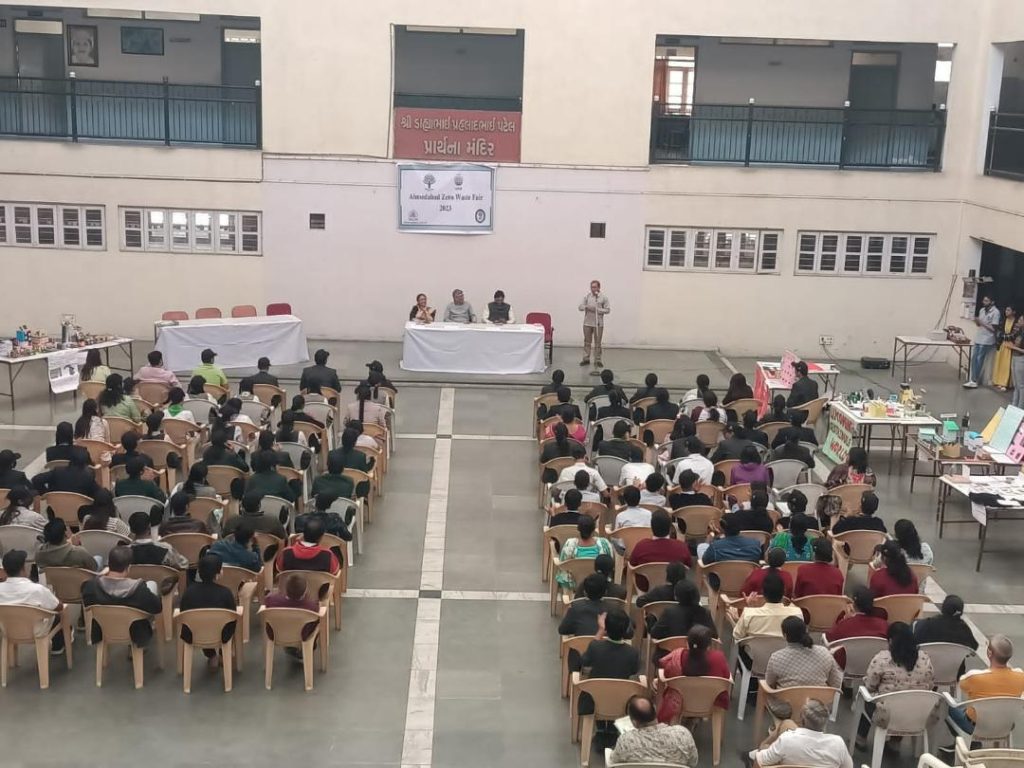
Ahmedabad Zero Waste Fair on 22nd January 2023 was organized on the occasion of “International Zero Waste Month 2023”, as a series of events in collaboration with Gujarat Pollution Control Board. At this fair, students from 15 schools in Ahmedabad City participated and presented their projects. Paryavran Mitra also invited stakeholders to a seminar in collaboration with the Chamber of Commerce, Gujarat Pollution Control Board to create awareness about plastic pollution among stakeholders.

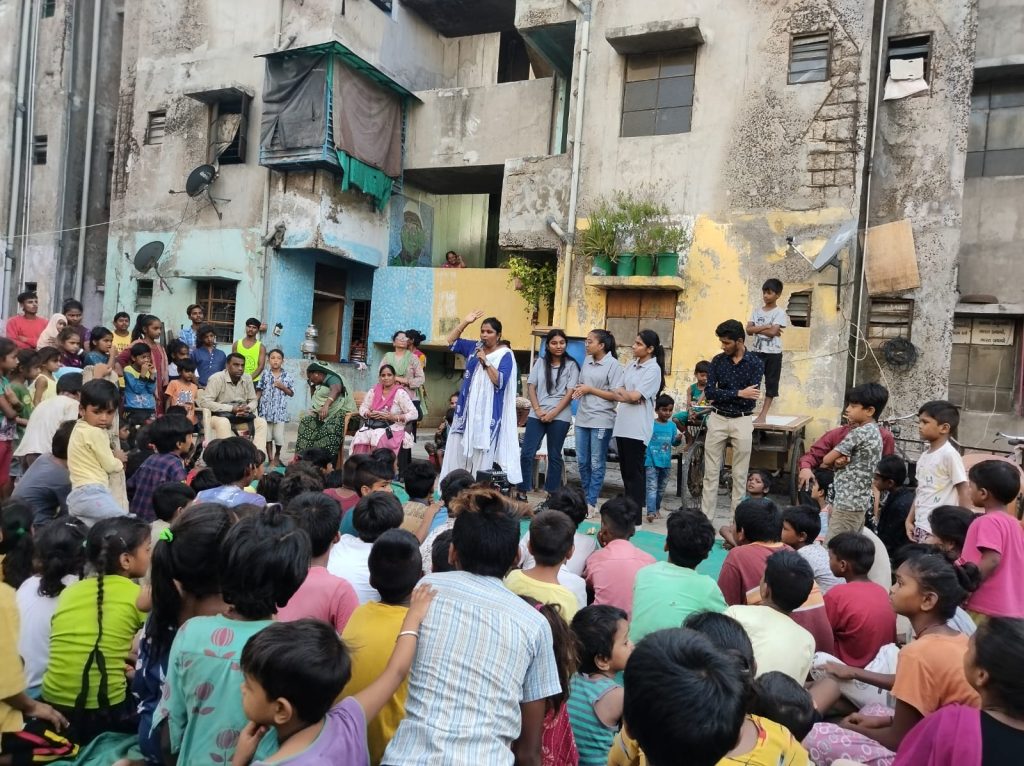
Green Catalyst, the youth wing of Paryavaran Mitra organized 10 community awareness programs titled: Lifestyle for Environment – Challenges, Solutions and Initiatives in different localities of Ahmedabad in May – June 2023 with Lok Manch and St. Xavier’s Social Service Society. The attempt was to take aim at some common environmental issues such as waste disposal, solid waste management, plastic waste generation, water pollution, climate change, and air pollution with a special focus on Lifestyle for the environment i.e., how we as individuals can bring change in our day-to-day lives that is sustainable and helps in conserving and protecting our environment. Green Catalyst volunteers of Paryavaran Mitra worked collectively to put together a 10-minute skit. The program was started by asking questions to the audience. The skit advocated towards the use of cloth bags rather than plastic ones. It was made interesting for the audience by familiarizing cloth bags as gifts on answering correctly the series of questions about the skit.

GC volunteers are in regular communication with waste pickers. The role of Paryavaran Mitra is to sensitize GC for human rights. Waste pickers are generally climate refugees who migrated from BanasKantha district (North Gujarat) to the big city of Ahmedabad. As the region is semi-arid and agriculture depends only on monsoon and is uncertain these days due to climate change, they shifted to picking plastics in the city.

Paryavaran Mitra also aided the waste pickers during Covid-19 by providing them with ration kits according to their needs and requirements.

In summation, the indefatigable efforts of Paryavaran Mitra are contributing to ameliorating the scourge of plastic pollution and promoting zero waste. Through assiduous advocacy, relentless awareness campaigns, and collaborative initiatives, we have caused a metanoia in society’s perception of plastic waste, fostering a nascent era of eco-consciousness.

Contributed by Dr. Shahriar Hossain, Environmental and Social Development Organization


Empowering Communities: A Tale of Methane Reduction through Zero Waste Approaches

In a world grappling with the consequences of climate change, it is imperative to celebrate the success stories that pave the way toward a sustainable and toxic-free future. Today, we share a remarkable journey of environmental stewardship and community empowerment, spearheaded by the Environmental and Social Development Organization – ESDO. This story illuminates the transformative power of zero-waste approaches, demonstrating how they not only reduce methane emissions but also exemplify the core principles of Environmental Justice.

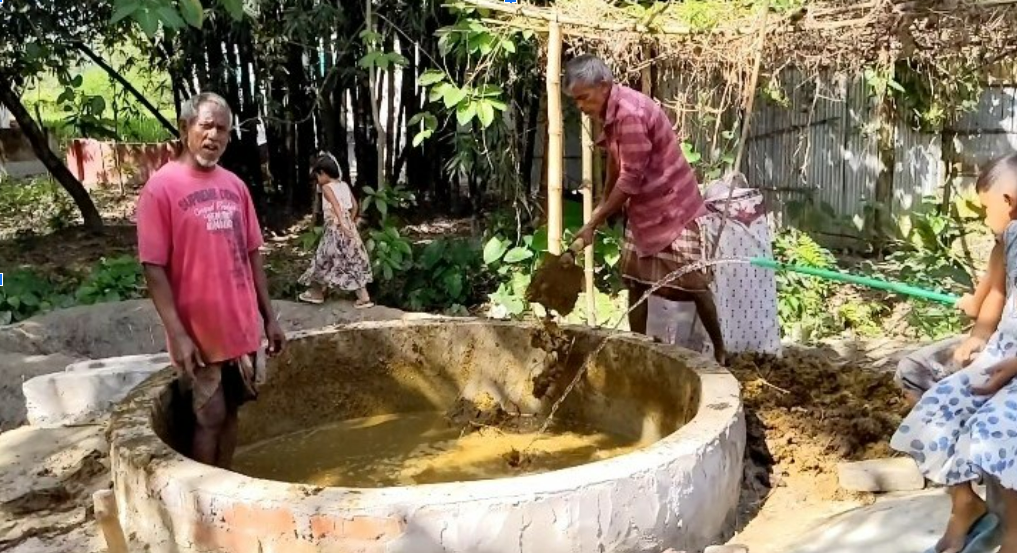
Distributing bin and composters for organic farming to local people in Rangpur, Bangladesh

A Vision Turned Reality: Zero Waste Community at Rangpur, Bangladesh

We, at ESDO, envision zero waste as a solution to reduce food loss, as well as waste management, and as a strategy to build an organic, eco-friendly and sustainable future. Therefore, we embarked on visionary initiatives, establishing a biogas plant and educating people of organic food production and sustainable soil management, ensuring soil and environmental health and ultimately, public health in Rangpur, Bangladesh. This approach utilized a proper waste management system to support two families. By converting organic waste into biogas, this project not only provided energy but also significantly contributed to reducing methane emissions, a potent greenhouse gas responsible for climate change. Furthermore, ESDO encouraged 300 families (150 families in Betgari Union and 150 in Rangpur) to use ‘Twin Pit Earth Composter’ to manage waste effectively for organic food production, and soil health management, while ensuring sustainable agricultural practices. We aimed to make the rural people in Bangladesh aware of the necessity of waste segregation through the 4R strategy (Refuse, Reduce, Reuse, Refill). We also set out to inform the communities on how they can mitigate environmental pollution impact through their daily activities, and build their adaptation potential in the emerging changing climate situation the world is facing. 

‘Twin Pit Earth Composter’ at Betgari Union, Rangpur, Bangladesh

Uplifting Environmental Justice Values

Equity, democracy, sustainability and community empowerment – these are the foundational pillars of environmental justice that our project embodies. By building zero waste communities in Rangpur District, we champion the idea that every individual, regardless of socio-economic status, can actively contribute to mitigating climate change and act as a change-making agent. This project fosters equitable access to resources and opportunities, ensuring that vulnerable communities are not left behind in the fight against the climate crisis. They can potentially participate in climate change action and significantly contribute to a single step in organic crop production through composting, changing the food production system and preventing food loss with the burgeoning population in Bangladesh.


Positive Impact and Success Metrics

Global methane emissions have increased by roughly 25 percent since 1990 to almost nine billion metric tons of CO₂ equivalent. During this period, the average annual atmospheric methane abundance has increased by 11 percent and reached a record high of 1,895 parts per billion (ppb) in 2021.[1] In this case, the impact of ESDO’s zero waste initiatives is tangible and far-reaching. Apparently, 47 percent of Dhaka’s methane emission is caused by waste. The study identifies 13 dumps where garbage is left in the open to decompose leading to methane emissions.[2] Through the implementation of the biogas plant and waste management programs, an impressive amount of organic waste can be diverted from landfills, thereby reducing methane emissions substantially. Moreover, our zero waste project in the Rangpur District has not only reduced greenhouse gas emissions but has also created job opportunities within the community. By providing employment, zero waste projects empowered individuals, fostered economic resilience and enhanced overall community well-being. If sufficient funds are available, ESDO will establish biogas plants in every possible district in Bangladesh to send a message to world environment leaders that positive change is possible if we work together, cultivating a pollution-free tomorrow for posterity.

Biogas Plant at Betgari Union, Rangpur, Bangladesh


Inspiring Change, Building More Zero Waste Communities

The success of ESDO’s initiatives serves as a beacon of hope, inspiring not only the communities directly involved but also national governments, local authorities and decision-makers worldwide. These stories are not just tales of environmental triumph but also testimonials of the efficacy of Environmental Justice Values and Principles in action.

By building zero waste communities, ESDO showcases the transformative potential of grassroots initiatives. These endeavors emphasize the importance of inclusive, participatory approaches in mitigating climate change. As we approach COP 28, it is crucial for all stakeholders – governments, funders, practitioners, and think tanks – to recognize and adopt similar principles in their methane reduction plans.


[1] https://www.statista.com/topics/10289/methane-emissions-worldwide/#topicOverview

[2] https://www.thedailystar.net/opinion/editorial/news/beware-methane-leaks-3281241

Contributed by IDIS Davao

As the Philippines grapples with pressing environmental challenges, the Interfacing Development Interventions for Sustainability, Inc. (IDIS) stands at the forefront of advocating for sustainable development in the Philippines. We advocate for a just transition and the adoption of sustainable methods that prioritize the well-being of both the environment and the Filipino people, and firmly oppose the adoption of the Waste-to-Energy Incineration (WTE) project in Davao City.

IDIS consistently asserts that the Waste-to-Energy Incinerator project is a detrimental band-aid solution that does not effectively address our country’s waste management challenges. The Ecological Solid Waste Management Act of 2000 and the “No to Single-Use Plastics Ordinance” in Davao City are existing policies meant to catapult a green transition, yet they continue to be neglected or ineffectively enforced. 

The present condition of the Sanitary Landfill (SLF) in Brgy. New Carmen clearly demonstrates this predicament, as it has already exceeded its maximum capacity. This is primarily attributed to the indiscriminate disposal of unsegregated biodegradable waste, which further increases methane production. This is a clear violation of the legal requirement that such waste shall not be disposed of in the aforementioned Sanitary Landfill.


WTE: an environmental threat that poses great risks to the Davao’s future

A study published by Dr. Jorge Emmanuel, an Environmental Science and Engineering Professor at Silliman University in Negros Oriental, unveiled that Waste-to-Energy (WTE) incinerators emit significant amounts of toxic compounds known as dioxins and furans. The inhalation of such harmful substances is linked with the development of tumors, cancer, asthma, and several other life-threatening diseases. Moreover, the by-products of incineration also exhibit limited dissipation, persisting in the environment for extended periods of time. The persistence of these hazardous compounds is estimated to be around 500 years, potentially exerting adverse effects on 10 to 40 successive generations. 

Furthermore, under the “Philippine Clean Air Act of 1999”, incinerating municipal, bio-medical, and hazardous wastes is prohibited due to the poisonous and toxic fumes they emit. 


Safeguarding tomorrow: a just and equitable transition within reach

Refusing investments in environmentally harmful energy sources is not just an ecological position, it is also a commitment to safeguarding the health and welfare of the general public. The implementation of a Waste-to-Energy (WTE) Incinerator is a flawed and destructive “solution,” with detrimental health implications on the local population and environment. The preservation of clean air, unpolluted water, and a flourishing environment are not mere luxuries; they are essential rights that demand the active protection and oversight of the government.

As Davao City finds itself at a pivotal crossroad, where the actions of its current administration can have far-reaching implications, IDIS continues to call on the government to serve as a paradigmatic model of sustainable development. By adopting proactive measures that embrace sustainable alternatives and strongly reject financial support for dirty energies such as the Waste-to-Energy Incineration Project, sustainable development becomes a feasible reality that facilitates a just and equitable transition.


Advocating for REAL solutions: Zero Waste

Contributed by Victor Hugo Argentino, Instituto Polis

As the world wakes up to the critical importance of reducing methane emissions to stabilize the climate, all eyes are on Brazil. The country emits 5.5% of global methane emissions, making it the 5th largest emitter globally. The waste sector is the second largest source of methane in Brazil, at 16%, and while 65.6 million tons of municipal solid waste is collected yearly, 45.6% of which is organic, only 0.6% is composted: landfills receive 71.6% and dumps 26.4%.

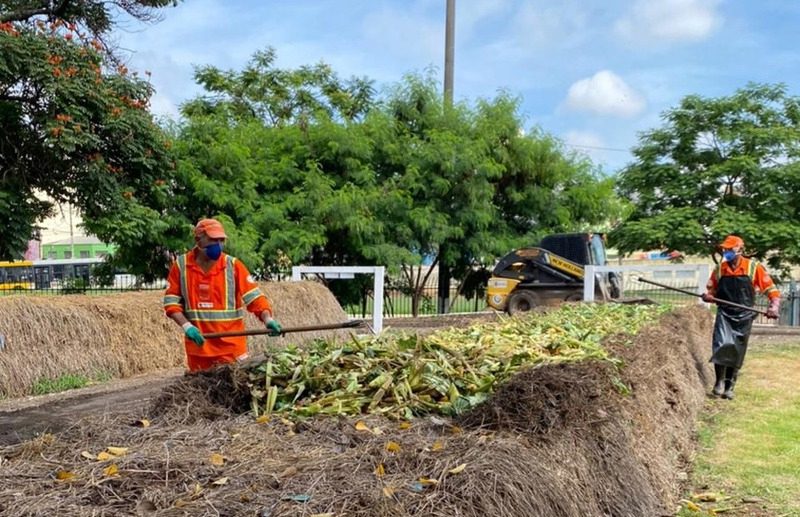
Sao Paulo composting site. Source: Sao Paulo City Hall

In the past, composting projects in Brazil’s big cities were unsuccessful, largely because they disregarded local contexts and inappropriately handled the waste. This led to an overall distrust in composting and similar technologies for organic waste management. Therefore, to engage society and decision makers and build capacity and public support to shift this situation, in 2020, the non-profit organization and GAIA member Instituto Pólis launched the São Paulo Compost, Cultivate campaign. The campaign is supported by 58 international, national and local partners in the biggest city of Brazil, São Paulo. 

In 2023, the movement escalated to the national level, with more than 200 organizations penning a letter for the Ministry of Environment and Climate Change of Brazil demanding organic waste management and climate mitigation in the waste sector. As a result, in recognition of Polis’ expertise, the Ministry signed a technical cooperation agreement with the NGO to advance organic waste recycling, waste picker integration, and greenhouse gas mitigation country-wide.

ACAMARTI waste pickers. Source: Tibagi City Hall

In the past, composting projects in Brazil’s big cities were unsuccessful, largely because they disregarded local contexts and inappropriately handled the waste. This led to an overall distrust in composting and similar technologies for organic waste management. Therefore, to engage society and decision makers and build capacity and public support to shift this situation, in 2020, the non-profit organization and GAIA member Instituto Pólis launched the São Paulo Compost, Cultivate campaign. The campaign is supported by 58 international, national and local partners in the biggest city of Brazil, São Paulo. 

In 2023, the movement escalated to the national level, with more than 200 organizations penning a letter for the Ministry of Environment and Climate Change of Brazil demanding organic waste management and climate mitigation in the waste sector. As a result, in recognition of Polis’ expertise, the Ministry signed a technical cooperation agreement with the NGO to advance organic waste recycling, waste picker integration, and greenhouse gas mitigation country-wide.

Farmers participate in the Poe No Balde Project. Source: Aline Sousa

Brazilian institutions lack the practical and theoretical knowledge to properly address methane emissions from the waste sector at the scale needed to meet global climate pledges. In order to accelerate the capacity-building needed,  Instituto Pólis has launched the initiative, “Brazil Compost and Cultivate.” The program is supported by the Global Methane Hub, which aims to reduce methane emissions in the waste sector by increasing organic waste diversion from disposal. The project is based on three frameworks: implementation and technical assistance; capacity building, and research.

This initiative identifies, strengthens, and accelerates existing food loss and waste prevention and recycling projects to understand their barriers, limitations, and potential to develop a national strategy for organic waste composting with key stakeholders and the  Brazilian Ministry of Environment and Climate Change. Meanwhile, Pólis promotes locally-based novel approaches, such as employing waste pickers in organic waste management and composting.

Local governments, companies, waste pickers and community leaders are also being trained and encouraged to develop local projects. All lessons learned are being systematized into an open knowledge hub to democratize the access of information, in order to instrumentalize local communities to build solutions based on local knowledge. For example, the Bucket Revolution in Florianópolis solved a rat infestation problem that had led to the death of 2 children, by implementing an efficient organic waste collection and composting system, demonstrating the importance of empowering local communities to lead.

Neighborhood bucket revolution. Source: CEPAGRO

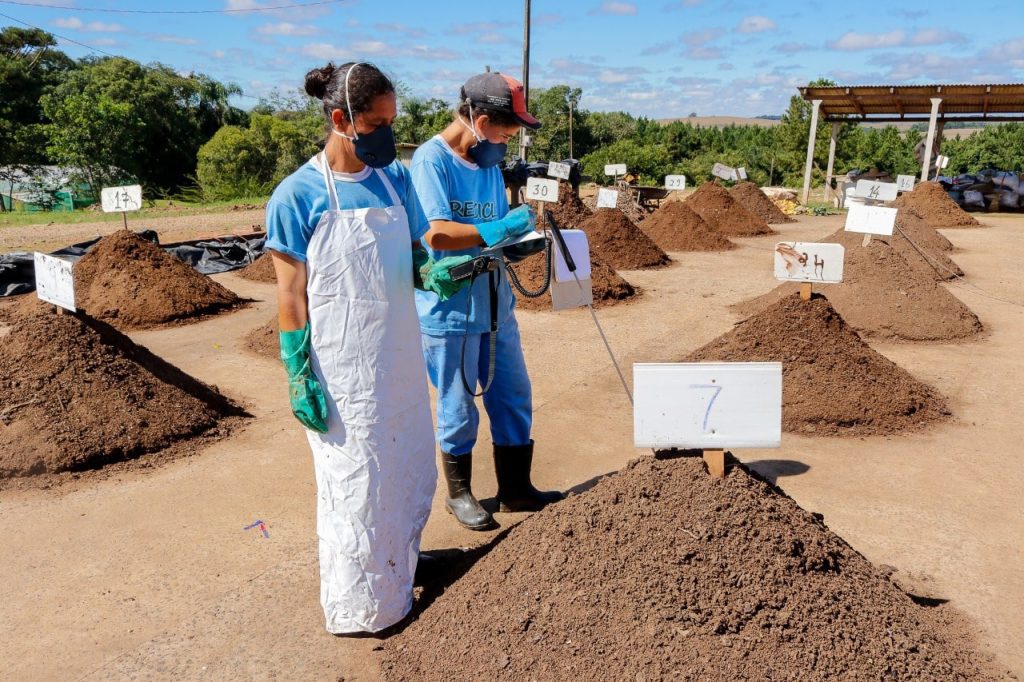
The first project that Pólis embarked upon was a study  of novel models of composting in cities: integrating recycling, agriculture and housing. These systems represent what a just transition would look in the waste sector, integrating waste pickers, farmers and citizens. In this case studies, not only was organic waste diverted from landfills, but the projects also led to cost-savings and fair jobs with higher wages. 

The study observed two waste pickers cooperatives: VerdeCoop (Entre Rios City) composts 180 tonnes per month with only 12% contamination in separate collection, despite the lack of support from local governments. CooperCicla works with 21 municipalities, composting 250 tonnes per month. 

The study shows that composting with waste pickers generates around 19 jobs (10 to 28) per 10,000 treated tonnes, more than private composting  (10 jobs) and around 11 times more than landfills and incinerators. These two waste picker-run systems were also found to be cheaper than linear solutions like landfilling and incineration, and the most viable option to end dumps in Brazil.

Other cities have developed composting systems with local and urban farmers, such as Põe no Balde project (Marabá city) and Santiago City. The latter developed a local currency to exchange organic waste for food in farmer-run local street markets. The study served as the main reference for the national government to launch a 1.5 million dollar fund to subsidize other municipalities to replicate this novel system.

Source: Santiago Prefecture

Instituto Polis’s work building capacity for organics management in accordance with environmental justice principles has remarkable momentum. The unrivaled success of existing organics management projects demonstrates that with further resources and governmental support, the country can achieve a just transition for methane action in the waste sector, with waste pickers and front-line communities leading the charge.