Asia Pacific

By Paula de Castro

The youth are a crucial force in Zero Waste implementation in the Asia Pacific region. And to highlight just how important their roles are, three youth-centered initiatives were given the spotlight during the recent International Zero Waste Cities Conference held in Indonesia: Mother Earth Foundation’s Zero Waste Youth Pilipinas, Consumers Association of Penang’s youth-focused education activities, and Trivandrum, Kerala’s Green Army.

Zero Waste Youth Pilipinas: Signature Campaigns and More

In the Philippines, the youth have been actively promoting Zero Waste, and in fact were instrumental in the declaration of the Zero Waste Month. In the Zero Waste Youth Festival held by Mother Earth Foundation (MEF) in October 2012 attended by more than 200 youth, a statement encouraging then President Benigno Simeon Aquino to declare a Zero Waste Month was initiated. In just a little more than a year, President Aquino issued Presidential Proclamation No. 760 designating every January as Zero Waste Month.

Consequently, on the first celebration of the Zero Waste Month, a Zero Waste Youth Caravan was organized in various schools across the country to educate high school students on waste issues. In that very first caravan, a signature campaign calling for the strict implementation of the Philippine law, Ecological Solid Waste Management Act of 2000, was launched. The campaign gathered more than 50,000 signatures.

Through the youth camps, the young participants create a strong network, and they get to understand better the environmental issues that the world is facing, and how important their role is. Photo courtesy of MEF.

Aside from conducting signature campaigns, members of the Zero Waste Youth Pilipinas also implement environmental programs, hold Zero Waste Youth Camp and conduct information campaigns, such as:

  • Bring Your Own Baunan (BYOB), and Oh my Glass (OMG!), where students are asked to bring their own reusable containers and tumblers for their break times;
  • Shoot that Kalat, wherein there are huge bins in the school grounds where students just shoot the PET bottles that they have used;
  • Monitoring of segregation to record the compliance rate of the students in segregation, and how much waste they produce per grade level.

According to Froilan Grate, president of MEF and Regional Coordinator of GAIA Asia Pacific, it is crucial that the youth are involved in Zero Waste. “Giving responsibility to the youth empowers them to help and contribute in solving the waste problem. It allows them to fully understand that what they are doing is vital to the city’s Zero Waste goal,” he said.

The Youth of Penang: Starting Them Young

The Youth of Penang: Starting Them Young

In Penang, Malaysia, the youth, even those as young as children in kindergarten, are not confined to merely learning their ABCs and 123s, thanks to the Consumers Association of Penang (CAP).

According to Theeban Gunasekaran, Education Officer of CAP, it’s never too early to teach children about topics such as health and nutrition, farming, caring for nature, and even lifestyle diseases.

“The youth are vibrant. Hence, they are the right target group to rouse to live a Zero Waste lifestyle and convey Zero Waste messages. Empowering the youth is crucial to making the world toxic-free and safe for all,” he said, emphasizing that the best way to reach out to the youth is through schools and higher learning institutions.

Educating school-age children is a key strategy of the Consumers Association of Penang {CAP) in advocating for Zero Waste lifestyle. In this photo, Suseela Nagappan, CAP Education Officer, teaches children about food web. As the lesson progresses, the children are taught about caring for the environment and mindful consumption. Photo by Theeban Gunasekaran, also of CAP.

“CAP has developed a close contact with the youth. Not a week goes in CAP without meeting a group of students,” he added.

In their lectures on health and nutrition, CAP shares vital information such as the amount of sugar in various types of drinks, the negative effects of smoking, e-cigarette and processed food, and diseases caused by unhealthy eating and living. They also promote traditional practices such as using herbs which further leads to teaching children on how to grow their own herbs.

“Last year, we had a group of students making door-to-door visit to houses in certain parts of Penang distributing herbs and explaining their health benefits. Direct involvement of youth ensures effective participation and significant changes in the society,” said Theeban.

To ease the task of reaching out to the youth, CAP formed Consumers Clubs in schools in Malaysia. Through the clubs, CAP gathers teachers to discuss with them various consumer issues. This ensures commitment among teachers to impart consumer messages to their students and constant communication among teachers and CAP.

With the teachers’ involvement, several schools have banned the sale of processed food in school canteens and reintroduced traditional food that are not only healthy but also come with less or no packaging.

CAP also conducts fora and learning sessions on plastic packaging, how wasteful it is and how much plastic we are being burdened with as a result of over-packaged foods. There are also sessions on urban farming, composting techniques using kitchen, garden and fish waste, and making soil enhancers using spoiled fruits.

To ease the seriousness of the topics, CAP Education Officers make their teaching sessions creative and hands-on, thus capturing the enthusiasm and unleashing the imagination of the young students.

Green Army: Youth for Green Protocol

Green Army is a movement led by youth to educate children on Zero Waste and to make a toxic free future. It is a platform where individuals and groups with similar vision work together with students to educate them about segregated waste management, organic farming, and other sustainable living practices in an urban environment.

Many NGOs, volunteering organizations, students, working professionals, and retired officials form the mentors of Green Army. Members from organisations like Thanal, Sahridhaya, Make a Difference (MAD), Care Others Too (CO2), Prakruthi, Kerala Shasthra Sahithya Parishad, Save A Rupee Spread A Smile (SARSAS), Green Village, Indus Cycling Embassy, Recycle Bin (a group of Architects) and others volunteer as Green Army mentors.

The Green Army is a great example of how collaboration among various stakeholders including the youth can make a great program like the Green Protocol fly. Photo courtesy of Green Army.

There are more than 100 active Green Army volunteers in the city. Around 30 schools have been given basic orientation on segregated waste management, organic farming, green protocol, and disposable plastics. Many of them have started campaigning with residential communities neighboring their school. Green Army members from these schools came forward to implement Green Protocol and Plastic Arrest during major public events and celebrations such as Onam 2017, a weeklong celebration at Trivandrum (the annual harvest festival of Kerala), District Interschool arts and cultural festival, and several school celebrations.

By Sherma E. Benosa

As the world scrambles to solve the plastic waste crisis, two Asian cities stand tall for having made huge strides not only in waste management but also in waste reduction.

Trivandrum City in Kerala, India, and the City of San Fernando in Pampanga, Philippines, are hailed as Zero Waste model communities with their successful implementation of Zero Waste programs: compliance rate is high, so is their diversion rate from landfill.

But not too long ago, these cities were on the brink of a waste crisis. Landfills and dumpsites were filling up in their communities. Trash littered streets and clogged waterways. The problem was so huge that incineration was even considered as an option.

But instead of taking a disastrous step toward building waste incineration facilities, leaders of these model cities turned to more sustainable solutions. They partnered with non-government organizations (NGOs) which guided them in implementing Zero Waste programs.

Today, these cities are proof that indeed, Zero Waste is not only possible; it is the way.

Changing the People’s Mindset

With systems and policies already in place, implementing Zero Waste in both cities now seem less challenging. But leaders of these cities say that the road to get to that point was an uphill climb.

“We met numerous challenges, especially at the start,” shared Dr. K. Vasuki, Director of the Suchitwa Mission, an organization of the Government of Kerala responsible for evolving implementation strategy and providing technical inputs for sanitation and waste management projects.

“When I was new in the mission, there was no clear [waste management] strategy. There were few learning models but no clear strategy. The idea at the time was to move toward incineration. People did not have faith in the government. For the first six months, we did not even have a complete idea on how to go about it,” she said.

Dr. K. Vasuki of the Suchitwa Mission, Kerala, India. Photo by Theeban Gunasekaran of Consumers Association of Penang.

To understand the problem, they partnered with Thanal, a public interest research, advocacy, and education organization based in Trivandrum with focus on environmental health and justice.

“We felt it was crucial to showcase models to demonstrate that Zero Waste works. But the mission only has an advisory role. We do not implement projects,” Dr. Vasuki shared. “We invited people to implement, but there were no takers to the idea. There was no place to demonstrate.”

According to Dr. Vasuki, it was a big challenge to convince people that doing away without disposables is doable. “People were resistant and critical about it. They thought it was impossible, impractical, and just not doable. So, we had to demonstrate that it was possible,” she said.

They partnered with the organizers of the 2015 National Games to implement a program they called Green Protocol. The aim was to reduce waste generation by, among others, banning the use of disposables in all sporting venues. They encouraged the use of reusable tableware and tumblers. With the help of 700 volunteers, the initiative prevented the generation of 120 metric tonnes of disposable waste.

With the successful implementation of Green Protocol at the event, people started believing that perhaps doing away with disposables was possible, but they were still not convinced it could be replicated.

This, according to Vasuki, challenged them to up their game. They built more models and strengthened their education campaign. They invited various segments of the society to take part in the initiative.

“We left no stones unturned. We approached every possible segment of the society—the schools, the church, the businesses… We convinced people that waste is everybody’s responsibility. We started the campaign, “My Waste, My Responsibility.”

Under the campaign, households were to manage their organic waste. “In Kerala, our biodegradable waste is 40 to 60 percent; because it is now managed at home, we are not at all concerned with this waste stream. Biodegradable waste is not a threat; it is a resource and is easy to compost at home. If we manage biodegradable waste, we have addressed a big part of the problem,” she shared.

Today, the Green Protocol has become embedded in the people’s lifestyle, penetrating a great traction of the society.

Strict Law Enforcement

The Philippines, meanwhile, has a national law called the Ecological Solid Waste Management Act which decentralizes waste management down to the smallest unit of government: the barangay (village). The law requires at-source waste segregation, daily door-to-door segregated waste collection, and building of materials recovery facilities (MRF) for composting of organics and temporary storage of other waste.

While the national law is good on paper, many cities, including San Fernando back then, have a hard time complying with the law.

“There was resistance among heads of the barangays in implementing the law,” shared Benedict Jasper Lagman, City Councilor of San Fernando. “They feared that if they would strictly implement it, they would turn away the voters.”

But Mother Earth Foundation (MEF), a Philippine-based NGO helping local government units in implementing Zero Waste, was able to successfully convince then-mayor Oscar Rodriguez that Zero Waste was the way to go.

“So we implemented it,” Lagman said, adding that they were met with resistance when they started requiring households to segregate their waste.

Benedict Jasper Lagman, Councilor, City of San Fernando, Pampanga, Philippines. Photo by Eidyl Khate Nolasco of Potrero United Youth Organization.

Assisted by MEF and armed with MEF’s 10 Steps to Implementing Zero Waste Program in the Community, the city persevered. They conducted baselining, multi-stakeholder consultation, intensive house-to-house information and education campaigns, dry-run and eventually full implementation of daily door-to-door segregated waste collection. The city also gave grants to barangays to construct MRFs, and provided every barangay four tri-bikes to be used for waste collection.

Soon, the people not only became used to segregating their waste but also started embracing the program, having seen its benefits: reduced waste, resulting in huge savings from hauling and transport and tipping fees and jobs generated for waste workers.

“Instead of losing votes, elected officials who promoted the program actually had more votes the next election,” Lagman said. Among them was Lagman himself. Then a neophyte politician, Lagman was at the bottom of the winning councilors on his first term. When he sought re-election, he was at the top.

Following the successful implementation of their waste management program in San Fernando, Lagman authored an ordinance banning the production, distribution and use of single-use plastic bags in the city, a measure that pitted him against local businesses who thought that the ordinance would be detrimental to their business.

“Nine thousand businesses including multinationals were to be affected by the ordinance, so we engaged with them,” Lagman said.

Eventually, a compromise was arrived at. “We agreed to stagger the implementation. We did baby steps. We educated people on radio and TV. We started with Plastic-free Friday. Then, for the first three months, we banned the use of polystyrene as packaging of food product. Finally, in 2015, we totally banned the use of plastic bags. Now, 85% of the citizen are obeying the rules,” he said.

Like Dr. Vasuki, Lagman underscored the importance of political will and collaboration in implementing a crucial program like Zero Waste.

“There is no perfect law, but through the strong partnership of the government, NGOs, and the private sectors and the strong participation of the community, we were able to balance the economic progress and environmental sustainability for the benefit of the generations to come,” he said. “When the people see the importance of the program, they follow,” he added.

Dr. Vasuki agreed. “Changing people’s behavior is a slow process. We have to accept that. We have to be persistent. But what I learned is that, when we showcase models and make people understand the benefits of the program, they support it. People do change,” she said.

Sherma E. Benosa is the Communications Officer of GAIA Asia Pacific.

This article appears on the first issue of Waste Not Asia, the official publication of GAIA Asia Pacific. 
(Waste Not Asia, Vol. 1, Issue 1, January to March 2018. pp. 11-14).

By Sherma E. Benosa

Hundreds of Dumaguete youth added their voice to the ongoing youth-initiated petition urging the countries’ lawmakers to pass a national ban on single-use plastics.

The call came during the 5th Zero Waste Youth Convergence held early this year at the Foundation University with nearly a thousand students from the local schools in attendance.

Started in 2017, the petition has thus far gathered nearly 40,000 signatures from students across the country.

“Plastic waste not only pollute the environment; they also pose health risks to humans and kill marine lives. Current estimates indicate that unless we act and change now, there would be more plastic than fish in our seas and oceans by 2050,” part of the petition reads.

The Dumaguete students likewise urged their local executives to implement the city’s regulation on plastic use. Passed in 2012, the ordinance was authored by Councilor Alan Gel Cordova, Vice Mayor Franklin Esmeña, Jr. and Councilor Manuel Arbon. However, enforcement is wanting.

“We are concerned with the growing amounts of plastic bags in our waste, filling up our dumpsites, clogging our canals, littering our beaches, and polluting the ocean. Plastic bags take hundreds of years to breakdown,” the students said in their petition.

In 2011, Senator Loren Legarda filed Senate Bill No. 2759 calling for the prohibition of the use of plastic bags in groceries, restaurants and other establishments and provision of corresponding penalties for violations thereof. The bill is still pending.

At present, hundreds of cities and municipalities have plastic bag ban or regulation, but enforcement is lax. A nationwide ban is seen to strengthen implementation.

Youth Taking Action

As they called for action from the local and national government, the youth have been busy doing their share in making Dumaguete a Zero Waste city.

Twelve-year-old Miguel Teves founded the Plastic Free Duma, an advocacy to stop using plastic. The group conducts beach cleanup on the shores of Dumaguete every Saturday. “We were on a vacation in Panglao Island (Bohol). Then I recognized the plastic. I decided to do something about it [if we do nothing] when we get older (the beaches) would be full of trash already. So I decided to put a stop to it,” he said.

The Plastic Free Duma started with Teves and his friends. Today, more people, young and old, have been involving themselves in the initiative.

Natalie Angeles and her friend Micah, meanwhile, launched the Keep It Topless initiative, a digital campaign that encourages people to not use the plastic lid of their cups when they go for drinks.

“It is a campaign to encourage people to not use plastic lid in their coffee cups. It’s one small step to encourage people to live a plastic-free lifestyle,” Angeles said.

A group of students from Silliman University have also been doing their part to make the city plastic free. They have been campaigning to food establishments to ditch the straws. Through their initiative, some establishments in the city have gone straw-free, including the Silliman University Cafeteria.

“These steps may be small things, but if all of us do our part, we will become part of the solution,” said Teves.

Sherma E. Benosa is the communications officer of GAIA Asia Pacific.

Quezon City, 18 April 2018 — NGO coalition No Burn Pilipinas today questioned the legality of the newly signed “waste-to-energy” (WTE) facility deal in Puerto Princesa, Palawan, as they warned cities and municipalities not to be duped by possible WTE scams. The group, which finds the 2.1 billion peso WTE deal in Puerto Princesa dubious, called on the Department of Energy (DOE) and Puerto Princesa City to immediately cancel the contract.

The groups were reacting to the recent report on the contract signing between the DOE, Puerto Princesa City and Austworks Corp., the facility provider for the construction of a so-called “waste-to-energy” plant. Under the deal, Austworks will build a purported “thermal gasification” WTE incinerator in the city’s Sta. Lourdes Sanitary Landfill, as well as well as provide garbage collection services. The WTE plant will supposedly generate 5.5 megawatts of electricity from the city’s 110 metric tons per day of waste.

The coalition No Burn Pilipinas contends that 1) the deal is illegal since waste incineration is banned under Philippine law; 2) the energyif anyproduced by the facility will be miniscule, and claims that the facility will pay for itself from the energy generated is false; and 3) there are no commercially operating thermal gasification WTE incinerators anywhere in the world. Moreover, the company involved, Austworks Corp. has no known record for building similar facilities anywhere in the world.

(L-R): Lea Guerrero, Energy and Climate Campaigner, GAIA Asia Pacific; Kat Leuch, Environmental Legal Assistance Center; Ruel Cabile, WTE Campaigner, EcoWaste Coalition; Sonia Mendoza, Chairman, Mother Earth Foundation; and Glenn Ymata, Philippine Movement for Climate Justice

“The planned ‘waste-to-energy’ incinerator in Puerto Princesa is patently illegal under Philippine law,” said Ruel Cabili, WTE campaigner of EcoWaste Coalition. “It is a clear violation of the ban on incineration enshrined in the Clean Air Act. It also contravenes the Ecological Solid Waste Management Act which the government should be strengthening. Pursuing “waste-to-energy” incineration undermines segregation, recycling and reduction effortsthe very approaches which the government should be supporting.”

For its part, the Palawan chapter of the Environmental Legal Assitance Center (ELAC), noted that Puerto Princesa’s current sanitary landfill was intended to evolve into a Zero Waste management program, as provided in the Environmental Compliance Certificate (ECC) issued to the city government. “The pursuit of WTE would result to a violation of the ECC,” said ELAC Palawan representative Kat Leuch. “We hope that the Puerto Princesa City government can still reconsider its planned incineration project and prioritize Zero Waste management in its development masterplan. Being a hall of fame awardee in the ‘Clean and Green Program’ of the Philippine government, we expect the city government to sustain its environmental protection efforts,” she added.

No Burn Pilipinas partners are also questioning the DOE’s promotion of WTE incineration. “Waste incineration is the most expensive and inefficient way to produce electricity, with construction costing twice that of coal-fired power plants and 60% more than nuclear plants, and operations costing ten times more than coal, and four times more than nuclear,” Glenn Ymata of Philippine Movement for Climate Justice. “WTE incineration is bad for the climate and is not renewable energy; it takes investments away from real energy solutions such as wind and solar.”

Aside from the deal’s illegality, No Burn Pilipinas is doubtful that the facility will actually operate successfully even if it is constructed. “Gasification plants are some of the most complex and expensive incinerators, and are not recommended as suitable waste treatment facilities in developing countries. In fact, no commercial-scale gasification plant meant for the treatment of municipal solid waste exists anywhere in the world,” said Lea Guerrero, clean energy campaigner of Global Alliance for Incinerator Alternatives. “Gasification’s history of technical challenges and failures has led to shut downs in operation which have left some cities and taxpayers in debt, paying for prohibitively expensive facilities that never worked.”

Environmental groups say that cities and municipalities should be extremely wary of incinerator companies selling billion peso “quick fix” incinerators. The case of Palawan is not the first WTE deal that seems too good to be true. In 2011, Angeles City was also lured into investing in a USD 63 million WTE facility that never materialized.

In 2006, the City of San Fernando in Pampanga entered into a contract for a gasification facility that was started but never completed. However, shortly after the failure of the gasification plant, the City of San Fernando, chose to instead pursue Zero Wasteand succeeded. In partnership with Mother Earth Foundation, the city was able to drastically reduce the volume of municipal waste in just six months. In the past, the city brought almost 90% of its waste to landfills. In the last four years with a Zero Waste program which includes segregation at source and composting of organics, this figure was reduced to 30%, resulting to huge savings for the city.

“Zero Waste is still the best approach for the sustainable management of discards,” said Sonia Mendoza of Mother Earth Foundation. “Waste is a complex problem that can’t be solved by a machine that burns trash and merely converts solid waste to toxic air pollution. The government should support Zero Waste approaches instead of partnering with incinerator companies that sell false solutions to cities and municipalities.

For more information:

Ruel Cabile, WTE campaigner, EcoWaste Coalition, ruel.cabile@ecowastecoalition.org, +63 915 7763314

Lea Guerrero, climate and clean energy campaigner, Global Alliance for Incinerator Alternatives (GAIA) – Asia Pacific, lea@no-burn.org, +63 908 8851140

BANDUNG, Indonesia (March 8, 2018) — Companies producing and earning from their problematic products should take on the responsibility for the global plastic pollution.

“It’s unfair for companies, who earn billions of dollars annually, to pass the burden and responsibility of managing the waste that their products create when cities and communities with limited resources are burdened by it,” stressed Froilan Grate, regional coordinator of the Global Alliance for Incinerator Alternatives (GAIA) Asia Pacific during the opening of the International Zero Waste Cities Conference held in Bandung, Indonesia, March 5-7.

“Cities are already struggling to fund waste collection systems, and they are still left to address waste that communities can neither compost nor recycle,” he added.

In his presentation, Grate shared the results of waste and brand audits conducted in Philippine cities and communities in 2017 showing that multinationals—Nestle, Procter and Gamble, Colgate-Palmolive, Unilever, Coca Cola—are among the top 10 plastic polluters in the country.

This finding is consistent to the waste and brand audit conducted in 2017 by Philippines-based member organizations of the #breakfreefromplastic movement along the stretch of Freedom Island which showed the same companies in the top 10.

“The net income in 2016 of the top six multinational corporations polluting the Philippines is $27 billion. As they rake in money for these problematic products, they are also making cities spend scarce resources to collect and manage
this waste,” he said, citing the example of 17 Metro Manila cities spending $87 million in 2012, an amount he said is better used to provide basic social services to the poor.

Grate likewise challenged the representative of the Indonesian brand, Danone, who was on stage as Grate made his presentation, to do more to get their company off the list of top 10 local brands that are polluting Indonesia.”While recycling should be pursued and recognized, we can never recycle our way out of the plastic problem. Companies must reduce the amount of plastic that they use and eliminate problematic products and packaging,” he stressed.

Froilan Grate, Regional Coordinator, GAIA Asia Pacific. Photo by Khate Nolasco

He also called on the government officials present to help them in demanding responsibility from these companies. “We hope cities would step up and be our partners in calling on these companies to take  responsibility for the products that they sell and the waste they create. They cannot pass the work of managing waste that you can neither compost nor recycle. So please join us as we call everyone to break free from plastic because that will all help us go for Zero Waste,” he said.

The International Zero Waste Cities Conference aims to be a learning, sharing, and collaborating venue to enable cities to pursue and accelerate the global transition to Zero Waste.

Organized by the Alliansi Zero Waste Indonesia and GAIA Asia Pacific, the conference was hosted by the cities of Cimahi, Soreang, and Bandung. It served as a venue for city and community leaders from Zero Waste cities  and municipalities in Indonesia, India, the Philippines, Malaysia, USA, and Europe to showcase how their communities divert waste from going to landfills through at-source waste segregation, composting, and anaerobic digestion.

FOR MORE DETAILS, CONTACTSherma E. Benosa, Communications Officer
GAIA Asia Pacific
sherma@no-burn.org | +63 9178157570

NOTES:
1.    In Indonesia, brand audits were conducted in three cities currently implementing Zero Waste programs, namely Bandung City, Cimahi City, and Bandung Regency. From the audit, a total of 8,101 plastic waste items were collected. These plastic items are considered as residual or other waste. The samples were taken from an eight-day waste assessment and characterization study (WACS). In the Philippines, brand audits were conducted in the cities of Malabon, Quezon City, and Tacloban. The audits, which were done in 2017, were part of the WACS carried out as preparatory activities to the Zero Waste Programs implemented in the said cities.
2.    Results of the waste and brand audit conducted by the PH-based members orgs of the  BFFP movement can be accessed here: https://www.breakfreefromplastic.org/2017/12/17/green-groups-reveal-top-plastic-polluters-following-massive-beach-cleanup-on-freedom-island/

Over 1,000 Dumaguete youth are expected to gather at Foundation University in Dumaguete, Negros Oriental today to learn from and share ideas and experiences with youth leaders from Zero Waste model communities across the country during the 5th Zero Waste Youth Convergence.

Held as part of the Zero Waste Month celebration, this year’s convergence, hosted by War on Waste Negros Oriental (WoW NOr) and Foundation University, highlights successful Zero Waste programs in some communities in the country, and the role that the youth play in these programs.

In Dumaguete, the youth are among those actively campaigning for waste reduction and management. Silliman students recently launched a campaign called STRAW WARS which calls for resort and cafeteria owners to do away with straws. Another initiative is the Plastic-Free Dumaguete, a beach cleanup held every Saturday. Supported by Wow NOr and other groups, this initiative was started by a twelve-year-old: Miguel Teves, a 6th grader at Southdale Integrated School.

“Solving Dumaguete’s waste crisis requires changing human behavior and one of the ways to do it is through the youth. It is an enlightened youth that can move their elders to change, sustain Zero Waste, and make it integral to the culture for generations to come,” said Merci Ferrer, co-founder of WoW NOr.

Filipino youth have been actively campaigning for ecological solid waste management. During the first-ever Zero Waste Youth Festival in 2012, participants which composed mostly of youth, passed a Zero Waste youth declaration which, among other demands, called for the declaration of a national Zero Waste Month. Two years later, then President Benigno Simeon Aquino III signed Proclamation No. 760 to commemorate Zero Waste Month every January. These celebrations have led to various activities highlighting zero waste practices through school caravans, conferences, and youth camps.

In 2017, young leaders spearheaded a petition urging lawmakers to pass a national law banning single-use plastic bags. The petition, which was started during the 4th Zero Waste Youth Convergence, has since gathered almost 40,000 signatures.

Since a bill on national plastic bag ban is still pending in the Senate, the signature campaign in support of the bill will be part of this year’s Zero Waste Youth Convergence.

Jann Manalese, president of the Zero waste Youth Pilipinas, is one of the young people who will speak at the Zero Waste Youth Convergence.

“Giving responsibility to the youth empowers them to help and contribute in solving the waste problem,” said Froilan Grate, president of Mother Earth Foundation (MEF) and regional coordinator of the Global Alliance for Incinerator Alternatives (GAIA) for Asia Pacific. “It allows them to fully understand that what they are doing is vital to the city’s Zero Waste goal.”

The Zero Waste Youth Convergence is one of the activities lined up for the Zero Waste Month celebration. GAIA Asia Pacific and MEF will gather city and barangay leaders on January 17-18 for the Zero Waste Cities Meeting; EcoWaste Coalition will hold a Zero Waste Forum on January 26 in Quezon City; and MEF will recognize unsung Zero Waste heroes in its annual Waste Workers Appreciation Day on January 28.

On top of these activities, GAIA Asia Pacific has an ongoing social media competition, the #WaysToZeroWaste2018 photo contest which encourages Zero Waste practitioners and even those who are just starting their journey to Zero Waste to share how they practice Zero Waste through photography and inspire others to do the same. The competition runs until January 31 and is open to everyone in the Asia Pacific region. Weekly finalists will receive Zero Waste kits. The major prize is a free travel to Bandung, Indonesia and a pass to the International Zero Waste Cities Conference on March 5-9, 2018.

For more information, please contact:
Sherma E. Benosa, Communications Officer, GAIA Asia Pacific’; +(63) 0917-8157570; sherma@no-burn.org

Top corporate plastic polluters told: “Own up, pay up, clean up your act!”

MANILA, Philippines (October 30, 2017) – Green groups belonging to the #breakfreefromplastic movement today went trick-or-treating at the headquarters of top corporations responsible for plastic pollution in Freedom Island on Manila Bay.  Instead of asking for treats, the groups, accompanied by “plastic sachet monsters,” delivered letters to the companies to demand accountability for the plastic pollution crisis.

“These sachet monsters represent a nightmare for recycling and the environment. The corporations responsible for the proliferation of these single-use, zero-value, and non-recyclable plastics need to own up to the massive pollution associated with their brands and products. They must clean up their act and start investing in alternative packaging materials and delivery systems that are ecologically sustainable for the people and the planet,” said Von Hernandez, Global Coordinator of the #breakfreefromplastic movement.

Last month, #breakfreefromplastic member organizations in the Philippines, which include the Global Alliance for Incinerator Alternatives (GAIA), Health Care Without Harm (HCWH), Mother Earth Foundation Philippines (MEF), Ecowaste Coalition, and Greenpeace Philippines, conducted an unprecedented  eight-day coastal cleanup,  waste and brand audit on Freedom Island,  a critical habitat for migratory birds off Manila Bay.

The audit identified the top brands found to be polluting the island.  Multinational corporations like Nestle (1), Unilever (2), and Procter and Gamble (4) ranked high in the brand audit while Indonesian company PT Torabika (3) also figured prominently in the ranking. The group also sent letters to other companies who are in the top 10, namely: Universal Robina Corporation (5), Nutri Asia (6), Monde Nissin (7), Zesto (8), Colgate-Palmolive (9) and Liwayway (10).

TRICK-OR-TREAT or NIGHTMARE OF PLASTIC POLLUTION. Halloween sachet monsters haunt the headquarters of top corporate plastic polluters to demand accountability for the proliferation of polluting sachets in beaches, oceans and waterways. Photo by Lian Hernandez

“Instead of finding genuine and real solutions to the global plastic pollution crisis, these corporations have managed to pass the burden of cleaning after their problematic packaging onto governments and consumers. It is high time that these companies, who have profited at our expense, assume responsibility for creating this mess,” stressed Greenpeace campaigner Abigail Aguilar.

The groups also asked the companies to respond to three critical issues: a) stopping the production, distribution and use of single-use and zero value plastic packaging for their products and investing in alternative reuse and delivery systems; b) saying no to incineration, burning in cement kilns or waste-to-energy processes to deal with the problem; and c) supporting Zero Waste programs and solutions.

For her part, Sonia Mendoza, Chair of Mother Earth Foundation Philippines, stated that the problem of waste can be eradicated by mainstreaming Zero Waste – an ecological resource management and reduction model that involves waste segregation at source, product redesign, and systematic waste collection and management.

In compliance with R.A. 9003 or the Ecological Solid Waste Management Act of 2000, Mother Earth Foundation Philippines (MEF) has been working with key cities and municipalities in the Philippines to implement Zero Waste programs. “In developing countries like the Philippines, our work with communities has demonstrated that Zero Waste is a practical and viable solution to our waste problem. It is an ecological and sustainable solution to the waste problem in areas where waste incinerators—or burning of waste—are being peddled as the solution,” Mendoza said.

For Ecowaste Coalition, a crucial factor in solving the plastic waste crisis is the enactment of a national policy that would eliminate the use of single-use plastics. “We must address the problem at source. Although ordinances banning the use of plastic bags are being implemented in certain cities and towns in the Philippines, we have yet to enact a nationwide ban on single-use plastics. Our government should muster the political will to ban single-use plastics and disposable once and for all,” said Aileen Lucero, National Coordinator of the Ecowaste Coalition.

Bills seeking to ban plastic bags nationwide are currently pending in both Houses of Congress.

Plastic monsters visit the headquarters of top corporate plastic polluters for a ‘trick or treat.’ Photo by Sherma Benosa

Note:

Detailed results of the audit can be accessed at www.plasticpolluters.org

17 October 2017, Quezon City.  The government must scrap moves to repeal the waste incineration ban and stop promoting so-called “waste-to-energy” (WtE) incineration facilities.  This was the call made by more than 50 civil society groups in a press conference today in Quezon City.

The groups, under a banner alliance called No Burn Pilipinas, condemned House Bill 2286, which seeks to repeal the waste incineration ban enshrined in Republic Act 8749, the Clean Air Act, and amend the country’s landmark Republic Act 9003, the Ecological Solid Waste Management Act, in order to allow incineration in the country.  The groups also said that the Department of Environment and Natural Resources’ (DENR) promotion of WtE is not only regressive but also runs counter to their mandate to ensure a healthy environment for Filipinos.

“Repealing the incineration ban is bad news for the environment, public health and local communities,” said Von Hernandez, Global Coordinator of the Break Free from Plastic movement.  “It represents a regressive move on the part of Congress, at a time when the planet is in dire need of genuine solutions to the climate and waste crisis.  Worse, it presents a triple whammy for Filipinos as so-called WtE plants translate to higher electricity costs, higher waste disposal fees, and higher risks of cancer for host communities.”

Hernandez also decried that no less than the DENR is paving the way for the resurgence of waste incineration proposals in the country, which the DENR currently promotes as “waste-to-energy,” pyrolysis or gasification plants.  “It is scandalous that the government agency mandated to implement our environmental laws is the same one working hard to undermine the spirit and intent of such laws,” he said.

Burning waste has many negative health, environmental, social, and economic consequences.  Incinerators threaten human health, pollute our air, harm our economies, contribute significantly to global warming, and fuel an unsustainable system of consumption and wasting.

No Burn Pilipinas slams moves to repeal incineration ban and promote WTE. Photo by Jed Alegado

“The push to revoke the incineration ban will undermine source segregation, recycling and other Zero Waste strategies that conserve resources, avoid toxic pollution and generate livelihoods and jobs.  Instead of overturning the prohibition on waste burning, Congress should, in fact, strengthen it by passing waste prevention and reduction measures complementing RA 9003 such as banning single-use plastic bags, disallowing recyclable and compostable materials in disposal facilities, curbing e-waste, and incentivizing innovations in waste management sector,” said Aileen Lucero, National Coordinator of EcoWaste Coalition.

Experiences around the world have also shown that WtE through incineration is the most expensive and most energy-intensive way to manage waste and generate electricity.  Incinerators are capital intensive and are more expensive than coal and nuclear facilities.According to the US Energy Information Administration, the projected capital cost of new waste incinerator facilities is twice the cost of coal-fired power plants and 60% more than the cost of nuclear energy facilities.  Waste incinerator operations and maintenance costs are 10 times the cost for coal plants and four times the cost of nuclear plants.

Lea Guerrero, Climate and Clean Energy Campaigner of the Global Alliance for Incinerator Alternatives (GAIA) said: “Incinerators are a costly folly.  Should these facilities be built in the Philippines the budget will be in the tens of billions of pesos.  There will also be massive increases in tipping fees by local government units (LGUs) who are already stretched for funds.  Clearly, it’s a bad investment given that it’s also the wrong way to manage waste.”

“A better alternative remains the strict implementation of the law,” said Sonia Mendoza, Chairman of Mother Earth Foundation (MEF).  “Implementing Zero Waste solutions is inexpensive and can be started immediately.  If properly implemented, results can be seen in a few months as in the case of the City of San Fernando in Pampanga.  We are calling on other LGUs to reject all incineration and WtE proposals, and instead pursue the Zero Waste approach, starting with the strict implementation of RA 9003.”

Reference
US Energy Information Administration (Department of Energy), Updated Capital Cost Estimates for Electricity Generation Plants, November 2010
http://www.eia.gov/oiaf/beck_plantcosts/pdf/updatedplantcosts.pdf

Malta, (5 October 2017) – At this year’s Our Ocean Conference, an annual gathering held since 2014 to press world leaders to address marine plastic pollution, non-government organizations working with 16 cities across Asia pledged to prevent hundreds of tons of waste from entering the environment through Zero Waste programs.

Nine organizations from Indonesia, Malaysia, the Philippines, and India belonging to the Global Alliance for Incinerator Alternatives (GAIA) committed to implement a Zero Waste strategy that would prevent more than 868,000 tons of waste annually—including more than 173,000 tons of plastic waste—from being released into the environment.

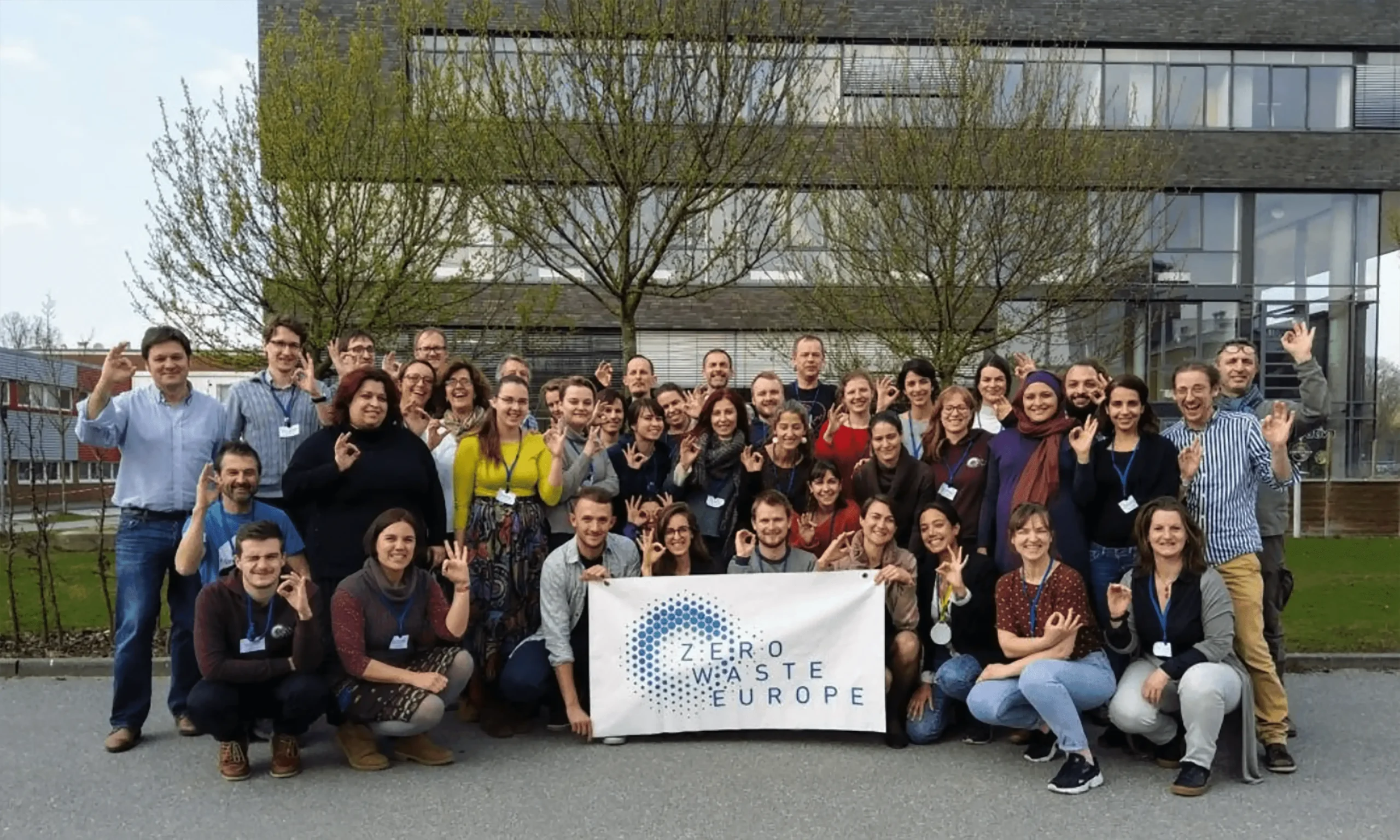
Joan Marc Simon, Executive Director of Zero Waste Europe, GAIA’s European branch, made the commitment at the high-level meeting attended by heads of states and environmental activists from all over the world.

Joan Marc Simon, Executive Director of Zero Waste Europe, presents the commitments during the Our Ocean Conference in Malta.

Part of the commitment read:

Zero Waste Europe, in collaboration with the Global Alliance for Incinerator Alternatives in the Philippines and 9 other partners in Asia, announced the allocation of EUR 300.000 to involve 16 cities in Southeast Asia to implement a Zero Waste strategy by 2020, preventing more than 868,000 tons of annual waste from entering the environment and including more than 173,000 tons of plastic waste annually from being released into the environment.

The nine organizations are working collaboratively to establish Zero Waste city projects in high-impact sites to reduce plastic and other pollution within two years.

The projects aim to localize zero waste systems in a wide variety of neighborhoods and cities, with focus on highly urban coastal areas where the potential for plastic pollution into waterways is high. The projects aim to reduce air, land, and water pollution while growing local economies and movement strength.

The solutions coming from Asia, particularly the Philippines, first came to the attention of world leaders in the 2016 Our Ocean Conference in Washington, DC.

Froilan Grate, Regional Coordinator of GAIA Asia Pacific, speaking as one of the panelists on marine pollution, shared the success stories of communities in the Philippines in implementing Zero Waste solutions that resulted in more than 80% diversion rates from landfills, produced green jobs, saved the communities millions of pesos, and changed the behavior of people toward waste.

Grate shared the experience of the City of San Fernando, Pampanga, a city just north of the country’s capital. San Fernando implemented Zero Waste strategies that involved waste reduction, job creation, waste separation at source, door-to-door collection, and investing in appropriate infrastructure and equipment that truly serves the need of the community.

“It was an honor to share zero waste models from the Philippines in the global stage. Our goal is to show that while waste is a problem in the region, communities and grassroots organizations have also successfully implemented working and viable models. Land-based solutions like zero waste systems, especially in coastal cities, are some of the fastest and most economical way to address the problem of marine plastic pollution,” said Grate.

Froilan Grate, Global Alliance for Incinerator Alternatives’ Regional Coordinator for Asia Pacific, shared Zero Waste solutions happening in the Philippines during the 2016 Our Ocean Conference in Washington, D.C.

The project partners from the four countries are Mother Earth Foundation, Ecowaste Coalition, and Health Care Without Harm Southeast Asia from the Philippines; Citizen Consumer and Civic Action Group, Thanal, and Stree Mukti Sanghatana from India; Balifokus and Yayasan Pengembangan Biosains dan Bioteknologi from Indonesia; and Consumers Association of Penang from Malaysia.

These organizations are also members of the #breakfreefromplastic, a global movement of more than 900 member organizations from across the globe envisioning a future free from plastic pollution. These organizations share the common values of environmental protection and social justice, which guide their work at the community.