Asia Pacific

Contributed by Sangeetha Pradeep, Thanal Zero-Waste team, Thrissur

On September 19, 2019, 110 youth volunteers from the nine coastal districts of Kerala formed the Plastic Task Force.  Just like friends from the larger Break Free From Plastic movement, they dream of making beach and community clean-ups a thing of the past, especially in the beautiful coastal area of Kerala – God’s own Country.  For Thanal, the youth are the best partners to drive the work on coastal pollution.  Our goal for the group is not just to keep our coasts clean but also for all the Zero Waste activities of Kerala’s districts. 

Inspiration: Litter Study in Kerala Coast

The Plastic Task Force took inspiration from the plastic litter studies that Thanal conducted along the Kerala coast in 2018 and 2019.  The study was intended to establish a benchmark for plastic litter found in the Kerala state coastline.  Collected samples from 59 locations in 10km intervals of the coastline revealed that there are 1.66 plastic pieces, weighing 10.31 grams, per square metre in Kerala’s beaches.  The plastic litter index also estimated 170 million pieces of plastic litter, approximately weighing over 1,000 tonnes.  The report was presented to Kerala Finance Minister Sri Thomas Issac on 10 June 2019.

Plastic Task Force was officially formed on 19 September 2019, composed of volunteers from women’s organizations, software companies, colleges, government offices and youth groups.  In an inauguration ceremony on Shanghumugam Beach in Trivandrum, Trivandrum Women’s college students welcomed the audience with a flash mob, carrying a message against single-use plastics. Then Honorable Mayor of Trivandrum Corporation (and now Member of the Kerala Legislative Assembly) Adv. VK Prasanth expressed his support to the Plastic Task Force, which would complement the Municipal Corporation’s efforts to make Trivandrum plastic-free.

To date, PTF has now 520 volunteers spread across six districts in Kerala: Trivandrum, Kollam, Alappuzha, Ernakulam, Thrissur, and Malappuram. 

Beach Clean-ups and More

The first and foremost aim of the Plastic Task Force is clean beaches.  So PTF started its activities with a beach cleanup.  Thanal’s Zero Waste team, with the help of PTF volunteers conducted beach clean ups in Veli beach, Trivandrum, and Kollam beach on 21 September 2019 as part of International Coastal Cleanup Day.  The PTF members along with the people residing near the beach collected the waste in that area.  We collected a total quantity of 212kg from that area.  Out of the 112 kg non-biodegradable waste, 95 kg were plastic, 13.5 kg were glass, and 3.5 kg were just diapers.

On the same day in Kollam beach, the Kollam team cleaned 2300 sqm area of the tourism spot.  A total of 21 kgs of plastics were collected.

Aside from beach cleanups, PTF volunteers also go around district communities to talk about brand audits, organize mass grassroots campaigns, and further enrich the Kerala plastic litter study.  Moreover, they compile stories and collaborate with Local Governments and Cities.  Thanal, meanwhile, will be on hand to provide guidance and training to PTF, until the youth group is comfortable holding on its own. 

Organizing PTF amid COVID-19 

PTF activities have been on a standstill during the COVID-19 pandemic.  Thanal had scheduled a series of meetings and trainings across nine districts but had to postpone them.  Volunteers will be trained to implement Green Protocol in their districts, as well as organize Zero Waste activities in communities.  To safeguard volunteers, Thanal is raising resources to provide them with accident insurance policies. 

Nonetheless, we have plans to organize PTF and recruit more volunteers in all 14 districts of Kerala, when people are allowed to publicly gather in the state. 

Thus we are moving forward with the support of our young friends.  We hope that we can bring a lot more changes in this small state of Kerala and expand this Task force activities in all states of our country.  This is actually the need of the future to protect out nature, especially our oceans…

About Thanal and Zero Waste Cities 

Trivandrum city is part of the International Zero Waste Cities Network.  During the initial stages of the Zero Waste Cities Project, focus was given to train households in segregated waste management by convening training sessions at household level.  However, as the project progressed, the city realized the need for Materials Recovery Facilities (MRFs) and Resource Recovery Centres (RRCs).  To date, the city has 54 community centres that serve as the backbone of community level waste solutions.  These solutions were developed and enriched by residents, city officials, project secretariat and elected officials, including the city Mayor.

The Zero Waste Cities project aims to build up momentum for scaling up decentralised waste management in the city.  Thanks to the city’s robust infrastructure and large scale non-biodegradable material collection drive, the Thiruvananthapuram Municipal Corporation has created a considerable amount of awareness among people to segregate.  Thanal also attributes this achievement to the presence of Green Army, which has been very active in festivals and public to promote the Green Protocol.

—————————-

This feature is made possible through the Zero Waste Cities project — an initiative coordinated by GAIA Asia Pacific and funded by the Plastic Solutions Fund (PSF). The views expressed in this feature do not necessarily reflect that of its funders.

GAIA has released a new technical analysis authored by chemical engineers Dr. Andrew Neil Rollinson and Dr. Jumoke Oladejo. The report reveals that chemical recycling is polluting, energy intensive, and has a track record of technical failures. The plastic pollution problem is getting out of control, with the plastic industry planning on drastically increasing production in the coming decades. We have no more time or money to waste on dysfunctional and potentially dangerous techno-fixes like chemical recycling. As we recover from the economic ravages of COVID-19, we must invest wisely in proven, common-sense solutions that will support public health and a safe environment. Unlike expensive and risky technologies like chemical recycling, investing in zero waste systems is a more cost-effective and efficient approach that addresses the problem at the source, creates good jobs, and builds community resilience for decades to come. 

By Claire Arkin, Communications Coordinator

As people around the world call for an end to plastic pollution, the plastic and petrochemical industry has seized upon a silver bullet solution: chemical recycling, or “advanced recycling.” This older, failed technology has been dusted off and breathlessly promoted in industry circles as the answer to plastic pollution, but the proof to back up these claims has been noticeably absent.  What really is chemical recycling, and is it all that it’s cracked up to be?  In short, the answer is no. A technical assessment and short briefing released today find that chemical recycling is polluting, bad for the climate, and has a track record of technical failures. Far from a promising solution to plastic waste, chemical recycling is a distraction, at best.  Chemical recycling refers to a process that aims to turn plastic waste back into virgin quality (like new) plastic through some combination of  heat, pressure, depleted oxygen, catalysts, and/or solvents. This differs from mechanical recycling, which essentially melts plastic waste and then turns it into pellets or flakes for further use.  Sounds good so far, right? 

chemical recycling is polluting, bad for the climate, and has a track record of technical failures. Far from a promising solution to plastic waste, chemical recycling is a distraction, at best.

This diagram shows the inputs and outputs of the plastic life cycle when it is chemically recycled. Greenhouse gases are emitted in multiple stages, and much of the material ends up getting lost or burned.

Unfortunately,  all too often what’s called “chemical recycling” is, on closer examination, a fancy way of burning plastic.  Not so good. Industry will often use the term “chemical recycling” or “advanced recycling” to actually mean plastic-to-fuel, where plastic waste (made of fossil fuels) is turned back into a fuel that is then burned, releasing greenhouse gases that bring us one step closer to climate breakdown. On top of that, these plants quite literally have to add fuel to the fire: it takes even more fuel to power the process, and the process itself leads to more greenhouse gas emissions. In short, more plastic waste is turned into greenhouse gas emissions than back into plastic. At every step of the way, chemical recycling is a climate polluter. Not only that, chemical recycling is also an environmental health risk.  Plastic waste contains a whole host of toxins (studies show that single-use food packaging can contain over 100,000 chemicals) and heating plastic releases a whole other toxic stew, like carbon monoxide, CO2, and dioxins. All of those toxic substances must go somewhere—into the air, the water, and the final products. Since much of “chemical recycling” is actually creating dirty fuels instead of new plastic, burning these fuels is not only a climate problem, it’s a health problem too. The COVID-19 crisis has made it impossible to ignore how air pollution kills. 

more plastic waste is turned into greenhouse gas emissions than back into plastic.

The petrochemical industry has long depicted the viability of chemical recycling in rosily optimistic terms.  However, current data suggests that this industry outlook is a far cry from the technology’s actual capabilities. In fact, there’s a disturbing lack of independent reporting or research on the subject of chemical recycling– most of what does exist is funded by the very industry that has a vested interest in the technology succeeding, and is based on lab studies, not real-world conditions.  In fact, these technologies  have an abysmal track record of technical and economic failures. As of 2017, the core technologies — known as pyrolysis and gasification — had wasted at least $2 billion of investments on canceled or failed projects. After all that, even if these projects do manage to produce some plastic, there is no market for it — with virgin plastic prices at rock bottom, expensive, energy-intensive technologies like chemical recycling just can’t compete.

As this diagram shows, every step of the chemical recycling process brings insurmountable technological and economic challenges.

Chemical recycling has been billed as a tech-fix that will solve our plastic problems. It won’t.  It turns out that even when a chemical recycling facility actually tries to turn plastic back into plastic, much of it gets burned or lost in the process anyway.  Meanwhile, the same industry that is promoting chemical recycling is planning on quadrupling the amount of plastic on the planet by 2050. There’s no way chemical recycling, or any other waste management approach, will be able to stop us from drowning in plastic. Our society urgently needs to transition from a fossil fuel economy to a sustainable future, and we have no more time to waste on chemical recycling.  We have a hard road ahead of us. A global pandemic is plunging us into a global depression. Plastic pollution is surging as industry falsely pushes single-use plastic as the safest option for the public, and recycling markets are once again tanking.  As we recover, we must invest wisely in proven, common-sense, upstream solutions that will support public health and a safe environment, and not waste precious funds on risky industry pipe dreams.   GAIA members around the world have been pioneering zero waste systems that stop plastic at the source, create good jobs, and build local economies and climate resilience. Let’s stick with what works. 

GAIA has released a new technical analysis authored by chemical engineers Dr. Andrew Neil Rollinson and Dr. Jumoke Oladejo. The report reveals that chemical recycling is polluting, energy intensive, and has a track record of technical failures, and concludes that it is impossible for chemical recycling to be a viable solution in the short window of time left to solve the plastic problem, especially at the scale needed. 

As a companion to the technical assessment, GAIA has released a briefing summarizing the main findings from the technical assessment, as well as some further conclusions from previous GAIA and Zero Waste Europe publications.

Loading...

Loading…

Environment and Social Development Organization (ESDO) Bangladesh

Harvesting ideas and securing a better home for all

Interview with Siddika Sultana by Sonia G. Astudillo

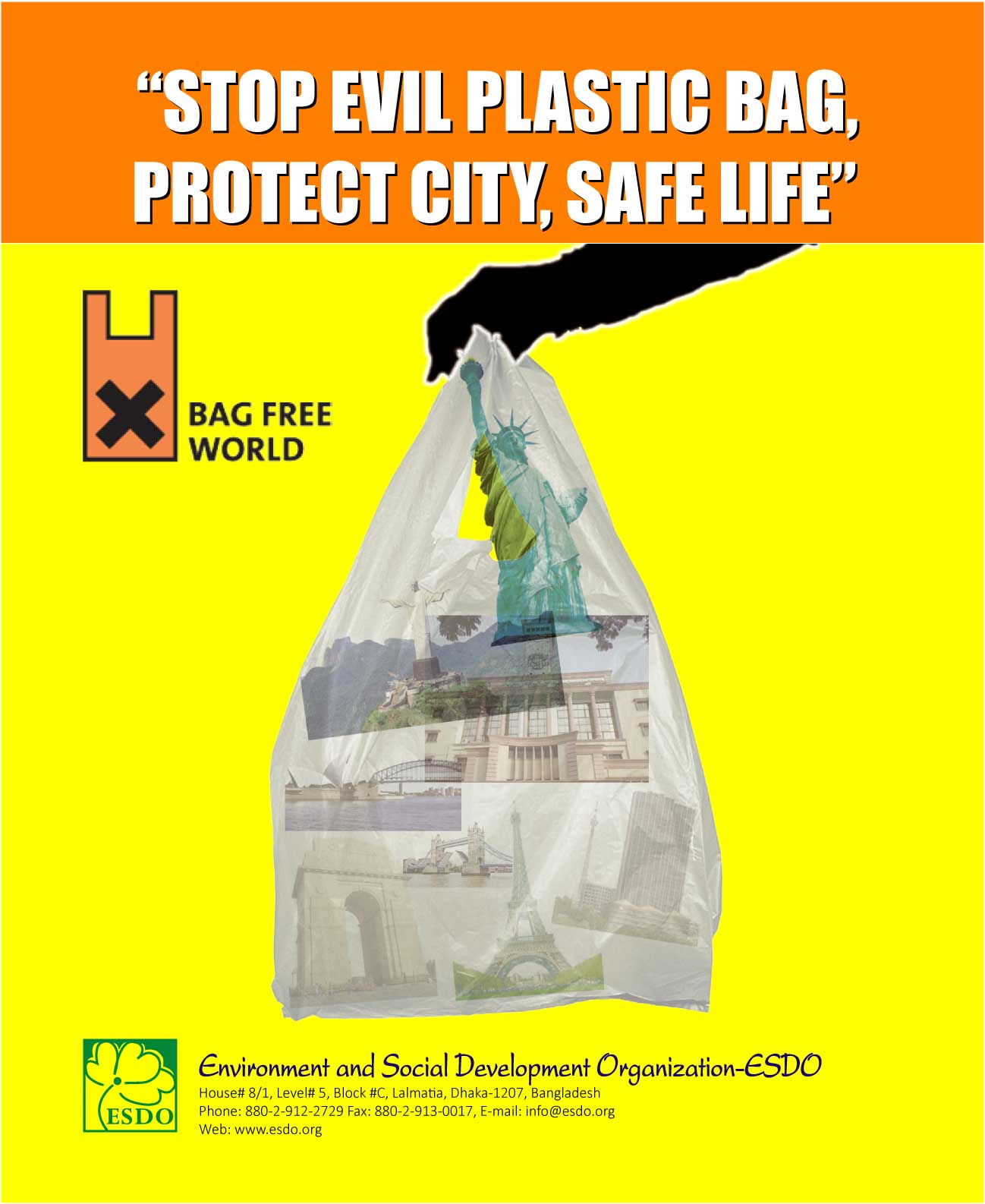
Best known to be the 1st NGO in the world to push for plastic shopping bag ban in Bangladesh way back when plastic pollution was not yet discussed anywhere else, GAIA Asia Pacific sat down with Siddika Sultana, Executive Director of ESDO, to talk about the organization’s history, their programs, and how they are coping during the pandemic.

ESDO and the plastic bag story

ESDO is a Bangladeshi organization established in 1990 to spread the message about the need for environmental conservation: to ensure the protection of biological diversity and ecological balance and build a large environmental movement.

It all started when Dr. Shahriar Hossain, the founder of ESDO and then a journalist in Bangladesh and a graduate student in Australia, walked into a store in Australia to buy fruits and other supplies. As he was paying for his purchase, the store owner asked: plastic bag or paper?

The rest, as they say, is history. Dr. Hossain went back to Bangladesh, studied the harmful effects of plastics, pushed the story to a national newspaper where he was working, discouraged by many, threatened by the plastic industry but supported by seven friends who helped established ESDO. As Siddika puts it, Dr. Hossain got the idea and dreamed of home.

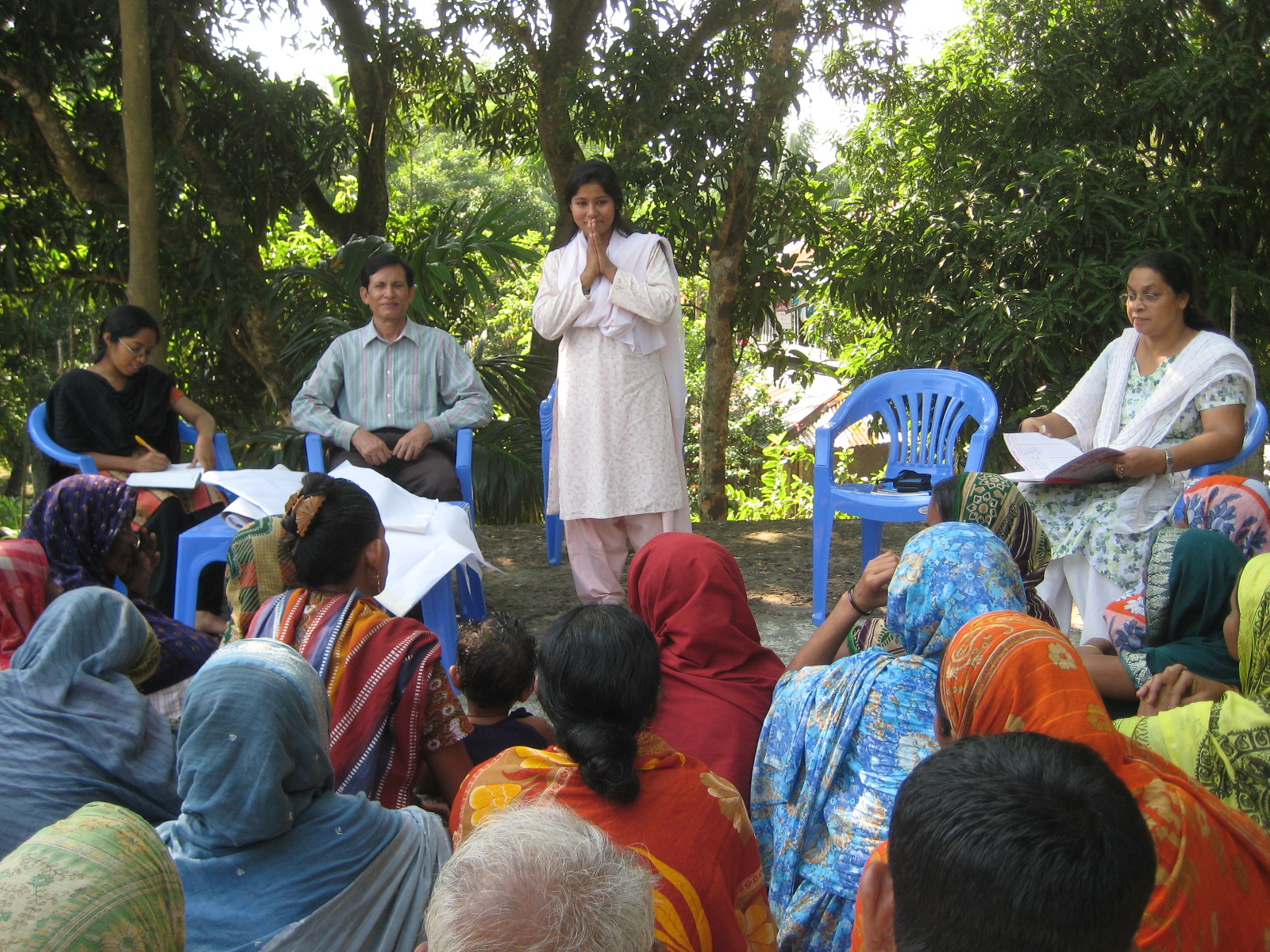
Currently ESDO works with the community through student volunteers with 8 Green Clubs in Dhaka City (with 30 to 35 members each) and 10 Girl Scout and 10 Boy Scout groups who help in capacity building programs, events, and rallies. Back in 1992, Siddika was a volunteer student for ESDO mainly involved in workshops and working with communities, a proof that teaching them young goes a long way.

What are ESDO’s top priorities?

Although formally formed in 1990, ESDO’s activities started in 1988. In 1995 ESDO set the top priorities of action on “Stop Plastic Pollution and Toxic-Free World”. Back then, it focused mainly on environmental issues, social justice issues, waste management, and movement building; until 2000 when we added environmental health with chemical safety in our program.

What are ESDO’s ongoing campaigns?

First is Building “Zero Waste community”. It’s our dream project. We are ready to kick off the pilot project; but due to COVID-19 pandemic, we had to delay it. We started the ground work through our eco-village programs in 1992 and the Zero Waste village project in 2013 where we go to communities and encourage and educate the village people to use their indigenous practices that do not disturb the environment. They relearn cultivation, producing green fertilizers, and homesteading. Barren lands with no trees or drinking water are now green villages. In 2012, we added the Zero Waste component so we are teaching them how to manage their waste and how to create fertilizers from waste, which they eventually sell.

Second is plastics bag ban. We started in 1989 and in 2002, after 13 years of campaigning, social mobilization, and policy advocacy, we won on this front. However, we are still struggling as new types of plastics are coming in such as sachet, cups, straw, and glasses. But now we are closer to banning single use plastics. Our plastic pollution movement focuses on campaign and policy advocacy, corporate and global policy change, brand audit, and movement building.

Third is our work on lead-free paint; which started in 2008. After a long campaign and advocacy work with the government, Bangladesh set a mandatory standard for lead-free paint in 2018.  This is another pioneering initiative of ESDO, another 1st in the world.

Fourth is on e-waste. We have submitted guidelines to the government. We hope to get good results this year and have a new law on e-waste.

All in all, ESDO is focused on awareness raising through our work with volunteers and students, policy advocacy with the government, and designing campaigns and conducting research.

One of ESDO’s work is policy advocacy, how is it working with the government?

It is not always easy but after ESDO established its good reputation, the government now listens to us.

What are ESDO’s biggest accomplishments and achievements?

The plastic bag ban in Bangladesh and building a global campaign and movement around it, the national and global mercury-free dentistry movement, banning microbeads in cosmetic and mercury in skin lightening cream, the High Court verdict to ban SUPs, lead-free paint, environmental education, e-waste management guideline, community-based waste collection, and pollution-free vehicles. ESDO developed 10,700 environmental educators and defenders through environmental camps for nature conservation and green clubs and developed and built support to 1.5 million people in 25 communities in Bangladesh. We have motivated more than 40,000 dental professionals in Asia, Africa, Latin America, and Europe towards mercury-free dentistry in collaboration with the World Alliance for Mercury-free dentistry, Asian Center, African Center, and Latin American Center.

How is your work impacted by the COVID crisis?

COVID-19 pandemic slow downed our movement and practical intervention; but we are not sitting at home. We have continued with our programs and conducted study on the impacts of COVID-19 related SUPs waste and released a report on SUPs and hazardous plastic generation by the healthcare system and how the waste pickers are involved in the process.  We also did a study on general and personal hygiene. Awareness program continues through social media and online press conferences.

What are the main environmental issues that your country/region is facing?

Chemicals and climate change. While Bangladesh is not heavy on industries, we are not emitting carbon, we are facing the same problems faced by other countries. Plastic pollution is an emerging environmental issue that needs to be tackled.

How do you see your organization’s work evolving in the next years?

We are focused on Zero Waste communities and villages and the need to balance SUPs through modeling shops and restaurants.  We are also working on PFAS pollutants which can be a major challenge because we are facing the big textile industry. But we have the opportunity to make this happen. When we started the lead-free campaign, ESDO was a small organization but we won. Our strategy: we invite people to come to us, to think about the country, to think about their children, and then make a decision. We always say, we are not against you, we are not the enemy of the country. If it is not safe for the environment and the workers, why would you do that? Please think about your nation.

How do you envision a just and equitable recovery from COVID-19 and how can your organization’s work be part of the solution?

This is really a challenge but we will try. ESDO can focus on health safety and share knowledge through the media. We can also do capacity building for the community. We design a campaign, do our research, raise awareness, think of policy changes, design best practices, and get cooperation from all sectors of the society. We believe collaboration, sharing, and network building can help.

What are your thoughts on the waste crisis that many countries in your region (and in the world) are living in right now?

We don’t have a waste management system or law but we are trying hard to change this. Other stakeholders are working with the government and other companies. We are trying to solve this issue.

Do you collaborate with partners in other regions? If so, how?

We have 3 network partner organizations in Bangladesh. We also work with organizations in India, Indonesia, Malaysia, Nepal, Philippines, Vietnam, and Sri Lanka.

How does your work on waste relate to social justice?

We work with indigenous people (IPs) in the Zero Waste villages. When we did the lead-free campaign, we focused on occupational safety for the workers. We will start our work on waste pickers rights.

Contributed by Iwut Wulandari, YPBB – Indonesia

Who makes sure your home’s waste is managed, so you don’t have to litter or burn trash that can produce toxic gases that are harmful to you?

It is the waste workers. They make sure that our waste is collected and, even better, quite a lot of them also compost and recycle!

Most of the waste workers in Indonesia are informal workers. Many of them are waste collectors working for minimum daily wage. Quite a lot of them work in coordination with community leaders, collecting waste from households and bringing them to transfer stations (TPS). Also, many informal waste workers work in the transfer stations to collect waste that can be recycled or composted.

Their work is difficult, often posing risks to their health and safety. In Bandung and in the whole of Indonesia, collectors are not used to wearing personal protective equipment, such as masks and gloves. Some waste workers that work more formally in a company also often work with minimum wage and bad working conditions.

Care for Waste Workers

There are many stories of waste collection incidents that led to injury among the workers. Mr. Hermawan, a waste management officer in the Sukaluyu Village area, and Mr. Udung, a waste collector in the Neglasari Urban Village in Bandung City, both died because of infected wounds caused by skewers from mixed waste. Mr. Udin had previous skewer-related injuries before, but managed to seek medical attention from puskesmas (community health centers). In many cases, however, collectors often avoid medical treatment because of healthcare costs. Likewise, they do not receive adequate healthcare support from the local government.

To commemorate National Waste Awareness Day (Hari Peduli Sampah Nasional), YPBB, in collaboration with the Bandung City Environmental Agency (Lingkungan Hidup dan Kebersihan / DLHK) and the public health service units of Cijerah, Puter and Neglasari, organized a free health check-ups for waste workers. The medical check-ups were done on 20-22 February 2020 in Gempolsari, Sadang Serang and Sukaluyu villages, benefiting hundreds of waste collectors in the city. YPBB also issued a statement marking the National Waste Awareness Day, reminding people about the welfare and safety of waste workers, as well as the need to properly sort waste at the household level to minimize health risks to collectors and reduce landfill-bound waste.

Zero Waste and COVID-19

As cities have implemented lockdowns and encouraged residents to stay at home, frontliners such as waste workers continued to provide service to communities. Without them, garbage will pile up in curbsides and streets. Waste workers remain at risk to COVID-19 infection, especially for those that are not using masks and gloves.

YPBB organized a fundraising drive to provide necessary PPEs and relief kits for waste workers in Bandung, Bandung District, and Cimahi.

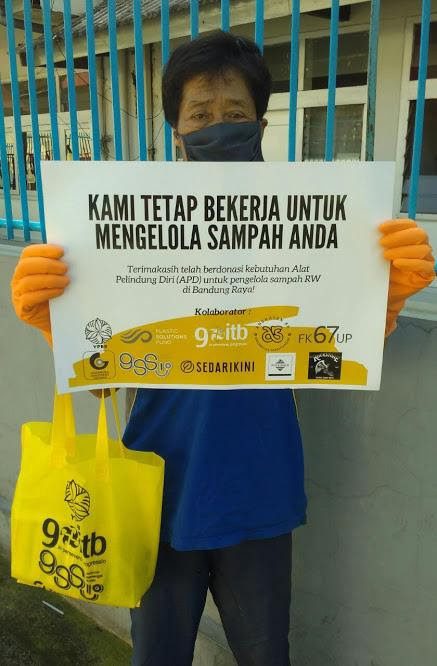
“We continue to work to manage your waste.” A thank you note from a garbage worker who just received his personal protective equipment.

The PPE donation program for the waste collectors was divided into 2 phases. For the first phase, 340 waste collectors in 3 cities of the Zero Waste Cities program (Bandung, Cimahi, and Bandung District) were given PPE donations. In the second phase, PPE donations were given to composting officers and waste collectors in the kelurahan (village) and RW (Rukun Warga/small village) under the guidance of DLHK. Although recipients of the 2nd phase are waste collectors outside the Zero Waste Cities project, the DLHK apply Zero Waste cities approach in those areas.

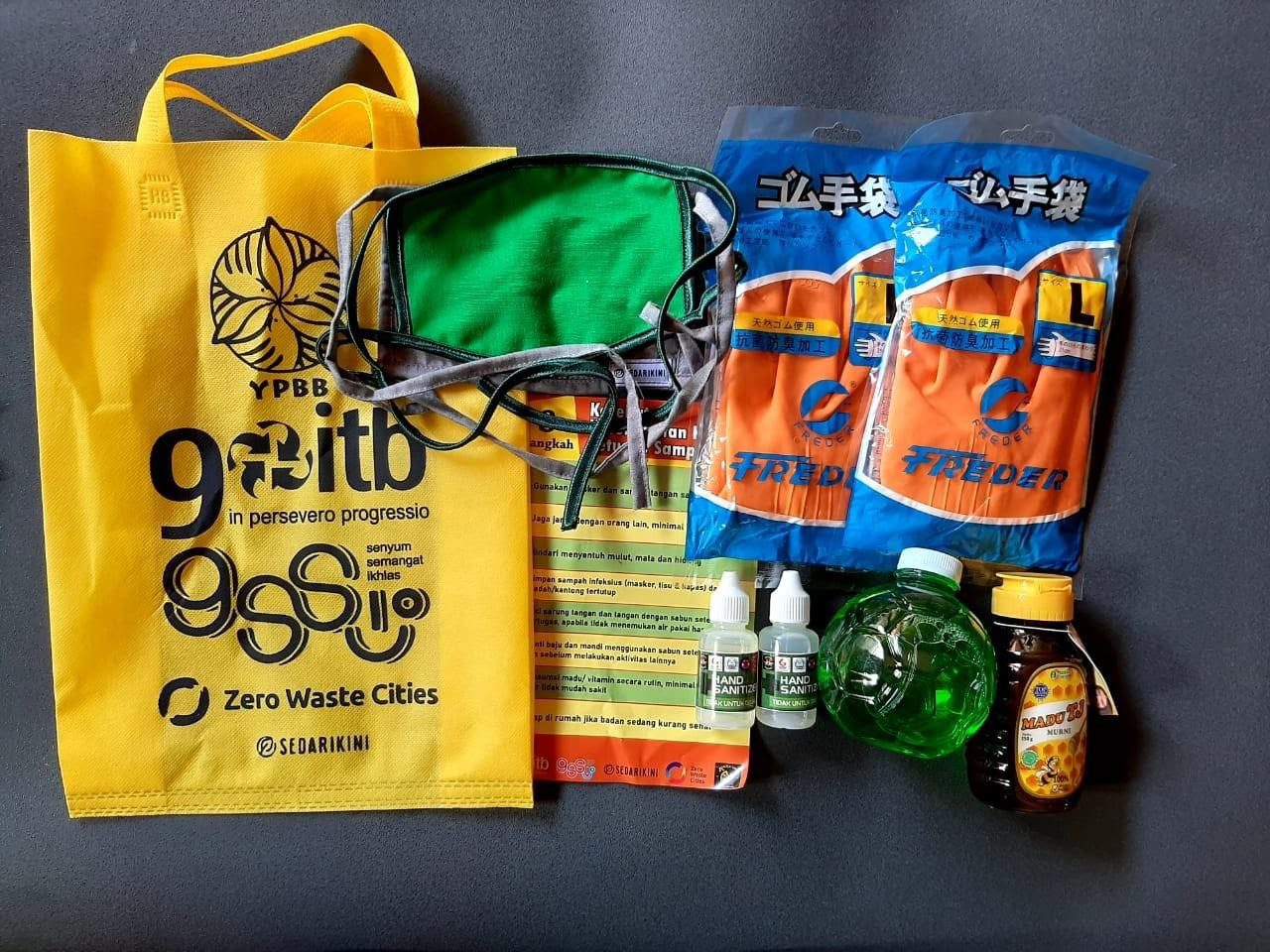
The donation drive helped increase public awareness in the midst of this pandemic, especially for the waste management sector. In addition to their heavy work, there is a great risk lurking in the middle of the COVID-19 pandemic. The PPE package includes cloth masks, rubber gloves, liquid hand washing soap, hand sanitizers, cloth bags, and posters related to safety measures for waste workers.

The Personal Protective Equipment package for waste worker.

To sustain the  efforts to make safer working conditions for the waste workers, YPBB is working with the city governments such as, Bandung City and Cimahi City, to enact and implement local regulation on waste management. If properly implemented, local governments can now allocate PPEs and additional resources for waste workers in the future. Not only that, local government will have responsibilities to allocate sufficient fund to formalize and provide good working condition for waste workers and the citizen will provide their waste in segregated and safe manner. “For this reason, local governments need to be supported so that the burden of transportation and final processing costs does not become burdensome. And even better if there is a financial assistance scheme for the transition process because this transition process requires considerable investment,” said David Sutasurya, Executive Director of YPBB.

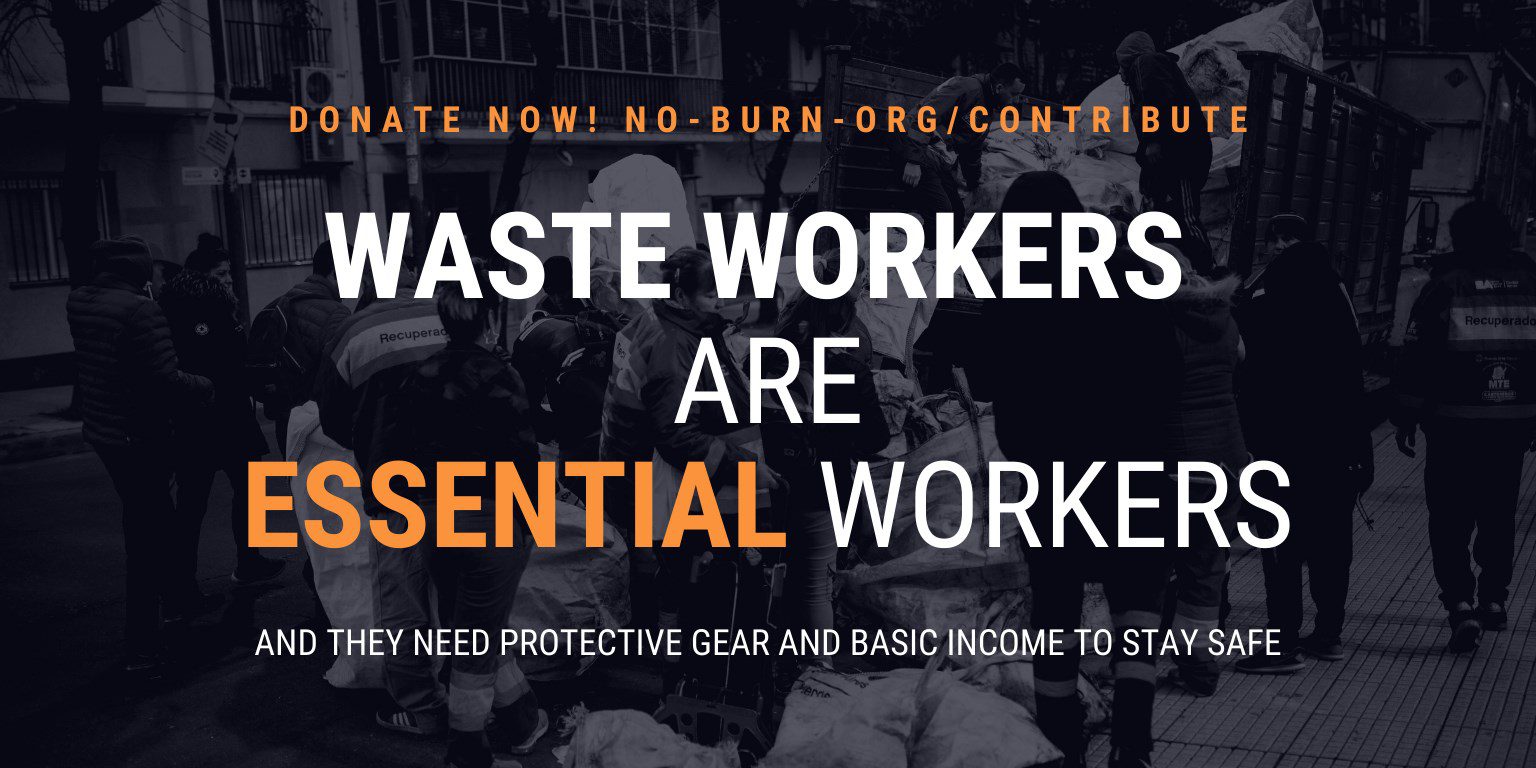
Other support for waste workers was also provided through the GAIA Emergency Solidarity Fund that aims to raise funds to support  waste workers and waste pickers in several countries in this time of the COVID-19 pandemic. For more information, you may visit https://www.no-burn.org/contribute.

Read in Bahasa: Kepedulian Kami untuk Petugas Sampah

—————————-

GAIA is grateful for the contributions from YPBB and Bandung City. This feature is made possible through the Zero Waste Cities project — an initiative coordinated by GAIA Asia Pacific and funded by the Plastic Solutions Fund (PSF) and the United States Agency for International Development (USAID). The views expressed in this feature do not necessarily reflect that of its funders.

GAIA Asia Pacific webinar series

Learn by the nuggets: GAIA AP webinar/webshop series

Learn by the nuggets webinar series features the work of GAIA members, and offers a deep dive on the latest reports and campaigns. This webshop series takes follows a workshop format with lectures, breakout sessions and, in some cases, homework assignments.  Materials from the webinars and webshops are available on the GAIA website and GAIA YouTube channel.

COMING UP

On the frontlines: waste workers in Asia   When: June 23, 2020   11:30 AM New Delhi/ 2PM Manila/ 4PM Sydney In this webinar, we will look into our members’ experience working with waste workers. Aileen Lucero of EcoWaste Coalition, Daru Rini of Environmental Conservation Organization (ECOTON), and Jessis Fam of Yayasan Pengembangan Biosains dan Bioteknologi (YPBB) will talk about their recommendations to improve the workers’ welfare and safeguard their rights. REGISTER HERE

________________________Organics management: biogas for home   When: July 7, 2020   11:30 AM New Delhi/ 2PM Manila/ 4PM Sydney In this webinar, speakers Shibu Nair, India Coordinator of GAIA Asia Pacific and Michael Templonuevo, Municipal Environment and Natural Resources Officer in Cavite Philippines will talk about the feasibility of setting up biogas for home.  REGISTER HERE.

By Edel S. Garingan, GAIA Resource Mobilization Associate for Asia and the Pacific

On December 20, 2019, amid the festivities and preparation for the holiday season, when people were already lining up in the malls to buy gifts and are musing about their menus for the special dinner and reunions, I found myself gazing at a bunch of food waste tucked inside old tires piled together as a makeshift facility for organic waste composting in Brgy. Niugan,Malabon City in the Philippines. It was my first exposure on Zero Waste implementation in the country. I met some of the dedicated waste workers in the community who were so enthusiastic in explaining to me and other GAIA staff how they manage their Materials Recovery Facility (MRF) that serve about 5,000 people. Aside from Brgy. Niugan, we also visited two other barangays implementing the same project. It was very impressive–waste workers are doing door-to-door collection, they are educating households on the importance of segregating wastes, and they are tending to a community garden where they use inputs from their organic compost. Meeting them and learning about the essential work that they do to promote the principles of Zero Waste in our communities is one of the best gifts I ever received that year.

Unknowingly, on the other side of the world, a new strain of a corona virus has just started infecting people in an escalating manner that it will pose a serious threat to the human population and will put cities and other areas under a total lockdown. Within three months after the first case was reported in Mainland China, more than a million people around the world had been infected by the virus that was later on identified as COVID-19.

On an ordinary day, waste workers in Zero Waste cities in Asia would wake up early in the morning, prepare their kart or vehicle, and would roam around the community, collecting waste, one house at a time. In the afternoon, they will have more time to spend with their children, do other work in the community, and in many cases, engage in other livelihood activities for additional income. Things dramatically changed as the COVID-19 cases shoot up in many countries and lockdowns were enforced.

The order of the day is to stay home and practice social distancing. But to many, this is not even a choice. They have to be at the frontline to serve and protect the greater community–this includes our waste pickers and workers. They risk their safety to continue to work outside their homes so that our wastes do not stay at home with us.

While many of them are able to continue their work under the prejudice of limited access to protective gears and equipment, it does not mean they earn the same. With businesses shutting down including junk shops and recycling facilities, waste pickers and workers are not able to sell the recyclable materials that they collect. This has greatly compromised their small income. Worse, in some areas where lockdown has been tightened up, some have totally lost their job, spending the quarantine with no income and limited resources to bring food on the table.

Long before the COVID-19, our waste pickers and workers had already been unrecognized; they are underpaid and have limited access to social services. Now, more than ever, they need our help to be able to get through the crisis. We need to help them so they can continue to be at the forefront in addressing plastic pollution and promoting a Zero Waste system as the solution for the waste crisis in Asia. 

Rising up for the waste pickers and workers and in honor of the essential work they do, a lot of civil society organizations in all parts of the world are setting up relief efforts for them. From Mumbai to Bangalore in India, they and their families received food packs and care kits that will help them protect themselves against the virus. In Malabon in the Philippines, a community kitchen that serves healthy food was set up to help boost their immune system. In solidarity to the waste pickers and workers and the grassroot organizations working with them, GAIA established the Emergency Solidarity Fund to pool resources and respond quickly to the emerging needs of the Zero Waste movement and waste pickers and workers around the world. The outpouring support that we receive for the solidarity fund is very overwhelming.

With the grant from the Plastic Solutions Fund and donation from individual advocates, in Asia Pacific alone, we were able to provide food packs and essential sanitary kits to more than 10,000 waste workers. We also distributed personal protective equipment, including mask, gloves, and boots, to a number of waste workers who are still braving the streets to do their job .

On my part, the waste workers in Malabon gave me a special gift last Christmas and that is the opportunity to know them and the work that they do – the same special gift that they give everyday to all of us. I have been thinking of ways to thank them for their work. For one, we can show our appreciation by reducing our wastes and segregating them when disposing. And yes, in times like this, we can thank them by extending help to organizations that help them.