Asia Pacific

Zero Waste Found to Be a Key Strategy to Build Strong, Sustainable Economies

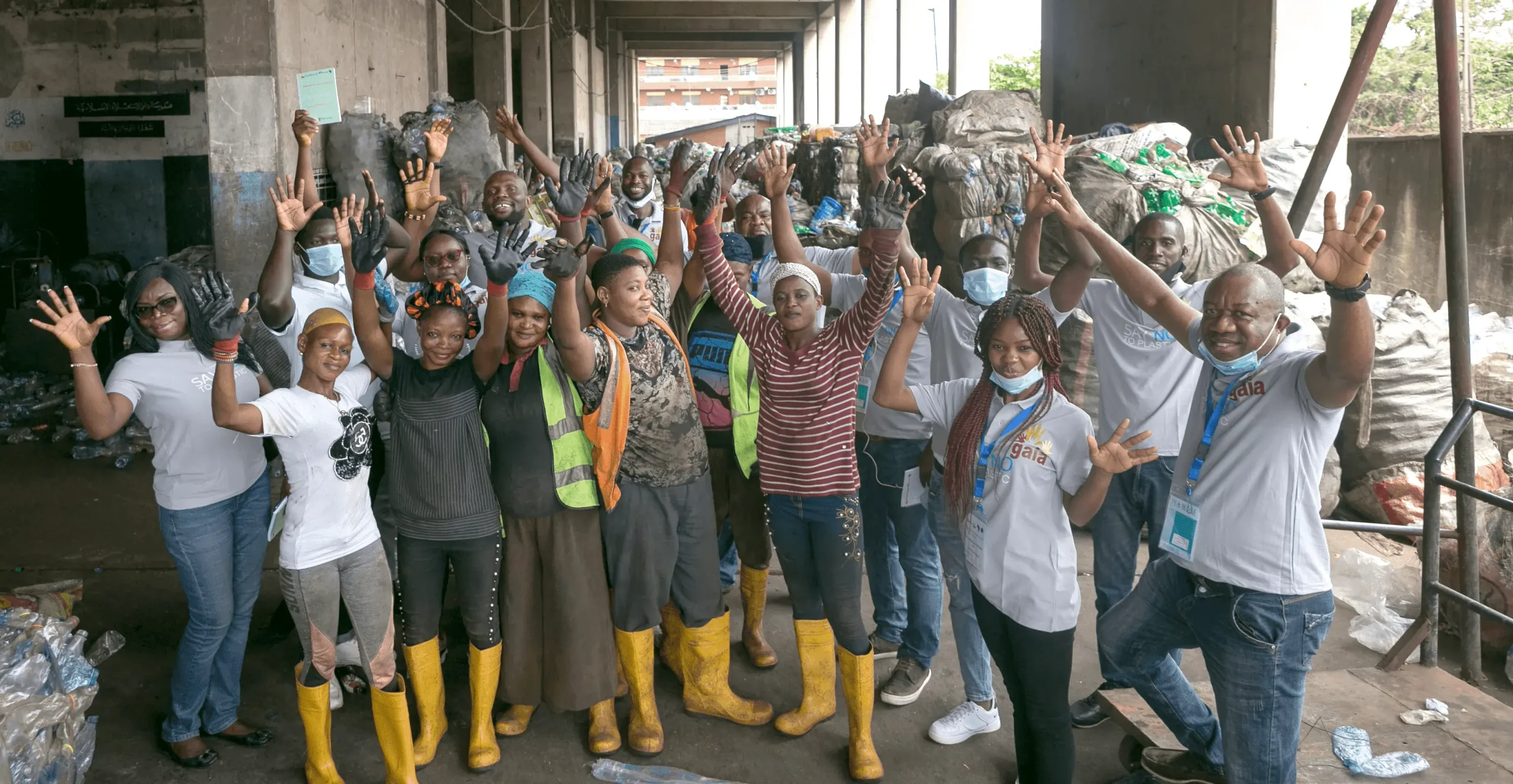
15 February 2021– A new study from GAIA finds that cities that invest in zero waste programs and policies create good green jobs, in addition to known benefits of reducing pollution and improving community health. This report comes as municipal governments worldwide are making critical decisions about which programs to invest in to increase climate resilience and rebuild local economies that have been damaged by the COVID-19 crisis.

In a global meta-analysis of job creation potential of different waste management sectors, the research makes clear that what’s good for the environment is also good for the economy. Zero waste strategies score highest on environmental benefits and create the most jobs of any waste management approach:

  • Reuse creates over 200 times as many jobs as landfills and incinerators.
  • Recycling creates around 70 times as many jobs as landfills and incinerators.
  • Remanufacturing creates almost 30 times as many jobs as landfills and incinerators.

Zero waste is a comprehensive waste management approach that prioritizes waste reduction and material recovery, with the ultimate aim of creating a circular economy, shrinking waste disposal to zero. In contrast, disposal-based systems rely on incineration (“waste to energy”) and landfills to handle most of the waste stream, resulting in higher economic costs and environmental consequences.

The report analyzed the job growth potential of cities around the world if they were to divert 80% of recyclable and compostable waste from landfilling and incineration. The numbers were impressive: for example, Dar Es Salaam, Tanzania and Ho Chi Minh City, Vietnam could both create over 18,000 jobs, and São Paulo, Brazil could create an astonishing 36,000 new jobs.

Zero waste systems not only create more jobs, they create better jobs. Studies show that jobs in zero waste go beyond basic manual labor, provide higher wages, offer more permanent positions, and improve quality of life.

Report author Dr. Neil Tangri, Science and Policy Director at GAIA, states, “With the world still reeling from the pandemic, job creation is a top priority. Zero Waste offers a strategy to create good jobs and reduce pollution without breaking the bank. It’s a triple win for the economy, the environment, and the city.” 

Press contacts:

Claire Arkin, Communications Coordinator

claire@no-burn.org | +1 ‪(856) 895-1505

###

GAIA is a worldwide alliance of more than 800 grassroots groups, non-governmental organizations, and individuals in over 90 countries. With our work we aim to catalyze a global shift towards environmental justice by strengthening grassroots social movements that advance solutions to waste and pollution. We envision a just, zero waste world built on respect for ecological limits and community rights, where people are free from the burden of toxic pollution, and resources are sustainably conserved, not burned or dumped. 

by Margaux Ortiz Fabreag

While it has been said that imitation is the best form of flattery, JuanaZero’s Mary Grace Draper sees replication as the best manifestation of victory.

Mary Grace knew that JuanaZero, the Zero Waste shop of Mother Earth Foundation (MEF), was one step closer to achieving its goal of making more people embrace a Zero Waste lifestyle when a local sari-sari store owner started adopting their Zero Waste business practices.

“The store owner has replicated our refilling system in selling fish sauce, vinegar, soy sauce, and cooking oil,” Mary Grace said in Filipino. The sari-sari store’s customers are now required to bring empty containers when purchasing these condiments.

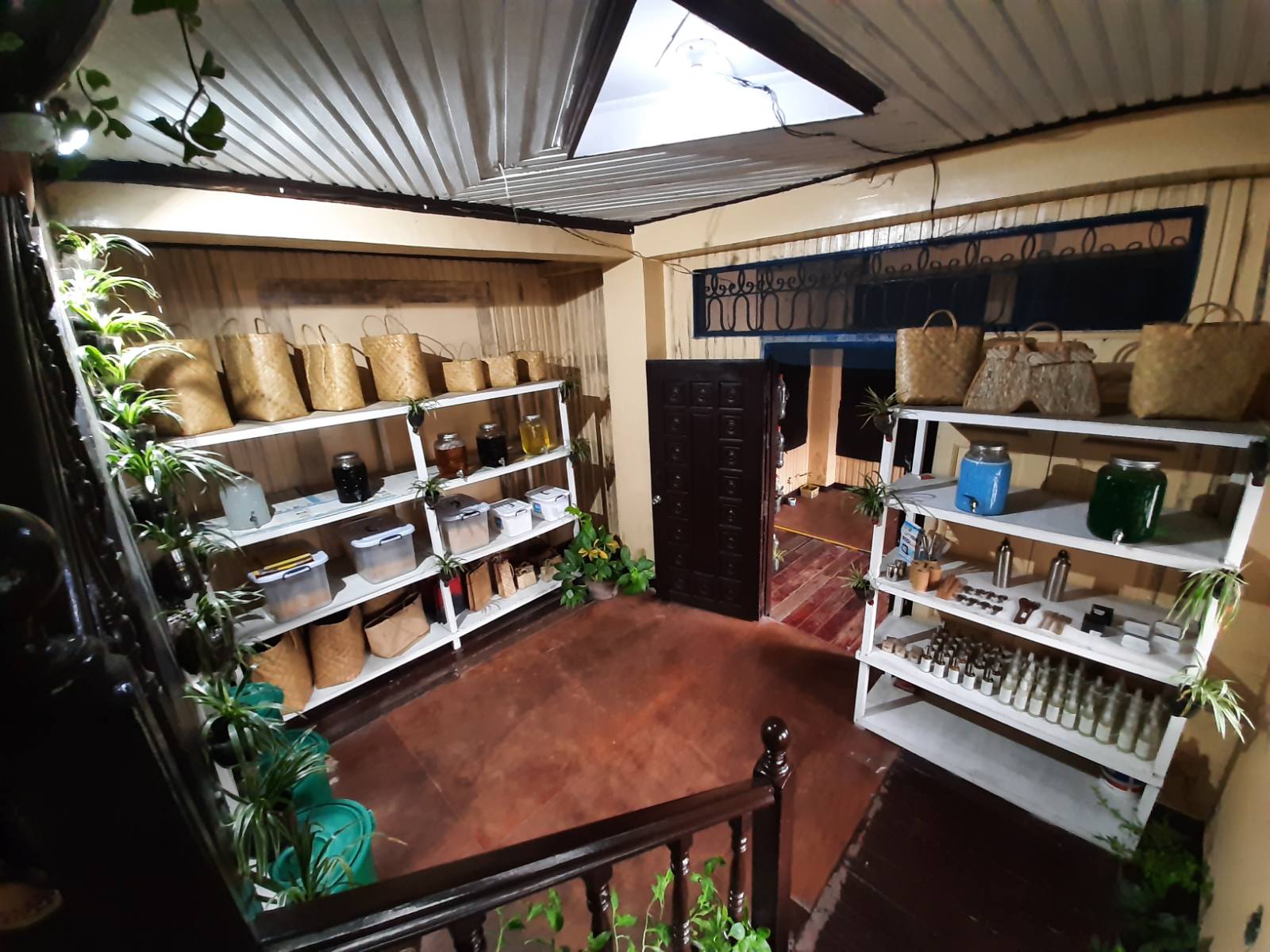
Mary Grace, who is assigned to oversee JuanaZero’s branch in Malabon City, Philippines, explained that aside from enabling both reseller and customer to save on costs by avoiding single-use plastic, JuanaZero passes on even more savings by purchasing and selling products manufactured in the city and nearby Navotas City.

Since opening its doors in September 2020, the store has been attracting more and more customers, according to Mary Grace. On the average, around five or six people bringing ecobags drop by their shop each day to purchase goods that they would consume for one or two weeks.

“It has only been a few months since we opened following the lifting of the strict COVID-related quarantines,” Mary Grace said. “We are hopeful that more people from our community will be convinced to go Zero Waste.”

Maricon Alvarez, program manager at MEF, explained that the initiative hopes to provide better alternatives to plastic products by selling metal cutleries, glass and metal straws, stainless cups, and other reusable items

JuanaZero also offers household essentials such as detergent powder, dishwashing liquid, and rice grains in addition to popular Filipino condiments.

“Our goal is a sustainable and Zero Waste community where people have access to affordable yet eco-friendly, Zero Waste products for their basic needs,” Maricon explained. 

JuanaZero aims to achieve this goal by promoting and offering an alternative and accessible Zero Waste store in the community that is also supportive of the local economy. 

“It is really a dream, a goal, and a part of the advocacy of MEF as an organization to offer this Zero Waste store especially in our project sites where we still see residual wastes composed of single-use plastics, despite the communities’ awareness of the importance of segregation,” Maricon said. She explained that an important part of the program is to establish an alternative delivery system that offers eco-friendly and reasonably priced products.

What makes JuanaZero different from other stores embracing the Zero Waste concept, according to Maricon, is its target audience. Instead of catering to the usual middle- to high-income market, JuanaZero targets the members of the local community.

“We first started convincing our waste workers to patronize the shop,” Maricon said. The team also drafted basic educational materials explaining to the community how they would actually be able to save on costs when they choose to buy from the JuanaZero store.

One such material detailed that customers could purchase a liter of cooking oil for only P80, as opposed to buying “tingi tingi” or small batches for P5 or P10 per plastic bag that could add up to P120 a liter.

“Their savings are considerable when they bring reusable containers in purchasing liquid essentials such as cooking oil, fabric conditioner, dishwashing liquid, and condiments,” Mary Grace explained.

More importantly, the community undergoes a paradigm shift as regards the concept of Zero Waste. They have learned to purchase several kilos of rice with their reusable eco-bags instead of buying three separate kilos of rice for each meal of the day. This wasteful practice usually involves the unnecessary use of a plastic bag for each purchase.

JuanaZero also serves another noble purpose: all its proceeds go to MEF’s Waste Workers’ Scholarship Fund, according to Maricon.

“We seek to help the unsung heroes of Zero Waste by providing scholarships and financing their children’s education expenses,” she said.

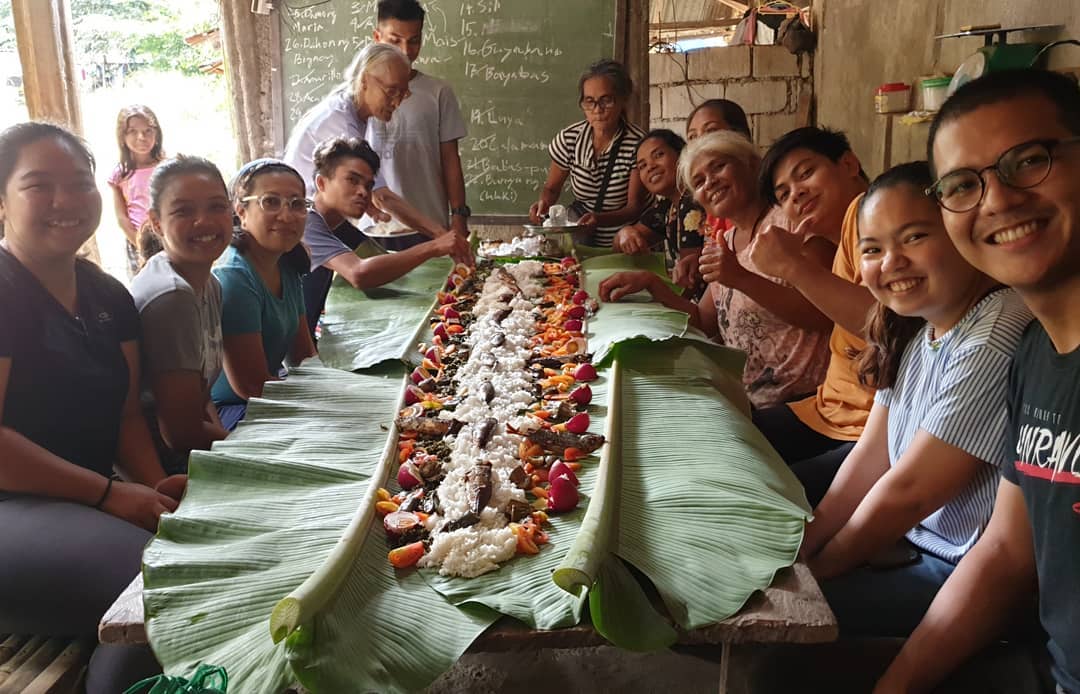
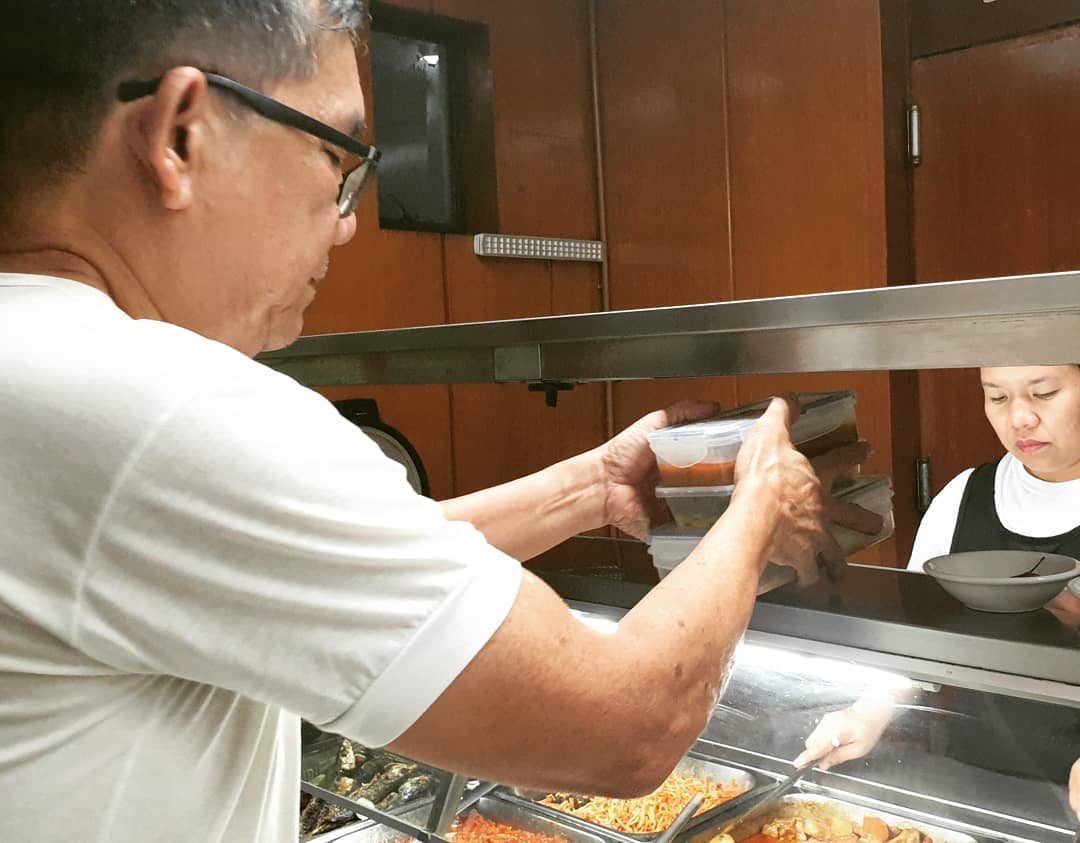
She added that the store’s profits also financed two of the foundation’s projects that assisted communities during the COVID-19 lockdown: a community kitchen called Kusina ni Juan, and the distribution of Zero Waste kits that contained reusable face masks and gloves, vitamins, and vegetables.

Kusina Ni Juan (community kitchen) distribution in selected barangays of Malabon City, Philippines.

Maricon shared that they are planning to expand their operations and are currently on the lookout for new products to offer. They hope that these products can compete in the market and more importantly, address the true meaning of Zero Waste as a concept and advocacy.

Maricon and her team are now promoting JuanaZero on social media platforms, with their partner Zero Waste communities, and through participation in caravans and exhibits.

“We are aiming for JuanaZero to have its own brand to help more waste workers,” she said.

Facebook

Photos courtesy of JuanaZero.

______________________

This article is part of the book, BUSINESS UNUSUAL: Enterprises paving the way to Zero Waste, a collection of feature articles on select enterprises in Asia Pacific that practice and promote Zero Waste principles. Published by Global Alliance for Incinerator Alternatives, the publication may be downloaded for free at www.no-burn.org/Business-Unusual.

by Beryl Tranco

A leisure trip to London in 2016 introduced Bittu John Kalungal, an MTech Aeronautical Engineering graduate, to the concept of bring-your-own-container shopping.

He was convinced of the concept, that on his return home in Kolenchely, Kerala, India, he left his job and converted their family’s 40-year-old grocery store into a Zero Waste store. Called 7 to 9 Green Store, the grocery now sells products without plastic packaging.

It took nearly one and a half years to transition my father’s old grocery store into Zero Waste,” Bittu said. “Setting up the store is quite expensive; all containers are manufactured and imported outside India. However, since it was already an established grocery store, it was easier to get sufficient supply of products.”

The conversion came with another challenge: shifting the customers’ preference for particular brands over unbranded products. “We gave samples. Customers gradually liked and started buying items our store offers. Most of these are fresh, natural, eco-friendly and home-made without any preservatives or artificial colors,” Bittu emphasized.

Inside the 500-square-foot store are rows of containers of biodegradable and chemical-free products such as hand washers, dishwashers, soaps, bamboo toothbrushes, and toothpaste in tablet forms. Another attraction is the organic corner where vegetables are sold loose so that consumers can purchase the quantity they desire at a cheaper price.

“It is the quality of the products that attract people from different parts of Kerala. I have customers from Chengannur, Ernakulam, and Tripunithura who drive all the way just to buy things from my store,” Bittu shared.

Bittu added that maintaining the products is not easy. “Shelf life is shorter than those in plastic packaging. For example, the shelf life of loose wheat powder is three weeks while packed items expire in nine months. So we should sell our products within a week. We convince our consumers by educating them about the consequences of plastic wastes.”

According to Bittu, customers bringing their own containers or bottles get a discount of 2% every time they shop. If they don’t have their own containers, they have the option to invest in organic cotton bags which they can use over and over for their grocery shopping. Glass bottles are also available for deposit. Customers can either keep the glass bottles or return them to the store and receive a full refund of their deposit. 

Since its opening, the store has inspired changes in the way people shop, having shown them the impact of plastic-free shopping. Bittu shared that a faculty of a local school approached him, gladly saying that in the three months he has been purchasing in his store, he hasn’t seen any plastic packets in his home. 

Bittu also talked about a doctor who came to his store with his own container to refill sugar. “Another guy was in the shop. This guy watched the doctor refill his own containers, then came to me and asked me:  ‘Does he always come with his own containers?’ That should be the change coming from everyone. From this incident, the guy realized it’s not bad to bring containers from home and buy by refill. In our society, 20% of the people set the trend and the rest look up at these 20% and try to live like them. If we can change the attitude of the 20%, we can make a huge difference in our society.”

7 to 9 Green Store has attained some fame through social media and news channels. Bittu shared that nearby stores are also now making efforts to avoid plastic packaging. They sell good quality cleaning solutions in loose form that are half the price of branded products. People refill their own bottles at a minimal cost. 

“Lots of people are asking for franchises. We are working on that. In two years, nearly 500 people came to the store not to purchase but to express their interest in replicating the enterprise. I am giving all my support to them. Having Zero Waste shops in every place will make a huge difference. Imagine one single store can save 10 lakh (1 million) pieces of plastic in two years!” Bittu stated. 

At the start of the Covid-19 pandemic, the number of walk-ins was reduced from 300 to 100 people. Their sales on nuts and dry fruits also dropped but other items were not affected.  “We felt it is risky now for different people to touch the scoops in the bin. We changed the dynamics to promote safe shopping. Customers are not allowed to get into the store. They give a list and patiently wait outside while we pack every item they purchase,” Bittu shared.


He added that they also started Zero Waste delivery where they bring their products to the customers’ doorstep. 

Today, the bring-your-own-container Bittu introduced to his community has changed his customers’ mindsets and shopping habits. This makes him feel good about his decision to leave his engineering work. “I am getting the satisfaction which my engineering job failed to give me. As I have said, we have prevented the use of 10 lakh pieces of plastic in two years. My town, Kolenchery is a remote town. I think there are nearly 40 grocery stores and five big supermarkets here. Can you imagine the amount of plastic coming out of each store every day?” he said.

He added: “If I just wanted to do business, I could simply sit with my father [in our old grocery store] and not make any risks. But I chose this one. I know I am doing something good for the environment and I am making money too,” he said.   

Website

Facebook

Instagram

Photos courtesy of 7-9 Green Store.

______________________

This article is part of the book, BUSINESS UNUSUAL: Enterprises paving the way to Zero Waste, a collection of feature articles on select enterprises in Asia Pacific that practice and promote Zero Waste principles. Published by Global Alliance for Incinerator Alternatives, the publication may be downloaded for free at www.no-burn.org/Business-Unusual.

by Salve Canale

“They now hope, have higher self-esteem, and they have developed confidence. They used not to have dreams for themselves, now they do,” Che Abrigo said about the indigenous farmers in the mountainous parts of the provinces of Rizal and Tarlac in the Philippines who inspired the livelihood initiative she started in 2016 and who remain their partner.

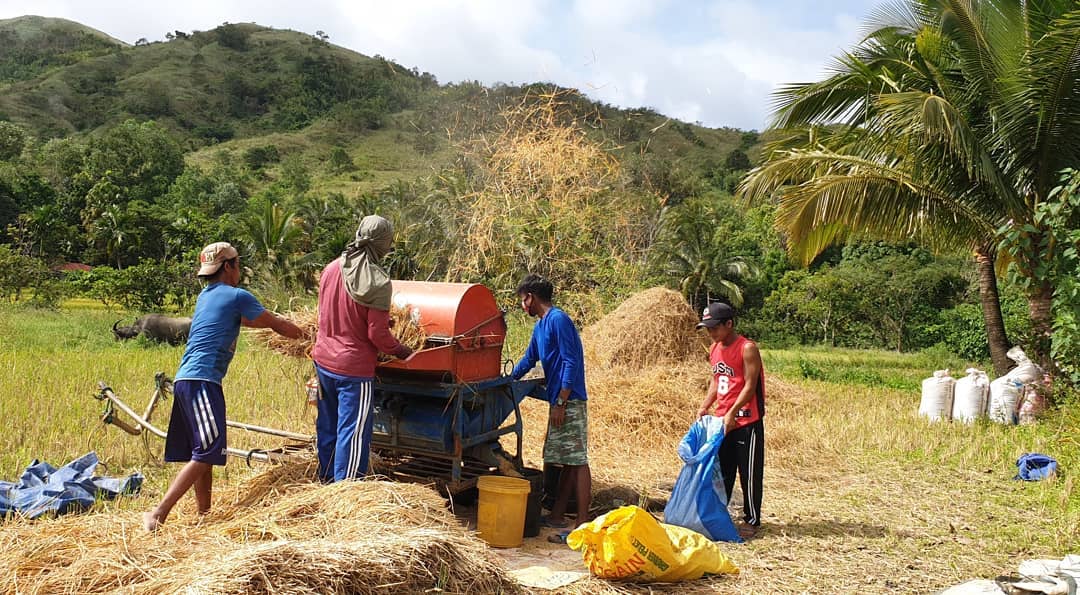
Che said that the first time she visited these communities, she observed the hopelessness in the people, and the low regard they had of themselves. “They told me: ‘We’re just indigenous peoples, we don’t know much, we didn’t finish school, we don’t even know how to read.’ They felt they were the lowest of people, because that’s how they have been treated for the longest time. So when I explained to them about the project, that what we were doing was not business and that it was not for me but for them, they were skeptical. They were skeptical because they have been told the same thing many times before, yet at the end of the project, of the funding, their lives remained the same,” Che shared.


But Che was keen on making a difference. A long-time NGO volunteer before she embarked on her own advocacy of helping farmers, Che had seen how some programs were not sustainable. “There were outreach activities. In fact, a lot of outreach activities. Some were just about dole-outs, which did not really improve the lives of the people,” she said.

Che initially secured a small grant to conduct organic farming training in these communities. But training was only the beginning. She wanted a sustainable livelihood for her partner farmers. So in 2018, Che established her own store, Sierreza Zero Waste Store and Artisan Café.

The goal was to help farmers in marketing their produce by bringing their products to the city the Zero Waste way and sans the exploitative ways of typical traders. “Together, we set a fair price at the start: something that would give them income. The good thing about that is that they did not need to overproduce because even if they produce less, the price would still be competitive,” Che, who used to drive long hours to the communities and do the heavy work on her own, said. 

The Zero Waste Store, Café and Talipapa

Growing up, Che used to collect pieces of garbage strewn on the streets—a habit she picked up from her father who, as a young man, worked as a garbage collector to pay for his living expenses and subsidize his own schooling. Her father taught her the value of recycling and reusing things and minimizing waste. It therefore does not come as a surprise that Che decided that her enterprise be Zero Waste.  “I tried to connect the advocacy of helping farmers and raising awareness on the impacts of waste on the environment,” she said.

This is the reason, Che shared, that they reduce, or where not possible, minimize waste from every aspect of the operation—from the production of food up to bringing that food in whatever form: whether fresh food, ready-to-eat food, processed food—to the consumer’s table. The whole process, the whole being of Sierreza, she underscored, is Zero Waste.

Farmers and Communities Supporting Each Other

Like any other enterprise, Sierreza was also impacted by the Covid-19 pandemic. For Sierreza, it meant giving up the store and café and switching to a mobile store, delivering fresh farm products and some of Sierreza’s processed items (e.g., dehydrated produce) to their customers. 

“Flexibility and adaptability are the keys to survive,” Che said. “It’s not the size, nor the revenue of a company. It’s your ability to adjust to the situation.”

During the pandemic, with many people unable to go out and do their groceries, people realized the importance of agriculture and safe food. During this time, the Sierreza model—mobile market—became crucial. Che’s once-a-week trip to the farming communities to get supplies doubled, resulting in better income for the farmers. “The farmers can stop planting if they want to. They produce their own food. They will survive. But they chose to continue planting for those who are in urban areas and cannot go out of their houses,” Che said. “The farmers kept on supporting us. And they kept us alive.” 

On the customers’ side, the team was able to service many senior citizens—bringing their orders right on their doorsteps. And as with the farmers, the buyers of the produce also became like family to the Sierreza team. 

“We connect with the customers at the personal level. We don’t see them as mere customers, we see and treat them as fellow human beings,” said Che. “Whoever becomes a part of the Sierreza team, it’s important that that person has a heart. Skills can be learned, but the heart to help others can never be replaced.” 

Facebook
Instagram

Photos courtesy of Sierreza.

______________________

This article is part of the book, BUSINESS UNUSUAL: Enterprises paving the way to Zero Waste, a collection of feature articles on select enterprises in Asia Pacific that practice and promote Zero Waste principles. Published by Global Alliance for Incinerator Alternatives, the publication may be downloaded for free at www.no-burn.org/Business-Unusual.

by Beryl Tranco

After a year of waiting for someone else to open a Zero Waste store in Dumaguete City, Philippines, Eula Rae Libo-on turned her dream of owning a Zero Waste store into reality. Together with her two closest friends, she invested in something that could possibly impact her community and the future generations.

“I was not on Zero Waste at first, but as I learned more about environmental concerns, I also became alarmed. I decided to do the switch, hence the hashtag of Lipay Mundo is #DoTheSwitch,” Eula shared.

The first Zero Waste store in the city had its soft opening in July 2019. “Lipay Mundo Co. aims to inspire the consumers and other businesses [about] the freedom of purchasing essentials without having to deal with the plastic packaging afterward,” Eula said.

“Lipay” means “happy” in Bisaya, the local language used in Dumaguete, and “Mundo” is Spanish for “world.”. “With a mission to keep non-recyclables and non-compostables out of landfills, we partner with different local and foreign organizations and individuals in granting Dumaguete City access to a Zero Waste lifestyle,” Eula shared.

Purchase only as much as you need

Located under the hotel stairs of Gabby’s Bed and Breakfast, Lipay Mundo presents itself as a small grocery store selling natural and organic products without packaging.

Lipay Mundo offers a bulk foods section that contains different kinds of organic pasta, nuts, coffee beans and moringa powder that comes in loose forms.

Also for sale are kitchen and household products such as edible and reusable straws, wooden and metal cutlery, beeswax food wrap sets, kitchen towels and reusable cups and food containers.

According to Eula, among the best sellers are the all-natural, non-toxic home cleaning and personal products. These are free of chemicals and toxins, therefore safe for every family member including babies.

“We make our own product brands [using] all-natural ingredients trusted by environmentalists and tested by chemists. We also carry other products sourced from individuals and brands with [their own] mission to create a positive environmental impact. We are proud to call them our friends and constant sources of inspiration,” Eula said.

Customers are given the freedom to purchase as little or as much as they need from the store as they are encouraged to bring their own containers for product refill or to trade with bottles from the store. They also have the option to buy empty glass bottles at Php 10.00 to use as their own refillable containers.

Overcoming the Challenges

“The first challenge [we had] was the belief system—making other people believe that [our] Zero Waste concept works. We overcame [this challenge] through endurance and patience that comes with teaching others the whole value of the concept,” Eula stated.

Eula shared that their first customers were foreigners and expatriates. “They were the ones who identified and understood the need, then eventually the locals followed. They now understand that the price point comes with the quality and sustainability of the products—having to not throw them away in the landfills after they use them,” she said.

And just like any other small enterprises, Lipay Mundo was also affected by COVID-19. The pandemic has brought out Eula’s creativity and readiness to adapt to change quickly. Closing the store was a challenge, yet it doesn’t mean the operations stopped.

“Since our physical store always smells good from the outside, people tend to come in and sniff everything they can get their hands on—which is taboo especially with the virus starting from the three entry points—eyes, nose, and mouth. We had to close the physical store indefinitely and stay online for now. We have to do more online advertising and apply a no-touch delivery concept where our riders deliver the orders to the customers without touching the deliveries,” she said.

Managing a Zero Waste store is to live up to the Zero Waste concept. “It’s not easy keeping up, but live up to it and see how the little Zero Waste things you do add up to the bigger picture. Start small, think big, scale fast,” she said.

Facebook

Website

Photos courtesy of Lipay Mundo.

______________________

This article is part of the book, BUSINESS UNUSUAL: Enterprises paving the way to Zero Waste, a collection of feature articles on select enterprises in Asia Pacific that practice and promote Zero Waste principles. Published by Global Alliance for Incinerator Alternatives, the publication may be downloaded for free at www.no-burn.org/Business-Unusual.

by Beryl Tranco

Sari-sari or neighborhood stores are the go-to for most Filipinos for their daily necessities. By selling products in small quantities, sari-sari stores enable households with a meager income to purchase their needs for the day. Sadly, these neighborhood stores also serve as a major point of sale for problematic products. Most of the products sold in these stores are packaged in plastic sachets.

Inspired to empower existing sari-sari stores to transition to Zero Waste, the Philippine Reef and Rainforest Conservation Foundation, Inc. (PRRCFI) launched Bacolod City’s first Zero Waste store, Wala Usik Tiangge + Kapehan, in January 2019. Wala Usik is a Hiligaynon phrase which means ‘no wastage.’

Although it is a business, Wala Usik is considered a non-profit. The capital is from fund-raising and grants, and the income goes to the conservation and advocacy work of the Foundation.

The physical store was constructed using repurposed and recycled materials. Tables and shelves are made from crates and pallets. Bar stools are sourced from surplus shops. The chandelier and lamps are upcycled from scavenged wine bottles.

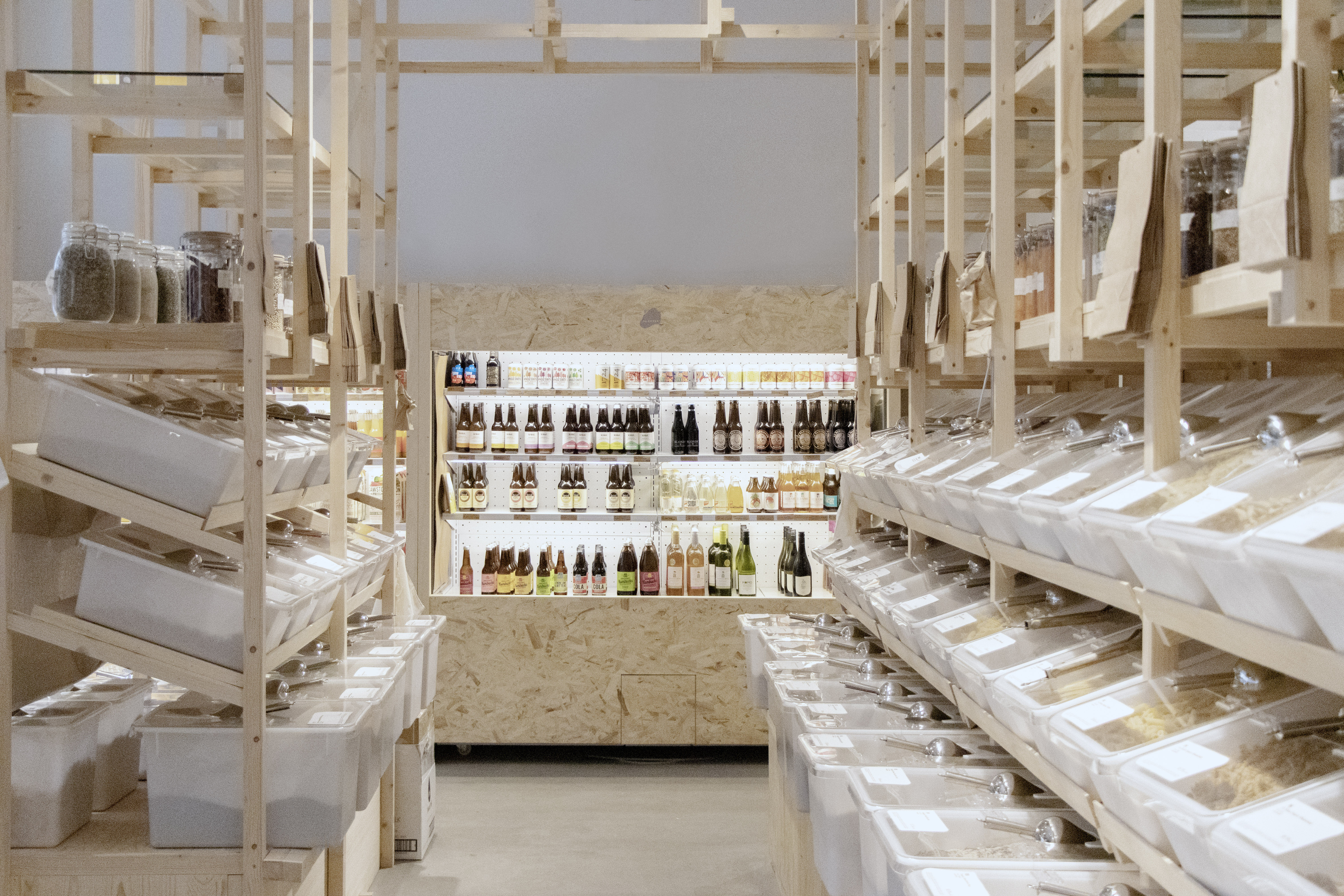
Inside the tiangge (store) are dispensers filled with liquid household laundry and dishwashing products, huge glass jars and barrels filled with different kinds of condiments and staples, personal care products, and reusable items.

According to PRRCFI Executive Director Dave Albao, one of the initial challenges they faced was how to dispense the products. “Big jars and containers are expensive. We had to fabricate and reconstruct mechanisms to refill products without contamination. Regulatory barriers have been an issue as well. The Food and Drug Administration (FDA) does not allow refills of shampoo and cosmetics,” he said.

But these initial roadblocks did not stop them from pursuing their vision. “We believe if nobody tries, studies, and tests, there is no step forward. So, we took the risk. Through our innovation laboratories, we conducted workshops to prototype, modify, and redesign [our store],” Dave said.

Wala Usik is a haven of local producers that attracts Zero Waste advocates, environmental activists, and socially aware citizens who regularly bring their own containers and bags to store their purchased products in. It also gathers local social enterprises with the philosophy of reducing the ecological footprint of importing foreign and unnecessarily packaged products.

Wala Usik also has a cafe that serves various local coffees, pastries (made by Bacolod-based foundations), and snacks from consignor community organizations. It also serves as a co-working space for collaborations with other environmental advocate groups. The cafe has been a venue for several Wala Usik workshops.

Wala Usik in the Barangays

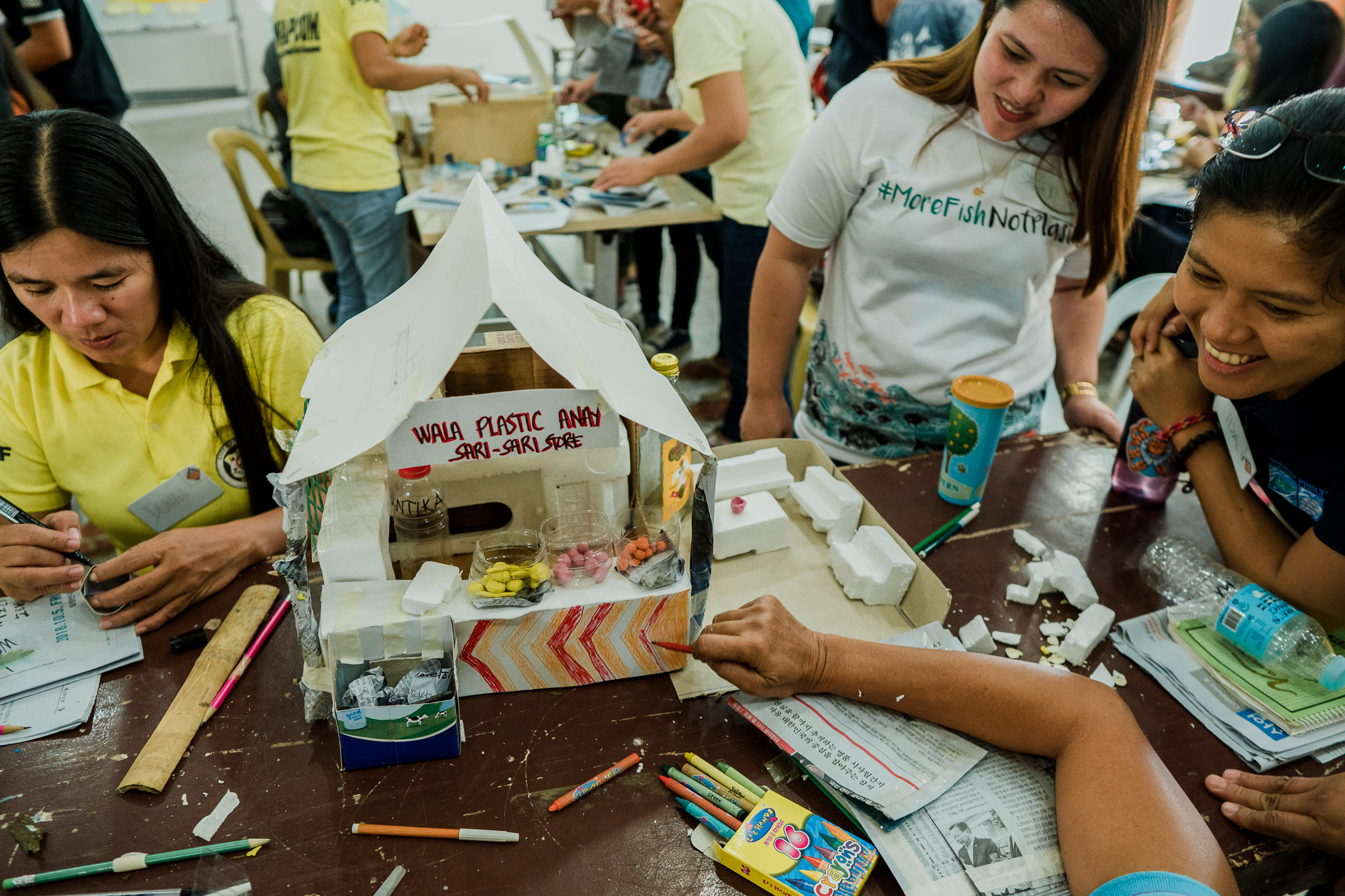
To bring Wala Usik to other places, PRRCFI held a Wala Usik Sari-Sari Store Design Workshop in February 2019 in Sipalay City, Negros Occidental to engage sari-sari store owners and other key stakeholders in designing and producing prototypes of the stores. Participants included artists, retail and industrial designers, LGU personnel, business consultants, and sari-sari store owners selected from SWEEP (Sea Waste Education to Eradicate Plastic) project barangays.

The first partner Wala Usik Sari-Sari store in Negros Occidental was launched in April 2019. Today, there are eight Wala Usik Sari-Sari stores in Negros Occidental: one each in the cities of Bacolod, Sipalay and Bayawan and the municipalities of Cauayan, Hinoba-an, Sta Catalina, Basay, and Siaton.

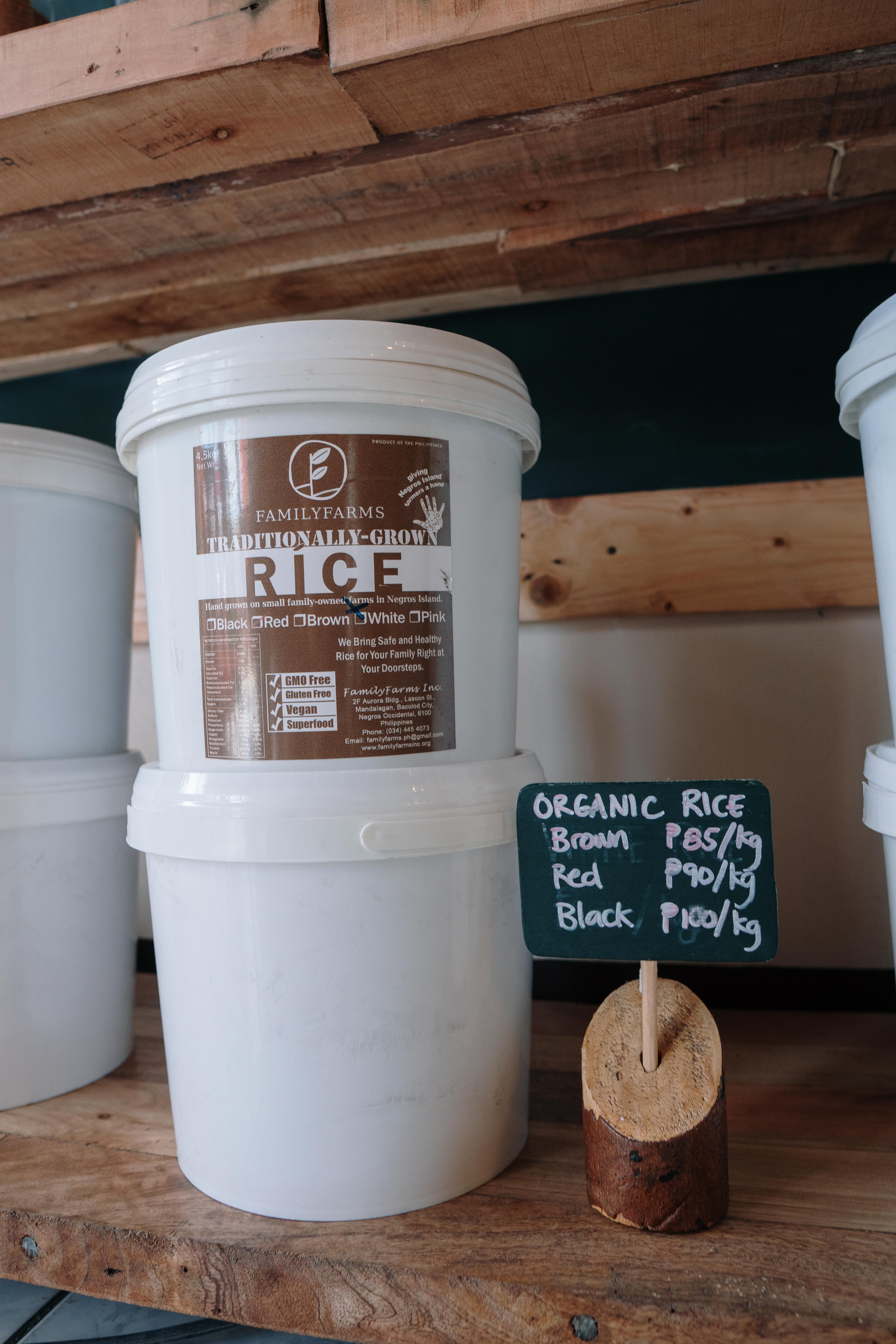
The owners determined the products they wanted to sell based on the interest of the consumers in their own communities. Sachets have been replaced with micro-refilling stations. A kilo of rice is put in a reusable container instead of a plastic bag. Cooking oil, vinegar, and other condiments are dispensed using reusable or repurposed containers, in incremental volumes and price points similar to products in sachets, but without the single-use packaging. The store owners lend containers to the customers, who then return them every time they go back to buy something, or when they bring their own containers to use to refill.

COVID-19 and the New Normal

Like other businesses, Wala Usik also suffered challenges due to the pandemic, forcing the management to close the physical store while redesigning its operation and transition into an online store.

“Most of the partner sari-sari stores are also adjusting their operations depending on quarantine and public health protocols. It will be interesting to see how these stores will evolve because of the pandemic,” Dave stated.
Dave still hopes to re-open Wala Usik Tiangge when the situation improves. They are still committed to continuing the replication of the model, and to scale their learnings from this first cycle to expand their advocacy towards developing a small food forest. According to him, it is important to engage with the community despite the current situation of limited movement.

“The advocacy is still there. There are many ways to address the challenges of refilling in the communities. Wala Usik Tiangge + Kapehan and the sari-sari stores have paved and are paving a path for designing a refilling model that is safe, sustainable, accessible, and affordable for our communities,” he said. “Imagine if 10% of sari-sari stores in the Philippines are wala usik, how much more ocean plastics we can prevent.”

Facebook

Instagram

Photos courtesy of Wala Usik.
______________________

This article is part of the book, BUSINESS UNUSUAL: Enterprises paving the way to Zero Waste, a collection of feature articles on select enterprises in Asia Pacific that practice and promote Zero Waste principles. Published by Global Alliance for Incinerator Alternatives, the publication may be downloaded for free at www.no-burn.org/Business-Unusual.

by Framelia Anonas

“Little steps will go a long way.” This is what Rangi Jory Madarang, or simply Ranj, always reminds herself as she and her business partner Ivy Jane Sumabong strive to influence people with their Zero Waste advocacy through their store called “Amgu” located in Cebu City, Philippines.

In this generation that lives with multi-packaged products, Ranj shared that the biggest challenge is getting people to understand the concept of Zero Waste. “Consumers are used to buying plastic packaged products, and here we are, encouraging everybody to try their best in living Zero Waste,” she said.

The store’s Zero Waste advocacy is complemented by the organic products which they also sell. But what makes Amgu click is its concept which is close to the heart of most Filipinos who are used to buying products in sachets to fit with their weekly needs and budget.

“We do refills. When you buy something, you just fill your container or buy the quantity that you need,” Ranj explained. “We wanted to give convenience to those who want to buy organic products without worrying [about] spending a lot,” she added.

Indeed, Amgu’s clients frequently return to the store to refill their household products, personal care, super foods, and eco-friendly items.

Awareness on board

“Amgu” in Cebuano means “awareness” and Ranj is happy to note that the store is indeed living up to its name. “Amgu’s largest consumers are people who are aware of how plastic is affecting the environment,” she said.

Ranj relates that the people’s response to Amgu has been great. Sometimes people who are not familiar with Zero Waste visit the store and come out with a working knowledge on the concept.  

“They are amazed with all the learning inside the store, and then they come back and become our regulars,” she happily shared. “It’s fulfilling to see repeat customers doing their groceries here, and bringing their own eco-bags and containers.”

Ranj and Ivy don’t get tired of educating their customers on the store’s purpose, what it is fighting for, and who will benefit from it. “We need everybody to understand that the business stands for a sole purpose: [to] make this planet a better and cleaner place to live in for our generation and most especially for the generations to come.”

In fact, a team of Grades 4 to 6 pupils were the very first group of students who visited the store. “They were part of our Urban Backpacking Challenge who were tasked to do problem solving using our refills. We did a small talk on sustainability, showed plastic-free products, and taught them how a small step in saving the planet goes a long way,” Ranj shared. 

Pandemic woes and lessons

COVID-19 brought with it difficult challenges that Ranj and Ivy had to overcome. Eco bags ran out as suppliers stopped their operations, but they did not let this deter them.

“We decided to post on social media that we needed paper bags for our packaging. Then the next day, donations came in and soon we had over a hundred paper bags, bottles, and jars that we could use for packaging,” she shared.

The pandemic brought in precious lessons for the Amgu owners. First and foremost, they realized the need to have contingency planning for business continuity.

“In situations like the COVID-19 pandemic, one should look for ways to make sure that the business stays afloat,” she said. “To keep the business running despite limited consumer visits, we offered delivery as an option.”

Creativity and resiliency are two important things that Ranj also learned. Sourcing some products became a challenge, mainly because of border restrictions, so they learned to produce some products on their own.

Perseverance has also proven to be a key value. “Everybody is struggling, but you just need to keep going. Stand up and take that single step to continue where you left off,” she advised.

Because of the shortage of supplies during the pandemic, Ranj enrolled in several training sessions on how to make personal care items like soaps, toothpaste/toothpowder, serums, and body oils.

“Because the focus was on Zero Waste, the sessions helped me on how to pitch these products so consumers would just buy in refills and stop buying new ones with attractive packaging that would just end up being thrown away,” she says.

For the next five to 10 years, Ranj envisions herself still making their own products and teaching communities on how to live sustainably. “I will continue to show them that there are many ways to lessen our waste,” she said, adding that she would also love to see more Amgu stores around Cebu and the neighboring islands.

“Nature is greatly affected by our actions,” she said. “If we continue to patronize products that are harmful to the environment it’s going to be us who will suffer.”

Photos courtesy of AMGU.

______________________

This article is part of the book, BUSINESS UNUSUAL: Enterprises paving the way to Zero Waste, a collection of feature articles on select enterprises in Asia Pacific that practice and promote Zero Waste principles. Published by Global Alliance for Incinerator Alternatives, the publication may be downloaded for free at www.no-burn.org/Business-Unusual.

by Georgina Ortiz

It is a project close to their hearts, their proverbial dream-come-true. And those familiar with their story would even dare to say that the whole Back to Basics Ecostore idea is aligned with the stars.

After all, the initials of the BtB’s five founders—Tanya Conlu, Abi Aguilar, Kate Galido, Arnie Cancio, and Lia Esquillo—spell T-A-K-A-L, the Filipino word for “scoop.” Takal has become a primary activity for the five on weekends, as they prepare the orders that they would deliver to their customers on Tuesdays.

“We would do the actual scooping and pouring of the products in our homes, which we have turned into refillery hubs,” Kate said, laughing.

BtB is a refillery and ecostore that aims to provide easy, affordable and convenient access to household and personal care products without the unnecessary packaging. It offers refill services for household essentials in any amount that its customers need.

The idea of BtB actually stemmed from an old Filipino practice of bringing empty bottles or containers to neighborhood sari-sari stores for day-to-day food essentials. 

However, this traditional, eco-friendly practice was forgotten when sachets and single-use plastic packaging came.

“We believe that refill systems should become the Filipino normal again,” Kate stressed. 

The BtB founders are aware of the challenge of finding affordable and high-quality products that are aligned with their eco-friendly goals. 

“We are proud of our products. Our line is a well-curated set of household essentials that we would actually use ourselves,” Lia said, adding that the items they sell come from a combination of big, well-known brands and small, community-based enterprises—all of them bought from suppliers by the bulk.

Lia explained that they did not only cater to their customers’ demand for earth-friendly brands and services, but also made sure that their suppliers were aligned with their practices.

Before considering a particular supplier for BtB, she said they would first conduct research and evaluate the supplier’s environmental and labor practices.

“We really make sure that they would take back their containers or their carboys and use these for subsequent purchases,” she explained.

Lia recounted her experience with soy sauce manufacturer, Marca Piña—recalling how she had started contacting the company via the telephone trunkline and then asking them if they would consider taking back their product containers upon delivery.

“We had to explain to them how we did things at BtB, and in the end, they understood and even provided us a discount for returning their containers,” Lia said.

She pointed out that other big manufacturers like cooking oil giant Minola were actually supportive of their mission, generously providing them with carboys that they could use in repurchasing oil. 

At present, BtB offers more than 50 household products to its customers—from shampoo bars to fabric conditioners to wild-forest honey and reusable pads.

“Our products are mostly Filipino brands, with the exception of the bamboo toothbrush which is currently unavailable locally,” Kate said. 

BtB started as a dream among its founders to revive Zero Waste practices among Filipinos. “The four of us—Lia, Kate, Tanya and myself—are environmentalists and belonged to one non-governmental organization before,” Abi said.

Arni, who would eventually join the four as one of BtB’s driving forces, was Lia’s co-parent in their kids’ school. Her experience with running her own online shop would eventually prove indispensable in BtB’s daily operations.

After holding initial meetings and conducting a market study in December 2018, the BtB founders opened shop in July 2019, which is also plastic-free month. 

They started with pop-up stores in bazaars, where it was easy to sell the idea of an earth-friendly, Zero Waste system to customers. “People were enthusiastic, bringing used containers with them for the refilling process,” Kate recalled.

Abi said that despite the physical challenges of running a refillery (“We would carry the carboys ourselves, even up many flights of stairs!”), they were happy and received positive feedback from customers.

Business was good, and the five women entrepreneurs eventually considered putting up a physical store to accommodate more customers. And then the 2020 pandemic came.

“We had to stop operations for three months,” Kate said. During the enhanced community quarantine from March to May, she recounted driving and bringing products to their customers themselves.

However, the pandemic also provided them with opportunities to help others, Lia said. “For a long time, we had wanted to deliver our products in wooden crates,” she said. They finally found a supplier in Pallet Reimagined, a group of Parañaque-based jeepney drivers who lost their jobs because of the pandemic. 

“We reached out and ordered from them. We even promoted their products and they were happy that a lot of customers suddenly began contacting them for customized woodworks,” Lia said.

BtB resumed normal online operations in June 2020, and their customers were more than happy to resume purchasing earth-friendly, Zero Waste products from the five.

“We are lucky that we are able to run BtB successfully even with our day jobs, because all five of us have supportive families, suppliers and customers,” Lia said.

Photos courtesy of BtB.

______________________

This article is part of the book, BUSINESS UNUSUAL: Enterprises paving the way to Zero Waste, a collection of feature articles on select enterprises in Asia Pacific that practice and promote Zero Waste principles. Published by Global Alliance for Incinerator Alternatives, the publication may be downloaded for free at www.no-burn.org/Business-Unusual.

by Margaux Ortiz Fabreag

The seed was first planted in a rural village in New Zealand, where Slowood founders Dora Lam and Kai Chan had stayed during a trip there. 

In that small village, they experienced firsthand how to live with nature harmoniously and to practice sustainable living—a concept which had initially astonished them.

“New Zealand’s supermarkets sell vast amounts of organic and package-free goods, which fascinated Dora and Kai,” said Peggy Liu of Slowood’s Marketing Team.

But it was in Hong Kong that the seed grew, eventually becoming a full-blown Zero Waste advocacy. 

“When Dora was pregnant, she tried seeking environmentally friendly products for her family. But in Hong Kong, eco-shopping is never easy as you need to visit different places to gather what you need,” Peggy said.

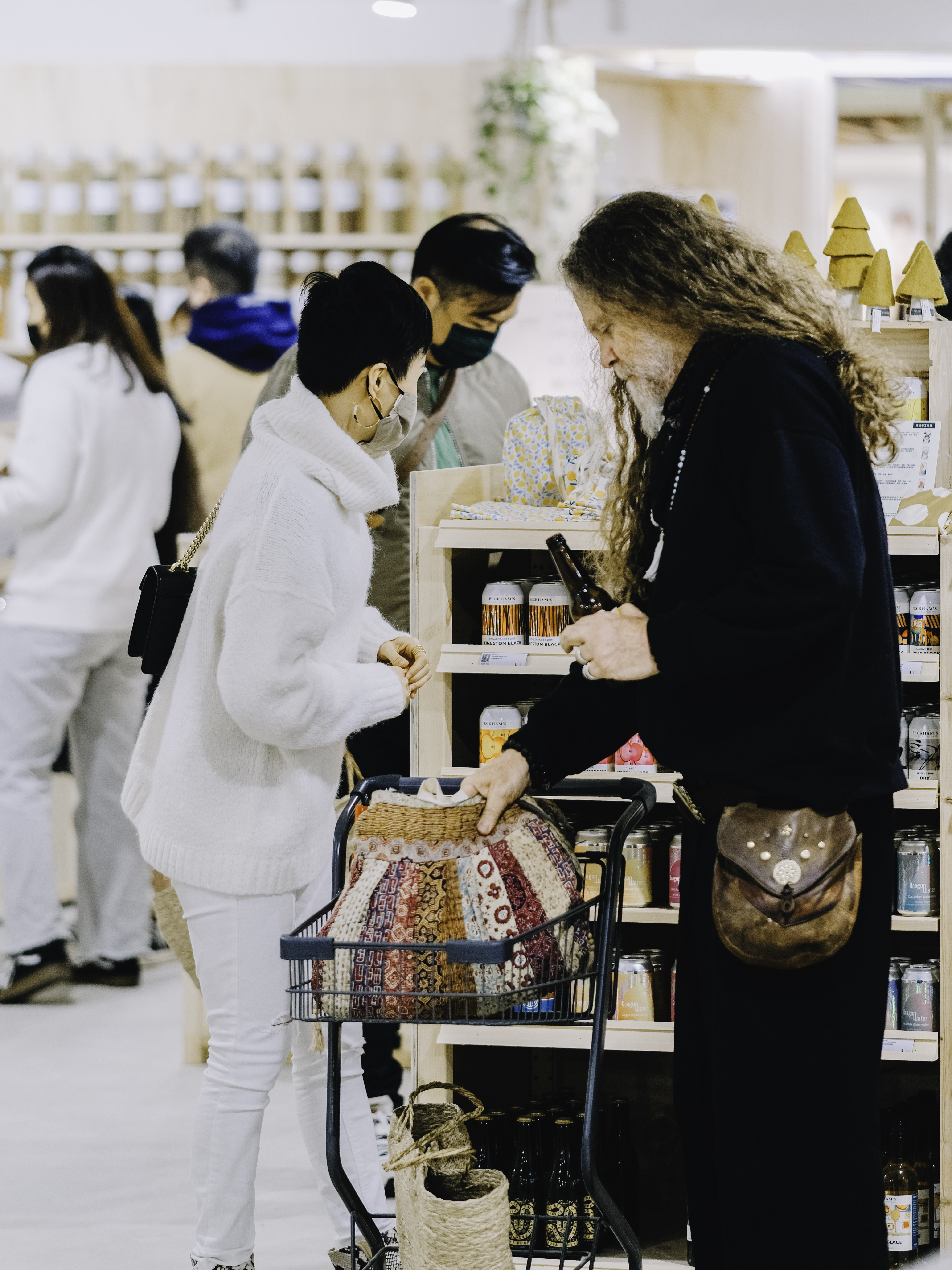
Dora and Kai then decided to start their own Zero Waste store that aimed to provide a wide range of products in one place. Slowood offers bulk food, refills of household and personal care products, organic vegetables, and fruits sans packaging, organic beauty and skincare products, slow fashion, and sustainable lifestyle and homeware.

“Bulk food and household refills have shown good performance, while skincare and herbal supplements are also popular and receive good reviews,” Peggy said, adding that Slowood finds ways to keep its prices friendly for customers by putting a lot of effort in sourcing products around the world.

The Slowood team has also made sure to make their special place more “welcoming” to people who are new to the Zero Waste concept.

“We are not only focusing on eco-conscious people; we would like to invite people who are less eco-conscious to join this Zero Waste movement,” Peggy stressed, explaining that they want to provide a gentler option for people who are not aware of sustainability yet or are reluctant to change their behavior. 

She explained that Slowood is learning with its customers and trying to forge their consumption habits by selling bulk and refills.

“They could start their sustainable journey with Slowood step by step,” Peggy said.

Slowood’s business quickly expanded in just two years of operation: from a small team of 10 in 2018 to 50 staff manning two stores offering delivery services. Slowood opened its third store days before Christmas 2020. 

This, despite the COVID-19 pandemic, which affected businesses—big and small—around the world.

Peggy said their prior focus on their online operations helped them face the challenges brought about by the unprecedented global health crisis.

“Digital transformation in the retail industry has never been this fast due to the lockdown. We have been developing our online outlet even before the pandemic so we are on track,” she said. 

In addition, Slowood reviewed its operations and allocated more resources to online development to keep up with the pandemic-related developments.

Peggy said Slowood tried its best to reinforce the Zero Waste message during the lockdown, even providing out-of-the-box offers such as the “mealbox solution” which encourages their customers to bring their own meal boxes.

“The customers are happy to do it,” Peggy shared.

They also spread the Zero Waste word on their social media channels, frequently updating them with environmental facts, various product features, and other relevant news.

“The most challenging part (in this business) is to communicate the Zero Waste message not only to customers, but also your suppliers and business partners,” Peggy said. 

While admitting that it takes time to educate the public and raise community engagement on Zero Waste practices, the Slowood team is hopeful that digital solutions would continue to help bridge the gap.

“Nowadays, people are more educated and the flow of information is moving faster. We could read the news and see unusual climate changes from the other side of the world,” Peggy said.

She added: “We believe that there will be more and more people being informed and willing to live in a planet-friendly way in Hong Kong.”

Website

Facebook

Photos courtesy of Slowood.

______________________

This article is part of the book, BUSINESS UNUSUAL: Enterprises paving the way to Zero Waste, a collection of feature articles on select enterprises in Asia Pacific that practice and promote Zero Waste principles. Published by Global Alliance for Incinerator Alternatives, the publication may be downloaded for free at www.no-burn.org/Business-Unusual.