Asia Pacific

Turning the Zero Waste vision into reality

Interview with Ahmed Afrah Ismail by Sonia G. AstudillThe vision started when as a kid, he wanted to plant trees and study Environmental Science to help save the environment. “As I grew a bit older, I realized that the impacts from those are not the same as what you can do with policy actions,” and so years later, with his wife Maryam Hamsha Hussain, Ahmed Afrah Ismail co-founded the Zero Waste Maldives that introduces local solutions and making these changes sustainable through participating in policy development for environmental reforms.

After graduating from the university with a degree in Mechanical Engineering, Afrah worked at the waste pollution section of the Environmental Protection Agency (EPA) in Maldives. During that time, he saw what the government was not doing and what they should be doing. “As a regulatory office, EPA was simply following the take-make-waste system and there was no work being done around circular economy. So I started reaching out and working on Extended Producer Responsibility (EPR), but funding was an issue at that time,” said Afrah. So together with his colleagues, they participated in a competition funded by the United Nations Development Programme (UNDP) and piloted a container deposit scheme as part of an EPR scheme. “It was successful, and the new government has incorporated EPR into their Strategic Action Plan as well as the Single-Use Plastic Phaseout Plans.”

He stayed a few more months in EPA, co-founded Zero Waste Maldives, and is now working for a different government agency while staying true to his vision for the environment. Looking back, Afrah shared that he first heard of GAIA when he was tasked in EPA to attend stakeholder meetings on incinerators and he did his research and “then I came across the GAIA publication, Questions to Ask When Evaluating a “Waste-to-Energy” Incinerator Project or Proposal.  After reading it, it did not make sense anymore not to do the right thing.”

GAIA sat down with Afrah to talk about Zero Waste Maldives, their beginnings, their work, and the vision.

Brief history of Zero Waste Maldives

Zero Waste Maldives started in 2018 but we registered in 2019. The mechanism of operating an NGO is a bit difficult in Maldives. Most NGOs die because of lack of funding. We did not want that to happen, so we started a social entrepreneurship model by selling Zero Waste alternatives that were not available here. Now, these alternatives (menstrual cups, cloth diapers) are sold in other stores in Maldives because we along with other like-minded partners championed them.  

With the goal of promoting a Zero Waste Low Impact Lifestyle and enable individuals, businesses, communities, and government to send nothing to the oceans, landfills, or incinerators, ZWM now has 15 to 20 contributors who are specialists in economics, communications, and engineering, working on different projects on a volunteer basis.

With almost 200 inhabited islands, what we want is to develop a waste management system that will work on different settings.   

We have also worked on other projects funded by the UNDP, Canada Fund for Local Initiatives (CFLI) , and United Nations Population Fund (UNFPA).  

What are Zero Waste Maldives’ top priorities?

First, we want Maldives  to get on the Circular Economy track. The country is very much a linear economy. We want to realign the government towards CE.

Second,  eliminating single-use plastics (SUPs) should be a priority as much as possible. We have managed to get the ball rolling on this. The Maldives now has a phaseout plan in place and there are import and production bans coming into place. By June 1, there will be a single-use plastic importation ban.  We work closely with the government’s environment ministry and the President’s office who are spearheading SUPs and EPR policies.  

Third is creating wealth opportunities through a waste wealth entrepreneurial ecosystem. We want to champion upcycling of fabric waste, promote reuse, and try to see if there is something else that we can do before we recycle an item. We cannot rely on recycling in Maldives, as we do not have any formal recycling infrastructure so we have to take other steps first before recycling.

What are your main ongoing campaigns?

We have a program with UNFPA to promote sustainable menstrual products and increase awareness on menstrual hygiene. So, we introduce people to available alternatives, we conduct webinar sessions, and distribute menstrual cups and cloth pads.   

We are also active on the anti-incineration campaign. There are plans to build a 500-ton capacity Waste-to-Energy incinerator very close to the capital city of Male’ in Thilafushi. This project is funded by the Asian Development Bank (ADB) and a replication of a failed incinerator project funded by the World Bank. The failed project was supposed to manage 40 tons of waste but is still not operational. The paperwork for the project began in 2008 and implementation was supposed to happen in 2015 but until now the Environment Ministry is trying to cover up and whitewash its failure.

The failed incineration project in R.Vandhoo was a bad project even from the initial concept stage. There was no real plan and it was haphazardly put together and executed. If proper data was collected and independent studies carried out by experts that were also not proliferators of incineration projects; I believe we would not have gone ahead with this project. Yet, ADB is replicating this WTE project. 

The ADB incinerator project has been approved where they are going to design, operate, and transfer to the government. There was no national legal mechanism framework to monitor the project risks and the Environment Ministry used that to their advantage. Lack of regulations is obviously more favorable to incinerator operators as regulations add more operational costs.

Apart from that, we are also working on reducing SUPs and waste via presentations and webinars that are catered to the public. A lot of people are open to SUPs bans and regulations but when we give them the idea of Zero Waste, it becomes difficult for them to comprehend. But there are of course niche markets and people are slowly embracing the concept.

Another new project is the Fenveshi funded by the CFLI. The project aims to help everyone in Male to stop drinking from plastic bottled water and start drinking in the city’s tap water in their homes and via public water fountains. We encourage the building of water fountains while educating the people and building trust in the municipal water supply systems. 

Another ongoing project is the FehiFathi, dhivehi words which translates to Green Stitch. Under this project, we reduce the amount of fabric that ends up in landfill by rescuing clothes that can be used secondhand and upcycling clothes into other reusable items. This project is focused on empowering women and works exclusively with local seamstress and other women’s development committees within the islands.  

What is Zero Waste Maldives’ biggest accomplishment or achievement?

The work we are starting with Adelphi (Germany) to create the EPR Mechanism for Maldives. If that is implemented, that will be our biggest accomplishment.

We played a big role in consulting and commenting on the SUPs policy and we have been continuously talking and putting pressure to the government and telling them the things that they can and should do. 

The President’s office has been pushing for SUPs ban for some time now and they are very keen on it that the President himself announced in the UN General Assembly that Maldives is phasing out SUPs by 2023. That is the push that the other agencies needed to follow suit. 

What challenges are you currently facing and how was the work impacted by the COVID crisis?

COVID-19 slowed things down for us, but it has also opened a lot of opportunities because people are more open to discussions and meetings around the waste management issues. If you manage your time well, you can have more meetings but of course that is also limited by the internet capacity of other countries.

Apart from the pandemic, another challenge we have is having to deal with old fashioned people who have an old-fashioned way of thinking, those who are not as open to innovation. I would say we need the older people to listen to the younger people, or perhaps even better, have the younger people lead.

What are the main environmental issues that your country/region is facing?

Waste mismanagement is the biggest environmental issue that we have and that is very much interlinked with health and social issues. With open burning, comes air pollution, and poor health for the people.

In Maldives, we still do a lot of land reclamation which impacts the coral reefs such as the ADB WTE incinerator project. The government keeps pushing for mega projects which are not impacting the people in a good way. We reclaim lands to build houses which the people cannot afford, and it does not solve anything nor does it make sense.  I’d say our biggest challenge is bad politics.

How do you see Zero Waste Maldives’ work evolving in the next years?

We will try to implement more social entrepreneurship businesses which will support the focus on Zero Waste management and will reduce the waste from top down. We will implement projects that will reduce waste and eliminate existing waste. In the midst of it, we will have CE projects that will create waste wealth, upcycling, and reuse.  

We would like to position ourselves as the leading NGO that drives a sustainablewaste policy in Maldives.

What are your thoughts on the waste crisis that many countries in your region and in the world are living in right now?

In some countries, the waste crisis can be addressed if there is a strong push from the people. Government always talks about individual action but if you look closely, it is the government who is not doing its job such as reducing waste top down and then they shift the blame to the people.

The waste crisis is not a segregated problem. It is not just my problem, or the government’s problem, it is our problem, and we need to see the big picture and work towards our goal of solving it. Even the big corporations who have been tagged as the biggest plastics polluters will have to be willing to change.

Do you collaborate with partners in other regions?

Yes, there is GAIA, Wildlife and Nature Protection Society in Sri Lanka, several NGOs in UK, Adelphi in Germany and Common Seas.

How does your work on waste relate to social justice?

The work on menstrual hygiene aims to help alleviate period poverty. We also try to provide alternatives to SUPs at the most affordable prices. We also advocate for environmental sustainability in all government development projects.
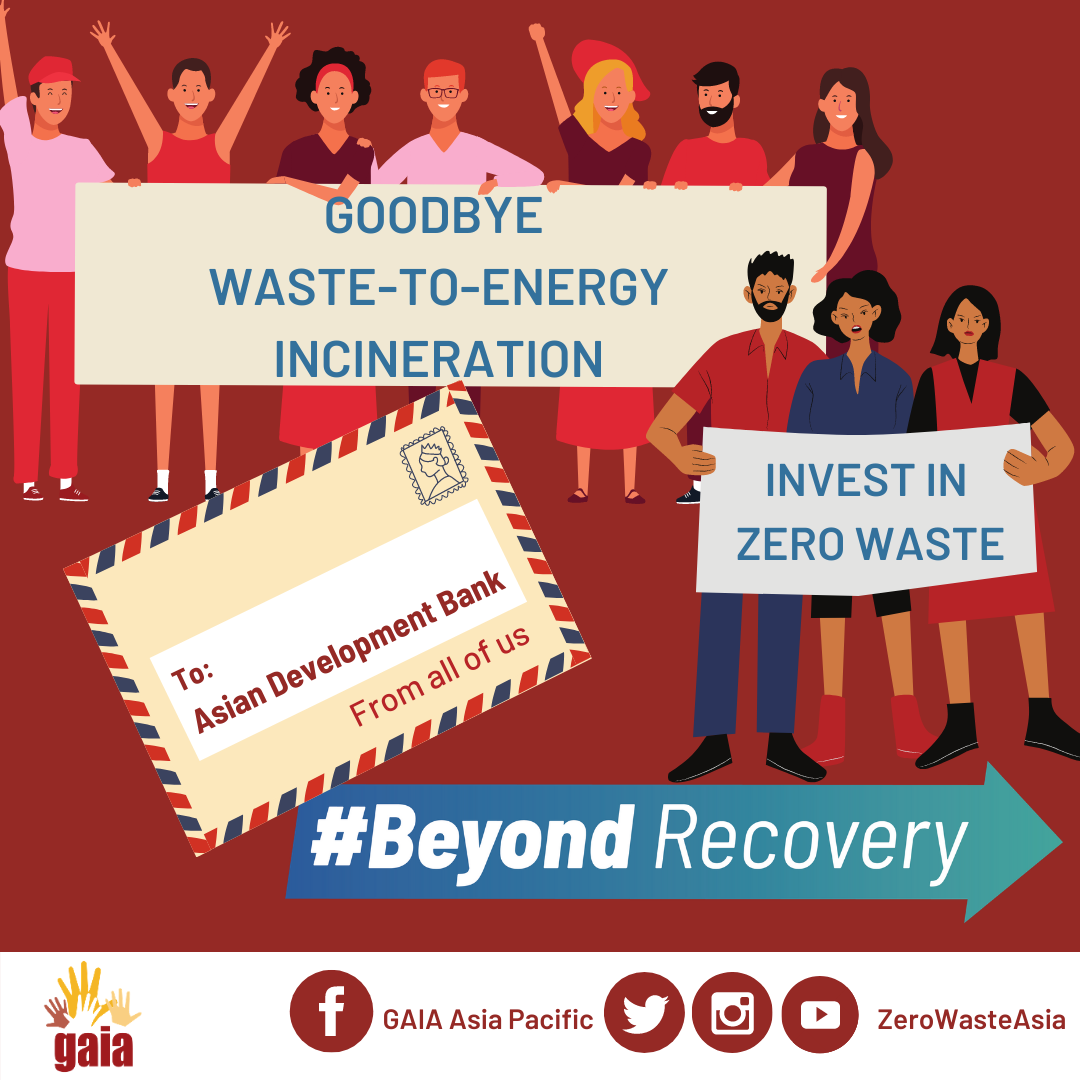
Zero Waste Proven Strategy for COVID-19 Economic Recovery: Mitigating Climate Change, Creating Good Jobs, and Revitalizing Local Economies

March 31, 2021- Environmental Justice groups around the world are joining a Global Day of Action to demand that our leaders go beyond recovery, to a future where zero waste practices drive clean air and water, more and better jobs, and a healthy environment for our families and communities, as our planet returns to a life-sustaining pathway where nothing and no one is wasted.

Over 150 groups across the globe have organized actions [50 events in 18 countries], signed petitions, or taken to social media to unite around a common blueprint for leaders to build a better future beyond COVID-19:

  1. Go zero waste, don’t incinerate. Regional and municipal COVID recovery plans and budgets should prioritize Zero Waste City systems, and phase out of false solutions like incineration.
  2. Include waste pickers and workers. Governments must include waste pickers and waste workers in these systems and provide them with a dignified living, as well as a seat at the decision-making table. 
  3. Break free from plastic. The pandemic must not be used as an excuse to fuel the plastic production crisis, and governments should enact policies that drastically reduce its production and consumption.
  4. Divest from incinerators, invest in local solutions. As part of a green recovery, International Financial Institutions must divest from waste-to-energy and instead finance local and regional zero waste systems.
  5. Put communities first. Governments and financial institutions must be fully transparent and inclusive with regards to how taxpayer money is being spent, not least by ensuring that meaningful consultations are held with civil society and affected communities early on in the process. 

Transitioning to zero waste systems has significant environmental, social, and economic benefits for any city.

Cecilia Allen, Global Projects Advisor at GAIA and contributor to the #BeyondRecovery publication series states, “At a time when governments are looking for ways to recover their economies, they need to realize the potential to create local, sustainable jobs by transitioning into zero waste systems. This will not only be good for the economy, but could also be the beginning of the end to the trap of eternal waste disposal, a headache for governments and a tragedy for the environment.”

GAIA members across the globe are uplifting these demands to their local and regional decisionmakers. In Asia Pacific, More than 50 environmental and human rights groups have urged the Asian Development Bank  (ADB) to stop funding waste-to-energy incinerators as the world faces climate, health, and economic crises. 

Ahmed Afrah Ismail, Co-founder of Zero Waste Maldives criticized ADB for investing USD 73 million for WtE in their country, saying that the project will sink their country into more debt and derail its net zero aspirations: “The ADB-funded WtE plant undermines our country’s single-use plastic phaseout plan, waste-to-wealth policies, and circular economy ambitions,” he added. “The government must look into zero waste, which is already proven to be viable financially, socially, and environmentally. Maldives can no longer burn more finances.”

In Africa members are taking action to both combat plastic pollution and build zero waste alternatives. For example, in Dar es Salaam, GAIA member Nipe Fagio will be debuting a Materials Recovery Facility for vulnerable populations, such as waste pickers and female community members, to own and lead waste management and earn an income from it.  

Ana Le Rocha, Executive Director of Nipe Fagio, states: “On this day, we demand that decentralized zero waste models become the rule for solid waste management in Tanzania and that communities are given an opportunity to embrace effective waste management by being presented with solutions that fit their needs. We take action for a healthy balance for people and the planet.”

European groups are pushing their governments to drop incineration and instead invest in a circular economy. Shlomo Dowen, National Coordinator of the UK Without Incineration Network (UKWIN) states,  “Incineration has no place in the circular economy towards which we should be working. Most of what is incinerated in the United Kingdom could and should be recycled or composted, and the rest should be designed out. The release of CO2 from incinerators makes climate change worse and comes with a cost to society that is not paid by those incinerating waste. ” –

In Latin America, waste picker groups are demanding inclusion into municipalities’ formal recycling systems and worker protections. Silvio Ruíz from the Asociación Nacional de Recicladores Colombia states: “Inclusion is the recognition of our work, which is one of the most important and honourable jobs in the world. It extracts from society’s waste everything that can be recycled and used so that it can benefit society again and minimise the impacts on nature.” 

 In the U.S., groups are pushing back on a provision of a federal bill that supports waste incineration. Denise Patel, GAIA US & Canada Program Director, states:  ”Rather than propping up a dying industry, transitioning to zero waste systems and building true clean, renewable energy systems is clearly a win-win solution for the climate and the economy.” 

For more information about the campaign, list of actions, and the #BeyondRecovery Publication series, visit zerowasteworld.org/beyondrecovery

Press contacts:

Claire Arkin | Communications Coordinator

claire@no-burn.org | +1 (856) 895-1505

GAIA is a worldwide alliance of more than 800 grassroots groups, non-governmental organizations, and individuals in over 90 countries. With our work we aim to catalyze a global shift towards environmental justice by strengthening grassroots social movements that advance solutions to waste and pollution. We envision a just, zero waste world built on respect for ecological limits and community rights, where people are free from the burden of toxic pollution, and resources are sustainably conserved, not burned or dumped. 

March 24, 2021–More than 50 environmental and human rights groups have urged the Asian Development Bank  (ADB) to stop funding waste-to-energy incinerators as the world faces climate, health, and economic crises. 

In a letter addressed to the Bank, the groups called on ADB to exclude waste-to-energy (WtE) incineration and other thermal-based technologies from the list of renewable energy sources and climate mitigation activities in its Energy Policy and other financial instruments. They recommended ADB to align itself with government-led climate action commitments made during the Climate Ambition Summit 2020.

“There is no reason why international financial institutions  (IFIs)  like the ADB should classify WtE incinerators as climate mitigation. Science and experience show that these dirty, waste-of-energy machines  are contributing to global warming as much as fossil fuel-based sources of energy, and are causing harmful effects on human health,“ Froilan Grate, GAIA Asia Pacific Regional Coordinator, said. “The ADB has been ignoring scientific evidence, government policies, and community sentiments critical to WtE incineration.”

The letter, sent ahead of the ADB’s major policy review processes on energy and safeguards  on 8 March 2021, was facilitated by the Global Alliance for Incinerator Alternatives. It was signed by non-profit organizations and social movements such as GAIA, Greenpeace, Oceana, Center for International Law ,  Zero Waste Europe, —all members of the global movement Break Free From Plastic— and International Accountability Project, 350.org Asia, NGO Forum on ADB, and regional and national Zero Waste movements.

The ADB is undertaking major revisions in two of its policiesEnergy Policy and the Safeguard Policy Statementthat will impact on the region’s immediate needs to both recover sustainably and act on the climate crisis. Aside from demanding ADB to divest from WtE incineration, the groups are also calling for better implementation of ADB’s social and environmental safeguard standards in developing member countries such as Maldives and the Philippines, where WtE incineration projects are underway. 

ADB’s so-called “clean energy” financing in the last decade is valued at over $23 billion. The portfolio includes WtE incineration, which has been excluded in the latest EU Taxonomy Reporta listing of economic activities that are considered “’sustainable finance.” WtE incineration has low resource efficiency and high loss in economic value of potentially recyclable materials.

Under the ADB Strategy 2030, the Bank committed to shifting 75%of its operations towards supporting climate change mitigation and adaptation, as well as providing $80 billion for climate financing, by 2030.

“The growing interest in making recovery packages stimulating not only for the economy but also for the environment is a  welcome progress in addition to the increasing number of green  funding mechanisms. But we should be prudent in identifying which green activities deserve incentives and public guarantees as we are currently facing multiple crises,” Grate said. 

The groups asserted that WtE incineration is not an efficient source of energy. Waste in developing countries have a high moisture content which reduces the energy recovery efficiency of waste incineration. 

They added that WtE projects pose irreversible and long-term fiscal, environmental and social risks for ADB and its borrowing countries which are already saddled by recovery loans. The letter outlined these risks. 

The letter also debunked WtE as a climate mitigation activity, saying that on the contrary, it is a hindrance toward decarbonization. It cited experiences of the European Union and the United States showing WTE incinerators’ contributions to GHG emissions.

The letter also highlighted that the graver and long-term consequences are externalized by communities and the environment for generations. “WtE incineration burn various materials which contain hazardous and toxic content such as heavy metals, polychlorinated biphenyls (PCBs), and brominated polyaromatic hydrocarbons (PAHS) which are proven to cause neoplasia, congenital anomalies, infant deaths and miscarriage, cancer, and other life-threatening illnesses,“ the letter stated.

To date, ADB has not responded to the letter. 

Global Day of Action 

GAIA is mounting a series of protests in the region toward a Global Day of Action (GDA) on March 31 with Zero Waste advocates, climate justice movements, and communities affected by WtE incineration projects.

Waste pickers and workers are also joining the GDA to call for better representation in consultation processes involving solid waste management and incineration projects because of the latter’s impact on livelihoods and work spaces. A full list of demands can be found here. 

This year’s GDA carries the theme #BeyondRecovery to challenge world leaders to do more than just recover from the devastating impacts of its single economic growth-driven models without considering the environmental and social consequences of policy and investment decisions. 

It is a day to call on IFIs to divest from incinerators and invest in local solutions in its recovery plans, and on governments to put communities first by being fully transparent and inclusive with regards to how taxes are being spent in this time of crises, not least by ensuring that meaningful consultations are held with civil society and affected communities early on in the process of developing recovery roadmaps and legislations.  

For more information, please contact:

Sonia Astudillo, GAIA Asia Pacific Communications Officer                         

sonia@no-burn.org, +63 917 5969286

About GAIA:

GAIA is a worldwide alliance of more than 800 grassroots groups, non-governmental organizations, and individuals in over 90 countries. The organization works to catalyze a global shift towards environmental justice by strengthening grassroots social movements that advance solutions to waste and pollution.

Renewable energy is defined as energy produced by natural resources — such as sunlight, wind, and geothermal heat — that are naturally replenished within a certain time span. Municipal solid waste is derived from finite natural resources and burning these materials for energy significantly hinders resource conservation, while burdening communities with pollution and climate impacts.

A new study reaffirms that waste incineration is neither a renewable nor clean source of energy through a thorough comparison with other energy sources. Waste incinerators, the dirtiest source of energy on the grid today, must not be part of national or state climate plans.

PDF

by Salve Canale

If you know your way around Intramuros, Manila, you have probably come across a pop-up market near the Manila Cathedral on a weekend. That’s the Old Manila Eco Market (OMEM), a Zero Waste weekend market that showcases locally sourced products like fresh fruits and vegetables, food consumables, personal care products, and handicrafts.

It was a dream for Old Manila Eco Market founders Shine de Castro and Sheila Leyva to have a weekend market in Manila. They wanted to bring locals back to enjoying their own tourist attractions while experiencing a weekend market without having to endure the heavy traffic and travel for hours. They pitched the idea to the Intramuros Administration and since 2018, the pop-up store has been a constant part of the Walled City.

ZERO WASTE ALL THE WAY

As much as it is a business, the Old Manila Eco Market is also an initiative to promote eco-friendly lifestyles. As enthusiasts of pop-up stores, Shine and Sheila are fully aware that these spaces  generate large amounts of waste, particularly disposables. So, it was a mutual decision to embrace Zero Waste from the beginning. That means strictly banning single-use plastics in all kinds of products, including ready-to-eat food, for their merchant partners. Thus, if a merchant applying to be a part of the weekend market cannot shift to reusable packaging, they tell them to reapply when they are ready to make the shift.

“It was challenging at the start,” Shine admitted. “Manilans are new to the concept of Zero Waste and a local weekend market.” 

Shine said that most people are not even aware that shampoo bars and beeswax wraps existed. They are also very curious about how a refilling system works. People are also very surprised that locally and naturally made products can be purchased by anyone at relatively low prices. “We don’t have a lot of customers yet but we just keep on keeping on and continue to spread awareness about Zero Waste and local alternatives.”

MARKET DAY AND MORE

For Old Manila Eco Market, every market day is made special by every market goer who learns about Zero Waste through the products and services they are offering. 

As Shine noted, being Zero Waste goes beyond substitution of packaging and creating awareness. That’s why they are determined to help their partners and consumers navigate the Zero Waste lifestyle not only by offering them -eco-friendly products but also by facilitating training sessions that promote sustainable lifestyle. Some of these training are on solid waste management, urban farming, bokashi composting, recycling/upcycling, DIYs, sustainability summit, and similar topics–offered at a minimal cost.

To give their partners more platforms to showcase their products, OMEM collaborates with other institutions and organize pop-up markets in malls and schools, and in organizations’ event venues. “We work with our beneficiaries to make them a Zero Waste community and empower them financially,” Shine said, adding that they often get invited by organizations to set up Zero Waste pop-up markets during events.

As with other businesses, OMEM also sometimes experiences difficulties. When things become difficult, Shine and Sheila would remind themselves of the reason why they started Old Manila Eco Market: to bring Zero Waste in one community at a time. 

When the lockdowns were imposed in Metro Manila beginning March 2020, they were not able to organize green events and they had to temporarily stop operating their pop-up events, which was the main source of their income. Shine and Sheila used the time for reflection. 

“We reflected on our business model, our plans for the coming years, and going back to basics,” Shine shared. Presently, they are giving training on growing food in their own community. “ The produce they grow will not not only provide food on their tables but could also be a source of additional income,” Shine said.

She added: “We are not just a store and we are not here just to sell products and services. We are building a community, not only of brands, but also of other movers and shakers working together to achieve a more sustainable lifestyle. All these while also promoting the local tourism industry.

Facebook

Instagram

___________________

This article is part of the book, BUSINESS UNUSUAL: Enterprises paving the way to Zero Waste, a collection of feature articles on select enterprises in Asia Pacific that practice and promote Zero Waste principles. Published by Global Alliance for Incinerator Alternatives, the publication may be downloaded for free at no-burn.org/business-unusual

by Johanna Poblete

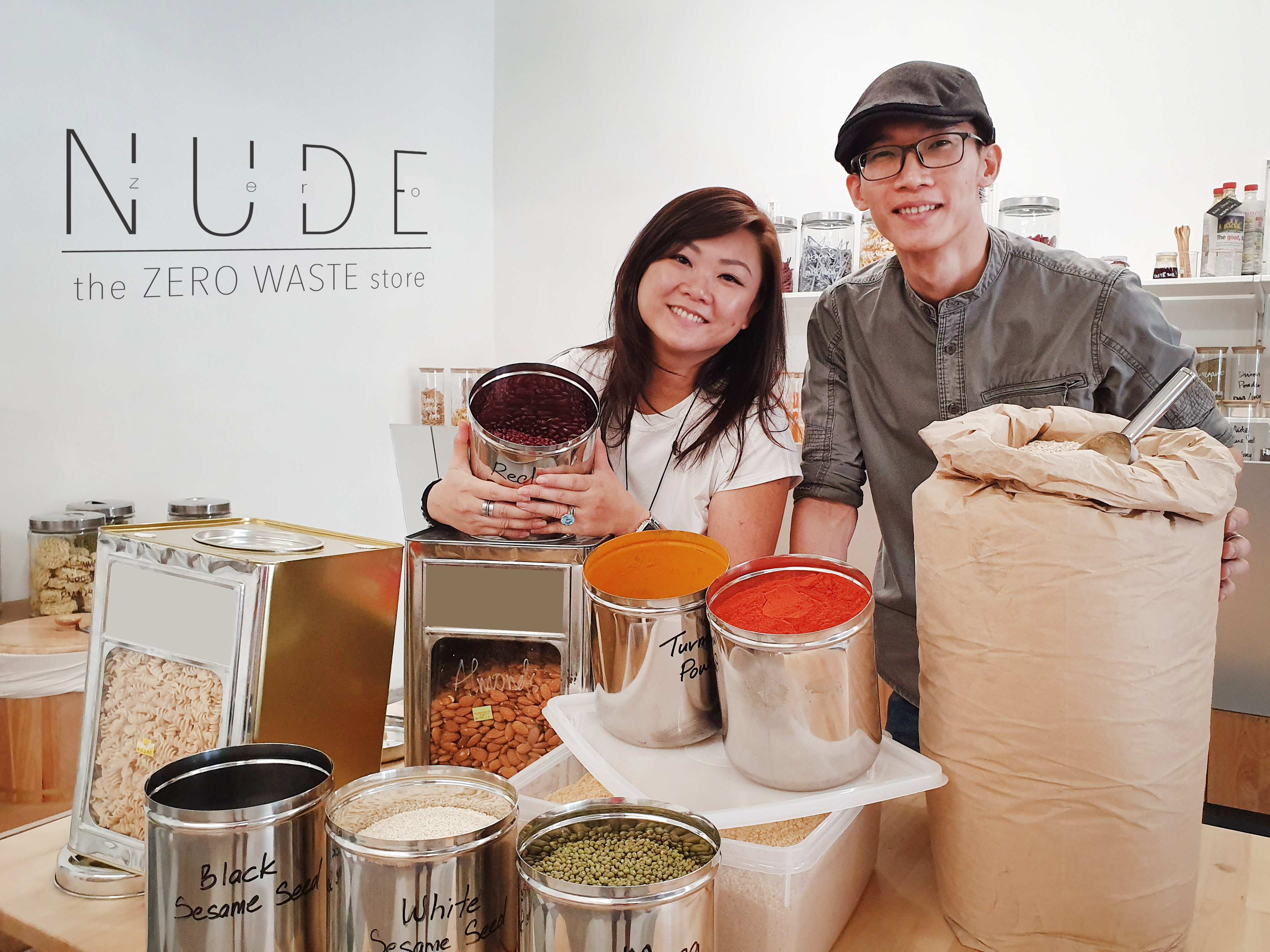
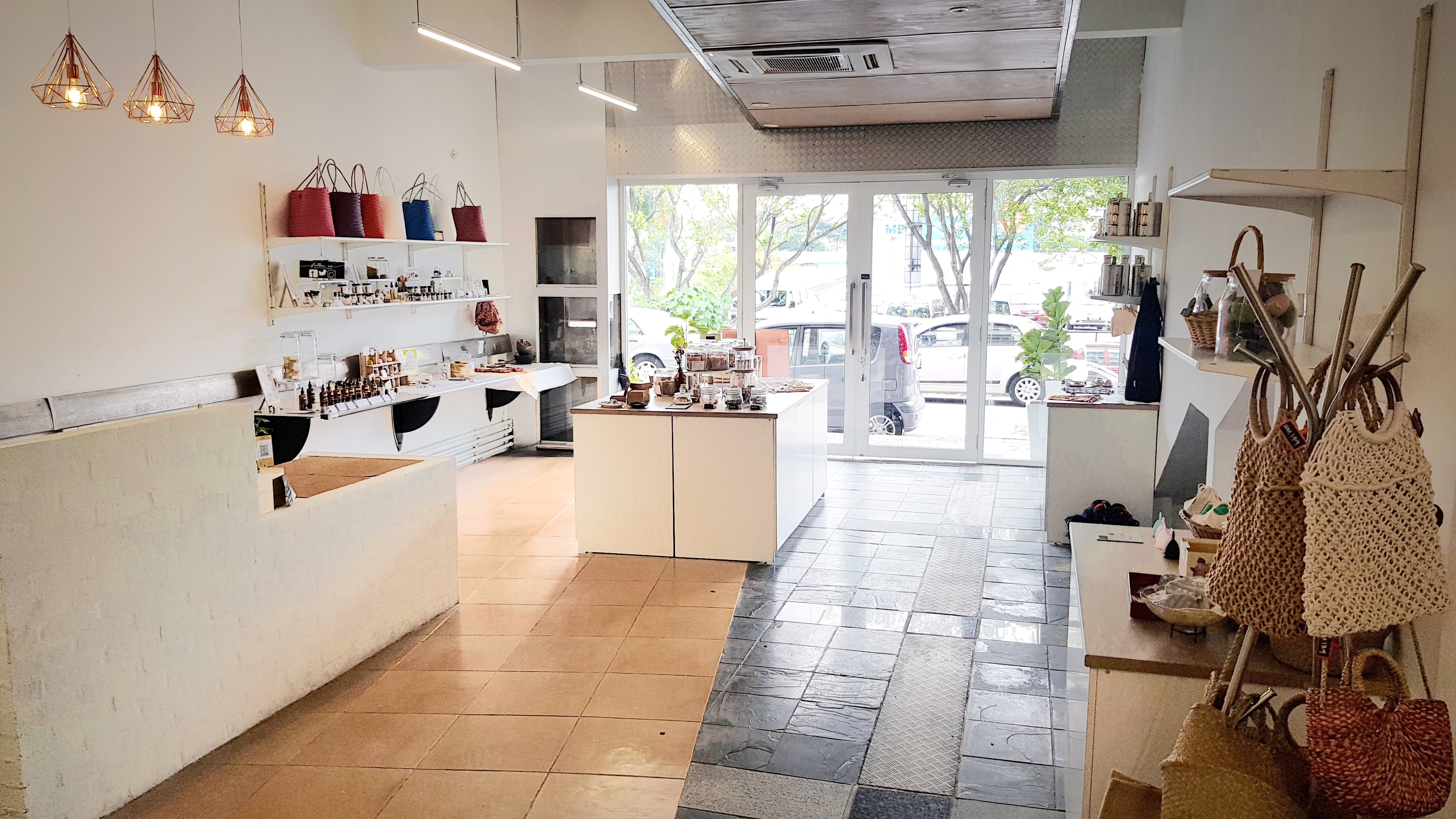
NUDE, the Zero Waste Store in Seksyen 19, Petaling Jaya, Malaysia has reimagined the typical supermarket setting into a friendly neighborhood staple as a modern, minimalist, plastic-free zone, where one can find as many package-free items under one roof. Their motto: “Just the Good Stuff–Package Free, Harm Free, Guilt Free.”

Co-founders Cheryl Anne Low and Wilson Chin conceptualized NUDE as a lifestyle store catering to customers who care for the environment and want to minimize their plastic and food waste. Supplies are mainly sourced locally and come in bulk, reusable, and returnable packaging. Store products are sold by the gram and placed in refillable reusables for rent in-store or preferably brought by the customers themselves. 


“[Our first proposition was] to give the consumer the choice to have everything they need, without the unnecessary plastic packaging,” Cheryl said. “Secondly, we wanted the consumers to have the choice of buying as much or as little as they actually need, rather than having to buy predetermined sizes, weights, or packages […because] how often have we found bags at the back of our fridge with food that has expired and had to be thrown out?”

Pocket-friendly practice

While Zero Waste stores are not new in Malaysia, most cater to a niche, premium market or have a limited product catalogue. When NUDE opened in 2018, they targeted the general populace and carried as many of the daily essentials as possible, ranging from Zero Waste lifestyle aids such as menstrual cups, bamboo toothbrushes, and solid toothpaste (“Moods”); to herbs and spices, handmade plain and vegetable pasta, homemade cookies, and local varieties of rice and coffee (“Foods”); to all-natural insect repellents, eco-friendly laundry detergents, and pet shampoo (“Goods”). 

“We made it available at one single point—a one-stop Zero Waste shop, if you like—for all your daily needs,” Cheryl said. 

The proprietors of NUDE make sure to extensively source quality products that can be sold at affordable price points, thus breaking the perception of Zero Waste being expensive and difficult to adopt. 

“Our prices are comparable to, if not better than, supermarket prices, which helps our customers go Zero Waste without burning a hole in their pockets…The fact that you don’t need to buy pre-packaged quantities allows you to dictate exactly how much you need to consume and spend,” Cheryl said. 

According to Cheryl, finding quality products that do not harm the earth at reasonable prices requires a lot of research and patience and discussing their advocacy with their suppliers. “Making the suppliers understand the reasons why we would like to buy package-free from them and coming up with workable realistic solutions for both parties is important,” she said, adding that to ensure the quality of the products they carry, they go “into the detail of the ingredients and do research on each of the ingredients,” she added.

No clutching at straws

Plastic use is so pervasive that the average consumer rarely questions the amount of waste generated down the line to allow for a single-use purchase. This same consumer may be unconscious of how plastic, which takes decades to break down, usually overfills dumping grounds and pollutes the ocean. 

The catalyst for Cheryl was seeing a video of a plastic straw being painstakingly removed from the nostril of a sea turtle. “Being a scuba diver, it affected me so much that it set me on a frenzy of fact-finding; why and how it could happen. That opened my eyes to what human activity is doing to the world and who suffers the most from it,” she said. 

The journey to a Zero Waste lifestyle for Cheryl and her partners started with a refusal to use plastic and eventually led to launching NUDE, just so they could educate more people on the impact of single-use plastic. She considers their customers as “co-passengers” in this journey. 

“Expect the unexpected,” says Cheryl, referring to the “back-breaking” labor of the past two years, including ensuring the safety of their customers during the Covid-19 pandemic. “We take their orders and sanitize and refill their containers for them. Before this, it was self-service, where customers were free to browse and make use of the weighing machines to refill their own containers with our guidance and assistance when they needed it.”  

NUDE remains focused on servicing the needs of zero waste practitioners and aspirers alike, even as Malaysians become increasingly committed to the lifestyle. “We have seen a massive growth in awareness, as well as eagerness in people about consciously contributing towards the healing of the planet,” says Cheryl, recalling how, in 2018, they would teach children about the concept of Zero Waste store.

Many children would pop in for biscuits and snacks, so we would teach them to bring their own containers. They would go home, tell their parents, and their curious parents would come visit us. Their praises for what we were doing, in teaching their children about the environment and how something like packaging can be harmful to marine life and animals, were always heartwarming. The parents appreciated what we were doing, and the kids came every day,” she shared.

Now the concept is not so novel, with more Zero Waste stores opening to cater to the burgeoning market. “It is a matter of time before this phenomenon really explodes and the consumers demand more and more zero waste options. Most definitely, this is the way of the future, sooner than later.”

Website

Facebook

_____________________

This article is part of the book, BUSINESS UNUSUAL: Enterprises paving the way to Zero Waste, a collection of feature articles on select enterprises in Asia Pacific that practice and promote Zero Waste principles. Published by Global Alliance for Incinerator Alternatives, the publication may be downloaded for free at no-burn.org/business-unusual.

by Trang Le Thi 

The Covid-19 pandemic has greatly affected Hoi An City where GreenViet has been implementing the “Building and Sharing Zero Waste Models in Selected Asian Communities” project under USAID’s Municipal Waste Recycling Program (MWRP). IEC  (Information, Education and Communication) activities have been postponed until the end of 2020. In addition to the pandemic, flooding and heavy rains have hit Hoi An and other parts of Central Vietnam, forcing project implementers to rethink activities and continue preparations virtually.

IEC and consultation activities resumed in December 2020, receiving strong support from all stakeholders. These activities have reached nearly 1,000 people in the nine villages of the two communes of Hoi An City.

Among these activities are: 

  • Community Outreach on Waste Sorting, Reducing Plastic Use and Composting.. This program was organized for 436 people representing 420 households in the Cam Thanh commune, and 433 people representing those from the Youth Union, Women Union, and Farmer Union in the 3 villages of Cham Island. Aside from raising awareness on the importance of waste classification at source, community members were also  introduced to the different ways to treat their kitchen waste by way of composting to reduce the amount of solid waste generated from each household. 


  • Developing Commune-Level Green Codes. Representatives from 60 households in each commune were invited to consultation meetings to propose Green Codes which would be used in their area. The Green Codes were agreed on by the community and printed out to display in public places for all community members and visitors to follow. An example of the Green Codes in Cham Island which is displayed in Hai Tuong Pagoda area, includes recommendations on (1) Using non-disposable containers for storing food, (2) Using personal water bottles to avoid using SUP products, (3) Using your own bags when shopping, (4) Avoiding or not using of nylon bags, (5) Saying NO to SUP products, and (6) Not using plastic water bottles in community meetings.


  • Door-to-door Education Programs. These activities have been implemented every week by a small group of project field officers and volunteers to comply with the government’s regulations on social distancing. Sixty households in 2 communes have been selected as pilot sites to be monitored for the activity. After 3 months, most of the members have become well versed on waste classification and composting. Furthermore, two Materials Recovery Facilities (MRF) have been set up in the Cam Thanh commune and Cham Islands to further encourage waste sorting among households.


With strong participation from the communities, the Hoi An Government, represented by the People’s Committees, in collaboration with the Quang Nam’s Tourism Association, has set a goal for Hoi An City to become a Green Destination by 2025.  It has been agreed upon by 40 businesses during the planning workshop last December 12th 2020 to focus on Zero Waste solutions to contribute to the goal. 

Green Codes displayed in Cham Island. Photo courtesy of GreenViet.

During the International Zero Waste Cities Conference 2021 (IZWCC 2021), Nguyen Minh Ly, Vice Chairman of Hoi An’s People’s Committee,  shared this statement in support of a Zero Waste Hoi An: “One of Hoi An’s priorities in the next period is to build a green, clean city with a special attention on reducing waste. This is an important direction that we are committed to.” He also confirmed that, “We wish to have support and collaboration to help Hoi An city in achieving the goals to [become] a Zero Waste city. We wish to learn from and share experience with other Zero Waste cities to contribute to a Zero Waste planet.” This is considered a very good sign that the project’s efforts in “Building and Sharing Zero Waste Models” in Hoi An city has been successful and has persuaded its government and communities to be the 1st Zero Waste city in Vietnam. 

Representatives of Hoi An government shared their messages in the virtual dialogue in IZWCC 2021. Photo courtesy of GreenViet.

—————————-

GAIA is grateful for the contributions from GreenViet. This feature is made possible through the Zero Waste Cities project  an initiative coordinated by GAIA Asia Pacific and funded by the Plastic Solutions Fund (PSF) and USAID. The views expressed in this feature do not necessarily reflect that of its funders.

by Marlet Salazar

The tingi or retail economy has been blamed for the proliferation of plastic sachets in the market. These two Philippine initiatives show that retail without plastic sachets is not only possible; they are the way. 

Salin PH: Mobile Retail Store

The desire to debunk the myth that going Zero Waste is expensive led to the founding of Salin PH (formerly Refill on the Road), a micro, small, and medium enterprise that offers sustainable products and promotes a plastic-free lifestyle.

“We want to make our products accessible by going to different locations and at the same time, compete with the pricing in the supermarkets,” said Krishia Pauline Ellis, CEO of Salin PH.

Salin PH started the preparations of rolling out a mobile refilling service in a customized vehicle targeting mainly condominiums. The COVID-19 pandemic sidelined the idea but it didn’t stop Krishia and the group from pursuing their advocacy.

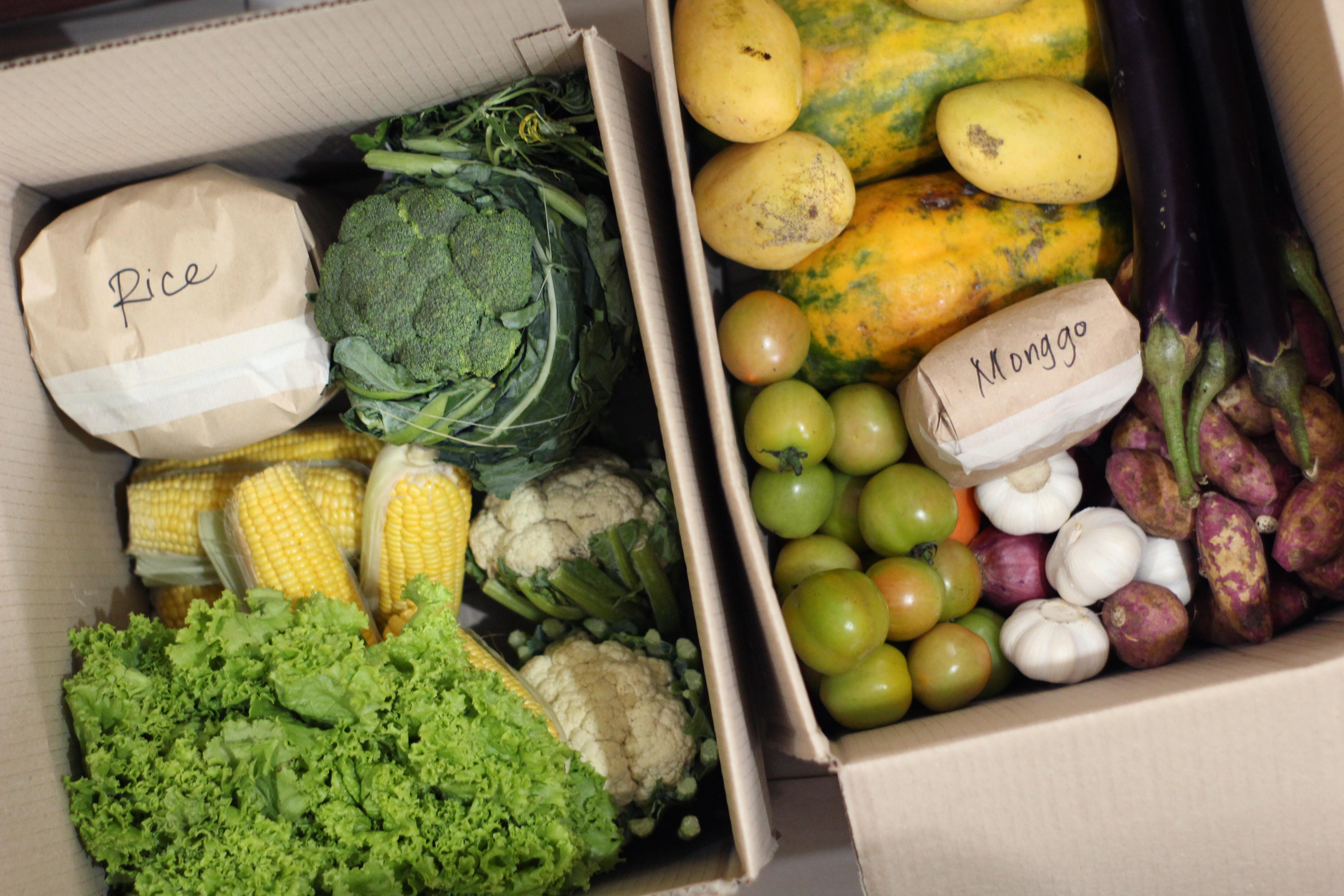
Salin PH is also trying to challenge the current mindset that selling tingi or retail is not possible without plastic sachets by selling its products via refill. Salin PH’s product lineup includes fresh produce—which is the store’s bestseller—as well as spices, coffee, superfood, nuts, loose leaf tea, personal, home care products, reusable jars, and eco-bags. Salin PH also offers a collection of Clean and Dry Plastic waste, alongside the product deliveries, which are then diverted to organizations who process them like The Plaf and Green Antz.

In response to the challenges of COVID-19, they used the online platform and increased their digital presence while still ensuring “a great customer experience.”

According to Krishia, the pandemic sped up e-commerce growth. Resources have become decentralized, giving more people better access to products, but it has also become harder to compete and be noticed online. “We learned that it is important to do content marketing continuously so that we can increase our audience.”

While the challenge of the pandemic dampened spirits and the economy, Salin PH is looking at expansion next year. 

“We are confident that we will expand even more by 2021 because our priority since the start is solving the needs of our customers,” Krishia said. “As long as we try to understand and talk with them constantly, we believe that we can grow even more.”

The Refillery: Your Community Refill Store

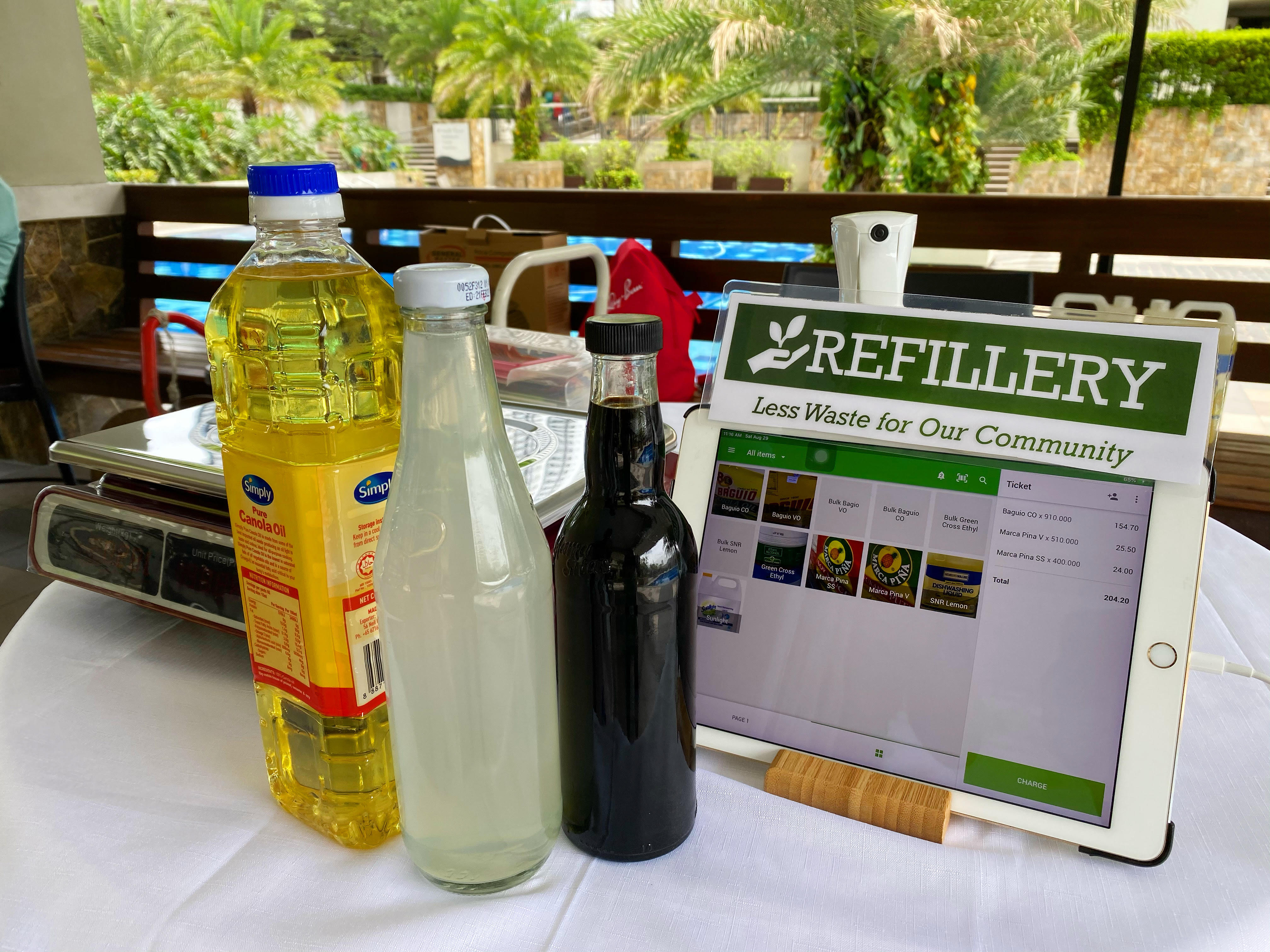
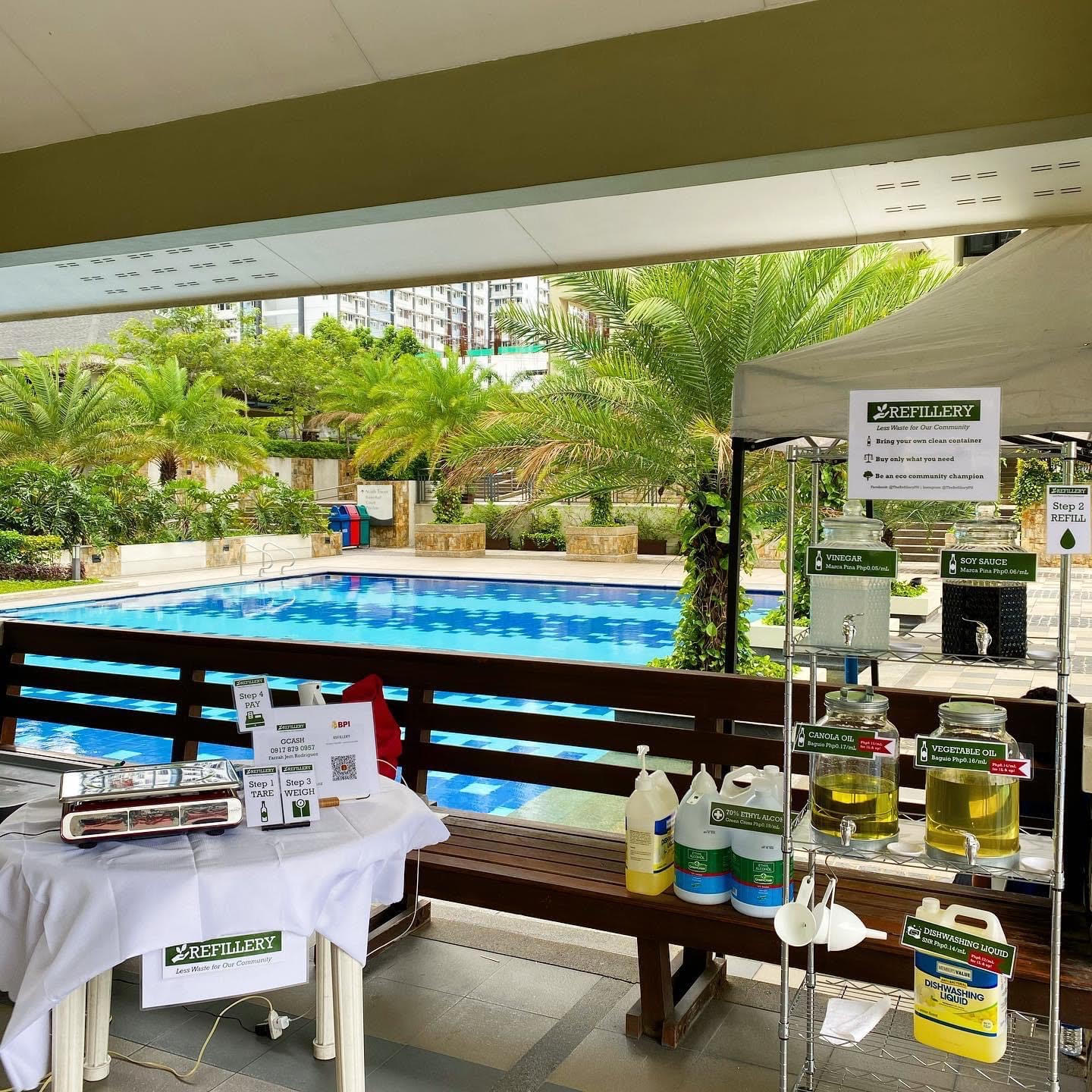
Founded by eco scuba divers who have been doing ocean cleanup until COVID-19 happened, The Refillery is another endeavor that, in the words of one of its founders, Farrah Rodriguez, is trying to be “low impact.” 

The Refillery demonstrates, among others, that the pandemic is an opportunity to improve. If for many, the pandemic paused all their planned projects, The Refillery’s founders found an opportunity to continue their environmental work by beginning to sell (retail) tingi products. 

The initiative also shows that embracing the tingi (retail) economy does not need to mean resorting to disposable plastic sachets. It sells everyday condiments such as black pepper, canola and vegetable oil, local salt, soy sauce, and vinegar through refillable containers along with household products like dishwashing liquid and 70% ethyl alcohol.

“With the fear of getting the virus from going out and being exposed, our community encouraged a community market that allowed us to refill our neighbors,” Farrah said.

The Refillery started around April or at the height of coronavirus infection and quarantines.

The fear of not working out the business plan and advocacy was quickly erased when upon the launch, the community responded favorably. Seeing that what The Refillery was doing is beyond making a profit, their neighbors supported them openly by patronizing their products. It also helped that people don’t want to be infected so not wanting to go to crowded places such as the supermarket helped push the value proposition of reducing waste.

According to Rodriguez, she has received demands to open up more shops but she has a day job. However, she is not disregarding the possibility of a branch next year when things will be more manageable than the current situation. 

“I’d also love to work with more organizations that can help me learn about eco-projects for communities,” Farrah said.

The tingi economy doesn’t have to go if people want to go Zero Waste–we just have to change how we do things–from prioritizing convenience at the expense of the environment, to putting our health and that of the environment on the top when making our choices. 

It seems hard, but Salin PH and The Refillery and their likes show the paradigm shift is not only possible, they also make it look easy.

The Refillery’s Facebook Page

Salin’s Facebook Page

Photos courtesy of The Refillery and Salin.

______________________

This article is part of the book, BUSINESS UNUSUAL: Enterprises paving the way to Zero Waste, a collection of feature articles on select enterprises in Asia Pacific that practice and promote Zero Waste principles. Published by Global Alliance for Incinerator Alternatives, the publication may be downloaded for free at www.no-burn.org/Business-Unusual.

Interview with Mageswari Sangaralingam by Sonia G. Astudillo

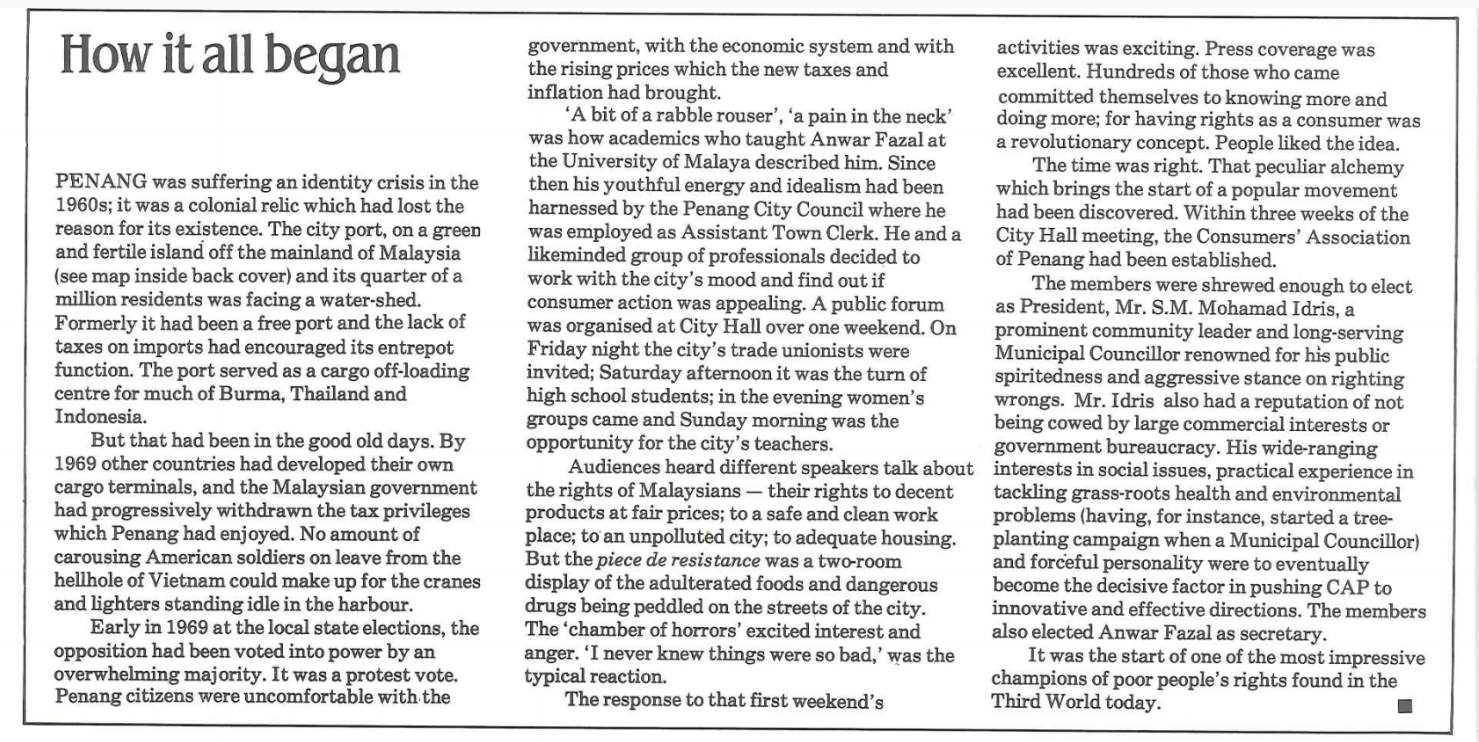
“High powered advertising and the aggressive campaign by transnational companies to ensure that the imported consumer culture penetrates and permeates through every social strata and every corner of the land…  the subtler but more deadly form of exploitation by dumping dangerous and substandard products which have been banned or withdrawn from the markets in industrialized country, the exportation of factories for production to evade stricter occupational safety and environmental laws, and the environmental destruction to make way for development,” according to the article Value for the People: The potential role of a consumer movement in the third world by Khor Kok Peng are the things that prompted the creation of Consumers Association of Penang (CAP) way back in 1969.  Anwar Fazal, a leading civil society activist founded the organization in a library in Penang as a response to the growing number of “development” projects in the 60s. 

Excerpt from the book “People with a purpose: The Consumers Association of Penang”.

Over 50 years later, CAP has grown its work and reach as a grassroots non-profit, civil society organization based in Malaysia that aims to promote critical awareness and action among people to uphold consumer rights and interests.  The group is focused on education, community mobilization, research, advocacy, training, and publication.  “Unlike other consumer organizations, CAP’s motivation is value for the people,” says Mageswari Sangaralingam, CAP research officer.  “CAP looks at the types of development being pushed, who is it for, and if it is genuine development or development to satisfy the needs of a few.” Of late, CAP’s value for the people has evolved into “to the people, for the people, with the people”.  The number of staff has decreased from 120 to 30 and in 1977 the Environment Section transitioned into another organization, Friends of the Earth (FOE) Malaysia, but that has not stopped the team from safeguarding consumers and ensuring environmental justice. GAIA sat down with Mages, who has been with CAP since October 1992 after completing her BSc in Human Development course.  “I went for several job interviews, but I got interested in CAP because it was laid back, staff not required to dress up as in the corporate world, open office environment, and I was interested in the work that they were doing.”  Working in the rural and community section, Mages is now more engaged on waste trade issues and plastics pollution as the problem has escalated in the country and region.     

What are CAP’s top priorities? Our priorities include:

  1. In the area of health — control of antibiotic resistance, affordable prices for medicines, food and product safety, and control of sugar, tobacco and dangerous food items.
  2. Promotion of natural organic farming and urban farming at the family, community, school, and farmers level.
  3. Environmental protection.  We help conserve forest and hill-lands, conserve water resources, combat climate change, promote public transport, reduce wastes, tackle pollution, and integrate sustainable development into national and local plans.
  4. On economics and finance.  We promote financial literacy including for the young, management of debts, and promotion of sound economic, trade, and financial policies, in the context of global uncertainties and instability.
  5. On tackling social problems.  We look into the cost of living, housing, poverty, inequality, workers’ wages, farmers’ produce prices, and migrant workers’ rights.
  6. We help consumers and young people question wasteful and unsustainable lifestyles and consumption patterns, materialistic consumer culture, and the social effects of digital economy and 4th industrial revolution.
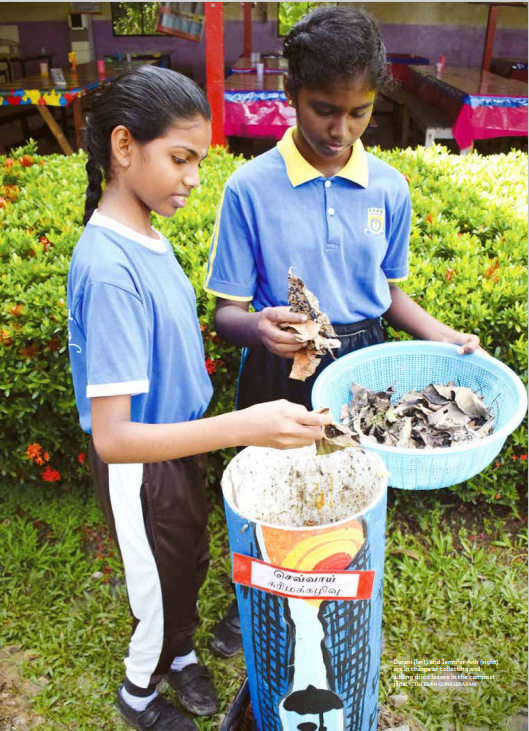
Darani (left) and Jennifer Ann (right) are in charge of collecting and adding dried leaves in the compost pipe. © THEEBAN GUNASEKARAN
  • In the rural areas, we look at the issues faced by farming communities i.e. their livelihoods, incomes, and land security. We help revive and develop the rural economy and protect the environment in rural areas i.e. river and sea pollution, hill chopping, deforestation, reduced fishery resources, among others.
  • In the urban areas, we look at the issues of urban land-use, public transport, housing for the poor, prevention of floods, and expansion of green spaces as part of “sponge city” strategy.
  • We help create more public participation by building the capacity of communities to understand and articulate their interests, and to engage in local, state, and federal policies/plans and their enforcement.
  • Besides the priority issues, CAP is also focused on attracting younger people to be staff or volunteers and developing the use of social media to reach a wider and younger audience.  We want to help develop communities and community leaders to take up their issues and establish a training and awareness building module, and educate individual consumers, communities, organizations on CAP’s issues and thereby create multipliers. We want to build up the future sustainability of CAP through the mobilization of funds and in strengthening the organization through the participation of local communities, young people, women and intellectuals.

    What are CAP’s main ongoing campaigns? Currently we have campaigns on agroecology, farming, plastics waste issues, and Zero Waste.  We continue to look at “development” projects and policies that are harmful to the communities.  We are also working on sustainable consumption and financial management.     What are CAP’s biggest accomplishments and achievements? CAP’s pioneering work led to the establishment of the Environment Ministry and the enlargement of the Ministry of Domestic Trade and Consumer Affairs.  We have worked with the Education Ministry and set up consumer clubs in 600 schools. Our sustainable agriculture project has trained families, schools, and communities in natural farming and our work on trade agreements provided valuable inputs to several Ministries and government leaders in formulating trade negotiating policies.

    How to use herbs for disease-free life : Selvi’s contribution towards zero waste is significant because she is reaching out to the community continuously. @THEEBAN GUNASEKARAN

    CAP has a record of being “ahead of the curve”, for example on changing the nature of the consumer movement, raising environmental issues, embarking on anti-tobacco and anti-sugar campaigns, and policy changes in the Housing Ministry. We promoted access to medicines by advising the government to introduce compulsory licenses that drastically reduced the prices of medicines for AIDS and Hepatitis C (from RM400,000 to RM1,000 per patient). CAP has also had an impressive record of expanding its boundaries, for example setting up Sahabat Alam Malaysia to take up environmental issues, establishing Third World Network which has had a major impact globally on policies regarding climate change, trade, biodiversity, and access to medicines.  CAP also helped in transforming the global consumer movement, including its new offshoots in the areas of health, food, and consumer rights. Many consumer associations in the developing countries were formed because of our regional training programmes.

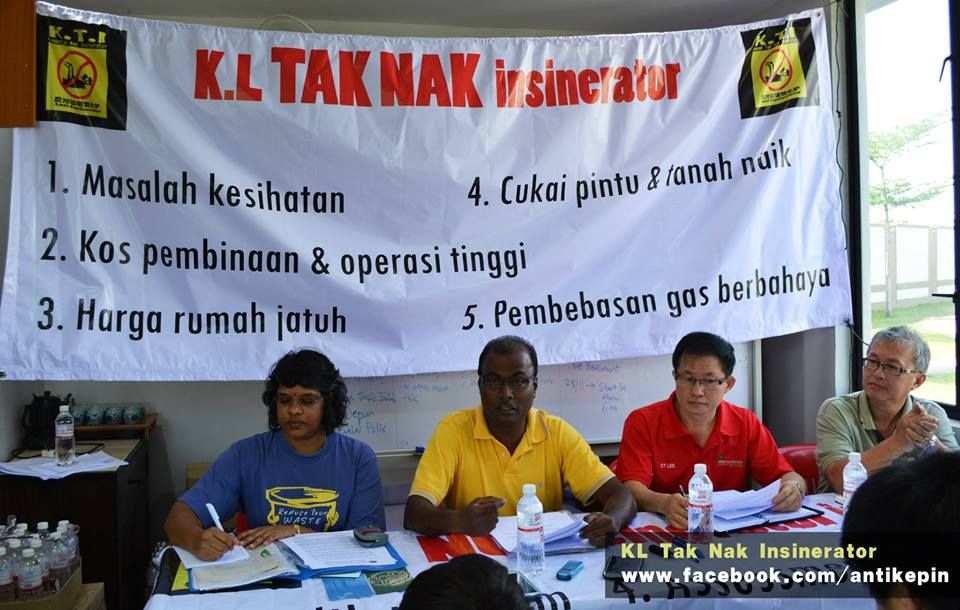
    Community protesting the incinerator proposal in Kepong, Kuala Lumpur. Photo courtesy of CAP.

    CAP has also helped many poor communities stand up for their rights: the Kuala Juru fishermen and the Kuala Kedah farmers fight against pollution, the Papan folks in the Asian Rare Earth case, the TheanTeik farmers against eviction, and the Penan and Sarawak natives against logging and for their native customary land rights.  Many other poor communities have benefited from CAP’s help.   Apart from government and policy interventions, CAP helped strengthen community-based organizations making them self-reliant.  What challenges are you facing, especially now with the COVID-19 crisis? We are still on lockdown with travel restriction thus only 30% of the staff can go to the office.  Projects have been delayed and we cannot go to the community to conduct programs and meetings.  We are trying to strengthen our social media but there are programs that have to wait until face-to-face meetings are allowed.     What are the biggest environmental issues faced by Malaysia and other countries in Southeast Asia? There is plastic and waste dumping and then electronic waste.  The COVID-19 pandemic has also brought in more waste from online shopping and food delivery, besides the single-use and disposables.   How do you see CAP’s work evolving in the next years? We need to have younger generation in the organization to continue the work.  I see that we will still be working on similar, if not the same, issues.  We also must look into digital finance, digital economy, and online purchasing.  There is so much happening that we need to keep up.   How do you envision a just and equitable recovery from COVID-19?  How can your organization’s work be part of the solution? We do that by giving our input in policies and working with the communities.  We look at new development projects and the concept of development being pushed by the government.   How does your work on waste relate to social justice?

    Photo courtesy of CAP.

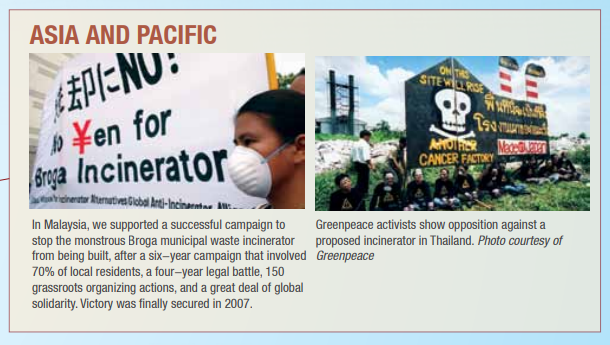
    We make sure environmental and social justice is always observed.  We work on genuine development for the people, ensuring that the development being offered is equitable and fair.   We have been fighting incinerators all these years.  One mega-incinerator proposal in Puchong, Kuala Lumpur was moved to a more remote, rural area in Broga thinking people there will not speak up and fight.  But we work with communities and we bring in experts to help us fight incinerators like the case of the Broga incinerator. We have stopped several incinerator projects, but the government keeps promoting it.