The Burn Book: Incinerators that Threaten the Climate, Public Health, and our Finances
- Incineration and cement kilns -
This publication analyzed data from twenty incinerators and incinerator proposals worldwide, focusing on public debt and subsidies, climate and air pollution, toxic byproducts, and other common issues surrounding the industry– identifying key patterns that emerged regardless of regional contexts:
“Waste-to-energy” incinerators turn waste into toxic air and ash pollution. Based on public data, these incinerators alone produced at least 1.7 million tons of toxic ash per year– the equivalent in weight to 230 Eiffel Towers. There is also significant documentation of air pollutants that threaten human health– including carbon monoxide, nitrous oxide, dioxin, and furans. Many communities surrounding these plants complained of odors, respiratory issues, and ground contamination.
These facilities have a large climate footprint. Despite studies showing that waste-to-energy incineration produces more climate emissions than any other power source, many of the incinerators on the list do not monitor or publicly disclose their emissions levels. The eleven that did have available data release a cumulative 5.5 million metric tons of CO2e per year, the equivalent of 1.3 million passenger cars.
“Waste-to-energy” is a waste of money. The twenty incinerators profiled have racked up nearly $7 billion of investments to date, with a portion of that directly from taxpayers in the form of government subsidies and municipal borrowing. In some cases municipalities are on the hook for millions of dollars in debt that stretches for decades. Waste incinerators are the most expensive form of waste management.
Burning waste undermines waste reduction. Once built, “waste-to-energy” incinerators require large volumes of waste to stay in operation, and many municipalities have “put-or-pay” contracts that disincentivize waste reduction. Much of the material burned in these incinerators could have been composted, recycled, or avoided altogether.
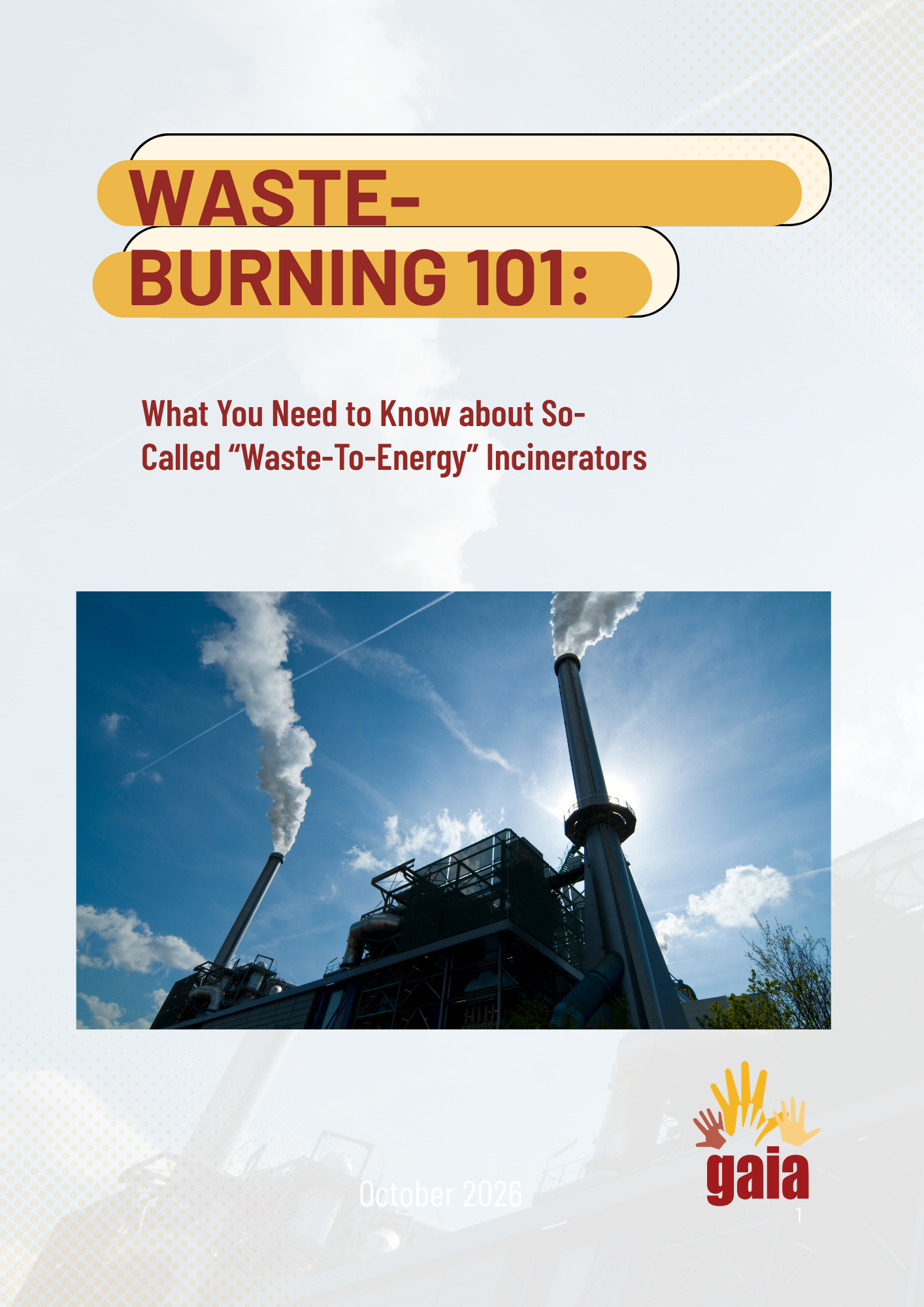
Waste-Burning 101: What You Need to Know about So-Called Waste-to-Energy Incinerators
- Incineration and cement kilns -
This toolkit compiles key facts, data and strategies to help communities and organizers understand the impacts of waste burning, challenge proposed or existing facilities, and engage in waste policy and planning decisions.
¿Necesitamos un tratado sobre el reciclaje deplásticos y puede este poner fin a lacontaminación por plásticos?
- Plástico -
El mundo exigió —y la Resolución 5/14 del PNUMA lo dispuso— un instrumento global para poner fin a la contaminación por plásticos, que incluyera medidas a lo largo de todo el ciclo de vida de los plásticos. ¿Puede cumplir con este objetivo un tratado que evita los controles sobre la producción de plástico y, en cambio, se enfoca únicamente en el reciclaje y la quema de plásticos? ¿Es un enfoque que prioriza el reciclaje serio y efectivo, o es un planteamiento engañoso que perpetúa la sobreproducción de plástico y la contaminación, y destruye nuestro clima?