






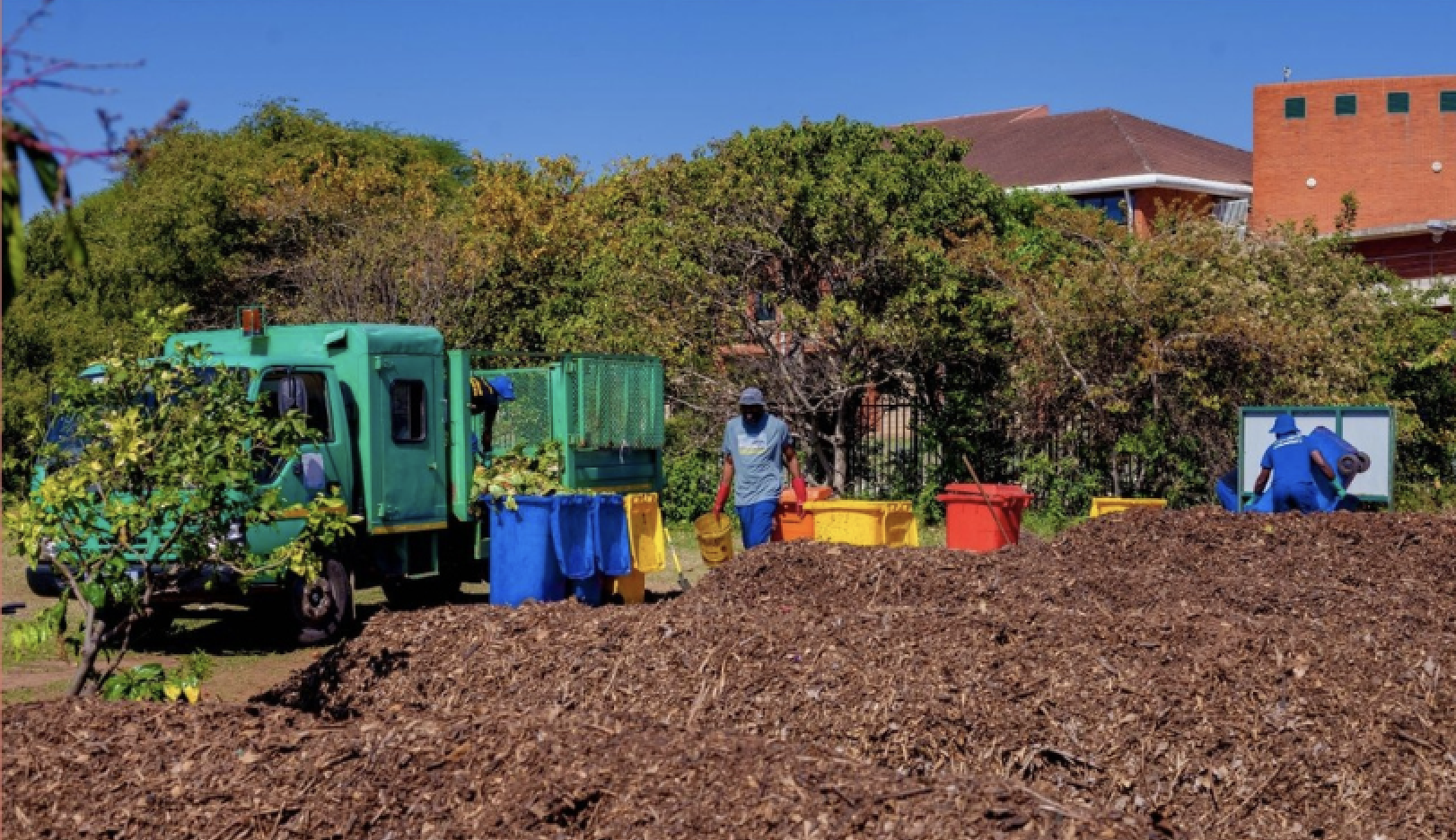
South Africa’s waste sector presents both a climate challenge and an opportunity for social equity. Landfills are a major source of methane, threatening public health and the environment, particularly in vulnerable communities. At the same time, informal waste workers—waste pickers, also referred to as waste reclaimers—play a vital role in recycling and resource recovery but are often excluded from formal systems. Integrating waste methane reduction with environmental justice in South Africa’s Nationally Determined Contributions (NDC) can simultaneously tackle emissions, protect communities, and support livelihoods.

RESOURCES
- A Key to Rapid Methane Reductions: Keeping Organic Waste From Landfills (GAIA 2024)
- Case Study: Avoiding Food Waste in Outdoor Markets, Fundación Basura’s Experience in the Metropolitan Region, Chile
- Case Study: Nourishing Communities: Gita Pertiwi’s Justice-Centered Food Sharing Model in Surakarta, Indonesia (GAIA 2024)
- Climate Finance: From Harmful to Impactful (GAIA 2024)
- Cutting Methane Emissions through Zero Food Waste System (GAIA 2024)
- Environmental Justice Principles for Fast Action on Waste and Methane (GAIA 2024)
- GAIA at COP29
- GAIA’s NDC Checklist: Guidance on integrating waste and methane reduction into the NDCs 3.0 in alignment with Environmental Justice Principles (GAIA 2024)
- Ramping Up Ambition on Waste Methane and Just Transition in Indonesia: Recommendations for Indonesia’s Second NDC (GAIA, 2025)
- South Africa’s 2025 NDC: Prioritizing the Waste Sector for Methane Reduction and a Just Transition (GAIA, 2025)
- Zero Waste Model: Dar Es Salaam Case Study (GAIA, Nipe Fagio 2024)
Practical roadmaps and guidelines on implementing zero waste strategies:
- Back to earth: composting for various contexts (GAIA, 2022)
- Enabling sustainable cities through Zero Waste: A guide for decision- and policy-makers (GAIA Asia- Pacific, 2019)
- Funding Zero Waste in Your Municipality: 3 Steps to Success (GAIA, 2021
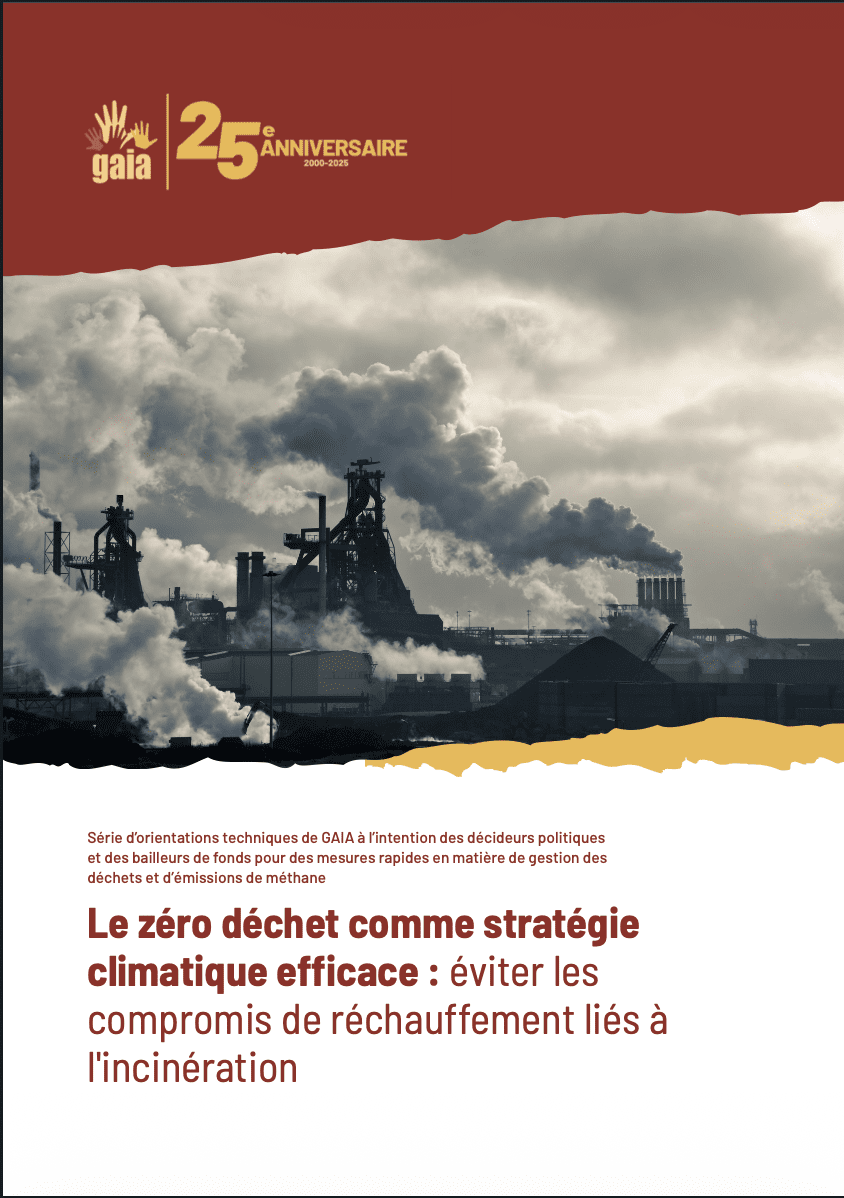
- GAIA Technical Guidance Series for Policymakers and Financiers on Fast Action on Waste and Methane (GAIA, 2025)
- My Zero Waste Event. 12 Actions to start a zero waste process (Zero Waste Europe, Zero Waste France, 2018)
- Reducing food waste at the local level: guidance for municipalities to reduce food waste within local food systems (ZWE and Slow Food, 2021)
- The Zero Waste Masterplan: A Guide to Building Just and Resilient Zero Waste Cities (GAIA US and Canada, 2020)
- Companion Guide for Organizers (GAIA, 2020)
- The Zero Waste Masterplan:Turning the vision of the circular economy into a reality for Europe (Zero Waste Europe, 2020)
- Zero Waste City Manual. A Toolkit to Establish City and Community Zero Waste Systems (Citizen consumer and civic Action Group (CAG), with GAIA and Break Free from Plastic, 2020
Relevant external reference documents and processes from close and aligned allies:
- Environmental Justice Leadership Forum on Climate Change
- Jemez Principles for Democratic Organizing, developed in Jemez in 1996
- Principles of Environmental Justice, developed in Washington DC in 1991
- Various EJ Declarations here