







INC-4 Day 1, April 23, 2024
Setting the Stage: the Opening Plenary
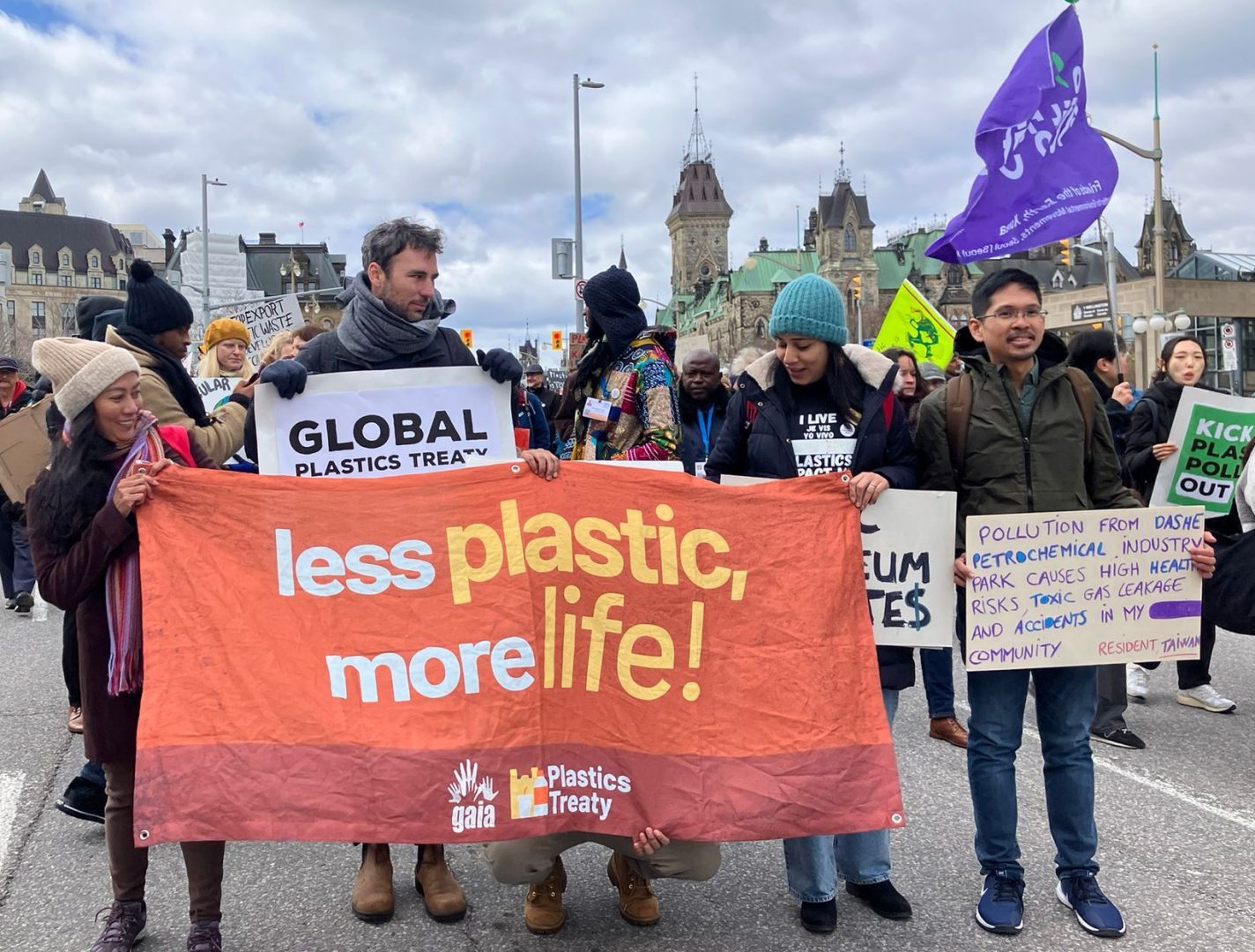
Today marked the first day of the fourth round of negotiations for a global plastics treaty. Member States and civil society crowded into the Shaw Center to hear the opening remarks. United Nations Environment Programme Executive Director Inger Anderson recognized the world’s 20 million waste pickers, and reiterated the need for a just transition in the treaty. She also emphasized the UNEA 5.2 resolution calling for “…an instrument that deals with the full lifecycle of plastic. To stop plastic pollution, we need to start at the start and end at the end.”
Steven Guilbeault, Canadian Minister of Environment and Climate Change echoed the need for a treaty that addresses the impacts of plastic from extraction to disposal. “There is no miracle solution. Neither recycling, nor banning, nor innovation alone can lead us to where we need to go. [We need action to] tackle the entire lifecycle of plastic pollution, considering production, design, and elimination.”
Africa and Pacific Small Island Developing States Continue to Lead Ambition
Throughout the INC’s, many of the countries most impacted by plastic pollution and climate change have shown the most ambition for a strong plastics treaty, particularly the African Bloc and Pacific Small Island Developing States (PSIDS). This was no different on the first day of INC-4. Vanuatu on behalf of PSIDS, stated in plenary that downstream measures alone can not prevent the plastics crisis, and that the treaty must include overall reduction of plastics including primary plastic polymers and elimination of chemicals of concern.
Rwanda stated that we have no time to waste. The Vast majority of African states support reduction of plastic production to sustainable levels, with global, legally bound, time bound targets.
The ‘Like-Minded Group’ is more formalized
At INC-3 in Kenya, a loose confederation of petro-states banded together to obstruct the negotiations and attempt to lower the scope and ambition of the negotiations. Now it seems that at INC-4 this group has become more of a formal entity.
While this “Like-Minded Group” is a vocal one in the negotiations, it is also in the minority. By GAIA’s count, 144 countries have expressed a willingness to consider plastic production cuts in the treaty.
One debate that may arise at the negotiations is around Rules of Procedure. Civil society has been demanding that democracy be protected through a provision for voting should consensus not be reached, in keeping with the most successful international environmental treaty negotiations. This provides a strong incentive for Member States to come to compromise, so that no one country can block progress and force the treaty to appeal to the lowest common denominator. The ‘Like-Minded Groups’ are attempting to block provisions for voting, which would undermine the democratic process.
Civil Society Access Issues
The decision to hold the INC in Ottawa created a significant obstacle for frontline communities from the Global South to obtain the necessary visa to attend. Because of visa delays, many were not able to join in time, calling into question UNEP’s ability to provide civil society with the access to meaningfully participate in the negotiations.
Today’s civil society soundbyte
In a Greenpeace press conference held at the Shaw Center today, Jo Banner of the Descendents Project explained the connection between the petrochemical industry and the legacy of slavery in the United States: “Throughout my area of Louisiana and even other parts of the country, chemical plants are in the literal footprint of plantations. Some of these plants still have the plantation homes on their properties… Plantation land provided everything these plants need to operate. Large acreage and access to water, and a government willing to sacrifice our health. The descendents of the enslaved who were on the fenceline of the plantation are now on the fenceline of the pollution of these plants.”
Contact:
Claire Arkin, Global Communications Lead
claire@no-burn.org | +1 973 444 4869
References:
For more information about GAIA’s treaty advocacy, please visit no-burn.org/unea-plastics-treaty, follow us on X @gaianoburn, and read our Press kit.