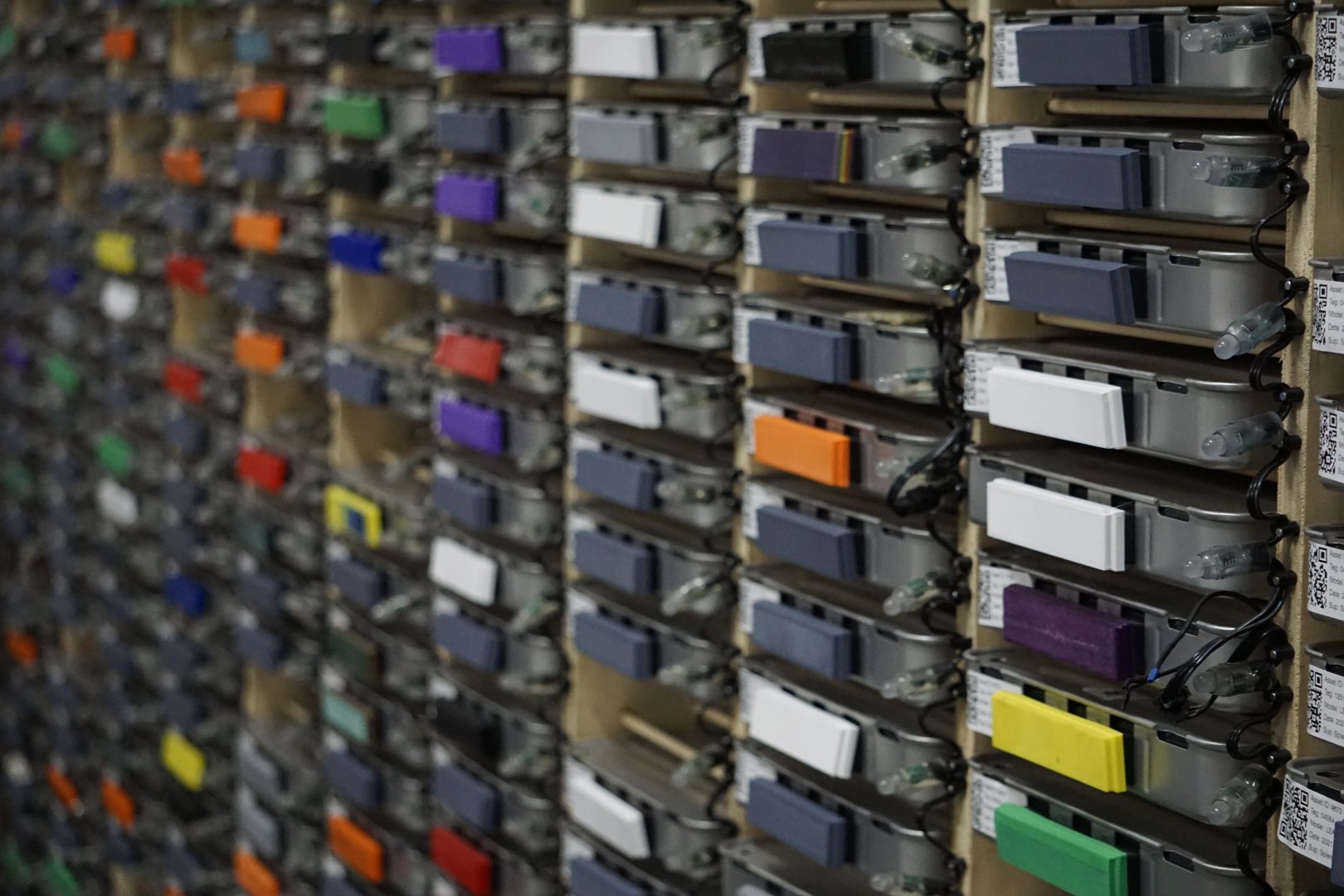
Batteries play a pivotal role in our society’s ability to harness the abundant energy from wind and solar sources, and so reduce reliance on fossil fuels. As with any energy system, renewables come with their own set of challenges and impacts. With rapidly evolving battery technologies and build-out of infrastructure supporting widespread electrification, it’s imperative that waste and pollution are addressed in the design of these systems and products right now.
GAIA advocates for innovative solutions such as redesigning batteries for longevity, advancing appropriate reuse and recycling practices with strong environmental justice standards to minimize waste and avoid harm. By standing in solidarity with allies and amplifying the voices of those most affected, we can advance a just, zero waste world centered around respect for ecological limits and community rights, where burning and dumping are replaced with solutions centering people and planet.
Together, let’s ensure that renewables are done right.
Videos
News

ELECTRIC VEHICLE BATTERY REPAIR, REUSE AND REPURPOSE TEACH-IN RECAP
GAIA’s Electric Vehicle (EV) Battery Repair, Reuse and Repurpose Teach-In helped GAIA members and partnering organizations learn more about the EV battery supply chain, how they are recycled, and why design for repair, reuse, and repurpose is so important. This publication compiles the key takeaways for each panel.

COMMUNITY IN NY WINS AGAINST LITHIUM BATTERY-BURNING FACILITY
In Endicott, Broome County, NY, a community-led campaign achieved a remarkable victory against the construction of a battery-burning facility, illustrating the power of collective action in the fight for environmental justice.

5 THINGS YOU SHOULD KNOW ABOUT UNEP’S GLOBAL ELECTRIC MOBILITY PROGRAMME IN AFRICA
Kenza Sara Elazkem, GAIA’s North Africa Outreach Coordinator, shares key takeaways from a webinar held by the United Nations Environment Programme (UNEP), under the theme of “Used Electric Vehicles, Battery End-of-Life & Circularity – Africa Workshop.”

Veto Request SB 615 : Vehicle Traction Batteries
The undersigned organizations are very concerned about environmental justice related to battery recycling and write to advise you of our strong opposition to SB 615: Vehicle traction batteries. SB 615 provides the Department of Toxic Substances Control with the responsibility of adopting regulations to implement and enforce SB 615, which requires traction battery suppliers to ensure responsible end-of-life management of their products.

GAIA and Environmental Justice Organizations Applaud Governor’s Decision to Veto SB 615
Berkeley, CA — The Global Alliance for Incinerator Alternatives (GAIA) commends Governor Gavin Newsom for vetoing Senate Bill 615 on September 29, 2024. The bill, which aimed to establish regulations for the reuse and recycling of electric vehicle (EV) batteries, was rightly rejected.

Charging Forward: Reducing Toxic Materials in Batteries for a Just Energy Transition
On October 15, 2024, during the “Charging Forward: Reducing Toxic Materials in Batteries for a Just Energy Transition” webinar, panelists discussed the need for data transparency on toxic chemicals in batteries, innovation to reduce the battery industry’s chemical footprint, and the creation of safer alternatives to ensure worker and community health and safety.

GAIA Africa Commemorates World Cities Day with a Campaign on Electric Vehicle Batteries
Leading to World Cities Day on October 31, 2024, The Global Alliance for Incinerator Alternatives (GAIA) Africa held a social media campaign focused on the crucial topic of Electric Vehicle (EV) Batteries. As the shift towards electric vehicles accelerates, the campaign aimed to tackle the life-cycle challenges of EV batteries and sustainability issues associated with the materials used in their manufacturing.

GAIA Submits Input to UN on Human Rights in the Life Cycle of Renewable Energy and Critical Minerals
On April 30, GAIA sent two submissions to the UN Special Rapporteur on Climate Change, responding to her call for inputs on Human Rights in the Life Cycle of Renewable Energy and Critical Minerals. These inputs, one global and one specific to Asia-Pacific, highlight evidence-based risks and recommendations to reduce harm and advance a just transition in battery materials. The submissions propose a zero waste approach that centers reuse, repair, and redesign to protect human rights and environmental health. GAIA’s recommendations are intended to help shape the Special Rapporteur’s thematic report to the Human Rights Council.
Publications
Batteries Infosheet Series
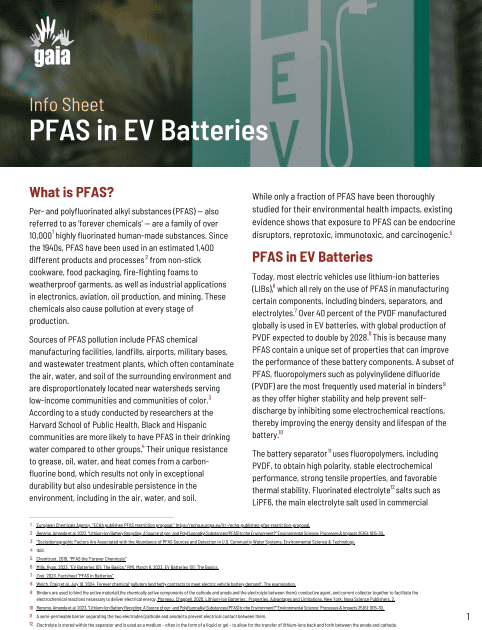
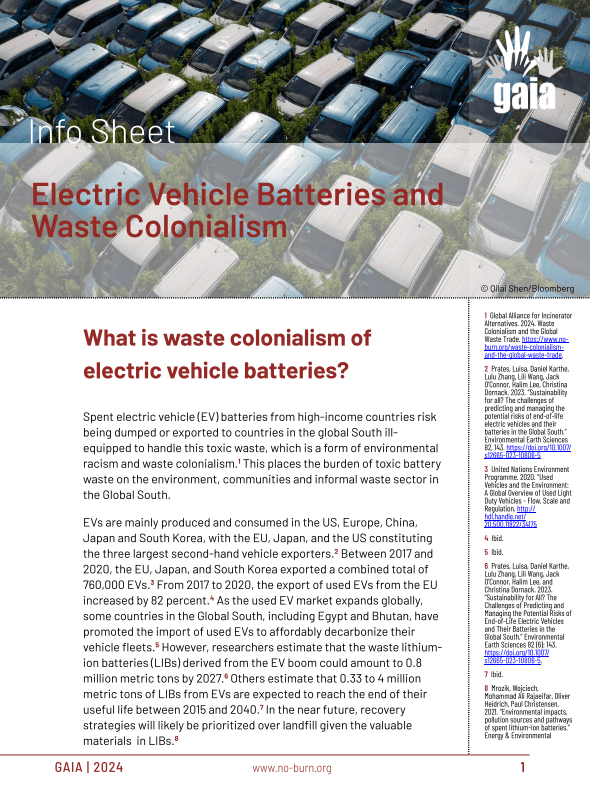
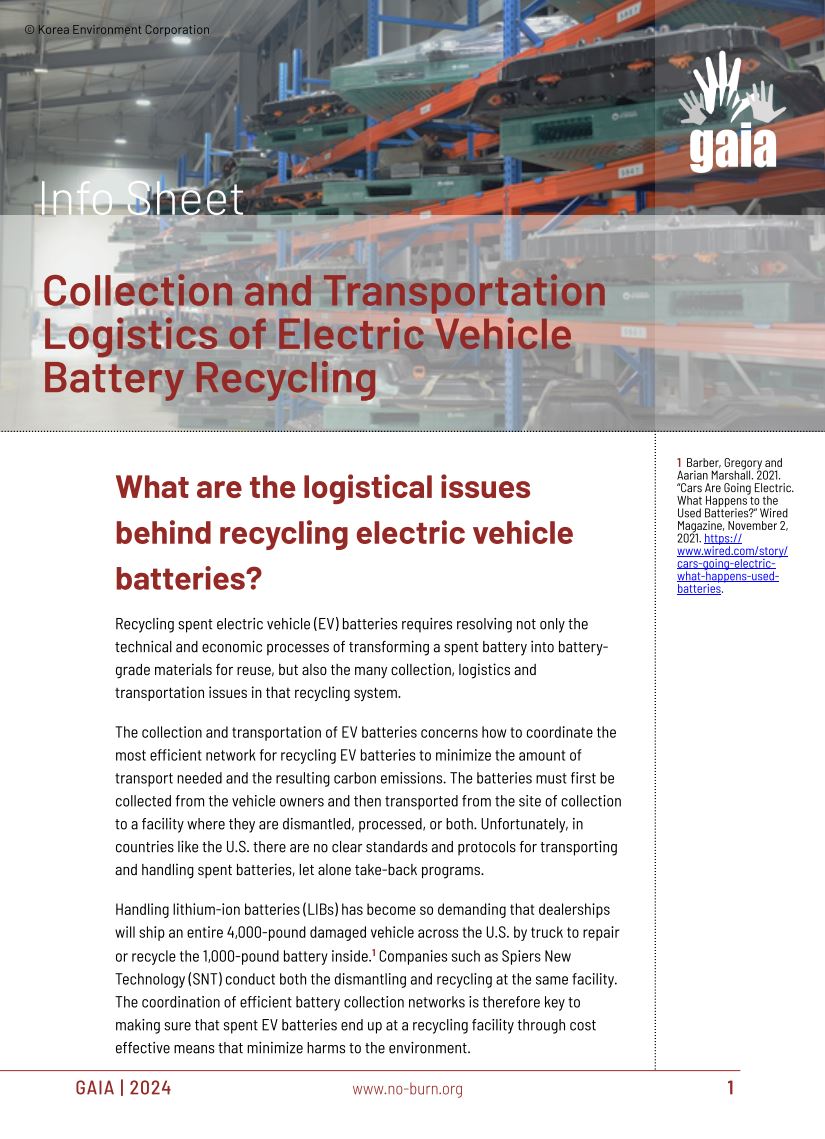
GAIA’s battery infosheets highlight challenges and opportunities of EV battery design for longevity, repairability, second-life applications, and recyclability.
Q&A: EV Battery Recycling
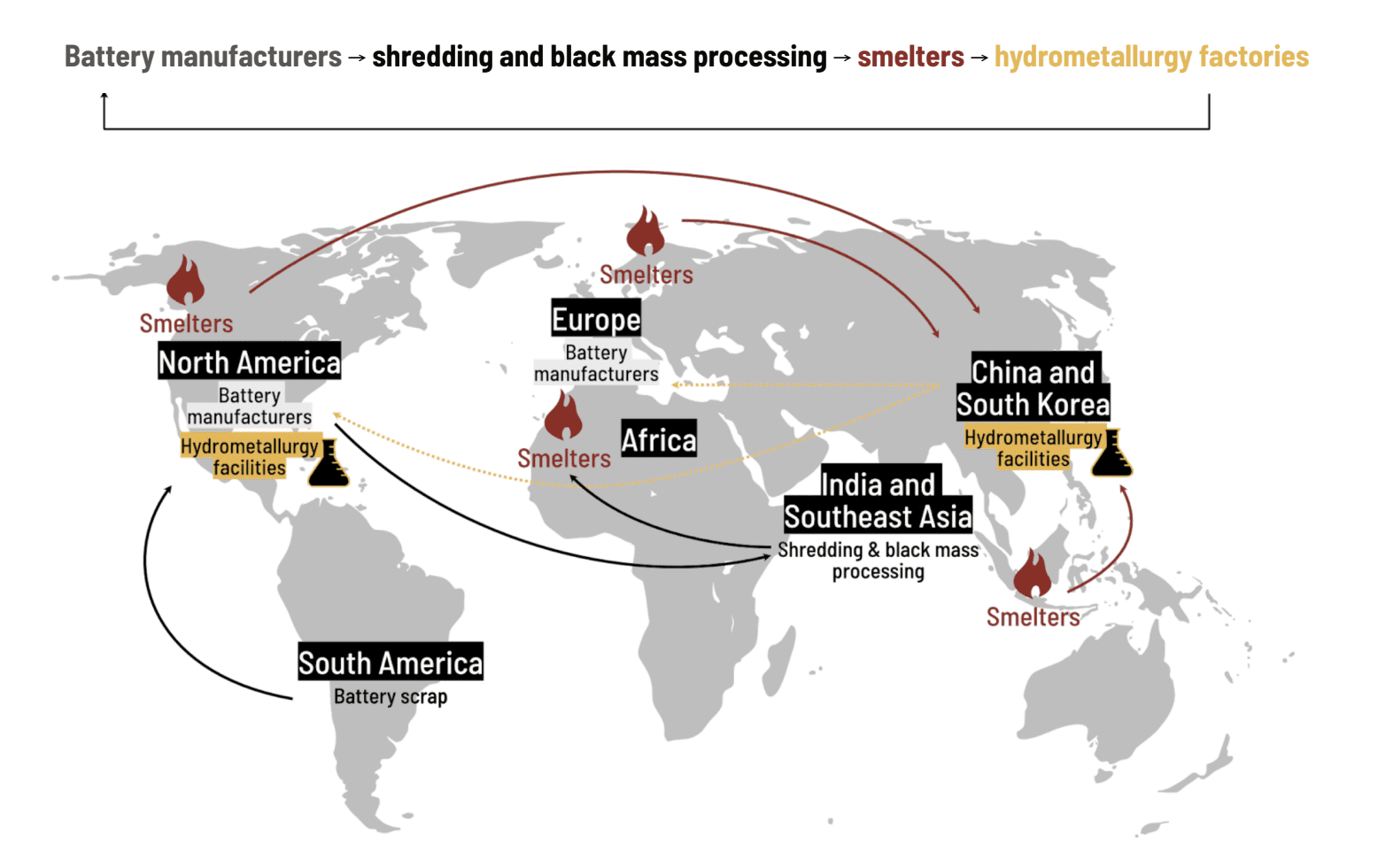
This Question & Answer publication answers key questions about what happens to electronic vehicle (EV) batteries after use, the challenges of current recycling technologies, and the solutions needed for a truly circular system. Learn about pyrometallurgy, hydrometallurgy, direct recycling, and GAIA’s recommendations for a just and effective approach.