





Contributed by Dr. Shahriar Hossain, Environmental and Social Development Organization
Empowering Communities: A Tale of Methane Reduction through Zero Waste Approaches
In a world grappling with the consequences of climate change, it is imperative to celebrate the success stories that pave the way toward a sustainable and toxic-free future. Today, we share a remarkable journey of environmental stewardship and community empowerment, spearheaded by the Environmental and Social Development Organization – ESDO. This story illuminates the transformative power of zero-waste approaches, demonstrating how they not only reduce methane emissions but also exemplify the core principles of Environmental Justice.

Distributing bin and composters for organic farming to local people in Rangpur, Bangladesh
A Vision Turned Reality: Zero Waste Community at Rangpur, Bangladesh
We, at ESDO, envision zero waste as a solution to reduce food loss, as well as waste management, and as a strategy to build an organic, eco-friendly and sustainable future. Therefore, we embarked on visionary initiatives, establishing a biogas plant and educating people of organic food production and sustainable soil management, ensuring soil and environmental health and ultimately, public health in Rangpur, Bangladesh. This approach utilized a proper waste management system to support two families. By converting organic waste into biogas, this project not only provided energy but also significantly contributed to reducing methane emissions, a potent greenhouse gas responsible for climate change. Furthermore, ESDO encouraged 300 families (150 families in Betgari Union and 150 in Rangpur) to use ‘Twin Pit Earth Composter’ to manage waste effectively for organic food production, and soil health management, while ensuring sustainable agricultural practices. We aimed to make the rural people in Bangladesh aware of the necessity of waste segregation through the 4R strategy (Refuse, Reduce, Reuse, Refill). We also set out to inform the communities on how they can mitigate environmental pollution impact through their daily activities, and build their adaptation potential in the emerging changing climate situation the world is facing.

‘Twin Pit Earth Composter’ at Betgari Union, Rangpur, Bangladesh
Uplifting Environmental Justice Values
Equity, democracy, sustainability and community empowerment – these are the foundational pillars of environmental justice that our project embodies. By building zero waste communities in Rangpur District, we champion the idea that every individual, regardless of socio-economic status, can actively contribute to mitigating climate change and act as a change-making agent. This project fosters equitable access to resources and opportunities, ensuring that vulnerable communities are not left behind in the fight against the climate crisis. They can potentially participate in climate change action and significantly contribute to a single step in organic crop production through composting, changing the food production system and preventing food loss with the burgeoning population in Bangladesh.
Positive Impact and Success Metrics
Global methane emissions have increased by roughly 25 percent since 1990 to almost nine billion metric tons of CO₂ equivalent. During this period, the average annual atmospheric methane abundance has increased by 11 percent and reached a record high of 1,895 parts per billion (ppb) in 2021.[1] In this case, the impact of ESDO’s zero waste initiatives is tangible and far-reaching. Apparently, 47 percent of Dhaka’s methane emission is caused by waste. The study identifies 13 dumps where garbage is left in the open to decompose leading to methane emissions.[2] Through the implementation of the biogas plant and waste management programs, an impressive amount of organic waste can be diverted from landfills, thereby reducing methane emissions substantially. Moreover, our zero waste project in the Rangpur District has not only reduced greenhouse gas emissions but has also created job opportunities within the community. By providing employment, zero waste projects empowered individuals, fostered economic resilience and enhanced overall community well-being. If sufficient funds are available, ESDO will establish biogas plants in every possible district in Bangladesh to send a message to world environment leaders that positive change is possible if we work together, cultivating a pollution-free tomorrow for posterity.
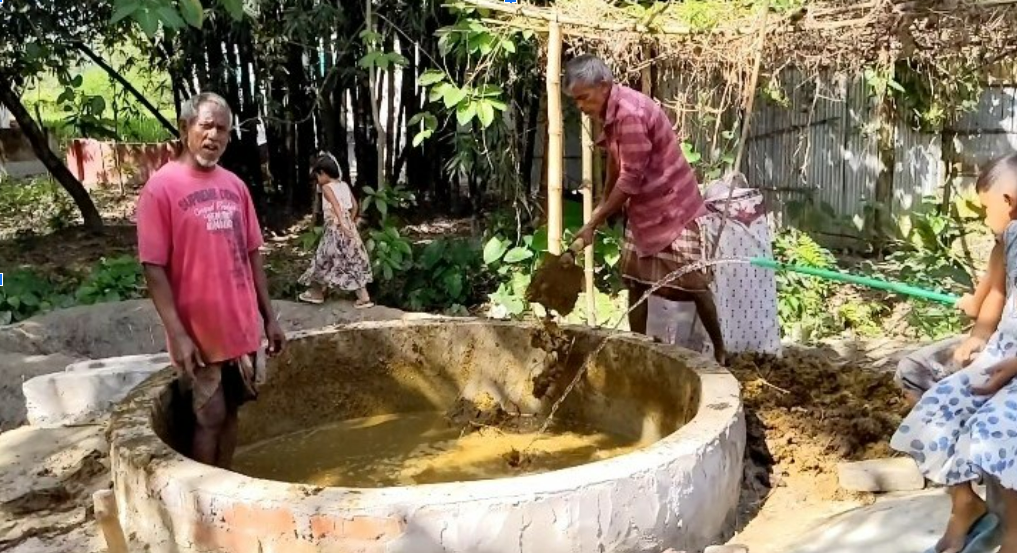
Biogas Plant at Betgari Union, Rangpur, Bangladesh
Inspiring Change, Building More Zero Waste Communities
The success of ESDO’s initiatives serves as a beacon of hope, inspiring not only the communities directly involved but also national governments, local authorities and decision-makers worldwide. These stories are not just tales of environmental triumph but also testimonials of the efficacy of Environmental Justice Values and Principles in action.
By building zero waste communities, ESDO showcases the transformative potential of grassroots initiatives. These endeavors emphasize the importance of inclusive, participatory approaches in mitigating climate change. As we approach COP 28, it is crucial for all stakeholders – governments, funders, practitioners, and think tanks – to recognize and adopt similar principles in their methane reduction plans.
[1] https://www.statista.com/topics/10289/methane-emissions-worldwide/#topicOverview
[2] https://www.thedailystar.net/opinion/editorial/news/beware-methane-leaks-3281241