





Contributed by ABCE
The Alianza Basura Cero Ecuador (ABCE) coordinates more than 41 social and environmental organizations that collectively promote the implementation of zero waste models at the local, regional and national levels, favoring processes to reduce the amount of solid waste generated and buried, as well as to promote social, environmental and gender justice.
At the ABCE, we promote the efforts of civil society organizations, academia and the recycling movement. To this end, we frame our work in five main axes:
- Zero waste advocacy in public policy: promoting the implementation of zero waste policies at the local and national level.
- Inclusive recycling and closed-loop systems: acknowledging the struggles of the recycling movement and promoting zero waste citizen initiatives.
- Prevention and management of organic waste: promoting the reduction of food production volume, food recovery, home and small-scale composting.
- Sacrifice zones: demanding the integral reparation of communities affected by massive waste burial: landfills, incinerators, co-processing plants.
- Rejection of plastic pollution, co-processing, incineration and importation of waste: rejecting and denouncing the impacts of these harmful practices.
In 2022, the Composting Network of Ecuador was founded as part of the ABCE. Since then, we have been working closely with grassroots and non-profit organizations involved in the prevention and management of organic waste. The network is focused on education and advocacy in public policies that favor waste management from a zero waste perspective.

Currently, ABCE and the Composting Network of Ecuador organize our work in three components:
- Academic research
We conduct academic and scientific research in coordination with the National Institute of Statistics and Census, as well as with the Association of Municipalities of Ecuador. We generate updated socio-environmental information that analyzes, from a political ecology perspective, the impacts of the inadequate management of urban solid waste. We produce academic and popular reports, cartographies and maps that make the national environmental impacts of the 221 municipalities visible in terms of: leachate generated, carbon dioxide and methane emissions, occupation and contamination of territory, as well as socio-environmental conflict.
Furthermore, we document the positive impacts of reduction, recovery and decentralized management of organic waste. All the experiences of food banks, organizations, foundations, services, family, community, neighborhood and municipal composting experiences have been mapped. The positive impacts of these initiatives have been calculated in terms of methane emissions avoided, leachates avoided and unused land area.
| Mapped initiatives | Number of initiatives | Ton/month |
| Food bank | 9 | 475 |
| Animal food managers | 150 | 261 |
| Decentralized composting | 139 | 87,92 |
| Composting services | 15 | 1294 |
| Municipalities | 65 | 2531,27 |
| TOTAL | 4649,19 |
- Training
We promote participatory training and exchange processes with the recycling movement, the state, civil society, agroecology networks and environmental organizations. We foster the exchange of knowledge and practical experiences, the dissemination of research results and the response to specific demands and training needs for the prevention and decentralized management of organic waste.
- Implementation
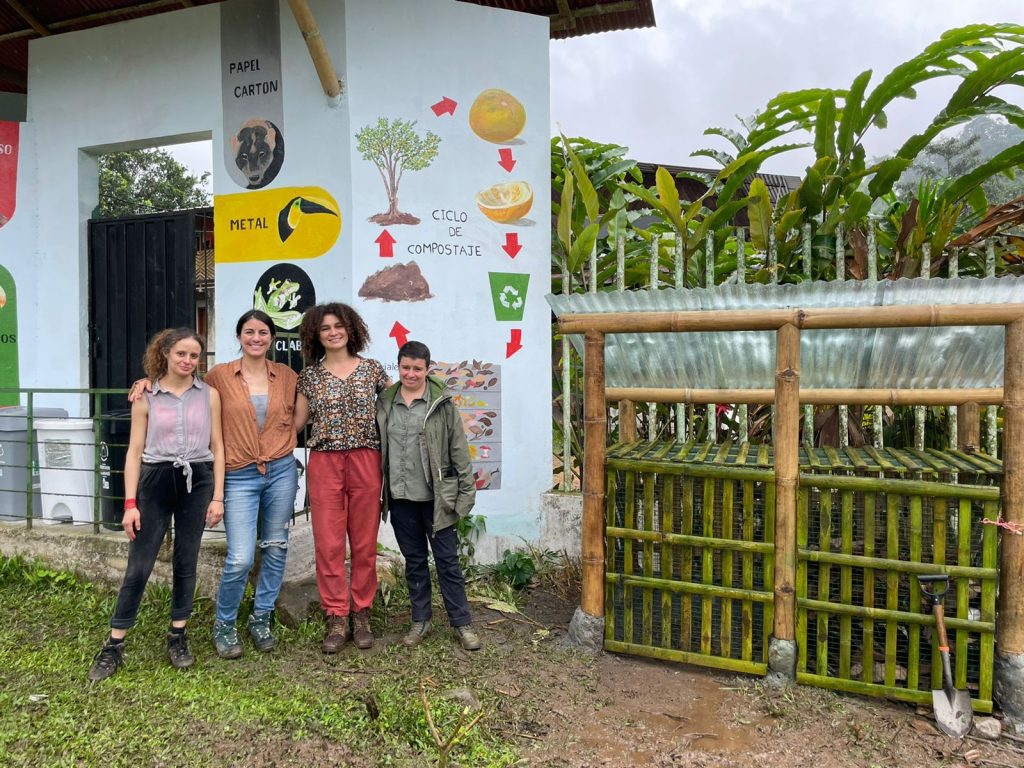
Through ABCE members and the Composting Network, we implement pilot programs and projects at the household, school, community, neighborhood and municipal levels. To date, 13 pilot programs are in operation, in addition to the initiatives developed by our members. One of the programs, for example, is the Zero Garbage Schools Network of the Andean Chocó, in which 7 schools participate.